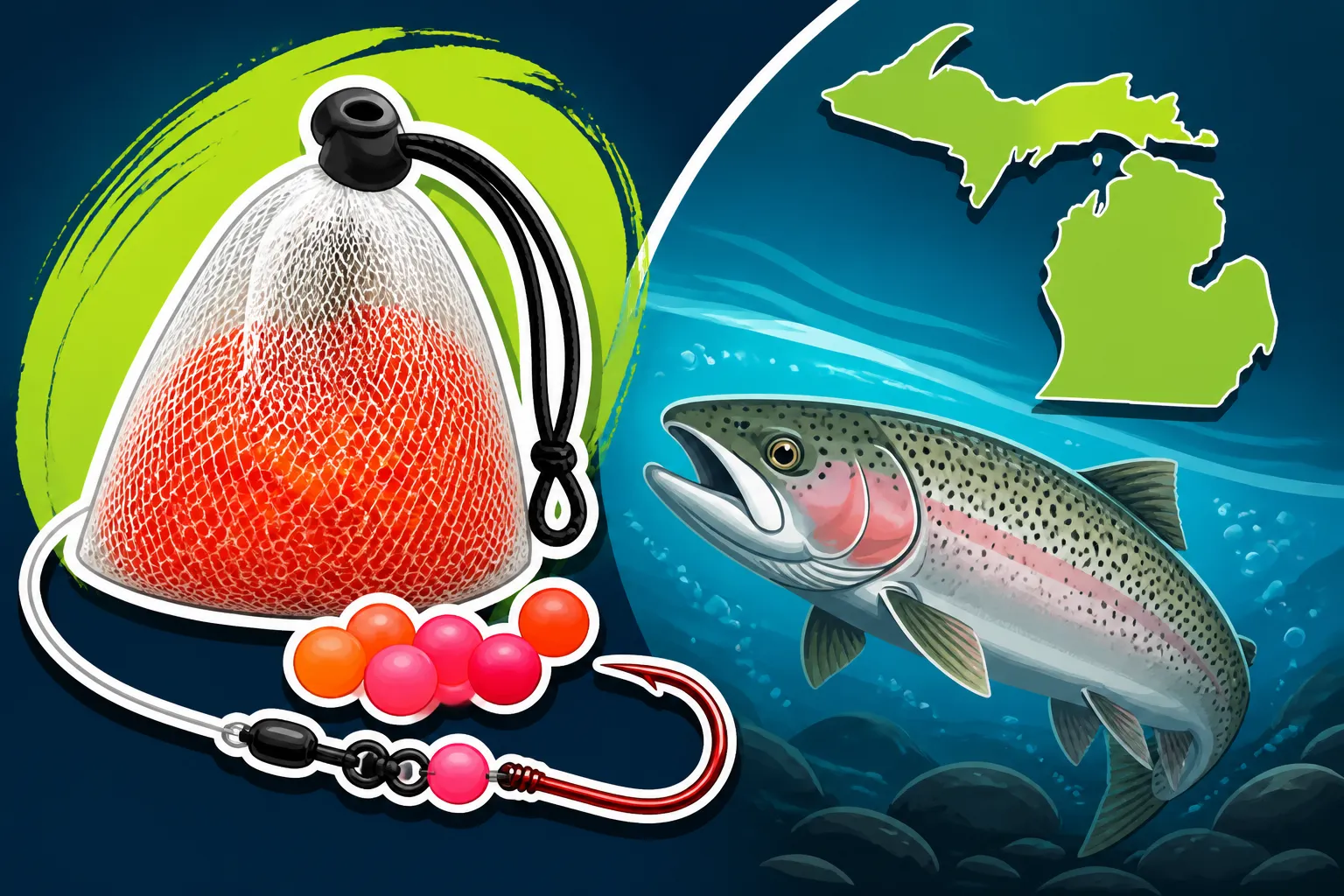
Best Spawn Bag Setup for Steelhead
There's nothing quite as frustrating as chasing Michigan steelhead, knowing they're in the river, but struggling to get a bite. Sometimes, they can be incredibly finicky, ignoring every fly, bead, or lure you throw at them. This often happens because they're keyed into a natural food source, and during spawning runs, that means fish eggs. This guide is dedicated to helping you master the art of the spawn bag, providing a detailed breakdown of the best setup and techniques to turn those tough days into memorable catches.
The Undeniable Effectiveness of Spawn Bags for Michigan Steelhead
When those powerful steelhead enter Michigan's rivers, their primary focus often shifts from aggressive predation to a more opportunistic feeding pattern, particularly when other salmon and trout are dropping their eggs. This natural food source becomes incredibly appealing, and a well-presented spawn bag can often be the difference between a blank day and a bent rod. It taps directly into their instincts, offering a highly nutritious, familiar meal.
Why Steelhead Can't Resist a Good Spawn Bag
Think about it from the steelhead's perspective. They've just migrated miles upstream, often fighting currents and obstacles, and they're expending a huge amount of energy. When other fish are spawning, the riverbed becomes a buffet of protein-rich eggs, dislodged by currents or by spawning activity itself. Steelhead are naturally drawn to this easy meal. A spawn bag mimics this perfectly: a concentrated cluster of eggs, easily digestible and packed with energy, drifting temptingly through their holding lies. It's an instinctive trigger that can be hard for them to ignore, even when they're not actively "feeding" in the traditional sense. It's less about a chase and more about an irresistible, effortless snack.
When and Where to Deploy Your Spawn Bag Magic
Spawn bags truly shine during the peak of the salmon and trout spawning runs, typically from late fall through early spring in Michigan's rivers. In the fall, as Chinook and Coho salmon are in the rivers dropping their eggs, steelhead move in right behind them to gorge. Later, in the spring, rainbow trout (steelhead are migratory rainbow trout, after all) and other resident trout species begin their own spawning rituals, once again making eggs a prevalent food source.
You'll find spawn bags most effective in areas where salmon or other trout have been, or currently are, spawning. This includes gravelly runs, riffles, and the deeper pools directly downstream where eggs might collect. Water clarity also plays a role. In slightly stained or off-color water, the subtle scent and visual appeal of a spawn bag can be highly advantageous. If you're fishing a river like the Manistee or the Au Sable, particularly during the runs, having some quality spawn bags on hand is almost a necessity. Knowing Michigan Fishing Seasons Explained will give you a better idea of when these runs typically occur.
Spawn Bags vs. Other Steelhead Baits
While beads, jigs, and artificial lures certainly have their place in a steelhead angler's arsenal, spawn bags often offer a unique advantage because they are a natural food item. Artificial baits rely on mimicking the look or action of prey, but a spawn bag provides the actual scent, texture, and nutritional value of real eggs. This can be crucial on days when steelhead are lethargic, pressured, or simply keyed into a specific natural food source.
For instance, a jig tipped with a wax worm might get some attention, but it doesn't offer the same concentrated protein signature as a cluster of natural roe. Beads are fantastic at imitating single eggs, but a bag presents a larger, more substantial meal. This isn't to say other baits are inferior, but rather that spawn bags fill a critical niche, especially when conditions favor a natural presentation. Often, combining strategies, like drifting a spawn bag through a prime lie and then following up with a bead rig, can maximize your chances.
Crafting Your Perfect Spawn Bag: Components and Considerations
Creating an effective spawn bag isn't just about stuffing some eggs into mesh; it's a careful blend of material selection, thoughtful preparation, and meticulous tying. Each component plays a vital role in presentation, durability, and, ultimately, attracting those magnificent Michigan steelhead.
The Heart of the Bag: Roe Selection and Curing
The quality of your roe is paramount. Fresh, vibrant eggs will always outperform old, freezer-burnt ones. Many anglers prefer salmon eggs (Chinook or Coho) due to their larger size and robust scent, but trout eggs can also be highly effective, especially in rivers where trout are the primary spawners. You can often obtain fresh roe from salmon you've caught yourself, or from local fish processors and tackle shops during the peak runs.
Once you have fresh roe, curing is the next critical step. Curing firms up the eggs, enhances their color, and helps preserve them, making them more durable on the hook and extending their shelf life. There are countless curing recipes out there, often involving borax, non-iodized salt, and various powdered egg dyes or scents. Commercial curing agents, readily available at tackle shops or through online retailers like Amazon, simplify the process and often yield excellent results. The goal is a firm, distinct egg that won't easily wash out of the bag but remains juicy and appealing. Properly cured roe should have a slightly tacky feel, vibrant color, and a strong, natural scent. Remember to check local regulations regarding the use of natural bait, as some waters or seasons might have restrictions.
Choosing the Right Mesh and Tying Technique
The mesh you choose for your spawn bags is more important than you might think. It needs to be strong enough to hold the eggs without tearing, fine enough to keep the eggs contained but permeable enough to release scent, and ideally, have a color that either stands out or blends in, depending on water conditions. Nylon mesh, often sold in rolls or pre-cut squares, is the standard.
- Mesh Color: Popular colors include natural (white/clear), chartreuse, pink, and orange. Natural is great for clear water, while brighter colors can increase visibility in stained water or on overcast days. Some anglers match the color to the roe itself, creating a subtle, natural presentation.
- Mesh Size: You'll find different weave patterns. A tighter weave might prevent individual eggs from escaping too quickly, prolonging the bag's effectiveness, while a looser weave can release scent more aggressively. Experimentation is key to finding what works best for your local conditions.
- Tying Material: Strong, thin elastic thread is ideal for tying spawn bags. It cinches down tightly without cutting the mesh and holds the eggs securely. You can often find this specialized thread at Bass Pro Shops or other dedicated fishing supply stores. Avoid regular sewing thread, as it can be too weak and prone to snapping.
Integrating Weight for Impeccable Presentation
The way your spawn bag drifts through the water is crucial for success. Steelhead are often looking for a natural, unencumbered drift. This means carefully considering how you add weight to your rig. The weight isn't typically inside the spawn bag itself, but rather on your leader or mainline, positioned strategically to get the bag down to the strike zone without hindering its natural movement.
Split shot is the most common form of weight. You'll want a variety of sizes to adapt to different current speeds and depths. The key is to use just enough weight to tick the bottom occasionally without dragging excessively. Too much weight will cause your bait to snag constantly and look unnatural; too little, and it will drift too high in the water column. Pencil lead, or slinky weights, are also excellent choices for fast-moving or snaggy rivers, as they tend to roll over obstructions more easily than split shot. The goal is to present your spawn bag with a "dead drift," making it look like a free-floating cluster of eggs. This natural presentation is often what triggers a strike from a wary steelhead.
Step-by-Step Guide to Tying Effective Spawn Bags
Tying your own spawn bags is a rewarding part of steelhead fishing. Not only does it save money, but it also allows you to customize them perfectly for the conditions you're facing. Let's walk through the process to create your own irresistible steelhead snacks.
Essential Materials for Your Tying Station
Before you begin, gather everything you'll need. Having your materials organized will make the process much smoother and more enjoyable. Think of it as preparing your chef's station before cooking a gourmet meal.
Here's your checklist:
- Cured Roe: Your primary ingredient! Make sure it's fresh and properly cured.
- Spawn Netting/Mesh: Rolls or pre-cut squares in various colors (white, pink, orange, chartreuse).
- Spawn Tying Thread: Thin, strong elastic thread. This is crucial for securing your bags.
- Small Scissors: Sharp scissors are essential for clean cuts of the mesh and thread.
- Small Scoop or Spoon: For handling the roe without crushing it and ensuring consistent bag size.
- Small Container/Tray: To hold your roe and prevent it from rolling away.
- Optional: Scent Additives: Liquid or gel attractants to further boost appeal.
- Optional: Gloves: Latex or nitrile gloves can keep your hands clean and prevent transferring human scents to the bait.
You can often find all these supplies, from curing agents to mesh and tying thread, at major outdoor retailers like Bass Pro Shops or Cabela's, and a quick search on Amazon will also yield many options for specialized spawn tying kits.
The Art of the Tie: A Detailed Walkthrough
Now, let's get hands-on and create those fish-catching masterpieces. Consistency is key here; aim for uniform size and shape for predictable drifts.
- Cut Your Mesh: Start by cutting a square of spawn netting. A common size is about 2×2 inches, but you can adjust this based on how large you want your finished bag. For average river conditions, a nickel-sized to quarter-sized bag is a good starting point.
- Add the Roe: Lay the mesh square flat in the palm of your non-dominant hand. Using your small scoop or spoon, place a consistent amount of cured roe in the center of the mesh. A teaspoon is often a good measure for a standard-sized bag. Try to keep the roe in a compact pile.
- Gather the Corners: Carefully gather the four corners of the mesh, bringing them up and over the pile of roe. Work them together so the mesh forms a small, tight "sac" around the eggs. You want to exclude as much air as possible without crushing the eggs.
- Tie It Off: With your other hand, take a length of spawn tying thread (about 6-8 inches). Wrap the thread tightly around the gathered mesh, just above the eggs, a few times. Cinch it down firmly to create a secure knot. An overhand knot followed by a double overhand knot usually does the trick. You want it tight enough that the eggs won't spill out, but not so tight that it cuts through the mesh. Trim any excess mesh, leaving a small "tag" end for tying to your hook later.
- Check for Durability: Give the finished bag a gentle squeeze. It should feel firm but still have a bit of give, and no eggs should easily escape. If the bag feels too loose, it might fall apart in the current; too tight, and it might not release scent effectively.
Practice makes perfect! After tying a few dozen, you'll develop a rhythm and a feel for the right tension and size.
Scent Boosters and Storage Secrets
While cured roe has its own natural attractant, sometimes adding a scent booster can provide that extra edge, especially in off-color water or when fish are particularly sluggish. Liquid or gel scents formulated for fish eggs or general anadromous species can be applied to the finished bags just before fishing, or even mixed into the roe during the curing process. Always check the ingredients to ensure they're safe for the environment and allowed in your fishing area. These can be particularly effective during the Winter Steelhead Run in Michigan Rivers when fish activity slows.
Proper storage is critical for maintaining the freshness and effectiveness of your spawn bags. Once tied, store your bags in an airtight container or a Ziploc bag, ideally with a small amount of the original curing solution or brine. Keep them refrigerated until you're ready to fish. For longer storage, you can freeze them, but be aware that freezing and thawing can sometimes make the eggs softer. If freezing, portion them into smaller batches so you only thaw what you need for a trip. Always check your bags before heading out; if they've developed an unnatural smell or the eggs look discolored, it's best to discard them and tie fresh ones.
Mastering the Presentation: Fishing Your Spawn Bags for Steelhead
Having perfectly tied spawn bags is only half the battle. The other half is presenting them to the steelhead in a way that mimics a natural, irresistible meal. This largely comes down to how you rig your line and how you read the river.
River Drift Techniques for Natural Movement
The most common and often most effective way to fish spawn bags in rivers is through a technique called drift fishing or float fishing (also known as bobber dogging in some circles). This method aims to present your spawn bag naturally, tumbling along the bottom with the current, just like real loose eggs.
Here's how you set it up and execute it:
- The Leader: You'll want a leader that's long enough to allow for a natural drift, typically 2-4 feet, made of fluorocarbon for its invisibility and abrasion resistance. Attach your spawn bag to a sharp, strong, single hook (size 8-12 is common, depending on bag size) at the end of this leader.
- Weighting Your Line: Above your leader, on your mainline, you'll place your split shot or pencil lead. The key here is distribution. Instead of one heavy weight, use several smaller split shot, spaced out over 12-18 inches above your leader swivel. This helps the weight "roll" along the bottom more naturally and reduces snags. Adjust the amount of weight based on current speed and depth; you want to feel your weight ticking the bottom occasionally, but not dragging heavily.
- The Drift: Cast slightly upstream and across the current from where you expect steelhead to be holding. Keep your rod tip high and maintain a slight bow in your line (just enough to feel the weight), allowing the current to carry your spawn bag downstream. As it drifts, "mend" your line (toss slack upstream with your rod tip) to prevent drag and ensure your bag drifts at the same speed as the current. Watch your line where it enters the water; any sudden stop, twitch, or unusual movement could indicate a strike. Set the hook quickly and firmly! This technique is especially effective for Drift Fishing Michigan Rivers for Steelhead.
Float Fishing: A Versatile Approach
Float fishing, also known as bobber fishing, is another incredibly effective way to present spawn bags, especially in slower pools, eddies, or when you need to precisely control the depth of your presentation. This method is fantastic for targeting specific holding lies.
Here’s the breakdown:
- The Float: Choose a good quality float (often called a "bobber" by some) appropriate for the size of your bait and the current. Centerpin floats are popular for their sensitivity and ability to track well in moving water.
- Depth Setting: Rig your float so that your spawn bag will drift just off the bottom, or even lightly ticking it, through the strike zone. You adjust the depth by sliding your bobber stop up or down your mainline.
- Weight Below the Float: Place enough weight (again, distributed split shot is often best) between your float and your spawn bag to cock the float properly, allowing only the bright tip to show above the water. This also helps your bait get down quickly and stay in the strike zone.
- Casting and Watching: Cast upstream and slightly across, just like drift fishing. However, now you're watching your float instead of your line entry point. Any dip, pause, or subtle movement of the float that isn't consistent with the current is your cue to set the hook. This method is excellent for covering a wide range of water and detecting subtle bites. It's also very effective for How to Float Fish for Steelhead.
Troubleshooting and Adapting to Conditions
Steelhead fishing is rarely straightforward, and adapting to changing conditions is key. If you're not getting bites, don't be afraid to experiment.
- Size Matters: If fish are being picky, try smaller bags (dime-sized) or larger ones (quarter-sized). Sometimes, a subtle change in profile can make all the difference.
- Color Confidence: Change your mesh color. Bright pink or chartreuse might be better in murky water, while a natural white or orange could be more effective in clear water or on bright days.
- Depth Adjustment: Are you fishing too high or too low? Adjust your weight or float depth until you're consistently ticking the bottom without snagging excessively. Steelhead often hold tight to the bottom in current.
- Freshness: Ensure your spawn bags are fresh. A stale or washed-out bag loses its appeal quickly. Replace them regularly, especially if you're getting no action.
- Current Speed: If the current is ripping, you might need more weight to get down. In slower water, reduce weight to maintain a natural fall rate.
By paying attention to these details and being willing to make adjustments, you'll significantly increase your chances of hooking into Michigan's magnificent steelhead.
| Spawn Bag Mesh Type | Best Use Case | Key Features | Where to Buy (Examples) |
|---|---|---|---|
| Orange Mesh | Stained water, general conditions | High visibility, mimics natural egg color | Bass Pro Shops, Local Tackle Shops |
| Pink Mesh | Clear to slightly stained water | Subtle visibility, common natural egg color | Amazon, Cabela's |
| Natural/White Mesh | Clear water, wary fish | Low visibility, lets egg color show through naturally | Online Retailers, Fishing Expos |
| Chartreuse Mesh | Very murky water, dark days, attracting attention | Extreme visibility, strong contrast | Any major fishing retailer |
| Tighter Weave Mesh | Slow current, longer scent release | Eggs held securely, gradual scent dispersion | Specialized Online Shops |
| Looser Weave Mesh | Fast current, aggressive scent release | Eggs wash out quicker, faster scent dispersal | Local Bait & Tackle |
Disclaimer
This article is for general informational purposes only and does not constitute professional advice. Laws, prices and regulations vary by location and change over time. Consult a qualified professional for guidance on your specific situation.