Best Bead Size for Steelhead
Navigating the world of steelhead fishing in Michigan often feels like a puzzle, and one of the trickiest pieces to get just right is choosing the perfect bead size. Many anglers find themselves staring at a wall of tiny, colorful beads, wondering if a millimeter here or there really makes a difference. This comprehensive guide is here to help you cut through the confusion, explaining why bead size is critical and how to consistently pick the right one for Michigan's diverse steelhead waters.
Why Bead Size Matters for Steelhead Fishing
When you're chasing steelhead, especially the magnificent ones that run Michigan's rivers, every detail matters. Unlike bass that might smack at anything that looks remotely edible, steelhead can be incredibly finicky. The size of your bead isn't just a suggestion; it's a critical component of convincing a wary fish to strike.
Mimicking Natural Prey
Steelhead are, at their core, opportunistic predators. When they enter rivers to spawn, they often key in on the eggs of other fish – particularly salmon and, later in the season, other steelhead or even suckers. These eggs vary in size, from the tiny offerings of a spawning trout to the larger, more robust eggs of a mature Chinook salmon. Your bead's primary job is to convincingly mimic these natural food sources.
Think about it: if salmon are actively spawning upstream, dropping dime-sized eggs into the current, a tiny 6mm bead might look completely out of place and get ignored. Conversely, if it's late winter and the last of the salmon eggs have long washed away, replaced by smaller suckers or resident trout eggs, a massive 10mm bead could easily spook a finicky steelhead. The fish are often "tuned in" to a specific size of food item, and if your presentation doesn't align, you're fighting an uphill battle. It's about presenting a familiar and irresistible meal, not just any meal.
Presentation and Drift
Beyond just looking like the right food, the size of your bead also significantly impacts how it behaves in the water. A bead needs to drift naturally with the current, tumbling along as if it were a loose egg caught in the flow. This "natural drift" is paramount. If your bead is too large and heavy for the current, it might sink too fast, snagging on the bottom, or dragging unnaturally. A draggy drift immediately raises a red flag for wary steelhead.
On the flip side, a bead that's too small and light for a fast, deep run might not get down to the fish's strike zone effectively or quickly enough. It could get washed over them, making it impossible for the steelhead to even see, let alone strike. The goal is a delicate balance: a bead that has enough mass to get into the feeding lane but is light enough to suspend and drift with the water's natural cadence. This relationship between bead size, weight, and water dynamics is a fundamental aspect of successful steelhead fishing.
Understanding Different Bead Sizes and Their Applications
When you walk into a tackle shop or browse options online at places like Bass Pro Shops or Amazon, you'll notice a wide array of bead sizes. Deciphering when and where to use each one is key to building a versatile steelhead arsenal.
Common Bead Sizes and Their Uses (6mm-8mm)
These smaller beads are often the unsung heroes of many steelhead outings, especially when conditions get tough.
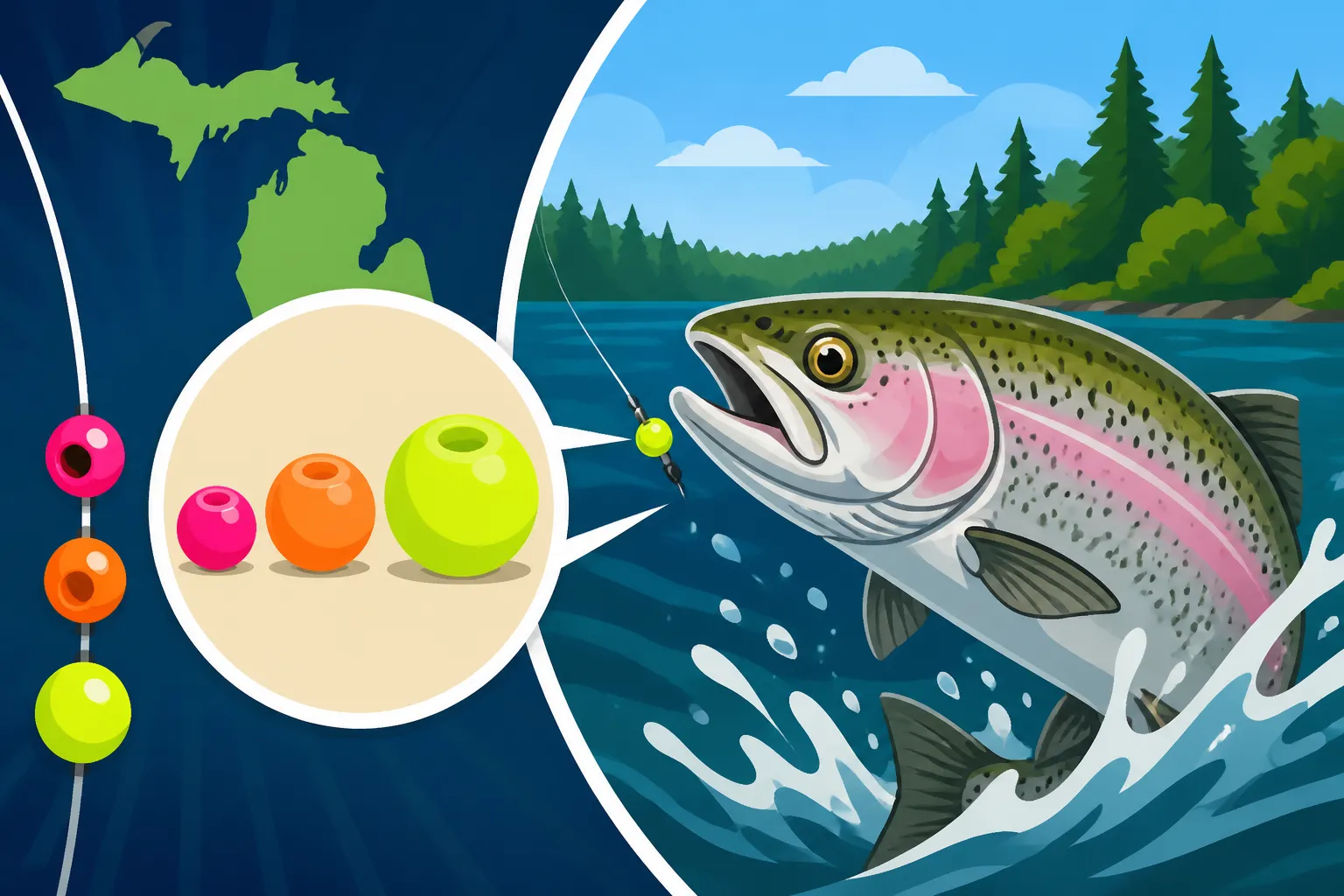
- 6mm: This is your "stealth" bead. It’s perfect for low, clear water conditions when steelhead are particularly spooky and highly pressured. Think about those crystal-clear, late-winter days on the Pere Marquette or Au Sable rivers after a long stretch of no rain. Fish have seen everything, and a subtle, small profile is often the only thing that will tempt them. It also excels in low light or very slow, shallow runs where an exaggerated presentation would be unnatural.
- 7mm: This size is arguably the most versatile and a fantastic starting point for many Michigan steelhead anglers. It's still subtle enough for clear water but offers a slightly larger profile than the 6mm, making it visible in moderately stained conditions or faster runs. If you're unsure where to start, a 7mm in a natural egg color is often a solid choice. It represents a common egg size from many trout and smaller salmon species, making it relevant through much of the season.
- 8mm: Stepping up slightly, the 8mm bead provides a good balance of visibility and natural appearance. It's an excellent all-rounder for typical Michigan river conditions – moderate flows, average clarity, and actively feeding fish. This size can also be effective when fish are somewhat aggressive but not quite ready for a truly large offering. It's a go-to for many anglers during the peak of the run when fresh fish are entering the system.
Medium to Larger Bead Sizes (9mm-10mm)
As conditions change, or if you're targeting more aggressive fish, these larger beads come into their own.
- 9mm: This bead size is fantastic when you need a bit more presence in the water. It shines in slightly stained water or during periods of higher flow, where a smaller bead might get lost. It effectively mimics the larger eggs of Chinook or Coho salmon during their peak spawning times. If you're fishing a wider, faster river like the Manistee or Muskegon, especially early in the fall run or after a bump in water levels, a 9mm bead can often make the difference, providing the visibility and profile needed to grab a steelhead's attention. Muskegon River Michigan Steelhead Run Timing provides great context for when these larger eggs might be prevalent.
- 10mm: When you need to go bold, the 10mm bead is your answer. This size is ideal for situations where maximum visibility and profile are paramount. Think dark, overcast days, heavily stained or turbid water, or when you're specifically targeting large, aggressive steelhead that are keying in on big egg clusters. During the height of the fall salmon spawn, when rivers are teeming with egg-dropping fish, a 10mm bead can be incredibly effective. It's also a strong choice for targeting pre-spawn or actively spawning steelhead that are less finicky and more focused on readily available protein.
Specialty and Oversized Beads (12mm+)
While not as common for everyday steelhead fishing, these larger beads have their niche applications.
- 12mm+: These are typically reserved for very specific scenarios. You might use an oversized bead in extremely high, dirty water where you need every bit of visual attraction you can get to cut through the murk. They can also be effective when targeting truly massive, actively feeding steelhead that are gorging on large egg sacs. Sometimes, an exaggerated presentation can trigger a strike from an otherwise uninterested fish, especially if you're trying to "wake up" dormant fish or provoke a territorial strike. However, it's crucial to remember that these are not your everyday beads; they often work best as a last resort or in highly specialized situations where conventional sizes aren't getting results. For general fishing, stick to the 6mm-10mm range.
| Bead Size | Typical Conditions | Fish Behavior / Strategy | Water Clarity | River Flow |
|---|---|---|---|---|
| 6mm | Low, clear water; post-spawn; high pressure | Spooky, finicky, subtle | Crystal clear | Low to Moderate |
| 7mm | All-around, versatile; moderate conditions | Standard, natural | Clear to Slightly Stained | Moderate |
| 8mm | Average conditions; moderate stained water | Actively feeding, good visibility | Clear to Stained | Moderate to Fast |
| 9mm | Higher flows; stained water; early/peak salmon run | Aggressive, seeking larger profile | Stained | Fast |
| 10mm | High/turbid water; dark days; peak salmon spawn | Very aggressive, maximum visibility | Heavily Stained/Turbid | Fast to Very Fast |
| 12mm+ | Extremely dirty water; targeting trophy fish | Provocative, last resort, specialized | Extremely Turbid | Very Fast / High |
Factors Influencing Your Bead Size Choice
Choosing the "best" bead size isn't a one-and-done decision. Michigan's rivers are dynamic, and conditions can change rapidly. A successful angler understands how various factors dictate the ideal bead size on any given day.
Water Clarity and Conditions
This is perhaps the most significant factor in your bead choice. Clear water allows fish to see everything, making them incredibly wary. In these conditions, smaller, more natural-looking beads (6mm-8mm) are typically more effective. A tiny, translucent egg drifting by often goes unnoticed, while a large, brightly colored bead screams "fake" to a spooky steelhead. Think about trying to fool a wise old brown trout in a spring creek; you wouldn't throw a huge streamer at it in crystal clear water. The same principle applies here.
Conversely, when rivers are stained from rain or snowmelt, or when glacial till gives them a milky appearance, larger beads (9mm-10mm) become essential. A small bead simply disappears in murky water, becoming invisible to the fish. A larger profile creates a more pronounced silhouette, allowing steelhead to detect it even when visibility is limited. It's like trying to find a needle in a haystack versus finding a bowling ball – the size makes all the difference in detection. This is a common scenario during the Fall Steelhead Run in Michigan Rivers after significant rainfall.
River Flow and Depth
The speed and depth of the current directly impact how your bead presents and how easily fish can spot it. In fast, deep runs, you'll generally need a larger or heavier bead to help it sink quickly and stay in the strike zone. A small, light bead in a swift current will often "wash out," riding high in the water column and passing over the fish's head before it has a chance to react.
Conversely, in slower, shallower pools or riffles, a smaller bead is usually more appropriate. A large bead in slow, shallow water can look unnatural, plummeting too quickly or creating an exaggerated movement that spooks fish. It's about achieving that delicate, natural tumble. If you're fishing a quiet bend where the water slows, a 7mm bead might outfish a 9mm simply because it moves more authentically. Understanding Michigan Fishing Regulations Every Angler Should Know can also help inform your approach, as some areas might have specific rules impacting your rigging.
Fish Activity and Pressure
Steelhead, like all fish, have moods. Their level of activity and the amount of fishing pressure they've experienced significantly influence their receptiveness to your offering. Highly pressured fish, common in easily accessible stretches of popular rivers, tend to be more wary and will often prefer smaller, more subtle presentations (6mm-7mm). They've seen countless lures and baits, and anything that looks remotely suspicious will be ignored.
On the other hand, fresh, aggressive fish that have just entered the river, or those actively spawning, might be less discerning and more willing to strike at a larger, more visible bead (9mm-10mm). They're focused on feeding or protecting redds, and a bold offering might trigger a strike. It's also worth noting that fish that haven't been targeted recently, such as during the Winter Steelhead Run in Michigan Rivers when fewer anglers are out, might also be more receptive to a slightly larger bead.
Time of Year and Available Forage
The Michigan steelhead season spans multiple months, and what they're feeding on changes throughout the year.
- Fall Run: Early in the fall, when Chinook and Coho salmon are just starting to drop eggs, their eggs are large and vibrant. This is a prime time for 9mm-10mm beads in brighter, natural egg colors.
- Late Fall/Early Winter: As salmon finish spawning, the remaining eggs are often smaller, or the steelhead might be keying in on decaying eggs or the smaller eggs of brown trout or suckers. This transition often calls for scaling down to 7mm-8mm beads.
- Late Winter/Spring: During the peak of the steelhead spawn, they will sometimes eat their own eggs or those of suckers. These eggs are generally smaller than salmon eggs, making 6mm-8mm beads particularly effective.
- Post-Spawn: After spawning, steelhead are often recuperating and can be very lethargic and finicky. Smaller, more subtle beads (6mm-7mm) are often the best bet to entice a strike from these recovering fish. For a deeper dive into seasonal changes, check out Michigan Fishing Seasons Explained.
Practical Tips for Selecting and Rigging Steelhead Beads
You've learned why bead size matters and the factors that influence your choice. Now, let's get into the nitty-gritty of putting it all into practice on Michigan's rivers.
Carrying a Variety
If there's one piece of advice that will dramatically increase your success, it's this: never head to the river with just one size or color of bead. Michigan's weather and water conditions are famously unpredictable, and what worked yesterday might be completely ignored today. A well-stocked bead box is your best friend.
Aim to carry a range of sizes from 6mm to 10mm, and certainly some natural colors like roe, natural clear, and mottled variations, but also some brighter options like orange or chartreuse for stained water. Imagine you arrive at the river, and what you expected to be clear water is suddenly muddied from an overnight rain. If all you have are 6mm clear beads, you're out of luck. Having a selection allows you to adapt to whatever the river throws at you. You can find an impressive array of bead sizes and colors at places like Bass Pro Shops or even a quick search on Amazon, allowing you to build your perfect collection. Bead Fishing for Trout and Salmon covers more about selection.
Rigging Your Bead for Optimal Presentation
The way you rig your bead is almost as important as the bead itself. The goal is to make it look like a freely drifting egg.
- Pegging is Key: You'll want to "peg" your bead about 1 to 2 inches above a small, sharp hook (usually a size 8 or 10 octopus-style hook). Pegging involves inserting a small piece of toothpick, a specialized rubber peg, or even a section of monofilament into the bead hole to secure it in place on your leader. This distance is crucial: it allows the bead to move naturally and independently of the hook, giving it a more lifelike appearance. It also keeps the hook point exposed and clear for a solid hookset.
- Leader Material and Size: Your leader should be nearly invisible in the water. Fluorocarbon is the preferred material for its low visibility and abrasion resistance. The strength of your leader will depend on water clarity, fish size, and potential snags, but typically 6-10 lb test is common for Michigan steelhead. A general rule for What Line Weight for Michigan Steelhead is to go as light as you dare without risking a break-off from a trophy fish.
- Weighting Your Rig: To achieve that perfect drift, you'll need to add split shot or a slinky weight above your pegged bead rig. The amount of weight depends entirely on the current and depth. You want just enough weight to bounce subtly along the bottom without snagging excessively or dragging. This ensures your bead is presented in the steelhead's strike zone. For a complete guide on this technique, look up How to Rig a Bead for Steelhead.
Observing the Environment
The best anglers are also the best observers. Before you even make your first cast, take a moment to read the water and the conditions around you.
- Water Clarity: Is the water gin clear, slightly stained, or chocolate milk? This will immediately narrow down your bead size and color choices.
- Other Anglers: Are other anglers having success? If so, subtly observe their presentations if possible. What size and color are they using? While you don't want to copy them exactly, it provides valuable clues.
- Natural Signs: Are there salmon or trout actively spawning? Look for redds (spawning beds) or fish rolling. If you see eggs in the water, take note of their size and color. This is the ultimate "match the hatch" scenario.
- Fish Behavior: Are fish aggressively chasing other baits, or are they holding tight to cover, appearing lethargic? Active fish might respond to a larger bead, while sluggish fish will demand subtlety.
By paying attention to these cues and being willing to experiment, you'll dramatically improve your chances of selecting the best bead size and, ultimately, catching more Michigan steelhead. Having the right gear, from Best Rods for Steelhead Fishing to Best Reels for Steelhead Fishing, also makes a huge difference in effectively presenting your chosen bead.
Disclaimer
This article is for general informational purposes only and does not constitute professional advice. Laws, prices and regulations vary by location and change over time. Consult a qualified professional for guidance on your specific situation.