Gas vs Electric Ice Auger for Michigan
If you're an ice angler in Michigan, you know the drill: the hard water calls, the shanties go out, and your mind turns to the essential tools that make the experience enjoyable, or at least tolerable, when the mercury plummets. One of the biggest decisions you'll face is choosing the right ice auger. The debate between gas and electric augers is real, and it often boils down to balancing raw power with modern convenience. This guide is here to help you navigate that frosty choice, ensuring you pick the perfect companion for drilling holes through Michigan's diverse ice.
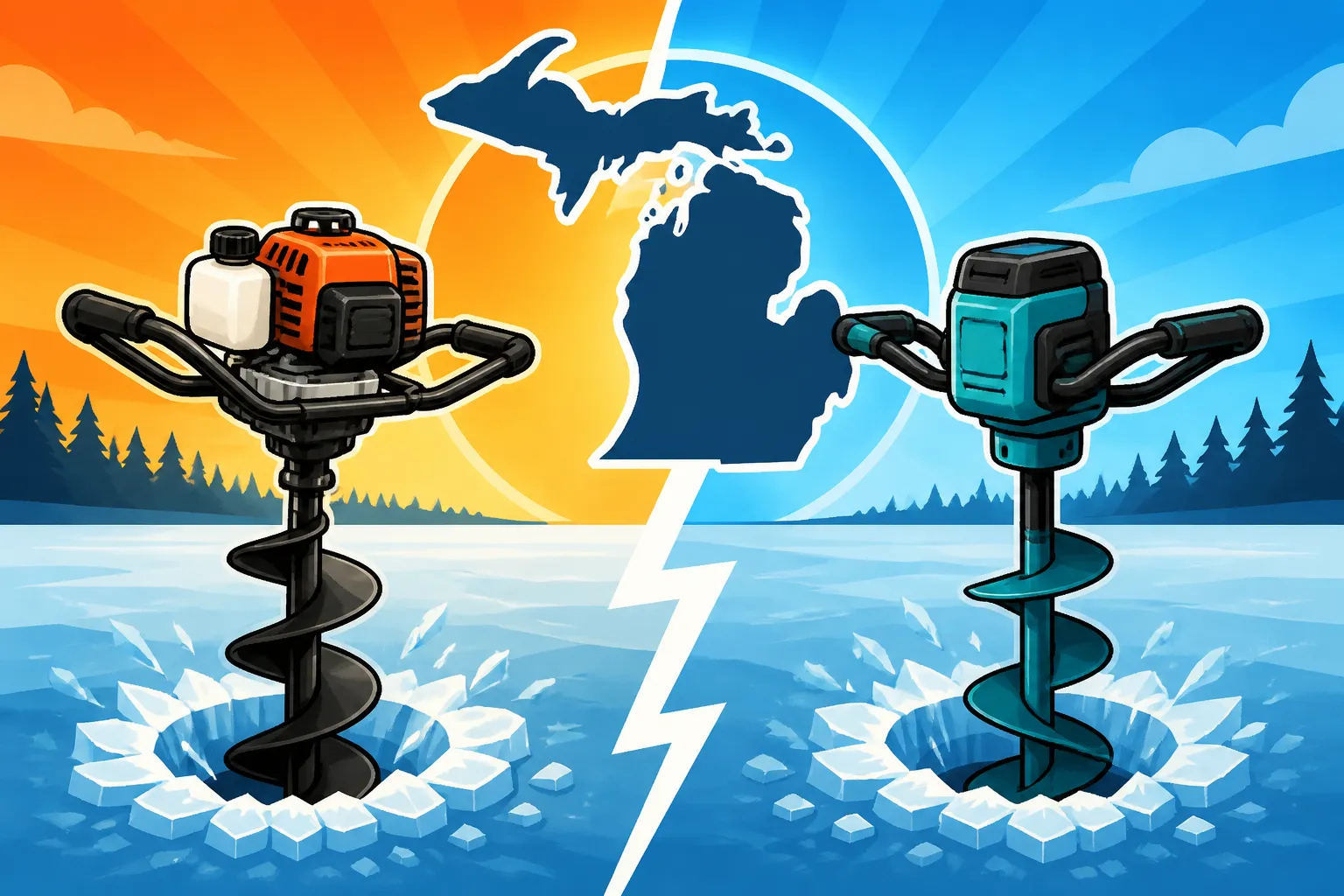
The Classic Workhorse: Gas Ice Augers
For many seasoned Michigan ice anglers, the gas-powered auger is the traditional, reliable choice. It's the sound of winter mornings on the lake, the smell of two-stroke fuel mingling with crisp, cold air. There's a certain nostalgia, and undeniable power, that comes with these machines.
Power and Endurance for Tough Ice
When Michigan's lakes and rivers truly lock up, you can be facing some serious ice. We're not just talking a few inches; we're talking about conditions where the ice might be a foot thick, or even two or three feet on some of the larger, deeper lakes, especially after a prolonged cold snap. This is where gas augers traditionally shine. Their powerful two-stroke or four-stroke engines are designed to chew through substantial ice without missing a beat.
Imagine you're out on Houghton Lake in late February, or perhaps tackling the massive ice sheets on Lake Superior in the Upper Peninsula. You've found a promising spot, but that ice has been building for months. A gas auger, with its robust motor, can blast through layer after layer, including those stubborn slush-refreeze layers that can challenge weaker machines. They offer a consistent, unwavering torque that's crucial for drilling numerous holes quickly, especially when you're trying to locate a school of actively feeding walleye or perch. You just keep feeding it fuel, and it keeps on cutting, making it a favorite for those who venture out frequently or target early and late-season ice, which tends to be thicker and more unpredictable.
Fuel Considerations and Maintenance Realities
While the power of a gas auger is a huge plus, it comes with its own set of practical considerations. The most prominent is the fuel itself. Many gas augers run on a two-stroke mix, which means you're not just pouring in straight gasoline. You need to pre-mix gasoline with a specific ratio of two-stroke oil, which can be a bit messy and requires carrying a separate fuel can. Get the ratio wrong, and you risk engine damage or poor performance. Then there's the odor – that distinct smell of exhaust fumes, which can be a nuisance, especially if you're drilling close to your ice shanty or trying to keep a low profile.
Beyond fuel, maintenance is a factor. Gas engines, by their nature, require more upkeep. Think about cold starts on a frigid morning. You're bundled up, your fingers are already numb, and the auger decides to be stubborn. Pulling a recoil rope repeatedly, checking the choke, adjusting the throttle – it's a common frustration that can quickly sour a morning. Spark plugs need to be cleaned or replaced, carburetors can gum up with old fuel, and air filters need attention. These machines are true workhorses, but like any workhorse, they need regular care and attention to perform reliably season after season. Many anglers, myself included, have spent frustrating minutes trying to coax a cold gas auger to life when all we wanted was to get a line in the water for some Ice Fishing Techniques for Michigan Walleye or Ice Fishing Techniques for Perch.
The Modern Contender: Electric Ice Augers
In recent years, electric ice augers have really stepped up their game, offering a compelling alternative to their gas-guzzling counterparts. What started as niche tools for light-duty fishing has evolved into powerful machines capable of handling serious ice, much to the delight of anglers looking for a quieter, cleaner experience.
Convenience, Quiet Operation, and Portability
The convenience factor of an electric auger is undeniable. There's no need to mix fuel, no fiddling with chokes or pull cords. Just press a button, and you're drilling. This instant-on capability is a game-changer when you're moving between dozens of holes, trying to stay on top of a hot bite. You can drop a line, drill a new hole 20 feet away, and be fishing again in seconds, without the roar of an engine interrupting your concentration or spooking nearby fish.
The quiet operation is another massive advantage. Imagine sitting in your ice shanty, enjoying the peace and quiet of a frozen lake, or having a conversation with your fishing buddies without shouting over an engine. This reduced noise pollution is not just about comfort; it can also be a strategic advantage, especially in shallower waters or for targeting wary fish. And let's not forget the absence of fumes. You can drill right inside a portable or permanent shelter without worrying about exhaust, which is a huge health and comfort benefit on those brutally cold days. Many electric models are also significantly lighter than their gas equivalents, making them easier to carry across snowy expanses or load into a sled, which is a real blessing when you're covering ground on one of the Best Ice Fishing Lakes in Michigan. Brands available on sites like Amazon often boast about their lightweight designs and quick setup.
Battery Life and Cold Weather Performance
Of course, the primary concern with any electric tool is battery life, and ice fishing adds the extra challenge of extreme cold. Modern electric augers typically use powerful lithium-ion batteries, which have come a long way in terms of capacity and cold-weather resilience. Many models can drill dozens of holes on a single charge, depending on ice thickness and diameter. However, it's crucial to remember that cold temperatures do impact battery performance. A battery that might drill 50 holes in mild conditions might only manage 30 or 40 when the air temperature drops below zero.
This means you need to be mindful of your power source. For a full day of serious hole-hopping, especially on thicker ice, carrying a spare battery is often essential. Keeping those spare batteries warm, perhaps in an insulated pouch inside your jacket, can also help maximize their performance. While charging solutions are readily available, you might not have access to an outlet if you're deep in the wilderness or on a multi-day trip. This is a vital consideration for Michigan anglers, as winter can deliver truly brutal conditions, and a dead battery can quickly end your day. However, for those who fish closer to home or have charging options, the convenience often outweighs this planning requirement. For a broad look at what other gear you might need, check out our What Gear Do You Need to Ice Fish in Michigan guide.
Making the Choice for Your Michigan Fishing Style
Deciding between a gas and electric auger isn't about one being inherently "better" than the other. It's about matching the tool to your specific fishing habits, the conditions you typically encounter, and your personal preferences. Michigan's vast and varied waters, from small inland lakes to the Great Lakes, present a wide range of ice fishing scenarios.
Factors to Weigh: Ice Thickness, Fishing Frequency, and Budget
Let's break down the key considerations to help you make an informed decision:
-
Ice Thickness: This is perhaps the most critical factor. If you consistently fish waters with very thick, multi-season ice (think 24+ inches), particularly in the colder northern regions like the Upper Peninsula, a powerful gas auger might still be your best bet for consistent, uncompromised performance. They simply have the brute force to power through anything. However, if you primarily fish lakes with average ice thickness (6-18 inches), which covers a good portion of Michigan's prime ice fishing, many electric augers are more than capable. Always remember to check How Thick Does Ice Need to Be to Fish in Michigan for safety first!
-
Fishing Frequency & Style: Are you an occasional angler who drills a few holes and sets up for the day? An electric auger's convenience will be a huge benefit. Are you a hardcore hole-hopper who might drill 50+ holes in a single outing? A gas auger (with plenty of fuel) or an electric with multiple charged batteries will be necessary. If you primarily use tip-ups for species like pike, you might drill fewer holes than someone jigging for panfish, making battery life less of a concern. For those setting multiple Tip-Up Fishing for Michigan Pike, mobility and quick hole drilling are important.
-
Noise & Fumes Tolerance: If you value peace, quiet, and clean air above all else, especially when fishing in a confined space like an ice shanty, an electric auger is the clear winner. The difference in the fishing experience is truly remarkable. If you don't mind the noise and smell, or if you're primarily fishing in open air, then a gas model's other benefits might still appeal to you.
-
Budget: Generally, gas augers have a lower initial purchase price compared to high-end electric models. However, when you factor in the ongoing cost of fuel and two-stroke oil for a gas auger, and potentially extra batteries for an electric, the long-term costs can balance out. It's worth researching current options at retailers like Bass Pro Shops or even looking for deals on platforms like Amazon to see how the pricing stacks up. Don't forget to consider the cost of Best Ice Augers for Michigan Ice Fishing overall, as it's a significant investment.
| Feature | Gas Ice Auger | Electric Ice Auger |
|---|---|---|
| Power/Endurance | High, ideal for very thick or multi-layered ice | Good to Excellent, suitable for most conditions |
| Starting | Recoil pull start, can be difficult in extreme cold | Instant push-button start |
| Noise Level | Loud, distinct engine roar | Very quiet, almost silent |
| Fumes | Strong exhaust fumes, requires ventilation | No fumes, safe for enclosed shelters |
| Weight | Heavier, especially with fuel | Lighter, easier to transport |
| Fuel/Power | Gasoline/oil mix, ongoing cost | Rechargeable battery, requires charging |
| Maintenance | Higher (spark plugs, carb, air filter) | Lower (battery care) |
| Cold Impact | Can be hard to start; fuel line freeze risk | Battery performance reduced; spares recommended |
| Best For | Extreme ice, high volume drilling, remote areas | Convenience, mobility, quiet fishing, shelters |
Hybrid Options and Future Trends
The world of ice fishing gear is constantly evolving, and augers are no exception. For anglers who love their existing gas auger but want a taste of electric convenience, there are even electric conversion kits available for some gas powerheads. These kits allow you to replace the gas engine with an electric motor, giving your trusty auger a new lease on life without buying a whole new unit.
Looking ahead, battery technology continues to advance at an incredible pace. We're seeing batteries that are lighter, more powerful, and more resilient to cold than ever before. This trend suggests that electric augers will only continue to improve, pushing the boundaries of what's possible on the ice. As manufacturers continue to innovate, the lines between what gas and electric augers can handle will likely blur even further, offering anglers even more tailored options for their unique Michigan fishing adventures. Whether you're planning your trip around the Free Fishing Weekend in February or hitting the ice on a regular basis, there will be an auger designed for your needs.
Ultimately, the "best" ice auger is the one that makes your time on Michigan's frozen lakes more enjoyable and productive. Consider your specific needs, the conditions you face, and how much you value convenience versus raw power. Both gas and electric augers have their place in the tackle boxes of Michigan anglers, and knowing their strengths and weaknesses will help you make the right choice for years of successful hardwater fishing.
Disclaimer
This article is for general informational purposes only and does not constitute professional advice. Laws, prices and regulations vary by location and change over time. Consult a qualified professional for guidance on your specific situation.