Best Pontoon Boat for Michigan Lakes
Choosing the perfect pontoon boat for enjoying Michigan's vast and varied waterways can feel like a daunting task. You're not just buying a boat; you're investing in countless memories, whether it's leisurely cruises with family or serious angling adventures. This comprehensive guide is here to help you navigate the sea of options, ensuring you pick a pontoon that perfectly matches your lifestyle and the unique demands of Michigan's beautiful lakes.
Understanding Michigan's Diverse Waters and Their Impact on Pontoon Choice
Michigan is famously surrounded by the Great Lakes, but it also boasts an incredible array of inland lakes, from shallow, quiet coves to expansive, deep bodies of water. The type of water you plan to spend most of your time on significantly influences the features you'll want in your pontoon boat. Ignoring these differences can lead to disappointment, like having a boat that's too small for choppy Great Lakes conditions or one that's overkill for a serene, no-wake inland pond. It's all about matching the vessel to the voyage.
Inland Lakes vs. Great Lakes Considerations
When you picture Michigan fishing, you might first think of the vastness of Lake Michigan or Lake Huron, with their salmon and steelhead runs. These waters can turn from glass-smooth to aggressively choppy in a matter of minutes, demanding a boat with robust construction and superior stability. For Great Lakes fishing, you'll likely want a pontoon with a heavier build, potentially a tritoon (three pontoons instead of two) configuration for enhanced stability and wave-cutting ability, and higher freeboard to handle bigger swells. You'll also need a more powerful engine to cover larger distances and manage stronger currents. Think about cruising around Grand Traverse Bay or fishing near the Straits of Mackinac Fishing Spots – these are not places for a flimsy vessel.
On the other hand, Michigan's thousands of inland lakes, like Houghton Lake, Higgins Lake, or even smaller, unnamed gems, often present much calmer conditions. For these waters, a standard bi-toon pontoon might be perfectly adequate. You might prioritize features like a shallower draft for exploring weed beds or tight coves, and perhaps a smaller, more fuel-efficient engine. The focus shifts from battling waves to enjoying serene mornings, fishing for panfish, or tubing with the kids. A boat perfectly suited for Michigan Inland Lakes Worth Fishing might be completely different from one tackling Lake Superior.
Water Depth and Access Points
Michigan's lakes, especially many of its fantastic inland fishing spots, can have varying depths, with many shallow areas near shorelines and boat launches. If you plan to explore these shallower regions, or if your favorite launch ramp tends to be a bit on the shallow side, the draft of your pontoon boat becomes a critical factor. Pontoons generally have a shallower draft than many V-hull boats, which is a huge advantage, but some designs are better than others. A pontoon with a well-designed hull that allows it to float higher in the water will give you more flexibility.
Consider too the practicalities of launching and retrieving your boat. Do you always use paved, deep boat ramps, or are you sometimes dealing with less-developed access points? A heavier, larger pontoon, especially a tritoon, will require a more substantial trailer and a capable tow vehicle. It also means more effort at the ramp. If portability and ease of access are high priorities for your local fishing spots, you might lean towards a slightly smaller or lighter pontoon that can be launched and recovered with less hassle. This is a practical consideration many anglers overlook until they’re struggling at a busy ramp on a summer Saturday. Understanding Best Trailer Setup for Michigan Boat Launches is just as important as the boat itself.
Key Features to Look For in a Michigan Pontoon Boat
Once you've got a handle on where you'll be boating, it's time to dig into the nitty-gritty of pontoon features. There's a pontoon out there for every style, from luxurious lounges to stripped-down fishing machines, and finding the right balance is key to maximizing your enjoyment on Michigan's waters.
Deck Layouts and Passenger Capacity
Pontoon boats excel at offering spacious, versatile deck layouts. The interior design heavily dictates how you'll use the boat. Are you primarily a family that loves to cruise and swim, hosting friends for sunset picnics on the water? Then you'll want plush L-shaped seating, perhaps a pop-up changing room, and a stern swim deck with a sturdy ladder. Brands often design these with comfort and entertainment in mind.
If, however, your main passion is fishing for Michigan Walleye Size and Possession Limits or casting for bass, you'll want a layout that caters to anglers. This often means dedicated fishing seats at the bow or stern, an open deck space for casting, and potentially a livewell integrated into the seating. Some pontoons offer "fish and cruise" layouts that attempt to balance both, providing comfortable seating but also having swivel fishing chairs and rod holders. Think about your typical outing: how many people will be with you, and what activities will dominate your time on the water? This will guide your deck layout choice.
Engine Power and Performance
The engine is the heart of your pontoon, and its power will directly impact your boat's performance. For smaller, calmer inland lakes where you primarily putter around, a modest outboard motor (perhaps 25-50 horsepower) might be perfectly sufficient. It's fuel-efficient and easy to maintain.
However, if you plan on navigating larger inland lakes, venturing onto the Great Lakes, or engaging in watersports like tubing or skiing, you'll need significantly more horsepower. Engines ranging from 90 HP to well over 200 HP are common on larger pontoons, especially tritoons. More power means faster cruising, quicker hole shots for watersports, and the ability to handle rougher water more safely. Keep in mind that higher horsepower engines also mean higher fuel consumption and typically a higher upfront cost. It's a trade-off between performance and economy. Consider what kind of speed and power you truly need for the activities you envision.
Hull Design and Stability
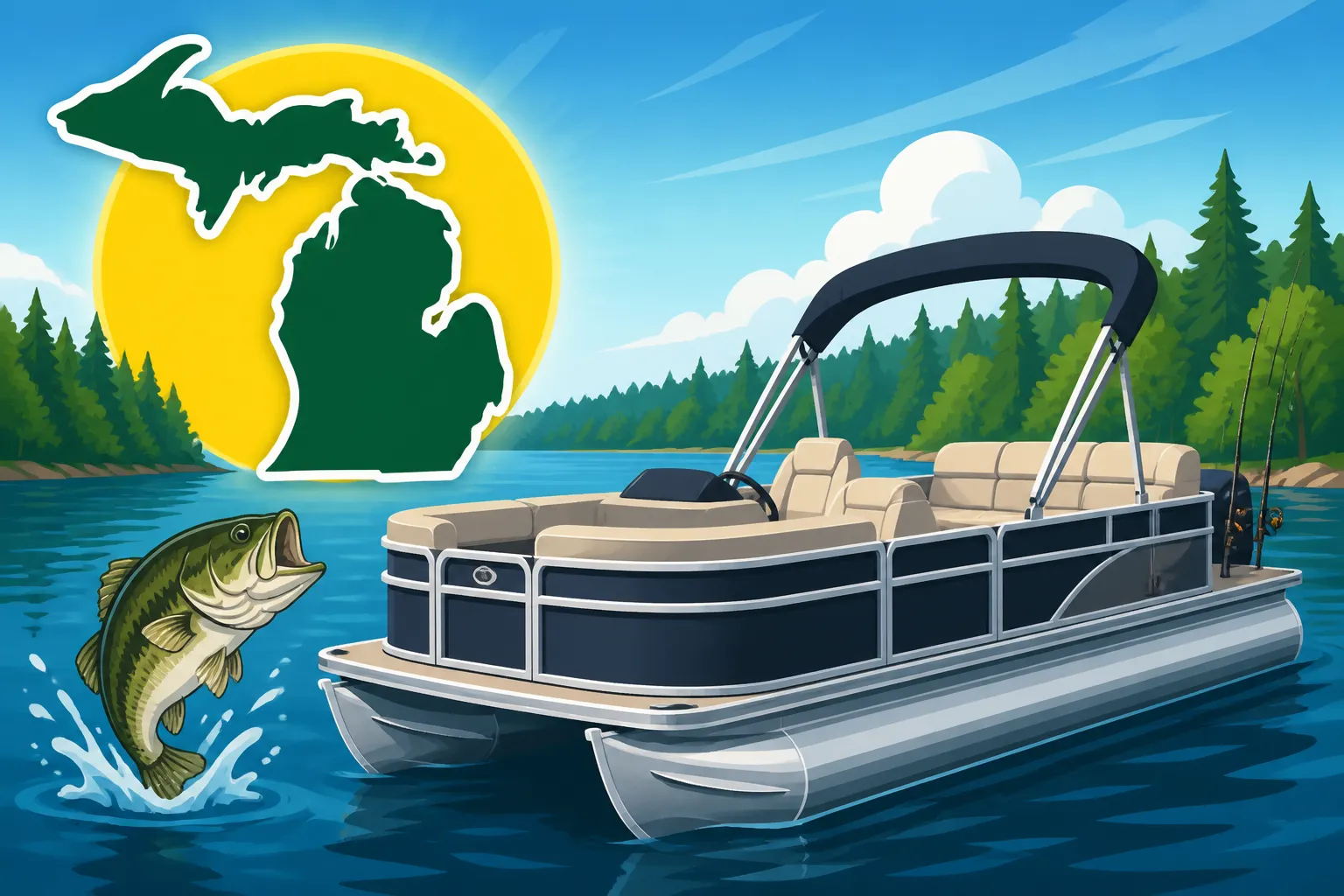
The basic pontoon boat features two aluminum tubes (pontoons) for flotation. This design offers excellent stability and deck space. However, many modern pontoons, especially those designed for performance or rough water, opt for a tritoon configuration, adding a third, center pontoon. This third log provides several key benefits:
- Enhanced Stability: Tritoons are generally more stable, especially in chop or when making sharper turns, which is crucial for Michigan's Great Lakes Fishing Guide.
- Improved Handling: With the third log, pontoons can often be designed with lifting strakes and hydrofoils, allowing them to plane more effectively and handle more like a traditional V-hull boat.
- Greater Weight Capacity: The added buoyancy of a third pontoon allows for larger engines, more passengers, and heavier loads.
- Smoother Ride: The tritoon often cuts through waves better, providing a more comfortable ride in less-than-ideal conditions.
While a bi-toon is fine for most small, calm inland lakes, if you're venturing onto larger bodies of water or the Great Lakes, a tritoon is often the superior choice for safety, comfort, and performance. You'll definitely appreciate the extra stability when a sudden squall kicks up waves on a big lake.
| Feature | Bi-toon Pontoon (2 Logs) | Tritoons (3 Logs) |
|---|---|---|
| Typical Use | Calm inland lakes, leisurely cruising, light fishing | Larger inland lakes, Great Lakes, watersports, heavy fishing |
| Stability | Good in calm water, can feel less stable in chop | Excellent in chop, very stable overall |
| Speed/Power | Lower HP engines, slower cruising | Higher HP engines, faster cruising, better hole shot |
| Ride Quality | Can pound in waves | Smoother ride, cuts through waves |
| Weight Cap. | Moderate | Higher, accommodates more passengers/gear |
| Cost | Generally lower | Generally higher |
| Trailer Needs | Standard pontoon trailer, easier launch/retrieval | Heavier duty trailer, more demanding launch/retrieval |
Essential Accessories and Customizations for Michigan Anglers
A pontoon boat is a fantastic platform, but it's the accessories and thoughtful customizations that truly transform it into a Michigan angler's dream machine. You'll want to think about what gear will make your fishing trips more productive and enjoyable. Many of these items can be found at retailers like Bass Pro Shops or online at Amazon.
Fishing-Specific Add-Ons
For those serious about fishing on Michigan's waters, certain add-ons are non-negotiable:
- Rod Holders: You can never have too many! Flush-mount, rail-mount, or vertical rocket launcher styles are all popular. Look for sturdy, adjustable options that can secure your Best Rods and Reels for Michigan Fishing whether you're trolling for walleye on Saginaw Bay or casting for bass on Lake St. Clair.
- Livewells: Keeping your bait lively or your catch fresh is crucial. Many fishing-specific pontoons come with integrated aerated livewells. If yours doesn't, portable options are available and can be rigged to recirculate water. A good livewell means less stress about your bait dying or your prized catch spoiling before you get back to shore.
- Electronics: A quality fish finder is an absolute game-changer. Look for units with GPS mapping, sonar (both 2D and down/side imaging), and even mapping for Michigan's specific lakes. These tools help you locate structure, identify fish, and navigate safely, especially on larger, unfamiliar bodies of water. Best Fish Finder for Boat Fishing in Michigan can help you pinpoint those elusive schools of perch or walleye. Consider a unit that can be easily mounted and has a clear, sunlight-readable display.
- Trolling Motors: For precise boat positioning while casting or slow-trolling, an electric trolling motor (bow-mounted is ideal) is invaluable. Modern models often come with GPS anchoring features, allowing you to "spot-lock" your boat in place, freeing you up to focus on fishing. This is particularly useful when targeting structure or drift fishing in a river mouth.
- Storage: Secure storage for tackle boxes, nets, and other gear is vital. Look for under-seat compartments, dedicated tackle drawers, and perhaps a lockable rod storage locker. Keeping your Best Tackle for Michigan Walleye Fishing organized and safe from the elements or accidental knocks is important for a smooth fishing day.
Comfort and Convenience Features
While fishing is the priority, comfort on the water ensures a better overall experience, especially during long days or when family joins.
- Bimini Top or Hardtop: Michigan summers can be hot, and protection from the sun is essential. A sturdy bimini top provides much-needed shade. Some higher-end pontoons even offer power biminis or rigid hardtops that can accommodate additional electronics or rod holders.
- Comfortable Seating: Even on a fishing pontoon, comfortable seating for relaxing between bites is a must. Look for marine-grade upholstery that's durable, easy to clean, and resistant to UV fading. Padded flooring, like marine-grade vinyl or woven flooring, also adds to comfort and makes cleanup a breeze.
- Coolers and Refreshments: Integrated coolers or dedicated spaces for bringing along a portable cooler keep drinks and snacks chilled. Some pontoons even feature small galleys with sinks and fresh water, elevating the on-water experience.
- Lighting: Good lighting isn't just for night fishing. Courtesy lights on the deck prevent trips and falls, and navigation lights are a legal requirement for boating after sunset. If you plan to extend your trips into the twilight hours, consider underwater lights or floodlights for ambiance or visibility.
Making Your Pontoon Purchase Decision
Deciding on the "best" pontoon for Michigan lakes ultimately comes down to your personal needs, priorities, and budget. It's a significant investment, so taking your time and doing your homework will pay off in the long run. Don't rush into anything!
Budgeting for Your Michigan Pontoon Dream
The initial purchase price of the pontoon boat itself is just one part of the equation. When budgeting, you need to factor in several other costs:
- Trailer: Unless you plan to keep your boat docked year-round, you'll need a suitable trailer. Ensure it's rated for the weight and length of your chosen pontoon.
- Engine: The outboard motor is often priced separately from the hull, and larger, more powerful engines significantly increase the overall cost.
- Accessories: All those fantastic fishing-specific add-ons, electronics, covers, and safety gear add up. Build a list of your must-have and nice-to-have items and price them out.
- Registration and Licensing: Don't forget the necessary paperwork. You'll need to understand Michigan Boat Registration Requirements and potentially Michigan Boat Titling Rules.
- Insurance: Protecting your investment with marine insurance is highly recommended.
- Storage and Maintenance: Whether you're paying for winter storage, shrink-wrapping, or annual tune-ups, these ongoing costs are part of boat ownership.
- Fuel: Especially with larger engines, fuel can be a significant recurring expense.
Creating a detailed budget will give you a clear picture of the total cost of ownership, helping you make a realistic and sustainable decision.
Where to Shop for Pontoon Boats
When you're ready to start looking, you have several avenues to explore. Local dealerships are a great place to start, as they can often offer packaged deals, servicing, and valuable local advice. They'll also handle the Michigan Fishing License Guide for Residents and Nonresidents and How to Buy a Michigan Fishing License process in a way that’s specific to your state’s requirements. Reputable brands often have a strong dealer network across Michigan. Attending boat shows can also be a fantastic way to see many different models, compare features side-by-side, and talk directly with manufacturers' representatives.
For accessories and smaller gear, big box retailers like Bass Pro Shops are excellent resources, offering a wide selection of fishing rods, reels, tackle, and boat accessories. You can often find sales and knowledgeable staff who can guide you on specific products. Online marketplaces like Amazon also offer an incredible array of boat accessories, from electronics to safety gear, often with competitive pricing and the convenience of home delivery. Just be sure to read reviews and confirm compatibility before purchasing.
Ultimately, the best pontoon boat for your Michigan adventures is one that fits your intended usage, handles the waters you frequent, and aligns with your budget. Do your research, ask questions, and don't be afraid to take a few test rides. Happy boating and even happier fishing!
Disclaimer
This article is for general informational purposes only and does not constitute professional advice. Laws, prices and regulations vary by location and change over time. Consult a qualified professional for guidance on your specific situation.