Best Ice Augers for Michigan Ice Fishing
Ah, ice fishing in Michigan! There's nothing quite like bundling up, heading out onto a frozen lake, and waiting for that tell-tale jig of your rod tip. But let's be real, before you even get to the fishing part, you've got to cut holes in the ice. And if you've ever spent a frustrating half-hour trying to hand-crank through a foot and a half of rock-hard ice with a dull auger, you know the pain. A good ice auger isn't just a luxury; it's absolutely essential for a successful, and more importantly, enjoyable day on the ice. This guide will walk you through everything you need to know to pick the perfect ice auger to conquer Michigan's diverse frozen waters, from the smallest panfish lakes to the vast expanses of Saginaw Bay.
Understanding Michigan's Ice Fishing Landscape and Your Auger Needs
Michigan's ice fishing scene is as varied as its open water. What works perfectly for a quick trip on a shallow, protected inland lake might leave you exhausted and frustrated on a windswept Great Lakes bay with two feet of ice. Before you even think about specific auger models, it's crucial to consider the unique conditions you'll face and how your personal fishing style dictates what you need.
The Diverse Ice Conditions Across Michigan
If you've fished around Michigan for any length of time, you know that "ice" isn't just "ice." We experience a huge range of conditions throughout the winter. Early season on smaller, shallower lakes, especially in the Lower Peninsula, might mean just a few inches of clear, solid ice. Here, you can zip through holes with minimal effort. However, as winter progresses, especially up north or on larger bodies of water, that ice can stack up. You might be looking at 18 inches, two feet, or even more, often topped with layers of slush, refrozen snow, or honeycombed ice.
Consider a place like Houghton Lake, Michigan's largest inland lake. It can get notoriously thick ice, sometimes exceeding two feet, especially towards late January and February. The same goes for the vast, exposed waters of Saginaw Bay or parts of the Upper Peninsula. Cutting multiple holes through that kind of ice with an inadequate auger isn't just tiring; it eats into your precious fishing time. You want to be able to punch holes quickly and efficiently to explore different depths and spots, especially when chasing actively feeding fish like walleye or perch. The sheer physicality of pushing through thick, dense ice can quickly dampen your enthusiasm for moving to a new spot if your auger isn't up to the task.
Matching Auger Type to Your Fishing Style
Your personal approach to ice fishing plays a huge role in the best auger choice. Are you a minimalist, walk-and-gun angler who covers a lot of ground, drilling a dozen holes to find fish and then moving again? Or are you a stationary angler, setting up a shanty, deploying a handful of tip-ups, and staying put for hours? These are very different demands.
If you're often out solo, hiking across the ice with a sled full of gear, weight and speed are paramount. You want something that’s easy to carry and can punch a lot of holes without draining your energy. Maybe you're targeting panfish like bluegill or crappie in relatively clear, thinner ice, where a smaller, lighter auger is perfectly sufficient. But if you're regularly fishing for larger species like pike or muskellunge, or setting up a full spread of lines for walleye, you'll likely need wider holes, which demand more power from your auger. Larger holes are also better for re-rigging lines in cold weather or landing bigger fish without struggling. Families often bring more gear, and having a powerful, easy-to-use auger makes the whole experience smoother, especially if kids are keen to help out. Nobody wants a frustrated kid (or adult!) on the ice because holes are taking too long to cut. For serious anglers who spend almost every weekend on the ice, especially those venturing onto the larger, deeper lakes where ice can be immense, an investment in a robust, high-performance auger is a no-brainer. Think about how many holes you realistically expect to drill in an average outing, and that will give you a good starting point for assessing your power needs.
Types of Ice Augers for Michigan Anglers
Just like there are different types of boats for different fishing scenarios in Michigan, there are several distinct categories of ice augers, each with its own strengths and weaknesses. Understanding these will help you narrow down the best fit for your specific ice fishing adventures.
Manual Augers: The Budget-Friendly and Reliable Choice
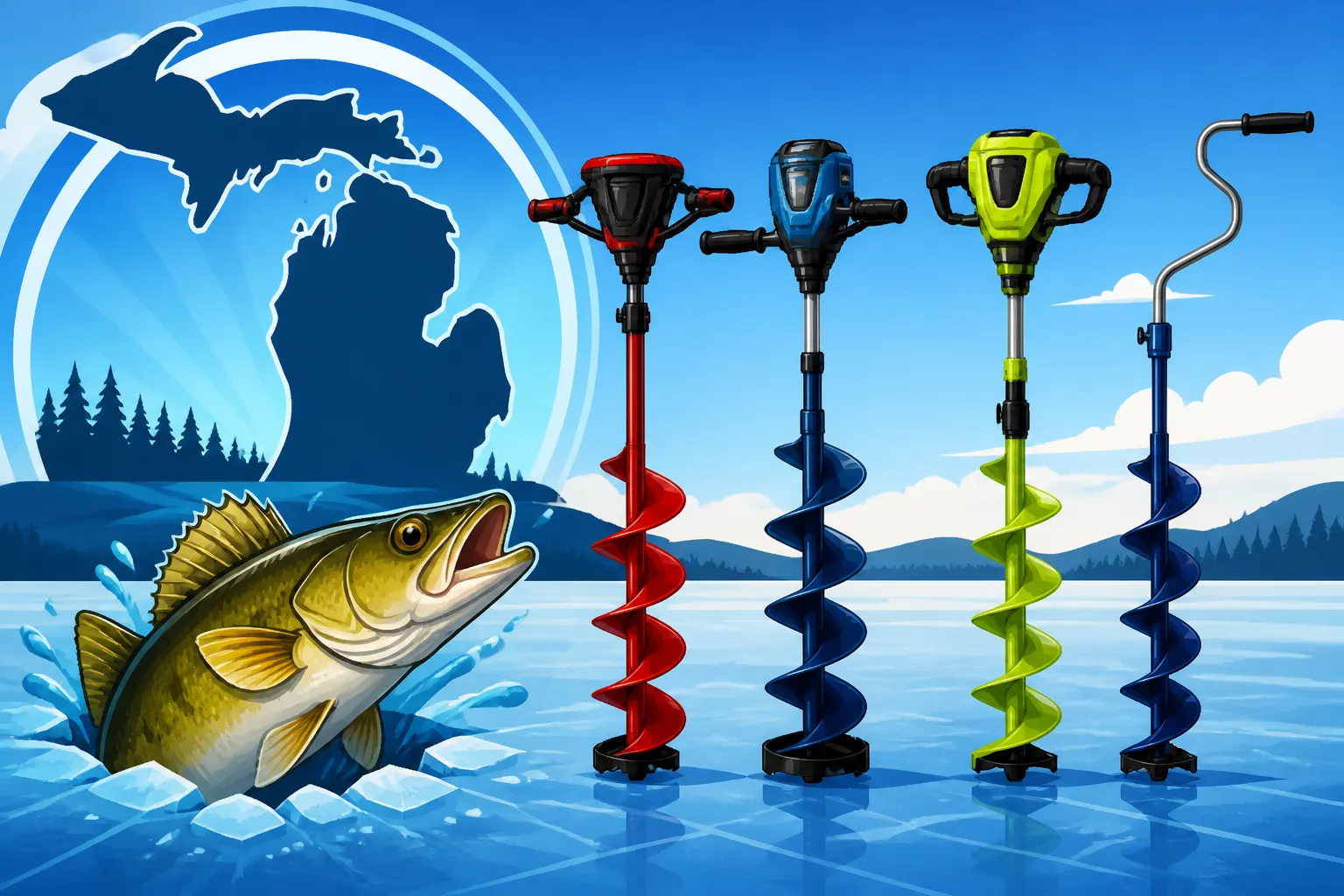
Manual augers are the classic, no-frills option that many of us started with. They're essentially a hand-cranked drill with sharp blades at the bottom. The biggest draw? Their affordability and simplicity. You can often find a decent manual auger for a fraction of the cost of their powered counterparts. They are also incredibly lightweight, making them perfect for anglers who like to walk long distances across the ice, especially if you're pulling a sled with all your gear. They are silent, which is a huge advantage in areas where fish are easily spooked by engine noise, and they require no fuel or batteries – just good old-fashioned elbow grease. This means no worrying about dead batteries in the cold or lugging extra fuel cans.
However, the "elbow grease" part is also their main drawback. Trying to cut multiple holes through thick, Michigan ice (say, over 12-15 inches) with a manual auger can be a serious workout. Your arms will ache, and your back might protest. It can be slow, especially compared to power augers, and if your blades aren't perfectly sharp, it becomes an exercise in pure frustration. Manual augers are best suited for early-season fishing on smaller, shallower lakes where the ice is typically less than a foot thick. They are also a great choice for quick, short trips, or for those who only need to drill a few holes. For panfish anglers who don't need large diameter holes, a 6-inch manual auger can be a perfectly effective tool. Brands like Eskimo offer reliable hand augers that are still a staple for many anglers who value portability and quiet operation. Just remember, a sharp blade is absolutely paramount for a manual auger to be effective – a dull one is just a fancy ice pick.
Electric Augers: Power, Convenience, and Growing Popularity
Electric augers have truly revolutionized the ice fishing world over the last decade, and for good reason. They offer a fantastic blend of power and convenience, making them increasingly popular among Michigan anglers. The main advantages are their speed and quiet operation. With an electric auger, you can zip through even thick ice in seconds, without the roaring engine noise of a gas auger or the exhausting effort of a manual one. This silence is a game-changer, allowing you to stealthily move from spot to spot without spooking fish, especially in shallow waters. Plus, there are no noxious fumes, which is a massive bonus if you're fishing inside a shanty or a portable pop-up shelter. They're also environmentally friendly, emitting no pollutants.
However, electric augers do come with their own set of considerations. The initial cost is typically higher than a manual auger. Battery life is the other big one; while modern lithium-ion batteries offer impressive hole counts, extreme cold can still reduce their efficiency. If you're planning a full day of fishing and drilling dozens of holes, especially in very thick ice, you might need a spare battery (which adds to the cost and weight) or a way to keep your primary battery warm. Charging can also take a few hours, so planning ahead is key. Leading brands like Ion and StrikeMaster Lithium have developed robust electric augers that can handle serious ice conditions, often comparable to smaller gas models. They're ideal for anglers who want speed and ease of use, regularly fish in moderate to thick ice, and appreciate the quiet, fume-free experience. For many, the convenience of just pressing a button and watching the ice disappear makes the trade-offs well worth it. Keeping the battery in a warm pocket or insulated bag until use can help maximize its performance in bitter Michigan cold.
Propane/Gas Augers: The Traditional Workhorse for Serious Ice
For many years, gas-powered augers were the undisputed kings of the ice, and they still hold a special place for anglers who demand raw power and reliability in the most extreme conditions. These augers are beasts, designed to cut through endless feet of thick, stubborn ice with brute force. Their main advantage is their sheer power output and consistent performance, even in sub-zero temperatures that might challenge electric batteries. If you're tackling multi-foot ice on the Great Lakes, planning an extended trip to the U.P., or drilling hundreds of holes as a guide, a gas auger is often the go-to choice. They can handle wide diameter holes (like 10-inch or even larger for muskie or big lake trout) with relative ease, and a tank of fuel can last for many, many holes.
But with great power comes some drawbacks. Gas augers are noticeably heavier than manual or electric models, making them a chore to carry long distances. They are loud, which can be disruptive to other anglers and potentially spook fish. They also produce exhaust fumes, making them unsuitable for use inside enclosed shelters unless properly ventilated. Maintenance is more involved than with other types; you have to deal with fuel mixes (for 2-stroke engines), spark plugs, carburetors, and winterizing procedures. Propane augers offer a cleaner, easier starting alternative to gasoline, with no messy fuel mixing or stale gas issues, but still have similar weight and noise characteristics. Brands like Eskimo, StrikeMaster, and Jiffy have been making reliable gas and propane augers for decades, and they remain the workhorses for serious ice anglers. If you're a die-hard ice fisherman who needs to punch dozens of large holes through two feet of Michigan ice, day in and day out, the power and reliability of a gas or propane auger might be exactly what you need.
| Auger Type | Pros | Cons | Ideal For |
|---|---|---|---|
| Manual | Lightweight, quiet, inexpensive, simple, no fuel/batteries. | Requires significant physical effort, slow on thick ice, tiring for many holes. | Thin ice (under 12"), few holes, stealthy approach, budget-conscious anglers, walk-and-gun panfish. |
| Electric | Fast, quiet, no fumes, push-button start, eco-friendly. | Higher initial cost, battery life concerns in extreme cold, batteries add weight, requires charging. | Moderate to thick ice (12-24"), moderate to many holes, inside shanties, mobile anglers, those avoiding gas/fumes. |
| Propane/Gas | Powerful, consistent performance in extreme cold, excellent for very thick ice or many holes, handles large diameters easily. | Heavy, noisy, produces fumes, requires fuel/maintenance, higher operating cost. | Very thick ice (24"+), large diameter holes, many holes, extreme cold, expedition-style fishing, guides. |
Key Features to Consider When Choosing an Ice Auger
Once you have a general idea of the type of auger that suits your style, it's time to dive into the specifics. There are several critical features that directly impact an auger's performance and suitability for Michigan's varied ice conditions.
Blade Design and Diameter: Cutting Through Michigan Ice
The blades are the business end of your auger, and their design and diameter are absolutely crucial. Most augers come with either chipper blades or shaver blades. Chipper blades, often found on older gas augers or some heavy-duty models, are designed to chop through ice by breaking it into small pieces. They are generally very durable and can handle dirty ice (ice with sand or gravel embedded) better than shavers, but they can also be slower and require more downward pressure. Shaver blades, common on most modern electric and many gas augers, are designed to shave off thin layers of ice, providing a much smoother, faster cut. They are incredibly efficient but are more susceptible to dulling if they hit sand, rocks, or old frozen debris. No matter the type, keeping your blades razor-sharp is the single most important maintenance tip you'll ever get. A dull blade, regardless of auger type, is going to make your life miserable. Always carry a blade cover to protect yourself and the blades when not in use.
The diameter of the auger bit is another vital consideration.
- 6-inch augers are excellent for panfish like bluegill and crappie. They cut quickly and easily, requiring less power and battery life. They're also great for quickly drilling "test" holes to find fish. The downside is that landing a larger fish, like a substantial walleye or a fat perch, can be a tight squeeze, and pulling your transducer or an underwater camera in and out can be a hassle, especially if you're wearing bulky gloves.
- 8-inch augers are often considered the sweet spot for many Michigan anglers. They offer a good balance, allowing you to easily land most walleye, pike, and larger perch without too much difficulty. They still cut relatively fast and are manageable for power augers.
- 10-inch augers are for serious trophy hunters or those who primarily target large fish like muskie, big northern pike, or lake trout. They create a generous opening, making it easier to land substantial fish and maneuver larger equipment. However, cutting a 10-inch hole requires significantly more power and effort than an 8-inch or 6-inch hole, meaning more battery drain for electric augers and more fuel consumption for gas models. If you're fishing a specific lake known for its giant muskies, like Lake St. Clair, a 10-inch auger might be a necessary piece of gear.
Think about the species you'll be targeting and the size of the holes you'll need to land them and comfortably operate your gear. A smaller hole often means more holes per charge or tank, but a larger hole offers more flexibility once you've found your spot.
Weight and Portability: Hauling Your Gear Across the Ice
Weight and portability are huge factors, especially if you're not using an ATV or snowmobile to get to your spots. Imagine trying to haul a heavy gas auger, a fishing shanty, rods, tackle, and a cooler across a half-mile of slushy ice – it's exhausting just thinking about it. Manual augers are the lightest, making them the top choice for truly mobile, walk-and-gun anglers. Electric augers fall in the middle, generally lighter than gas models, though the battery pack itself adds significant weight. Gas augers, with their engines and fuel tanks, are typically the heaviest.
Consider how you primarily get around on the ice.
- If you mostly walk or pull a sled, every pound matters. A lighter manual or electric auger will save your energy for the actual fishing. Many electric augers, especially those with smaller batteries, are designed to be easily carried by hand for short distances between holes.
- If you use a snowmobile or ATV, weight is less of a concern, and a heavier, more powerful gas auger might be perfectly acceptable, as the machine does all the heavy lifting.
- Portability also extends to size. Some augers can be disassembled into two pieces, making them easier to transport in a car trunk or across difficult terrain. Look for features like foldable handles or padded carrying cases if you're often on the move. For a detailed look at what else you might need, check out What Gear Do You Need to Ice Fish in Michigan.
Power Source and Battery Life (for Electric Augers)
For electric augers, the power source and battery life are paramount. Most modern electric augers use powerful lithium-ion batteries, but not all batteries are created equal. You'll see variations in voltage (e.g., 24V, 40V, 80V) and amp-hours (Ah). Generally, higher voltage and higher amp-hours mean more power and longer battery life. A 40V or 80V system with a 4-6Ah battery is usually sufficient for most anglers, providing dozens of holes through average Michigan ice.
However, cold weather is the enemy of batteries. As temperatures drop, battery performance can decrease significantly. To mitigate this, many anglers will keep their spare batteries (or even their primary battery) in an insulated bag or a warm pocket until they're ready to use them. Rapid charging capabilities are also a nice feature, allowing you to top up a battery quickly if you have a generator or an inverter in your vehicle. Some anglers even bring a portable power station to recharge batteries on the ice during longer trips. Always check the manufacturer's stated number of holes per charge for the specific ice thickness and diameter you plan to cut, and then factor in a healthy buffer for real-world cold conditions. Planning for a successful day means making sure your power source won't leave you stranded with half-drilled holes.
Maintenance and Care for Your Michigan Ice Auger
Just like any piece of essential fishing gear, your ice auger needs a little love and attention to perform its best and last for many seasons. Neglecting basic maintenance can lead to frustration on the ice and costly repairs down the road.
Keeping Your Blades Sharp and Protected
This cannot be stressed enough: sharp blades are absolutely critical. A dull blade will not only make cutting holes a tedious chore but can also put unnecessary strain on your auger's motor (for electric/gas) or your body (for manual). Think about it like trying to saw wood with a dull blade – it's inefficient and dangerous. After every fishing trip, especially if you've drilled many holes or suspect you might have nicked something, inspect your blades for nicks, burrs, or dull spots. If you fish a lot, consider having a spare set of blades on hand, which can be swapped out quickly on the ice. Some anglers prefer to sharpen their own blades with a specialized sharpening stone or file, but many send them out to professional sharpeners or simply replace them with new, factory-sharp blades, which often perform best.
Always, always use a blade cover when your auger is not actively cutting ice. This isn't just for safety (those blades are razor-sharp!), but also to protect the cutting edge from accidental bumps against rocks, concrete, or even the floor of your ice shanty. A small nick can drastically reduce cutting efficiency. Make sure the blades are completely dry before putting the cover on and storing the auger to prevent rust, which can quickly degrade blade performance. If you want to explore more ice fishing techniques that rely on efficient hole drilling, check out Best Ice Fishing Techniques for Michigan Lakes.
Winter Storage and Off-Season Prep
Proper storage is key to extending the life of your ice auger, whether it's the end of a long ice fishing season or just between trips.
- For Electric Augers: The batteries are the heart of the system. Follow the manufacturer's recommendations for long-term storage, but generally, it's best to store lithium-ion batteries at a partial charge (around 50-60%), not fully charged or fully depleted. Keep them in a cool, dry place – not in freezing temperatures – as extreme cold can permanently damage battery cells. If you're done for the season, remove the battery from the auger. Clean any ice or debris off the powerhead and shaft.
- For Gas/Propane Augers: This requires a bit more effort. If you're storing a gas auger for more than a few weeks, it's crucial to deal with the fuel. Either run the engine completely dry of fuel (until it stalls), or use a fuel stabilizer in your gasoline if you intend to keep fuel in the tank. Old, untreated gasoline can cause sticky carburetors and hard starting. Change the engine oil if it's a 4-stroke model. Remove the spark plug and put a small amount of oil into the cylinder, then pull the rope a few times to distribute it – this prevents rust on the cylinder walls. For propane augers, simply disconnect the propane cylinder. Clean the auger head and shaft thoroughly, ensuring no dirt, grit, or rust remains. Lubricate any moving parts as recommended by the manufacturer. Store all augers in a dry place to prevent corrosion. Taking these steps ensures your auger will be ready to perform reliably when the ice fishing season rolls around again. For more insights on what to expect seasonally, Michigan Ice Fishing Season Timing is a great resource.
Where to Find the Best Ice Augers for Your Michigan Adventures
Alright, you've done your homework, you know what type of auger you need, and you're ready to make a purchase. But where should you actually buy one? You've got a couple of main options, each with its own benefits.
Shopping In-Person: Getting Hands-On Advice
There's a lot to be said for walking into a physical store and getting your hands on an auger before you buy it. For many of us, this is the traditional way we've always purchased our fishing gear. Places like Bass Pro Shops and other local sporting goods stores or even smaller, independent tackle shops across Michigan are fantastic resources.
The biggest advantage of shopping in person is the ability to actually feel the auger. You can lift it, check its balance, and get a real sense of its weight and ergonomics. Is it too heavy for you to carry comfortably? Does the handle feel right in your hands? These are things you can't really judge from a picture online. Plus, you get the benefit of talking to knowledgeable sales staff. Many of these folks are avid ice fishermen themselves and can offer invaluable advice based on local conditions or specific models they've used. They might even have insights into current trends or common issues with certain brands. They can also help you with accessory recommendations, like spare blades, blade covers, or even special carrying cases. When you're dropping a significant amount of money on a piece of equipment, having that direct interaction and the chance to physically inspect it can provide a lot of peace of mind. Plus, if you ever have an issue, returning or servicing the auger is often much simpler when you've bought it from a local shop.
Online Shopping: Convenience and Wide Selection
In today's world, online shopping has become incredibly convenient, and for ice augers, it offers a huge selection that might not be available at your local brick-and-mortar store. Platforms like Amazon and various specialized fishing gear websites are excellent places to start your search.
The primary benefit of buying online is the sheer variety. You can browse through dozens of models, compare specifications side-by-side, and often find competitive pricing or special deals that aren't available elsewhere. Online reviews from other anglers can also be incredibly helpful, giving you real-world feedback on how a particular auger performs in various conditions. You can read about battery life, cutting speed, durability, and any quirks a model might have. This collective wisdom can be a powerful tool in making an informed decision. The convenience of having an auger delivered right to your door is also a major plus, especially if you live in a rural area without many local options. Just be sure to check return policies and warranty information carefully before making a purchase. While you miss out on the hands-on feel, the expansive selection and detailed reviews often make online shopping a compelling option for finding the best ice auger for your Michigan adventures. For more specific insights into targeting species like walleye, consider exploring Michigan Walleye Fishing Techniques, and ensure your chosen auger can handle the ice you'll encounter on those prime walleye waters.
Disclaimer
This article is for general informational purposes only and does not constitute professional advice. Laws, prices and regulations vary by location and change over time. Consult a qualified professional for guidance on your specific situation.