How Big Do Channel Catfish Get in Michigan
It's easy to overlook channel catfish when you think about Michigan's incredible fishing opportunities. We often jump straight to salmon, trout, or walleye, and for good reason—they're phenomenal! But let me tell you, if you're sleeping on the channel cat, you're missing out on some seriously thrilling fights and some truly impressive fish. Many anglers wonder just how big these whiskered wonders can get in our waters, and let's put it this way: they can grow to be absolute monsters that will make your reel scream. This guide is all about diving deep into the world of Michigan's channel catfish, exploring their size potential, where to find those big ones, and how to tackle them.
Understanding Channel Catfish in Michigan's Waters
When we talk about catfish in Michigan, most folks are thinking about the channel catfish. They're widespread, abundant, and a ton of fun to catch. But unlike their bullhead cousins, which tend to stay on the smaller side, channel cats have the genetic potential and the appetite to grow quite large, making them a legitimate trophy fish for many anglers.
The Typical Size Range Anglers Expect
For the casual angler in Michigan, a channel catfish typically falls into the 1 to 5-pound range. These are your everyday catches, often picked up incidentally while fishing for other species, or specifically targeted for a delicious fish fry. They're feisty, put up a decent scrap, and are plentiful in many of our rivers and lakes. If you're consistently catching catfish in this size bracket, you're doing well, and they make for excellent table fare.
However, once you start getting into the 5 to 15-pound range, you're talking about a "good" channel cat in Michigan. These are powerful fish, thick-bodied, and they'll pull some serious drag. They represent a significant step up from the smaller catches and are often the result of deliberate targeting, perhaps with heavier tackle or specific baits. Many anglers consider a 10-pound channel cat a trophy in its own right, a testament to its age and the abundant food sources in our waters. But don't stop there, because Michigan's waters hold even larger specimens for those who put in the effort.
It's when you cross that 15-pound threshold that you enter into true trophy territory. While not an everyday occurrence, Michigan regularly produces channel catfish well into the 20-pound range, and even beyond. These fish are often old, wise, and incredibly powerful. Catching one is an unforgettable experience, demanding patience, skill, and sometimes a bit of luck. The sheer girth and fighting power of a 20-plus pound channel cat can truly test your gear and your angling prowess.
Factors That Fuel Channel Catfish Growth
Several factors play a crucial role in how large a channel catfish can grow in Michigan. It's not just about age; it's a complex interplay of environment, diet, and genetics.
Channel catfish are omnivorous, which is a huge advantage for their growth. They aren't picky eaters, consuming a wide variety of food sources from insects, crustaceans, and mollusks to smaller fish, frogs, and even decaying organic matter. This adaptable diet means they can thrive in diverse environments and capitalize on whatever food is most abundant. A constant supply of high-protein meals allows them to pack on pounds and grow quickly, especially during Michigan's warmer months when their metabolism is at its peak.
Their preferred habitat also contributes significantly to their size. Channel catfish love deep holes, scour channels, log jams, and undercut banks in rivers. In lakes, they'll congregate around submerged structures, deep humps, and areas with muddy or silty bottoms where they can find food. These deep, sheltered areas often provide stable temperatures and a rich ecosystem for foraging, allowing them to grow undisturbed. Waters with plenty of current in rivers also deliver a constant conveyor belt of food, giving them ample opportunity to feed.
The overall water quality, temperature, and abundance of prey in a given body of water are paramount. Lakes and rivers with healthy ecosystems, minimal pollution, and a long growing season will naturally produce larger fish. Michigan's diverse waters, from the warmer southern rivers to the productive inland lakes, offer excellent conditions for channel catfish to flourish. A consistent food supply, combined with ample space and good water, means these fish can live longer and reach impressive sizes.
Finally, genetics play a role. Some individual fish simply have the genetic predisposition to grow larger and faster than others. While environmental factors are huge, a healthy genetic pool within a population ensures that there's always the potential for true giants to emerge. Anglers often speculate about "genetic strains" in certain lakes or river systems that consistently produce larger fish, though this is often tied back to prime habitat and food availability.
Identifying a Channel Catfish vs. Other Michigan Catfish
It’s important to properly identify a channel catfish, especially if you’re hoping to find those larger specimens. Michigan is home to several species of catfish, but the channel cat has distinct features.
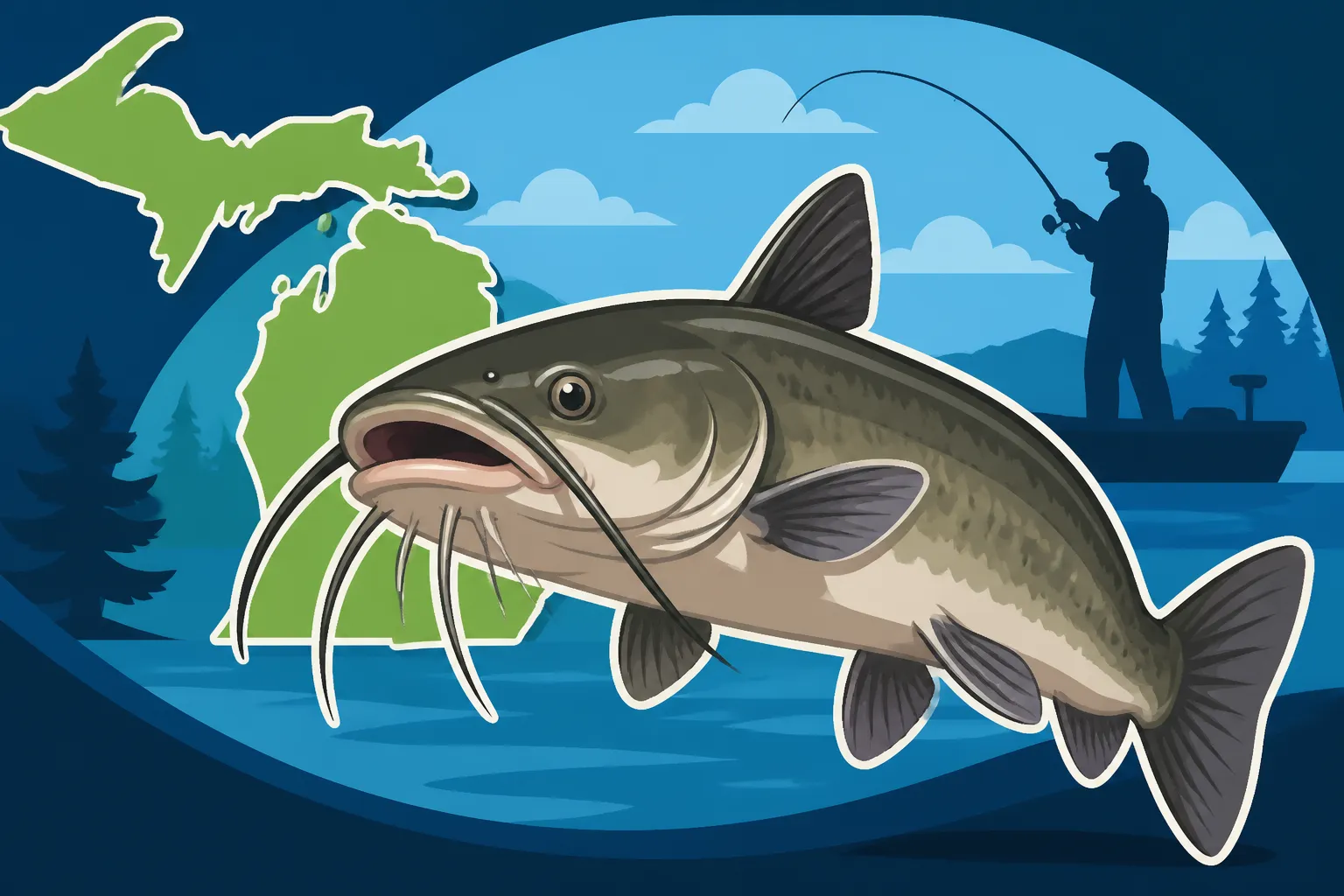
The most defining characteristic of a channel catfish is its deeply forked tail. This is a crucial differentiator from the rounded or slightly emarginate (indented) tails of bullhead species. If you catch a catfish with a deeply V-shaped tail, you've got a channel cat on your hands. Younger channel catfish often have small, dark spots scattered along their sides, which tend to fade as they age. This is another good indicator, although larger, older fish may lose most of these spots.
Their body shape is generally more slender and streamlined compared to the chunky, robust bodies of bullheads. They have eight barbels (whiskers) around their mouth: two on the chin, two on the upper jaw, and four longer ones on the snout. These barbels are sensory organs, helping them locate food in murky water or low light conditions. Their head is also somewhat smaller in proportion to their body compared to a bullhead.
| Feature | Channel Catfish | Bullhead Catfish |
|---|---|---|
| Tail Shape | Deeply forked | Rounded or slightly emarginate |
| Spots | Dark spots on sides (especially when young) | No spots |
| Body Shape | More slender, streamlined | Chunkier, robust, often pot-bellied |
| Head Size | Proportionally smaller compared to body | Proportionally larger compared to body |
| Mouth | Upper jaw slightly overlaps lower | Jaws generally even |
| Color | Olive-brown to blue-gray (can vary) | Olive, brown, yellow, black (species dependent) |
Distinguishing them from bullheads (like brown, black, or yellow bullheads) is usually straightforward once you know what to look for. Bullheads are typically smaller, rarely exceeding a few pounds, and lack the deeply forked tail. They also tend to have a more squat body and a wider head. Understanding these differences will help you confirm you’ve landed a channel cat and not a smaller relative. For a more detailed look at all the whiskered residents, check out What Catfish Species Live in Michigan and Michigan Catfish Species Guide.
Chasing Michigan's Trophy Channel Catfish
While catching any channel catfish is fun, there's a special thrill that comes with targeting and landing a true trophy-sized specimen. These aren't just bigger fish; they're stronger, wiser, and often require a different approach.
The Allure of Record-Sized Catches
For many dedicated anglers, the pursuit of a record-sized fish is the ultimate quest. While breaking a state record is a rare feat, the dream of landing a personal best or a fish that pushes the boundaries of what's possible in Michigan's waters is a powerful motivator. A trophy channel catfish, perhaps a 25-pound behemoth, represents years, even decades, of growth. It's a testament to the health of the waterway and the resilience of the species.
The fight itself is legendary. Imagine a fish that pulls like a freight train, refusing to give an inch, diving deep, and testing every component of your tackle. That's what you get with a truly large channel cat. They don't have the acrobatics of a salmon or the explosive runs of a steelhead, but their sheer brute strength and stubborn refusal to quit make for an unforgettable battle. Anglers who specialize in catfish often speak of the "thump" of a big cat taking the bait, followed by a relentless, heavy pull that signals you've hooked into something special.
What constitutes a "trophy" can vary for each angler. For some, it might be that first 10-pounder. For others, it's consistently breaking the 15 or 20-pound mark. The pursuit is about the challenge, the experience, and the connection to these powerful fish that lurk in the depths of our rivers and lakes. It's not just about the numbers on the scale; it's about the story, the battle, and the respect you gain for such a formidable creature.
Prime Locations for Larger Specimens
If you're serious about finding bigger channel catfish in Michigan, you need to go where the food is abundant and the habitat is favorable for growth. These aren't always the most pristine, sparkling waters; often, the best spots are those with a bit of "character" – meaning structure, current, and rich bottom environments.
Major river systems are your best bet. Rivers like the Grand River, Muskegon River, Saginaw River, and the Detroit River are known producers of impressive channel catfish. These large rivers offer deep channels, strong currents that bring food, plenty of woody debris, and diverse bottom compositions. Look for areas with pronounced river bends where the current has scoured out deep holes, often marked by log jams or undercut banks. The confluence of smaller tributaries with a main river can also be hotspots, as these areas often concentrate baitfish and other food sources. These deeper, darker spots provide ideal ambush points and cover for large, mature catfish.
Beyond the rivers, some of Michigan's larger inland lakes and connecting waters also hold significant populations of big channel cats. Lake St. Clair, for example, with its connection to the Detroit River, offers excellent opportunities for large catfish in its deeper channels and weed edges. Larger reservoirs or impoundments, like those on the Muskegon or Au Sable rivers, can also be fantastic. These bodies of water often have ample forage and diverse structures that support large fish. While you might not associate Michigan's Great Lakes directly with catfish, their tributaries certainly flow into them, and the lower stretches of rivers emptying into the Great Lakes can hold some true giants. For a general overview of Michigan's diverse fishing opportunities, check out Best Places to Fish in Michigan and Michigan's Great Lakes Fishing Guide. Also, explore Michigan Inland Lakes Worth Fishing to pinpoint specific bodies of water.
When you're scouting locations, remember that channel catfish are bottom dwellers and structure-oriented. They'll be found near cover – sunken trees, rock piles, bridge pilings, and ledges. They are also known to frequent areas with slightly softer, muddier bottoms where they can root around for food. Night fishing can be particularly effective for targeting larger catfish, as they often become more active and venture out of their deeper daytime haunts to feed in shallower areas. Using a good fish finder can help identify these deep holes and structures, but sometimes, old-fashioned scouting and local knowledge are key.
Seasonal Considerations for Big Catfish
Understanding the seasonal patterns of channel catfish can significantly increase your chances of hooking into a trophy fish in Michigan. Their behavior changes with water temperature, and knowing these shifts is crucial.
Spring, particularly late spring as water temperatures begin to rise into the 60s, marks a significant increase in catfish activity. After a long, cold winter, these fish are hungry and actively feeding to prepare for spawning. This pre-spawn period is an excellent time to target them, as they are often concentrated in specific areas, gorging themselves on available forage. Look for them moving into shallower flats adjacent to deep channels in rivers and lakes, or in the warmer sections of a river system. The fish are often fat and feisty, making for powerful battles.
Summer is arguably the prime time for channel catfish fishing in Michigan. As water temperatures climb into the 70s and 80s, catfish become incredibly active. They are largely nocturnal feeders, so evening and nighttime fishing can be exceptionally productive, especially for larger specimens. During the day, they might retreat to deeper, cooler water or dense cover to avoid the sun. As dusk approaches, they move into shallower feeding flats, river bends, and along current seams to hunt. High summer temperatures can make some species sluggish, but catfish often thrive in the heat. To learn more about fishing in the heat, see How to Catch Fish During Summer Heat in Michigan.
As fall approaches and water temperatures begin to drop, channel catfish will once again enter a feeding frenzy. They're trying to pack on weight for the upcoming winter, much like in the spring. This can be a fantastic time to target big fish, as they're actively roaming and searching for food. The cooler temperatures mean they might be active for longer periods during the day. As winter truly sets in, their metabolism slows, and they become less active, often retreating to deep holes in rivers or the deepest parts of lakes, making them harder to target. For a broader understanding of how seasons affect fishing in Michigan, check out Michigan Fishing Seasons Explained.
Essential Gear and Techniques for Channel Catfish
To consistently land larger channel catfish, you can't just rely on light panfish gear. These fish are powerful, and if you're targeting those 15-pounders and up, you need tackle that can stand up to the challenge.
Choosing the Right Rod, Reel, and Line
When it comes to rods, think sturdy. A medium-heavy to heavy action rod, typically between 7 and 9 feet long, is ideal. The length helps with casting heavier baits and rigs, and also provides leverage to steer large fish away from snags and structure. A good backbone is essential for muscling big cats out of cover, while a moderate tip action can help absorb the initial shock of a strong bite and keep tension during the fight. Brands like Ugly Stik or Berkley offer durable, affordable options often found on Amazon that are perfect for this kind of fishing.
Your reel needs to match the power of your rod and the fish you're targeting. A robust spinning reel in the 4000 to 6000 size range, or a baitcasting reel designed for heavier lines and lures, is a solid choice. The most important feature is a smooth, reliable drag system. When a big channel cat decides to run, you need a drag that can give line smoothly without sticking or jerking, which can lead to snapped lines or pulled hooks. Look for reels with strong internal components that can withstand constant pressure. For options, you can browse a wide selection of durable reels on Amazon designed for heavier applications.
Line choice is critical. For Michigan's channel catfish, I'd recommend a strong monofilament line in the 15-25 pound test range, or braided line in the 30-50 pound test range. Braided line offers superior strength-to-diameter ratio and incredible sensitivity, allowing you to feel even the subtlest bites in current or at long distances. However, it has less abrasion resistance than mono. Many anglers opt for braided mainline with a fluorocarbon or heavy mono leader (30-50 lb test) for abrasion resistance around sharp snags and structures. The leader also offers a bit of stretch, acting as a shock absorber. For more general advice on tackle, check out Best Rods and Reels for Michigan Fishing.
Effective Baits and Rigs for Bottom Feeders
Channel catfish are primarily bottom feeders, and they have an incredible sense of smell. This means scent is key when selecting bait. You'll want something potent that can draw them in from a distance.
Cut bait is a perennial favorite for large channel cats. Pieces of oily fish like shad, suckers, or even bluegill (where legal to use as bait) can be incredibly effective. The scent trail they release is a powerful attractant. Chicken livers are another classic, though notoriously messy and soft; their strong odor is irresistible to catfish. Other effective natural baits include nightcrawlers (bunched up), shrimp, and even hot dogs soaked in garlic or other scents. Prepared "stink" baits or dip baits, often sold in tubs, are specifically formulated to attract catfish with their pungent odor. These can be particularly effective when fished in warm water.
For rigging, the slip sinker rig (also known as a Carolina rig) is a go-to. It allows the catfish to pick up the bait and run a bit without feeling the weight of the sinker immediately, which can lead to more solid hookups. You'll need an egg sinker (or similar no-roll sinker), a bead to protect your knot, a swivel, and a leader (12-24 inches) tied to a strong, sharp hook. Circle hooks are highly recommended, especially when fishing for larger fish or practicing catch and release, as they typically hook in the corner of the fish's mouth, reducing gut hooking. Hook sizes ranging from 4/0 to 8/0 are common for targeting larger cats.
When fishing in current, a three-way rig can be effective for keeping your bait off the bottom slightly, allowing it to flutter more naturally. This rig involves a three-way swivel, with your mainline tied to one eye, a dropper line with a sinker tied to another, and a leader with your hook tied to the third. Experiment with different weights to find what holds your bait in place without constantly moving in the current. Always keep an eye on your rod tip for that unmistakable catfish "thump" or a slow, steady pull. A well-stocked tackle box should include various sinkers, hooks, swivels, and leader material. To organize it all, check out tips for your Best Tackle Box Setup for Michigan Anglers. While not specifically for catfish, you might find some crossover insights from Best Bait for Michigan Walleye. You might even find some creative applications from How to Fish for Carp in Michigan.
Landing and Handling Big Catfish Safely
Landing a large channel catfish safely for both you and the fish is paramount, especially if you plan to release it. Their powerful bodies and sharp pectoral and dorsal fins demand respect.
A sturdy landing net with a wide hoop and a deep bag is essential. Trying to hoist a 20-pound catfish by the line is a recipe for disaster, risking a snapped line or a lost fish. A net allows you to cradle the fish, minimizing stress and preventing it from thrashing on the bank or boat deck, which can cause injury to the fish or yourself. Ensure the net material is knotless and soft to protect the fish's slime coat and fins.
Lip grippers can be a valuable tool for controlling a large catfish, especially if you're alone. They allow you to securely hold the fish by its lower jaw without touching its body or fins directly, giving you control for hook removal and photos. Be mindful of the sharp spines on their pectoral and dorsal fins. These can inflict painful wounds, so handle the fish with care, keeping your hands clear of those areas. Some anglers wear gloves when handling large cats to protect themselves.
If you're practicing catch and release for those trophy fish, minimize their time out of water. Get your photos quickly, ensure the fish is upright and breathing when released, and consider holding it in the water until it swims away under its own power. A big channel catfish has taken many years to grow to that size, and returning it safely ensures it can continue to contribute to Michigan's fantastic fishery. Remember to check Michigan Fishing Regulations Every Angler Should Know for any specific rules regarding possession and handling.
Disclaimer
This article is for general informational purposes only and does not constitute professional advice. Laws, prices and regulations vary by location and change over time. Consult a qualified professional for guidance on your specific situation.