What Invasive Fish Species Are in the Great Lakes
There's nothing quite like spending a day on Michigan's beautiful waters, casting a line and soaking in the peace. However, beneath the surface, many of our precious Great Lakes and inland waters face a silent but significant threat: invasive fish species. These unwelcome guests can drastically alter ecosystems, outcompete native fish, and even change the entire fishing experience we know and love. This comprehensive guide will explore the most common invasive fish species found in Michigan's Great Lakes, explain the real-world problems they cause, and equip you with the knowledge to identify them and take action to protect our fisheries.
Understanding Invasive Fish Species in the Great Lakes
When we talk about invasive species, it's not just about a fish being in the "wrong place." It's about a species that has been introduced to an ecosystem outside its native range, and which then causes — or is likely to cause — harm to the environment, economy, or human health. In the Great Lakes, this issue is particularly acute due to the massive shipping traffic and interconnected waterways.
Defining Invasive Fish Species
An invasive fish species isn't just a fish that migrated. It's typically one that arrived through human activity, often unintentionally. Think of a tiny hitchhiker on a ship's hull, or a bait bucket dumped into a new lake. These species often have certain characteristics that make them successful invaders: they might reproduce quickly, grow fast, tolerate a wide range of conditions, or have no natural predators in their new environment. Once established, they can spread rapidly, becoming incredibly difficult to control or eradicate. For anglers, this means fewer of our beloved native species, changes in fishing patterns, and sometimes even dangerous conditions, like jumping Asian Carp.
The Ecological and Economic Impact
The ripple effects of invasive fish species are vast and deeply concerning. Ecologically, they can outcompete native fish for food and habitat, prey on native fish eggs and young, introduce diseases, and alter the food web from the bottom up. Imagine a species that eats all the tiny invertebrates that young walleye depend on, or one that devours the eggs of smallmouth bass. This directly impacts the health and population of our treasured game fish.
Economically, the impact is also severe. Millions of dollars are spent annually on control efforts, research, and mitigation. Commercial fishing industries can suffer if native fish stocks decline, and recreational fishing, a huge driver of tourism and local economies in Michigan, can be negatively affected if popular species dwindle or fishing becomes less enjoyable due to a glut of undesirable invaders. When you consider the vastness of the Great Lakes and the interconnectedness of Michigan's waterways, it becomes clear that preventing new invasions and managing existing ones is a monumental task that touches every aspect of our aquatic environment. Michigan Fishing Regulations Every Angler Should Know outlines many of the rules designed to protect our natural resources.
Key Invasive Fish Species You'll Encounter in the Great Lakes
Michigan's Great Lakes and associated rivers are home to several problematic invasive fish species. Knowing how to identify them and understanding their impact is the first step in being a responsible angler.
Round Goby: The Bottom-Dwelling Nuisance
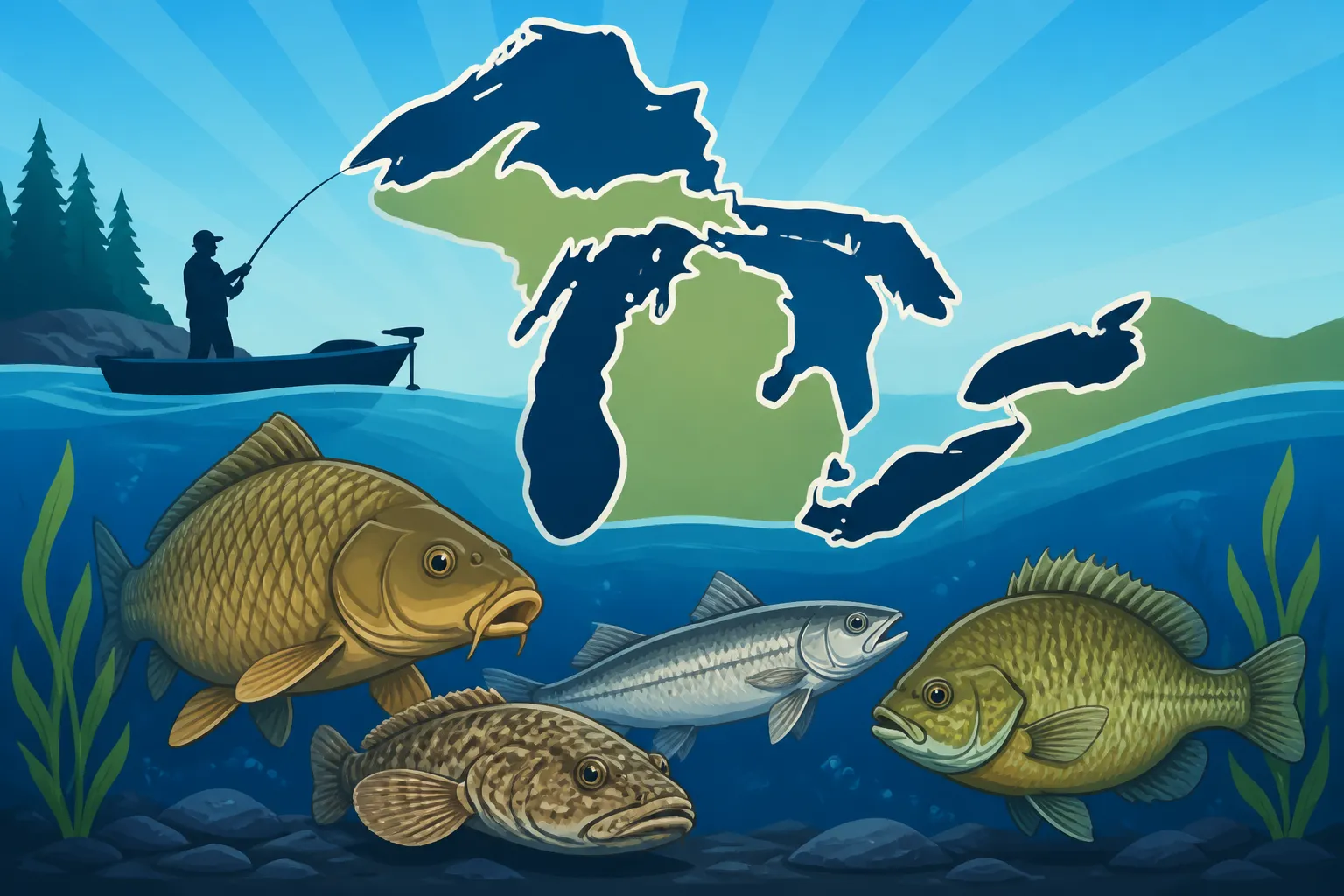
The round goby is arguably one of the most widespread and well-known invasive fish in the Great Lakes. Originally from the Black and Caspian Seas, these small, bottom-dwelling fish arrived in the late 1980s via ballast water from oceangoing ships. They have a distinctive large head, prominent eyes, a soft-rayed dorsal fin, and a single, fused pelvic fin that forms a suction cup-like disc on their underside. You’ll often find them lurking under rocks or docks.
The problem with round gobies is multifaceted. They are aggressive, territorial, and have a voracious appetite. They compete with native species like darters, sculpins, and young game fish for food (especially invertebrates) and prime spawning habitat. Worse, they prey on the eggs and fry of valuable native species like walleye, smallmouth bass, and even lake trout. While some larger game fish, like smallmouth bass, have learned to prey on gobies, their sheer numbers and rapid reproduction mean they continue to be a major disruptive force. For many anglers, catching a dozen gobies for every native perch can be a frustrating experience. Are Round Goby a Problem in Michigan Waters? delves deeper into this issue.
Sea Lamprey: The Parasitic Predator
Few invasive species strike fear into the hearts of anglers quite like the sea lamprey. These eel-like, jawless fish are native to the Atlantic Ocean and made their way into the Great Lakes via shipping canals in the early 20th century. Adult sea lampreys are parasitic, attaching themselves to host fish with their disc-shaped mouth filled with concentric rows of razor-sharp teeth. They then rasp a hole in the fish's side and feed on its blood and body fluids.
The impact of sea lampreys on Great Lakes fisheries has been catastrophic. Before control efforts began, they decimated populations of lake trout, whitefish, and other large native species, leading to the collapse of commercial fisheries. A single lamprey can kill up to 40 pounds of fish in its adult lifetime. While intensive control efforts, primarily using a targeted pesticide called TFM (lampricide) in their larval stream habitats, have greatly reduced their populations, they remain a constant threat. Anglers often encounter fish with tell-tale circular scars from lamprey attacks, a stark reminder of their presence. The ongoing fight against sea lampreys is a critical component of maintaining healthy Great Lakes fish populations. For more on this, you can read Are Sea Lamprey a Threat to Michigan Fish?.
Asian Carp (Bighead and Silver): A Looming Threat
When people talk about Asian Carp, they're typically referring to Bighead Carp and Silver Carp, two species that originated from Asia and were introduced to the southern U.S. for aquaculture and to control algae in wastewater treatment ponds. They are not yet widely established in the Great Lakes, but the threat of their invasion is a constant, pressing concern for Michigan and neighboring states. These fish are notorious for their prolific breeding, rapid growth, and their potential to dominate waterways.
Bighead Carp are filter feeders that consume vast amounts of plankton, the very base of the food web. This directly competes with native planktivores like gizzard shad, young sport fish, and even mussels. Silver Carp are even more famous (or infamous) for their tendency to leap high out of the water when startled by boat engines, posing a significant physical danger to boaters and anglers. Both species can grow very large and quickly achieve high densities, potentially outcompeting nearly every native species for food and space. Extensive measures, including electric barriers in connecting waterways like the Chicago Area Waterway System, are in place to prevent their entry into Lake Michigan, but the vigilance is constant. These fish could completely transform our Great Lakes if they establish a foothold.
Alewife: A Historically Significant Invader
The alewife is another saltwater species that found its way into the Great Lakes through canals. While not as universally hated as the sea lamprey, the alewife has had a significant and complex impact on the ecosystem. They are small, silvery fish that form large schools, particularly in the open waters of the Great Lakes.
In the mid-20th century, alewife populations exploded, especially after native predators like lake trout were decimated by sea lampreys. This created massive die-offs of alewife, littering beaches and fouling water intakes. More importantly, their abundance created a "feast or famine" food source for predators. While Pacific salmon species (Chinook, Coho) were introduced to feed on them, too much reliance on alewife can lead to issues. Alewife are known to contain thiaminase, an enzyme that breaks down thiamine (Vitamin B1) in the fish that consume them. This can lead to nutritional deficiencies in predators like lake trout and salmon, affecting their reproduction and survival. Managing alewife populations is a delicate balance, as they are both a food source for introduced salmon and a potential detriment to native species.
| Invasive Fish Species | Key Identification Features | Primary Impact | Status in Great Lakes |
|---|---|---|---|
| Round Goby | Large head, fused pelvic fin (suction cup), prominent eyes | Competes with native fish, preys on eggs/fry, aggressive, rapidly reproduces | Widespread and established |
| Sea Lamprey | Eel-like body, jawless mouth with sharp teeth, no paired fins | Parasitic, feeds on blood/fluids of host fish, decimated native large fish | Present, under intensive control |
| Bighead Carp | Large head, eyes below mouth, dark blotches, deep body | Filter-feeder, consumes vast plankton, competes with native planktivores | Major threat, not yet established |
| Silver Carp | Silver body, eyes below mouth, often jumps out of water | Filter-feeder, consumes vast plankton, competes with native planktivores, hazard to boaters | Major threat, not yet established |
| Alewife | Silvery, distinct 'belly keel' of scales, small, schooling | Competes with native forage fish, food source for salmon, thiaminase deficiency | Widespread and established |
How Anglers Can Help Mitigate the Spread
As anglers, we are on the front lines of protecting Michigan's waters. Our actions, however small, can make a huge difference in preventing the further spread of invasive species. It's a collective effort, and every single one of us has a role to play.
Clean, Drain, Dry Your Gear
This is perhaps the most critical and easy-to-remember principle. Before leaving any body of water, you absolutely must "Clean, Drain, Dry."
- Clean: Inspect your boat, trailer, waders, boots, and all fishing gear. Remove any visible mud, plants, or aquatic organisms. This might mean scraping off mud from your boots or picking off bits of weeds from your anchor. You can find excellent boot brushes and gear wash at retailers like Amazon that make this task much easier.
- Drain: Pull the drain plug from your boat, livewell, bilge, and bait buckets. Make sure all water is drained before leaving the ramp. Many invasive species, even tiny larvae, can survive in standing water.
- Dry: Allow all equipment to thoroughly dry for at least five days, or as long as possible, before entering another body of water. If you're moving between waterways more quickly, consider using a high-pressure wash with hot water or even a diluted bleach solution (then rinse thoroughly). This drying period is key to killing any lingering microscopic invaders. Don't forget items like landing nets and anchor ropes, which can hold moisture and small organisms.
Never Release Live Bait
It might seem harmless, but releasing unused live bait into a new waterway is a primary pathway for invasive species. That minnow from the bait shop might not be native to the lake you're fishing, or it could carry parasites or diseases that could devastate local fish populations. This is a common method for introducing species like the rusty crayfish, another significant invader, and various baitfish.
The rule is simple: if you brought it with you, don't let it go. Dispose of unused bait in the trash, never in the water or on the shoreline where it could be washed back in. This applies to baitfish, worms, and any other live organisms you use for fishing. Always purchase bait from local, reputable sources when possible, and if you use minnows, ensure they are free of any non-native species. For detailed information on bait rules, refer to Michigan Fishing Regulations Every Angler Should Know.
Report Sightings and Follow Regulations
Being observant and knowing your local rules are powerful tools in the fight against invasives. If you catch an unfamiliar fish that you suspect might be an invasive species, take a picture, note its location, and report it to the Michigan Department of Natural Resources (DNR). The DNR has systems in place to track and respond to new threats. Michigan's DNR Hunt Fish App for Licenses and Reporting is a great tool for this, often having a reporting feature built in.
Beyond reporting, always respect and follow local fishing regulations. These rules are often designed with invasive species management in mind. For example, some areas may have specific rules about bait usage, possession limits for certain species, or requirements for cleaning boats. Knowing and adhering to these rules, which are detailed in the Michigan Fishing Regulations Digest PDF for 2026 (check the current year's digest), is crucial. Whether it's the specific rules for Michigan Muskellunge Harvest Reporting Rules or general guidelines for all species, compliance helps everyone.
Michigan's Proactive Response to Invasive Species
Michigan takes the threat of invasive species very seriously, and the Michigan Department of Natural Resources (DNR) plays a pivotal role in managing and mitigating their impact. It's a constant battle, requiring significant resources and dedicated personnel.
DNR Efforts and Management
The DNR, in collaboration with federal agencies, universities, and other state departments, employs a multi-pronged approach to invasive species management. This includes robust monitoring programs to detect new invasions early, research into effective control methods, and direct management actions. For instance, the fight against sea lampreys involves extensive surveying of rivers to locate spawning grounds and applying lampricides to target lamprey larvae without significantly harming other aquatic life.
For species like Asian Carp, efforts are focused on prevention, with significant investment in technologies like electric barriers and research into deterrents at critical chokepoints. Public education campaigns, like the "Clean, Drain, Dry" initiative, are also a huge part of the DNR's strategy, empowering anglers and boaters to be part of the solution. They also work to manage ecosystems to favor native species, helping them to better compete against invaders.
Legal Framework and Penalties
To support these efforts, Michigan has a clear legal framework in place regarding invasive species. There are laws prohibiting the introduction of certain species, requiring proper cleaning of watercraft, and outlining penalties for violations. For example, knowingly releasing an invasive species or transporting aquatic plants or organisms on your boat or trailer can result in significant fines. These regulations are not meant to be punitive but are designed to protect our shared natural resources.
It’s always a good idea to stay informed about the latest regulations, which can change periodically. The official DNR website and the annual fishing guide are your best sources for up-to-date information. Ignorance of the law is generally not considered an excuse, so taking the time to understand the rules is part of being a responsible angler. This helps ensure that the beautiful waters and diverse fish populations that draw so many of us to Michigan remain healthy for generations to come. If you're ever in doubt about a specific rule or species, consulting resources like the Michigan Fishing Regulations Digest PDF for 2026 or Michigan Fishing Violation Penalties and Fines can provide clarity.
Disclaimer
This article is for general informational purposes only and does not constitute professional advice. Laws, prices and regulations vary by location and change over time. Consult a qualified professional for guidance on your specific situation.