Best Lures for Michigan Walleye
It can be incredibly frustrating to hit the water, knowing Michigan's walleye population is thriving, only to cast for hours without a bite because you're using the wrong gear. Choosing the best lures for these finicky, yet delicious, fish can feel like a guessing game with endless options. This comprehensive guide will cut through the confusion, helping you understand walleye behavior and pinpoint the most effective lures to fill your livewell, whether you're on the Great Lakes, a quiet inland lake, or a rushing river.
Understanding Michigan Walleye Behavior and Habitat
To consistently catch walleye in Michigan, you first have to think like a walleye. These fish aren't just swimming around randomly; they have specific preferences for water temperature, light conditions, and forage. Understanding these foundational elements is crucial because it dictates where they'll be and what they'll be willing to strike. It's like knowing your dinner guest's favorite restaurant and meal before inviting them out.
Seasonal Movements and Feeding Patterns
Michigan's seasons play a huge role in walleye behavior. In the spring, after the ice recedes, walleye move into shallower spawning grounds, often rivers or rocky shoals in lakes. During this time, they're not necessarily aggressive feeders right after spawning, but as they recover, they'll key in on easy meals. Water temperatures climbing into the 40s and 50s Fahrenheit signal this transition. They might be sluggish, so slower presentations are often key.
As summer heats up, walleye retreat to deeper, cooler waters, often congregating near thermoclines where cool water meets warmer surface water, or finding refuge in weed beds or around structure like submerged humps and points. Their metabolism is higher, and they become more active predators, chasing baitfish. This is when they are often found in larger schools, making them a great target for those who know how to locate them. Fall sees another push into shallower waters as temperatures drop and they gorge themselves in preparation for winter. They become incredibly aggressive, fattening up before the lean months. Winter brings them back to deep basins, where they become more lethargic, requiring subtle presentations for ice anglers. Knowing these patterns helps you anticipate where they'll be and what kind of mood they're in. For more on when to target these fish, check out Best Time of Day to Catch Walleye.
Key Walleye Habitats in Michigan
Michigan offers an incredible diversity of walleye habitats, from the vast open waters of the Great Lakes to countless inland lakes and winding rivers. Each environment presents its own set of challenges and opportunities.
On the Great Lakes, walleye are often found in expansive basins, near offshore structure like reefs, shoals, and transitions in bottom composition. Saginaw Bay on Lake Huron, for instance, is famous for its massive walleye fishery, where fish often roam large flats. In Lake Erie, which Michigan shares a piece of, the walleye are often found relating to mud flats and current breaks. Think about the massive baitfish schools they follow in these open water environments.
Inland lakes, while smaller, can be just as productive. Walleye will relate to deep weed lines, submerged islands, rock piles, sudden drop-offs, and channel edges. Lakes like Houghton Lake or Higgins Lake are prime examples of inland walleye factories where structure is everything. They use these features for ambush points and cover from predators and bright light.
Rivers present a different challenge. Walleye will stack up in current seams, behind obstructions, in deeper holes, and near tributary mouths. They use the current to their advantage, letting baitfish drift to them. Think about how the fish might use a log jam or a bend in the river to break the current and rest, ready to dart out for a meal. Understanding how to "read" the river for these features is crucial.
| Habitat Type | Key Features for Walleye | Typical Depths (Approx.) | Preferred Presentation Speeds |
|---|---|---|---|
| Great Lakes | Offshore reefs, shoals, mud flats, current breaks | 15-60+ feet | Medium to Fast Trolling |
| Inland Lakes | Deep weed lines, humps, rock piles, drop-offs | 10-40 feet | Slow to Medium Casting/Jigging |
| Rivers | Current seams, deep holes, log jams, tributary mouths | 5-25 feet | Slow Jigging/Drift Fishing |
The Go-To Lure Categories for Michigan Walleye
When you're out on the water, the tackle box can feel like a confusing mess of plastics, metals, and wood. But don't fret; for Michigan walleye, a few core lure categories consistently outperform the rest. Mastering these types will give you a solid foundation for any walleye scenario you encounter.
Jigs: Versatility and Effectiveness
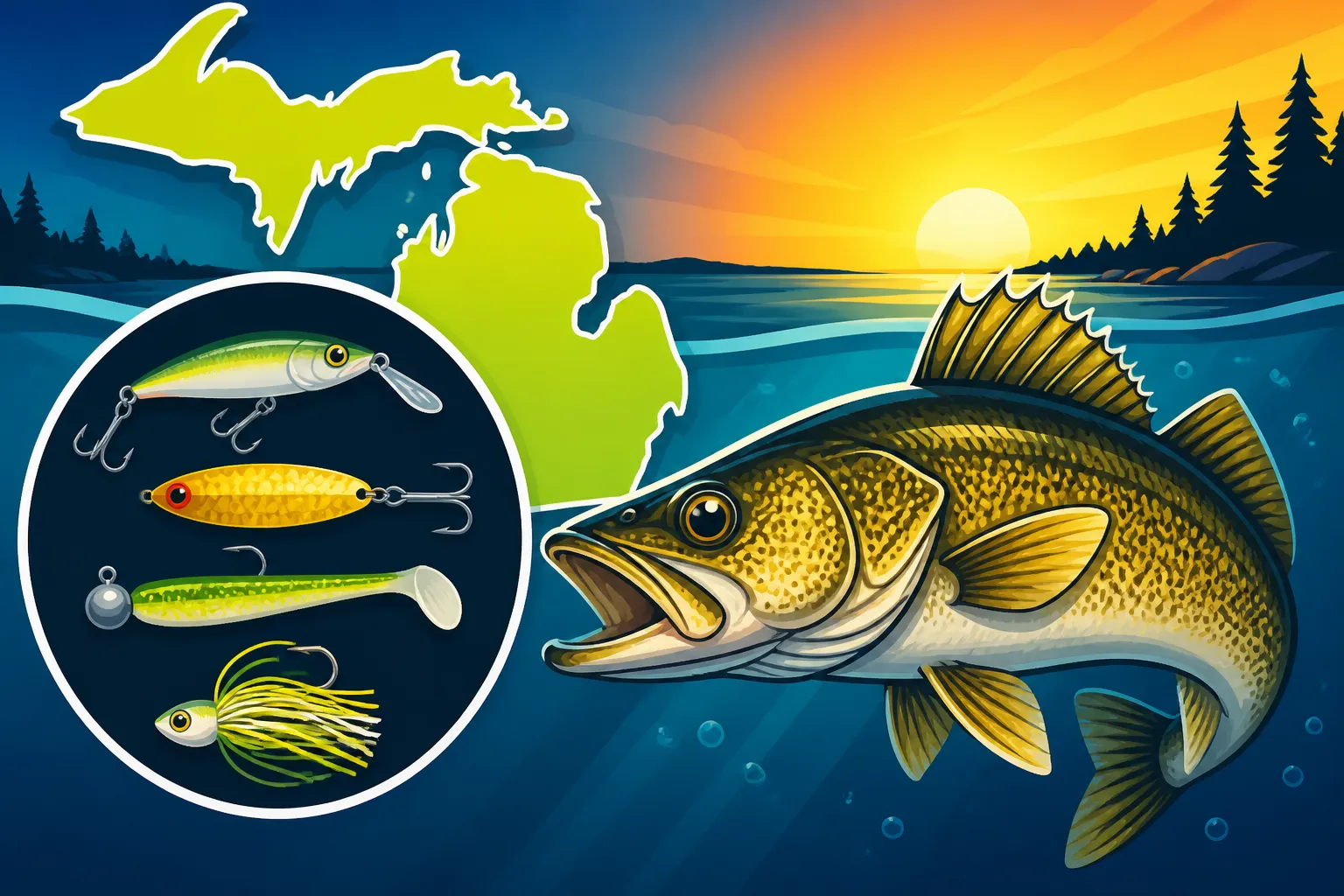
If there's one lure that every walleye angler in Michigan should have in abundance, it's the jig. Jigs are incredibly versatile and can be fished effectively year-round, from open water to ice fishing. The beauty of a jig lies in its ability to mimic a wide range of forage, from dying baitfish to crustaceans, simply by varying your retrieve.
The head design of a jig is important. A stand-up jig, for example, is fantastic for soft bottoms as it keeps the hook upright, presenting your soft plastic or live bait tantalizingly off the bottom. A traditional round head jig is more versatile and can be hopped, dragged, or swam. The weight of the jig is also critical, needing to be heavy enough to reach the bottom and maintain contact, but light enough to present naturally. In rivers, heavier jigs are often required to combat the current and ensure you're in the strike zone. Jigging Techniques for Michigan Walleye can really elevate your game.
Pairing jigs with soft plastics like grubs, paddle tails, or minnow imitations is a common and highly effective strategy. The plastic adds profile, action, and sometimes scent, making the jig even more enticing. Sometimes, a simple plastic grub is all it takes to trigger a bite when the walleye are lethargic. You can find a huge variety of soft plastics and jig heads on platforms like Amazon, making it easy to experiment with different sizes and colors.
Crankbaits: Covering Water and Triggering Strikes
Crankbaits are your workhorses for covering vast expanses of water, particularly when walleye are actively chasing baitfish or when you're trolling in the Great Lakes or larger inland lakes. These lures are designed to dive to specific depths and, with their wobbling action, perfectly imitate a struggling baitfish.
There are two main types of crankbaits to consider: diving crankbaits (sometimes called plugs) and shallow-running crankbaits. Diving crankbaits often have a larger, longer lip that helps them plunge to depths ranging from a few feet to over twenty feet, making them ideal for targeting suspended walleye or fish relating to deep structure. Shallow-running crankbaits, with their smaller lips, are excellent for casting over weed flats, around shallow points, or when walleye move up into shallower water during low-light conditions.
The action of a crankbait—how tightly or widely it wiggles—can also be a factor. Some walleye prefer a tight, subtle shimmy, while others respond to a wide, aggressive wobble. Color choices can be overwhelming, but generally, natural baitfish patterns work well in clear water, while brighter or more contrasting colors might be better in stained or murky conditions. Trolling with crankbaits is a highly productive method, especially on the Great Lakes, where anglers can cover miles of water, presenting multiple lures at varying depths.
Spinner Rigs: The Classic Live Bait Presentation
When walleye get picky, or when you simply want to present live bait in a highly attractive manner, spinner rigs are often the answer. These rigs combine the flash and vibration of a spinning blade with the natural appeal of a live worm, minnow, or leech. It's a classic setup that has put countless walleye in the boat over the years.
A typical spinner rig consists of a leader line, a clevis with a blade (Colorado, Indiana, or willowleaf being common shapes), some beads, and usually one or two snelled hooks. The blade creates flash and vibration, attracting walleye from a distance, while the beads provide a bit of color and spacing. The hooks are then used to hold your live bait.
Spinner rigs are incredibly effective when slow-trolled or drift-fished, allowing the blade to spin and the bait to waft enticingly through the water column. This presentation mimics a wounded baitfish or an easy meal, which walleye, being opportunistic predators, find hard to resist. Different blade colors, from shiny chrome to vibrant chartreuse, can be experimented with to find what the walleye are keying in on. Sometimes, a subtle gold or silver blade is all that's needed, while other times, a brightly colored blade is essential for attracting attention in darker waters.
Top Specific Lures and How to Fish Them
Now that we've covered the main categories, let's drill down into some specific lures that have a proven track record for catching Michigan walleye. It's not just about what lure you use, but how you present it. The most expensive lure won't do you any good if it's not fished correctly.
Best Jigs for Different Conditions
When it comes to jigs, there's no single "best" option, as conditions dictate what will be most effective.
- Marabou Jigs: These feathery jigs offer incredible action with minimal movement. They "breathe" in the water, mimicking small invertebrates or fry. They are fantastic for cold water or when walleye are sluggish. A slow, subtle lift-and-drop retrieve is often all it takes. Think about targeting river walleye in deep pools or suspended fish in early spring with a marabou jig.
- Plastic-Tipped Jigs: A jig head paired with a soft plastic grub (like a Berkley Gulp! or a Kalin's Grub) or a minnow imitation is a year-round producer. For clear water, natural colors like smoke or watermelon can be deadly. In stained water, brighter colors like chartreuse or orange often get more attention. On a platform like Amazon, you can find a huge array of soft plastics to pair with your favorite jig heads.
- Technique: Vertical jigging directly over fish, pitching to structure, or snap-jigging (a sharp upward jerk followed by a free fall) can all be effective. The key is to let the jig fall on a semi-slack line to allow the plastic's action to shine.
- Hair Jigs (Bucktail): Similar to marabou, bucktail jigs offer a subtle, pulsating action that walleye find irresistible. They're particularly good in rivers with moderate current or when imitating larger baitfish. White, black, and various greens are common productive colors.
Top Crankbaits for Trolling and Casting
Crankbaits are essential for active walleye. Here are some standouts:
- Rapala Shad Rap / Berkley Flicker Shad: These are classic walleye catchers. The Shad Rap has a balsa wood body that gives it a unique, subtle wobble and buoyancy, making it exceptional for casting or slow trolling. The Flicker Shad is a durable plastic option that closely mimics common baitfish and dives to specific depths, making it very effective for trolling. They come in a wide range of sizes and colors.
- Technique: For trolling, use a planer board system to spread your lines and cover more water, especially on the Great Lakes. Experiment with different speeds until you find what the fish prefer. When casting, a steady retrieve with occasional pauses can entice strikes.
- Storm Deep ThunderStick / Reef Runner: These are big-water crankbaits designed for deeper trolling, especially popular for Great Lakes walleye. Their aggressive wobble and deeper diving capabilities help them reach walleye holding in deeper water or along significant structure.
- Technique: Primarily used for trolling, these lures can be fished with lead core line, snap weights, or downriggers to achieve desired depths. Pay attention to your boat speed and lure depth to keep them in the strike zone.
- Bandit Walleye Deep: A very popular choice, especially for open-water trolling on places like Saginaw Bay. These slim-profile crankbaits dive quickly and have a consistent action that walleye love. Again, you can find these easily on Amazon, often in multi-packs, making it convenient to stock up.
- Technique: Trolling these at varying speeds, often between 1.5 to 2.5 mph, is the go-to. Experiment with lead lengths behind planer boards to find the 'sweet spot' for depth and action.
Effective Spinner Rig Components
Building or buying effective spinner rigs means understanding the components:
- Blade Styles:
- Colorado: Round, wide blade, creates maximum thump and vibration, ideal for slow retrieves or murky water.
- Indiana: Oval shape, good compromise between flash and vibration, very versatile.
- Willowleaf: Long, narrow blade, creates less drag and flash, good for faster retrieves or cutting through weeds.
- Colors: Metallic colors like silver, gold, and copper are always good bets, especially in clear water. Fluorescent colors like chartreuse, orange, and pink can be excellent in stained water or low-light conditions.
- Beads: Provide attraction and spacing. Many anglers prefer brightly colored beads, often matching them to the blade color or contrasting them.
- Hooks: Usually two single hooks in tandem (snells) to properly present a nightcrawler or leech. The size depends on your bait, but generally, 1/0 or 2/0 hooks are standard.
- Technique: Slow trolling or drift fishing is paramount for spinner rigs. Let the boat's movement or the current do the work, keeping the blade spinning just above the bottom or in the suspended walleye's strike zone. A slip-sinker rig ahead of your spinner rig is a common setup to control depth. For more on what walleye eat, check out Best Bait for Michigan Walleye.
Matching Lures to Michigan's Diverse Walleye Waters
Michigan's diverse aquatic landscape means there's no one-size-fits-all approach to walleye fishing. The lure that slays them in Saginaw Bay might not even get a sniff in a shallow inland lake river. It's all about adapting your approach to the specific environment you're fishing.
Lures for the Great Lakes Walleye Fisheries
The Great Lakes, particularly Lake Erie and Saginaw Bay on Lake Huron, are renowned for their incredible walleye populations. The sheer size of these bodies of water often dictates different tactics than smaller inland waters.
- Trolling Dominance: Trolling with crankbaits is often the most efficient way to locate and catch walleye in the vastness of the Great Lakes. Deep-diving crankbaits like the Bandit Walleye Deep, Storm Deep ThunderSticks, and Berkley Flicker Shads are indispensable. Anglers often employ multiple lines, using planer boards to spread out their lures and cover a wider swath of water. This allows them to present different colors, depths, and actions simultaneously until a pattern emerges. You might have one rod running a blue chrome Bandit at 20 feet, another with a firetiger Flicker Shad at 15 feet, and so on.
- Jigging in Structure: While trolling covers open water, jigs still have their place, especially when walleye are congregated on specific structures like reefs or humps. Vertical jigging with heavy lead head jigs (1/2 oz to 1 oz or more, depending on depth and current) tipped with soft plastics or live minnows can be deadly. Fish finders are crucial here to locate schools of fish and drop your jig directly to them. This is often the strategy used on deeper rock reefs in Lake Michigan or Lake Huron.
- Blade Baits: In certain Great Lakes scenarios, especially when walleye are suspended or holding tightly to structure, blade baits (like a Silver Buddy or a Heddon Sonar) can be incredibly effective. Their high vibration and erratic action on a rip-and-fall retrieve can trigger reaction strikes from even finicky walleye.
Lures for Inland Lake Walleye
Michigan's thousands of inland lakes, from the smallest ponds to giants like Houghton Lake, offer varied walleye fishing. The tactics here often blend aspects of river and Great Lakes fishing, scaled down for the smaller environment.
- Jigging Weed Lines and Drop-offs: Jigs are paramount for inland lakes. Lightweight jigs (1/8 oz to 3/8 oz) tipped with soft plastics (grubs, worms, minnow imitations) or live bait are ideal for working along deep weed lines, rock piles, and sharp drop-offs. A slow, subtle retrieve, often a gentle lift and fall, is very effective.
- Crankbaits for Structure and Casting: Medium-diving crankbaits like the Rapala Shad Rap or smaller Berkley Flicker Shads are excellent for casting to points, submerged humps, or trolling along contours. You might cast these from shore in the evenings or troll them slowly from a small boat. In lakes like Torch Lake or Burt Lake, where walleye might suspend over deeper water, crankbaits can also be trolled effectively.
- Live Bait Rigs: A classic slip-sinker rig with a lively nightcrawler, leech, or minnow is an evergreen choice for inland lake walleye. This allows the bait to be presented naturally near the bottom. This is often combined with a simple walking sinker or split shot to keep the bait in the strike zone. Sometimes, simplicity is the ultimate sophistication. Consider exploring Houghton Lake Fishing Guide: Michigan's Largest Inland Lake for more specific tactics.
River Walleye Lure Strategies
River walleye are often current-oriented and can be found in different holding areas depending on flow and time of year. Your lure choice and presentation must account for the moving water.
- Heavy Jigs for Current: To get to the fish in river current, you often need heavier jigs. Jigs ranging from 1/4 oz to 1/2 oz or more, depending on the river's flow, are common. Bucktail jigs or plastic-tipped jigs are excellent.
- Technique: Pitching jigs upstream and allowing them to drift naturally downstream, bouncing along the bottom, is a deadly tactic. This "current fishing" technique mimics dislodged baitfish. Focus on current seams, eddies, and deeper holes.
- Crankbaits for Current Seams: Shallow-running or medium-diving crankbaits can be cast to current seams or trolled upstream against the current. The crankbait's wobble in the current can be very enticing. Often, a slow, steady retrieve is all that's needed. Think about casting a Rapala Original Floater or a small shallow-diving Flicker Shad along a break line.
- Bottom Bouncers and Spinner Rigs: For drift fishing, particularly from a boat, bottom bouncers paired with spinner rigs are highly effective. The bottom bouncer helps keep your bait near the bottom while minimizing snags, and the spinner rig adds flash. This is an excellent way to cover ground in a river, letting the current do some of the work. You can pair these with live bait or even soft plastic worms. Remember to check Michigan Fishing Regulations Every Angler Should Know before you head out.
| Lure Type | Great Lakes Strategy | Inland Lake Strategy | River Strategy |
|---|---|---|---|
| Jigs | Vertical jigging deep structure with heavy jigs | Pitching lighter jigs to weed lines, drop-offs | Heavier jigs drifted in current seams, holes |
| Crankbaits | Deep trolling with large, deep-diving plugs | Casting medium divers to points, slow trolling contours | Casting shallow runners to current breaks, upstream trolling |
| Spinner Rigs | Trolling with bottom bouncers (often with live bait) | Slow trolling or drifting over open water | Drifting with bottom bouncers in moderate current |
As you can see, there are many fantastic lures for catching walleye in Michigan, but the key is to choose wisely based on the conditions you encounter. Don't be afraid to experiment, and always pay attention to what the fish are telling you. Sometimes the walleye will be aggressive, slamming anything that moves. Other times, they'll demand a subtle presentation that perfectly mimics their natural forage. That's the challenge and the thrill of fishing for these incredible fish in Michigan! For more specifics on regulations for these valuable fish, consider Michigan Walleye Size and Possession Limits or Michigan's Statewide Minimum Size Limit for Walleye to ensure you're fishing responsibly.
Disclaimer
This article is for general informational purposes only and does not constitute professional advice. Laws, prices and regulations vary by location and change over time. Consult a qualified professional for guidance on your specific situation.