Muskellunge Identification and Size Limit
Landing a Michigan muskellunge is often the pinnacle of freshwater angling, but the excitement of a potential trophy catch comes with a critical responsibility: knowing exactly what you've caught and whether it meets the legal requirements for harvest. Many anglers struggle with correctly identifying a true muskie or understanding the complex size restrictions that vary by waterbody, leading to confusion and potential violations. This guide is here to demystify Michigan's muskellunge regulations, helping you confidently identify these magnificent fish and navigate the rules to ensure you're fishing ethically and legally.
The Elusive Michigan Muskellunge: What Makes Them Unique?
There's nothing quite like the heart-stopping moment a massive muskellunge slams your lure or follows it right to the boat, earning it the nickname "the fish of a thousand casts." But before you celebrate, you need to be absolutely sure you've got a muskie on your hands, especially given their striking resemblance to their pike cousins. Misidentification can lead to serious trouble if you keep a fish that doesn't meet the specific length requirements.
Visual Cues: Spotting a True Muskie
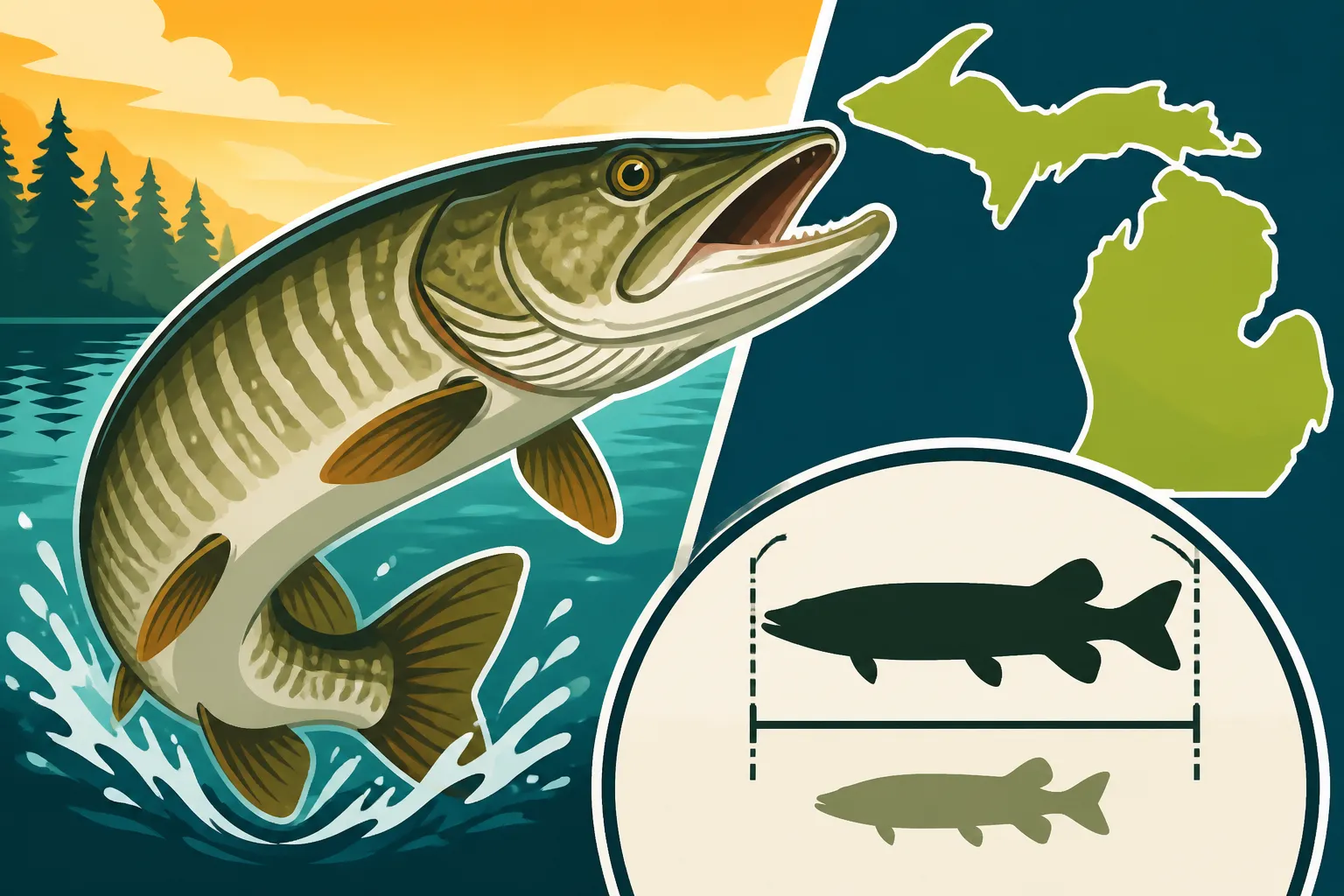
Muskellunge are true apex predators in Michigan's waters, known for their elongated, torpedo-shaped bodies and fearsome dental work. When you're trying to identify one, look for several key visual characteristics that set them apart. Their body coloration can be quite variable, ranging from silvery-green to brownish, often adorned with dark markings. These markings can appear as spots, bars, or irregular blotches on a lighter background. This dappled pattern is distinct and less uniform than the bean-shaped spots you might see on a northern pike. Pay close attention to the caudal fin, or tail fin; it's typically deeply forked, more so than a pike's. The mouth is another dead giveaway, extending well past the eye, creating that iconic toothy grin.
Muskellunge vs. Northern Pike: Key Differences You Need to Know
This is where many anglers get tripped up, and it's a crucial distinction. Northern pike and muskellunge belong to the same Esox family, and they share a similar body shape, making them look deceptively alike at first glance. However, there are a few definitive ways to tell them apart. The most reliable method involves counting the sensory pores on the underside of their lower jaw. Muskies typically have six to nine pores on each side, while northern pike have five or fewer. Another excellent differentiator is the scale pattern on their cheek and gill covers. A muskie will have scales only on the upper half of its cheek and gill cover, leaving the lower half bare. A northern pike, on the other hand, will have full scaling on both its cheek and the upper half of its gill cover, with the lower half of the gill cover often bare. It sounds like a small detail, but it’s consistently accurate. For a detailed breakdown, you might want to check out How to Tell a Muskellunge From a Northern Pike. Understanding these nuances is vital for responsible angling and helps protect Michigan's muskie populations.
| Feature | Muskellunge (Muskie) | Northern Pike |
|---|---|---|
| Jaw Pores | 6-9 sensory pores on each side of the lower jaw | 5 or fewer sensory pores on each side of the lower jaw |
| Cheek Scales | Scales only on the upper half of the cheek | Scales completely cover the cheek |
| Gill Cover Scales | Scales only on the upper half of the gill cover | Scales on the upper half, lower half often bare |
| Body Markings | Dark spots, bars, or blotches on a lighter background | Light, bean-shaped spots on a darker background |
| Caudal Fin | More deeply forked, often pointed tips | Less deeply forked, more rounded tips |
| Snout Shape | More pointed and duckbill-like | More rounded and broad |
Understanding Michigan's Muskellunge Size Limits
Michigan takes its muskellunge management very seriously, and for good reason. These slow-growing, long-lived predators are an important part of the ecosystem and a highly prized sport fish. To protect their populations and ensure future angling opportunities, strict size limits are in place. These aren't just arbitrary numbers; they are carefully determined by fisheries biologists to allow muskies to reach reproductive maturity and contribute to a healthy, self-sustaining fishery. Failing to adhere to these limits can result in significant fines and penalties, so knowing the rules before you cast is non-negotiable.
Statewide Minimums and the One-Fish Rule
Across most of Michigan's waters, there is a statewide minimum size limit for muskellunge. Generally, any muskie you wish to keep must be at least 42 inches long. That's a substantial fish, which immediately tells you that muskie fishing is largely a catch-and-release endeavor. This 42-inch minimum is designed to ensure that most muskellunge have had several opportunities to spawn before they are harvested, contributing to the next generation of these magnificent fish.
Beyond the size limit, Michigan also has a strict daily and annual bag limit. For muskellunge, this is typically one fish per angler per year. Yes, you read that right – one fish per year. This extremely conservative limit underscores the value placed on each individual muskie and the importance of responsible management. If you are lucky enough to harvest a legal muskellunge, you are also required to report it. You can find all the details on this process by looking up Michigan Muskellunge Harvest Reporting Rules. It’s all part of the commitment to conservation.
Lake-Specific Muskellunge Regulations
While the 42-inch statewide minimum is a good starting point, it's crucial to understand that many specific lakes and rivers in Michigan have their own unique muskellunge regulations, often with higher minimum size limits. These localized rules are put in place because different waterbodies have different growth rates, population dynamics, and fishing pressures. For example, some of Michigan's premier muskie waters might have a 50-inch minimum size limit. You'll find specific details on waters like Lake St. Clair, Thornapple Lake, and Lake Hudson often come with these increased minimums to manage their trophy potential.
Imagine you're fishing on Lake St. Clair, renowned for its muskie population, and you land a beautiful 45-inch fish. While that would be legal in many other parts of the state, Lake St. Clair has a special rule for muskellunge that typically requires them to be much larger, often 50 inches. This means your 45-inch fish, while impressive, would need to be immediately released unharmed. It's a common mistake for anglers to assume one rule fits all, which is why checking the Michigan Fishing Regulations Digest for the specific waterbody you plan to fish is an absolute must. Always verify the current regulations for your target lake or river to avoid any unpleasant surprises. You can learn more about these specific rules by checking out Michigan Lakes With a 50-Inch Muskellunge Minimum.
The Art of Catch and Release for Muskellunge
Considering the strict size limits and the "one fish per year" rule, it's clear that muskellunge fishing in Michigan is predominantly a catch-and-release sport. This isn't just a suggestion; it's an essential practice that ensures the long-term health and vitality of muskie populations. Releasing these powerful fish successfully requires preparation, skill, and a deep respect for the resource. Many anglers proudly document their catches with photos and then watch these magnificent creatures swim away, knowing they've contributed to the fishery's future.
Why Conservation is Paramount for Muskies
Muskellunge are relatively slow-growing fish, taking many years to reach trophy sizes. They also don't reproduce as prolifically as some other species. This combination means that their populations are particularly vulnerable to overharvest. When you release a muskie, especially a large one, you're sending a proven breeder back into the water to contribute to future generations. This helps maintain a healthy genetic pool and ensures that the thrill of muskie fishing continues for years to come. Michigan's fisheries managers rely on catch-and-release to sustain a high-quality muskie fishery, and anglers are key partners in this effort. Even if you legally harvest your one fish for the year, you should still practice careful catch-and-release for any subsequent catches. After all, Michigan's One Muskellunge Per Year Rule means any additional muskie must go back.
Beyond simply releasing them, understanding their ecological role is important. Muskies are apex predators, which means they help keep other fish populations in check, contributing to the overall balance and health of the aquatic ecosystem. Losing too many large muskies can have ripple effects throughout the food chain. Therefore, viewing muskie fishing not just as a pursuit of a trophy, but as an act of stewardship, elevates the entire experience. It’s important to remember that Is Catch-and-Release Muskie Fishing Legal Year-Round in Michigan? typically dictates that the season is open for catch and immediate release, even when harvest seasons are closed or limits are met.
Proper Handling and Measuring Techniques for a Safe Release
Successfully releasing a muskie starts the moment you hook it. Minimize the fight time as much as possible to reduce stress on the fish. Once landed, avoid bringing the fish into the boat if possible, especially if you're not planning to keep it. If you must bring it aboard, use a large, rubberized landing net to support its entire body, preventing damage to its fins and slime coat. Never hold a muskie vertically by its jaw or gills, as this can severely injure its spine and internal organs. Instead, support its belly with one hand while gripping its jaw with a specialized tool or gloved hand.
When it comes to measuring, do it quickly and efficiently. Use a bump board or a flexible measuring tape laid flat. Lay the fish gently on the board, belly-down, and measure from the tip of the jaw to the tip of the tail. Snap a quick photo if you want, and then get the fish back into the water as soon as possible. Sometimes, especially with larger fish or longer fights, a muskie might need to be revived. Gently hold the fish upright in the water, moving it back and forth to force water over its gills until it's able to swim away under its own power. Having the right tools on hand, like a large knotless net, long-nosed pliers or jaw spreaders, and a bump board, makes a world of difference. You can find a wide selection of these specialized muskie handling tools and release gloves on Amazon. Learning How to Catch and Release a Muskellunge effectively is a skill every muskie angler should master.
Equipping Yourself for Michigan Muskellunge Adventures
Muskellunge fishing isn't for the faint of heart or the lightly equipped. These powerful, intelligent fish demand respect, patience, and robust gear. Trying to tackle a muskie with insufficient tackle is not only frustrating but can also be detrimental to the fish if it results in a prolonged fight or improper landing. Investing in the right equipment is an investment in both your success and the well-being of the muskie population.
Essential Gear for Pursuing "The Fish of a Thousand Casts"
When you're chasing muskies, your gear needs to be up to the task. Forget your ultralight panfish setup; you're going to need heavy-duty rods, reels, and lines. A medium-heavy to heavy power casting rod, typically 7 to 9 feet long, is ideal for throwing the large, heavy lures muskies are known for. Pair this with a sturdy baitcasting reel capable of holding a significant amount of high-pound-test braided line – often 80 to 100 lb test, especially when you factor in the abrasion resistance needed around weeds and toothy critters.
Lures are a world unto themselves for muskie anglers. You'll be throwing everything from large bucktails and spinnerbaits to massive jerkbaits, glide baits, and topwater lures. The sheer size and weight of these baits are what often surprise new muskie anglers. And don't forget your leaders! A heavy fluorocarbon or wire leader is absolutely essential to prevent those razor-sharp teeth from cutting your line. A 100-200 lb test leader is not uncommon. You can easily stock up on a variety of reputable muskie baits and robust leaders on Amazon, ensuring you’re ready for any situation. For more detailed insights, consider looking at Best Lures for Muskellunge.
Beyond the rod, reel, and lures, a few other items are non-negotiable. A large, long-handled, rubber-coated net is critical for safely landing and controlling a muskie at boatside. Forget the small nets; you need one big enough to engulf a 50-inch fish. Long-nosed pliers, bolt cutters, or specialized jaw spreaders are also vital for safely removing hooks from a muskie's mouth, especially if it's deeply hooked. And always have a pair of heavy-duty gloves on hand. Remember, these fish have teeth! For guidance on landing, you could check Best Net for Landing Muskellunge.
Navigating Michigan's Muskellunge Fishing Seasons
While muskellunge fishing is often associated with the warmer months, Michigan has distinct seasons that dictate when and how you can target these fish. Generally, the open season for muskellunge in most Michigan waters runs from early June through mid-December, though specific dates can vary by management unit (the Upper Peninsula often has slightly different dates than the Lower Peninsula). This season structure is in place to protect muskies during their crucial spawning periods in the spring when they are most vulnerable.
Understanding these seasonal windows is key to planning your trips. Early season, shortly after the opener, can be excellent as muskies are often recuperating from the spawn and more aggressive. Summer months see them moving to deeper, cooler waters or associating with heavy weed cover. Fall is arguably the most celebrated time for muskie fishing, as these fish go on a feeding frenzy to bulk up for winter, making them incredibly active and willing to chase larger baits. The cooler water temperatures also mean less stress on released fish. It's always a good practice to consult the current Michigan Fishing Regulations Digest for the precise season dates for your chosen waterbody, as these can be updated. Even if you're practicing catch-and-release, adhering to the open season dates is a fundamental aspect of legal and responsible angling.
Disclaimer
This article is for general informational purposes only and does not constitute professional advice. Laws, prices and regulations vary by location and change over time. Consult a qualified professional for guidance on your specific situation.