Atlantic Salmon on Lake Huron
Many anglers dream of chasing the legendary salmon and trout of the Great Lakes, often focusing on the mighty Chinook or the acrobatic Coho. But if you've ever felt like there's a missing piece to your Great Lakes fishing adventure, or perhaps you're simply looking for a unique and challenging quarry, you might be overlooking one of Lake Huron's most exciting, albeit less common, residents: the Atlantic Salmon. This guide is here to unravel the secrets of finding and successfully catching Atlantic Salmon in Lake Huron, transforming your understanding of Michigan's diverse fishery.
The Unique Story of Atlantic Salmon in Lake Huron
When we talk about salmon in Michigan, most folks immediately picture the robust Chinook or the feisty Coho. But Atlantic Salmon? They have a truly distinct and fascinating history here, a testament to conservation efforts and the dedication of anglers and biologists alike. Unlike their Pacific cousins, Atlantics aren't native to the Great Lakes, making their presence a special triumph.
A Michigan Success Story: Stocking and Sustaining
The story of Atlantic Salmon in Lake Huron is one of hope, effort, and continuous adaptation. These magnificent fish, renowned for their incredible fighting spirit and table fare, were originally found in rivers connecting to the Atlantic Ocean. Their introduction to the Great Lakes began decades ago, with various programs aiming to establish a sustainable population. The Michigan Department of Natural Resources (DNR) has played a pivotal role in this journey, primarily through strategic stocking efforts.
Lake Huron, in particular, has seen consistent stocking, especially in areas like the Au Sable River system, which feeds directly into the lake. These stockings are crucial because, unlike Chinook and Coho salmon, Atlantic Salmon have largely struggled to establish naturally reproducing populations in Great Lakes tributaries. The cold, clean waters, and specific habitat requirements for successful spawning are challenging to replicate, making ongoing stocking programs vital for maintaining their presence. This means that every Atlantic Salmon you encounter in Lake Huron is likely there thanks to careful planning and a commitment to enriching our fishing opportunities. It's a true partnership between nature and human stewardship, ensuring that future generations can also experience the thrill of these unique fish. For a broader look at how different species are managed, check out Michigan Salmon Species Explained.
Identifying Atlantic Salmon: Key Distinctions
Out on the vast expanse of Lake Huron, with so many incredible species swimming below, it can sometimes be a challenge to distinguish one silver flash from another, especially when you're battling a hard-fighting fish. However, knowing how to properly identify an Atlantic Salmon is not only good angling practice but often essential for adhering to specific regulations. They have several key features that set them apart from their Pacific salmon relatives and the lake trout.
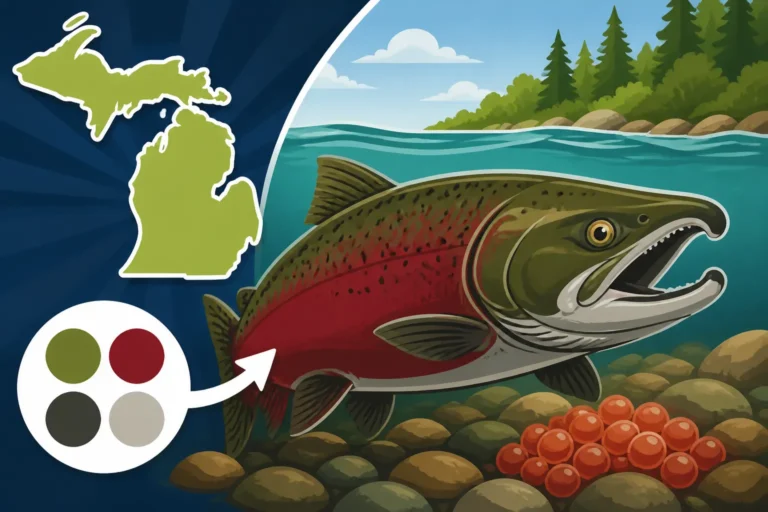
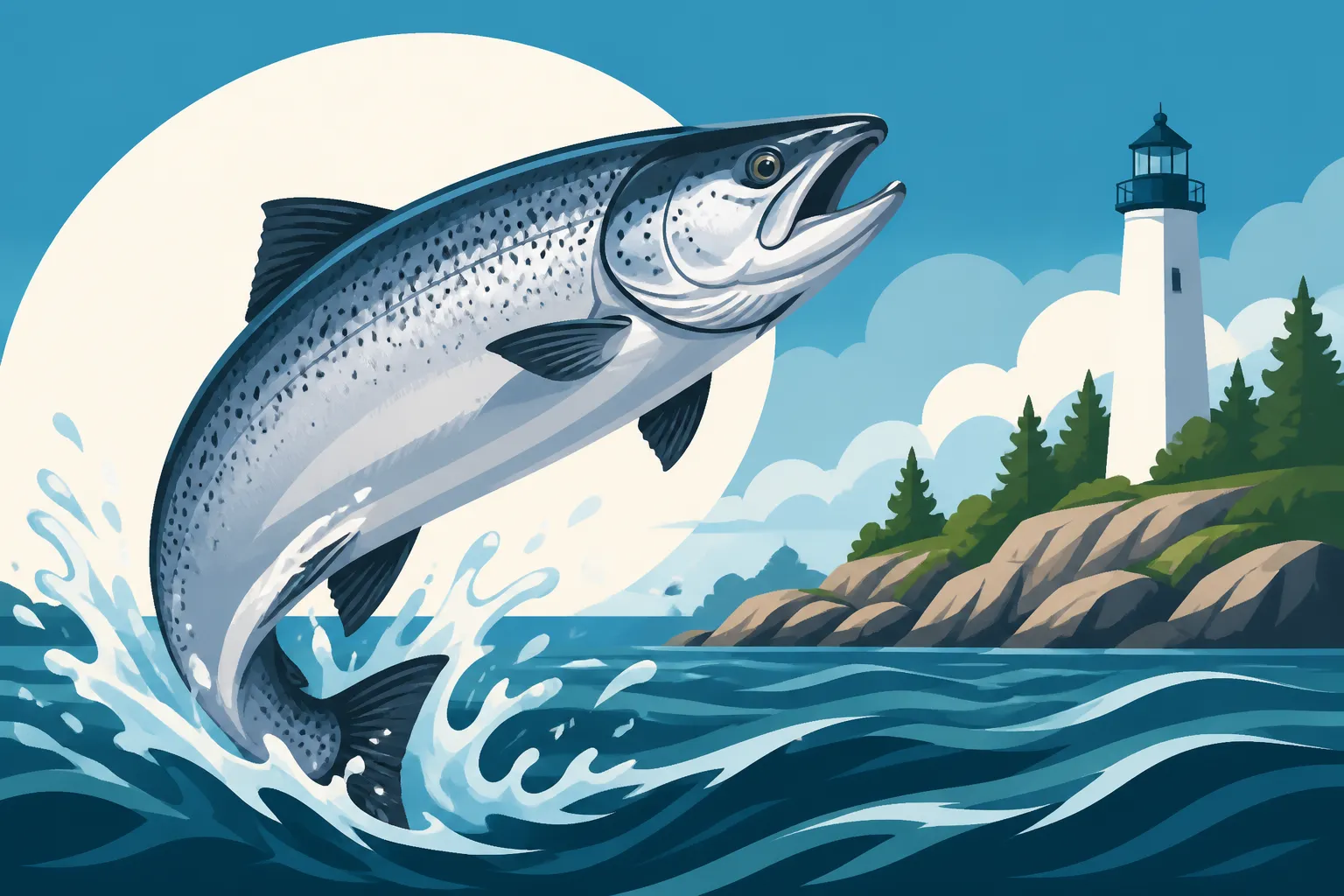
Atlantic Salmon typically have a more slender, elongated body shape compared to the deeper-bodied Chinook or Coho. Their caudal (tail) fin is usually subtly forked, rather than deeply forked like a lake trout, and often has very few or no spots, unlike the heavily spotted tails of Chinook. Look for small, distinct spots, often X-shaped or oval, above the lateral line on their silver flanks. The mouth of an Atlantic Salmon is generally smaller than a Chinook, and the gums are typically white, without the distinct black gum line you'd find on a Chinook. While Coho also have white gums, their tail spots are usually only on the upper lobe, and their overall body profile is a bit more robust than an Atlantic.
Knowing these subtle differences becomes second nature with experience, but it’s always a good idea to refresh your memory, especially if you're targeting a specific species. Misidentification could lead to inadvertently violating regulations, so a quick mental checklist can save a lot of headaches later.
Here’s a quick reference table to help differentiate some common salmonids you might encounter in Lake Huron:
| Feature | Atlantic Salmon | Chinook Salmon (King) | Coho Salmon (Silver) | Lake Trout |
|---|---|---|---|---|
| Body Shape | Slender, torpedo-shaped | Robust, deep-bodied | More slender than Chinook, deeper than Atlantic | Long, slender, often mottled or worm-like pattern |
| Tail Fin | Slightly forked, few/no spots | Heavily spotted on both lobes, deeply forked | Spots only on upper lobe, moderately forked | Deeply forked, often pale spots |
| Mouth/Gums | White gums, upper jaw extends to middle of eye | Black gums, teeth often sharp | White gums, upper jaw extends to back of eye | White/pale gums, often conical teeth |
| Spots | Few, distinct, often X-shaped, above lateral line | Heavy spotting on back and tail | Few, smaller spots on back, upper tail lobe | Light spots on dark background, no distinct patterns |
| Pectoral Fins | Relatively small | Larger, more pointed | Moderate size | Large, paddle-like |
Where to Find Them: Prime Lake Huron Hotspots
Lake Huron is a colossal body of water, and finding a needle in a haystack can feel easier than finding a specific fish species at times. However, Atlantic Salmon, like all fish, follow predictable patterns based on their life cycle, food sources, and environmental conditions. Knowing where to focus your efforts can drastically increase your chances of success.
Bays and River Mouths: Seasonal Gathering Points
One of the most reliable places to find Atlantic Salmon in Lake Huron, especially during certain seasons, is near the mouths of major rivers and within protected bays. While Atlantics don't naturally reproduce in these rivers as readily as some other salmon species, they still exhibit strong migratory behaviors, often returning to the rivers they were stocked in or seeking cooler water refuges. This behavior makes river mouths prime targets.
Consider areas like the mouth of the Au Sable River near Oscoda, or Thunder Bay near Alpena. These locations offer a confluence of freshwater currents, often cooler temperatures, and an abundance of baitfish that Atlantics prey upon. During the spring and fall, when water temperatures in the main lake are fluctuating, these river mouths can act as thermal breaks, drawing in salmon. In the spring, they might be cruising for baitfish after the ice breaks up, while in the fall, they often gather, exhibiting a mock spawning run, even if actual reproduction is unlikely. Anglers fishing from shore or in smaller boats can have excellent success casting spoons, stickbaits, or even fly fishing in these nearshore areas. It's a dynamic environment, so paying attention to water flow, clarity, and baitfish activity is key. Remember that Michigan Fishing Season Dates and Rules will always be your best friend when planning these trips.
Offshore Structure and Thermoclines
Venturing further out into the vastness of Lake Huron reveals another set of strategies for locating Atlantic Salmon. These fish are pelagic for much of their lives, meaning they live in the open water column, constantly on the move in search of food and comfortable temperatures. This is where understanding offshore structure and, crucially, the thermocline, becomes paramount.
The thermocline is a layer in the water column where the temperature changes rapidly. During the warmer months, this layer is a vital zone for many cold-water fish, including Atlantic Salmon. It provides a comfortable temperature range and often concentrates baitfish like alewives and smelt, which form the base of the Atlantics' diet. Using a good fish finder is indispensable here, not just for marking fish, but for identifying bait balls and the depth of the thermocline. You'll often find Atlantics cruising just above, within, or just below this temperature break.
Beyond temperature, offshore structure also plays a role. While Lake Huron might seem like an endless expanse of water, there are underwater features like ledges, drop-offs, and humps that can attract baitfish and, consequently, salmon. These areas act as ambush points or feeding grounds. Trolling techniques are often employed to cover vast amounts of water efficiently, allowing you to intercept these moving schools of salmon. It requires patience and persistence, but the reward of hooking into a powerful Atlantic Salmon in the open water of Lake Huron is truly exhilarating.
Mastering the Catch: Techniques for Lake Huron Atlantics
Catching Atlantic Salmon in Lake Huron isn't just about luck; it's about employing the right techniques and understanding their behavior. Whether you're a seasoned Great Lakes troller or prefer casting from shore, there are proven methods to entice these magnificent fish.
Trolling Strategies: Covering Water
For many Great Lakes anglers, trolling is the go-to method for targeting salmon and trout, and Atlantic Salmon are no exception. Trolling allows you to cover vast stretches of water, presenting your lures at specific depths and speeds until you find where the fish are active. The key to successful trolling for Atlantics on Lake Huron lies in precision and adaptability.
You'll want to employ downriggers, lead core line, or planer boards to get your lures down to the desired depths, which often correspond to the thermocline or baitfish concentrations. Start by experimenting with different depths until you start marking fish or getting strikes. Speed is also critical; generally, a trolling speed between 2.0 and 3.0 mph is a good starting point, but don't be afraid to vary it. Sometimes, a subtle speed change is all it takes to trigger a bite. Lure selection is equally important. Spoons, especially those mimicking alewives or smelt, are highly effective. Stickbaits, particularly those with a tight wobble, can also be deadly. Many anglers find a vast selection of these on Amazon, allowing for easy comparison and choice. Color patterns can vary day to day, so having a diverse tackle box is always a good idea. Consider bright colors on overcast days or in stained water, and more natural patterns in clear water. For a comprehensive look at the gear involved, read Trolling Gear for Michigan's Great Lakes.
River Mouth and Nearshore Casting
While offshore trolling is highly effective, not everyone has access to a fully rigged boat, and sometimes the most exciting fishing happens closer to shore. River mouths and nearshore areas on Lake Huron can offer fantastic opportunities for Atlantic Salmon, especially during migratory periods. This is a more active, hands-on style of fishing that many prefer.
When fishing river mouths, focus on areas where the river current meets the lake water, creating seams and eddies that concentrate baitfish. Early mornings and late evenings are often the most productive times, as salmon tend to move into shallower water to feed under low light conditions. Casting spoons, such as smaller Cleos or Dardevles, in silver, blue/silver, or green/silver patterns, can be incredibly effective. Cast out, let them sink to the desired depth, and retrieve with a varied retrieve, incorporating pauses and jerks to mimic a wounded baitfish. Stickbaits like Rapalas or ThunderSticks are also excellent choices, especially those designed for shallow water diving. Fly anglers can also find success here, particularly in the fall, using streamers that imitate baitfish. For those looking to stock up on a variety of casting lures, Amazon offers a convenient way to browse and purchase different brands and colors that might appeal to Atlantics in Lake Huron. This nearshore action can be quite dynamic, offering exciting strikes and powerful fights in a more intimate setting.
Essential Gear for Atlantic Salmon Anglers
Having the right gear is paramount when targeting a powerful species like Atlantic Salmon, especially in the vast and sometimes challenging conditions of Lake Huron. The appropriate rods, reels, lines, and lures not only increase your chances of success but also make the experience more enjoyable and efficient.
Rods, Reels, and Line: The Right Setup
Building a reliable setup starts with selecting the right rod and reel combination. For trolling on Lake Huron, a medium-heavy to heavy action rod, typically 8 to 10 feet in length, is ideal. These longer rods help absorb the shock of a hard strike and manage the fight of a strong salmon, while also spreading out lines when using planer boards. A moderate-fast to fast action provides the backbone needed to control a large fish while maintaining enough tip sensitivity to detect subtle bites. Pair this with a robust line-counter reel, which is essential for consistent depth control when trolling. Brands like Daiwa and Penn offer excellent options, and you can explore many reliable choices for Best Rods and Reels for Michigan Fishing and Trolling Gear for Michigan's Great Lakes.
When it comes to line, a good starting point is 20-30 lb monofilament or braided line for your main trolling line. If using braid, a fluorocarbon leader of 15-20 lb test is highly recommended for its abrasion resistance and invisibility in the water. For casting from shore or a smaller boat, a medium-heavy spinning rod (7-8 feet) with a matching spinning reel spooled with 10-15 lb fluorocarbon or braided line with a mono leader will give you excellent casting distance and fish-fighting power. Many anglers find it convenient to browse a wide array of options for lines, leaders, and pre-spooled reels on Amazon, ensuring they have the right test and material for the job.
Lures and Baits: What Gets Their Attention
Atlantic Salmon, like all predators, are opportunistic feeders, but they do show preferences for certain presentations. Understanding what kind of lures and baits to use, and when, can significantly increase your catch rate. The primary forage for Atlantics in Lake Huron is typically alewives and smelt, so lures that mimic these baitfish are always a good bet.
Spoons are undoubtedly one of the most effective lures for Atlantic Salmon, especially when trolling. Classic spoon designs like those from Michigan Stinger, Dreamweaver, or Evil Eye in sizes ranging from 3 to 5 inches are highly popular. Color patterns that feature silver, blue, green, and chartreuse, often with a contrasting tape or paint job, are perennial favorites. Experiment with different colors until you find what the fish are keying in on that particular day. For casting, smaller spoons and crankbaits, or stickbaits like Rapala Original Floaters or Husky Jerks, are excellent. These mimic injured baitfish and can provoke aggressive strikes. Soft plastic swimbaits rigged on a jig head can also be very effective, especially when fished near drop-offs or underwater structure.
While Atlantics primarily feed on baitfish, some anglers have success with natural baits like cut bait or alewives presented on a meat rig behind a flasher, particularly when trolling. However, artificial lures tend to be the more common and productive choice for these fish in Lake Huron. No matter your preference, having a diverse collection of spoons, stickbaits, and swimbaits in various colors and sizes is crucial for adapting to changing conditions, and you can stock up on a huge variety from vendors on Amazon.
Understanding Regulations and Conservation
Fishing for Atlantic Salmon in Lake Huron is a privilege, and it comes with the responsibility of understanding and adhering to the regulations designed to protect and sustain this unique fishery. Michigan's efforts to maintain this population are significant, and every angler plays a part in its ongoing success.
Michigan's Atlantic Salmon Rules
Michigan has specific regulations for Atlantic Salmon, which are distinct from other salmon and trout species. These rules are put in place to manage the population, particularly because the fish are primarily sustained through stocking programs rather than natural reproduction in Lake Huron. It's absolutely crucial that you consult the most current Michigan Fishing Guide (often available as a PDF online or at license retailers) before heading out. Regulations can and do change, so relying on old information is a recipe for trouble.
Typically, there will be specific daily possession limits for Atlantic Salmon, which may differ from the limits for Chinook, Coho, or even lake trout. There might also be minimum size limits that Atlantic Salmon must meet before they can be legally kept. These regulations are designed to allow enough fish to contribute to the overall population structure, even if it's primarily a put-grow-and-take fishery. Anglers also need a valid Michigan Fishing License Guide for Residents and Nonresidents to fish for any species in Michigan waters. Make sure you understand how to properly identify an Atlantic Salmon, as misidentifying it as another salmon or trout species could lead to fines or penalties if you keep an illegal fish. When in doubt, always release the fish.
Contributing to Future Generations
Catching an Atlantic Salmon is an incredible experience, and practicing good conservation habits ensures that this opportunity remains for future generations. While the DNR stocks Atlantic Salmon, successful catch and release practices are still vital, especially for fish that might be on the smaller side or if you've already met your daily limit.
When releasing fish, minimize handling time, keep the fish in the water as much as possible, and use proper de-hooking tools. If you're planning on releasing fish, consider using single, barbless hooks, as they cause less damage and are easier to remove. Supporting the stocking programs themselves is also a key part of conservation. The funds generated from fishing license sales directly contribute to these vital programs, as well as habitat restoration and fisheries management across the state. Every time you purchase a Michigan Resident Annual Fishing License Cost or a Michigan Nonresident Annual Fishing License Cost, you're directly investing in the future of fishing in Michigan, including the unique opportunity to pursue Atlantic Salmon in Lake Huron. Being a responsible angler means more than just following the rules; it means actively participating in the stewardship of our precious natural resources.
Disclaimer
This article is for general informational purposes only and does not constitute professional advice. Laws, prices and regulations vary by location and change over time. Consult a qualified professional for guidance on your specific situation.