Northern Pike Fishing in Michigan
Northern Pike, those toothy critters of Michigan's waters, often get a bad rap. Some anglers find them intimidating, while others struggle to consistently land these powerful predators. Maybe you've had a few frustrating outings, or perhaps you're just starting and feel overwhelmed by their reputation. But let me tell you, there's nothing quite like the thrill of a big pike hitting your line, and with a little knowledge, you can absolutely master Michigan pike fishing. This guide is going to strip away the mystery, covering everything from identifying these incredible fish to the best spots, gear, and techniques to help you hook into some true Michigan giants.
Understanding Michigan's Northern Pike
Before we dive into the nitty-gritty of catching these freshwater torpedoes, it's crucial to understand a bit about the Northern Pike themselves. They're often misunderstood, sometimes confused with their equally toothy cousin, the muskellunge, but pike have their own unique charm and habits that make them a fantastic sportfish in Michigan.
Identification and Key Characteristics
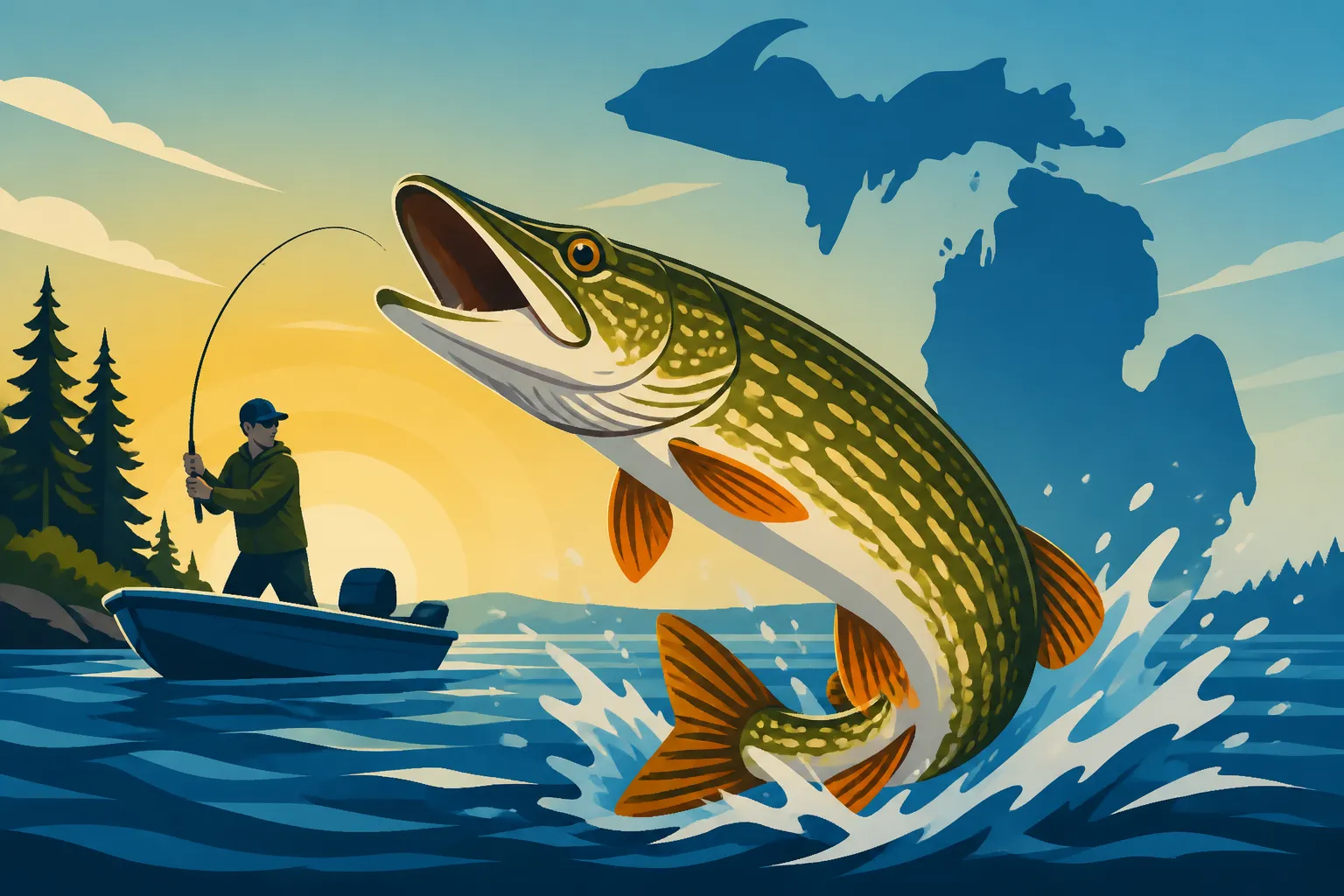
Northern Pike (scientific name Esox lucius) are easily identifiable once you know what to look for. They have a long, slender body, often described as torpedo-shaped, perfectly adapted for explosive bursts of speed to ambush their prey. Their coloration typically ranges from dark green to olive green on their backs, fading into a lighter, often yellowish-white belly. What truly sets them apart are the distinctive, light-colored, bean-shaped spots that speckle their sides. Unlike muskellunge, which have dark markings on a light background, pike have light markings on a dark background. This might seem like a small detail, but it's a reliable way to differentiate them when you're admiring your catch.
Another key identifier is their powerful, duckbill-shaped snout, armed with rows of razor-sharp teeth that curve inward. These teeth are no joke, designed to grasp and hold onto struggling prey, and they demand respect when handling a landed fish. Their dorsal and anal fins are located far back on their body, close to the tail, which is another adaptation for those sudden bursts of acceleration. On average, pike in Michigan might range from 20 to 30 inches, but don't be surprised to encounter fish well over 40 inches in healthy waters. They are truly magnificent predators.
Habitat and Preferred Environments
Northern Pike are incredibly adaptable and can be found in a wide variety of freshwater habitats across Michigan. They thrive in cool to moderately warm water and are often associated with shallow, weedy areas. Think lily pads, cattails, submerged grass beds, and fallen timber – these are prime ambush points where pike lurk, waiting for an unsuspecting meal to swim by. They are masters of camouflage in these environments, blending seamlessly with the vegetation.
While they appreciate shallow cover, larger pike will often retreat to deeper, cooler water during the heat of summer, especially in larger lakes. However, they will still make forays into the shallows during low light conditions or to patrol the edges of weed lines. You'll find them in almost every type of water body, from small inland lakes and large impoundments to the vast Great Lakes bays and slow-moving rivers. Their preference for these environments means they are often accessible to shore anglers and boaters alike, offering diverse fishing opportunities depending on your style and location.
Michigan's Northern Pike Regulations
Fishing for Northern Pike in Michigan, like any other species, comes with its own set of rules and regulations designed to protect fish populations and ensure sustainable angling for future generations. It's not just about what you catch, but how you catch it and what you keep. The Michigan Department of Natural Resources (DNR) publishes a comprehensive fishing guide annually, and it's your go-to source for the most up-to-date information. I always recommend having a copy, whether it's the physical digest or the Michigan's DNR Hunt Fish App for Licenses and Reporting on your phone.
Generally, Michigan has statewide minimum size limits and daily possession limits for Northern Pike, though these can vary by specific water body. For instance, while a common statewide minimum might be 24 inches, certain lakes or rivers might have special regulations, such as a protected slot limit (where fish within a certain size range must be immediately released) or different daily bag limits. This is often done to manage unique fisheries or to protect larger, spawning-aged fish. Always double-check the current regulations for the specific body of water you plan to fish. Catching a trophy pike is exhilarating, but knowing you're doing it legally and sustainably makes it even better. Ignoring these rules can lead to hefty Michigan Fishing Violation Penalties and Fines, which no one wants.
Where to Find Northern Pike in Michigan
One of the great things about Northern Pike fishing in Michigan is just how widespread these fish are. From the smallest backwater ponds to the expansive Great Lakes, there's a good chance a healthy pike population isn't too far from you. Knowing their preferred habitats, as discussed earlier, is the first step, but let's get more specific about some of Michigan's prime pike waters.
Best Inland Lakes for Pike
Michigan is blessed with thousands of inland lakes, and many of them hold fantastic Northern Pike populations. Generally, you're looking for lakes with good weed growth, varying depths, and plenty of forage fish. Some of the well-known hotspots include Houghton Lake, the largest inland lake in Michigan, which is famous not only for its walleye but also its plentiful pike. Torch Lake, while known for its clear waters and lake trout, also has good pike numbers, especially in its shallower, weedy bays. The chain of lakes around Traverse City, like Long Lake and Grand Traverse Bay's shallower arms, can also be quite productive.
Smaller, less pressured lakes, especially those with good fertility and abundant weeds, can often surprise you with some truly large pike. It often comes down to exploring and paying attention to local reports. Look for lakes with extensive shallow flats, submerged weed beds, and areas with coontail or lily pads. These are the nurseries for their prey, and therefore, the dining rooms for pike. You'll find that these lakes offer a wonderful mix of accessibility and challenging angling, making them ideal for a day trip or a longer fishing vacation.
Great Lakes Bays and Connecting Waters
While many think of salmon and trout when the Great Lakes come to mind, the shallow bays and connecting waters are incredible Northern Pike fisheries. Saginaw Bay on Lake Huron is a renowned walleye fishery, but its extensive shallow, weedy flats also teem with pike, often reaching impressive sizes. Similarly, areas like Green Bay on Lake Michigan (the Wisconsin side, but similar habitat continues into Michigan's Door County region) and various bays along the Upper Peninsula's Great Lakes shoreline can be fantastic.
The St. Marys River, connecting Lake Superior and Lake Huron, is another prime example. Its backwaters and slower currents provide ideal pike habitat. Even areas within Lake St. Clair, particularly around extensive weed beds and shallow flats, hold significant numbers of pike alongside its famous muskellunge and smallmouth bass. These Great Lakes areas often present opportunities for truly trophy-sized pike, as the sheer abundance of forage fish and vast habitat allows them to grow large. Fishing these larger water bodies can be a bit more challenging due to their size, but the rewards can be incredible.
River Systems with Strong Pike Populations
Michigan's river systems are also excellent places to target Northern Pike, especially the slower-moving sections, oxbows, and backwater sloughs. Rivers like the Muskegon River, while famous for its steelhead and salmon runs, has quieter sections with good pike populations. The Grand River, particularly around Grand Rapids and downstream, has numerous areas where pike hide in structure and slower currents.
The Detroit River, connecting Lake St. Clair and Lake Erie, is another surprising pike hotspot in its marshy edges and slower-moving side channels. The key in rivers is to look for areas where the current slows down, allowing weeds and structure to establish. Tributaries, creek mouths, and flooded timber are all excellent places to concentrate your efforts. Pike in rivers are just as aggressive as their lake-dwelling counterparts, often holding tight to cover and ambushing anything that swims by. Understanding the flow and identifying these slack water areas is critical to success.
Essential Gear for Northern Pike Fishing
Northern Pike are powerful, toothy predators, and your gear needs to be up to the challenge. Going in under-gunned will lead to frustration, broken lines, and lost fish. Having the right tools for the job not only increases your chances of landing that trophy but also ensures the safety of both you and the fish.
Rods, Reels, and Line Selection
When it comes to rods, you'll want something with a good backbone. A medium-heavy to heavy power spinning or baitcasting rod, typically in the 6'6" to 7'6" range, is a solid choice. The length provides good casting distance for covering water, and the heavy power gives you the leverage needed to set hooks firmly and control a strong-fighting pike. For reels, a durable spinning reel in the 3000-4000 series or a sturdy baitcasting reel with a good drag system is ideal. Look for reels that can handle heavier line and offer smooth retrieves.
Line choice is critical. Braided line, with its superior strength-to-diameter ratio and no stretch, is an excellent choice for pike. A 30 to 50 lb test braid will handle most situations, providing the power to pull fish out of thick cover. Since braid is visible, you'll want to tie on a fluorocarbon leader of 20-30 lb test, which is much less visible in water. However, the most important part of your leader system for pike is a steel or heavy fluorocarbon leader (60-100 lb test) at the very end, just before your lure or bait. Pike's teeth will slice through regular mono or fluoro like butter. Many anglers find pre-tied wire leaders convenient. You can find a wide range of options on platforms like Amazon, which makes it easy to compare brands and styles.
Lures, Baits, and Terminal Tackle
Pike are opportunistic feeders, and they'll strike a wide variety of lures and baits. The key is to present something that mimics their natural prey or provokes a reaction strike.
Lures:
- Spoons: Classic metal spoons like Daredevils or Johnson Silver Minnows are pike killers. Their wobbling action and flash are irresistible.
- Spinnerbaits: Large, flashy spinnerbaits with big blades create a lot of vibration and are excellent for working through weeds.
- Crankbaits: Dive-and-rise crankbaits, particularly those with a strong wobbling action, are great for targeting deeper weed edges or trolling.
- Soft Plastics: Large swimbaits or paddle-tail plastics rigged on heavy jig heads can be very effective, especially for wary pike.
- Jerkbaits: Suspending jerkbaits that can be twitched and paused are deadly, especially in cooler water.
| Lure Type | Best Use Cases | Key Characteristics | Retrieve Style |
|---|---|---|---|
| Spoons | Covering open water, casting, trolling, through weeds | Metal, wobbling action, flash, weedless | Steady retrieve, occasional pauses |
| Spinnerbaits | Heavy cover, weeds, shallower water | Flashy blades, skirted body, vibration | Steady retrieve, stop-and-go, burn and kill |
| Crankbaits | Deeper water, weed lines, trolling | Hard body, diving lip, wobbling action | Steady retrieve, varying speed, deflection off cover |
| Soft Plastics | Versatile, wary fish, slow presentations | Realistic profile, paddle tails, grub tails | Jigging, slow retrieve, twitching |
| Jerkbaits | Clear water, suspended fish, aggressive presentation | Suspending, twitching, erratic action | Twitch-twitch-pause, erratic retrieves |
Baits:
For live bait, large minnows, suckers, or shiners are incredibly effective, especially when fished under a bobber or on a quick-strike rig. Dead bait, particularly oily fish like herring or smelt, can also be very productive, especially during colder months or through the ice. A quick-strike rig, which uses two treble hooks to ensure a solid hookset without deep swallowing, is highly recommended for live and dead bait to ensure a healthy release.
Terminal Tackle:
Beyond your leader, you'll want strong snaps and swivels to connect your lures. Heavy-duty snap swivels (rated for 50 lbs or more) are essential. Don't skimp on quality here; a weak snap can mean losing a trophy fish.
Pike-Specific Accessories (nets, pliers, etc.)
Handling Northern Pike requires specific tools for both your safety and the fish's well-being.
- Landing Net: A large, rubberized landing net with a deep basket is crucial. The rubberized mesh protects the fish's slime coat and gills, while the deep basket keeps the fish contained. A sturdy handle is also a must. Trying to land a thrashing pike by hand is a recipe for disaster.
- Long-Nose Pliers or Hook Removers: These are absolutely non-negotiable. Pike have numerous sharp teeth, and reaching in with your fingers to remove a hook is extremely dangerous. Long-nose pliers or specialized hook removers allow you to safely extract hooks without getting your hands near those teeth.
- Jaw Spreader: While not always necessary, a jaw spreader can be incredibly helpful for safely opening a pike's mouth, especially if the hook is deeply set or the fish is particularly feisty. This creates a safe space for you to work with your pliers.
- Gloves: Heavy-duty fishing gloves can provide an extra layer of protection for your hands from both teeth and gill plates.
- Scale: If you plan on weighing your catch, a reliable digital scale is great, but ensure you zero it with your net first if weighing in the net, or use a Boga-style grip for direct weighing, which securely holds the fish by the lip.
Having these tools readily accessible and knowing how to use them will make your pike fishing experience much more enjoyable and safer for everyone involved. Investing in good quality accessories, especially those for fish handling, is a small price to pay for a successful and ethical angling experience.
Effective Northern Pike Fishing Techniques
Northern Pike fishing isn't just about having the right gear; it's also about knowing how to present your offerings in a way that triggers their aggressive strikes. Pike are ambush predators, and your techniques should play into that instinct.
Casting and Retrieving Lures
Casting and retrieving artificial lures is arguably the most popular and often most effective way to catch Northern Pike. The key is to cover water and present your lure in a way that mimics a struggling baitfish or an easy meal. When casting, aim for prime pike territory: weed edges, pockets in lily pads, fallen trees, and around submerged structure. Pay attention to how the lure feels in the water; you want it to have a natural, enticing action.
A common retrieve for many pike lures is a steady, medium-speed retrieve with occasional pauses or twitches. For spinnerbaits, a "burn and kill" retrieve can be deadly: reel it fast for a few seconds to create a lot of flash and vibration, then stop abruptly, letting the lure helicopter down. Pike often strike on the pause. For jerkbaits, a series of sharp rod twitches followed by a pause will make the lure dart erratically, imitating a wounded baitfish – a sight pike can rarely resist. Experiment with retrieve speeds and patterns until you find what the fish are responding to on a given day. Sometimes a slow, methodical retrieve is best, other times, they want something fast and aggressive.
Trolling for Trophy Pike
Trolling is an incredibly effective method for covering large areas of water, especially in bigger lakes or bays, and often yields some of the largest Northern Pike. When trolling, you're essentially dragging lures behind a boat at a slow, consistent speed, allowing them to swim at specific depths where pike are likely to be lurking. This technique is particularly good for targeting pike that are cruising deeper weed lines, structural breaks, or suspended in open water following baitfish schools.
Deep-diving crankbaits and large spoons are excellent choices for trolling. You'll want to experiment with different lure colors and sizes until you find what's working. Pay close attention to your boat speed; generally, a speed of 2-3 mph is a good starting point, but slight variations can make a big difference. Using a fish finder to locate schools of baitfish or prominent underwater structures will greatly increase your success. In larger bodies of water, trolling can be a patient game, but when that rod doubles over, you'll know it was worth the wait for a potentially massive pike.
Live Bait Rigs and Presentations
While artificial lures are exciting, live bait remains an incredibly effective method for tempting stubborn or large Northern Pike. There's something about a live, struggling minnow that pike just can't resist. The most common live bait presentation involves a large float (bobber) and a quick-strike rig. The float allows you to suspend your bait at a specific depth, usually just above a weed bed or structure, and visually signals a bite.
When using live bait, select a sturdy float that can support the weight of your baitfish without sinking. Hook your live minnow, sucker, or shiner through the back, just behind the dorsal fin, being careful not to injure its spine, which allows it to swim naturally. You can also fish live bait on the bottom using a slip sinker rig, especially if targeting deeper areas. The key to live bait fishing for pike is patience. Let the fish take the bait, and when the float disappears or the line starts to peel off, give it a few seconds before setting the hook to ensure the pike has fully committed to the meal. Remember, for a healthier release, a quick-strike rig with two treble hooks is far superior to a single hook, as it minimizes the chances of the fish swallowing the bait deeply.
Seasonal Strategies for Michigan Pike
Northern Pike behavior and locations shift with the seasons, largely driven by water temperature and the availability of their preferred forage. Understanding these seasonal patterns is key to consistently finding and catching them throughout the year in Michigan.
Spring Pike Fishing Hotspots
Ah, spring in Michigan! After the long winter, pike are often among the first fish to become truly active. This is a fantastic time to target them, especially just after ice-out and into the spawning period. In early spring, when water temperatures are still quite cold (in the low 40s to low 50s Fahrenheit), pike move into shallow, dark-bottomed bays and flats that warm up first. These are often the same areas they'll use for spawning. Look for areas with emergent vegetation like cattails, bulrushes, or last year's decaying weeds.
Large female pike will be gorging themselves to regain energy after spawning, while males will still be lingering. Big spoons, slow-rolled spinnerbaits, and large soft plastics can be incredibly effective when fished slowly through these warming shallow areas. As the water warms slightly further, pike become more aggressive and will readily hit fast-moving jerkbaits or crankbaits. The post-spawn period, when pike are hungry and recouping, can offer some of the most intense action of the year. This is a prime time to find them in depths of 2-8 feet, actively hunting.
Summer Pike Tactics
Summer brings warmer water temperatures, which can push some pike, especially larger ones, out of the super-shallow waters they frequented in spring. While smaller pike might remain in the thickest shallow cover, bigger fish often seek out cooler, deeper water adjacent to structure or extensive weed lines. This doesn't mean they're gone from the weeds entirely; they'll often position themselves on the deeper edges of weed beds, submerged humps, or near drop-offs where they can quickly dart into the shallows for a meal.
Trolling with deep-diving crankbaits or large spoons along these deeper weed lines (often 10-20 feet) can be very effective during the summer months. Casting large spinnerbaits or weedless spoons into weed pockets or along the outside edges of vegetation during low-light periods (early morning, late evening) can also produce. Live bait, suspended under a slip bobber just above the thermocline or at the edge of a deep weed line, is another killer summer strategy. The key is to understand that while they still love cover, their definition of "cover" might shift to deeper, cooler options in the peak heat of summer.
Fall Pike Aggression and Patterns
Fall is arguably one of the best times of the year to chase trophy Northern Pike in Michigan. As water temperatures begin to drop, pike enter a pre-winter feeding frenzy, trying to pack on as much weight as possible before the lean months of ice fishing. They become incredibly aggressive and will often move back into shallower areas, especially those with good remaining weed growth, to feed heavily on schooling baitfish.
Look for pike concentrating around deep weed edges, points, and channel swings. Large crankbaits, swimbaits, and big spinnerbaits are all excellent choices. Trolling big lures can also be exceptionally productive as pike often cruise open water, ambushing baitfish. Don't be afraid to use larger presentations now; big pike are looking for big meals. This is also a fantastic time for live bait, particularly large suckers or shiners, fished on quick-strike rigs. The cooler water means pike are less likely to be stressed by a fight, making catch and release even more viable. Michigan Fishing Season Dates and Rules often remain open for pike well into late fall, offering plenty of opportunity.
Ice Fishing for Northern Pike
Michigan's winter transforms many of its lakes into prime ice fishing grounds, and Northern Pike are a hugely popular target through the ice. Ice fishing for pike is a unique and often thrilling experience. Pike remain active under the ice, continuing their predatory habits. You'll often find them in similar locations to open water fishing – around weed beds, submerged timber, and along drop-offs – just accessed from above!
The primary methods for ice fishing pike are tip-ups and spearing. Tip-ups allow you to set multiple lines with large live or dead bait (suckers, shiners, smelt) suspended at various depths. When a pike takes the bait, the flag on the tip-up pops up, signaling a bite. It's a fantastic way to cover a large area and increase your chances. Jigging with large spoons or swimbaits can also entice bites, especially if you're actively searching for fish with a flasher or fish finder. Make sure your holes are large enough to land a big pike, and always have your long-nose pliers handy. For a full breakdown of winter angling, check out our Michigan Ice Fishing Guide. Knowing How to Tie a Tip-Up for Pike Fishing is a fundamental skill for winter success.
Catch and Release Best Practices and Safety
Northern Pike are not only magnificent sportfish but also a valuable part of Michigan's aquatic ecosystem. Practicing proper catch and release techniques is vital for their survival, especially for the larger, breeding-stock fish. Plus, let's be honest, those teeth demand a careful approach for your own safety!
Handling Pike Safely for Release
The first rule of handling a Northern Pike is to be prepared. Before the fish even comes out of the water, have your large, rubberized net, long-nose pliers, and possibly a jaw spreader ready. Once you've landed the fish in your net, avoid lifting it vertically by the line, which can damage its jaw or internal organs. Keep the fish in the water as much as possible, especially if you plan to quickly photograph and release it.
When you do bring the fish into the boat or onto the ice, handle it gently. The best way to secure a pike is to grasp it firmly behind the head, just behind the gill plates. This area is firm and provides a good hold without compressing its vital organs. You can also carefully use a specialized lip grip (like a Boga-style grip), but be mindful not to let the fish thrash too much, as this can still cause injury. Support the fish's body with your other hand, particularly its belly, especially if it's a larger fish. Never hold a pike by the eye sockets or by putting your fingers into its gills unless you intend to harvest it immediately.
Dealing with Pike's Teeth and Gills
This is where your long-nose pliers and potentially a jaw spreader become your best friends. Pike have a mouthful of incredibly sharp, inward-pointing teeth. Trying to reach in with your bare hands is a guaranteed way to get cut. Once you have a secure grip on the pike, use your jaw spreader to gently open its mouth, exposing the hook. Then, use your long-nose pliers to carefully back out the hook. If the hook is deeply set, take your time. Don't rip or tear at the fish. Sometimes, it's easier to cut the line and leave the hook in, especially if it's a single hook, as they can sometimes dissolve or rust out. However, if using treble hooks, it's always best to remove them.
Avoid touching the gills at all costs. The gills are extremely delicate and vital for the fish's respiration. Any damage to the gills can be fatal for the pike, even if it swims away strongly. If you accidentally snag a gill, consider harvesting the fish (if within legal limits) to prevent waste. After hook removal, quickly snap a photo if desired, and then gently place the pike back in the water, supporting its belly until it swims away under its own power. Sometimes a gentle push forward and back (known as "fanning") helps water flow over its gills, assisting in recovery.
Ethical Angling and Conservation
Beyond proper handling, ethical angling for Northern Pike encompasses a broader respect for the resource. This means knowing and following Michigan Fishing Regulations Every Angler Should Know, understanding bag and size limits, and respecting private property. It also means using appropriate gear; for instance, using excessively light tackle for pike often results in prolonged fights that exhaust the fish, reducing its chances of survival after release. A good quality net helps immensely in reducing stress on the fish.
Consider the environmental impact of your fishing. Pack out what you pack in, and avoid leaving any trash or discarded fishing line, which can be deadly to wildlife. By practicing responsible catch and release, using proper handling tools, and adhering to regulations, we ensure that Michigan's fantastic Northern Pike populations remain healthy and continue to provide exciting angling opportunities for generations to come. It's about being a steward of the environment as much as it is about catching fish.
Cooking and Preparing Your Northern Pike
While many anglers prefer to catch and release Northern Pike, especially the larger ones, they are also a delicious fish to eat when properly prepared. Pike have a reputation for being "bony," but with the right filleting technique, you can easily overcome this challenge and enjoy some fantastic table fare.
Cleaning and Filleting Pike The Y-bone Challenge
The main reason some shy away from eating pike is the presence of the "Y-bones" or "pin bones." These are small, Y-shaped bones that run along the lateral line in the upper portion of the fillet. If you try to fillet a pike like a typical panfish or walleye, you'll end up with a lot of tiny, annoying bones. However, there's a specific filleting technique that completely removes these bones, leaving you with beautiful, boneless pieces of meat.
The "five-fillet" or "seven-fillet" method is the key. Essentially, you make cuts to isolate the boneless meat from the sections containing the Y-bones. This involves making your initial cuts down the back and sides, then carefully slicing around the Y-bone section to remove it, often resulting in two smaller boneless strips from each side, plus the belly meat. It takes a little practice, but once you get it down, you'll be amazed at how much boneless meat you can get from a pike. There are many excellent tutorials online that visually demonstrate this process, and watching one can be incredibly helpful. It's similar in concept to how you might fillet a large species like a How to Fillet a Muskellunge, but with its own specific nuances.
Popular Cooking Methods
Once you've mastered the art of filleting and have those beautiful, boneless pike fillets, you're ready to explore a world of delicious cooking options. Pike meat is white, firm, and has a mild, slightly sweet flavor, making it incredibly versatile.
- Frying: A classic choice. Dredge your pike fillets in a seasoned flour or cornmeal mixture, then pan-fry or deep-fry until golden brown and flaky. The firm texture holds up beautifully to frying, and it's a crowd-pleaser.
- Baking or Broiling: For a healthier option, baking or broiling pike fillets with a squeeze of lemon, a pat of butter, and some fresh herbs (dill is fantastic with pike!) is simple and delicious. The firm flesh won't fall apart.
- Grilling: Pike fillets can also be grilled, especially if they are thicker pieces or you use a grill basket to prevent sticking. A marinade can add extra flavor and keep the fish moist.
- Fish Cakes or Patties: If you have smaller pieces of boneless pike, they can be flaked and used to make delicious fish cakes or patties, mixed with breadcrumbs, herbs, and spices.
- Pickling: Pickled pike is a traditional delicacy, especially in the Upper Midwest. The vinegar solution softens any remaining tiny bones and infuses the fish with incredible flavor. This method is often reserved for smaller pike.
No matter how you prepare it, fresh Michigan Northern Pike is a culinary treat that's well worth the effort of filleting. Don't let the bones deter you; with the right technique, you'll be enjoying these fantastic fish on your dinner plate in no time.
Disclaimer
This article is for general informational purposes only and does not constitute professional advice. Laws, prices and regulations vary by location and change over time. Consult a qualified professional for guidance on your specific situation.