When Does the Michigan Fishing License Year Start
It's incredibly frustrating when you're all geared up for a fantastic day on the water, only to realize you're unsure if your Michigan fishing license is still valid or when it actually expires. The Michigan Department of Natural Resources (DNR) has a specific calendar for licenses that often catches anglers off guard, leading to confusion and sometimes, an unwelcome surprise when you discover your license has run out. This comprehensive guide will clear up exactly when the Michigan fishing license year starts and ends, ensuring you're always prepared and compliant for your next angling adventure.
Understanding the Michigan Fishing License Calendar
Many states operate on a standard calendar year for fishing licenses, where a license purchased in January is typically valid until December 31st of that same year. However, Michigan does things a little differently, and knowing this distinction is key to maximizing your license's value and avoiding any unintentional violations.
The Annual Cycle: April 1st to March 31st
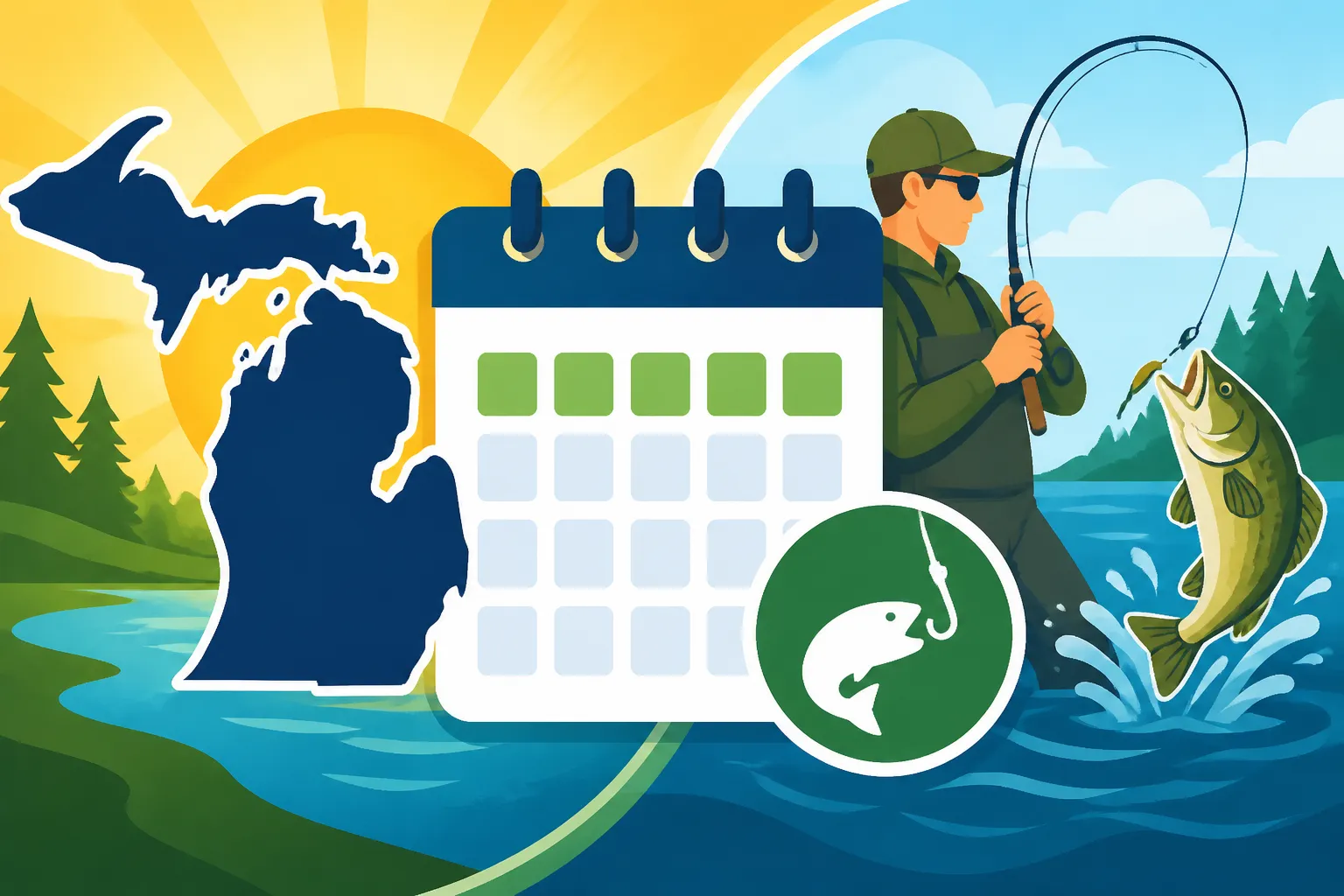
Let's cut right to it: the Michigan fishing license year always begins on April 1st and concludes on March 31st of the following year. This means that any annual fishing license you purchase, whether it's on April 1st, July 15th, or even February 1st, will expire on March 31st. It's a hard and fast rule, not a rolling 12-month period from your purchase date. For instance, if you purchase your annual license on May 15, 2024, it will be valid until March 31, 2025. This fixed annual cycle is a critical piece of information for every Michigan angler, and understanding it helps tremendously in planning your fishing outings. You can find more details on this specific timeframe in our guide on Michigan's Fishing License Year Runs April to March.
This particular start date aligns with some significant shifts in Michigan's angling opportunities. April 1st traditionally marks the opening of trout season on many inland waters, and the much-anticipated spring steelhead runs are often in full swing on our larger rivers like the Manistee and Au Sable. By having the license year reset on this date, it ensures that anglers are covered for these prime spring fishing events right from the get-go. It also helps the DNR manage their fiscal year and align conservation efforts with the natural cycles of fish populations and angling pressure across the state.
Why This Specific Start Date Matters
The April 1st start date isn't arbitrary; it's strategically chosen to coincide with the resurgence of fishing activity across Michigan. As the ice recedes and water temperatures begin to rise, many species become active, and anglers are eager to get back out. For instance, the Lower Peninsula Walleye Opener usually falls in late April, and migratory fish like steelhead are making their way upriver. Having a consistent start date simplifies the regulatory framework for these dynamic periods. Our guide on Michigan Fishing Season Dates and Rules offers a deeper dive into how these dates line up.
For dedicated anglers, purchasing your license right around April 1st ensures you get the full benefit of its validity. Think of it as hitting the ground running for the entire season. If you're passionate about chasing a wide variety of species throughout the spring, summer, and fall, getting your license early means you won't miss a beat. This structured approach helps both anglers and the Michigan DNR, ensuring that the necessary permits are in place as the fishing year truly kicks off. It also supports the immediate funding needs for critical spring stocking and habitat management programs that gear up at this time.
Common Misconceptions and Planning Your Season
The unique Michigan fishing license year often leads to misunderstandings, especially for new anglers or those visiting from out of state where different rules might apply. Being aware of these common pitfalls can save you money and headaches.
Avoiding the "Calendar Year" Trap
One of the most frequent misconceptions is assuming your Michigan fishing license operates on a calendar year (January 1st to December 31st) or is valid for a full 12 months from the date of purchase. It's a natural assumption, as many other licenses and memberships work that way. However, as we've discussed, Michigan is different. If you bought your license in, say, August 2024, thinking it would last until August 2025, you'd be disappointed to find it expires on March 31, 2025. This means you'd only get about eight months of fishing for the price of an annual license.
This misunderstanding can lead to feeling short-changed or, worse, inadvertently fishing without a valid license if you don't realize it's expired. Always double-check the actual expiration date printed on your license, or easily viewable through the Michigan DNR's online system or the Hunt Fish App. Our detailed article on Michigan Fishing License Expiration Date elaborates further on this crucial aspect, helping you understand precisely when your fishing privileges conclude for the season. It’s always best to be informed rather than caught off guard while out on the water.
Strategizing Your License Purchase
Given the April 1st to March 31st cycle, the optimal time to purchase your annual Michigan fishing license is, naturally, right around April 1st. This ensures you get the maximum possible usage out of your investment, covering all four seasons of angling opportunities. If you're a year-round angler, or someone who loves the spring runs, summer bass, fall salmon, and even a bit of ice fishing, buying early is a no-brainer.
However, if your fishing plans are more sporadic or confined to a specific part of the year, a different strategy might be more economical. For instance, if you only plan to fish during the fall salmon run or for ice fishing in the winter, purchasing an annual license in October might mean you only get five months of use before it expires on March 31st. In such cases, you might consider alternatives like the short-term licenses if they align better with your specific trip duration. For those who enjoy consistency, making it a ritual to renew your license each spring is a great way to stay on top of things. More tips on this can be found in our guide on Michigan Fishing License Renewal Each Spring.
Here's a quick comparison to help you strategize:
| License Type | Validity Period | Ideal Purchase Time | Best For |
|---|---|---|---|
| Annual License | April 1st to March 31st (following year) | March (for current year) or April 1st (new year) | Anglers who fish year-round, or extensively throughout the spring, summer, and fall. Maximizes value by covering most of the active fishing season. |
| 24-Hour License | 24 hours from selected start time | Immediately before your intended 24-hour fishing trip | Short, spontaneous trips, or when visiting Michigan for a single day of fishing. Perfect for an impromptu weekend visit or a dedicated day on the Detroit River without committing to an annual license. |
| Annual (late purchase) | From purchase date to March 31st (following year) | Only if planning to fish exclusively in the immediate months leading up to March 31st and then renew. | Anglers who are only getting into fishing late in the year and don't want to wait until April 1st, or perhaps those who have a very specific, limited window of fishing planned before the March 31st expiration. Often less cost-effective. |
It’s always worth weighing the options, especially when planning a trip or considering how much you'll fish in a given period.
Special Considerations and License Types
Michigan offers a variety of fishing licenses designed to accommodate different needs, from local residents to out-of-state visitors. Understanding these options, and how their validity periods might differ from the standard annual cycle, is crucial.
Short-Term Licenses and Their Validity
While the annual license adheres strictly to the April 1st to March 31st cycle, Michigan also offers a very popular short-term option: the 24-hour fishing license. This license is a game-changer for many anglers, especially those who might only get out on the water for a single day or are just visiting. The beauty of the 24-hour license is that it's valid for exactly 24 hours from the specific date and time you choose at the point of purchase. It's not tied to the April 1st annual cycle, which makes it incredibly flexible. For example, if you buy a 24-hour license at 2:00 PM on a Saturday, it's good until 2:00 PM on Sunday. Our dedicated guide, Michigan 24-Hour Fishing License Explained, delves into all the specifics.
This flexibility makes short-term licenses ideal for non-residents passing through, or for Michigan residents who have a last-minute opportunity to hit their local lake. When you're comparing a Michigan 24-Hour License vs Annual License: Which Is Cheaper, consider your planned fishing frequency. If you're only going out once or twice a year, the 24-hour option could be more cost-effective. Beyond the basic annual and 24-hour options, Michigan also offers different price points and types for residents, nonresidents, seniors, and youth, which are all covered in detail in our Michigan Fishing License Costs and Types Explained article. You can often purchase these short-term licenses instantly online or via the Michigan DNR's mobile app, making it incredibly convenient.
Renewals and Staying Compliant
Renewing your Michigan fishing license is a straightforward process, but it's essential to remember that annual licenses require renewal every spring before April 1st to maintain continuous coverage. While the Michigan DNR often sends out helpful email reminders, it's ultimately every angler's personal responsibility to ensure they have a current license before casting a line. You can easily purchase or renew your license online through the DNR's website, at one of the many authorized license retailers across the state (like your local bait shop or a major outdoor retailer), or directly through the Michigan's DNR Hunt Fish App for Licenses and Reporting on your smartphone. Many anglers find the app particularly convenient for on-the-go purchases.
Failing to renew or fishing without a valid license can lead to significant penalties, including fines, potential court appearances, and even the confiscation of your fishing gear. It’s simply not worth the risk. Imagine planning a dream trip to fish for salmon on Lake Michigan, only to have your day ruined by an enforcement officer because you forgot to renew. Don't let a simple oversight turn into a costly mistake. Our article, What Happens if You Fish in Michigan Without a License, outlines the potential consequences and underscores the importance of compliance. Always make it a habit to check your license status before heading out.
Where Your License Money Goes
It's natural to wonder where your hard-earned money goes when you purchase a fishing license. In Michigan, these fees are vital, directly supporting the health and future of the state's incredible fisheries and natural resources.
Funding Conservation Efforts
Every dollar collected from fishing license sales in Michigan plays a critical role in funding vital conservation and management efforts by the Michigan DNR. These funds are not simply absorbed into a general state budget; they are specifically earmarked for projects that directly benefit anglers and the aquatic ecosystems they enjoy. For example, a significant portion goes toward fish stocking programs, ensuring that species like Chinook salmon, Walleye, and various trout continue to thrive in our Great Lakes and inland waters. It also supports crucial habitat restoration initiatives, such as improving river health for steelhead or protecting wetlands that serve as important nurseries for young fish.
The funds also support scientific research, allowing biologists to monitor fish populations, track disease, and make informed decisions about bag limits and size restrictions, ensuring sustainable fishing for generations to come. Without these license fees, many of these essential programs would simply not be possible. It's a direct investment in the very resource that brings so much joy to anglers across the state. Our comprehensive guide on Where Michigan Fishing License Money Goes provides an in-depth breakdown of how these funds are allocated, giving you peace of mind that your contribution makes a tangible difference.
Supporting the Michigan DNR
Beyond direct conservation projects, fishing license revenue provides essential operational support for the Michigan DNR, the agency tasked with managing all of Michigan's natural resources. This includes funding for law enforcement efforts by conservation officers who patrol our lakes and rivers, ensuring everyone adheres to regulations that protect fish populations. These officers are often on Amazon looking for new equipment to make their jobs easier, but their salaries and training are directly supported by license sales. Additionally, funds go towards maintaining public access sites, like boat launches, fishing piers, and shoreline access points, ensuring that anglers have ample opportunities to enjoy Michigan's waters.
These state-level funds are often leveraged to unlock additional federal funding through programs like the Sport Fish Restoration Act. This act, funded by excise taxes on fishing equipment and motorboat fuel, matches state contributions, effectively doubling the impact of your license purchase. This creates a powerful financial engine for conservation. By supporting the DNR, you're not just buying a piece of paper; you're actively contributing to the sustainable management of one of Michigan's most cherished natural assets. Staying informed about regulations, which are detailed in our Michigan Fishing Regulations Every Angler Should Know article, and supporting the DNR through license purchases ensures that these resources remain vibrant and accessible.
Disclaimer
The information provided in this guide is for general informational purposes only and does not constitute legal advice. Fishing regulations and license requirements are subject to change. Always consult the official Michigan Department of Natural Resources (DNR) website or their annual fishing guide for the most current and accurate information before engaging in any fishing activities.