How to Fish for Pike in Weed Beds
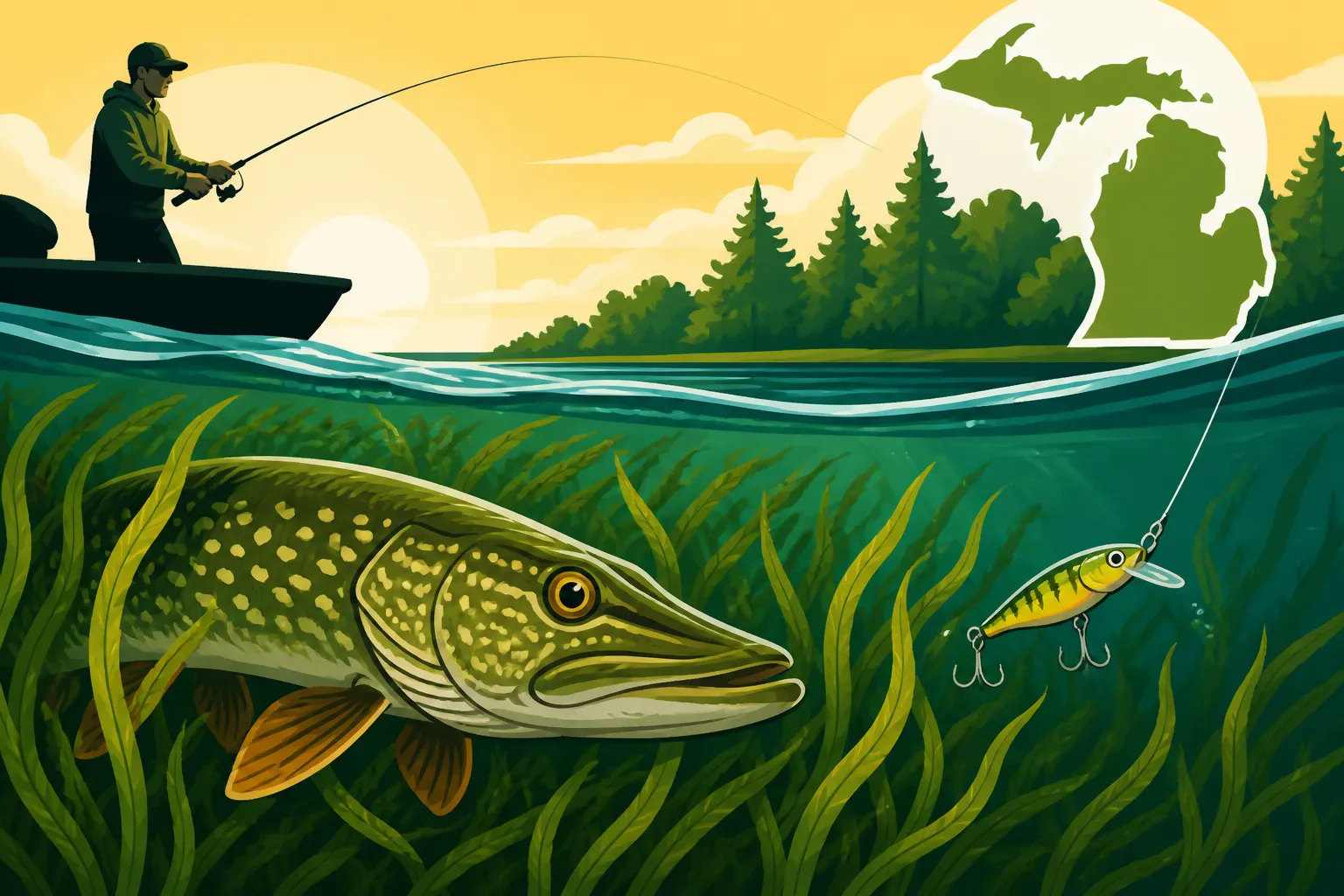
That feeling when you're staring at a beautiful, dense bed of submerged weeds in a Michigan lake, knowing for a fact that there are northern pike lurking within, but you just can't seem to get your lure to them without snagging every single time? It's incredibly frustrating, and it's a common dilemma for many anglers. Those weed beds, while challenging, are absolute magnets for pike, offering them perfect ambush points and cover. This comprehensive guide will equip you with the knowledge, gear, and techniques to confidently tackle those weedy sanctuaries and consistently put pike in your net.
Understanding Northern Pike Behavior in Weed Beds
To effectively fish for northern pike in weed beds, you first have to think like a pike. These aggressive predators aren't just hiding in the weeds by chance; they're there for very specific, strategic reasons. Understanding these reasons will drastically improve your success rate.
Why Pike Love Weeds
Weed beds are prime real estate for northern pike, especially in Michigan's abundant lakes and rivers. Think of them as underwater jungles, providing everything a predator like a pike needs to thrive. First and foremost, weeds offer unparalleled cover. Pike are ambush predators, meaning they prefer to lie in wait, hidden from their prey, before launching a lightning-fast attack. The dense foliage of submerged weeds or lily pads allows them to remain camouflaged, blending into their surroundings until the perfect moment strikes. This cover also protects them from larger predators, although a full-grown pike usually doesn't have much to fear in most Michigan waters.
Beyond just cover, weed beds are also bustling cafeterias for a pike. Smaller baitfish, panfish like bluegill and crappie, and even juvenile perch all seek refuge and food within these dense aquatic plants. This constant supply of potential meals means pike don't have to expend a lot of energy hunting in open water. They can simply position themselves along a weed edge, in a pocket, or right within a sparse section, waiting for an unsuspecting meal to swim by. The warmer water found in shallower, weedy areas can also attract baitfish, further drawing pike in, particularly during cooler periods or the edges of the fishing season.
Identifying Productive Weed Structures
Not all weed beds are created equal when it comes to holding pike. While any patch of green might hold a smaller pike, the real trophy fish often favor specific structures or transitions within these weedy environments. Look for irregularities: points, pockets, lanes, or breaks in the weed line. A weed point that extends out into deeper water creates a natural ambush corridor where pike can intercept baitfish moving along the edge. Similarly, a distinct pocket or indentation within a large weed mat provides a confined space for a pike to lurk, especially if it's near deeper water or a channel.
The type of weeds matters too. While dense, impenetrable mats can be frustrating to fish, pike often position themselves on the edges of these mats or in sparse sections where they can still move and strike. Look for areas where emergent weeds like lily pads meet submerged coontail or milfoil. These transition zones often concentrate baitfish and, consequently, pike. Also, don't overlook isolated clumps of weeds, especially those growing on hard bottom or near structural elements like rocks or old stumps; these can be dynamite spots for a single, large pike looking for its own private hunting ground. Understanding these nuances is key to knowing Michigan's Most Popular Fish Species and where to find them.
Essential Gear for Conquering Weed Beds
Fishing heavy cover like weed beds demands a specific setup. Using the wrong gear is a recipe for snags, lost lures, and heartbreak. You need equipment that can handle the abuse, rip through weeds, and muscle out a big pike.
Rods, Reels, and Line: The Power Trio
When targeting pike in weeds, forget your finesse setups. You need power and backbone. A heavy-action casting rod, typically 7 to 8 feet long, is your best friend. The length helps with casting accuracy and provides leverage to steer fish out of heavy cover. A fast tip is beneficial for precise casts into small pockets and for feeling subtle bites, but the real power should come from the mid-section and butt of the rod.
Pair this with a sturdy baitcasting reel. Look for a reel with a strong drag system and a decent gear ratio (around 7.1:1 or higher) to quickly pick up slack line and retrieve lures effectively, especially after a strike. You'll often be casting heavier, weedless lures, so the robust construction of a good baitcasting reel from brands available on platforms like Amazon is crucial.
For line, there's really only one choice for weed beds: braided line. Monofilament stretches too much, making it hard to feel bites and set hooks through weeds, and it abrades easily. Fluorocarbon, while low-stretch and abrasion-resistant, can still get bogged down and cut in heavy vegetation. Braided line, with its zero stretch and incredible strength, allows you to feel everything, set solid hooksets, and, critically, cut through weeds if your lure gets snagged or a fish dives deep into the cover. Opt for 50-80 pound test braid; it might seem like overkill, but it's not when you're battling a strong pike in thick vegetation. This setup is quite different from what you might use for something like Best Rods and Reels for Michigan Fishing for open water panfish.
Lures and Leaders: Weedless Wonders
The choice of lures is paramount when fishing weed beds. You need lures designed to either slide over, through, or around vegetation without accumulating it or getting hung up.
- Spinnerbaits: These are absolute workhorses for weed beds. Their single, upturned hook, often shielded by a wire frame, makes them remarkably weedless. The flash and vibration of the blades draw attention, and they can be retrieved at varying depths. Look for models with single Colorado blades for maximum thump and lift in dense cover, or willowleaf blades for faster retrieves along weed edges.
- Jigs with Weed Guards: Texas-rigged soft plastic baits on a heavy-duty jig or a jig with a brush guard can be effective. Consider creatures baits, craws, or large worms. The key is to ensure the hook point is completely protected to prevent snagging.
- Topwater Baits (Frogs, Buzzbaits): For fishing over dense mats or lily pads, nothing beats a topwater frog or a weedless buzzbait. These lures create exciting surface commotion, and pike absolutely explode on them. Frogs, in particular, can be walked or popped directly over the thickest cover, making them incredibly effective and thrilling.
- Soft Plastic Swimbaits/Paddle Tails: Rigged weedless on a weighted swimbait hook or a keel-weighted hook, these can be fantastic for swimming just above or through sparse weeds. Their realistic profile and action are irresistible to pike. Many anglers find great options for these on Amazon, allowing them to experiment with different sizes and colors.
- Spoons: Especially weedless spoons like the Johnson Silver Minnow, these can be jigged or retrieved through thinner weeds, fluttering and flashing to attract strikes. Their design helps them shed vegetation.
No matter the lure, a leader is non-negotiable for pike. Their razor-sharp teeth will make short work of straight braided line. While a heavy fluorocarbon leader (40-60 lb test) can work for stealthier presentations, a wire leader is often preferred for absolute bite protection, especially if you're targeting larger fish. A short, roughly 8-12 inch wire leader with a strong snap swivel is ideal for quickly changing lures. This is also a good tip for when you're using similar lures for Best Lures for Muskellunge.
| Lure Type | Best Application | Pros | Cons | Retrieve Speed |
|---|---|---|---|---|
| Spinnerbait | Edges, sparse weeds, through open lanes | Highly weedless, good flash/vibration | Can still pick up some weeds, not for mats | Medium to Fast |
| Topwater Frog | Over dense mats, lily pads, heavy surface cover | Extremely weedless, exciting strikes, noisy | Slower presentation, only for surface bites | Slow to Medium |
| Weedless Jig | Pockets, holes in cover, sparse bottom weeds | Can be fished vertically, natural profile | Requires careful rigging, slower retrieve | Slow |
| Soft Plastic Swimbait | Sparse to medium weeds, along edges | Versatile, realistic action, silent | Needs proper weedless rigging, can snag | Medium |
| Weedless Spoon | Sparse weeds, open water near cover | Flashes well, casts far, sheds some weeds | Can get snagged in dense cover, less action | Medium |
Mastering the Attack: Techniques for Weedy Waters
Getting your lure to the fish in a weed bed is one thing; getting a strike and landing the fish is another entirely. These techniques will help you maximize your chances.
Precision Casting and Presentation
Accuracy is paramount when fishing weed beds. You're not just casting into open water; you're often aiming for small openings, pockets, or specific lanes within the vegetation. Practice pitching and flipping your lures, rather than just long, sweeping casts. This allows for more controlled, quiet entries into the water and minimizes splashing that could spook fish in shallow, weedy areas. Focus on casting just past your target zone and retrieving the lure into the sweet spot, or dropping it directly into a hole in the weeds.
Once your lure is in the water, the presentation matters. Pike in weed beds are often lying in ambush, so a sudden, erratic movement might be exactly what triggers a strike. For spinnerbaits and swimbaits, vary your retrieve speed. A slow, steady retrieve can work, but sudden twitches, pauses, or bursts of speed can imitate a fleeing baitfish and elicit a reaction strike. With topwater frogs, work them slowly and deliberately, pausing over openings, twitching them to mimic a struggling amphibian. Sometimes, the longer a frog sits in a key spot, the more likely a pike will investigate and strike. Remember, pike are aggressive, but they also use the element of surprise; your presentation should capitalize on that.
Working the Edges, Pockets, and Lanes
The perimeter of a weed bed is always a good starting point. Pike often patrol these edges, darting out to grab passing baitfish or anglers' lures. Make parallel casts along the outside edge of the weed line, experimenting with different depths and retrieve speeds. Don't be afraid to let your lure briefly touch the weeds before ripping it free; this "killing" motion can often trigger an aggressive response from a nearby pike.
Inside the weed bed, look for natural lanes or channels. These are pathways that pike use to move through the cover. Cast down these lanes, allowing your lure to work unimpeded. Any small, open pocket of water within a larger weed mat is a prime target. Cast directly into these pockets, letting your lure sink briefly before starting your retrieve. These isolated openings are like little dinner tables for pike. If you're using a weedless jig or a Texas-rigged plastic, you can even try "punching" it through thicker mats. This involves using a heavy tungsten weight (an ounce or more) to literally break through the overhead canopy of vegetation, dropping your lure into the dark, hidden world below where big pike often lurk. This takes a robust setup, usually bought from fishing specialty stores or online via Amazon, and a strong backbone to your rod.
Timing and Environmental Factors
Even with the best gear and techniques, knowing when and where to apply them can make a huge difference in your success when fishing for pike in weed beds.
Seasonal Movements and Weed Growth
Pike behavior in weed beds isn't static throughout the year; it shifts with the seasons, largely influenced by water temperature and the life cycle of the weeds themselves. In spring, after the ice-out (and once Michigan Fishing Regulations Every Angler Should Know allow), shallower weed beds warm up first. This attracts baitfish and, subsequently, pike looking to feed aggressively after a long winter and before spawning. This is a fantastic time to target them on the edges or in newly emerging patches of weeds.
As summer progresses, weed beds grow thicker and more expansive, providing maximum cover. Pike will be deep within these structures during bright, sunny days, seeking cooler water and shade. During lower light conditions, like early morning, late evening, or overcast days, they might move to the edges or suspended higher in the water column within the weeds. When you're thinking about Michigan Fishing Seasons Explained, summer is prime time for weed fishing. Come fall, as water temperatures begin to drop and weeds start to die off, pike can become even more aggressive, feeding heavily in preparation for winter. They might be found along the edges of still-green weed beds, or migrating to deeper weed lines as other vegetation recedes. Even during winter, some larger pike will still relate to deeper, standing green weeds if accessible through the ice, though our focus here is on open water techniques.
Water Clarity and Weather Conditions
Water clarity plays a significant role in how pike use weed beds. In clear water, pike rely heavily on visual ambush and might be more wary of your presentation. You might need to use more natural-colored lures and make longer, quieter casts. In stained or murky water, however, their visibility is reduced, making them rely more on vibration and scent. This is where spinnerbaits with large, thumping blades or noisy topwater baits really shine, as they create a commotion that pike can home in on.
Weather conditions also influence pike activity. Overcast days, especially those with a light chop on the water, are often ideal. The reduced light penetration makes pike feel more secure and encourages them to be more active, potentially moving closer to the weed edges. The chop on the surface also helps break up your boat's silhouette and makes it harder for pike to scrutinize your lure. Bright, sunny days can push pike deeper into the densest cover, making them harder to entice. On these days, focus your efforts on the shadiest, thickest parts of the weed beds, or target them during low-light periods. Remember, staying mobile and adjusting your approach based on these factors will lead to more success when you're pursuing Northern Pike Fishing in Michigan.
Disclaimer
This article is for general informational purposes only and does not constitute professional advice. Laws, prices and regulations vary by location and change over time. Consult a qualified professional for guidance on your specific situation.