How to Catch Smallmouth Bass on Lake Michigan
If you've ever gazed out at the vastness of Lake Michigan and wondered how on earth to even begin finding a feisty smallmouth bass, you're not alone. It can feel like looking for a needle in a haystack, especially when you're used to smaller inland lakes or rivers. But let me tell you, Lake Michigan is a phenomenal smallmouth fishery, offering incredible opportunities for those who know where to look and how to fish. This guide is all about demystifying the process, giving you the practical tips and techniques you need to successfully hook into some hard-fighting bronzebacks on one of the greatest lakes in the world.
Understanding Lake Michigan Smallmouth Bass
Smallmouth bass in Lake Michigan are a different beast compared to their river or smaller lake counterparts. They thrive in the vast, clear, often deeper waters of the Great Lakes, adapting their behaviors to this unique environment. Knowing their preferences and habits is the first step to consistently finding them. You can learn more about their characteristics in our comprehensive guide on Smallmouth Bass Identification in Michigan.
Where to Find Them: Structure, Depth, and Seasons
Smallmouth bass are quintessential structure-oriented fish, and this holds especially true in Lake Michigan. They aren't just swimming aimlessly in the open water; they're hugging specific features. Think rocky reefs, gravel beds, drop-offs, humps, ledges, and rip-rap shorelines, especially where there's a mix of rock and sand. These areas provide cover from predators, ambush points for prey, and often hold warmer water in spring or cooler water in summer. Marinas, breakwalls, and bridge pilings can also be prime real estate for these bronze beauties.
The depth at which you'll find them can vary wildly depending on the season and time of day. In the early spring, as water temperatures slowly climb, smallmouth will often move into shallower, sun-warmed bays and flats, sometimes in less than 5 feet of water, especially those with dark bottom materials that absorb heat. As summer progresses and the lake warms, they might retreat to deeper structures, anywhere from 15 to 40 feet or even more, particularly during midday. During the fall, they'll often move back into intermediate depths before heading to their deep wintering holes. Understanding these seasonal migrations is crucial for success, as highlighted in our broader guide to Michigan Fishing Season Dates and Rules.
Water clarity also plays a significant role. Lake Michigan is generally quite clear, which means smallmouth bass often rely heavily on their eyesight to hunt. This influences your lure choices and presentation. They can be more cautious in extremely clear, calm conditions, but the clear water also allows them to spot your lure from a greater distance if presented correctly. Keeping an eye on localized weather patterns and water temperatures will greatly inform your strategy.
Their Diet and Behavior
Lake Michigan smallmouth bass are opportunistic predators with a diverse diet. A huge part of their diet consists of small fish like round gobies, alewives, sculpins, and various minnows. Crayfish are another absolute favorite, especially in rocky areas. You'll also find them munching on insect larvae and even small invertebrates. Knowing what they're eating helps you "match the hatch" with your lure selections, giving you a distinct advantage. Our guide on What Do Smallmouth Bass Eat in Michigan dives deeper into their dietary preferences.
Their behavior is often characterized by aggression and territoriality, particularly during the spawn and when actively feeding. They are powerful fighters, known for their strong runs and acrobatic jumps once hooked. Early morning and late evening are often prime feeding times, but on a large body of water like Lake Michigan, they can be active throughout the day, especially if there's cloud cover or chop on the water. During periods of high pressure and bright sun, they might hug structure tighter or move deeper, requiring more precise presentations.
Smallmouth are also schooling fish, especially the larger ones. If you catch one, there's a good chance there are more in the vicinity. This makes precise boat positioning and careful marking of waypoints on your electronics incredibly valuable. Once you find a productive spot, work it thoroughly before moving on. Their seasonal movements are also tied to baitfish migrations and water temperature, making them a constantly moving target that requires anglers to adapt and observe.
Essential Gear for Lake Michigan Smallmouth
Fishing Lake Michigan's smallmouth requires a bit more robust gear than you might use for their smaller inland cousins. The fish are often larger, the conditions can be tougher, and the potential for catching a trophy-sized bass is very real. Don't skimp on quality; your gear needs to stand up to the challenge. For a general overview of necessary equipment, check out our guide on the Best Rods and Reels for Michigan Fishing.
Rods, Reels, and Line
For Lake Michigan smallmouth, a medium-heavy to heavy power spinning rod, typically 6'6" to 7'6" in length, is a versatile choice. The longer rod provides better casting distance, which is often essential when trying to reach offshore structures or cover a lot of water from shore or a boat. It also offers more leverage for fighting bigger fish and keeping them buttoned up during their vigorous head shakes and jumps. A fast action tip is ideal, allowing for excellent sensitivity to detect subtle bites, while still providing enough backbone to drive hooks home and control powerful fish.
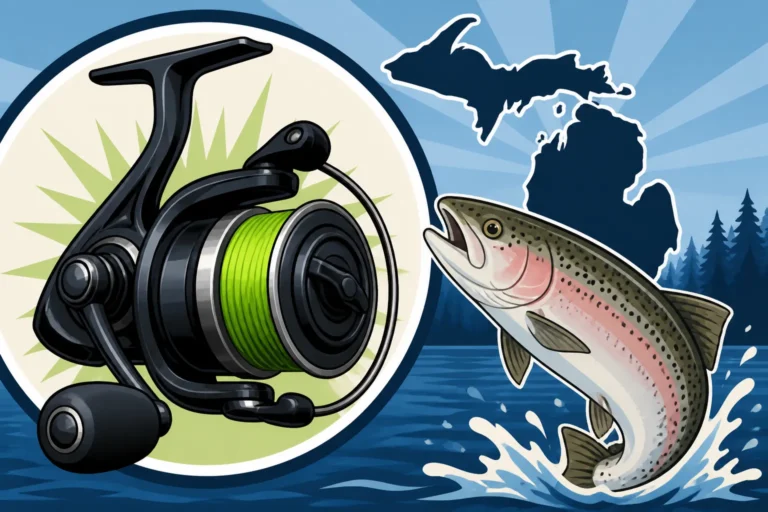
Pair your rod with a quality spinning reel in the 2500-3000 size range. Look for a reel with a smooth drag system, which is paramount for battling strong smallmouth, especially if they make a long run. A good gear ratio (around 6.0:1 or higher) will help you quickly pick up slack line and keep pace with a charging fish. When shopping for these items, many anglers find a great selection and competitive prices on platforms like Amazon, where you can read reviews and compare specs before committing.
Line choice is critical. Braided line in the 10-20 pound test range is an excellent main line due to its incredible sensitivity, strength-to-diameter ratio, and lack of stretch. This helps you feel those faint bites, especially when fishing deep or in windy conditions. Always tie on a fluorocarbon leader, typically 6-12 pound test, using a strong knot like an FG knot or a double uni knot. Fluorocarbon is nearly invisible underwater, which can be a game-changer in Lake Michigan's clear waters, and its abrasion resistance helps against rocky bottoms and sharp fish teeth.
Lures and Baits
When it comes to lures for Lake Michigan smallmouth, versatility is key. You'll want a tackle box stocked with a variety of options to present to these discerning fish. Some tried-and-true favorites include:
- Tube Jigs: These are absolute smallmouth magnets. Rigged internally with a jig head, they imitate crayfish or gobies and are incredibly effective when dragged or hopped along the bottom. Natural colors like green pumpkin, brown, or watermelon with flakes are excellent choices. You can find a huge array of tube jigs and internal jig heads ready for your next trip to Lake Michigan on Amazon.
- Drop Shots: This technique is a fantastic way to present a soft plastic bait precisely at the fish's eye level, especially when they are suspended or holding tight to structure. Small plastic worms, minnow imitations, or creature baits rigged on a drop shot are deadly. It allows for a subtle, natural presentation that can entice even finicky smallmouth.
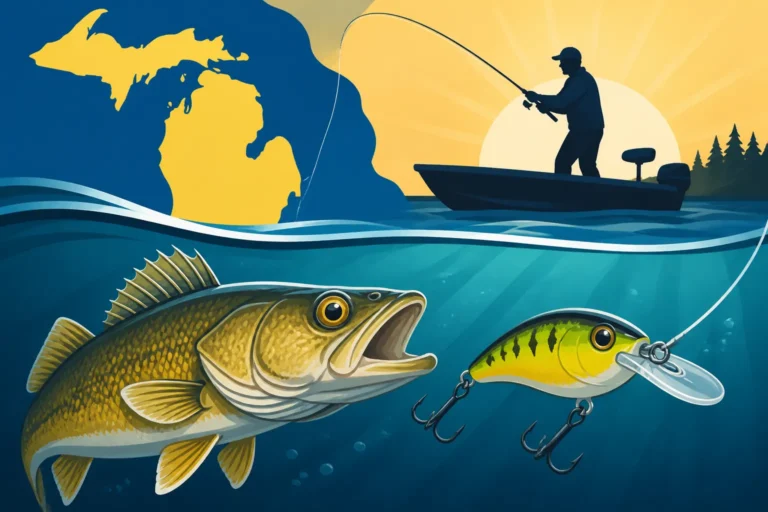
- Jerkbaits: For aggressive smallmouth or when fishing in shallower water, hard jerkbaits are phenomenal. Choose suspending models that allow you to pause the lure in the strike zone. Metallic colors, natural baitfish patterns, and even some brightly colored options can provoke vicious strikes. Work them with a "twitch, twitch, pause" retrieve to mimic a wounded baitfish.
- Swimbaits: Both paddle-tail and boot-tail swimbaits on a jig head are excellent for covering water and imitating baitfish. Vary your retrieve speed and depth until you find what triggers a bite. They're especially effective when smallmouth are actively chasing baitfish.
- Crankbaits: Deep-diving crankbaits can be highly effective for probing deeper rocky structures. Choose models that dive to the depth where you're seeing fish on your electronics. Lipless crankbaits are also great for covering water over shallower flats and can generate reaction strikes.
Live bait, such as shiners, gobies (where legal and not invasive), or crayfish, can also be incredibly effective, especially when conditions are tough. However, many anglers prefer artificial lures for their versatility and the sport of outsmarting the fish with a presentation. When preparing for your trip, consider ordering a variety of these lures, perhaps a few different sizes and colors, from retailers like Amazon to ensure you have options for changing conditions.
Top Techniques for Success
Mastering a few key techniques will significantly boost your chances of catching smallmouth bass on Lake Michigan. It's not just about having the right gear; it's about how you use it and how you adapt to the conditions. Understanding Casting Techniques for Smallmouth Bass is foundational to many of these approaches.
Casting and Retrieval Strategies
One of the most effective strategies for Lake Michigan smallmouth is "dragging" or "hugging" the bottom with tube jigs or football jigs rigged with creature baits. This involves casting your lure out, letting it sink to the bottom, and then slowly dragging it back with your rod tip, pausing occasionally. Most bites will feel like a slight "tick" or just added weight on your line as the bass picks up the lure. It's subtle, but incredibly effective at imitating a crayfish or goby foraging on the bottom.
Another critical technique, especially when fish are suspended or holding tightly to structure, is the drop shot. After casting to your target, let the weight sink to the bottom, then lift your rod tip slightly to get tension on the line and gently shake or quiver the rod. This makes the soft plastic bait dance enticingly without moving the weight, keeping your offering right in the strike zone for extended periods. This method excels in clear water and high-pressure situations where a subtle presentation is needed.
When smallmouth are aggressive and feeding on baitfish near the surface or in mid-water, a swift retrieve with jerkbaits or swimbaits can be electrifying. For jerkbaits, a common retrieve is a "rip-rip-pause," allowing the lure to suspend for a few seconds before ripping it again. This erratic action often triggers reaction strikes. For swimbaits, a steady retrieve with occasional twitches or pauses is usually all it takes. Remember to always adjust your retrieval speed and cadence until you find what the fish prefer on any given day.
Seasonal Adjustments
The dynamic nature of Lake Michigan means your approach needs to change with the seasons.
- Spring (Ice-out to early June): As the ice recedes and water temperatures begin to rise (usually 45-55°F), smallmouth move into shallower bays, rocky points, and flats. This is pre-spawn, and they can be found in 5-20 feet of water. Tube jigs, jerkbaits, and swimbaits are excellent choices. Slow presentations are often best as the fish are still somewhat lethargic. Focus on areas that warm up fastest. For specific strategies during this time, consider our guide on How to Catch Smallmouth Bass in the Spring.
- Summer (June to August): Post-spawn smallmouth become more active and will spread out over deeper structures, reefs, and drop-offs, often in 15-40 feet of water or deeper. Early morning and late evening can find them shallower, but during the bright midday sun, they'll seek cooler, deeper haunts. Drop shots, deep-diving crankbaits, and carolina rigs become highly effective. Look for schools of baitfish on your electronics, as the smallmouth won't be far behind.
- Fall (September to November): As water temperatures drop, smallmouth begin their fall feeding frenzy, bulking up for winter. They'll often move back to intermediate depths (10-30 feet) on main lake points, reefs, and shoals. This can be some of the best fishing of the year, with fish actively chasing bait. Jerkbaits, crankbaits, swimbaits, and even larger tube jigs are all excellent choices. They are often aggressive and will hit a variety of lures.
| Season | Typical Depth (approx.) | Go-To Lures | Key Techniques |
|---|---|---|---|
| Spring | 5-20 feet | Tube Jigs, Jerkbaits, Swimbaits | Slow drag, twitch-pause retrieve |
| Summer | 15-40+ feet | Drop Shots, Deep Crankbaits, Carolina Rigs | Bottom dragging, subtle shakes, deep trolling/casting |
| Fall | 10-30 feet | Jerkbaits, Crankbaits, Swimbaits, Tube Jigs | Aggressive retrieves, covering water, bottom contact |
Best Fishing Spots on Lake Michigan
Lake Michigan is enormous, which means finding the "best" spots can feel overwhelming. However, smallmouth bass tend to favor specific types of habitat. While specific GPS coordinates are beyond this guide, I can point you toward the types of locations that consistently hold these fantastic fish. Our broader Michigan's Great Lakes Fishing Guide offers even more context for fishing these vast waters.
Nearshore Areas and Piers
Even without a boat, you can find excellent smallmouth fishing opportunities on Lake Michigan. Many of the harbor walls, breakwalls, and larger fishing piers that jut out into the lake provide fantastic access to smallmouth habitat. These structures often feature rip-rap or large boulders on their flanks, creating perfect ambush points and cover. During the spring and fall, smallmouth will cruise these areas, often within casting distance from shore.
Think about places like the harbors in Holland, Grand Haven, Muskegon, or Ludington. The rocky points and jetties near these towns are prime spots. You might not always catch giant smallmouth from shore, but numbers can be good, and you'll certainly experience the thrill of a hard fight. Target the outside edges of these structures, where the deeper water meets the shallow breakwalls. Early mornings and late evenings are especially productive from shore, as boat traffic is lower and the bass feel more comfortable moving into shallower water to feed.
When fishing these nearshore areas, use presentations that mimic gobies or crayfish, like small tube jigs or jig-and-trailer combos hopped along the bottom. Jerkbaits can also be very effective for covering water from a pier. Pay attention to changes in depth, current breaks, and any visible structure. Even a small patch of rocks different from the surrounding sand can hold fish.
Offshore Structure
For those with a boat, Lake Michigan's true smallmouth potential often lies offshore. These areas consist of expansive rocky reefs, gravel humps, underwater points, and sharp drop-offs. These features can be found miles offshore or just a short run from a boat launch. The key to finding them is using quality marine electronics – a good GPS mapping system will show you contours and potential structure, and a fish finder (sonar) will help you pinpoint fish and baitfish actively holding to that structure.
Good examples of areas with prominent offshore structure include the waters around Traverse City in Grand Traverse Bay, the rocky reefs north of Ludington, or the ledges and humps near Manistee. These locations often have significant depth changes, currents, and hard-bottom areas that attract both baitfish and the smallmouth that feed on them. Once you locate a promising piece of structure, use your trolling motor or anchor precisely to thoroughly dissect the area with drop shots, tube jigs, or deep-diving crankbaits.
When fishing offshore, remember that weather can change rapidly on Lake Michigan. Always prioritize safety, monitor marine forecasts, and be prepared for changing conditions. A robust boat designed for big water, as covered in our Best Boats for Michigan Fishing guide, is essential. Once you find a school of smallmouth on an offshore reef, the action can be fast and furious, with multiple hookups possible. It's a truly rewarding experience, battling these powerful fish in such a grand setting.
Disclaimer
This article is for general informational purposes only and does not constitute professional advice. Laws, prices and regulations vary by location and change over time. Consult a qualified professional for guidance on your specific situation.