Best Ice Fishing Techniques for Michigan Lakes
Venturing out onto Michigan’s frozen lakes for a day of ice fishing is an experience unlike any other, but it can also feel like navigating a mystery. Many anglers, especially those new to the hardwater scene, grapple with questions about what gear to use, where to drill a hole, and how to actually get a fish to bite when the water below is freezing. This guide is here to cut through the ice and equip you with the best techniques to make your next Michigan ice fishing adventure not just bearable, but truly successful and enjoyable.
Navigating the Frozen Landscape: Essential Preparations for Michigan Ice Fishing
Before you even think about dropping a line, proper preparation is key when tackling Michigan's often unpredictable winter conditions. It's not just about comfort; it's about safety and efficiency, ensuring your day on the ice is memorable for all the right reasons.
Prioritizing Safety and Ice Awareness
The first, and most critical, rule of ice fishing is always safety. Michigan winters can be fickle, and ice conditions can change rapidly, even on the same body of water. Never assume ice is safe just because others are out there. Always check the thickness yourself with an ice spud or auger as you move. A minimum of four inches of clear, solid ice is generally recommended for walking, but if you're bringing an ATV or a truck, those requirements increase significantly. It's truly a life-or-death matter, and understanding "How Thick Does Ice Need to Be to Fish in Michigan" is paramount.
Carrying essential safety gear is non-negotiable. Ice picks, worn around your neck, are your most important tool if you happen to break through. A throw rope, capable of reaching someone in distress, and a whistle to signal for help are also crucial. Dressing in layers is a given, but also consider insulated, waterproof outer layers that can keep you dry and warm even in a sudden snow squall or if you get a little too close to slushy areas. Conditions on Lake St. Clair or Saginaw Bay, for example, can be vastly different from a smaller, sheltered inland lake, so always plan accordingly.
Equipping Your Ice Fishing Arsenal
Once safety is covered, it’s time to talk gear. The right equipment won't just make your experience more comfortable; it will directly impact your success. A good ice auger is your portal to the fish. Whether you choose a manual, propane, or electric model, ensure it's sharp and in good working order. Many anglers find high-quality electric augers, often available on Amazon, to be a game-changer for drilling multiple holes quickly and quietly.
Beyond the auger, you’ll need specialized rods and reels. Ice fishing rods are much shorter than open-water rods, typically ranging from 24 to 36 inches, allowing you to fish comfortably inside a shanty or close to the hole. Pair these with small spinning reels or inline reels for optimal jigging control. For a comprehensive look at what to bring, check out our guide on "Michigan Ice Fishing Gear Guide." An insulated shanty or portable shelter can be a lifesaver on windy or brutally cold days, providing a warm refuge and protecting your electronics from the elements. Don't forget a portable heater and enough fuel to last your trip!
The Art of Presentation: Core Ice Fishing Techniques
With your gear ready and safety squared away, it’s time to focus on how to actually catch fish. Successful ice fishing often boils down to understanding how fish behave in cold water and presenting your bait or lure in an enticing way.
Active Jigging: Enticing the Bite
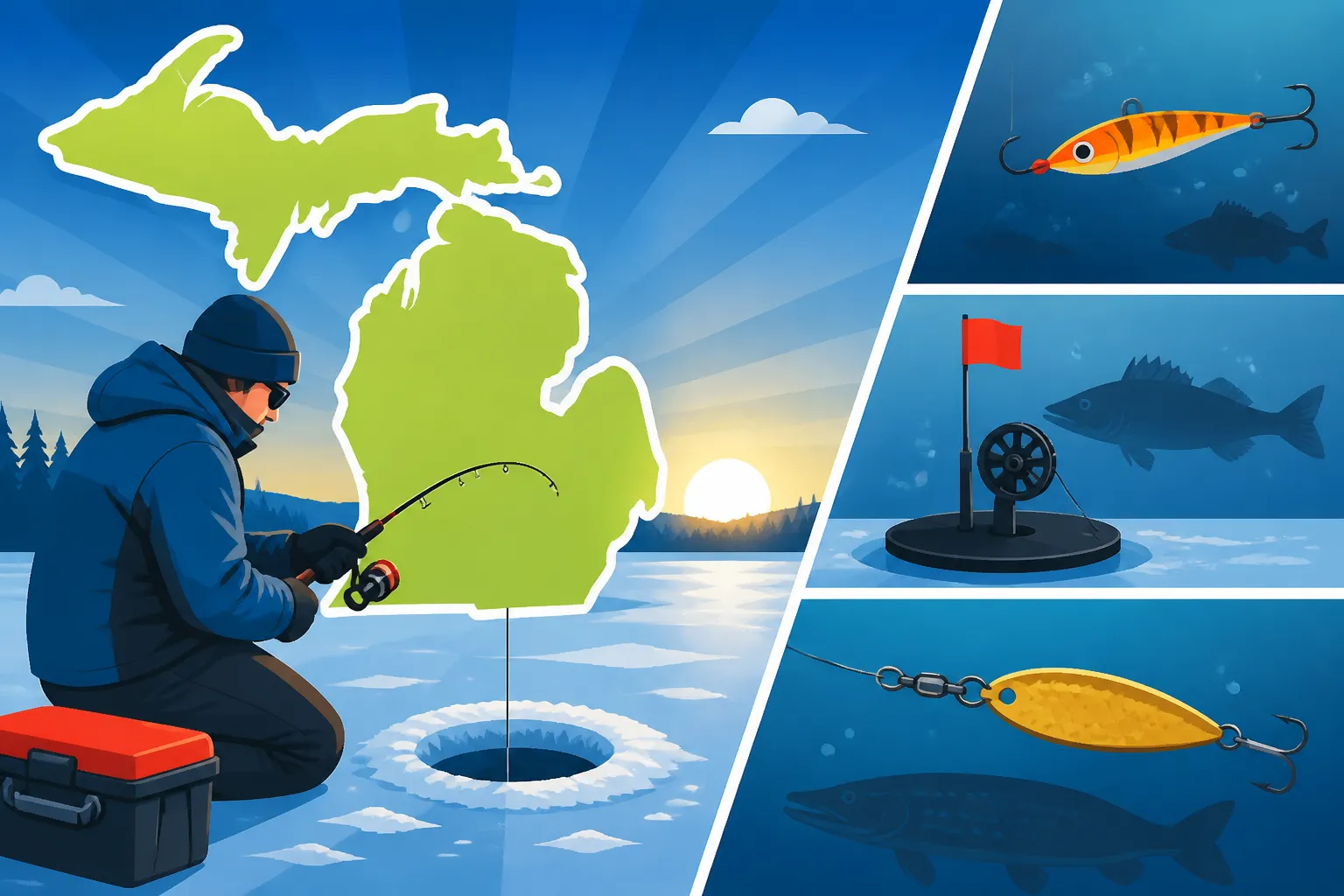
Jigging is arguably the most popular and often most effective technique for many Michigan ice anglers, especially when targeting actively feeding fish like walleye or perch. The basic premise involves using a small, weighted lure (a jig) and imparting motion to it to mimic a distressed baitfish or insect. There are countless types of ice jigs available, from tiny teardrops for panfish to larger, heavier spoons and swimming lures for predatory species.
The retrieve is key. Start by lowering your jig to the desired depth, often just above the fish you're seeing on your flasher. Then, a series of short, sharp lifts, followed by a pause, is a classic approach. Experiment with different cadences: sometimes a rapid series of small twitches is best, while other times a slow, exaggerated lift-and-drop works wonders. Pay close attention to how the fish on your sonar react. If they rise to your bait but don't commit, try shrinking your jigging motion or holding the bait completely still. This technique is especially effective when combined with a lively minnow head or a wax worm on the hook, adding scent and natural movement.
Passive Angling: The Power of the Tip-Up
While jigging keeps you engaged, tip-ups offer a more relaxed approach, allowing you to cover a wider area or target less aggressive fish. A tip-up is a simple device that sits over an ice hole, holding your line with a baited hook at a predetermined depth. When a fish takes the bait, it triggers a flag to "tip up," signaling a bite. This allows you to fish multiple holes simultaneously, provided you adhere to Michigan's specific regulations regarding the number of lines allowed.
Setting up a tip-up involves spooling it with appropriate line (often braided line with a fluorocarbon or monofilament leader), attaching a sinker, and a hook, and then baiting it, typically with a live minnow. Shiner minnows or sucker minnows are excellent choices for larger predators like walleye and pike. For more detailed insights, our guide on "Tip-Up Fishing for Michigan Pike" offers valuable information. Position your tip-ups in a spread to cover different depths or structural elements, such as weed edges, drop-offs, or submerged humps. This passive approach often shines when fish are wary or when targeting larger, slower-moving fish that prefer a stationary meal.
Deadsticking and Setlines: A Subtle Approach
Beyond tip-ups, deadsticking is another passive technique that can be incredibly effective, especially for finicky fish. This involves using a rod and reel, but instead of actively jigging, you simply set the rod in a holder over an open hole, leaving your bait or lure motionless. Sometimes, a subtle vibration from your heater or even just the movement of the live bait itself is enough to entice a strike.
Deadsticking often works best in conjunction with active jigging. You might have one rod jigging aggressively to attract attention, while a second rod is deadsticked nearby with a simple live minnow, often presented on a plain hook or a small jig head. Many anglers swear by a deadstick with a lively minnow beneath a sensitive bobber, especially for walleye that can be quite subtle in their takes. This method exploits the "fear of missing out" impulse in fish – they might be curious about your active presentation but ultimately commit to the easy meal offered by the deadstick. Just like with tip-ups, you'll need to know Michigan's specific rules on the number of lines you can have in the water.
Species-Specific Strategies: Matching Your Method to the Fish
Michigan's diverse waterways mean a wide array of fish species are available through the ice. Tailoring your techniques, baits, and locations to your target species dramatically increases your chances of success.
Unlocking Walleye on Ice
Walleye are a highly prized catch for Michigan ice anglers, known for their delicious fillets and challenging nature. When targeting walleye, focus on specific structural elements. They often relate to drop-offs, points, humps, and the edges of submerged weed beds, especially during low-light conditions. Prime times are dawn, dusk, and even after dark. Many enthusiastic anglers swear by the effectiveness of "How to Catch Walleye at Night in Michigan" for these elusive fish.
For bait, live minnows are king. Shiners, emerald shiners, or large fatheads fished on a plain hook or a small jig under a tip-up or deadstick are phenomenal. For active jigging, choose spoons (like the Swedish Pimple or Johnson Silver Minnow) or aggressive swimming lures (such as Rapala Jigging Raps or Northland Puppet Minnows). These lures, often found conveniently on Amazon, mimic fleeing baitfish. Present them with an erratic jigging motion, bringing them a foot or two off the bottom and then letting them flutter down. A classic technique is to pound the spoon on the bottom a few times to stir up sediment, simulating a feeding fish, before lifting and jigging. For more in-depth knowledge, dive into "Ice Fishing Techniques for Michigan Walleye."
Finding the Frugal Perch
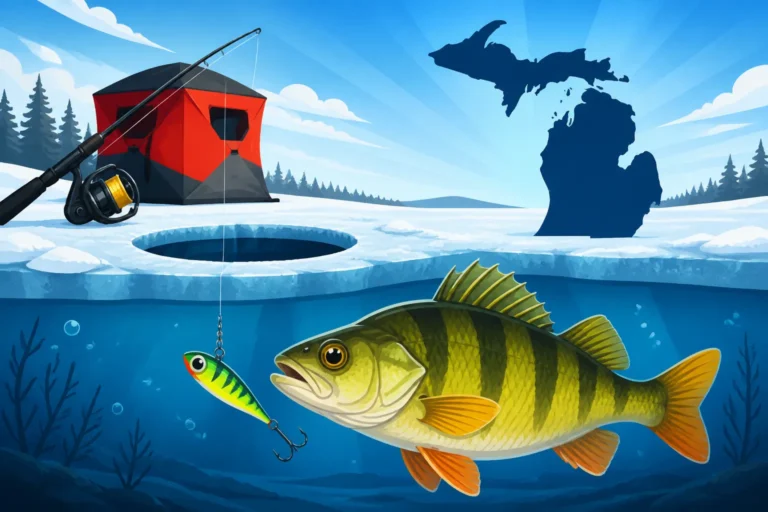
Yellow perch are a favorite panfish among Michigan ice anglers, offering fast action and excellent eating. Perch often school up, so when you find one, you're likely to find many more. They tend to relate to similar structures as walleye, but often shallower, such as flats, weed edges, and soft bottom areas rich in invertebrates.
Tiny jigs are the go-to for perch. Teardrop jigs, often tipped with a single or double wax worm, are incredibly effective. Small spoons like the Tungsten Toad or the Clam Leech Flutter Spoon, in colors like chartreuse, orange, or glow, can also trigger bites. For bait, wax worms, spikes, and small minnows are irresistible. When you're jigging for perch, use subtle movements: a slight jiggle, a small lift, and a long pause. Sometimes, just holding the bait still slightly off the bottom is all it takes. Once you locate a school, they can be very aggressive, making for an exciting day. Learn more about optimal timing with our guide "Best Time to Ice Fish for Perch."
Pursuing Northern Pike and Other Predators
Northern pike are another thrilling target through the ice, offering brute strength and impressive size. Pike are ambush predators, often lurking near weed lines, submerged timber, or shallow flats where baitfish congregate. They have a voracious appetite and will readily strike larger baits.
Tip-ups are the most common and effective way to target pike. Use large shiner minnows, golden shiners, or even small suckers rigged on a quick-strike rig or a large treble hook. Set your bait suspended a few feet off the bottom, or even in the middle of the water column if you see active baitfish on your electronics. Pike will often "take" the bait and run, peeling line off the tip-up before stopping to swallow it. Wait for that second run before setting the hook to ensure a solid connection. Pike fishing can be a waiting game, but the reward of a thrashing trophy often makes it worth it. For more specialized advice, refer to "Tip-Up Fishing for Michigan Pike." Other species like crappie and bluegill are also popular through the ice, responding well to tiny jigs and wax worms in deeper weed beds or brush piles. Consider exploring the full range of "Michigan's Most Popular Fish Species" to expand your ice fishing horizons.
Beyond the Basics: Advanced Tactics and Technology
Once you've mastered the fundamental techniques, you can start incorporating more advanced strategies and leveraging modern technology to gain a significant edge on the ice.
Leveraging Modern Electronics: Sonar and Cameras
Modern ice fishing electronics have revolutionized the sport, turning guesswork into informed decisions. A good flasher or fish finder is an invaluable tool. Devices from brands like Humminbird or Garmin (many popular models are available on Amazon) provide real-time information about what's directly beneath your hole: water depth, bottom composition, and, most importantly, fish presence and their reaction to your lure. They allow you to see your bait, adjust its depth, and watch how fish approach it, letting you fine-tune your presentation on the fly.
An underwater camera can add another dimension, allowing you to actually see the fish, identify the species, and observe how they react to different baits. This visual feedback is incredibly educational and can drastically improve your understanding of fish behavior under the ice. While not strictly necessary for catching fish, using electronics significantly shortens the learning curve and maximizes your time on productive spots. For those serious about hardwater angling, investing in these tools is a game-changer.
| Technique | Description | Target Species | Ideal Conditions | Primary Gear |
|---|---|---|---|---|
| Active Jigging | Using small, weighted lures with varied retrieve motions to attract strikes. | Walleye, Perch, Crappie, Bluegill, Trout | Active fish, moderate to good visibility | Short ice rod, spinning/inline reel, jigs, spoons, swimming lures, wax worms |
| Tip-Up Fishing | Passive method using a device that signals a bite; covers wide areas. | Walleye, Northern Pike, Lake Trout, Bass | Less active fish, covering multiple depths/areas | Tip-ups, heavy line, quick-strike rigs, live minnows (shiners, suckers) |
| Deadsticking | Setting a rod motionless over a hole with live bait; subtle presentation. | Walleye, Perch, Crappie, Bluegill, Panfish | Finicky fish, slow bite, complementary to jigging | Sensitive ice rod, small spinning reel, bobber, small hook, live minnows, spikes |
| Electronics Use | Employing sonar (flasher/graph) to locate fish and monitor lure presentation. | All species | Any conditions; maximizes efficiency and success | Fish finder/flasher, underwater camera, GPS |
| Night Fishing | Targeting species (primarily walleye) after dark, when they become more active. | Walleye, Burbot (Eelpout), sometimes Perch | Darkness, stable conditions | Jigging rods/tip-ups, glow lures, headlamp, heater, insulated shelter |
The Thrill of Night Fishing for Walleye
When the sun dips below the horizon, a whole new world opens up for Michigan ice anglers, especially those targeting walleye. Walleye are highly nocturnal predators, and often their most aggressive feeding windows occur after dark. This can be a prime time to target larger fish that are wary during the day.
The key to successful night fishing is minimizing light pollution directly over your hole. While a headlamp is essential for baiting hooks and moving around, try to avoid shining it directly into the water. Many anglers use glow-in-the-dark lures, charging them with a small flashlight or UV light between drops. The subtle glow can be an irresistible attractant in the dark water. Pay close attention to your electronics, as walleye will often cruise in shallower water after dark, moving up from their daytime haunts on deeper break lines. Sound discipline is also important; keep noise to a minimum. If you're willing to brave the cold, night fishing can offer some of the most rewarding and memorable experiences on Michigan's frozen lakes. For timing, be sure to consult our guide on "Michigan Ice Fishing Season Timing."
Disclaimer
Always check the latest Michigan Department of Natural Resources (DNR) fishing regulations before heading out, as rules and conditions can change. Ice safety is paramount; never take unnecessary risks. This guide is for informational purposes only and does not constitute professional advice.