Best Muskellunge Lure Colors for Stained Water
For many dedicated anglers, chasing the elusive muskellunge in Michigan is a thrilling, often frustrating, pursuit. When you add the challenge of stained or murky water, selecting the right lure becomes even more critical, turning a fun day on the water into a head-scratching puzzle. This comprehensive guide will cut through the confusion, helping you understand why certain lure colors shine in Michigan’s off-color muskie waters and how to choose the best ones to increase your chances of landing a true freshwater leviathan.
Understanding Stained Water Conditions in Michigan
Before we dive into color, it’s crucial to understand what "stained water" actually means in the context of Michigan's diverse fisheries. Not all murky water is created equal, and the type of stain can influence how light penetrates and, consequently, how your lures appear to a muskie. It’s not just about visibility; it’s about how light interacts with particles and dissolved substances in the water.
Types of Water Stains and Their Impact
Michigan’s waters can be stained by a variety of factors, each creating a unique challenge for anglers. One common type is tannin stain, often seen in rivers like the Manistee River or parts of the Au Sable River, which flow through heavily wooded areas. These waters take on a tea-colored hue from decaying leaves and vegetation, making them appear dark and somewhat opaque. Light penetration in tannin-stained water is often limited to the upper water column, and colors can appear muted.
Another prevalent type of stained water comes from glacial clay or agricultural runoff, especially after heavy rains. This can turn otherwise clear lakes or rivers a milky brown or greenish-brown. The fine particulate matter in these waters reflects and scatters light differently than tannins, often reducing overall visibility drastically. Think of it like a dense fog underwater. On larger bodies like Lake St. Clair, wind can also stir up bottom sediments, creating localized areas of stained water, particularly in shallower flats or channels. These conditions force muskies to rely less on visual cues over distance and more on close-range sight, vibration, and scent.
How Water Clarity Affects Muskie Behavior
Muskies are ambush predators, and their hunting strategy is heavily influenced by water clarity. In crystal clear water, they might spot a lure from a significant distance, giving them ample time to decide to strike. However, in stained water, that long-range visibility is severely hampered. This doesn’t mean muskies can't see your lure; it means they have to be much closer to it to detect it visually.
This reduced visibility often pushes muskies into tighter cover or shallower areas where they can ambush prey more effectively. It also means they might rely more on their lateral line system to detect vibrations from your lure. They’re still hunting by sight, but it’s a much more immediate, short-range visual encounter. The right lure color, therefore, isn't just about being "seen," but about being seen effectively when the muskie finally gets into striking distance. This is why you often need to work your lures closer to structure or cover when fishing stained water, as the fish won't be cruising open water looking for distant prey.
The Science Behind Lure Color in Murky Water
It might seem counterintuitive, but the "best" color in stained water isn't always the brightest. The principles of light absorption and reflection underwater play a huge role in what a fish actually perceives. Understanding this can save you a lot of wasted casts and help you select lures with confidence.
Light Penetration and Color Absorption
Water acts as a filter, and different colors of the light spectrum are absorbed at varying rates. Red, for example, is the first color to disappear, becoming indistinguishable at relatively shallow depths, even in clear water. Orange and yellow follow, then green, and finally blue. In stained water, this absorption process is accelerated. The dissolved tannins or suspended particles absorb and scatter light even more efficiently, quickly stripping away colors.
What does this mean for your muskie lure? A bright red lure that looks vibrant above water might appear dull gray or even black underwater in stained conditions. Conversely, colors like green and blue might retain some of their hue deeper, but their overall visibility can still be poor if the water is very dark. The key is to select colors that either stand out sharply due to contrast or use fluorescent pigments that react differently to what little light is available, making them "pop." Think about how a neon sign stands out on a foggy night; it's not necessarily the color that matters as much as its ability to emit or strongly reflect light.
How Muskies Perceive Colors
Muskies, like many predatory fish, have excellent vision, but it's adapted to their aquatic environment. While they can perceive a range of colors, their ability to differentiate them diminishes in low light or turbid conditions. Instead of seeing a precise shade of chartreuse, they might perceive a strong, bright contrast against the darker water column. This is why colors that create a stark silhouette or intensely reflect available light become so effective.
The scientific understanding of fish vision suggests that under low light, rods in their eyes are more active, focusing on brightness and contrast rather than specific hues. As light levels increase, cones become more active, allowing for color differentiation. In stained water, you’re often operating in a low-light environment, even during the day. Therefore, colors that create a strong visual footprint – either very bright and attention-grabbing or very dark and silhouetting – are your best bets. This principle also extends to how you present your lure, ensuring it generates enough action and vibration to first attract the muskie, then allowing the visual cue to seal the deal up close.
Top Lure Colors for Muskellunge in Stained Michigan Waters
Given the unique challenges of fishing stained water in Michigan, certain lure colors consistently prove to be more effective. These aren't just random choices; they leverage the principles of light penetration and fish vision we just discussed.
High-Contrast and Fluorescent Patterns
When the water is heavily stained, sometimes the best approach is to go bold. High-contrast patterns and fluorescent colors are designed to grab attention, even when visibility is minimal. Think of a safety vest on a cloudy day – it stands out.
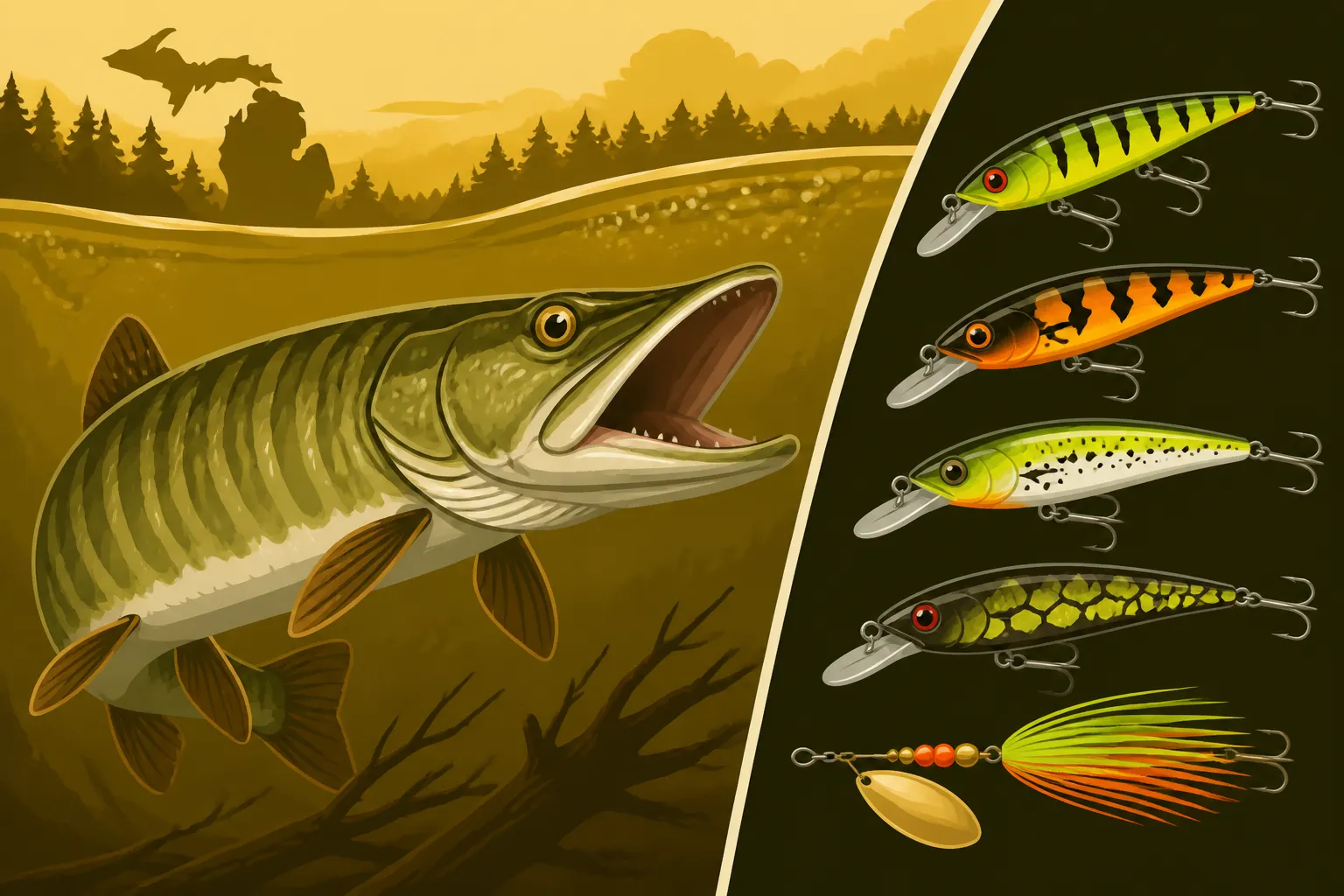
- Chartreuse: This bright, almost electric green-yellow is a perennial favorite for a reason. Its fluorescent properties allow it to reflect more light than standard pigments, giving it an unmistakable glow in murky conditions. Whether it's a chartreuse bucktail, a crankbait with chartreuse sides, or a jerkbait with a chartreuse belly, this color works because it presents a high-visibility target that fish simply can't ignore. It’s especially potent in tannin-stained rivers where the green-yellow cuts through the brown. You can often find an excellent selection of these on Amazon.
- Firetiger: This classic pattern combines chartreuse, orange, black stripes, and sometimes a bit of green or yellow. The combination of bright, contrasting colors and bold stripes creates a powerful visual disturbance that muskies can pick up from a distance in stained water. The black stripes help to break up the lure's profile, making it look more like a struggling baitfish, while the bright colors ensure it's seen. This pattern is a great all-rounder for varying degrees of stained water.
- Hot Orange/Hot Pink: While red disappears quickly, vibrant orange and hot pink, especially those with fluorescent qualities, can retain some visibility longer than natural reds. They offer a strong contrast against dark water and can be particularly effective on overcast days or in extremely cloudy water where anything subtle would be completely lost. Many anglers find success with these colors for triggering reaction strikes.
Dark and Silhouetting Colors
While bright colors aim to stand out, dark colors operate on an entirely different principle: creating a strong silhouette. In very dark or heavily stained water, a light-colored lure might simply blend in with the ambient gloom. A dark lure, however, creates a distinct, solid shape that is clearly visible against the slightly lighter sky or even the limited overhead light penetrating the water.
- Black: You might think black is boring, but it's incredibly effective in seriously stained water, especially on bright days. When viewed from below against the surface light, a black lure creates the most defined silhouette possible. It tells the muskie, "There's a solid object here, and it's moving!" without trying to trick them with specific colors. Black bucktails and dark-colored jerkbaits are prime examples of this principle at work.
- Purple: Often overlooked, purple is a fantastic color for stained water. It sits in a unique spot on the light spectrum; while it's a dark color, it also has a vibrancy that can be surprisingly visible in low light. A dark purple lure, often combined with black or chartreuse accents, offers both a strong silhouette and a subtle, intriguing hue that can trigger strikes from cautious fish.
- Dark Green/Olive: In waters with a greenish stain, or where there's a good amount of subsurface vegetation, dark green or olive can work wonders. These colors provide a strong, natural silhouette while still having enough pigment to appear as a solid mass. They’re less about being "bright" and more about being "present" and noticeable against the murky backdrop.
Here's a quick reference table for choosing your muskie lure colors in varying stained water conditions:
| Water Clarity Level | Recommended Primary Colors | Secondary Accents | Rationale |
|---|---|---|---|
| Lightly Stained | Chartreuse, Firetiger | Orange, Yellow | Brightness and contrast cut through moderate stain; good visibility. |
| Moderately Stained | Firetiger, Hot Orange | Black, Chartreuse | Strong contrast and fluorescent properties for noticeable presence. |
| Heavily Stained | Black, Dark Purple | Chartreuse, Orange | Maximizes silhouette effect; fluorescent accents for close-range pop. |
| Tannin-Stained | Chartreuse, Orange, Black | Green, Gold | Fluorescents cut through tea-color; black for silhouette; gold for flash. |
| Clay/Muddy Stained | Black, Hot Pink, Firetiger | White | Extreme contrast and silhouette are key; brights for immediate visibility. |
When you're trying to figure out how to choose the right gear, consider reading up on the "Michigan Muskellunge Fishing Techniques" to complement your lure color choices.
Beyond Color: Other Factors for Muskie Success in Stained Water
While lure color is a crucial piece of the puzzle, it's not the only factor that will help you land muskies in Michigan's stained waters. The effectiveness of your presentation involves a combination of elements working together to appeal to the muskie's senses, particularly when visibility is limited.
Lure Action and Vibration
In water where a muskie can't see your lure from afar, its other senses become incredibly important. This is where lure action and vibration truly shine. Muskies possess a highly developed lateral line system, which is a sensory organ that detects pressure changes and vibrations in the water. These vibrations are essentially sound waves, and they travel much further and are less affected by water clarity than light.
- Bucktails: These are phenomenal in stained water because of the significant vibration and flash they create. The spinning blades thump and displace a lot of water, sending out strong vibrations that muskies can feel. The flash from chrome or nickel blades also works well, even in low light, reflecting any available ambient light to create quick, noticeable glints. When choosing a bucktail, opt for larger blades that move more water, such as those found on offerings from Musky Mayhem Tackle or Cowgirl Baits. You can usually find a great selection of these specialized lures on Amazon.
- Crankbaits and Jerkbaits: Look for crankbaits with an aggressive wobble and rattles. The internal rattles create sound, while the wide wobble displaces a good amount of water. Jerkbaits that have an erratic, side-to-side darting motion also create significant water disturbance, making them easier for a muskie to locate. Consider suspending jerkbaits that can be paused in the strike zone, allowing the muskie to home in on the subtle vibrations and their silhouette. These lures can be particularly effective when you're focusing on "Michigan Muskellunge Fishing Techniques."
Lure Size and Profile
When visibility is poor, bigger isn't always better, but a substantial, well-defined profile is key. Muskies might not be able to discern fine details, but they can detect a larger mass more easily.
- Larger Lures: While you don't necessarily need to go to your absolute biggest baits, opting for lures on the larger side of your typical range can be beneficial. A 10-inch crankbait will present a more prominent target than a 6-inch one. The larger profile creates a stronger silhouette against the murky background, making it easier for the muskie to see at close range.
- Bulky Profiles: Lures with a fatter or wider body also offer a more substantial profile. Glide baits and larger soft plastics, when retrieved correctly, can displace a lot of water and create a significant "footprint" that muskies can sense and see when they get close. Don't forget that a muskie's decision to strike is often instantaneous, so a quickly identifiable shape is paramount. If you're wondering how big they get, check out "How Big Does a Muskellunge Get in Michigan".
Retrieve Speed and Depth Control
Even with the perfect lure color and action, your retrieve can make or break your success in stained water. Adjusting your speed and ensuring your lure is in the right part of the water column are critical.
- Slower Retrieves: Often, a slower retrieve is more effective in stained water. This gives the muskie more time to react and locate your lure. Remember, they’re working with reduced visibility, so they need that extra moment to process the information your lure is providing through vibration and sight. A slow, steady retrieve with a bucktail, or a deliberately paused jerkbait, can be incredibly productive.
- Pauses and Twitches: Incorporating pauses, twitches, and sudden changes in direction can mimic a disoriented or injured baitfish. These erratic movements not only create additional vibration but also give the muskie a clear, easy target. A muskie in stained water is looking for an easy meal, and a vulnerable-looking lure is hard to resist.
- Targeted Depth: Ensure your lure is running at the correct depth where muskies are likely to be holding. In stained water, muskies might hold shallower to take advantage of whatever light is available or tighter to cover. If you're fishing a deep lake, you might need to use heavier lures or incorporate downriggers (if allowed) to get your bait in front of fish. However, in many stained Michigan rivers, muskies will often be close to the bank or submerged structure. Understanding "Michigan Fishing Regulations Every Angler Should Know" is always vital, especially regarding specific lure and depth limitations in certain areas.
- Cover More Water: While slower retrieves are important, don’t be afraid to make multiple casts to the same piece of structure from different angles. This increases the chances of your lure entering the muskie's limited visibility zone. You might need to make more casts than usual to find that "sweet spot." For example, when fishing Lake St. Clair, known for its incredible muskellunge fishing, casting and retrieving methodically around weed lines or drop-offs, even in stained areas, is key to success. Don't forget to report your catch if you're lucky enough to land one, adhering to the "Michigan Muskellunge Harvest Reporting Rules."
Combining the right lure color with aggressive action, a substantial profile, and a carefully controlled retrieve will significantly boost your chances of success when chasing Michigan muskies in stained water. It’s all about giving that toothy predator every possible reason to find and strike your offering.
Disclaimer
Please note that fishing conditions, regulations, and fish behavior can change. Always consult the latest Michigan Department of Natural Resources (DNR) fishing guide for the most up-to-date regulations, including size and bag limits, before heading out on the water. This guide is for informational purposes only and does not guarantee fishing success.