Bead Fishing for Trout and Salmon
There’s nothing quite like the sight of trout or salmon holding in a Michigan river, their colors vibrant, their power undeniable. But sometimes, despite your best efforts with spinners, flies, or traditional baits, they just seem to ignore everything you throw at them. It's incredibly frustrating to see fish after fish turn their noses up at your carefully chosen presentation. That's where bead fishing comes in – a highly effective technique that taps into a fish's most primal instincts, often turning those frustrating days into memorable ones, and this guide will show you how to master it for Michigan's waters.
Understanding the Allure of Bead Fishing in Michigan
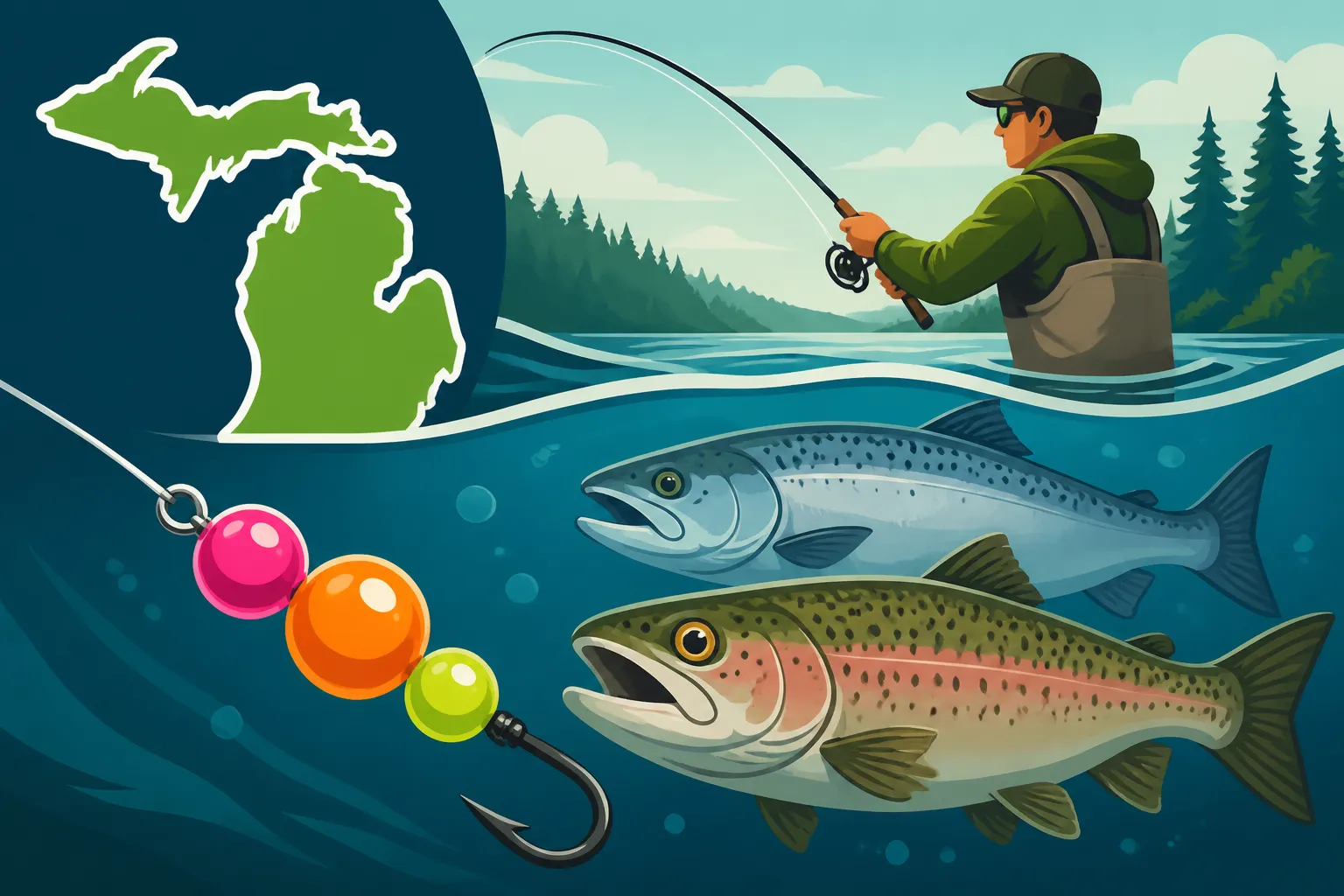
Bead fishing, at its core, is about mimicking one of the most natural food sources for trout and salmon in our Michigan rivers: fish eggs, or "roe." When salmon and steelhead embark on their spawning runs, eggs become a predominant food source, either drifting freely in the current after being dislodged from redds or simply being present in the environment. This technique capitalizes on that natural phenomenon, offering a presentation so realistic that even the most wary fish find it hard to resist.
Why Beads Mimic Natural Roe So Well
The reason beads are so incredibly effective is their uncanny resemblance to natural fish eggs. Think about it: during the fall salmon runs and the subsequent steelhead runs into our rivers, millions of eggs are broadcast into the water column. Some are fertilized, some aren't, and some get washed downstream, becoming an opportunistic meal for any fish downstream. These eggs come in various sizes and shades, from milky white to translucent orange, and beads are designed to replicate this perfectly.
A good fishing bead, often made of durable plastic or glass, is designed to be semi-buoyant or neutral in buoyancy, allowing it to drift naturally with the current, just like a real egg. When rigged correctly, it presents as a single, vulnerable morsel. This isn't just a simple round piece of plastic; manufacturers like Mad River, Lure Parts Online, and various options found on Amazon offer a wide array of sizes (typically 6mm to 14mm) and colors that perfectly match the various stages of egg development. From "natural roe" colors to "milking egg" white or bright "clown egg" patterns, these beads accurately simulate the real thing, triggering a feeding response even in fish that aren't actively foraging on other prey.
The Behavioral Science Behind Fish Striking Beads
It's not just about looking like an egg; it's about appealing to a fish's fundamental survival and opportunistic instincts. When salmon and trout are in their spawning phases, their primary focus isn't typically "feeding" in the traditional sense. However, they are still highly territorial and opportunistic. Eggs represent a concentrated source of protein and energy, and any fish, whether actively feeding or not, will instinctively pick them up.
For spawning fish, the presence of eggs is a powerful environmental cue. Even if they're not 'hungry,' the sight of a drifting egg, especially one that accurately matches the color and size of local roe, can trigger a defensive or opportunistic bite. This is why you often hear anglers talk about "instinctive strikes" with beads. It's less about a fish actively hunting a meal and more about it reacting to a valuable food source floating right past its nose, or even trying to eliminate a perceived threat to its spawning area. It's a subtle yet profound difference that makes bead fishing incredibly potent when other methods fail.
Essential Gear for Michigan Bead Fishing
While bead fishing might seem straightforward, having the right gear is crucial for success. This isn't a power-fishing technique; it's all about finesse, natural presentation, and feeling those subtle takes. Your setup needs to be sensitive enough to detect the faintest bite and capable of handling strong fish on light line.
Rods, Reels, and Lines for Delicate Presentations
For bead fishing, especially in Michigan's clear rivers, you'll want a rod that offers both sensitivity and the right amount of backbone to fight a powerful fish without snapping your light leader. A longer rod, typically 9 to 11 feet in length, is ideal. This extra length helps you manage your line, mend your drifts effectively, and keep as much line off the water as possible, reducing drag and making for a more natural presentation. Light to medium-light power with a fast action is generally preferred. For example, a 10'6" moderate-fast rod in a light power would be a fantastic choice for Michigan steelhead. If you're wondering about specifics, our guide on Best Rod Length for River Steelhead dives deeper into these choices.
Matching that rod with a quality spinning reel in the 2000-3000 size range is a solid move. The reel needs a smooth drag system, as you'll often be fighting big fish on relatively light line. For your main line, many anglers prefer a high-visibility monofilament or fluorocarbon in 8-10 lb test, which helps in detecting subtle takes. However, a growing number of anglers are opting for braided line (10-20 lb test) as their main line due to its zero stretch and incredible sensitivity, often pairing it with a longer fluorocarbon leader. When you're looking for these specialty items, resources like Amazon often have a wide selection from various brands, ensuring you find exactly what you need. Consider exploring options from brands like Shimano, Daiwa, or Fenwick for reliable performance.
Selecting the Right Beads and Components
This is where the artistry of bead fishing really comes into play. You need a variety of beads to match conditions and species. Sizes range from tiny 6mm beads for spooky trout or early season steelhead, up to 12-14mm for larger salmon or aggressive steelhead. The most common sizes for steelhead and salmon are usually in the 8mm to 10mm range.
Color selection is paramount. "Natural" colors like clear, natural roe, peach, and various shades of orange are staples. However, don't shy away from "hotter" colors like chartreuse, pink, or even bright red, especially in dirty water or during specific phases of the run when fish might be more aggressive or territorial. UV-reactive beads can also make a significant difference on overcast days or in deeper runs. Material can also vary, from soft plastic beads that offer a subtle feel to harder acrylic or glass beads that provide more durability and a distinct "clack" when hitting rocks, sometimes triggering a reaction strike. Ensuring you have a diverse selection in your tackle box is key to adapting to changing conditions on the river.
Beyond the beads themselves, you'll need the right hooks and leader material. A light, sharp, single egg hook, typically size 6 to 10, is standard. The hook should be small enough to be mostly hidden by the bead but strong enough to hold a powerful fish. Fluorocarbon leader material is essential for its near invisibility in water and its abrasion resistance. You'll typically use 4-8 lb test fluorocarbon for your leader, depending on water clarity and fish size. You can find comprehensive sets of leader materials and hooks from reputable brands at most fishing supply stores or online through platforms like Amazon.
| Component | Description | Common Sizes/Types | Why it's Important |
|---|---|---|---|
| Beads | Plastic, glass, or soft beads mimicking fish eggs. | 6mm-14mm, colors like peach, orange, clear, chartreuse. | Matches natural food source, triggers strikes. |
| Hooks | Single, short-shank, wide-gap egg hooks. | Size 6, 8, 10, typically light wire. | Concealment, strong hook set, minimizes fish damage. |
| Leader | Fluorocarbon line for invisibility and abrasion resistance. | 4-8 lb test. | Undetectable by fish, protects main line from nicks. |
| Pegging Material | Toothpicks, rubber stops, or specialized bead stops. | Varies by bead hole size. | Secures bead just above the hook, crucial for presentation. |
| Swivels | Small, barrel swivels. | Size 10-14. | Connects main line to leader, reduces twist. |
| Weights | Split shot or pencil lead. | Various sizes (B, BB, 00, 1, etc.). | Achieves proper drift depth and speed. |
Accessories That Make a Difference
Beyond the core rod, reel, and bead setup, a few key accessories can significantly improve your bead fishing experience and success. First, a good pair of polarized sunglasses is non-negotiable. They cut glare off the water, allowing you to see deeper into the river, spot fish, and identify subtle changes in structure or current that can hold fish.
Next, a durable landing net with a rubberized mesh is critical for ethical catch and release. The rubber mesh protects the fish's slime coat and fins, minimizing damage during handling. When you're thinking about Michigan Bag and Size Limits Explained, you’ll realize most of your trout and salmon fishing is catch-and-release, so a good net is a must. Lastly, a small tackle box or specialized bead box to organize your beads, hooks, and leader material will keep you efficient on the water. Nobody wants to fumble through a messy bag when the fish are biting. And don't forget the obvious but often overlooked items like line nippers, forceps for hook removal, and a comfortable vest or pack to carry it all.
Mastering Bead Rigging Techniques
Getting your bead rig just right is arguably the most critical component of successful bead fishing. The goal is always a natural, drag-free drift that mimics a free-floating egg. There are a few primary ways to rig beads, each with slight variations that can be adapted to different fishing scenarios and river conditions.
The Free-Drifting Bead Rig Pegged vs Unpegged
The "free-drifting" bead rig is the cornerstone of this technique. It involves threading a bead onto your fluorocarbon leader, typically a foot or two above your hook. The critical decision here is whether to "peg" the bead or leave it "unpegged."
Pegged Bead Rig: With a pegged bead, you insert a small piece of material (often a toothpick, a specialized rubber bead stop, or even a small section of monofilament) into the bead's hole, securing it at a specific distance from the hook. The standard distance is about 1 to 2 inches from the eye of the hook. This creates a highly compact presentation where the bead and hook drift as a single unit. The primary benefit of pegging is that it ensures the bead is always right where you want it, making it easier for a fish to inhale the entire presentation when it takes the bead. It's often preferred in faster water or when fish are aggressively hitting the bead, as it maximizes hookup ratios. You can easily find various pegging materials and specific "bead pegs" on Amazon, simplifying the setup process. This method ensures that the bead always drifts just above the hook, appearing as a single, enticing egg.
Unpegged Bead Rig: An unpegged bead is simply threaded onto the leader and allowed to slide freely. A small split shot or knot placed a foot or two above the hook will stop the bead from sliding too far up your line, but the bead itself is not fixed to the hook. The advantage here is an even more natural, separate presentation of the bead and the hook. Some anglers believe this can entice more cautious fish who might be wary of a fixed, slightly bulkier presentation. The bead drifts ahead of the hook, and when a fish takes the bead, the hook is often inhaled right behind it. This method works well in slower, clearer water where fish have more time to inspect the offering. However, it can sometimes lead to fewer solid hookups if the fish doesn't fully commit to the take. The key to both methods is ensuring the bead is positioned correctly in relation to the hook – not too far away, and not directly on it, to ensure a good hook set when the fish takes the offering. For a more detailed look, check out our guide on How to Rig a Bead for Steelhead.
Indicator and Float Fishing Setups
Indicator, or float fishing, is the most common way to present beads in rivers and streams. This setup allows you to control the depth and speed of your drift, ensuring your bead is presented naturally at the fish's eye level. The basic setup involves a slip or fixed float (indicator), split shot or pencil lead to get your rig down, and your bead rig (pegged or unpegged) below.
Slip Float vs. Fixed Float: A slip float is excellent for deeper runs or when you need to adjust your depth frequently. The line runs through the float, and a small bobber stop (knot or rubber stopper) on your main line sets the fishing depth. This allows you to reel in your rig completely for casting, even if you’re fishing very deep water. Fixed floats, on the other hand, are attached directly to your line at a set depth. They are simpler to rig and are ideal for shallower water or when you're consistently fishing the same depth. The choice often comes down to the specific water you're fishing and your personal preference. When selecting floats, look for highly visible colors that contrast well with the water and sky, making it easier to detect the subtle twitches that indicate a bite.
Weighting Your Rig: Proper weighting is crucial for a natural drift. You want just enough weight to get your bead down to the fish's strike zone without causing your float to drag unnaturally or "skate" across the surface faster than the current. A common approach is to use a few small split shots strategically placed above your leader, gradually tapering the weight heavier towards the float and lighter towards the bead. This helps the rig sink naturally while keeping the bead presenting subtly. Pencil lead is another excellent option, as it’s less prone to snagging on rocky bottoms. The key is to match your weight to the current speed and depth, allowing your bead to tick the bottom occasionally, simulating a dislodged egg rolling along the riverbed. This setup is particularly effective in areas where steelhead are holding.
Adapting for Different Water Conditions
Michigan's rivers can change dramatically from day to day, or even hour to hour, impacting water clarity, flow, and temperature. Successful bead fishing means adapting your techniques to these conditions.
Clear Water, Low Flow: In clear, low-flow conditions, fish are often more wary. This is the time to downsize your beads (6-8mm), use subtle, natural colors (clear, natural roe, light peach), and lighten your fluorocarbon leader (4-6 lb test). Long, stealthy casts and precise drifts are essential. You might opt for an unpegged bead rig here to maximize natural movement. Your indicator should also be small and subtle.
Murky Water, High Flow: Conversely, in higher, murkier water, fish might be less able to see your presentation. This calls for larger, brighter beads (10-14mm) in "hotter" colors like chartreuse, pink, or bright orange to increase visibility. You can also bump up your leader strength (6-8 lb test) as fish are less likely to be line-shy. Heavier weighting will be necessary to get your bead down quickly and keep it in the strike zone amidst strong currents. A pegged bead rig might be more effective here to ensure the bead and hook stay together in the turbulent water. It's all about making your offering stand out without sacrificing the natural drift.
Where and When to Employ Bead Fishing in Michigan
Michigan offers an incredible array of opportunities for bead fishing, primarily targeting steelhead (migratory rainbow trout) and various species of salmon. Knowing the prime locations and the best times of year significantly increases your chances of success.
Prime Rivers for Trout and Salmon Runs
Michigan is blessed with numerous rivers renowned for their annual trout and salmon runs. These are the arteries where bead fishing truly shines. On the west side of the Lower Peninsula, rivers like the Pere Marquette River, the Manistee River, the Muskegon River, and the St. Joseph River are legendary. These systems see massive pushes of Chinook and Coho salmon in the fall, followed by strong runs of steelhead throughout the fall, winter, and spring. The Au Sable River on the east side, while famed for its resident brown trout, also gets runs of migratory fish in certain sections.
Further north, the rivers flowing into Lake Superior, such as the Chocolay River or the Carp River, offer fantastic opportunities for both steelhead and migratory brook trout. Each river has its unique characteristics – some are wide and deep, others are narrow and boulder-strewn. Always consult our guide on Best Rivers for Trout and Steelhead in Michigan to get a detailed overview of specific access points and fish concentrations for these amazing fisheries. Local bait shops near these rivers are also invaluable resources for up-to-the-minute conditions and hot spots.
Seasonal Strategies for Optimal Success
Bead fishing in Michigan is largely a seasonal pursuit, coinciding with the spawning migrations of salmon and trout.
Fall (September – November): This is prime time for salmon, particularly Chinook and Coho, entering the rivers from the Great Lakes. Following them, or sometimes alongside them, are the first waves of "fall-run" steelhead, eager to gorge on salmon eggs. This is when natural egg colors (peach, orange, clear) in larger sizes (10-12mm) are particularly effective. The water temperatures are cooling, and fish are often aggressive. Look for salmon actively spawning on redds; steelhead will typically be holding downstream, waiting for eggs to drift their way. This is also when you'll find great opportunities in the Fall Steelhead Run in Michigan Rivers.
Winter (December – February): While challenging due to colder temperatures and ice, winter bead fishing for steelhead can be incredibly rewarding. Steelhead are still present, often holding in deeper, slower pools. Downsize your beads (8-10mm) and consider more subtle colors. Presentation becomes even more critical, with slower, more meticulous drifts. Ice fishing for other species is popular, but open water river fishing for steelhead with beads remains a viable, albeit cold, option.
Spring (March – May): Spring is arguably the peak of Michigan steelhead fishing. "Winter-over" steelhead become more active as water temperatures rise, and fresh "spring-run" steelhead enter the rivers. This is also when resident trout (browns, rainbows) become more active. Both natural and brighter "hot" colors (chartreuse, pink, orange) can be effective. Fish are often spread throughout the river system, from deep pools to riffles. This period also sees the opening of many inland trout seasons, making beads a versatile option for various species. For brown trout, smaller beads in natural colors can be incredibly effective when river conditions mimic post-spawn egg washouts. Our guide on How to Catch Brown Trout in Michigan Rivers provides additional tactics for targeting these wily fish.
Understanding Water Clarity and Flow
The success of your bead fishing adventure is heavily influenced by water clarity and flow. These factors dictate bead size, color, and rigging adjustments.
Clear Water: When rivers are running low and clear, fish are at their wariest. Stealth is paramount. Use smaller beads (6-8mm), translucent or natural colors, and lighter fluorocarbon leaders (4-6 lb test). Long casts, precise drifts, and minimal disturbance are key. Fish tend to hold in deeper runs or under cover, so focus your efforts there. An unpegged rig might offer the most natural presentation.
Stained to Murky Water: After a rain event or snowmelt, rivers often become stained or muddy. While this can sometimes shut fishing down, it can also turn fish on. In these conditions, visibility is reduced, so you need to make your offering stand out. Opt for larger beads (10-14mm) and vibrant, high-contrast colors like chartreuse, hot pink, or bright orange. These "hot" colors provide the best visibility in low-light or turbid conditions. You'll also need more weight to get your bead down through the faster, heavier current. Fish often move into slower seams or closer to the banks in these conditions, so adjust your casting accordingly. Always be mindful of river conditions and flow rates, as mentioned in our Michigan Steelhead Run Timing article, to determine the best approach.
Common Mistakes and How to Avoid Them
Even with the right gear and knowledge, bead fishing can have a learning curve. Many anglers encounter similar frustrations initially, but by recognizing and correcting common mistakes, you can significantly improve your catch rate.
Presentation Errors and Solutions
The most frequent culprit for a lack of success in bead fishing is a poor presentation. It doesn't matter how perfectly matched your bead is if it's not drifting naturally.
Dragging the Bead: This is perhaps the most common error. If your line is cutting across the current faster than your bead or float, your presentation will look unnatural. Fish will ignore it, or worse, be spooked. The solution is constant line mending. After your cast, immediately flip or "mend" your line upstream to create a belly of slack that allows your float and bead to drift at the exact speed of the current. This takes practice, especially in complex currents. Pay close attention to your float's movement; it should drift smoothly and consistently, without speeding up or slowing down unnaturally. For more on effective fishing, understanding the broader Michigan Fishing Regulations Every Angler Should Know is always a good foundation.
Improper Weighting: Too much weight, and your bead will plummet and snag the bottom constantly, or your float will be heavily submerged, making subtle takes hard to see. Too little weight, and your bead won't get to the fish's strike zone or will drift too high in the water column. The solution is fine-tuning. Start with a moderate amount of weight and observe your float. If it's bouncing off the bottom excessively, remove a split shot. If it's cruising above where you expect fish to be, add a small shot. The goal is for your bead to occasionally "tick" the bottom, indicating it's in the right zone. Adjust your weighting as you move through different depths and current speeds.
Incorrect Depth Setting: Steelhead and salmon often hold very close to the bottom. If your float is set too shallow, your bead will drift over their heads, completely unseen. The solution is to experiment. Start by setting your float so your bead is slightly deeper than you estimate the water to be. If you're constantly snagging, shorten it. If you're not getting bites and the float isn't ticking bottom, lengthen it. You'll often find a "sweet spot" where your bead is consistently ticking the riverbed or just above it. Don't be afraid to adjust your depth several times in a single run.
Hook Setting and Fighting Fish with Delicate Gear
Once you've achieved that perfect drift and a fish finally takes your bead, the battle is far from over. Bead fishing often involves lighter leaders and smaller hooks, requiring a refined approach to hook setting and fighting the fish.
The "Tick" and the Hook Set: Unlike aggressive strikes on lures, bead takes are often incredibly subtle. Your float might simply hesitate, dip slightly, or even just stop completely for a fraction of a second. This "tick" is your cue. Don't wait for the float to disappear; by then, the fish might have spit the bead. The moment you see anything out of the ordinary, set the hook with a sharp, upward sweep of your rod. Because the hook is often small and the fish might just be mouthing the bead, a quick and firm hook set is essential to drive the hook home. Many anglers struggle with this, mistaking a snag for a bite, or vice-versa. Practice makes perfect here.
Fighting Fish on Light Line: Once hooked, trout and salmon in Michigan's rivers are incredibly powerful. They will make strong runs, jump, and try to use the current to their advantage. Your light leader (4-8 lb test) is vulnerable to breaking if you apply too much pressure or don't manage the fight correctly. The key is to let your rod and reel's drag do the work.
When a fish runs, let the drag peel line; don't try to stop it. Keep your rod tip high to maintain tension and absorb head shakes. If the fish tries to go downstream, angle your rod to the side and apply gentle pressure to turn its head. Pump and reel, slowly gaining line when the fish tires, but always be ready to give line when it surges again. Avoid horsing the fish or trying to land it too quickly, especially large steelhead or salmon. Patience and a well-tuned drag system are your best friends in this scenario. And once landed, always handle the fish with care, especially if you plan to release it, which is often the case given Michigan's conservation efforts. Refer to our guide on Catch-and-Release Techniques for Michigan Muskellunge for general tips applicable to all large game fish.
Ethical Considerations and Conservation
Bead fishing, like all forms of angling, comes with a responsibility to the resource. Given that this technique often targets fish during sensitive periods of their life cycle (spawning runs), practicing ethical angling and conservation is paramount. We want to ensure that future generations can enjoy the incredible fishing Michigan offers.
Minimizing Impact on Spawning Fish
One of the most important aspects of ethical bead fishing is to be mindful of actively spawning fish and their redds. A redd is a shallow depression in the riverbed, usually in gravel, where fish lay their eggs. Actively spawning salmon and trout can be easily identified by their paired presence over these gravel beds and their distinct colorations.
Avoid Fishing to Actively Spawning Fish: While legal in most areas (always check the Michigan Bag and Size Limits Explained and local regulations), intentionally targeting fish directly on redds can disrupt their spawning process and damage future generations. When you see fish actively cutting a redd, it's best to move upstream or downstream. Many anglers believe that the primary appeal of beads to these fish is their territorial aggression, rather than a genuine feeding response, which can lead to foul hooking if not careful.
Watch Your Step: When wading, be extremely careful not to walk on redds. These depressions, often slightly lighter in color due to cleaned gravel, contain thousands of eggs. Stepping on them can crush the eggs, severely impacting future fish populations. Be aware of your surroundings, wear polarized sunglasses to help spot redds, and always tread lightly.
Proper Catch and Release Practices
Given the prevalence of catch and release in many Michigan trout and salmon fisheries, especially for wild populations or those with specific limits, proper handling is non-negotiable.
Keep Them Wet: The absolute best practice is to keep the fish in the water as much as possible. This protects their delicate slime coat, which is their primary defense against disease and parasites. If you must remove the fish from the water for a quick photo, do so only for a few seconds, and make sure your hands are wet.
Use the Right Net: As mentioned earlier, a rubberized landing net is ideal. The rubber mesh is much gentler on fins and the slime coat than traditional nylon nets. Avoid dragging fish up onto rocky banks or through the sand.
Gentle Hook Removal: With bead fishing, the hook is typically small and often in the corner of the fish's mouth. Use forceps or needle-nose pliers to quickly and gently remove the hook. If the hook is deeply ingested, it's often better to cut the line as close to the hook as possible rather than risk internal damage trying to extract it. Fish can often expel or dissolve hooks over time.
Revival is Key: After the fight and hook removal, gently hold the fish upright in the current, facing upstream. Support its belly and tail until it regains its strength and can swim away on its own. Don't "throw" a fish back; allow it to recover naturally. Witnessing a healthy fish swim strongly away is often more rewarding than any catch. By following these practices, we contribute to healthy, sustainable fisheries for everyone.
Disclaimer
The information provided in this guide is for general informational purposes only and is not intended as legal advice. Fishing regulations in Michigan are subject to change, and it is the angler's responsibility to review and comply with all current Michigan Department of Natural Resources (DNR) rules and regulations before fishing. Always consult the official Michigan Fishing Regulations Digest or the DNR website for the most up-to-date information.