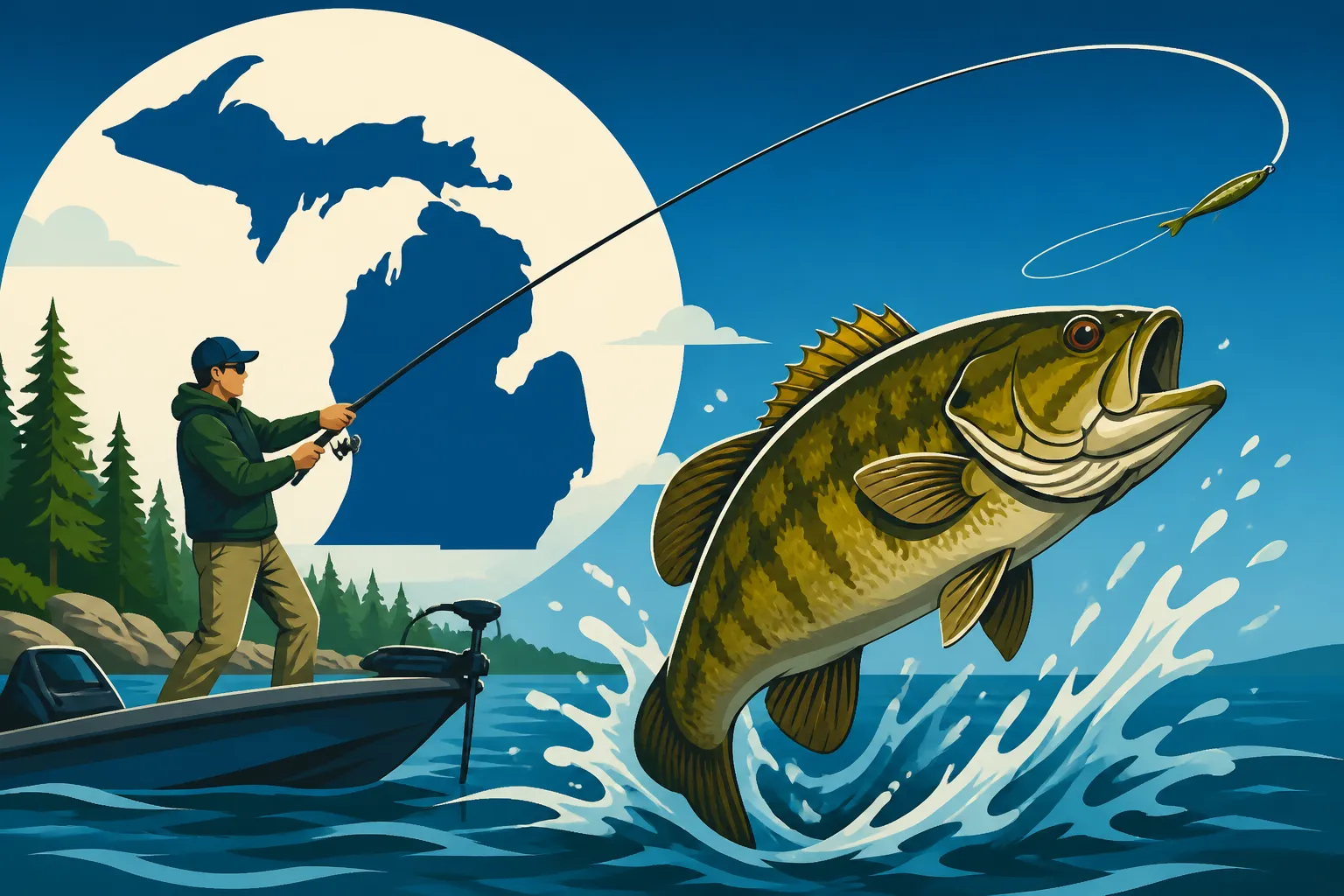
Casting Techniques for Smallmouth Bass
Catching smallmouth bass in Michigan is an exhilarating experience, but many anglers find themselves frustrated when these hard-fighting bronzebacks seem to vanish or ignore their presentations. It's not just about having the right lure; it's often about how you deliver it. This comprehensive guide will walk you through the essential casting techniques, gear considerations, and strategic approaches to help you consistently put Michigan smallmouth in your net.
Understanding Michigan Smallmouth Bass Behavior
Before you even think about casting, it's crucial to understand the creature you're targeting. Smallmouth bass are incredibly sensitive to their environment, and their behavior dictates where they'll be and what they'll bite. Knowing their preferred hangouts and feeding patterns will empower you to choose the right casting technique for the situation.
Habitat Preferences for Bronzebacks
Michigan's waters offer a diverse range of habitats, and smallmouth bass thrive in many of them, particularly those with clear water and rocky structures. You'll find them congregating around various forms of cover and depth changes, which provide ambush points and protection. On the Great Lakes, like Lake St. Clair or the northern reaches of Lake Michigan, smallmouth absolutely love expansive rock flats, boulder fields, and sharp drop-offs. These areas teem with baitfish like gobies and crayfish, which are primary food sources for these aggressive predators.
Inland lakes and rivers, such as parts of the Grand River or the St. Joseph River, also hold excellent smallmouth populations. Here, they'll seek out current breaks, fallen trees, submerged log jams, and rocky stretches where the water is clean and well-oxygenated. Understanding these preferences means you can visualize where a smallmouth might be holding before you even make your first cast. If you're fishing a clear lake, look for transition areas where a sandy bottom meets gravel or rock, or where submerged vegetation gives way to open water.
Seasonal Movements and Feeding Patterns
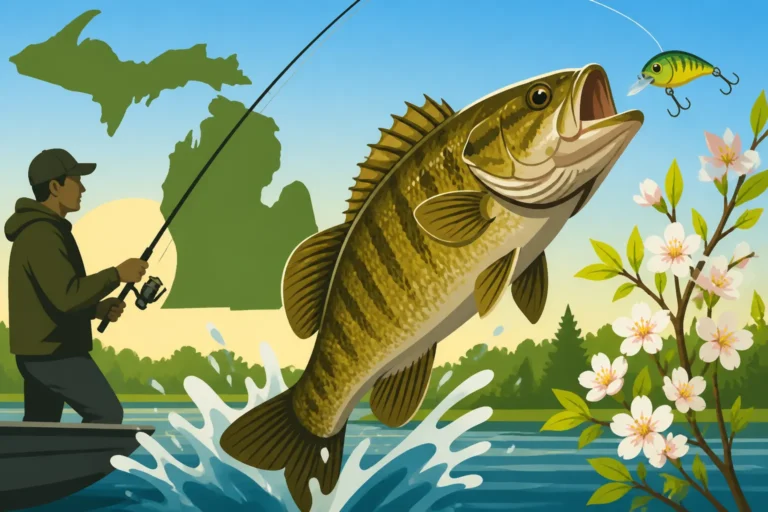
Smallmouth bass are creatures of habit, and their habits change drastically with the seasons. In spring, as water temperatures rise, smallmouth begin to move into shallower waters for their pre-spawn and spawning rituals. This is often when they are most aggressive and willing to chase a lure, making them a fantastic target for anglers mastering their casting techniques to hit specific beds or rocky outcrops. As summer progresses, smallmouth tend to move deeper to escape the heat and bright sunlight, often suspending over structure or clinging to deep rock piles and ledges. Early morning and late evening bites become more prominent during this time, as they move shallower to feed under lower light conditions.
Come fall, as water temperatures drop, smallmouth begin their "fall feed," gorging themselves in preparation for winter. They can be found in a variety of depths, often moving back to shallower flats or congregating on deeper offshore humps, chasing schools of baitfish. Knowing these general patterns helps you decide not just where to cast, but what type of lure to present and how to retrieve it. For instance, a fast-moving crankbait might be perfect for active, shallow spring fish, while a slow-fished jig could be the ticket for deeper, lethargic summer smallmouth. This understanding forms the backbone of effective casting strategies, ensuring your presentations align with the fish's current mood and location.
Essential Gear for Smallmouth Bass Casting
Having the right equipment is paramount for successful smallmouth bass fishing. The specific techniques you employ will often dictate your gear choices, ensuring you have the sensitivity, power, and accuracy needed to effectively present lures and fight these feisty fish.
Rod and Reel Selection
When it comes to smallmouth bass, most anglers opt for either spinning gear or baitcasting gear, each with its distinct advantages. Spinning setups are generally more forgiving and excel at casting lighter lures, making them ideal for finesse techniques like drop-shotting or working weightless soft plastics. A medium-light to medium-power spinning rod, typically 6'6" to 7'2" in length, with a fast action tip is a versatile choice. This setup allows for precise casting, excellent sensitivity to detect subtle bites, and enough backbone to handle a fighting smallmouth. Pair it with a 2500 or 3000 series spinning reel, which offers a good balance of line capacity and smooth drag. Brands like Shimano, Daiwa, or even more budget-friendly options found on Amazon offer reliable performance for spinning gear.
Baitcasting setups, on the other hand, provide more power and accuracy for heavier lures and presentations, especially when targeting dense cover or needing to make long, precise casts with crankbaits or larger jigs. A medium to medium-heavy power baitcasting rod, often 6'8" to 7'6" with a fast action, is common. The fast action allows for quick hook sets and sensitivity, while the increased power helps control larger fish and launch heavier baits. A baitcasting reel with a gear ratio between 6.4:1 and 7.1:1 is excellent for smallmouth, offering a good balance of retrieve speed for various lures. While baitcasting takes more practice to master, it opens up a new world of presentation options. You'll often find anglers discussing their preferred setup for different techniques, highlighting the importance of matching your rod and reel to your chosen fishing style. When considering your options, checking out resources like "Best Rods and Reels for Michigan Fishing" can provide even more tailored advice.
Line Choices and Terminal Tackle
The line you spool onto your reel can significantly impact your casting distance, sensitivity, and ability to land a fish. For smallmouth bass, anglers typically gravitate towards fluorocarbon, braided line, or a combination of both. Fluorocarbon line, often used in 8 to 12-pound test, is a fantastic choice for its low visibility underwater, excellent sensitivity, and moderate stretch. Its density helps lures sink faster and stay at desired depths, which is particularly beneficial for bottom-contact techniques with jigs or soft plastics.
Braided line, while highly visible, offers superior strength, incredible casting distance, and virtually no stretch, providing unparalleled sensitivity for detecting even the lightest bites. However, its visibility often necessitates tying a fluorocarbon leader (6 to 10 feet long) to the end of the braid with a strong knot like an FG or Alberto knot. This combination allows for long casts and sensitivity with the braid, while the fluorocarbon leader provides stealth and abrasion resistance near the lure.
Your terminal tackle – hooks, weights, and swivels – must also be matched to your chosen lures and techniques. For soft plastics, you'll need various worm hooks (e.g., EWG, offset shank) and bullet weights for Texas rigs, or specialized jig heads for Ned rigs. For topwater and jerkbaits, ensure your trebles are sharp and sturdy. Always carry a selection of hooks in different sizes (e.g., #1 to 3/0) and weights (e.g., 1/16 oz to 1/4 oz) to adapt to changing conditions and lure choices. Having a well-stocked tackle box, perhaps with a good variety bought from Amazon, means you're always ready to switch tactics. When fishing in Michigan, understanding your line and tackle is just as important as knowing the "Michigan Fishing Regulations Every Angler Should Know" to stay within legal bounds.
Fundamental Casting Techniques
Becoming a proficient smallmouth angler requires mastering several fundamental casting techniques. Each technique serves a specific purpose, whether it’s reaching distant targets, placing a lure accurately into tight cover, or making a stealthy presentation. Practice is key, as smooth, controlled casts will increase your success dramatically.
Overhead Casting for Basic Accuracy and Distance
The overhead cast is the most common and fundamental casting technique, and mastering it is essential for almost any fishing scenario. It's used when you need to cover a lot of water, cast long distances, or achieve moderate accuracy in open areas. To execute an overhead cast, hold your rod comfortably with your dominant hand, reeling until your lure is hanging a few inches from the rod tip. Initiate the cast by bringing the rod up smoothly, stopping abruptly at the 10 o’clock position (just past vertical). This "loading" of the rod blank uses the rod’s flex to propel the lure.
Without pausing, bring the rod forward in a controlled motion, releasing the line (with your index finger on a spinning reel, or by thumbing the spool on a baitcaster) as the rod tip reaches roughly the 2 o’clock position, aiming towards your target. The key is to keep the motion fluid and controlled, avoiding jerky movements. Finish the cast by pointing the rod tip at your target. This technique is excellent for covering broad flats or targeting offshore humps on larger bodies of water like Grand Traverse Bay or parts of Lake Huron. It's your go-to when you need to quickly assess an area or when fish are scattered and actively chasing bait over open water.
Roll Casting and Pitching for Cover and Accuracy
Sometimes, an overhead cast simply isn't feasible due to overhanging trees, dense shoreline brush, or other obstructions. This is where roll casting and pitching become invaluable.
Roll Casting: This technique is perfect for situations where you have limited back-casting room. Instead of bringing the rod fully behind you, you use a circular or "roll" motion to create tension in the line, loading the rod blank to propel the lure forward. To perform a roll cast, let your lure hang a bit lower, perhaps a foot or two from the rod tip. Bring your rod tip up and slightly behind you, creating a "D" loop of line in front of you. Then, swiftly but smoothly, drive the rod forward, keeping the rod tip low to the water. The line unrolls off the tip, carrying the lure to your target. This is fantastic for fishing riverbanks or tight spots on inland lakes like Houghton Lake, where accuracy and a low trajectory are needed without snagging vegetation behind you.
Pitching: Pitching is a more controlled, stealthy, and highly accurate technique for presenting lures to close-range cover, such as docks, lily pad fields, or submerged logs. It involves swinging the lure like a pendulum, rather than a full cast. Hold the lure in your off-hand, pull out enough line for your target, and point your rod tip towards the target. Swing the lure forward with your off-hand, and as it swings out, simultaneously release the lure and sweep the rod forward and downward in a smooth, controlled motion, engaging the reel as the lure touches the water. The goal is to make the lure enter the water with minimal splash, mimicking a natural bait falling. This technique is invaluable for targeting specific ambush points where smallmouth might be lurking, especially in quieter waters.
Skipping and Flipping for Advanced Cover Penetration
For the truly challenging spots where smallmouth love to hide, skipping and flipping are advanced techniques that can get your lure where others can't. They demand practice but offer incredible rewards.
Skipping: Imagine skipping a flat stone across the water – that's the basic idea. Skipping a lure involves making it bounce or "skip" across the surface of the water to reach tight, low-clearance areas like under docks, pontoon boats, or overhanging trees. This is predominantly a baitcasting technique, though skilled spinning anglers can achieve it. Hold your rod low, parallel to the water, and make a quick, sidearm cast, releasing the line just right so the lure hits the water at a shallow angle. The lure then skips multiple times across the surface before settling into the desired spot. It’s an art form, but once mastered, you can place a lure into prime smallmouth real estate that might otherwise be unreachable. Many anglers use soft plastics like tubes or soft jerkbaits for skipping, as their flatter profiles tend to skip better.
Flipping: Flipping is another close-quarters, stealthy technique designed to drop a lure vertically into dense cover with minimal disturbance. Unlike pitching, where you swing the lure, flipping keeps the lure in a relatively short line from the rod tip, often just a few feet. With a long rod (7' to 8' is common for flipping), pull out a few feet of line from your reel with your off-hand. Use your rod tip to swing the lure in a short pendulum motion towards the cover. As the lure swings, guide it with the rod tip and your off-hand, letting out line as needed to "flip" it softly into the target. This technique allows for extreme precision and is perfect for punching through matted vegetation, dropping jigs into thick brush piles, or targeting tight pockets within lily pad beds. Smallmouth often hold tight to such cover, and a quiet, vertical presentation can trigger a reaction strike they wouldn't give to a splashy cast.
| Casting Technique | Primary Use Case | Key Advantage | Ideal Lure Types | Best for Michigan Waters Like |
|---|---|---|---|---|
| Overhead Cast | Distance, open water, covering large areas | Simplicity, range | Crankbaits, spinnerbaits, heavier soft plastics | Lake Michigan, Saginaw Bay, larger inland lakes |
| Roll Cast | Tight back-casting room, river banks | Stealthy, accurate in confined spaces | Jigs, lighter crankbaits, spoons | Au Sable River, Manistee River, wooded shorelines |
| Pitching | Close-range cover, accuracy, stealth | Pinpoint accuracy, quiet entry | Jigs, Texas-rigged soft plastics, Ned rigs | Docks, fallen timber, lily pads on inland lakes |
| Skipping | Under docks, overhanging cover | Accessing unreachable spots | Tubes, soft jerkbaits, flatter soft plastics | Marinas, shoreline trees, pontoon boats on Lake St. Clair |
| Flipping | Dense vertical cover, punching vegetation | Vertical presentation, penetration | Heavy jigs, creature baits, punch baits | Thick weed beds, brush piles on inland lakes |
Lure-Specific Casting and Presentation Strategies
The best casting technique is only half the battle; knowing how to present your lure once it hits the water is equally important for tempting smallmouth bass. Different lure types require distinct casting and retrieve strategies to maximize their effectiveness.
Topwater and Jerkbaits: Triggering Reaction Strikes
Topwater lures and jerkbaits are incredibly exciting to fish, often triggering explosive strikes from aggressive smallmouth. But getting them to perform their magic requires precise casting and specific retrieval methods.
Topwater Lures: These baits, like poppers, walking baits (e.g., Heddon Super Spook, Lucky Craft Sammy), or prop baits, are designed to mimic injured baitfish or frantic prey on the surface. Casting accuracy is absolutely paramount for topwater. You want to land the lure precisely near a piece of cover – a dock, a rock, a weed line – with a soft splash, not a jarring crash. An overhead cast with a gentle delivery or a smooth pitch is often ideal. Once the lure lands, let it sit for a few seconds; this "deadsticking" period can often draw an immediate strike. Then, begin your retrieve. For walking baits, a rhythmic twitch-twitch-pause of the rod tip, while reeling in slack, makes the lure "walk the dog" in a tantalizing side-to-side motion. Poppers require sharper, more deliberate snaps of the rod tip to create splash and gurgle. The key is to experiment with retrieve speed and pauses, as smallmouth can be finicky. Early mornings, late evenings, and overcast conditions are prime times for topwater action, especially on calm waters like those found on Lake St. Clair or smaller Michigan lakes.
Jerkbaits: Jerkbaits are sub-surface lures designed to mimic a wounded or fleeing baitfish with an erratic, darting action. Unlike topwaters, they are usually cast out with an overhead cast for distance. The presentation is all about rhythm: twitch, twitch, pause. The "pause" is often when the strike occurs, as the lure suspends enticingly in the water column. You want to make your cast and then reel in any slack before beginning your jerking motion. A good jerkbait retrieve might involve two or three sharp downward jerks of the rod tip, followed by a 3-5 second pause, then repeating. The longer the pause, the more time a following smallmouth has to commit to the strike. Fluorocarbon line is often preferred for jerkbait fishing due to its low stretch, which enhances the lure's darting action and provides better sensitivity. These lures are particularly effective in clear water, especially during cooler water temperatures in spring and fall.
Soft Plastics and Jigs: Subtle Bottom Contact
For wary smallmouth or those holding tight to structure, soft plastics and jigs excel at subtle, bottom-oriented presentations. These require a keen sense of touch and patience, often relying on finesse casting techniques.
Weightless Wacky Rigs, Texas Rigs, and Ned Rigs: These presentations are all about imitating crayfish, gobies, or worms slowly moving along the bottom or subtly falling through the water column. For a weightless wacky rig (a soft plastic worm hooked in the middle), a gentle pitch or roll cast is ideal to allow the worm to fall slowly and naturally with a tantalizing wobble. For Texas rigs (soft plastic threaded onto a hook with a bullet weight), casting to cover and slowly dragging or hopping it over structure is the key. The Ned rig, a short stick bait on a mushroom-shaped jig head, is incredibly effective for smallmouth, especially when they're finicky. A light pitch or lob cast, followed by a slow drag-and-pause retrieve, allowing the bait to stand up on the bottom, is usually deadly.
With these techniques, feeling the "thump" of a smallmouth bite, or simply noticing your line twitch, requires maximum sensitivity. Braided line with a fluorocarbon leader is often favored for this very reason, providing immediate feedback on what your lure is doing on the bottom. Focus your casts on areas with rocky bottoms, gravel patches, or subtle depth changes where smallmouth ambush their prey. You can find a huge variety of these soft plastics and jig heads on Amazon, which makes experimenting with different colors and styles easier than ever. For more detailed information, exploring articles like "Best Technique for Smallmouth Bass on Lake St. Clair" can provide local insights.
Crankbaits and Spinnerbaits: Covering Water and Deflection
When smallmouth are aggressive and scattered, or you need to quickly locate active fish, crankbaits and spinnerbaits are excellent choices for covering a lot of water.
Crankbaits: These lures are designed to dive to specific depths and deflect off structure, often triggering reaction strikes. For shallow-diving crankbaits (that run 0-5 feet), a precise overhead cast parallel to a shoreline, riprap, or a shallow flat is often best. For deeper-diving crankbaits, you'll want to cast them out over deeper water or along drop-offs, reeling them down until they "contact" the bottom or structure. The key to crankbait fishing is not just retrieving, but deflecting the lure off rocks, logs, or even subtle changes in bottom composition. When a crankbait hits something, it momentarily changes direction or stalls, often mimicking a fleeing baitfish and triggering an immediate strike. Vary your retrieve speed – a steady retrieve, a stop-and-go, or a sudden burst – to find what the fish prefer on any given day.
Spinnerbaits: Spinnerbaits are incredibly versatile lures, excelling in various types of cover, from submerged timber to sparse weeds. An accurate overhead cast or a pitch to a specific piece of cover is common. The beauty of a spinnerbait is its "flash and vibration," created by the spinning blades and skirt. Cast it out and retrieve it steadily, allowing the blades to spin. You can vary the retrieve speed, letting it fall occasionally (known as "dying"), or even bumping it off cover. When fishing dense cover, make sure to cast past your target and retrieve through it, allowing the spinnerbait's weedless design to prevent snags. These lures are especially effective in stained or murky water where the flash and vibration help fish locate them. Consider a resource like "Best Lures for Muskellunge" for a comparative look at how different lures attract aggressive predators.
Adapting to Michigan's Diverse Waters
Michigan offers an incredible array of fishing environments, from the vast expanse of the Great Lakes to intimate inland rivers. Each type of water presents unique challenges and opportunities for smallmouth bass anglers, requiring an adaptive approach to casting techniques.
Great Lakes Techniques: Navigating Vastness and Weather
Fishing the Great Lakes for smallmouth bass, especially on waters like Lake St. Clair, Lake Michigan, or parts of Lake Huron, is an experience unlike any other. These vast bodies of water demand different strategies compared to smaller inland lakes. Here, longer casts are often necessary to reach offshore reefs, rock piles, or expansive flats where smallmouth gather. An accurate overhead cast is your primary tool for covering water efficiently. You’ll often be contending with wind and waves, which can significantly impact your casting accuracy and lure presentation. Heavier lures, capable of cutting through the wind and maintaining contact with the bottom in choppy conditions, become essential.
When faced with strong winds, using a heavier jig or a denser crankbait will help you cast further and keep your lure in the strike zone. Trolling motors with GPS Spot-Lock features (like those found on Minn Kota or Motorguide models) are invaluable for holding position over productive structure, allowing you to repeatedly cast to the same spot without drifting too quickly. On the Great Lakes, smallmouth often relate to specific depth changes, rocky points, and submerged shoals, so understanding your electronics to locate these structures is key. For more in-depth knowledge on tackling these big waters, "Michigan's Great Lakes Fishing Guide" is an excellent resource, and "Lake St. Clair Smallmouth Bass Fishing" offers specific tactics for that world-class fishery.
Inland Lake and River Tactics: Precision in Confined Spaces
While the Great Lakes demand power and distance, Michigan's numerous inland lakes and rivers often require a more refined, precise approach. Here, smallmouth might be found in tighter quarters, around fallen trees, lily pads, or subtle current breaks. Techniques like pitching, roll casting, and even flipping become incredibly important for accurately placing a lure without spooking fish or getting snagged.
On a smaller river like sections of the Au Sable, you might find smallmouth holding behind boulders or in deeper pockets along the bank. A well-executed roll cast can place a jig or a soft plastic precisely into these pockets without disturbing the shallow water. In an inland lake dotted with docks or overhanging trees, skipping a tube bait under a dock is often the only way to reach a hidden bronzeback. Lighter tackle, such as a medium-light spinning setup, is often preferred for these finesse presentations, allowing for softer landings and more sensitive feel. Focusing on current seams in rivers, the edges of weed beds, or visible structures in lakes will increase your success. For further guidance on these environments, check out "Michigan Inland Lakes Worth Fishing" to discover more specific locations and strategies.
Practice, Patience, and Observation
Mastering casting techniques for smallmouth bass isn't just about reading a guide; it's a journey that requires dedication, perseverance, and a willingness to learn from every cast. The most successful anglers are those who continuously refine their skills and adapt to the ever-changing conditions on the water.
Developing Your Casting Muscle Memory
Becoming a truly proficient caster for smallmouth bass comes down to muscle memory. Just like any sport, repetitive practice will engrain the movements needed for accurate, smooth, and consistent casts. Don't wait until you're on the water to practice; set up targets in your backyard (e.g., a five-gallon bucket, a hula hoop) and practice different casting techniques without a hook, using a weighted plug or a practice lure. Focus on a fluid motion, avoiding jerky movements that can lead to snags or poor presentations. Pay attention to how the rod loads and unloads, and the timing of your line release.
Common casting flaws include "powering" the cast with too much arm, resulting in a loss of accuracy and distance, or releasing the line too early or too late, leading to sky-high casts or lures splashing too close to you. Dedicate specific practice sessions to overhead casting for distance, then switch to pitching to tight targets, or even try skipping under a patio table. The more you practice, the more intuitive these movements will become, allowing you to cast without thinking, which is crucial when an opportunity arises on the water. Many instructional videos and training aids can be found on platforms like Amazon to help accelerate your learning curve.
Reading the Water and Adjusting Your Approach
Even with perfect casting technique, if you're not casting to where the fish are, you won't catch them. This is where reading the water and constantly observing your surroundings becomes critical. Pay attention to factors like water temperature, clarity, current, wind direction, and sunlight penetration. These elements all influence where smallmouth will hold and how they will feed. For instance, if the water is clear and the sun is high, smallmouth are likely to be deeper or tucked into dense cover, requiring a more precise, stealthy pitch or flip. If it's overcast with a slight chop, they might move shallower and be more willing to chase a topwater or spinnerbait.
Observe other anglers, if present, to see what they might be catching fish on, but don't be afraid to experiment. If one casting technique or lure isn't producing, don't be stubborn. Change your lure color, alter your retrieve speed, try a different casting angle, or switch to an entirely different technique. The beauty of smallmouth fishing in Michigan is its dynamic nature; what worked yesterday might not work today, and what works on one lake might not work on another. Be patient, stay observant, and always be willing to adjust your approach. Over time, you'll develop an instinct for what the fish are doing, and your casting skills will become an extension of that intuition, leading to more consistent success.
Disclaimer
Please note that fishing regulations in Michigan can change. Always consult the latest Michigan Department of Natural Resources (DNR) fishing guide or website for the most current rules and regulations, including specific seasons, size limits, and bag limits for smallmouth bass and other species. This guide is for informational purposes only and should not be considered a substitute for official DNR publications.