Lake Charlevoix Fishing Report
Figuring out what's biting, where to go, and what gear to use on a huge, dynamic lake like Lake Charlevoix can feel like trying to solve a puzzle with half the pieces missing. Many anglers, even seasoned ones, find themselves scratching their heads when local conditions change rapidly or they're targeting a new species. This comprehensive guide is designed to cut through the confusion, offering a detailed Lake Charlevoix fishing report that will help you understand the lake's diverse fishery, pinpoint hot spots, and get you rigged up for success, no matter the season.
Understanding Lake Charlevoix's Diverse Fishery
Lake Charlevoix isn't just another pretty Michigan lake; it's a deep, cold, and incredibly diverse fishery connected to Lake Michigan via the Pine River Channel. This connection means you'll find a fascinating mix of warmwater and coldwater species, offering something for every angler. Knowing what's available and when different fish species are most active is the first step toward a successful outing.
Walleye and Smallmouth Bass Opportunities
When it comes to warmwater species, walleye and smallmouth bass are undoubtedly two of the most sought-after prizes in Lake Charlevoix. These fish thrive in different habitats within the lake, offering distinct angling experiences.
Walleye fishing on Lake Charlevoix can be absolutely phenomenal, particularly during the low-light hours of dawn, dusk, or even at night. They tend to congregate around deeper flats, humps, and the edges of drop-offs, especially areas with a good supply of baitfish. Many local anglers find success trolling crankbaits like Rapalas or Reef Runners in classic walleye colors such as chartreuse, firetiger, or purple. If you prefer a more active approach, jigging blade baits or soft plastics along structure can also yield impressive results. Remember that walleye can be quite particular, so experimenting with retrieve speeds and lure presentations is key to unlocking their bite. This lake's walleye population is robust, often producing fish in the 18-24 inch range, with bigger trophy fish lurking.
Smallmouth bass, on the other hand, are aggressive, hard-fighting fish that thrive in Lake Charlevoix's clear, rocky environments. They love to ambush prey around submerged timber, rock piles, ledges, and transition areas where hard bottom meets softer substrates. During the warmer months, you can find smallmouth in relatively shallow waters, particularly in bays and near points, where they'll readily strike topwater lures, jerkbaits, and spinnerbaits. As the water cools, they tend to move deeper, holding tight to rocky reefs and humps. At these times, drop-shotting soft plastics, Ned rigs, or casting tube jigs become incredibly effective techniques. You might find some excellent Smallmouth Bass Fishing in Michigan insights applicable here. The average smallmouth here is a feisty 14-18 inches, but don't be surprised to hook into bronzebacks pushing 20 inches or more. Their explosive fights make them a favorite target for many anglers.
Lake Trout and Salmon Prospects
For those who crave the thrill of coldwater angling, Lake Charlevoix’s connection to Lake Michigan provides fantastic opportunities for lake trout and various salmon species. These fish are typically found in the deeper, cooler parts of the lake, especially during the summer months.
Lake trout are native to the Great Lakes system and thrive in Lake Charlevoix's deeper basins. They are often targeted by trolling spoons, plugs, or dodgers and flies at depths ranging from 50 to 150 feet, sometimes even deeper. Downriggers are practically essential for getting your offerings down to where these magnificent fish reside. The lake's clear waters mean that natural baitfish patterns like smelt or cisco imitations tend to work well. Early spring and late fall can also see lake trout move into shallower waters, particularly around structure or where baitfish are schooling, making them accessible to different techniques. These fish can grow quite large, offering a true test of your tackle and angling skill. For more general insights, check out our guide on Michigan Trout Species Explained.
Salmon, including Chinook (King) and Coho, enter Lake Charlevoix primarily during their spawning runs, often in late summer and fall, as they make their way up the rivers and streams that feed the lake. While they don't typically reside in Lake Charlevoix year-round in large numbers like they do in Lake Michigan, the lake can offer transient opportunities, especially near the Pine River Channel and other tributary mouths. Trolling J-Plugs, crankbaits, or casting spoons can be effective when salmon are moving through. During peak spawning times, drifting spawn bags or skein in the river mouths can be highly productive. These powerful fish provide some of the most exhilarating fights in freshwater, and catching one on Lake Charlevoix is a memorable experience.
Panfish and Northern Pike Action
While walleye, bass, and trout steal many of the headlines, Lake Charlevoix also boasts excellent fishing for panfish and northern pike, offering more accessible and often consistent action, especially for families or beginners.
Panfish, including yellow perch, bluegill, and crappie, are abundant throughout Lake Charlevoix. These species are fantastic targets for light tackle and are often found in weed beds, around docks, and in shallower bays. Yellow perch are particularly popular and can be found in schools over sandy or silty bottoms, often near deeper water access. Small minnows, worms, or tiny jigs tipped with wax worms or plastics are usually all you need. Bluegill and crappie tend to prefer areas with more cover, like lily pads, submerged timber, or weed edges. A simple bobber setup with a worm or a small jig can keep you busy for hours. During ice fishing season, these panfish are mainstays, providing steady action. You can often find great perch schools in the smaller bays like Round Lake and Oyster Bay.
Northern pike are another exciting species present in Lake Charlevoix, offering thrilling strikes and powerful runs. These predatory fish are ambush hunters and are typically found lurking in or near dense weed beds, around submerged logs, or at the edges of drop-offs where they can surprise unsuspecting baitfish. Large spoons, spinnerbaits, jerkbaits, and even topwater lures are excellent choices for pike. Live bait, such as large shiners or suckers, fished under a bobber can also be incredibly effective, especially when targeting larger specimens. Pike in Lake Charlevoix can reach impressive sizes, making them a formidable opponent on conventional gear. Many anglers focus their efforts on the shallower, weedy bays where pike frequently patrol for food.
Finding the Hot Spots on Lake Charlevoix
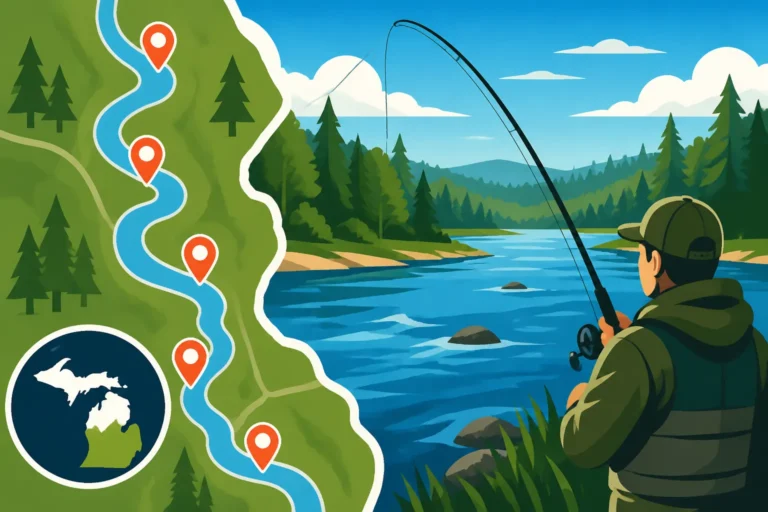
Lake Charlevoix is expansive, covering over 17,000 acres, with depths plunging to over 120 feet. Knowing where to start can be daunting. Thankfully, the lake offers a variety of public access points and distinct fishing zones, each with its own character and species potential.
Public Access and Boat Launches
Accessibility is rarely an issue on Lake Charlevoix, with several well-maintained public boat launches and access points strategically placed around its shores. These facilities cater to different types of boats and provide a convenient starting point for your fishing adventure.
The City of Charlevoix itself offers excellent access, with public docks and boat launches leading directly into Round Lake, which connects to the main body of Lake Charlevoix and then out to Lake Michigan. This area is great for launching larger vessels and provides immediate access to both shallow and deep waters. East Jordan and Boyne City, located at the southern ends of the east and south arms of the lake, respectively, also have municipal boat launches. These are ideal for exploring the distinct characteristics of the lake's arms, which can be shallower and have different structures than the main body. For instance, the Boyne City launch provides access to the Boyne River mouth, a popular spot during salmon runs. Utilizing these municipal launches is straightforward, often requiring a nominal fee or a Michigan DNR Recreation Passport. Always check for current regulations and launch fees before you head out.
Beyond the main towns, there are several smaller state-managed or county-owned access points that might be less crowded, particularly during peak season. These include smaller ramps and parking areas, some of which are better suited for smaller boats, kayaks, or canoes. For example, Young State Park, near Boyne City, offers a launch and good shore access. Knowing these diverse options allows you to select the best starting point based on your target species, preferred fishing method, and the size of your craft. When planning your trip, consider checking out the broader guide on Best Places to Fish in Michigan to put Lake Charlevoix into perspective alongside other fantastic Michigan fisheries.
Shore Fishing Opportunities
While Lake Charlevoix is a big water, best explored by boat, there are still some decent opportunities for shore anglers, especially if you know where to look. These spots often concentrate fish and can provide rewarding experiences without the need for a boat.
The most prominent and often productive shore fishing spots are found in and around the city of Charlevoix. The jetties and piers along the Pine River Channel, especially where it meets Lake Michigan, can be fantastic for targeting salmon, steelhead, and brown trout during their migratory periods. These areas provide deep water access right from shore, and casting spoons, spinners, or drifting spawn can be highly effective. The drawbridge area itself also offers various spots to cast a line. Additionally, the city's public parks and waterfront areas often have docks or designated fishing platforms where you can target panfish, smallmouth bass, and even the occasional walleye. These spots are particularly family-friendly, offering amenities and easy access.
Further inland, some of the smaller bays and public parks in Boyne City and East Jordan also offer shore fishing. Look for public access points in parks that feature docks, seawalls, or shallow, weedy areas. These are prime locations for panfish like perch and bluegill, as well as northern pike. While not as extensive as the boat-based opportunities, shore fishing on Lake Charlevoix can still yield some memorable catches. It's often a great way to enjoy the lake for a few hours without a full-day commitment. Remember to respect private property and always check local signage for any fishing restrictions.
Deep Water Structure and Drop-Offs
The true gems of Lake Charlevoix, especially for coldwater species and larger walleye and smallmouth, lie in its intricate deep-water structure. Navigating these areas effectively requires good electronics and a solid understanding of fish behavior.
The main basin of Lake Charlevoix features several prominent deep-water humps, reefs, and dramatic drop-offs that plunge to over 100 feet. These areas are magnets for baitfish like cisco and smelt, which in turn attract predatory lake trout, salmon, and larger walleye. Anglers targeting lake trout will focus on these deeper contours, often trolling spoons or large stickbaits at specific depths indicated by their fish finders. Precision boat control and the use of downriggers or leadcore line are crucial here to present lures effectively at the desired depth. Identifying distinct thermoclines and concentrating efforts just above or within these cooler water layers can significantly improve your chances.
For walleye and smallmouth bass, particularly during the summer and fall, paying close attention to the transitions along these deeper drop-offs is vital. Walleye will often stage on the deeper edges of flats adjacent to sharp breaks, moving up to feed during low-light conditions. Smallmouth bass will relate to rocky points and underwater ledges that extend into deeper water, using them as ambush points. Using your sonar to identify bait balls, schools of fish, or prominent structural features like rock piles or submerged timber in these deeper zones will be your biggest asset. Many anglers find it helpful to consult detailed bathymetric charts of Lake Charlevoix to pinpoint these features before heading out. Sometimes, charter services listed on platforms like FishingBooker can provide invaluable local knowledge for these complex deep-water patterns.
Current Conditions and How to Interpret Them
Successfully fishing Lake Charlevoix often boils down to understanding and reacting to current environmental conditions. Water temperature, clarity, and recent weather patterns all play a significant role in fish behavior and can dictate where fish are holding and what they're willing to bite.
Reading Water Temperatures and Thermoclines
Water temperature is arguably one of the most critical factors influencing fish activity, especially in a diverse fishery like Lake Charlevoix. Different species have preferred temperature ranges, and knowing where these ranges exist in the water column can unlock the bite.
In spring, as ice melts and surface water begins to warm, fish like walleye and smallmouth bass will move into shallower bays and darker bottom areas where water temperatures rise fastest. Targeting water temperatures in the mid-40s to low 50s Fahrenheit can be key for prespawn walleye and early season bass. For instance, the shallow areas of Oyster Bay or the flats near Boyne City will warm up quicker than the main lake basin. As summer progresses, a distinct thermocline will form in the deeper parts of Lake Charlevoix. This is a layer where water temperature changes rapidly, and it's often where coldwater fish like lake trout will concentrate, seeking cooler, oxygenated water. Monitoring your fish finder for this thermocline and presenting lures just above or within it is crucial for deep-water success.
Conversely, surface temperatures in the main lake during summer might reach the mid-70s, pushing warmwater species into deeper, cooler breaks or forcing them into low-light feeding patterns. In the fall, as surface temperatures drop, fish activity can again pick up in shallower waters before they eventually retreat to deeper wintering grounds. Carrying a reliable thermometer and using your boat's electronics to find temperature breaks and the thermocline can give you a significant advantage. This knowledge helps you understand Michigan Fishing Seasons Explained in a more nuanced way, tailoring your approach to specific temperature zones.
Impact of Weather Patterns
Weather isn't just about comfort; it profoundly affects fish behavior, particularly on a large, clear lake like Charlevoix. Paying attention to recent and forecasted conditions can help you predict fish movements and feeding windows.
High-pressure systems, often associated with clear skies and calm winds, can make fishing tough. The bright sun penetrates deep into the clear water, making fish feel exposed and often pushing them deeper or into denser cover. During these periods, a more subtle, finesse approach with natural baits or smaller lures is often more effective. Fish might also become more active during low-light periods (dawn, dusk) or at night under these conditions. Conversely, low-pressure systems, often bringing clouds, wind, and even light rain, can trigger aggressive feeding. The reduced light penetration makes fish feel safer and more willing to chase baits. Walleye, in particular, often become very active during choppy conditions, as the waves break up light and stir up baitfish.
Wind direction and intensity also play a crucial role. A consistent wind blowing into a bay or across a point can create current and concentrate baitfish, making those areas prime spots for predators. For example, a persistent west wind pushing into the Boyne City area might stack baitfish and, consequently, walleye or smallmouth on those western shores. While fishing in heavy chop can be challenging, it can also lead to some of the best fishing, especially for species like walleye. Always prioritize safety on big water when the wind picks up, especially if you're exploring Best Boats for Michigan Fishing. Local weather forecasts should be a key part of your pre-fishing routine.
Online Resources and Local Intel
In today's interconnected world, staying updated on local fishing conditions is easier than ever, thanks to online resources and the invaluable knowledge of local anglers and charter captains.
Websites like the Michigan DNR often publish fishing reports or updates that, while general, can provide a baseline understanding of conditions across the state's major fisheries. More specific insights can be found on local forums, Facebook groups dedicated to Lake Charlevoix fishing, or through real-time mapping apps that show recent catches. Many fishing apps integrate weather data, water temperatures (where available), and even user-submitted reports, giving you a snapshot of what's happening on the water. Some platforms even allow you to book local guides, like those found through FishingBooker, who can offer the most up-to-date and hyper-local information.
Perhaps the best source of intel, however, comes from local bait shops and fellow anglers. A quick stop at a local tackle store in Charlevoix, East Jordan, or Boyne City can provide invaluable information on what lures are working, which areas are producing, and what current conditions are truly like. Don't be shy about striking up conversations at the boat ramp or local diner; many anglers are happy to share general tips, especially if you're respectful and show genuine interest. Combining these digital and personal resources allows you to piece together a comprehensive, real-time fishing report for Lake Charlevoix.
Essential Gear and Techniques for Lake Charlevoix
Having the right tackle and knowing how to employ it effectively are paramount to success on Lake Charlevoix. Given the lake's diverse species and varied environments, a versatile approach is often best.
Rods, Reels, and Line Choices
The vast range of species in Lake Charlevoix means that a one-size-fits-all rod and reel setup won't cut it if you're serious about targeting different fish. A good approach involves having a few versatile setups.
For walleye and smallmouth bass, a medium-light to medium power spinning rod, around 6'6" to 7' long, with a fast action tip, is ideal. Pair this with a 2500 or 3000 series spinning reel spooled with 8-12 lb braided line, especially if you're doing a lot of jigging or casting soft plastics. The braid offers excellent sensitivity and hook-setting power, and you can add a fluorocarbon leader (6-10 lb test) for abrasion resistance and stealth in the clear water. For specific techniques, like drop-shotting smallmouth in deeper water, a slightly longer, more sensitive rod might be preferred. For walleye trolling, a medium-action casting rod in the 7-8 foot range, paired with a line counter reel spooled with 10-15 lb monofilament or braid, is more appropriate. You can find more details on Best Rods and Reels for Michigan Fishing if you plan on expanding your collection.
When targeting the deeper, harder-fighting lake trout and potentially salmon, heavier gear is a must. A medium-heavy to heavy power trolling rod, typically 8-10 feet long, designed for downrigger fishing, is essential. These rods have a softer tip to absorb the shock of a strike while still providing the backbone needed to fight large fish. Pair these with robust conventional reels spooled with 20-30 lb monofilament or braided line. For line, some anglers prefer leadcore line for trolling deeper without downriggers, allowing a more direct fight once a fish is hooked. For northern pike, a medium-heavy baitcasting setup with 15-20 lb monofilament or 30-50 lb braid is a good choice to handle their powerful runs and sharp teeth.
Lures and Bait Strategies
The diverse diet of Lake Charlevoix's fish means a wide array of lures and baits can be effective, but matching your offering to the target species and conditions is key.
For walleye, a tackle box stocked with various crankbaits (both shallow and deep diving), blade baits, jigging spoons, and soft plastics (like Berkley Gulp! minnows or paddletails) in natural baitfish colors and brighter attractor patterns will serve you well. Live bait, such as shiner minnows or nightcrawlers, fished on a slip bobber or bottom bouncer rig, can also be incredibly effective, especially when the bite is tough. Smallmouth bass respond well to jerkbaits, tube jigs, drop-shot rigs with small worms or creature baits, and topwater lures like poppers and walk-the-dogs during low-light periods. For lake trout and salmon, large trolling spoons (e.g., Dreamweaver, Pro-King) in silver, green, blue, or purple hues, often paired with dodgers or flashers, are standard. Plugs and flasher-fly combos are also highly productive. You might even want to check out some insights on Michigan Walleye Fishing Techniques.
Panfish are typically caught on simple offerings: small jig heads tipped with wax worms, minnows, or small soft plastics. Crappie jigs in bright colors, tiny spinners, and small bobber rigs with crickets or worms are always reliable. For northern pike, larger spoons (Daredevle, Doctor Spoon), spinnerbaits with big blades, and substantial crankbaits that mimic perch or baitfish are great choices. Don't forget live suckers or large shiners under a large float for trophy pike. Remember that presentation is just as important as the lure itself; varying your retrieve, pauses, and depths until you find what triggers a bite is crucial.
Essential Electronics and Safety
Modern fishing relies heavily on electronics, and Lake Charlevoix is no exception. Beyond that, safety is paramount on such a large body of water.
A good quality fish finder/chartplotter combo is perhaps the most important piece of electronic gear for fishing Lake Charlevoix, particularly for deep-water species. Look for units with clear sonar (2D, Side Imaging, Down Imaging), detailed mapping capabilities (like Navionics or LakeMaster charts that show contours and depths), and GPS for marking waypoints. This allows you to identify fish schools, locate structure, and navigate safely. A robust electric trolling motor, especially one with GPS anchoring capabilities (like a Minn Kota or MotorGuide), can be a game-changer for holding your position over a specific spot or slowly working a contour. These tools, paired with a reliable marine battery, will significantly enhance your ability to find and stay on fish.
Safety on Lake Charlevoix cannot be overstated. Always carry enough U.S. Coast Guard-approved life jackets for everyone on board, and ensure children are wearing theirs. A fully charged marine radio (VHF) is essential for communication, especially if you venture far from shore or into the main Lake Michigan access. Keep an eye on weather forecasts, as conditions can change rapidly. Other essential safety items include flares, a horn or whistle, navigation lights (if fishing near dawn/dusk or at night), and a first-aid kit. A well-prepared angler is a safe and successful angler. Make sure you're familiar with Michigan Fishing Regulations Every Angler Should Know before heading out, especially regarding required safety gear.
| Fish Species | Best Season | Typical Location | Recommended Technique | Common Baits/Lures |
|---|---|---|---|---|
| Walleye | Spring, Summer, Fall | Deeper flats, drop-offs, river mouths | Trolling, Jigging, Drifting | Crankbaits, Blade Baits, Minnows, Crawlers |
| Smallmouth Bass | Spring, Summer, Fall | Rocky points, ledges, submerged timber | Casting, Drop-shotting, Topwater | Jerkbaits, Tubes, Senkos, Poppers |
| Lake Trout | Year-round (deep water) | Deep basins, humps, thermocline | Trolling with downriggers | Spoons, Plugs, Flashers w/flies |
| Chinook/Coho Salmon | Late Summer, Fall | Pine River Channel, river mouths, main lake | Trolling, Casting, Drifting | Spoons, Plugs, J-Plugs, Spawn |
| Yellow Perch | Year-round | Weed beds, sandy flats, docks | Jigging, Bobber fishing | Small minnows, Worms, Tiny Jigs |
| Northern Pike | Spring, Summer, Fall | Weedy bays, shallow cover, drop-off edges | Casting, Trolling, Live bait | Large Spoons, Spinnerbaits, Shiners |
Navigating Fishing Regulations on Lake Charlevoix
Like all Michigan waters, fishing on Lake Charlevoix is governed by specific regulations set forth by the Michigan Department of Natural Resources (DNR). These rules cover everything from license requirements to species-specific size and bag limits, and it's your responsibility to know and follow them.
Michigan Fishing License Requirements
Before you even think about casting a line in Lake Charlevoix, or any public water in Michigan for that matter, you need to ensure you have the proper fishing license. This isn't just a formality; it's a legal requirement and contributes to the conservation efforts that keep Michigan's fisheries healthy.
Every angler aged 17 and older must possess a valid Michigan fishing license. This applies whether you're a resident or a nonresident, and whether you're fishing from shore, a boat, or through the ice. There are various license types available, including annual licenses that run from March 1st to March 31st of the following year, and shorter-term 24-hour licenses, which are great for visitors or those just trying out fishing for a day. For residents, there are often discounts for seniors or those with certain disabilities. You can easily purchase your license online through the DNR website, on the DNR Hunt Fish App, or in person at various authorized retailers across the state. Not having a license can result in fines and legal penalties, so always double-check yours before heading out. For a comprehensive guide, check out how to Buy a Michigan Fishing License Online.
Even if you're fishing with a guide or on a charter trip arranged through a service like FishingBooker, you are still personally responsible for having your own valid fishing license. The charter captain's license only covers them, not their clients. It's a common misconception that if you're on a commercial vessel, you're exempt, but that's simply not the case in Michigan. Always ensure everyone in your party who is 17 or older has their individual license clearly displayed or readily available, as DNR officers frequently patrol Lake Charlevoix and other popular fishing destinations.
Species-Specific Limits and Seasons
Beyond the general license requirement, Lake Charlevoix has specific rules regarding the size and number of fish you can keep, as well as season dates for certain species. These regulations are designed to protect fish populations and ensure sustainable angling for future generations.
For popular species like walleye, smallmouth bass, and yellow perch, there are daily possession limits and often minimum size requirements. For example, walleye typically have a 15-inch minimum size limit and a daily possession limit of five. Smallmouth bass often have a specific season (usually closing during their spawning period in spring) and a minimum size, though this can vary by water. Yellow perch often have a generous daily limit, but understanding specific exceptions, like those that might apply to boundary waters, is crucial. These limits are not arbitrary; they are based on scientific data and aimed at allowing fish to reach maturity and reproduce.
Coldwater species like lake trout also have specific daily limits and size restrictions, which can sometimes vary between the Great Lakes and interconnected inland waters. Salmon, particularly during their runs, might have higher daily limits, but it's crucial to confirm the current regulations, especially if you're planning on harvesting them. It’s highly recommended to consult the official Michigan Fishing Regulations Digest, which is updated annually and available online as a PDF or in print at bait shops and DNR offices. This digest will clearly outline all the rules, including any special regulations specific to Lake Charlevoix or its connecting waters. Always review the digest before each fishing season, as rules can sometimes change. Knowing these rules ensures you're fishing legally and responsibly.
Disclaimer
Fishing conditions and regulations in Michigan can change. Always consult the latest Michigan Department of Natural Resources (DNR) regulations before heading out on the water. This guide is for informational purposes only and should not replace official DNR publications.