Best Time to Fish Muskegon Lake for Walleye
For many anglers, chasing walleye on Michigan's famous Muskegon Lake can feel like a game of hide-and-seek. These cunning fish are often elusive, making the quest to pinpoint their feeding windows a genuine challenge. This comprehensive guide will peel back the layers of mystery surrounding Muskegon Lake's walleye, revealing the best times to wet your line and the tactics that will put more fish in your boat or on the ice.
Understanding Muskegon Lake's Walleye Fishery
Muskegon Lake, a sprawling freshwater embayment connected to Lake Michigan, offers a dynamic and productive walleye fishery. However, its unique characteristics mean that simply knowing "when" to fish isn't enough; understanding the lake itself and the walleye's natural behaviors within it is crucial for consistent success.
Characteristics of Muskegon Lake for Walleye
Muskegon Lake is an impressive body of water, covering approximately 4,149 acres with an average depth of 22 feet and a maximum depth reaching around 79 feet. This diverse environment, featuring shallow bays, deeper channels, submerged structures, and varying bottom compositions, provides ample habitat for walleye throughout the year. The lake's connection to Lake Michigan allows for a natural migration pattern for some fish, especially during spawning seasons, adding another layer of complexity and opportunity. You'll find a mix of current, especially near the river mouth and the channel to Lake Michigan, along with calmer, shallower areas. This varied landscape means that different fishing strategies will be effective depending on where you are on the lake and what time of year it is.
The Walleye Life Cycle and How It Influences Fishing
Walleye are largely temperature-dependent fish, and their life cycle revolves around spawning, feeding, and seeking optimal thermal comfort. Their annual patterns directly dictate the best times to target them. Typically, walleye spawn in early spring when water temperatures rise into the 40s (Fahrenheit), often seeking rivers and rocky shoals. After spawning, they enter a post-spawn recovery phase, moving from their spawning grounds to deeper feeding areas. As summer progresses, they'll follow baitfish into deeper, cooler waters during the day, often moving shallower to feed at dawn, dusk, and even after dark. Come fall, they engage in an aggressive feeding binge to build up fat reserves for winter, making them highly catchable. In winter, under the ice, their metabolism slows, but they remain active enough to be targeted by ice anglers, especially during specific windows. Understanding these transitions is key to unlocking the lake's walleye potential.
Prime Seasons for Walleye on Muskegon Lake
While walleye can be caught year-round on Muskegon Lake, certain seasons undeniably offer better odds and more active bites. Each season presents its own challenges and rewards, demanding different approaches from the savvy angler.
Spring Awakening: Post-Spawn and Early Summer Bites
Spring is arguably one of the most exciting times for walleye fishing on Muskegon Lake, primarily due to the post-spawn recovery and subsequent feeding frenzy. After the arduous process of spawning, which typically occurs in late March through April in the rivers feeding into or connecting with the lake, walleye are hungry and looking to replenish their energy stores.
- Timing the Post-Spawn Movement: As water temperatures climb into the 50s and low 60s, usually from late April through May, walleye begin to disperse from their spawning grounds. They'll often stage in transition areas, such as points, drop-offs, and shallower flats near river mouths, before moving to their deeper summer haunts. This period offers excellent opportunities for anglers who can intercept these migrating fish.
- Targeting Hungry Fish: During this time, walleye are aggressive. Trolling with crankbaits is highly effective, mimicking the baitfish they are actively pursuing. Popular crankbait colors often include firetiger, perch, and chartreuse. Jigging with minnows or soft plastics near structure can also produce excellent results. This is when you'll find them closer to shore or in shallower depths than you might in the dog days of summer. If you're wondering about specific size and possession limits, it's always wise to check the Michigan Walleye Size and Possession Limits to ensure compliance.
Summer Strategies: Deep Water and Night Fishing
Summer fishing on Muskegon Lake can be a bit more challenging for walleye, but it offers fantastic rewards for those willing to adapt their tactics. As the lake warms, walleye typically move to deeper, cooler water during the day, seeking thermal comfort and congregating around structures.
- Daytime Deep-Water Tactics: From June through August, look for walleye suspended over deeper flats, along sharp breaklines, or near submerged humps and reefs. Trolling with planer boards and downriggers to present crankbaits or crawler harnesses at precise depths is often the most productive daytime method. Pay close attention to your fish finder to locate schools of baitfish, as walleye will seldom be far behind. Some of the best lures for Michigan walleye often include deep-diving crankbaits or spinner rigs tipped with nightcrawlers.
- Night Fishing Prowess: This is where summer walleye fishing truly shines on Muskegon Lake. As the sun sets and water temperatures cool slightly, walleye move shallower to feed under the cover of darkness. Night Fishing Techniques for Walleye can be incredibly effective. Casting shallow-running crankbaits, stickbaits, or even jigging with glow-in-the-dark lures near weed lines, docks, and rocky shorelines can lead to exceptional catches. The hours immediately following sunset and just before sunrise are particularly productive.
Fall Feast: Pre-Winter Feeding Frenzy
Autumn, typically from September through November, is another stellar season for walleye fishing on Muskegon Lake. As water temperatures begin to drop, walleye embark on a serious feeding binge in preparation for winter. They become highly active and more predictable in their movements.
- Aggressive Fall Bites: Walleye will often return to shallower areas, especially points, humps, and expansive flats, to actively chase schools of baitfish like shad and alewives. Trolling crankbaits, both shallow and medium-diving, remains a top technique, but casting and retrieving lipless crankbaits or jigging with larger minnows and plastics can also be deadly.
- Locating Concentrations: The cooler water concentrates baitfish, and consequently, walleye. Focus on areas where baitfish are schooling, often indicated by bird activity or marks on your sonar. Look for these concentrations in depths ranging from 15 to 30 feet, depending on the specific lake section and water temperatures. This intense feeding period provides some of the best opportunities for catching trophy-sized walleye before the ice forms.
Winter Ice Action: Hardwater Walleye
For those who embrace the cold, ice fishing for walleye on Muskegon Lake can be incredibly rewarding, typically from late December through March, depending on ice conditions. While their metabolism slows, walleye are still active and will readily strike a well-presented bait.
- Prime Ice Fishing Locations: Walleye under the ice will often relate to structure such as drop-offs, points, and humps. They may also be found cruising deeper flats where baitfish congregate. Early ice and late ice usually offer the most aggressive bites.
- Effective Ice Fishing Techniques: Ice Fishing Techniques for Michigan Walleye often involve jigging with spoons, vibrating lures (like Rapala Jigging Raps or Acme Kastmasters), or tip-ups rigged with live minnows. Drilling multiple holes and moving frequently until you locate active fish is a common and effective strategy. The hours around dawn and dusk, and sometimes even into the night, are often the most productive. Always prioritize safety and check ice thickness before venturing out.
Factors Influencing Walleye Success Beyond the Season
While understanding the seasonal patterns is paramount, many other environmental and tactical factors significantly impact your walleye fishing success on Muskegon Lake. Paying attention to these details can turn a slow day into a memorable one.
Weather, Water Temperature, and Clarity
Walleye are highly sensitive to their environment, making these factors critical to consider on any given day.
- Water Temperature: This is perhaps the most crucial factor. Walleye prefer specific temperature ranges for feeding and spawning. As mentioned, early spring sees them in cooler waters (40s-50s F) for spawning, moving to warmer, but still comfortable, zones (60s-70s F) for active feeding. In deeper water, they seek cooler thermocline layers during summer heat. Knowing the current water temperature can help you pinpoint where fish might be holding. You can often find this information from local bait shops, online reports, or your own boat's electronics.
- Weather Conditions: Overcast days or periods of low light are often better for walleye, as their excellent low-light vision gives them an advantage over prey. Bright, sunny days can push them deeper or into denser cover. Wind also plays a significant role; a light chop on the water can break up light penetration, encouraging walleye to be more active, and it also creates current and baitfish movement. Strong winds, however, can make boat control difficult and fishing challenging.
- Water Clarity: Muskegon Lake can experience varying water clarity. Walleye generally prefer water that has a slight stain or turbidity, as it offers them ambush opportunities and protection from predators. Extremely clear water can make them more wary and push them into deeper or heavily structured areas. Conversely, excessively muddy water after heavy rains can disperse baitfish and make it harder for walleye to hunt by sight. Adjusting lure color and vibration based on clarity is crucial. For instance, brighter, more aggressive colors and strong vibrations might work better in stained water.
Best Times of Day and Tidal Influences
Beyond the broader seasonal windows, the time of day can dramatically alter your success rate for walleye on Muskegon Lake.
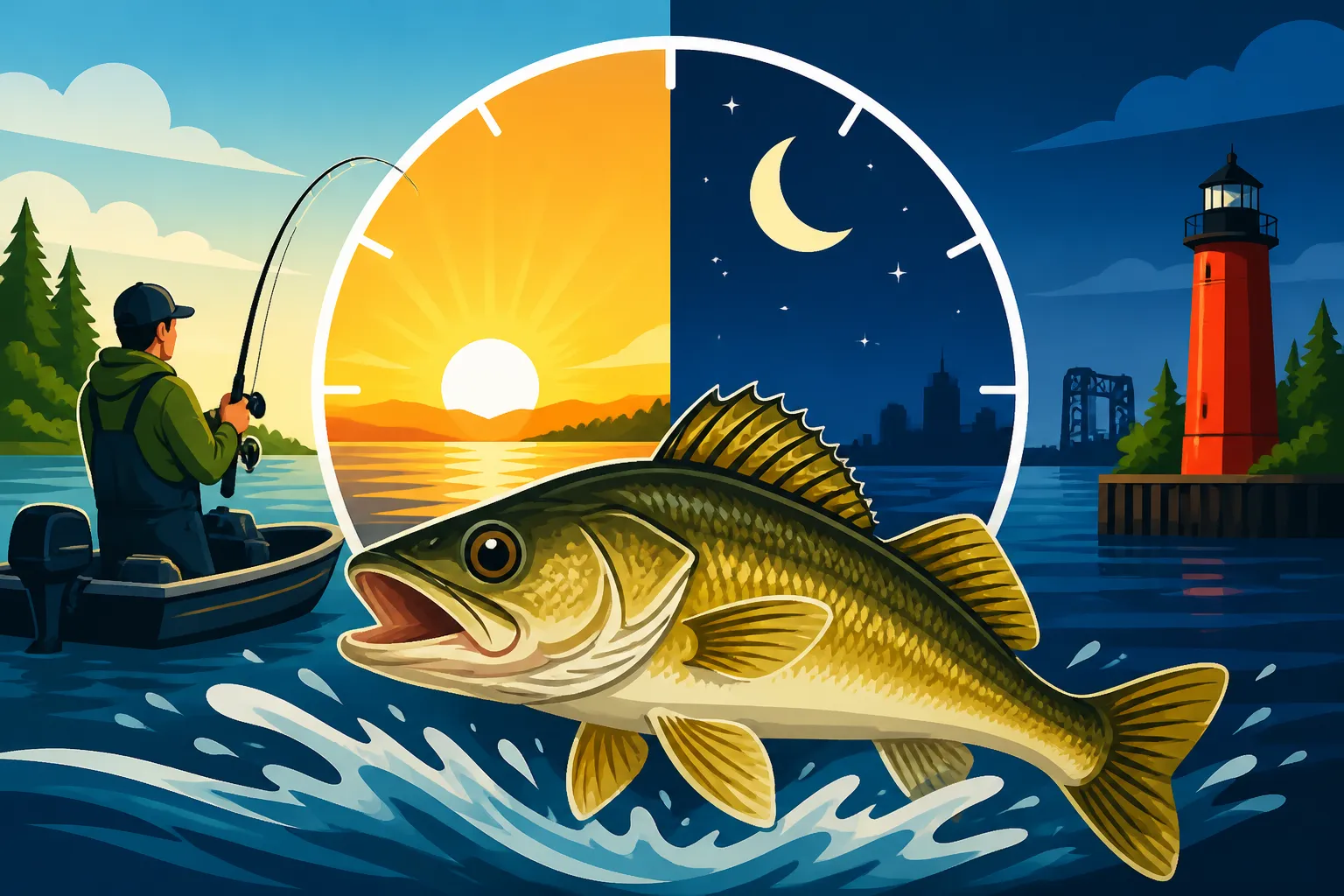
- Dawn and Dusk: These low-light periods are universally recognized as prime walleye feeding times. Their large, light-sensitive eyes allow them to hunt effectively when other fish are less active. This applies whether you're trolling, casting, or jigging. During these windows, walleye often move into shallower areas to chase baitfish. This is a great time to implement Best Time of Day to Catch Walleye strategies.
- Night Fishing: As discussed for summer, but also relevant in spring and fall, fishing after dark can be incredibly productive, especially on clear nights or under a full moon. Walleye abandon their deep-water retreats and venture into shallow flats, weed lines, and structural elements.
- Solunar Tables and Moon Phases: While not influenced by oceanic tides, Muskegon Lake, like many inland bodies, can see fish activity fluctuate with moon phases and solunar tables. Full and new moons are often associated with increased fish activity, and specific "major" and "minor" feeding times can be predicted using solunar charts, which are based on the moon's position relative to the earth. These are not guarantees, but they can offer an edge, especially during otherwise slow periods.
Gear and Techniques for Muskegon Lake Walleye
Having the right equipment and knowing how to use it is non-negotiable for consistent walleye success on Muskegon Lake.
- Rods and Reels: A medium-light to medium-heavy spinning or casting rod, 6'6" to 7'6" in length, is versatile for most walleye applications. Pair it with a smooth-drag spinning reel (2500-3000 size) or a baitcasting reel for trolling.
- Line: Braided line (10-20 lb test) is popular for its sensitivity and strength, often used with a fluorocarbon leader (8-12 lb test) for abrasion resistance and invisibility. Monofilament (8-12 lb test) is also a good choice, especially for trolling where its stretch can be beneficial.
- Lures and Bait:
- Crankbaits: Essential for trolling and casting. Brands like Rapala, Berkley, and Bandit offer a wide array of diving depths and colors.
- Jigs: From 1/8 oz to 1/2 oz, tipped with live bait (minnows, leeches, nightcrawlers) or soft plastics (grubs, paddle tails). Jigging techniques for Michigan Walleye are critical to master.
- Crawler Harnesses: Spinner rigs tipped with live nightcrawlers, often trolled slowly, are deadly, especially in summer.
- Blade Baits & Snap Jigs: Great for vertical jigging, especially during fall and winter.
- Electronics: A good fish finder with sonar and GPS is invaluable for locating structure, marking baitfish, and finding walleye schools. Side-imaging and down-imaging capabilities can give you an even clearer picture of the underwater world.
- Boating Gear: For boat anglers, a reliable boat suitable for the size of Muskegon Lake, with a trolling motor for precise boat control, is essential. For those interested in buying or registering a boat, understanding Michigan Boat Registration Requirements is important.
Planning Your Muskegon Lake Walleye Trip
A successful walleye fishing trip to Muskegon Lake involves more than just showing up with a rod and reel. A little planning and local knowledge can go a long way in maximizing your chances.
Consulting Local Resources and Fishing Reports
Never underestimate the power of local intelligence. Before heading out, gather as much current information as possible.
- Bait Shops: Local bait and tackle shops around Muskegon, like Fish On Bait & Tackle or Frank's Great Outdoors, are goldmines of information. The folks working there are often avid anglers themselves and can provide up-to-the-minute reports on what's biting, where, and on what. They'll know about recent water temperatures, clarity, and specific patterns that are working. Don't be shy about asking questions – they love helping fellow anglers!
- Online Forums and Social Media Groups: There are numerous Michigan fishing forums and Facebook groups dedicated to specific lakes or regions. Joining these can provide real-time updates from other anglers, sometimes even with photos and detailed reports. Just remember to take some information with a grain of salt and always verify what you hear.
- Michigan DNR Resources: The Michigan Department of Natural Resources (DNR) website provides excellent resources, including weekly fishing reports, creel surveys, and detailed maps. They also provide comprehensive information on Michigan Fishing Regulations Every Angler Should Know and where to purchase a Michigan Fishing License Guide for Residents and Nonresidents.
When to Consider a Guided Trip
For many, especially those new to Muskegon Lake or walleye fishing in general, hiring a professional guide can be an invaluable investment.
- Accelerated Learning: Guides spend countless hours on the water and possess an intimate knowledge of the lake's nuances, seasonal patterns, and specific hot spots. They can teach you effective techniques, how to read your electronics, and how to adapt to changing conditions much faster than you could learn on your own. Platforms like FishingBooker can help you find and book experienced local guides specializing in walleye on Muskegon Lake, making the process straightforward.
- Maximized Success: A good guide will put you on fish, increasing your chances of a successful and enjoyable trip. They provide all the necessary gear, bait, and often even tackle, taking the guesswork out of preparation. This is particularly beneficial if you're visiting from out of state or have limited time to scout the lake yourself.
- Exploring Specific Techniques: If you're keen to learn a particular technique, like effective trolling patterns for summer walleye or precision jigging on ice, a guide can offer hands-on instruction. They often have specialized equipment that can be complex to set up and operate on your own. Looking for a guide on a platform like FishingBooker can also provide peace of mind by showing reviews and ratings from other anglers, helping you choose the best fit for your trip.
Here's a quick reference table summarizing the best times and general strategies for walleye on Muskegon Lake:
| Season | Best Time of Day | Typical Water Temperature | Primary Techniques | Key Locations | General Challenges / Notes |
|---|---|---|---|---|---|
| Spring | Dawn/Dusk, Daytime | 40s-50s F | Trolling (Crankbaits), Jigging (Minnows) | River mouths, flats, points, shallow breaks | Post-spawn recovery can make them finicky; focus on transition zones. |
| Early Summer | Dawn/Dusk, Night | 60s-70s F | Trolling (Crankbaits, Crawler Harnesses) | Drop-offs, deep humps, main lake basin, weedlines | Daytime can be slow; night fishing is often best. |
| Late Summer | Night, Early Morning | 70s+ F | Night Fishing (Crankbaits), Deep Trolling | Thermocline, deepest parts of the lake, structure | Heat pushes fish deep; focus on low light. |
| Fall | Dawn/Dusk, Daytime | 50s-60s F | Trolling (Crankbaits), Jigging, Casting | Flats, points, humps, baitfish concentrations | Pre-winter feeding frenzy, highly active fish. |
| Winter (Ice) | Dawn/Dusk, Night | 30s F (under ice) | Jigging (Spoons, Raps), Tip-Ups (Minnows) | Drop-offs, humps, deeper flats, submerged structure | Ice safety paramount; early/late ice often best bites. |
Remember that Muskegon Lake offers year-round opportunities for dedicated walleye anglers. By understanding the seasonal movements, paying attention to environmental cues, and adapting your techniques, you can significantly increase your chances of a successful outing. Don't forget that local expertise can greatly enhance your trip, whether it's from a tackle shop owner or a charter captain you find through a service like FishingBooker.
Disclaimer
Fishing conditions and regulations are subject to change. Always consult the latest Michigan Department of Natural Resources (DNR) fishing guide and local advisories before heading out. Ensure you have the appropriate Michigan Fishing Regulations Every Angler Should Know and follow all safety guidelines.