Lake Michigan Offshore Chinook and Coho Trolling
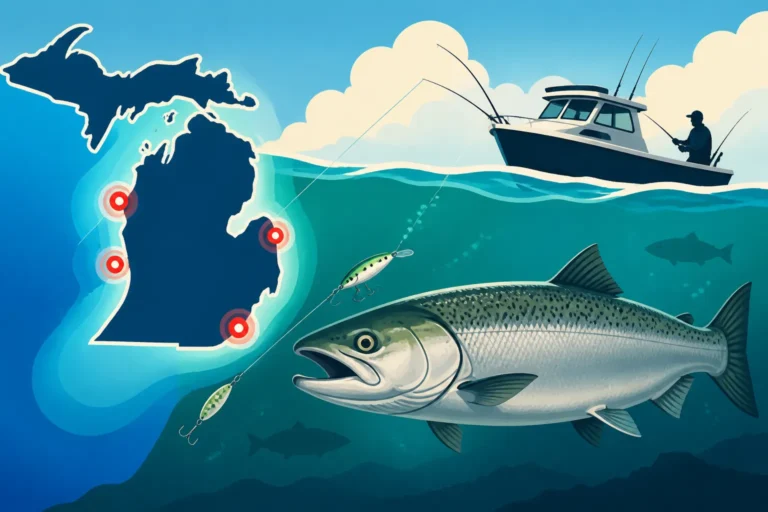
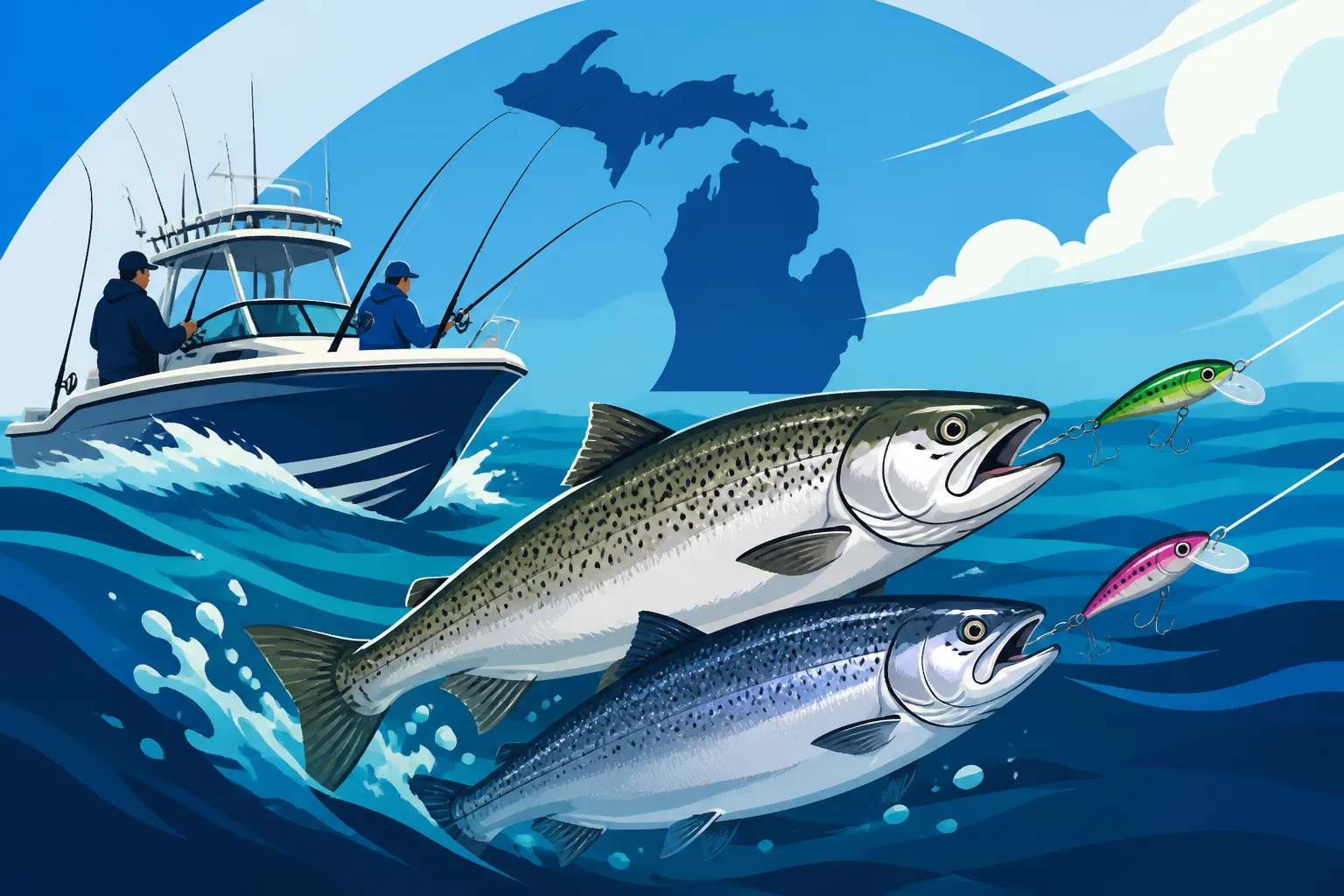
The sheer immensity of Lake Michigan can be incredibly intimidating for any angler dreaming of landing a trophy salmon. It's easy to feel overwhelmed by the vast expanse of water, wondering where on earth to even begin looking for those elusive Chinook and Coho offshore. Many folks spend countless hours and gallons of fuel just aimlessly cruising, coming back to the dock with empty coolers and even emptier hopes. This comprehensive guide is here to cut through that frustration, providing you with the knowledge, techniques, and confidence to successfully troll for Chinook and Coho salmon in the open waters of Lake Michigan.
Understanding Lake Michigan's Offshore Salmon Fisheries
When you're out on Lake Michigan, it's not just a big pond; it's an intricate ecosystem where Chinook and Coho salmon live, feed, and migrate. Understanding their individual preferences and behaviors is the first critical step to finding them reliably offshore. Think of it like a treasure hunt, but instead of a map, you have science and observation guiding you.
Chinook Salmon Behavior and Migration Patterns
Chinook salmon, often affectionately called "kings" by Great Lakes anglers, are the heavyweight champions of Lake Michigan. These powerful fish are renowned for their incredible fights and impressive size. When targeting them offshore, you need to think about depth, temperature, and food sources. Chinook generally prefer deeper, cooler water, especially as the summer heat sets in. They are primarily piscivores, meaning they feed on other fish, and in Lake Michigan, that largely means alewives, smelt, and sometimes bloater chubs.
Their migration patterns are less about a single, predictable path and more about following these baitfish schools. In spring, kings might be found in shallower waters as baitfish congregate there. But as the lake warms up, they'll retreat to the cooler, more stable temperatures of the thermocline – that invisible boundary layer where warm surface water meets cold deep water. This layer is often rich in oxygen and food, making it a prime hunting ground. Knowing how to Trolling for Chinook Salmon on Lake Michigan involves understanding these thermal preferences and how they relate to the baitfish populations. They'll also use underwater structure, like ledges or old river channels, as ambush points, even far offshore, if those structures hold cooler water or bait.
Coho Salmon Characteristics and Preferred Habits
Coho salmon, often called "silvers" for their bright, chrome appearance, offer a different kind of challenge and reward. While generally smaller than Chinooks, they are incredibly aggressive and put on an acrobatic fight that's truly exhilarating. What sets Coho apart for offshore trolling is their preference for warmer surface waters, especially during the spring and early summer. You'll often find them cruising just below the surface, or in the very top layers of the water column, often above the thermocline, particularly in the northern reaches of the lake where surface temperatures might be slightly cooler.
Coho are also voracious eaters, primarily feasting on the abundant alewife populations. Their aggressive nature means they're often more willing to strike a variety of lures, and they can be found spread out over vast areas of open water, not always tightly schooled like some other species. This makes them a fantastic target for anglers, especially early in the season, as they can provide consistent action when the bigger kings are still transitioning to their deeper summer haunts. Understanding how to effectively approach Trolling for Coho Salmon on the Great Lakes requires focusing on shallower presentations and often faster trolling speeds to entice their predatory instincts.
The Role of Baitfish in Offshore Salmon Location
You simply cannot talk about offshore salmon fishing on Lake Michigan without talking about baitfish. They are the cornerstone of the entire fishery. Chinook and Coho salmon are where the food is, plain and simple. In Lake Michigan, the primary forage species are alewives, an invasive species that, despite its challenges to the ecosystem, forms the bulk of the salmon's diet. Other important baitfish include native bloater chubs and, to a lesser extent, smelt.
Your electronics, particularly your fish finder, will become your best friend in locating these bait schools. When you mark dense clouds of baitfish suspended at a certain depth, especially near the thermocline or over underwater structure, you can bet that salmon are not far behind. Savvy anglers spend a lot of time searching for these bait concentrations because it’s a much more efficient use of time than blindly trolling. If you're not seeing bait, you're probably not seeing salmon. The presence, density, and depth of baitfish will dictate where you set your lines and at what depths you target, making this understanding absolutely crucial for consistent success.
Essential Gear and Rigging for Offshore Trolling
Offshore trolling on Lake Michigan isn't just about having a boat; it's about having the right tools for the job. The sheer size of the fish, the depths you're targeting, and the forces involved mean your gear needs to be robust, reliable, and purpose-built. Skimping on tackle can lead to heartbreaking losses, snapped lines, and endless frustration.
Rods, Reels, and Line Selection for Great Lakes Salmon
Let's talk about the workhorses of your setup: rods and reels. For Great Lakes salmon, you're not just casting a little panfish rig. You're dealing with powerful fish that can strip line and bend lesser rods into pretzels. You'll want heavy to medium-heavy action trolling rods, typically 7 to 10 feet long, designed to handle the stress of pulling flashers, dodgers, and deep-diving lures, as well as the powerful runs of a king salmon. These rods have a softer tip to absorb strikes and keep fish pinned, but plenty of backbone to muscle them in. Brands like Shimano, Daiwa, and Fenwick offer excellent options that can withstand the demands of this fishery.
Matching these rods with the right reels is equally important. Line-counter reels are practically mandatory for offshore trolling. These reels, often from brands like Daiwa Accudepth or Okuma Convector, allow you to precisely measure how much line you're deploying, which is crucial for replicating successful patterns and depths. You'll want reels with a smooth, powerful drag system and a high line capacity – often holding 250-300 yards of 20-30 lb monofilament or braid backing. Speaking of line, a common setup involves a main line of 20-30 lb monofilament, which offers some stretch to absorb headshakes. Many anglers are also moving towards braided lines with a monofilament or fluorocarbon leader, as braid offers superior sensitivity and strength, while the leader provides stealth and abrasion resistance. A good rule of thumb is a 20-30 lb fluorocarbon leader for Chinook, and perhaps slightly lighter for Coho, though always check for abrasions after each fish.
Downriggers, Dipsy Divers, and Planer Boards
Getting your lures down to the fish's feeding depth is where the real ingenuity of offshore trolling comes into play. This isn't bank fishing; you need specialized equipment.
-
Downriggers: These are arguably the most critical tools for deep-water salmon fishing. A downrigger uses a heavy lead ball (typically 8-15 lbs) to carry your fishing line, attached by a release clip, down to a precise depth. When a fish strikes, the line pops out of the clip, and you fight the fish directly without the weight. This allows for incredibly accurate depth control. Most serious Lake Michigan anglers will run multiple downriggers off their boat, often 2-4, to cover different depths simultaneously. Brands like Scotty and Cannon are industry leaders, known for their reliability. Mastering Downriggers for Michigan Great Lakes Trolling is a game-changer for hitting the thermocline where kings often reside.
-
Dipsy Divers (or Disk Divers): These are self-planing diving devices that take your line down without the need for a heavy weight on a separate cable. They are essentially plastic disks that, when deployed, "dive" and plane away from the boat, spreading your lines horizontally as well as vertically. This helps cover a wider swath of water and avoids tangles. They come in various sizes and can be set to dive at different angles. Dipsy divers are fantastic for targeting fish from shallow to mid-depths and are often used in conjunction with downriggers.
-
Planer Boards: These devices are designed to carry your fishing lines horizontally away from the boat, covering even more water and presenting lures to fish that might be spooked by the boat's prop wash or shadow. In-line planer boards, like those from Off Shore Tackle, clip directly to your main line, while larger mast-style boards run off a separate mast and tow line, allowing you to run multiple lines off one board. Planer boards are particularly effective for Coho and shallower-running Chinook, especially early in the season. They allow you to present lures in undisturbed water, a crucial advantage on clear days or pressured fish.
Lures, Baits, and Color Strategies
Choosing the right lure can feel like a daunting task with the sheer variety available, but there are some time-tested favorites for Lake Michigan salmon.
-
Spoons: These are probably the most versatile and widely used lures. Spoons mimic wounded baitfish with their wobbling action. Brands like Dreamweaver, Michigan Stinger, Warrior, and Silver Streak are staples in any serious salmon angler's tackle box. Sizes range from smaller Coho-friendly spoons to large Magnum spoons for big kings. Color choice is critical: bright colors (chartreuse, orange, hot pink) work well on cloudy days, in stained water, or for aggressive Coho. Natural baitfish patterns (blue/silver, green/silver) excel on clear days or in bright sun. Glow-in-the-dark spoons are fantastic for low light conditions, dawn/dusk, or very deep water.
-
Dodgers and Flies: This combination is a deadly rig, especially for Chinook. A dodger is not a lure itself but an attractor that flashes and kicks, imparting an erratic action to a trailing fly or small spoon. The dodger's action makes the fly behind it dance enticingly. Popular dodgers include those from Dreamweaver and Atommik. The flies are typically small, Mylar-based creations that imitate baitfish. These rigs are particularly effective when salmon are keying in on smaller baitfish or when they're a bit more finicky.
-
Plugs: Diving plugs, sometimes called "stick baits," are excellent for triggering aggressive strikes. Brands like Rapala, J-Plug, and Kwikfish are popular choices. These lures dive to specific depths on their own and have a strong wobbling action. They're often used for Chinook, especially when they're hitting larger prey. Color strategies for plugs are similar to spoons, with natural patterns for clear water and brighter, more contrasting colors for low light or stained conditions.
The key to lure selection is experimentation. What worked yesterday might not work today. Keep a variety of lure types, sizes, and colors on hand, and don't be afraid to change things up until you find what the fish are hitting. Sometimes it's the subtle details, like a specific shade of green or a particular retrieve speed, that makes all the difference.
| Lure Type | Primary Target Species | Ideal Depth Range (Approx.) | Common Trolling Speed (MPH) | Best Conditions |
|---|---|---|---|---|
| Spoons | Chinook, Coho | 10-150 feet | 2.0 – 3.5 | Versatile, various sizes/colors for all conditions |
| Dodgers & Flies | Chinook, Lake Trout | 40-150 feet | 1.8 – 2.8 | When salmon are finicky or keying on small bait |
| Plugs | Chinook, Lake Trout | 20-80 feet | 2.5 – 4.0 | Aggressive fish, darker water, specific bait profiles |
| Flasher & Flies | Chinook, Coho | 10-100 feet | 2.0 – 3.5 | High visibility, attracting fish from a distance |
Mastering Trolling Techniques for Chinook and Coho
Now that you have your gear sorted, it's time to put it all into action. Trolling for salmon isn't just dragging lures behind a boat; it's a dynamic, calculated dance between boat speed, lure presentation, and understanding the underwater environment.
Effective Trolling Speeds and Patterns
Trolling speed is one of the most critical, yet often overlooked, variables in salmon fishing. There's no single "magic" speed; it depends on the species, lure type, and even water temperature. For Chinook salmon, a common trolling speed ranges from 2.0 to 3.0 miles per hour. However, it's crucial to observe your lures in the water (if possible, or use your fish finder to see their action) to ensure they're working correctly. Different lures have optimal speeds where they exhibit their most enticing action. Spoons might "flutter" perfectly at 2.5 mph, while a plug might need 3.0 mph to achieve its intended wobble.
Coho salmon, on the other hand, often respond well to faster trolling speeds, sometimes up to 3.5 mph or even 4.0 mph, especially in warmer surface waters. Their aggressive nature means a faster presentation can trigger a chase and strike response. It's often beneficial to run a variety of speeds throughout your trolling pass. Don't just hold the throttle steady! Incorporating subtle speed changes – speeding up for 30 seconds, then slowing down for 30 seconds – can make your lures dart and fall, often triggering strikes from following fish.
Beyond speed, your boat's movement pattern is key. Straight lines are rarely the most effective. Implementing "S-turns" or wide, sweeping turns will cause your inside lines to slow down and sink slightly, while your outside lines speed up and rise. This change in speed and depth can be irresistible to salmon. Many anglers find that strikes often occur during these turns, proving that variations in presentation are vital. Paying attention to these nuances is part of what makes How to Troll for Chinook Salmon on Lake Michigan so rewarding.
Depth Management and Temperature Strategies
Finding the right depth is paramount, especially for Chinook. Lake Michigan is a massive body of water, but salmon often inhabit a relatively narrow "comfort zone" within the water column. This zone is heavily influenced by water temperature, specifically the thermocline. The thermocline is where the water temperature changes rapidly with depth. Salmon, particularly kings, will often orient themselves along this thermocline, as it offers cooler, oxygen-rich water and is often where baitfish congregate.
Your boat's electronics, including a good fish finder with temperature readings, are indispensable here. Watch for distinct temperature breaks on your screen and note the depths at which you're marking baitfish and salmon arches. If you see a strong thermocline at 50 feet, that's your starting point. You'll want to deploy your downriggers to target just above, within, and just below that depth, covering the entire zone. For Coho, especially in spring, you might be targeting the top 30 feet, sometimes even the top 10-15 feet, regardless of the thermocline's depth.
Adjusting your depths as you troll is not only common but necessary. As the day progresses, or as you move across different areas of the lake, the thermocline might rise or fall, and baitfish might move. Constantly monitoring your electronics and making minor adjustments to your downrigger depths by a few feet can mean the difference between an empty boat and a cooler full of fish. Don't be afraid to experiment with your depths if the bite slows down; sometimes just a five-foot change is all it takes to find the fish again.
Reading Your Electronics: Fish Finders and GPS
Modern marine electronics are nothing short of miraculous for offshore trolling. Your fish finder is your window into the underwater world, and your GPS is your memory and roadmap. Learning to interpret the data they provide is a skill that will dramatically improve your success rate.
A good fish finder (sonar unit) will display several critical pieces of information. You'll see the bottom contour, which is important even offshore as subtle changes in depth or submerged structures can hold fish and bait. More importantly, you'll see fish arches and bait balls. Small, dense clouds on your screen are likely baitfish, and larger, distinct arches are individual fish – hopefully salmon! The depth at which you see these marks is your cue for setting your lures. Some fish finders, especially those with CHIRP technology, can even differentiate between species or show the density of schools. Pay attention to how the marks appear: are they spread out, or are they concentrated in tight schools? This can tell you about the fish's mood and activity level.
Your GPS unit (often integrated with the fish finder) is vital for navigation and pattern recognition. Before you even leave the dock, you might pre-load waypoints for historical hot spots, known structure, or productive depths. Once you're on the water, you'll use it to mark "tracks" of your trolling passes. This allows you to go back over productive water with precision. When you get a strike, immediately hit the "man overboard" or "mark waypoint" button on your GPS. This marks the exact spot and depth where the fish hit, allowing you to quickly turn and troll through that productive area again. Over time, your GPS will become a digital logbook of your successful patterns and locations, helping you build a mental map of Lake Michigan's offshore productive zones. Brands like Garmin, Lowrance, and Humminbird offer excellent integrated units perfect for Great Lakes fishing.
Navigating the Seasons and Key Fishing Zones
Lake Michigan's salmon fishery is highly seasonal, with distinct patterns emerging as water temperatures change throughout the year. Knowing what to expect and where to look during each season is crucial for consistent success.
Spring to Early Summer: Coho Dominance and Nearshore Action
As the ice retreats and spring arrives, the waters of Lake Michigan begin to stir. This is often the time when Coho salmon truly shine. Early in the season, typically from April into June, Coho are often found closer to shore, in the warmer surface waters that develop first. These fish are actively feeding after the winter and can be incredibly aggressive. You might find them in depths ranging from 10 to 50 feet of water, often in the top 30 feet of the water column.
The key to finding them during this period is to look for warmer water pockets and areas where currents might concentrate baitfish. River mouths, where warmer water and nutrients flush into the lake, can be particularly productive. Piers and harbors can also be staging areas for bait, which in turn attracts Coho. Best Lake Michigan Fishing Piers and Harbors might offer some unique opportunities from shore before you head out deeper. Light tackle and fast-trolled spoons or small plugs often do the trick. Many anglers will focus their efforts from ports like Holland, Grand Haven, and Muskegon, targeting the first few miles offshore. The bite can be fantastic, offering fast action and a great way to kick off the salmon season.
Mid-Summer: Deep Water Chinook and Mixed Bag Opportunities
By mid-summer, typically July through August, the lake has stratified, and the thermocline is well-established. This is prime time for Chinook salmon, but they've usually moved to deeper, cooler waters offshore. You'll often find them suspended along the thermocline, sometimes 60, 80, or even 120 feet down, depending on the lake's conditions. This requires a full spread of downriggers to reach those depths effectively.
During this period, you're looking for structure – not necessarily physical bottom structure, but thermal structure. Sharp drops in the thermocline, temperature "breaks," or areas where baitfish are dense along the thermocline are prime targets. Chinook are still feeding heavily on alewives, so finding those bait schools with your electronics is critical. While kings are the main target, mid-summer can also offer a fantastic "mixed bag" of fish, including Coho (often deeper than in spring), steelhead (rainbow trout that migrate to the lake), and even lake trout. This diversity keeps things exciting and means you should be prepared to adjust your tactics for multiple species. Think about deploying some lines shallower for Coho and steelhead, while others target the deep kings and lake trout.
Late Summer to Fall: Pre-Spawn Blitz and River Mouths
As summer wanes and fall approaches, typically from late August through September, Lake Michigan's salmon fishery undergoes another dramatic shift. This is the period of the "pre-spawn blitz" for Chinook and Coho. These fish, now mature, begin to stage near the mouths of the rivers they will eventually ascend to spawn. Their drive to feed becomes incredibly strong, as they bulk up for their arduous journey upstream.
During this time, salmon are often very aggressive and can be found in a wider range of depths, from relatively shallow waters near river mouths to deeper staging areas just offshore. The action can be phenomenal, with multiple hookups not uncommon. Anglers will focus their efforts near major river systems that have salmon runs, such as the St. Joseph River, the Kalamazoo River, the Grand River, the Muskegon River, and the Manistee River. Look for congregations of boats, as experienced anglers will often be pinpointing these staging areas. While trolling remains highly effective, some anglers also start to incorporate casting techniques closer to river mouths. This is the last chance for anglers to intercept these magnificent fish before they commit to their spawning runs, which means the competition can be fierce, but the rewards are well worth it. Keep an eye on local reports, especially for Michigan's Fall Salmon Run Fishing, to know when and where the fish are showing up in force.
Safety, Regulations, and Responsible Angling Practices
Going offshore on Lake Michigan is an incredible experience, but it comes with serious responsibilities. Safety should always be your number one priority, closely followed by adhering to regulations and practicing responsible angling to ensure the longevity of this incredible fishery.
Essential Safety Equipment and Weather Awareness
Lake Michigan, for all its beauty, can turn from placid to perilous in a matter of minutes. Never underestimate its power. Before you even think about leaving the dock, ensure your boat is equipped with all the required safety gear, and then some. This includes:
- Life Jackets: Have enough Coast Guard-approved life jackets for everyone on board, readily accessible. For children, they should be wearing them at all times.
- VHF Marine Radio: A reliable VHF radio is non-negotiable. Cell phones can lose signal far offshore. A VHF allows you to communicate with other boats, the Coast Guard, and monitor weather alerts.
- Flares, Air Horn, or Whistle: Essential signaling devices in case of emergency.
- First-Aid Kit: A well-stocked kit for minor injuries is crucial.
- Fire Extinguisher: Check its expiration date.
- Anchor and Sufficient Rode: An anchor that can hold your boat in an emergency.
- Paddles/Oars: Even with a motor, a backup propulsion method is wise.
- Navigation Lights: If you'll be out at dawn, dusk, or night.
Beyond the gear, weather awareness is paramount. Always check the marine forecast before you launch, and continue to monitor it throughout your trip via your VHF radio or weather apps. Pay attention to wind speed and direction, wave height, and any storm warnings. If the forecast looks dicey, it's always better to err on the side of caution and stay home. No fish is worth risking your life. Let someone know your float plan – where you're going and when you expect to return. This simple step can be a lifesaver if you run into trouble.
Michigan's Salmon Regulations and Reporting
Fishing in Michigan means adhering to the state's comprehensive fishing regulations. These rules are put in place by the Michigan Department of Natural Resources (DNR) to manage fish populations and ensure sustainable fishing for future generations. Ignoring them can lead to hefty fines and loss of privileges.
First and foremost, everyone 17 years of age and older needs a valid Michigan fishing license. You can purchase one easily online, through the DNR Hunt Fish App, or from various license retailers. Make sure you understand the different types, from an annual license to a Michigan 24-Hour Fishing License Explained for short trips. This guide, Michigan Fishing License Guide for Residents and Nonresidents, can clarify your needs.
Specific regulations apply to salmon, including daily possession limits and minimum size limits. These can vary slightly by species (Chinook vs. Coho) and sometimes by specific waters, although generally, Great Lakes salmon rules are quite uniform. Always consult the most current Michigan Fishing Regulations Digest before you head out. You can find it online on the DNR website, or pick up a physical copy wherever licenses are sold. For instance, Michigan Daily Bag Limits by Species will detail exactly how many salmon you can keep. Ignorance of the law is never an excuse. Staying informed is a key part of being a responsible angler.
Catch and Release Best Practices for Sustainable Fishing
While filling a cooler with delicious salmon is a fantastic reward, practicing responsible catch and release is vital for the long-term health of the Lake Michigan fishery. Many anglers choose to release smaller fish, or fish they don't intend to eat, to grow larger and spawn.
Here are some best practices for catch and release:
- Minimize Fight Time: Use appropriate tackle that allows you to land the fish quickly, reducing exhaustion.
- Keep the Fish in the Water: Whenever possible, unhook the fish while it's still in the water. This minimizes air exposure, which can damage gills and internal organs.
- Handle With Wet Hands: If you must handle the fish, wet your hands first to protect its slime coat, which is a crucial defense against disease.
- Support the Fish Horizontally: Never hold a large salmon vertically by its tail or jaw, as this can cause internal organ damage. Support its belly, especially for larger fish.
- Use Barbless Hooks: Consider crimping down the barbs on your hooks to make unhooking easier and less damaging.
- Proper Reviving: If a fish is lethargic, hold it gently in the water, facing into the current (or move the boat slowly forward to push water over its gills) until it regains its strength and swims away on its own.
By following these practices, you contribute to a healthy, vibrant fishery, ensuring that the thrill of offshore salmon trolling can be enjoyed by generations to come. And if you're looking for an experienced hand to show you the ropes, consider booking a charter through services like FishingBooker, where seasoned captains prioritize both success and sustainability.
Disclaimer
The information provided in this guide is for general informational purposes only and should not be taken as legal advice regarding fishing regulations. Fishing regulations in Michigan can change frequently. Always consult the most current Michigan Department of Natural Resources (DNR) fishing regulations digest and local ordinances before engaging in any fishing activities. Adherence to all applicable laws and safety guidelines is the sole responsibility of the individual angler.