Do Charter Boats Provide Gear in Michigan?
One of the biggest questions that often pops into an angler's mind when planning a Michigan fishing charter, especially if they're traveling from out of state or are new to the charter experience, is whether they need to haul all their fishing gear with them. It’s a common worry – nobody wants to show up unprepared, or conversely, lug heavy tackle bags only to find they weren't needed. This comprehensive guide is here to put those worries to rest and clearly explain what Michigan fishing charter boats typically provide, and what you might still want to bring along for a comfortable and successful trip.
The Standard Charter Boat Offering: What You Can Always Expect
When you book a reputable fishing charter in Michigan, you're not just paying for the captain's expertise and the boat ride; you're investing in a complete, ready-to-fish experience. This means the boat is fully equipped with almost everything you'll need to catch fish. The beauty of a charter is that all the heavy lifting, both literally and figuratively, is already taken care of.
Rods, Reels, and Terminal Tackle
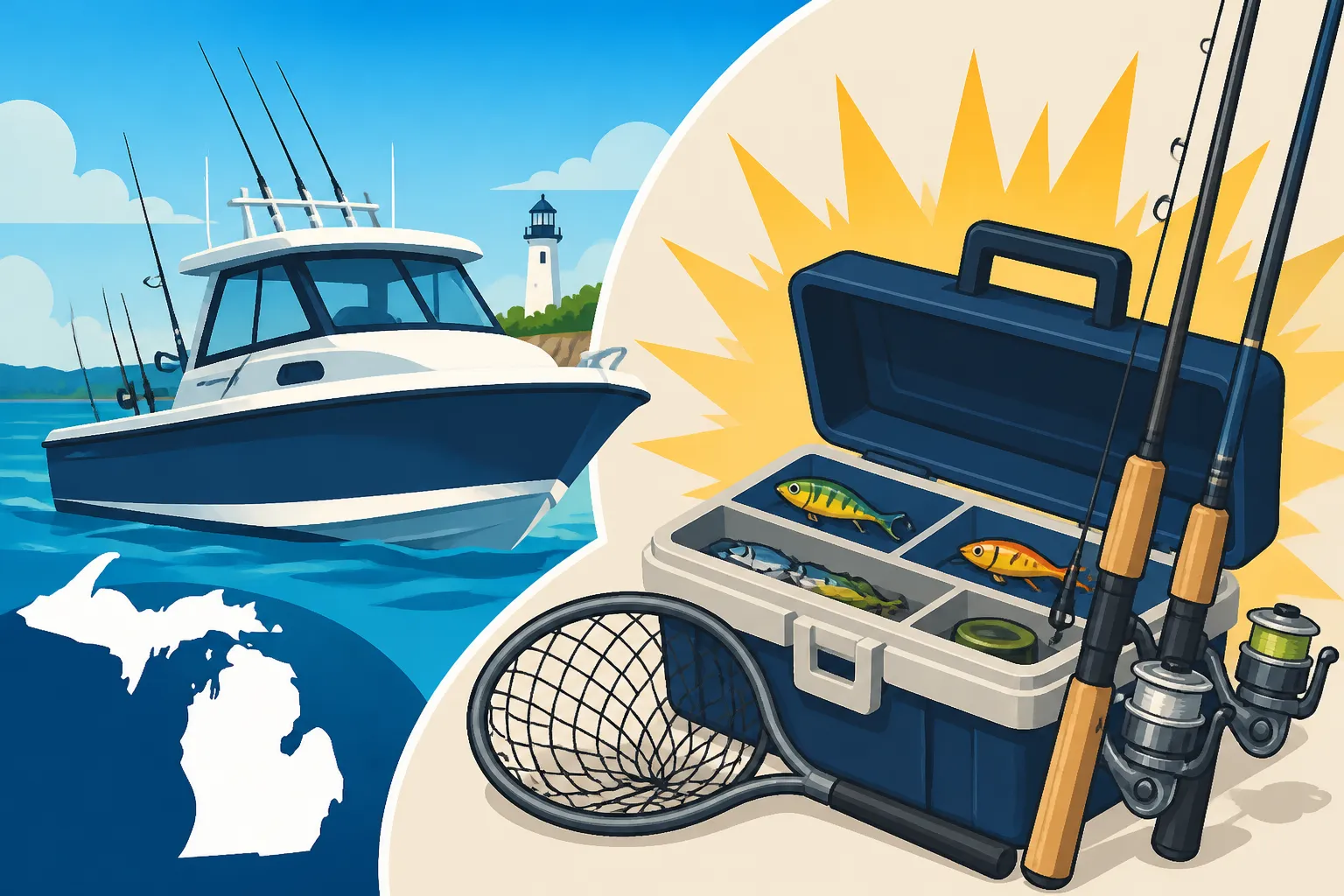
One of the greatest benefits of fishing with a charter boat is that they supply all the necessary rods, reels, and terminal tackle. This isn't just any old gear; we're talking about high-quality, specialized equipment that's perfectly matched to the target species and the specific fishing conditions of Michigan's diverse waters.
For instance, if you're heading out for Chinook Salmon in Michigan's Great Lakes on Lake Michigan, your charter will have heavy-duty trolling rods and reels designed to handle powerful runs and the strain of fighting large fish. These setups are often paired with downriggers and planer boards, which allow for presenting baits at precise depths and covering a wide swath of water. You won't need to worry about purchasing an expensive trolling setup from Bass Pro Shops or searching for specialty gear on Amazon; it's all there, maintained and ready.
Similarly, if your trip is focused on Michigan Walleye Size and Possession Limits in Saginaw Bay or Lake St. Clair, expect lighter, yet sensitive, spinning or baitcasting gear ideal for jigging or casting crankbaits. The terminal tackle – hooks, sinkers, swivels, and leaders – will be meticulously chosen by the captain based on what's proven to work best for the day's conditions. This means sharp hooks and appropriately sized leaders for subtle bites, saving you the frustration of setting up your own rigs.
Bait and Lures
Beyond the rods and reels, the charter boat will always provide the bait and lures. This is a huge advantage because local captains are constantly adapting their strategies based on current fish behavior, water temperatures, and recent success. They often have an arsenal of custom-tuned lures or access to the freshest live bait that would be difficult for an individual angler to procure.
Imagine heading out for a day of fishing on the Detroit River for walleye. Your captain will likely have buckets of lively shiners or emerald shiners, knowing exactly what those walleye are keying in on that particular morning. Or perhaps for a Lake Huron salmon trip, they'll have a selection of spoons and flasher-fly combinations in colors that have been producing strikes that week. This removes all the guesswork for you; you simply show up and fish with confidence, knowing the bait and lures are optimal.
This isn't just about convenience; it's about efficacy. Charter captains spend countless hours on the water, observing patterns and testing different presentations. Their tackle boxes are curated with what's working, not just what looked good on the shelf. This expertise, combined with readily available bait and lures, significantly increases your chances of a successful and memorable outing.
Essential Safety Equipment
Safety is paramount on any fishing trip, and Michigan fishing charters are no exception. All legitimate charter boats are federally and state-regulated and legally required to carry a full complement of safety equipment. This includes Coast Guard-approved life jackets for every passenger, regardless of age or size. You'll find adult PFDs readily accessible, and smaller sizes for children will be on board as well.
Beyond life jackets, charter boats are equipped with first-aid kits, communication devices like marine radios, GPS navigation systems, depth finders, and often emergency signaling devices. The captain and crew are trained in marine safety and first aid, giving you peace of mind that you're in capable hands should any unforeseen circumstances arise.
While you are certainly welcome to bring your own life jacket if you prefer, it's not a necessity. The captain will typically do a quick safety briefing before departure, pointing out where emergency equipment is stored and what procedures to follow. This ensures everyone on board knows what to do in case of an emergency, allowing you to relax and focus on the fishing experience.
What You Might Need to Bring (or Ask About)
While charter boats cover the vast majority of fishing gear, there are definitely items you'll want to bring for your personal comfort, safety, and enjoyment. These are typically personal effects that enhance your day on the water but aren't directly related to the act of catching fish.
Personal Comfort Items
Michigan's weather, especially on the Great Lakes, can be incredibly unpredictable and change rapidly. One moment it's sunny and calm, the next you could be facing a chilly wind and rain. Therefore, packing layers of clothing is always a wise decision. Think about bringing a waterproof jacket and pants, even if the forecast looks clear. A warm hat and gloves can make a huge difference, particularly during early morning trips or in cooler seasons like spring or fall when you're targeting How to Fish for Steelhead in Michigan.
Sun protection is also crucial. Sunglasses (polarized are best for spotting fish or structure in the water), a wide-brimmed hat, and plenty of sunscreen are essential to prevent sunburn, even on cloudy days. Don't forget non-slip, comfortable shoes that can get wet, as boat decks can be slippery. Snacks and drinks are another must-have. While some charters might offer bottled water, it’s always best to bring your own hydration and favorite munchies to keep your energy up throughout the day.
| Item Type | What the Charter Typically Provides | What Anglers Should Consider Bringing |
|---|---|---|
| Fishing Gear | Rods, Reels, Terminal Tackle | Your 'lucky' rod (check with captain) |
| Bait/Lures | Fresh Bait, Lures (local favorites) | Personal favorite lures (check first) |
| Safety Gear | Life Jackets, First Aid, Marine Radio | Personal PFD (optional) |
| Comfort | Basic Seating, Enclosed Cabin | Layers of Clothing, Rain Gear, Hat, Sunglasses, Sunscreen |
| Food/Drink | (Sometimes) Bottled Water | Snacks, Drinks, Personal Hydration |
| Fish Care | Filleting Service | Cooler with Ice for Transporting Catch |
| Documentation | Boat License, Captain's Credentials | Personal Fishing License, ID |
Specialized Gear (If You Have It)
Most charter operations are set up for a specific style of fishing, often trolling or conventional casting and jigging. While they provide all the necessary gear for these methods, you might have specialized equipment of your own that you prefer to use. For example, if you're an avid fly fisherman and are taking a charter that targets species like trout or steelhead on a river, you might want to bring your own fly rod and reel.
However, this is where communication with your captain becomes absolutely vital. Always, and I mean always, ask the captain beforehand if it's acceptable and practical to bring your own specialized gear. Some boats might have limited space, or your gear might not be compatible with their primary fishing methods or safety protocols. A captain running a Trolling Gear for Michigan's Great Lakes setup will have a very different boat layout and gear requirement than one doing smallmouth bass on Lake St. Clair. Clearing it with them ensures there are no surprises or disappointments on the day of your trip. They might even offer advice on what gear would be most effective.
Fish Storage and Transport
After a successful day of fishing, you'll likely have some fish to take home. While many Michigan charter captains offer cleaning and filleting services right on the boat or back at the dock (sometimes for an additional fee, so ask!), you are almost always responsible for bringing your own cooler filled with ice to transport your fresh catch home.
A good-sized cooler is essential, especially if you're targeting larger species like salmon, walleye, or lake trout. You want to ensure your fillets stay cold and fresh during your drive, preventing any spoilage. Make sure your cooler is clean and ready to go. You can find excellent coolers at stores like Bass Pro Shops or various sizes and brands on Amazon that are perfect for keeping your bounty chilled.
Why Charters Provide Gear & The Benefits for Anglers
The practice of charter boats providing all the necessary fishing gear isn't just a courtesy; it's a fundamental part of the value proposition and overall experience. This approach offers significant benefits to both the angler and the captain, contributing to a more successful and enjoyable trip for everyone involved.
Expertise and Local Knowledge
One of the primary reasons charters provide gear is that it allows the captain to completely optimize the fishing setup for the specific conditions, time of year, and target species. Their livelihood depends on putting clients on fish, and they achieve this by using the best possible equipment tailored to their intimate knowledge of the local waters.
Consider a charter captain operating on Lake Superior. They know exactly what kind of rods and reels are needed for deep-water lake trout, what line strengths are appropriate, and which specific lures (and colors!) are currently enticing bites. This level of specialization would be nearly impossible for the average angler to replicate without extensive personal investment in gear and years of trial and error. By providing the gear, the captain ensures every client benefits from this deep reservoir of Michigan Fishing Season Dates and Rules knowledge and experience, maximizing the chances of a successful day.
Cost Savings for Anglers
Let's be honest, fishing can be an expensive hobby, especially when you start getting into specialized techniques or larger species on the Great Lakes. Outfitting yourself with a full array of quality rods, reels, tackle, and accessories for Michigan's Great Lakes Fishing Guide could easily run into hundreds, if not thousands, of dollars. This includes everything from specific trolling setups with downriggers to specialized rods for river steelhead.
By booking a charter, you bypass this significant upfront investment entirely. You get access to top-of-the-line equipment without the burden of purchasing, maintaining, or storing it. This makes charter fishing an incredibly accessible option for beginners, families, or out-of-state visitors who don't want to invest in gear they might only use once or twice a year. It's a fantastic way to experience Michigan's incredible fisheries without breaking the bank on equipment. Think about the variety of tackle needed for different fish; a charter provides it all, saving you from buying a different setup for walleye, then salmon, then muskie.
Maintenance and Readiness
There’s nothing more frustrating than having your fishing trip hampered by faulty equipment – a reel that jams, a line that snaps, or a hook that’s dull. Charter captains understand this deeply, which is why they are meticulous about the maintenance of their gear. Their rods are regularly checked for wear and tear, reels are cleaned and lubricated, and lines are spooled fresh. Hooks are sharpened or replaced, and leaders are tied perfectly.
When you step onto a charter boat, you can have confidence that every piece of equipment handed to you is in prime working condition. This attention to detail eliminates potential equipment failures that could cost you a prized fish. It means less time troubleshooting and more time actually fishing, leading to a much more enjoyable and productive experience for everyone on board.
How to Prepare for Your Michigan Fishing Charter
Even though the charter handles most of the heavy lifting, a little preparation on your part can go a long way in ensuring a smooth, enjoyable, and successful Michigan fishing adventure. Thinking ahead about a few key elements will make your trip much more relaxing.
Communicate with Your Captain
This is arguably the most important piece of advice for any charter trip. Before your scheduled date, take the time to call or email your captain. Confirm the meeting time and location, and ask any questions you might have. This is your opportunity to inquire about specific target species, what kind of fishing to expect, and any last-minute weather considerations.
You might ask, "What should I wear?" or "Is there anything specific you recommend I bring for snacks or drinks?" If you have a particular preference, like wanting to focus on a certain species if conditions allow, now is the time to voice it. For example, if you're interested in Michigan Muskellunge Harvest Reporting Rules, you could ask if the captain often targets them. Good communication ensures that both you and the captain are on the same page, setting clear expectations for the day.
License and Regulations
While the charter captain handles all the necessary permits and registrations for the boat itself, you are responsible for having a valid Michigan fishing license. This is a non-negotiable requirement for anyone aged 17 and older. You can easily purchase your Michigan Fishing License Guide for Residents and Nonresidents online through the Michigan DNR website, at most sporting goods stores, or even at some bait shops.
It’s always a good idea to purchase your license well in advance of your trip to avoid any last-minute rushes or technical difficulties. Keep a digital or physical copy readily accessible. While the captain will keep you informed of specific Michigan Fishing Regulations Every Angler Should Know like bag limits or size restrictions for the fish you're targeting, your personal license is entirely your responsibility. Don't let a forgotten license cut your fishing day short! Remember, there are Michigan Free Fishing Weekends Explained twice a year when licenses are waived, but otherwise, you'll need one.
Gratuity and Expectations
It’s customary to tip your charter captain and crew, usually around 15-20% of the trip's cost, especially if they've provided excellent service, worked hard to find fish, and helped make your trip memorable. The crew often puts in long hours both on and off the water, preparing gear, cleaning fish, and maintaining the vessel. A tip is a great way to show your appreciation for their hard work and dedication.
Set realistic expectations for your trip. While captains are incredibly skilled and work diligently to put you on fish, fishing is still fishing – there are no guarantees. Focus on enjoying the experience, the scenery, and the opportunity to learn from seasoned professionals. Even on slower fishing days, being out on the beautiful waters of Michigan is an experience in itself. Your captain's goal is to make it an enjoyable and safe day, regardless of the catch count, so come ready to have fun!
Disclaimer
This article is for general informational purposes only and does not constitute professional advice. Laws, prices and regulations vary by location and change over time. Consult a qualified professional for guidance on your specific situation.