Best Ice Auger for Thick Ice
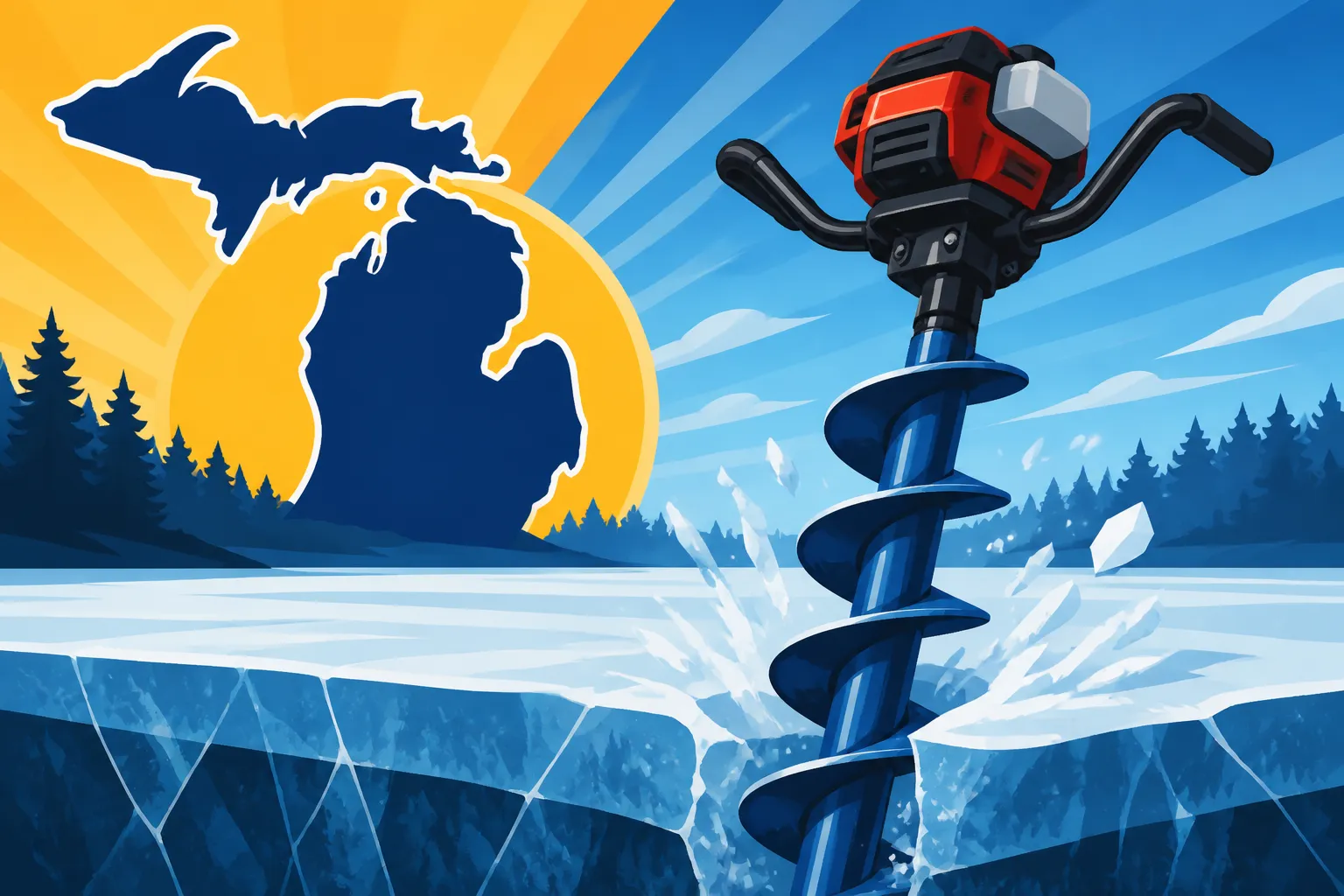
There's nothing quite like the thrill of chasing fish through a hole in the ice, but when Michigan's winter really settles in, that beautiful, thick ice can become your biggest adversary. Trying to drill through two or three feet of solid ice with an underpowered or dull auger isn't just frustrating; it's a monumental energy drain that can turn a fun day into a miserable chore. This guide is all about helping you conquer Michigan's formidable ice, exploring the best augers designed to slice through even the thickest layers with ease, ensuring your time on the hardwater is spent fishing, not drilling.
Understanding Michigan's Thick Ice Challenge
Michigan winters are legendary, and while they bring breathtaking snowy landscapes, they also bring some seriously thick ice to our beloved lakes and rivers. If you're going to pursue walleye, pike, or perch through the hardwater, you need gear that can keep up with Mother Nature's demands.
Why Michigan Ice Gets So Thick
Our state's unique geography, nestled among the Great Lakes, often means prolonged periods of sustained cold temperatures. From the deep snows of the Upper Peninsula to the sprawling inland lakes of the Lower, ice can accumulate to impressive depths. Factors like consistent sub-freezing temperatures, minimal snow cover (which insulates the ice), and the sheer duration of winter all contribute to layers of ice that can be two, three, or even more feet thick. Regions like Saginaw Bay, Houghton Lake, and many U.P. lakes are famous for producing substantial ice, making them prime testing grounds for any serious ice angler's equipment. You'll often hear tales of anglers needing extension shafts on their augers just to reach the water.
The Frustration of Underpowered Augers
I've been there, staring down a foot-and-a-half of ice, cranking a manual auger, feeling every muscle scream. Or worse, watching a small, underpowered electric auger grind to a halt after just a few holes, its battery fading faster than your hopes for dinner. It’s an infuriating experience that steals precious fishing time and saps your enthusiasm. When you're trying to set up multiple tip-ups for pike or move quickly to stay on a hot walleye bite, a weak auger is a liability. It makes you question why you even bothered bundling up. No one wants to spend half their day on the ice sweating and struggling with a piece of gear that just isn't up to the task of How Thick Does Ice Need to Be to Fish in Michigan.
Types of Ice Augers for Serious Ice Anglers
Choosing the right ice auger is paramount, especially when facing Michigan's often formidable ice conditions. Each type has its place, but for consistently thick ice, some options clearly outshine others.
Manual Augers: When They Fall Short (or Shine for Thin Ice)
Manual augers are the old-school, tried-and-true method of punching holes. They're lightweight, quiet, and require no fuel or batteries. For early or late-season ice that's six to twelve inches thick, a sharp manual auger can be incredibly efficient and give you a great workout. However, once the ice creeps past 18 inches, and certainly beyond two feet, a manual auger quickly becomes a test of endurance, not efficiency. Your arms and back will feel it, and drilling multiple holes can become exhausting, even painful. They're fantastic for portability and quick scouting on thinner ice, but for the serious hardwater angler targeting deep mid-winter ice in Michigan, they often just don't cut it. They might be a good backup, but rarely your primary tool for thick conditions.
Power Augers: The Workhorses of the Ice
When the ice gets tough, power augers step up to the plate. These are the heavy hitters that Michigan anglers rely on to get through the thick stuff with relative ease. They come in three main varieties: gas, propane, and electric. Each has its own set of advantages and considerations, but all are designed to save you from the manual grind, letting you focus on the fish. They represent a significant investment but pay dividends in saved energy and increased fishing time. For an in-depth look at what else you might need, check out What Gear Do You Need to Ice Fish in Michigan.
Deep Dive into Power Auger Options for Thick Ice
Let's break down the different types of power augers and see how they stack up against Michigan's challenging ice conditions.
Gas-Powered Augers: Raw Horsepower for the Toughest Conditions
Gas augers have long been the undisputed champions of raw power on the ice. They typically feature a two-stroke engine (though some four-stroke models exist) that delivers immense torque, allowing their sharp blades to chew through even the thickest ice with incredible speed. For anglers who regularly encounter two, three, or even four feet of ice, especially in areas like the Upper Peninsula, a gas auger offers unparalleled performance. They're not just fast; they're consistent, rarely bogging down unless the blades are dull or the fuel mix is off.
The trade-offs, however, are noteworthy. Gas augers are often the heaviest option, making them a bit more cumbersome to transport, especially if you're pulling a sled a long distance. They're also noisy, which can disrupt the tranquility of the ice and potentially spook fish in shallower water. And then there's the exhaust — the fumes can be an issue, especially if you're fishing inside a portable or permanent shanty. Maintenance involves mixing fuel, checking spark plugs, and winterizing for storage. Despite these considerations, for sheer, brute force hole-punching through whatever Michigan throws at you, a reliable gas auger remains a top choice for many, often found at retailers like Bass Pro Shops.
Propane Augers: Cleaner, Quieter, and Still Powerful
Propane augers emerged as a fantastic middle-ground solution, offering significant power without many of the drawbacks of traditional gas models. Instead of a messy gas-oil mix, they run on readily available 1-pound propane canisters (the same ones you might use for a portable grill). This means no mixing fuel, no spilled gasoline, and significantly cleaner emissions. The exhaust fumes are much less potent, making them a more comfortable choice for use inside ice shanties or in close quarters with other anglers.
While not always quite as "fire-breathing" powerful as some high-end gas models, modern propane augers are more than capable of handling very thick Michigan ice. They offer excellent torque and speed, often with a quieter operation than their gas counterparts. The convenience of propane canisters means you don't have to carry a separate gas can; just swap out a small, lightweight cylinder when it runs empty. They tend to start reliably in cold weather and require less overall engine maintenance. For many Michigan anglers seeking a powerful, yet cleaner and more user-friendly option, a propane auger is a fantastic choice, balancing power with convenience.
Electric Augers: The Modern Solution for Many
Electric augers have undergone a revolution in recent years, largely thanks to advancements in lithium-ion battery technology. What used to be underpowered toys are now formidable ice-cutting machines, capable of drilling dozens of holes through thick ice on a single charge. For many, they represent the future of ice fishing.
The primary benefits are silence and cleanliness. Electric augers are incredibly quiet – you can often talk to your fishing buddy while drilling a hole right next to them. There are no fumes, no mixing fuel, and virtually no maintenance beyond charging the battery. They start instantly, every time, even in bitter cold. While early models struggled with deep ice or long battery life, today's top-tier electric augers, such as those you might find on Amazon or at a specialized fishing store, feature powerful brushless motors and high-capacity batteries that can chew through two or three feet of ice without breaking a sweat.
However, battery life is still the main consideration. While a good battery will last for many holes, extreme cold can reduce performance, and forgetting to charge it means no drilling. Carrying spare batteries is often a necessity for extended trips or particularly deep ice, adding to the overall weight. Despite this, the convenience, quiet operation, and ample power of modern electric augers have made them incredibly popular among Michigan anglers who prioritize ease of use and a pristine ice environment. They are especially popular for those who frequently move in and out of ice shelters.
Key Features to Look for in an Ice Auger for Thick Ice
When you're trying to slice through Michigan's concrete-like ice, not just any auger will do. Specific features make all the difference between an easy drilling experience and a grueling one.
Blade Design and Diameter
The blades are where the rubber meets the road, or rather, where the steel meets the ice. For thick ice, you want sharp, high-quality steel blades designed for aggressive cutting. Chipper blades are rugged and good for dirty ice, but often slower. Shaver blades (also known as "laser" or "scoop" blades) are typically faster and smoother through clean ice. Many modern power augers use a combination or highly optimized shaver-style blades that excel at quickly removing ice. Always look for easily replaceable blades, as even the best will dull over time or get nicked by rocks.
Diameter is another critical factor. While a 6-inch auger is light and fast, it creates a small hole. An 8-inch auger is a popular all-around choice, offering a good balance for most species, from perch to smaller walleye. For larger species like big walleye, northern pike, or lake trout, a 10-inch auger might be preferred, but it requires significantly more power to drill. For thick ice, the larger the diameter, the more demanding the drilling will be, so ensure your powerhead is up to the task if you opt for a wider hole. This decision might also tie into Best Ice Fishing Rods for Cold-Weather Anglers which need appropriate hole sizes.
Power and Torque Considerations
This is the heart of an auger's ability to tackle thick ice. High horsepower (for gas/propane) or high torque (for electric) is absolutely essential. A powerful engine or motor won't bog down when it hits a foot and a half of ice. It will maintain its RPMs and continue to cut efficiently.
- Gas/Propane: Look for engines in the 40-70cc range for strong performance. Brands like Eskimo and Strikemaster are known for robust engines that can handle consistent abuse.
- Electric: The battery voltage (e.g., 40V, 60V, 80V) and amp-hour (Ah) rating are crucial. Higher voltage and Ah mean more power and longer run times. Equally important is the motor's design; brushless motors are more efficient and powerful than brushed motors. Manufacturers like ION and Jiffy have developed sophisticated electric augers specifically for challenging conditions, which you can often find at reputable outdoor retailers.
Don't skimp on power when dealing with thick ice; it's the number one factor that determines ease of use and efficiency.
Extension Capabilities
When you're fishing on lakes that regularly freeze to 30 inches or more, a standard auger shaft might not be long enough to punch all the way through. That's where extension shafts come in. These are typically 12-inch or 24-inch segments that you can add between the powerhead and the auger bit.
Many auger manufacturers offer compatible extensions. It’s a good idea to ensure the model you choose has this capability, even if you don't immediately need it. Nothing is more frustrating than drilling 28 inches down only to realize you can't quite break through the last few inches because your auger isn't long enough. This often happens on larger, deeper lakes where ice builds up consistently over months, providing ample time for significant growth.
Weight and Portability
While power is key, you also have to consider how you're going to get your auger onto the ice. A beastly gas auger that weighs 35 pounds might be great for drilling, but if you're hiking a mile across a frozen lake, that weight becomes a real drag.
- Gas/Propane: Generally the heaviest, but advancements in materials have led to lighter models. Look for lightweight powerheads and composite flighting (the spiral part) to reduce overall weight.
- Electric: Often lighter than gas, especially since the battery is the heaviest component, and many units are designed with portability in mind. The ability to separate the powerhead from the battery can also make carrying easier.
Consider your fishing style. If you primarily use a snowmobile or ATV, weight might be less of an issue. If you're a walk-on angler, every pound counts. Balancing brute force with manageable weight is the challenge, especially for those venturing to remote locations on Michigan's Upper Peninsula Fishing Spots Guide.
Comparing Top Auger Options for Michigan's Deep Freeze
Let's put it all together and see how these different auger types perform when the ice gets truly challenging in Michigan.
Gas vs. Electric vs. Propane for Thick Ice
Here's a breakdown to help you decide:
| Feature | Gas Auger | Propane Auger | Electric Auger |
|---|---|---|---|
| Power/Torque | Extremely high, consistent | Very good, consistent | Excellent (modern models), dependent on battery |
| Thick Ice Perf. | Top-tier, rarely bogs down | Excellent, handles thick ice well | Excellent, especially with high-voltage batteries |
| Noise Level | High | Moderate to Low | Extremely Low (Silent) |
| Fumes | Strong, exhaust smell | Minimal, very clean | None |
| Maintenance | Higher (fuel mix, spark plug, winterizing) | Lower (no fuel mix, minimal engine care) | Lowest (battery charging, blade care) |
| Fuel/Battery | Gasoline (can, messy) | 1lb propane canisters (clean, easy) | Rechargeable Lithium-ion battery |
| Weight | Often heaviest (25-35 lbs) | Mid-range (20-30 lbs) | Light to Mid-range (15-28 lbs), battery adds weight |
| Cold Start | Can be finicky in extreme cold | Excellent, very reliable | Instant, reliable |
| Cost | Mid to High | Mid to High | Mid to High (batteries can add significant cost) |
| Portability | More cumbersome | Easier than gas, less messy | Easiest, especially for walk-ons |
For consistently dealing with Michigan's deepest ice, any of these power auger types can be an excellent choice, provided you select a model with sufficient power and a good set of blades. Brands like Strikemaster (often found at Bass Pro Shops), Eskimo, Jiffy, and ION are well-regarded for their robust construction and performance in challenging conditions.
Real-World Scenarios: Choosing the Right Auger for Your Michigan Adventure
Let's consider some common Michigan ice fishing scenarios and which auger might be the best fit:
-
The Upper Peninsula Lake Trout Enthusiast: You're heading to a remote lake in the U.P. in February, where the ice might be three feet thick, and you need to drill a dozen 10-inch holes for your big lake trout. In this scenario, a powerful gas auger with an extension shaft would be a strong contender. Its brute force ensures you'll cut through the thickest ice without hesitation, and you can carry extra fuel if needed. While heavy, you're likely using a snowmobile anyway. Alternatively, a high-voltage electric auger with a couple of spare batteries could also perform exceptionally well, offering a quieter experience.
-
The Saginaw Bay Walleye Hunter: You're targeting walleye on Saginaw Bay, where the ice can be thick but you also need to drill many holes quickly to follow the schools. You're likely moving around a lot, possibly in a portable shanty. A propane auger offers an excellent balance here. It's powerful enough for the thick ice, clean enough for use in a shanty, and easier to handle than a gas auger for frequent moves. An electric auger would also be a fantastic choice for its silence and instant starting, perfect for stealthy approaches and quick relocation, and many anglers source them from online retailers like Amazon. Consider Best Time to Fish Saginaw Bay for Walleye when planning your trip.
-
The Inland Lake Perch and Panfish Angler: You primarily fish smaller inland lakes for yellow perch and bluegill, but sometimes the ice gets surprisingly thick, especially mid-season. You might also want to fish with kids or friends in a smaller shelter. A modern, high-quality electric auger with an 8-inch bit is likely your best bet. It's quiet, fume-free, lightweight for carrying, and more than capable of handling typical inland ice thicknesses. The ease of use and instant start make it perfect for quick hole punching and moving around with minimal fuss, ensuring a pleasant experience for everyone.
-
The River Steelhead Chaser: While most steelhead fishing happens in open water, some early or late season opportunities exist for ice fishing in slower river sections or backwaters. Here, ice thickness can vary wildly, and you might encounter slush or variable conditions. Portability and quick deployment are key. An electric auger excels in these situations due to its lighter weight and instant start. You might not need massive power, but reliable, quick hole punching is crucial. Check Michigan Steelhead Run Timing for more context.
Ultimately, the best ice auger for thick ice in Michigan is one that matches your fishing style, the specific conditions you anticipate, and your personal preferences for noise, fumes, and maintenance. Investing in a quality power auger, whether gas, propane, or electric, will dramatically improve your ice fishing experience, letting you focus on the reason you're out there: catching fish. Make sure to consider Michigan Ice Fishing Guide for all aspects of ice fishing.
Disclaimer
This article is for general informational purposes only and does not constitute professional advice. Laws, prices and regulations vary by location and change over time. Consult a qualified professional for guidance on your specific situation.