Best Lure Color for Murky Water Walleye
It's incredibly frustrating when you arrive at your favorite Michigan walleye spot, full of anticipation, only to find the water churned up and murky. That milky, brownish, or even greenish tint can make you doubt every lure in your tackle box. How on earth are those elusive walleye supposed to see anything down there? This guide is here to shed some light on the best lure colors to use when fishing for walleye in murky water, helping you turn those challenging conditions into successful fishing trips.
Understanding Murky Water and Walleye Behavior
Fishing in murky water is a whole different ballgame compared to crystal-clear conditions. It requires a shift in strategy, and it starts with understanding what makes water murky and how walleye react to it. Michigan's diverse waters, from the Great Lakes to countless inland lakes and rivers, can all experience periods of reduced visibility.
What Makes Water Murky in Michigan?
Murky water isn't just one thing; it comes in many forms, and understanding the source can sometimes help you choose the right approach. In Michigan, several factors can contribute to water murkiness. Heavy rainfall, for instance, often washes sediment and runoff from the land into rivers and lakes, giving the water a brownish, muddy appearance. This is common on rivers like the Saginaw or the Grand after a good spring rain. Algae blooms, especially in warmer summer months, can turn shallower inland lakes, like parts of Houghton Lake or Lake St. Clair, a distinct greenish hue. Wave action on large bodies of water like Lake Michigan or Saginaw Bay can constantly stir up the bottom, especially in shallower areas, leading to suspended sediment that reduces visibility. Even seasonal changes, like fall turnover in deeper lakes, can temporarily mix layers of water and suspended particles.
When the water is discolored, the amount of light penetrating the depths significantly decreases. This affects how fish perceive their surroundings and, crucially, how they perceive your lures. It's not just about a general "darkness"; different types of murkiness will absorb and scatter light in unique ways, making some colors disappear and others pop.
How Walleye Adapt to Low Visibility
Walleye are often nicknamed "low-light feeders" for a very good reason. They possess superior vision in dim conditions, thanks to a reflective layer in their eyes called the tapetum lucidum. This gives them an edge over many prey species, allowing them to hunt effectively at dawn, dusk, night, or in deeper, darker waters. So, when the water turns murky, they're not as disadvantaged as you might think; in fact, they might even feel more comfortable and confident feeding, especially if brighter conditions usually push them deeper.
However, even with their excellent low-light vision, extreme murkiness still reduces their effective range of sight. This is where their other senses come into play. Walleye have a highly developed lateral line system, which detects vibrations and pressure changes in the water. This allows them to "feel" prey (or your lure) moving nearby, even if they can't see it clearly. They also rely on their sense of smell, which is another reason why scenting your lures can be so effective in dirty water. The key takeaway is that in murky water, you need to appeal to all of a walleye's senses, not just sight. If you're looking for more general walleye wisdom, check out our guide on Michigan Walleye Fishing Techniques.
The Science Behind Lure Color in Murky Water
Understanding how light behaves in water is fundamental to choosing the right lure color. In clear water, most colors are visible to fish, depending on depth and light conditions. But in murky water, certain wavelengths of light are absorbed or scattered more rapidly. Red, for example, is one of the first colors to disappear at even shallow depths, making red lures less effective in truly stained water unless they're right in front of the fish's face.
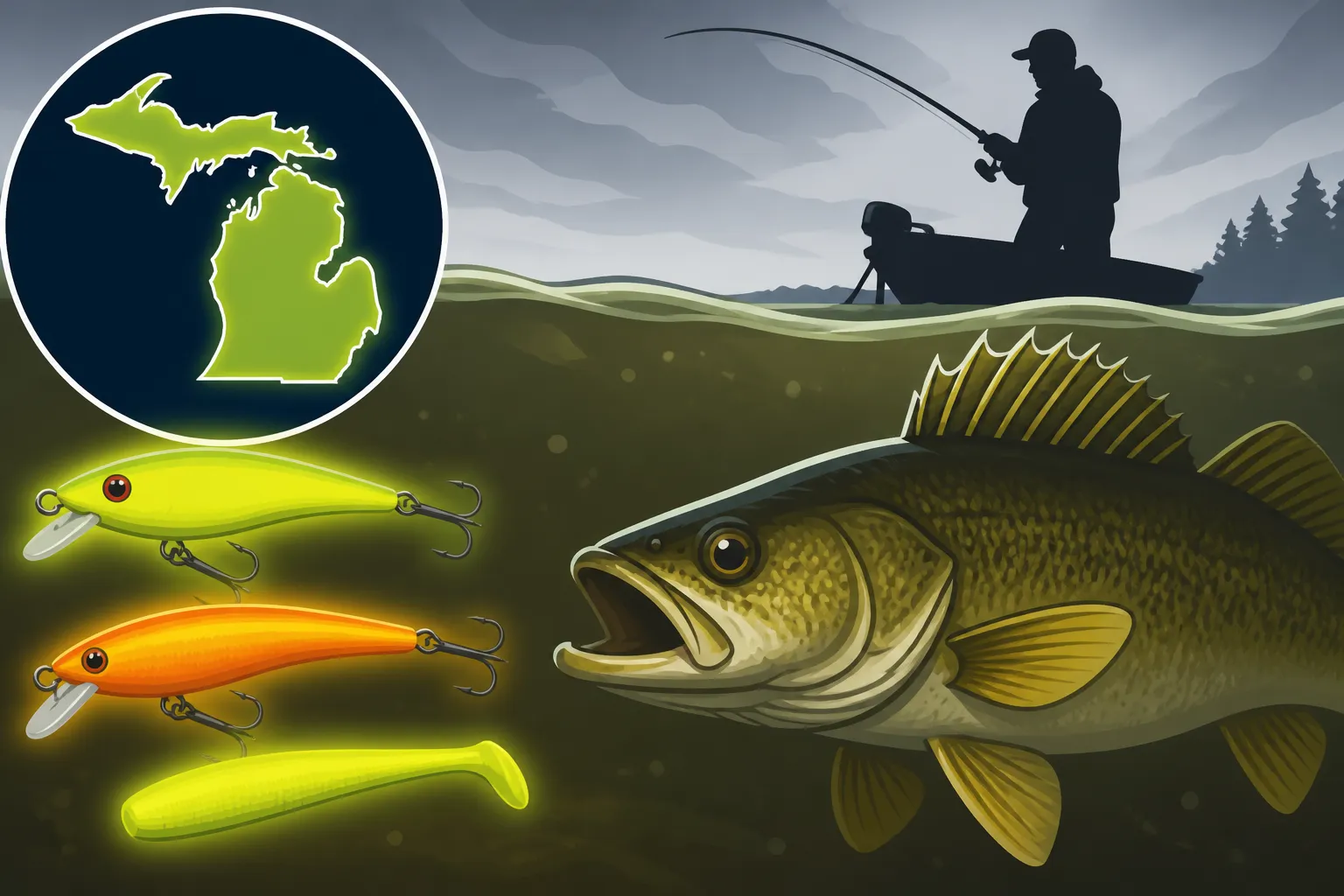
So, what colors work? The general rule of thumb is to opt for colors that offer high contrast and stand out, either by reflecting what little light is available or by creating a strong silhouette. Fluorescent colors, particularly chartreuse and orange, are often effective because they absorb ultraviolet (UV) light and re-emit it as a visible glow, making them appear brighter and more vibrant to fish, even in low-light conditions. Darker colors, on the other hand, create a stark silhouette against a brighter sky or water surface, making them easier for a walleye to detect with its superior low-light vision. The goal is to make your lure impossible to ignore, even when visibility is minimal.
Top Lure Colors for Murky Water Walleye in Michigan
When the water turns turbid, it’s time to lean into those lure colors that scream "look at me!" to a walleye. Forget subtlety; you want high visibility and strong contrast. There are a few tried-and-true favorites that Michigan anglers swear by when faced with murky conditions.
The Power of Chartreuse and Fluorescent Greens
If there's one color universally lauded for murky water fishing, it's chartreuse. This vibrant, almost glowing green-yellow is a walleye magnet in stained water. Its effectiveness stems from its incredible visibility. Chartreuse has excellent UV reflective properties, meaning it absorbs the available ultraviolet light and re-emits it, making the lure appear brighter and more distinct underwater than many other colors. Think of it like a neon sign in a dim bar – it just stands out.
Many anglers will reach for a chartreuse jig head tipped with a minnow or a soft plastic when fishing rivers like the Detroit River or St. Clair River after heavy rains. The combination of the bright color and natural scent can be irresistible. Similarly, chartreuse crankbaits or spinnerbaits are fantastic choices when trolling in murky bays like Saginaw Bay. You can find a huge variety of these effective lures at places like Bass Pro Shops, or easily browse for them on Amazon. The key is that the walleye's eye, even in low light, picks up on this intense color, drawing them in for a closer inspection.
Bright Oranges and Firetiger Patterns
Another stellar performer in murky water is bright orange, often combined with a "firetiger" pattern. Firetiger is typically a mix of chartreuse, orange, and black stripes, sometimes with a dash of green. This pattern takes the high-visibility of chartreuse and orange and amplifies it with strong contrast from the black stripes. Orange, like chartreuse, tends to remain visible at greater depths and in stained water compared to colors like red or blue. It's an aggressive color that often triggers a strike response.
Anglers fishing the lower stretches of the Manistee River for walleye often find firetiger patterns excel when the river is high and off-color during spring runoff. The distinct stripes and bright colors provide an unmistakable profile, even in fast-moving, dirty water. For Michigan Walleye Fishing Techniques, particularly when casting or trolling, a firetiger crankbait or jigging rap can be incredibly effective. The bold contrast helps the lure maintain its profile, making it easier for walleye to zero in on it.
Darker, Silhouetted Colors
While bright, fluorescent colors are excellent for grabbing attention, sometimes the best approach in murky water is to create a strong silhouette. This is where darker colors like black, dark blue, or even deep purple come into play. Imagine holding a dark object up against a bright sky; it stands out clearly. The same principle applies underwater. If there's any ambient light filtering down from the surface, a dark lure will appear as a distinct, contrasting shape to a walleye looking up from below.
This strategy is particularly effective on overcast days or when fishing in very deep, dark holes where even fluorescent colors might struggle to shine. A black jig head paired with a dark plastic worm or a black crankbait can be surprisingly deadly. The silhouette provides a clear target for the walleye to home in on using its superior low-light vision. Don't underestimate the power of a simple black or dark blue jig in highly stained water; sometimes it's less about reflecting light and more about blocking it out to create that perfect profile.
Understanding the Importance of Flash and Vibration
Beyond color, two other elements become critically important in murky water: flash and vibration. Even if a walleye can't perfectly discern the color of your lure, it can certainly see glints of reflected light and feel vibrations in the water.
- Flash: Lures with reflective surfaces, like chrome, gold, or silver blades on spinnerbaits and spoons, can catch and amplify any available light, sending out irresistible flashes. These flashes can be detected from a greater distance than color alone, drawing the walleye's attention. Even a small amount of flash can make a big difference, especially when light conditions are constantly changing with cloud cover or water depth.
- Vibration: This is where the walleye's lateral line truly shines. Lures that produce strong vibrations, such as lipless crankbaits, rattling baits, or spinnerbaits with thumping blades, create pressure waves in the water that walleye can detect. This allows them to locate and track your lure even if they can't see it at all. When the water is really soupy, sometimes vibration and sound are more important than color. Many of the most effective Michigan Walleye Fishing Techniques leverage strong vibrations.
Combining these elements – a high-visibility color, flash, and strong vibration – gives you the best chance of success in murky water. Think about a firetiger crankbait with rattles and a shiny bill; it hits all the sensory notes a walleye relies on.
| Lure Color Category | Primary Advantage in Murky Water | Best Conditions/Applications | Examples |
|---|---|---|---|
| Chartreuse/Fluorescent | High visibility, UV glow | Moderately murky water, overcast days, deeper water | Chartreuse jigs, spinnerbaits, crankbaits |
| Bright Orange/Firetiger | Aggressive visibility, strong contrast | Heavily stained water, rivers with runoff, active fish | Firetiger crankbaits, orange jigs, stickbaits |
| Dark (Black, Dark Blue) | Strong silhouette | Very turbid water, deep holes, night fishing, overcast days | Black jigs, dark crankbaits, dark soft plastics |
| Metallic (Silver, Gold) | Reflective flash | Any murky condition, especially with some ambient light | Spinnerbait blades, spoons, chrome crankbaits |
Matching Lure Color to Michigan's Specific Murky Water Conditions
Michigan offers a vast array of fishing environments, and what constitutes "murky water" can vary significantly from one body of water to another. A muddy river after a storm is different from an algal bloom in a shallow lake. Understanding these nuances can fine-tune your lure selection even further.
Rivers vs. Inland Lakes vs. Great Lakes
The type of water body often dictates the kind of murkiness you'll encounter and, subsequently, the best approach for lure color.
- Michigan Rivers (e.g., Saginaw River, Grand River): Rivers are often murky due to suspended sediment from runoff, especially after rain or during spring thaws. This water tends to be brownish or tan. In these conditions, high-contrast and bright fluorescent colors like chartreuse, firetiger, and bright oranges are king. The moving water also means walleye rely heavily on their lateral line, so lures with strong vibration and rattles are crucial. Think about jigging bright plastics or blades, or running rattling crankbaits.
- Michigan Inland Lakes (e.g., Houghton Lake, Lake St. Clair): Murky conditions in inland lakes are often caused by algae blooms (green water) or stirred-up sediment in shallower, fertile basins. In algal blooms, green-based patterns like chartreuse, emerald shiner, or even blue/white combinations can work well. If it's just stirred-up sediment, similar to river fishing, bright fluorescents and firetiger remain top choices. For the extensive walleye fisheries on Best Walleye Lakes in Michigan's Lower Peninsula like Lake St. Clair, even the famed smallmouth bass often bite on brighter colors when the water is off.
- Michigan Great Lakes (e.g., Saginaw Bay, Lake Michigan near river mouths): The Great Lakes can experience murkiness from a combination of wave action stirring up the bottom, large-scale runoff events, or even distant algal blooms. Saginaw Bay, famous for its walleye, often has stained water. Here, the sheer size of the water body means you might encounter varying levels of murkiness. When trolling the vast waters of the Michigan Great Lakes Fishing Guide, brighter, more aggressive patterns like firetiger, bright orange, and chartreuse are often preferred for their ability to be seen from a distance. Lures with plenty of flash are also excellent, as they can catch the limited light and stand out.
Seasonal Considerations for Murky Water Walleye
The seasons also play a role in how and why water gets murky, influencing your lure choices.
- Spring Runoff: In spring, Michigan experiences snowmelt and heavy rains, leading to widespread murky conditions in rivers and near lake tributaries. Walleye are often staging or moving upstream to spawn during this time. The cold, stained water calls for bold colors like chartreuse and orange, combined with slower presentations. Lures like jig-and-minnow combos or slower-moving crankbaits in bright colors allow the walleye to locate them without expending too much energy. Understanding When Does Walleye Season Open in Michigan's Lower Peninsula and the prevailing weather conditions is key.
- Summer Algae Blooms: Warmer summer temperatures can cause algae blooms in many Michigan lakes, turning the water green. While this reduces visibility, walleye are often active. In greenish murky water, colors that contrast well with green, such as chartreuse, orange, or even dark blues and purples, can be effective. Sometimes, more natural patterns with a bright kicker color (like a perch pattern with a chartreuse belly) can be deadly.
- Fall Turnover: In deeper lakes, fall turnover can temporarily stir up sediment and detritus from the bottom, causing a brief period of murkiness. Walleye are often feeding aggressively before winter during this time. Stick with your high-contrast brights or strong silhouettes, but also consider scenting your lures heavily. The walleye are trying to put on weight, so appealing to their hunger with a good scent can make all the difference.
Day vs. Night Fishing in Murky Waters
Walleye are renowned night feeders, and murky water can make day fishing feel a lot like night fishing. However, there are still differences.
- Day Fishing in Murky Water: Even on a bright, sunny day, murky water filters out most light. During the day, bright fluorescent colors with good UV properties (chartreuse, orange, firetiger) are typically your best bet. They leverage any ambient light to stand out. Lures with metallic flash (silver, gold) can also be highly effective as they reflect what light is available.
- Night Fishing in Murky Water: At night, regardless of water clarity, the absence of light means color becomes less important than silhouette, vibration, and scent. In murky water at night, truly dark lures (black, dark blue, purple) create the strongest silhouette against the moonlit or starlit sky. Walleye will track these dark shapes with their superior low-light vision. Lures with loud rattles or strong thumping actions are also critical for them to locate your offering. Our guide on Night Fishing Techniques for Walleye offers even more specifics for after-dark angling.
Beyond Color: Other Factors for Murky Water Walleye Success
While lure color is a crucial piece of the puzzle, it's never the only factor in successful murky water walleye fishing. Walleye rely on a combination of senses, and appealing to all of them will significantly increase your strike rate. Think of color as the initial attraction, but then you need to seal the deal with other sensory cues.
Lure Action and Vibration
As we touched on earlier, the walleye's lateral line is a superpower in low visibility. It's a system of sensory organs running along the fish's sides that detects pressure changes and vibrations in the water. This means a lure that moves with a distinct wobble, thump, or rattle can be located by a walleye from a considerable distance, even if it can't see the lure.
- Crankbaits with Rattles: Many crankbaits designed for walleye fishing come with internal rattles. These create noise and vibration, signaling their presence to fish. When the water is murky, a loud rattling crankbait in a firetiger or chartreuse pattern can be a deadly combination. Whether you're casting them from shore or trolling them from a boat, that auditory cue is a huge advantage.
- Spinnerbaits and Blade Baits: The spinning blades on these lures create both flash and significant vibration. A thump-thump-thump from a spinnerbait blade is a signal that a walleye can't ignore. Blade baits, with their unique vibrating action, are also excellent for jigging in murky water, sending out strong pulses that alert walleye to their presence. For effective Jigging Techniques for Michigan Walleye, these lures are often indispensable.
- Soft Plastics with Paddle Tails: Even soft plastic lures, when rigged correctly, can provide a seductive action. Paddle-tail swimbaits, for example, create a thumping vibration as the tail kicks through the water, mimicking a fleeing baitfish. Using these on a brightly colored jig head gives you both visual and tactile appeal.
Scent and Live Bait
When sight is limited, other senses step up. Walleye have an excellent sense of smell, and they use it to track down prey. This makes scent, whether natural or artificial, an incredibly powerful tool in murky water.
- Live Bait: There's simply no substitute for the real thing when it comes to scent. A lively minnow, a juicy nightcrawler, or even a leeches can produce a natural scent trail that walleye can follow directly to your hook. Tipping a brightly colored jig with a minnow is a classic murky water walleye tactic that's hard to beat. The visual appeal of the jig combined with the irresistible scent and subtle movements of the live bait often proves too much for a walleye to ignore. If you're wondering What Do Walleye Eat in Michigan Lakes, live bait is often at the top of their menu.
- Scented Soft Plastics: Many soft plastic lures now come pre-infused with fish attractant scents. These can be very effective, especially when paired with a highly visible color. The scent leaves a trail in the water, giving the walleye a "bread crumb" path to follow.
- Applied Scents: You can also purchase liquid or gel scents to apply directly to your lures. These can enhance any lure, from crankbaits to jigs. Just a dab or two can make a significant difference, especially if you're working an area slowly. You can find a wide variety of these at local bait shops or online through retailers like Amazon. The goal is to give the walleye every possible reason to find and strike your lure. For more on what to use, check out Best Bait for Michigan Walleye.
Presentation and Retrieval Speed
How you present your lure is just as critical as its color or scent, especially in murky water. Since walleye's visibility is reduced, they need more time to locate and commit to a strike.
- Slower Retrieval Speeds: In murky water, speeding up your retrieve is usually counterproductive. Slow down your presentation considerably. This gives the walleye more time to see, feel, or smell your lure as it passes by. Whether you're trolling, casting, or jigging, err on the side of slower. A slow, steady retrieve for a crankbait or a gentle jigging motion allows the walleye to fully process the lure's presence.
- Pauses and Jerks: Incorporating pauses and erratic jerks into your retrieve can also be highly effective. A pause allows the lure to flutter or sink, often triggering an impulse strike from a walleye that's been following it. The sudden, unpredictable movement can mimic a wounded baitfish, making it an easy target.
- Working the Structure: Walleye in murky water will often hug structure more tightly. They might be right on the bottom, tucked into weed lines, or tight against submerged timber. Your presentation needs to put the lure directly in their strike zone. Use your electronics to identify potential holding spots, and then work those areas thoroughly with precise casts or controlled drifts. Remember that the Michigan Walleye Daily Possession Limit and Michigan Walleye 15-Inch Minimum Size Limit apply regardless of water clarity, so be mindful of regulations.
By combining the right high-contrast or silhouetted lure colors with strong vibration, a potent scent, and a deliberate, slow presentation, you'll be well-equipped to tackle murky water and put more Michigan walleye in your boat or on the bank. Don't let stained water deter you; often, it presents some of the best fishing opportunities if you adapt your approach!
Disclaimer
This article is for general informational purposes only and does not constitute professional advice. Laws, prices and regulations vary by location and change over time. Consult a qualified professional for guidance on your specific situation.