Beads and Artificial Lures Under Michigan Rules
One of the most common head-scratchers for Michigan anglers, especially when heading to certain designated waters, is figuring out what exactly counts as an "artificial lure." It's not always as straightforward as it seems, and making the wrong choice can lead to a frustrating encounter with a conservation officer. This comprehensive guide will untangle the complexities surrounding artificial lures and popular items like beads under Michigan's fishing regulations, helping you stay compliant and enjoy your time on the water.
Understanding Michigan's Definition of an Artificial Lure
The concept of an "artificial lure" is central to many specific fishing regulations across Michigan, particularly in trout and salmon streams or other designated waters. It's not just a term; it defines what you can and cannot use, directly impacting your tackle box choices.
The General Rule: What Qualifies as Artificial?
At its core, an artificial lure is designed to imitate natural prey or attract fish through its shape, color, and movement, but it isn't made from living or dead organic matter. Think about it this way: if it was manufactured in a factory and isn't a dead minnow, a worm from your garden, or a piece of cheese, it's generally considered artificial. This includes everything from a brightly colored crankbait to a meticulously tied fly or a jig head adorned with a soft plastic tail. The key characteristic is that it’s synthetic or processed, not something that was once alive or part of a living organism.
The Michigan Department of Natural Resources (DNR) defines an artificial lure as "a man-made device used to attract fish, including flies, spinners, spoons, and plugs, but not including anything to which scent has been added, except that plastic or rubber imitations of worms, insects, minnows, or other animals may be used with or without scent." This definition is crucial because it immediately introduces a nuance regarding scent, which often confuses anglers. For example, a worm-shaped soft plastic that has no added scent is clearly artificial. However, if that same soft plastic comes infused with a strong garlic or anise attractant, or you add some fish oil to it, it starts to straddle the line, and in some waters, that addition of scent could push it out of the "artificial lure only" category.
The "Attractant" Distinction: Natural vs. Artificial Scents
Here's where it gets particularly tricky and often leads to confusion. Many artificial lures today come pre-scented or are designed to hold added scents. The Michigan DNR's definition makes a very specific point: "except that plastic or rubber imitations of worms, insects, minnows, or other animals may be used with or without scent." This means that for plastic or rubber imitations, adding scent or using a pre-scented version does not disqualify it as an artificial lure. This is a big deal for bass and walleye anglers who rely on scented soft plastics to draw in bites.
However, the "scent" clause primarily applies to those specific soft plastic or rubber imitations. If you take a metal spoon or a wooden crankbait and slather it with a natural fish attractant like Berkley Gulp! Alive! or a homemade concoction, that might, in certain contexts, be interpreted differently, especially if the regulations for a specific waterbody are exceptionally strict about "artificial lures only" without any exceptions for scent. The general intent is to allow common soft plastic presentations with scent, but you should always exercise caution and consult the Michigan Fishing Regulations Every Angler Should Know or the official digest if you're planning to add a natural bait or attractant to a hard lure in an artificial-only water. The spirit of artificial-only regulations is often to reduce incidental catch or the impact on sensitive fish populations by requiring lures that rely purely on presentation and retrieve, rather than scent to draw fish in.
Why the Definition Matters: Specific Water Regulations
Understanding this definition isn't just an academic exercise; it has real-world implications for where and how you can fish. Michigan is home to many diverse fisheries, and to protect sensitive populations or manage specific fishing experiences, certain waters have "artificial lures only" regulations. For example, many of Michigan's prime trout streams, particularly those designated as "Type 1" or "Type 2" trout streams, might have these restrictions to promote catch-and-release and minimize mortality.
If you’re fishing a stream that explicitly states "artificial lures only," using a live worm, a salmon egg, or even a piece of corn would be a violation. The same goes for any lure that has a natural bait attached, like a jig tipped with a live minnow or a piece of crawler. Knowing the precise definition ensures you're equipped with the right gear. Failing to adhere to these rules can result in fines, confiscation of gear, or even loss of fishing privileges. It's always worth checking the latest Reading the Michigan Fishing Regulations Digest before heading out, especially if you're visiting a new waterbody or a renowned trout fishery.
The Bead Debate: Are They Artificial Lures or Bait?
The use of fishing beads, particularly in Great Lakes tributaries for steelhead and salmon, has sparked a lot of discussion among anglers and regulatory bodies. Are these small, often colorful, plastic or glass spheres considered artificial lures, or are they bait? The answer, as is often the case in fishing regulations, isn't always a simple yes or no, and it largely depends on context and how they are rigged.
Beads on Their Own vs. Rigged with Bait
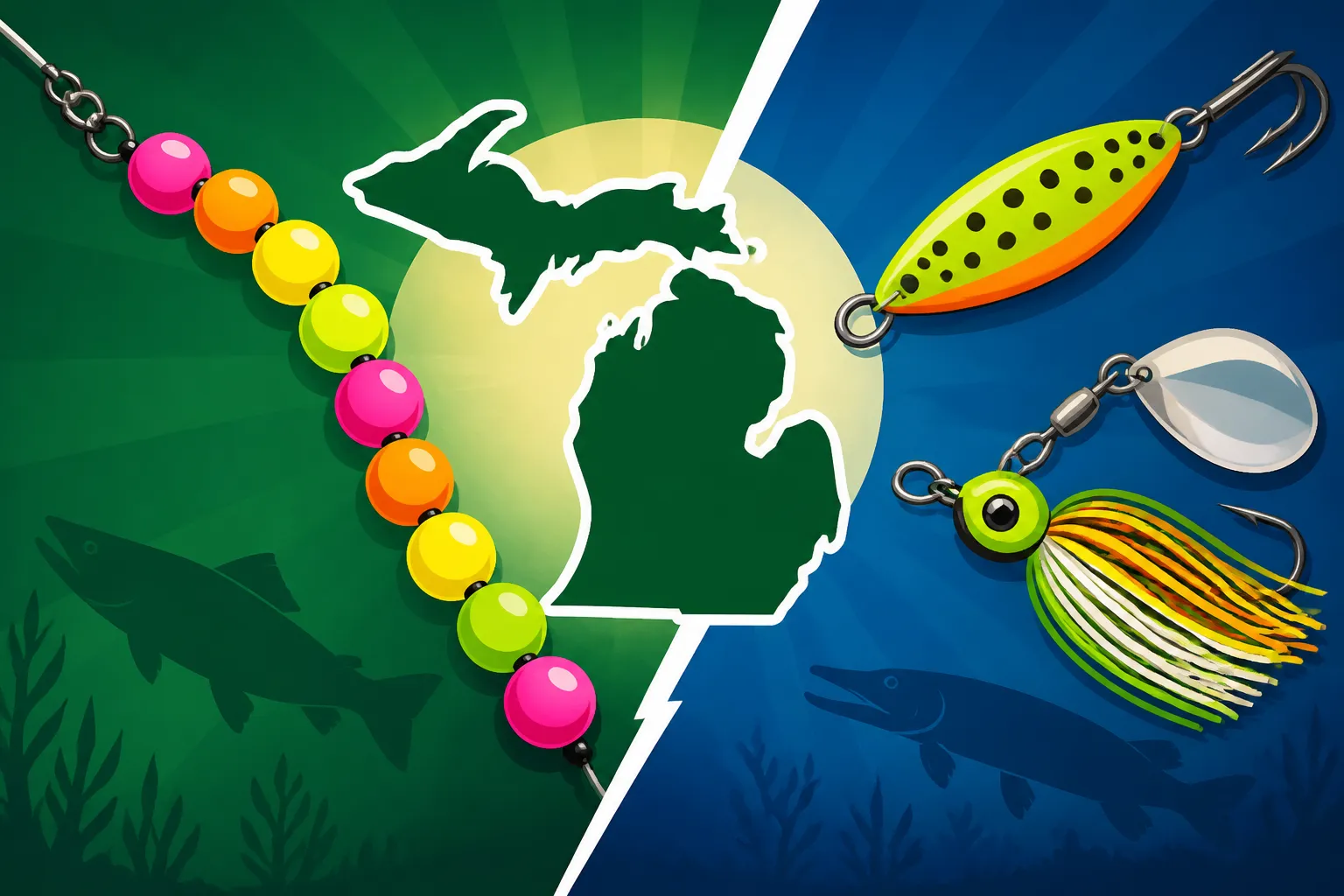
When you talk about beads, you're usually talking about small, often translucent or opaque spheres that mimic fish eggs. How to Rig a Bead for Steelhead often involves sliding them up the line, above the hook, to drift naturally in the current. If a bead is fished by itself on a hook, without any natural bait attached to the hook, it is generally considered an artificial lure. It's a man-made item designed to imitate a natural food source (an egg) and relies on its appearance, drift, and the fish's predatory or opportunistic instincts. Many anglers buy these in bulk from sporting goods stores or from online retailers like Amazon, specifically for this purpose.
The line becomes blurred, however, if you attach anything natural to the hook when a bead is present. For instance, if you have a bead on your line and then tip your hook with a live wax worm, a piece of corn, or even a cured salmon egg, then your setup is no longer purely "artificial." It's now a combination of an artificial attractant (the bead) and natural bait. In waters where "artificial lures only" regulations are strictly enforced, this combination would likely be considered illegal. The intent behind "artificial only" rules is to remove natural scent and taste as primary attractants, relying instead on visual and mechanical presentation.
The "Enticement" Factor: How Beads Function
Beads function primarily as visual attractors. They perfectly imitate loose salmon or steelhead eggs drifting in the current, a common food source for many species, especially trout and steelhead, which follow spawning salmon upriver. The size, color, and buoyancy of the bead, coupled with a natural drift, are what entice a strike. This reliance on visual appeal and drift, rather than scent or taste, strengthens the argument for beads being classified as artificial lures when fished alone.
The debate often arises because of their simplicity and the uncanny realism of some bead designs. They don't have moving parts like a spinner or a wobbling action like a crankbait. They are, in essence, a static imitation of an egg. But just as a plastic worm imitates a living worm without being alive, a bead imitates an egg without being one. This distinction is vital for understanding why Is a Bead an Artificial Lure Under Michigan Trout Rules? is a question that anglers frequently ponder. Most anglers will find that if they are using a single bead on the line with a bare hook (or a hook that only has a small piece of yarn to hold the bead in place, which is also considered artificial), it falls squarely within the artificial lure category for most Michigan waters.
Specific Scenarios and Interpretations
Let's consider a few specific scenarios. If you're fishing a designated "artificial lures only" section of a river like the Au Sable, and you're using a single bead on your leader, drifting it with an indicator, you're likely compliant. This setup relies on the bead's visual appeal and your presentation. However, if you add a tiny piece of actual fish roe (salmon egg) to the hook below that bead, you are now using natural bait, and you would be in violation.
Another scenario involves the use of "bead rigs" where the bead is pegged directly above a small, bare hook. This is a very popular and effective method. As long as nothing natural is added to that hook, the entire setup is considered artificial. The key takeaway from the DNR's perspective is whether the fish is being attracted by something that was once alive and offers natural scent or taste, or if it's solely enticed by the artificial presentation. Always clarify with the most current regulations, specifically looking for exceptions or precise definitions on "natural bait" versus "artificial lures" for the water you intend to fish.
Common Artificial Lure Categories and Their Legality
Beyond the bead debate, Michigan anglers have a vast array of artificial lures at their disposal. Knowing the main categories and their general legality under "artificial only" rules is essential for stocking your tackle box wisely, whether you're browsing Bass Pro Shops or looking for deals on Amazon.
Hard Baits and Their Variations (Crankbaits, Jerkbaits)
Hard baits are perhaps the most iconic category of artificial lures. These are typically made from plastic, wood, or metal and are designed to imitate various baitfish, insects, or even frogs. They come in an incredible diversity of shapes, sizes, and colors, each with a specific action in the water.
- Crankbaits: These lures have a distinct lip or bill that causes them to dive and wobble as they're retrieved. They mimic fleeing baitfish and are fantastic for bass, walleye, and pike. Because they are constructed entirely from non-organic materials and rely on their action and appearance, crankbaits are universally considered artificial lures and are legal in all "artificial lures only" waters.
- Jerkbaits: Longer and slender, jerkbaits are designed to be fished with a "twitch-twitch-pause" retrieve, making them dart erratically like a wounded baitfish. They are extremely effective for triggering strikes from predatory fish like bass, pike, and muskellunge. Again, these are made from synthetic materials and rely on angler manipulation for their action, making them completely compliant with artificial-only regulations.
- Topwater Lures: Poppers, walk-the-dogs, and prop baits create commotion on the surface, mimicking struggling baitfish, frogs, or insects. These are exhilarating to fish for bass and pike. Like other hard baits, their artificial construction and reliance on action make them perfectly legal for any water with artificial lure restrictions.
The beauty of hard baits is their unambiguous nature in the context of artificial-only rules. You can pick up a Rapala, a Storm, or a Livingston Lures product, and you're good to go, provided you're not trying to attach a live minnow to one of the treble hooks!
Soft Plastics and Their Usage (Grubs, Worms, Swimbait)
Soft plastics revolutionized fishing, offering incredible versatility and realistic feel. Made from flexible plastic polymers, they come in countless forms, from simple grubs to highly detailed creature baits.
- Plastic Worms and Grubs: These are staples for bass, walleye, and panfish anglers. From a Texas-rigged worm to a jig-and-grub combo, their soft, supple action and varied profiles make them highly effective. As mentioned earlier in the definition of an artificial lure, plastic or rubber imitations are explicitly allowed with or without scent in Michigan. This means you can use your favorite scented soft plastics, like those from a brand such as Gary Yamamoto or Z-Man, in "artificial lures only" waters. This exception is critical for many anglers who rely on the added attractant.
- Swimbaits: These are soft plastic lures designed to imitate baitfish, often with a paddle tail that creates a swimming action on retrieve. They can be rigged on jig heads, weedless hooks, or as trailers. Like other soft plastics, they are considered artificial lures, and their scented versions are also permitted under the Michigan DNR's specific wording.
- Creature Baits and Tubes: These odd-shaped soft plastics mimic crayfish, insects, or other aquatic critters. Their unique actions and profiles make them deadly for bass and other species. They also fall under the "plastic or rubber imitations" exception for scent.
The flexibility of the scent rule for soft plastics is a huge advantage for Michigan anglers, allowing them to use highly effective modern lures without fear of violating artificial-only regulations. Just ensure the lure itself is indeed made of plastic or rubber.
Spoons, Spinners, and Jigs: Classic Artificials
These are some of the oldest and most enduring artificial lure designs, proving their effectiveness across generations of anglers.
- Spoons: Metal lures that wobble and flash when retrieved, mimicking wounded baitfish. They're excellent for targeting salmon, trout, pike, walleye, and even panfish. Spoons are inherently artificial and always legal in artificial-only waters, again, assuming you don't add any natural bait to them. You can find a huge variety of sizes and colors at any tackle shop or online.
- Spinners: Characterized by a rotating blade that creates flash and vibration, spinners are irresistible to many fish, particularly trout, salmon, and panfish. From inline spinners to spinnerbaits, their metallic and synthetic components make them clear artificial lures. These are a go-to for many river anglers pursuing trout and steelhead.
- Jigs: A weighted head with a hook, often dressed with hair, feathers, or soft plastic. Jigs are incredibly versatile and can be fished in countless ways, from vertical jigging for walleye to pitching into cover for bass. When dressed with artificial materials (like marabou, bucktail, or synthetic fibers) or soft plastics, they are unequivocally artificial lures. Best Tackle for Michigan Walleye Fishing often includes a good selection of jigs. However, if you tip a jig with a live minnow, a piece of crawler, or a wax worm, it then becomes a "bait" presentation and would be illegal in artificial-only waters. This is a common mistake to avoid.
The simplicity and effectiveness of these classic artificials ensure their place in any angler's tackle box, and they are generally compliant with the strictest artificial-only rules, provided no natural bait is added.
Where Artificial-Only Rules Apply in Michigan
Michigan has a vast network of rivers, lakes, and Great Lakes waters, and fishing regulations can vary significantly from one body of water to another, or even within different sections of the same river. It's not enough to simply know what an artificial lure is; you also need to know where those restrictions are in force.
Designated Trout and Salmon Streams
Many of Michigan's premier trout and salmon streams, particularly in the northern Lower Peninsula and throughout the Upper Peninsula, have specific regulations designed to protect these sensitive coldwater fisheries. These often include "artificial lures only" rules, sometimes with even further restrictions like "single-pointed, barbless hooks only" or "fly-fishing only." The intent is usually to minimize harm to fish, particularly those caught and released, by making the hook removal easier and reducing the chance of deep hooking, and by removing natural scent that might entice a fish to swallow the hook more deeply.
For example, sections of the Au Sable River, Manistee River, or Pere Marquette River, renowned for their trout and steelhead runs, will have these specific rules clearly outlined in the Michigan Fishing Regulations Digest. It's crucial to consult this guide for the specific river or stream section you plan to fish. You might find that one stretch allows bait, while an upstream or downstream section is strictly artificial-only. Ignoring these boundaries can lead to significant penalties, so paying attention to signage at access points is also vital.
Special Regulation Waters and Seasons
Beyond the classic trout streams, other waterbodies or specific seasons might have "artificial lures only" mandates. These special regulations are often implemented for various conservation or management purposes. For instance, some lakes might have experimental regulations to try and improve fish populations, or certain tributaries during spawning runs could have temporary restrictions to protect vulnerable fish.
Sometimes, the rule might apply only during specific times of the year, such as a spring or fall spawning run when fish are concentrated and more susceptible to capture. Michigan Fishing Season Dates and Rules will always be your best friend in these situations. It's not uncommon for a lake to be open to all methods during the summer but then switch to artificial-only during a specific time for a particular species, like during a catch-and-release muskie season. Always assume that if you're targeting a prized or sensitive species, or fishing during a known spawning period, there might be additional restrictions on tackle.
Catch-and-Release Only Zones
Catch-and-release only zones are specifically designed to allow anglers to enjoy fishing while ensuring the fish population remains robust. In these areas, minimizing stress and injury to the fish is paramount. Therefore, "artificial lures only" is a very common regulation in these zones. The absence of natural bait means fish are less likely to swallow hooks deeply, making for quicker and less damaging release.
When fishing a designated catch-and-release section, even if it's not explicitly a trout or salmon stream, you must adhere to the artificial lure rule. These areas often coincide with critical habitat, spawning grounds, or areas where specific trophy fish management goals are in place. For example, some sections of rivers might be catch-and-release for muskellunge, and they will likely require artificial lures to ensure the safe release of these large, powerful fish. Always respect these regulations, as they are put in place to ensure the long-term health of Michigan's fisheries for everyone to enjoy.
Navigating the Regulations: Tips for Anglers
Michigan's fishing regulations can feel like a labyrinth at times, with rules varying by waterbody, species, and even time of year. Knowing how to navigate these rules, especially regarding artificial lures and bait, is paramount for a responsible and enjoyable fishing experience.
Consulting the Michigan Fishing Guide Digest
Your absolute best resource for understanding Michigan fishing regulations is the official Michigan Fishing Guide Digest, published annually by the DNR. This comprehensive document is available online as a PDF and in print at most license retailers, including many local tackle shops and outdoor stores. It's a goldmine of information, detailing statewide regulations, special regulations for specific waters, and clear definitions for terms like "artificial lure" and "natural bait."
Before heading to any new fishing spot, or even a familiar one if it's been a while since you last checked, make it a habit to look up that specific waterbody in the digest. Pay close attention to sections on "Special Regulations by County," "Trout and Salmon Regulations," and "Great Lakes Regulations." The digest will clearly delineate sections of rivers or specific lakes that are designated "artificial lures only" or "fly-fishing only." Don't rely on hearsay or old memories; regulations can and do change. The Michigan Fishing Regulations Digest PDF for 2026 (or the current year's version) is an indispensable tool for every angler.
Understanding Local Water Rules and Signage
While the statewide digest is your primary reference, local signage at public access points, boat launches, and trailheads can provide immediate, critical information for the specific stretch of water you're about to fish. These signs often highlight special regulations unique to that location, such as "Artificial Lures Only" or "No Live Bait." Sometimes, these signs will even indicate the boundaries of a special regulation zone, like "Artificial Lures Only from this point upstream to [landmark]."
Always take a moment to read any posted signs. They are there for your benefit and to help you comply. If you see conflicting information between a sign and the digest, it's usually best to follow the most restrictive rule, or better yet, seek clarification. Sometimes a new regulation might be in effect locally before the annual digest is printed, or a specific local ordinance might apply. These signs are essentially on-the-spot updates or clarifications, and they carry legal weight.
When in Doubt, Ask or Opt for Clearly Legal Options
If you've consulted the digest, checked local signage, and still find yourself scratching your head about whether your bead rig or scented soft plastic is legal in a particular spot, don't guess. Making an assumption can lead to a violation. There are several ways to get clarification:
- Contact the DNR: The Michigan DNR has regional offices and a dedicated customer service line where you can ask specific questions about regulations. Their conservation officers and biologists are there to help anglers understand and follow the rules.
- Ask Local Tackle Shops: Local bait and tackle shop owners and staff are often incredibly knowledgeable about the specific regulations for nearby waters. They are usually anglers themselves and can provide practical advice and insights. For example, if you're near the Au Sable, a tackle shop owner will know precisely what flies or beads are permitted.
- Choose Clearly Legal Options: When uncertainty lingers, opt for a lure that is undeniably artificial and free of natural bait or overly ambiguous scents. A classic spoon, a plain-colored crankbait, or a jig dressed with purely synthetic materials are almost always safe bets in artificial-only waters. If you're using beads, ensure no natural bait is attached to the hook, and that the bead itself is strictly an imitation. You can browse extensive selections of these unambiguous artificial lures at retailers like Bass Pro Shops or through online platforms like Amazon, ensuring you pick items that align with the strictest interpretations of the rules.
| Lure Type | General Classification | Scented Versions (Plastic/Rubber) | Natural Bait Added? | Generally Legal in "Artificial-Only" Waters |
|---|---|---|---|---|
| Crankbaits | Artificial Lure | N/A (Hard Plastic/Wood) | No | Yes |
| Jerkbaits | Artificial Lure | N/A (Hard Plastic/Wood) | No | Yes |
| Spoons | Artificial Lure | N/A (Metal) | No | Yes |
| Spinners | Artificial Lure | N/A (Metal/Plastic) | No | Yes |
| Soft Plastic Worms | Artificial Lure | Yes (Explicitly Allowed) | No | Yes |
| Plastic Grubs | Artificial Lure | Yes (Explicitly Allowed) | No | Yes |
| Swimbait (Soft) | Artificial Lure | Yes (Explicitly Allowed) | No | Yes |
| Jigs (Dressed) | Artificial Lure | N/A (Feather/Hair/Synthetic) | No | Yes |
| Jigs (Tipped) | Artificial Lure + Bait | N/A | Yes (Live Worm, Minnow) | No (If artificial-only rule applies) |
| Fishing Beads | Artificial Lure | N/A (Plastic/Glass) | No | Yes (When fished alone on a bare hook) |
| Live Worm | Natural Bait | N/A | Yes | No (If artificial-only rule applies) |
| Salmon Eggs | Natural Bait | N/A | Yes | No (If artificial-only rule applies) |
| Minnows | Natural Bait | N/A | Yes | No (If artificial-only rule applies) |
Understanding Michigan's fishing regulations, especially the nuances of "artificial lures," can seem daunting, but with a bit of homework and a common-sense approach, you can navigate the waters confidently. By familiarizing yourself with the official digest, paying attention to local signage, and exercising caution when in doubt, you'll be well-equipped to enjoy Michigan's incredible fishing opportunities while respecting its valuable resources. Tight lines!
Disclaimer
This article is for general informational purposes only and does not constitute professional advice. Laws, prices and regulations vary by location and change over time. Consult a qualified professional for guidance on your specific situation.