What Is the Smallmouth Bass Limit in Michigan
It's incredibly frustrating to head out for a peaceful day of fishing, only to be riddled with anxiety about whether the fish you just caught is legal to keep. Michigan's fishing regulations, while vital for conservation, can sometimes feel like a labyrinth, particularly when it comes to specific species like smallmouth bass. This comprehensive guide will untangle the complexities of smallmouth bass limits in Michigan, providing clear, actionable information on daily possession numbers and size requirements so you can fish with confidence and peace of mind.
Understanding Michigan's Smallmouth Bass Regulations
Fishing for smallmouth bass in Michigan is a cherished pastime, known for the feisty fight these bronze beauties put up. However, enjoying this sport responsibly means understanding and adhering to the regulations designed to protect their populations. These rules aren't just arbitrary; they are the result of scientific research aimed at ensuring healthy fish stocks for generations to come.
The Statewide Daily Possession Limit for Smallmouth Bass
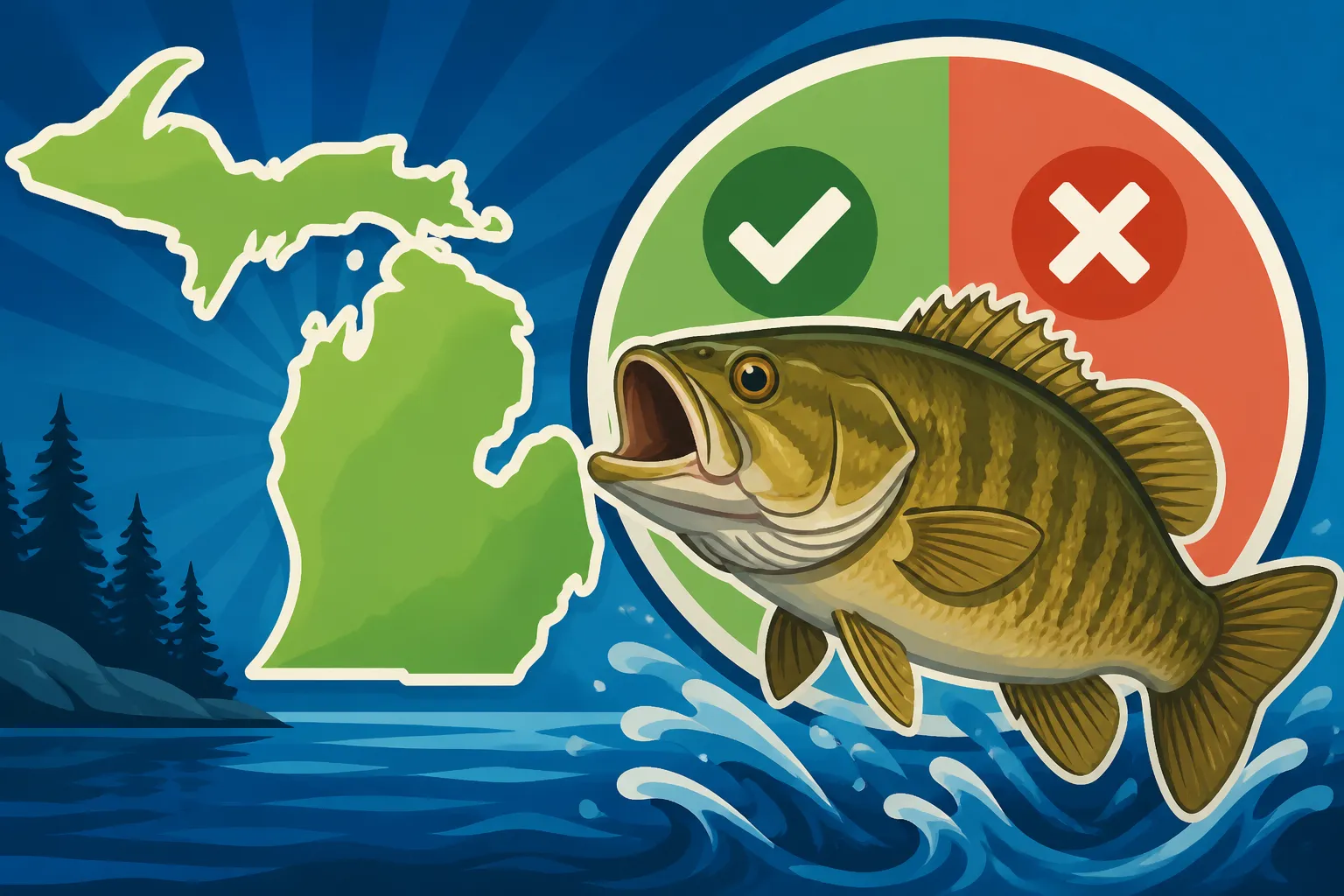
Across most of Michigan's vast inland waters and Great Lakes, the standard daily possession limit for smallmouth bass is five fish. It's crucial to understand that this isn't just about how many you can catch in a single calendar day. This limit applies to the total number of smallmouth bass you have in your possession at any given time, whether they are in your livewell, cooler, vehicle, or at your cabin. For instance, if you caught and kept three smallmouth bass yesterday and plan to fish again today, you can only keep two more to reach your total possession limit of five.
This "possession limit" concept is vital because it prevents anglers from accumulating large numbers of fish over several days, which could put undue pressure on local fish populations. It encourages a more thoughtful approach to harvesting, ensuring that more fish remain in the water to reproduce and grow. Remember, this limit is often combined with largemouth bass, so your total combined bass catch must not exceed this number. For a full rundown on all the rules, it's always smart to consult the official Michigan Fishing Guide, which you can often find digitally or physically at license retailers.
Michigan's Statewide Minimum Size Limit for Smallmouth Bass
In conjunction with the daily possession limit, Michigan also enforces a statewide minimum size limit for smallmouth bass: 14 inches. This means that any smallmouth bass you catch that measures less than 14 inches from the tip of its snout to the end of its tail (with the mouth closed and tail pinched) must be immediately released back into the water. The rationale behind this minimum size is rooted in conservation biology. Smallmouth bass typically reach sexual maturity and spawn for the first time before they hit 14 inches. By allowing them to grow past this length, the regulations help ensure that individual fish have at least one opportunity, and often several, to reproduce and contribute to the next generation of bass.
Imagine a bustling lake where every angler kept every bass they caught, regardless of size. The population wouldn't stand a chance. The 14-inch minimum acts as a safeguard, protecting the younger, breeding-age fish and promoting a healthier overall age structure within the population. It also ensures that the fish you do keep offer a more substantial meal, rewarding patient anglers. Accurate measurement is key here; a reliable measuring board, easily found on Amazon, can be an invaluable tool to avoid any accidental violations.
Where to Find the Official Regulations
While this guide provides a clear overview, the official source for all Michigan fishing regulations is the Michigan Department of Natural Resources (DNR). Their annual Michigan Fishing Regulations Every Angler Should Know digest is published each year and is absolutely essential reading for any angler. This digest details all statewide regulations, as well as any specific exceptions for particular bodies of water, which are plentiful in Michigan.
It's tempting to rely on what you heard from a friend or what you remember from last year, but rules can and do change. A responsible angler makes it a habit to review the current year's digest before hitting the water. You can typically find a digital version on the DNR's website, download it to your phone, or pick up a physical copy wherever fishing licenses are sold. Having this resource at your fingertips can prevent a simple mistake from becoming a costly violation.
Navigating Special Regulations and Exceptions
Michigan is incredibly diverse, boasting thousands of inland lakes and rivers, plus the vast Great Lakes. It stands to reason that a "one-size-fits-all" approach to fishing regulations wouldn't always make sense. While the statewide limits provide a baseline, many specific bodies of water have their own unique rules for smallmouth bass that override the general regulations.
Water-Specific Regulations for Smallmouth Bass
It’s not uncommon to encounter special regulations for smallmouth bass that differ from the statewide 5-fish, 14-inch minimum. These exceptions are put in place for specific management reasons, such as protecting unique populations, rehabilitating a struggling fishery, or enhancing opportunities for trophy fishing. For example, some lakes might have a "slot limit," where you can only keep fish between certain sizes (e.g., 14-18 inches), or perhaps a reduced daily limit to encourage catch-and-release. Other waters might have a higher minimum size, say 18 inches, or even be designated as "catch-and-immediate-release only" year-round for smallmouth.
Failing to check these localized rules is one of the most common ways anglers inadvertently break the law. Before you plan your trip to a new lake or river, make it a point to specifically look up the regulations for that particular body of water in the Michigan Fishing Guide. You might find a favorite fishing hole has a completely different set of rules than a lake just five miles away. This diligence is part of being a smart, ethical angler, and it directly contributes to the health of localized fish populations. For more on how seasons might impact your plans, check out Michigan Fishing Season Dates and Rules.
The Smallmouth Bass Catch-and-Release Season
One of the most significant special regulations for smallmouth bass in Michigan is the dedicated catch-and-release only season. Typically, from late May through mid-June (the exact dates can vary slightly year to year, so always check the current regulations), all smallmouth bass caught in Michigan waters must be immediately released. This is a critical period for smallmouth bass as it coincides with their spawning season. During this time, male bass are diligently guarding their nests, making them particularly aggressive and vulnerable to being caught.
The "catch-and-immediate-release" rule means exactly what it says: once you catch a smallmouth bass during this period, you must unhook it and release it back into the water as quickly and carefully as possible, without undue stress or delay. Keeping a smallmouth bass during this season, even accidentally, can lead to serious fines and penalties. This regulation is a cornerstone of Michigan's bass conservation efforts, designed to ensure successful spawning and the perpetuation of healthy bass populations. Understanding the nuances of this rule is paramount for any bass angler.
Comparing Smallmouth and Largemouth Bass Limits
Anglers frequently encounter both smallmouth and largemouth bass in Michigan waters, and it’s important to know that while they are both "bass," their specific regulations can sometimes differ. Often, the statewide daily possession limit of five fish is a combined limit for both largemouth and smallmouth bass. This means if you keep three smallmouth, you can only keep two largemouth, and vice versa. However, their minimum size limits can sometimes vary, and there might be water-specific rules that affect one species more than the other.
For instance, the statewide minimum size limit for largemouth bass might be 14 inches, similar to smallmouth, but specific lakes could have different rules for each. Proper fish identification is key here. A smallmouth typically has a jawline that does not extend beyond its eye, and it has vertical bars or mottled patterns on its side. A largemouth, as its name suggests, has a jawline that extends well past its eye, and usually a horizontal dark stripe along its body. If you're unsure, it's always safer to err on the side of caution or simply release the fish. To help with this, you can refer to Smallmouth Bass Identification in Michigan and Largemouth Bass Identification in Michigan for detailed descriptions. The nuances of Michigan's Combined Largemouth and Smallmouth Bass Limit are crucial to grasp for responsible angling.
The Importance of Conservation and Responsible Angling
Understanding daily limits and size restrictions for smallmouth bass isn't just about avoiding a ticket; it's about being a responsible steward of Michigan's natural resources. These regulations are deeply rooted in scientific conservation principles, ensuring that our lakes and rivers remain vibrant and full of fish for future generations. Every angler has a role to play in protecting these valuable ecosystems.
Why Smallmouth Bass Limits are Crucial for the Ecosystem
Smallmouth bass are more than just a prized catch; they are a vital component of Michigan's aquatic ecosystems. As apex predators in many of the waters they inhabit, they help keep prey fish populations in balance, which in turn influences the health of aquatic vegetation and invertebrate communities. Without appropriate limits on harvest, overfishing could severely deplete smallmouth populations, leading to a cascade of negative effects throughout the food chain. This disruption can throw the entire ecosystem out of whack, affecting other species and the overall health of the waterbody.
For example, if smallmouth numbers dwindle, smaller baitfish might overpopulate, potentially outcompeting other species for food or altering the balance of aquatic insects. The regulations ensure that enough breeding-age fish survive each year to maintain a healthy, self-sustaining population. This forward-thinking approach means that your children and grandchildren will still have the opportunity to experience the thrill of a Michigan smallmouth bass strike.
Best Practices for Catch-and-Release
Even when you're within your legal limit to keep fish, many anglers choose to practice catch-and-release, especially for larger, older fish that are valuable breeders. When you do release a fish, especially an undersized one as required by law, doing so properly is paramount to its survival. Here are some best practices:
- Minimize Handling Time: The less time a fish spends out of water, the better its chances of survival.
- Wet Your Hands: Always wet your hands before touching a fish to protect its protective slime coat, which acts as its first line of defense against disease.
- Use Barbless Hooks: Barbless hooks, or hooks with crushed barbs, are much easier to remove, causing less trauma to the fish.
- Support the Fish's Body: If you must hold the fish for a photo, support its weight horizontally, especially under its belly, to avoid damaging its internal organs or spine. Avoid hanging it vertically by the jaw.
- Use Proper Tools: A good pair of long-nosed pliers or hemostats can help quickly remove hooks. A soft, rubberized landing net is also much gentler on a fish's scales and fins than traditional knotted nylon nets. You can find excellent options for these on Amazon.
- Revive the Fish: If a fish seems sluggish upon release, gently hold it in the water, facing into the current, until it regains its strength and swims away on its own.
By following these simple steps, you significantly increase the chances that your released fish will survive and thrive, contributing to the overall health of the fishery.
The Angler's Role in Sustainable Fishing
Ultimately, the future of Michigan's smallmouth bass fishing lies in the hands of its anglers. We are the direct beneficiaries of a healthy fishery, and as such, we bear a responsibility to protect it. This extends beyond simply following the rules. It involves a commitment to sustainable practices and an understanding that our actions on the water have an impact.
Reporting violations, such as someone keeping undersized fish or exceeding their limit, is a critical part of this responsibility. While it can feel uncomfortable, it's essential for protecting the resource for everyone. Furthermore, supporting conservation organizations and purchasing your fishing license (like the Michigan Resident Annual Fishing License Cost or a Michigan Nonresident Annual Fishing License Cost) directly funds the DNR's efforts in fisheries management, stocking, habitat improvement, and enforcement. Every license dollar contributes to keeping Michigan's waters healthy and teeming with fish. Consider it an investment in your passion.
Practical Application for Michigan Smallmouth Anglers
Knowing the rules is one thing, but applying them correctly on the water can sometimes present challenges. From accurately measuring your catch to understanding what to do in accidental situations, preparing for real-world scenarios will make your fishing trips more enjoyable and stress-free.
Measuring Your Catch Accurately
When the action heats up, and you've got a beautiful smallmouth bass in the net, it's easy to get excited. However, before you decide to keep it, an accurate measurement is crucial. Michigan regulations typically require you to measure fish from the tip of the snout to the furthest tip of the tail, with the mouth closed and the tail compressed.
Here's how to ensure accuracy:
- Lay the fish flat: Place the fish on a measuring board or ruler. A specialized fish measuring board, often available on Amazon, with a solid "nose bump" is ideal for consistency.
- Close the mouth: Gently push the fish's mouth closed against the starting point of the ruler or board.
- Compress the tail: Pinch the tail fin lobes together to get the maximum length measurement.
- Read the measurement: Note the length at the furthest point of the compressed tail.
What if it's borderline? If your fish is just shy of 14 inches, or exactly 14 inches and you’re unsure if it’s truly past the mark, the safest bet is always to release it. It's better to release a legal fish than to accidentally keep an illegal one and face penalties. Many anglers develop a keen eye for fish size over time, but always verify with a physical measurement if you intend to keep a fish.
Planning Your Trip Around Regulations
A little planning goes a long way, especially when navigating Michigan's diverse regulations. Before you even pack your rods, take a few minutes to:
- Consult the current Michigan Fishing Guide: As mentioned, this is your bible. If you're heading to a new lake, specifically look up that body of water to check for any special smallmouth bass regulations. Are there slot limits? Is it catch-and-release only? Knowing these details beforehand can save you a lot of hassle.
- Equip yourself properly: Make sure you have the right tools for responsible angling. This includes a reliable measuring device, a pair of pliers for easy hook removal, and if you plan to keep fish, a cooler with plenty of ice.
- Have a plan for your catch: Decide ahead of time whether you're targeting fish for release or for the dinner table. If you're releasing, practice good catch-and-release techniques. If you're keeping, know your limits and ensure you have a way to quickly and humanely dispatch and store your legal fish. Many anglers find it useful to have a compact, waterproof copy of the regulations, or even a digital version on their phone, for quick reference on the water.
By planning ahead, you can focus on the joy of fishing, rather than worrying about compliance. You can also explore specific techniques, like those for Best Technique for Casting to Smallmouth Bass, knowing you're fully prepared for the regulations.
What to Do if You Accidentally Catch an Illegal Fish
It happens to the best of us: you're reeling in a beautiful smallmouth, and once it's in the net, you realize it's clearly undersized or you've already hit your limit. Your immediate action in this situation is critical.
- Immediate Release: If the fish is undersized, or if you've already met your daily possession limit for that species, you must release it immediately. Do not hesitate, do not try to hide it, and do not put it in your livewell "just for a minute."
- Minimal Handling: Follow all the best practices for catch-and-release discussed earlier. Get the hook out, revive the fish if necessary, and get it back in the water quickly and gently.
- No "Accidental" Keeps: There's no legal provision for accidentally keeping an illegal fish. If a conservation officer finds an undersized fish or an over-limit catch in your possession, you will face consequences regardless of your intent. Understanding Michigan Fishing Violation Penalties and Fines can help underscore the importance of strict adherence.
The goal is to be proactive and responsible. By understanding the rules, preparing your gear, and knowing how to act in unexpected situations, you contribute to the health of Michigan's smallmouth bass fisheries and ensure that this fantastic sport remains vibrant for everyone. For those seeking specific spots, remember to check localized rules for places like Best Time to Fish Lake St. Clair for Smallmouth Bass or How to Catch Smallmouth Bass on Lake Michigan.
| Regulation Type | Statewide Smallmouth Bass Limit | Notes |
|---|---|---|
| Daily Possession Limit | 5 fish (combined with Largemouth Bass) | Total number of fish you can possess at any given time |
| Minimum Size Limit | 14 inches | Measure from tip of snout to tip of tail (mouth closed, tail compressed) |
| Catch-and-Release Season | Mandatory, typically late May to mid-June (check annual guide for dates) | Protects spawning bass; fish must be immediately released back into the water |
| Water-Specific Exceptions | Varies by lake/river, can include slot limits or different sizes | Always consult the current Michigan Fishing Guide for specific water bodies |
| Proper Identification | Crucial for distinguishing from Largemouth Bass | Prevents accidental violations when limits differ or are combined |
Disclaimer
This article is for general informational purposes only and does not constitute professional advice. Laws, prices and regulations vary by location and change over time. Consult a qualified professional for guidance on your specific situation.