How to Tell a Splake From a Lake Trout
It's a common dilemma when you're out on Michigan's beautiful waters, reeling in a feisty fish, and then staring at it, scratching your head. Is it a lake trout or a splake? Many anglers struggle to tell the difference between these two similar-looking species, especially since they share many of the same habitats. This comprehensive guide is here to clear up that confusion, offering detailed tips and characteristics to help you confidently identify your catch.
The Challenge of Identification: Why It's Tricky
For many Michigan anglers, distinguishing between a splake and a lake trout can feel like trying to solve a riddle while holding a slippery, wiggling fish. They both belong to the char family, and frankly, they just look a lot alike to the untrained eye. This isn't just a casual curiosity; knowing exactly what you've caught can be crucial for adhering to Michigan Fishing Regulations Every Angler Should Know and understanding bag limits.
Shared Habitats and Appearance
One of the biggest reasons for confusion is that both splake and lake trout can be found in similar cold, deep waters across Michigan. You might catch either one in the Great Lakes or some of our larger inland lakes. They both sport dark spots on a lighter body, and their general shape can appear quite similar when they're fresh out of the water. Imagine you're fishing a deep hole on Higgins Lake, and you pull up a beautiful, spotted fish. Your first thought might be, "Trout!" but then the specifics start to blur. Is it that native char, or its clever hybrid cousin? The natural variations within each species only add another layer to this identification puzzle, making a quick glance often insufficient.
Hybrid Nature of the Splake
The splake is a fascinating fish, a true hybrid created by crossing a male brook trout with a female lake trout. This genetic blend gives it characteristics from both parents, which is precisely why it’s such a challenge to distinguish from a purebred lake trout. It's like trying to tell two siblings apart when one has features from both parents, and the other strongly favors just one. While the intention behind creating splake was often to combine the fast growth of lake trout with the earlier maturity and catchability of brook trout, it resulted in a fish that's a bit of an identity chameleon. It doesn't quite fit neatly into either category, creating a unique challenge for anglers trying to make a positive ID.
Key Physical Characteristics to Look For
When you're holding a fish and trying to figure out if it's a splake or a lake trout, you need to become a detective. Don't just look at the overall picture; zoom in on the specific details, almost like you're inspecting a piece of art. These subtle differences, once you know what to look for, can make all the difference.
Tail Shape and Fin Structure
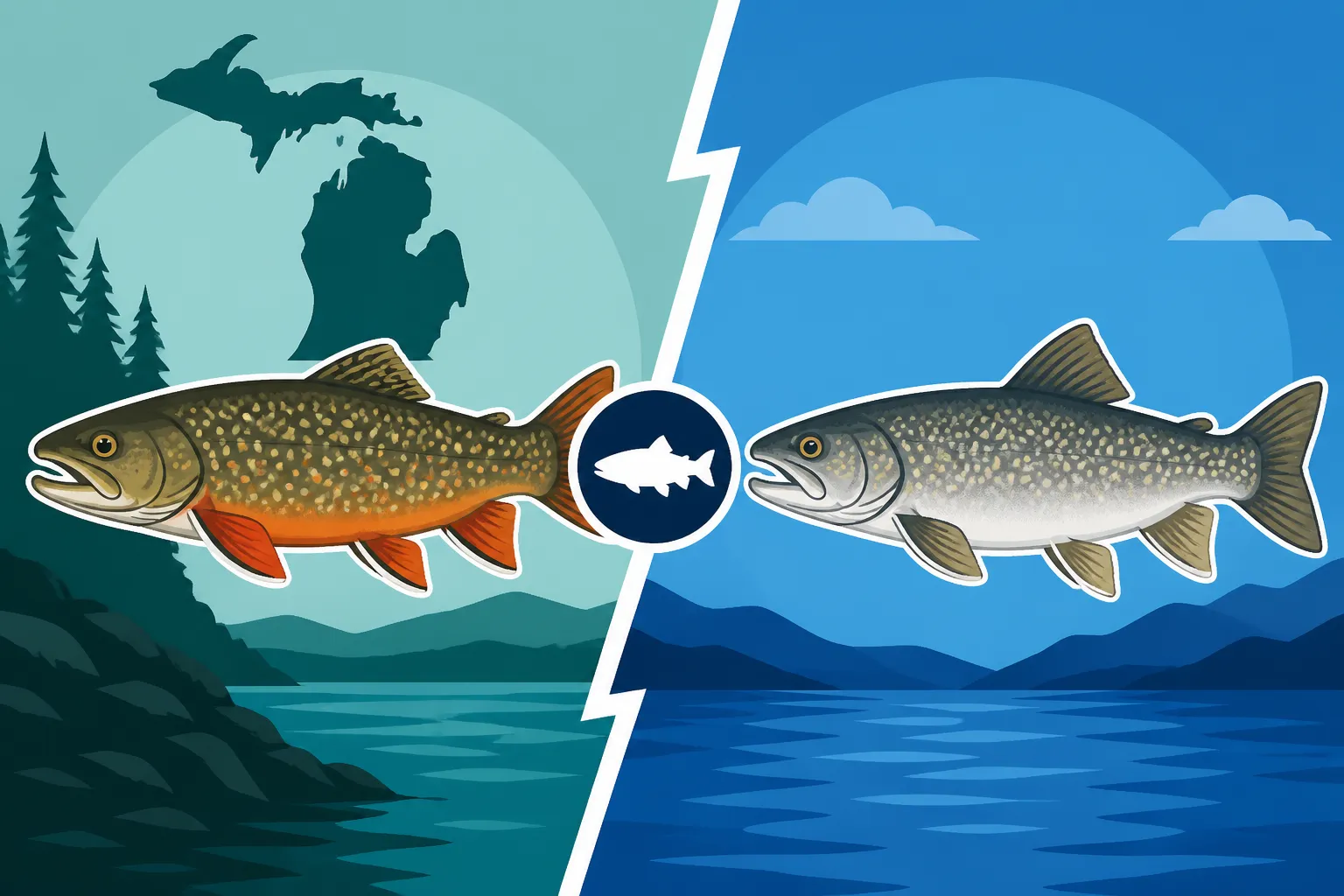
The tail, or caudal fin, is often your first and most reliable clue. This might sound minor, but it's a telling feature. A true lake trout generally has a deeply forked tail. Think of it like a capital "V" or a swallowtail, with two distinct, pointed lobes. When you hold it up, you'll see a clear, deep indentation. Now, a splake, thanks to its brook trout parentage, tends to have a less forked tail. It's often described as being only moderately forked or even somewhat square-ish. It still has an indentation, but it's not as pronounced or deep as that of a lake trout. Sometimes, people describe it as being somewhere between a brook trout's square tail and a lake trout's deeply forked one.
Beyond the tail, take a moment to look at the fins. While not always as distinct as the tail, splake often exhibit some of the white leading edges on their pectoral, pelvic, and anal fins, similar to what you'd see on a brook trout. Lake trout rarely have these bright white fin edges. These subtle touches can really help solidify your identification, especially if the tail isn't as clear as you'd like.
Body Shape and Spots
The overall body shape can also offer hints, though this can be trickier, as fish vary greatly depending on age, diet, and individual genetics. Lake trout often have a more elongated, somewhat cylindrical body shape. They can grow quite large and appear very streamlined. Their spots are typically lighter in color than their body, appearing almost cream or yellow, and are usually well-defined. These spots extend onto the tail fin, which is a key identifying marker for a lake trout.
Splake, on the other hand, often have a body shape that's a bit more stout, almost a hybrid between the lake trout's elongation and the brook trout's more compact form. Their spots tend to be darker, sometimes red or orange with blue halos (known as "halos" or "vermiculations"), similar to brook trout, though they are usually less vibrant and numerous than on a pure brook trout. Crucially, while lake trout have spots extending onto their tail, splake often do not, or if they do, they are much fainter and less defined. Observing the spot patterns and whether they reach the tail can be a strong indicator.
Mouth and Jaw Anatomy
Another excellent, albeit slightly more intrusive, way to tell these two apart is by examining their mouth and jaw structure. Lake trout have a larger, more pronounced mouth that often extends well past the back of their eye. Their jaws are robust, designed for preying on smaller fish in deep waters. They also possess strong teeth.
Splake generally have a mouth that is more intermediate in size, often not extending quite as far back as a lake trout's. It's still a decent-sized mouth, but typically doesn't have the same impressive gape. If you gently open the fish's mouth, you might also notice differences in the vomerine teeth on the roof of its mouth, though this often requires a bit more expertise and a willingness to get up close and personal. However, just the general proportion and size of the mouth in relation to the head can often give you a good clue. For visual learners, looking up detailed diagrams of fish anatomy on resources like Amazon or specialized fishing forums can be incredibly helpful for understanding these subtle oral distinctions.
Here’s a quick comparison table to help sum up the key physical differences:
| Feature | Lake Trout (Salvelinus namaycush) | Splake (Salvelinus fontinalis x S. namaycush) |
|---|---|---|
| Tail Shape | Deeply forked ("V"-shaped) | Moderately forked to slightly square |
| Spots | Light, often cream/yellow, on dark body; extend onto tail fin | Darker, sometimes reddish/orange with halos; usually do not extend onto tail fin |
| Fin Edges | Generally uniform color | Often have white leading edges on pectoral, pelvic, and anal fins |
| Body Shape | More elongated, torpedo-like | More stout, intermediate between lake trout and brook trout |
| Mouth Size | Large, jaw extends well past eye | Intermediate, jaw usually does not extend as far past eye |
Behavioral Differences (Though Less Reliable for Anglers)
While physical traits are your best bet for on-the-spot identification, understanding some behavioral patterns can also contribute to a more holistic picture of these fish. However, these are much harder to observe directly as an angler.
Feeding Habits and Habitat Preference
Both lake trout and splake are predatory fish, but their preferred diets and precise habitat niches can differ slightly. Lake trout are well-adapted to deep, cold, oxygen-rich waters and are often found near the bottom structure of large lakes. They primarily feed on baitfish like ciscoes, alewives, and smelt, becoming apex predators in their ecosystems. You'll often find them lurking in the thermocline during warmer months.
Splake, being a hybrid, often exhibits a broader range of habitat use. They tend to prefer water slightly warmer than typical lake trout habitats, but still cooler than what a brook trout might tolerate year-round. They can often be found in shallower waters than lake trout, particularly during spring and fall, making them more accessible to shore anglers or those fishing closer to structure. Their diet can also be more varied, including insects and smaller organisms in addition to baitfish, a nod to their brook trout heritage. Knowing these tendencies can sometimes give you a hunch about what you've just hooked, especially if you're fishing a specific depth or type of structure. For more on what these fish like to eat, check out What Do Lake Trout Live At.
Spawning Behavior
This is a significant difference but one you'll likely never observe directly while fishing. Lake trout are fall spawners, typically migrating to rocky shoals or reefs in late autumn to deposit their eggs. This is a natural, instinctual process that has evolved over millennia.
Splake, being a hybrid, often exhibit variable or sometimes even sterile spawning behavior. While some splake may attempt to spawn, their reproductive success is often limited, which is why stocking is so crucial for maintaining splake populations in many Michigan lakes. They might attempt to spawn earlier than lake trout, sometimes even mimicking their brook trout parent's tendencies. This difference in reproductive strategy is a key biological distinction, highlighting the true hybrid nature of the splake and why sustained populations often rely on human intervention and ongoing stocking programs.
Why Accurate Identification Matters
Beyond the satisfaction of knowing what you've caught, being able to accurately identify a splake from a lake trout has real-world implications for responsible angling and conservation. It's not just about bragging rights; it's about being a good steward of Michigan's precious fisheries.
Following Michigan Fishing Regulations
The most immediate and practical reason to know the difference is to comply with fishing regulations. Michigan's Michigan Fishing Regulations Every Angler Should Know can have different bag limits, size limits, or even special regulations for certain bodies of water for lake trout versus splake. For instance, a lake might have a more restrictive limit on lake trout due to conservation efforts for a wild population, while splake, often stocked, might have a more liberal limit. Catching a fish and mistakenly identifying it could lead to inadvertently violating these rules, which nobody wants. Always carry a copy of the current Michigan Fishing Guide (either a physical copy or the Michigan's DNR Hunt Fish App for Licenses and Reporting) and consult it for the specific body of water you're fishing. It's your responsibility as an angler to know the rules, and proper fish identification is a big part of that.
Conservation Efforts and Data Reporting
Accurate identification also plays a vital role in Michigan's broader conservation and fisheries management efforts. When anglers report their catches, or when biologists conduct surveys, distinguishing between splake and lake trout helps them understand population dynamics, stocking success rates, and the overall health of the fishery. If everyone misidentifies their fish, the data collected becomes less reliable, making it harder for the Michigan Department of Natural Resources to make informed decisions about stocking, harvest quotas, and habitat protection. By taking the time to correctly identify your catch, you're contributing to valuable data that helps ensure future generations of anglers can enjoy the same fantastic fishing opportunities in Michigan. Think of it as citizen science; every correct identification helps paint a clearer picture of our underwater world. Learning more about the Michigan's Great Lakes Fish Species Guide can enhance this understanding.
In the end, while it might seem like a small detail, knowing how to tell a splake from a lake trout is a valuable skill for any Michigan angler. It empowers you to be a more knowledgeable, compliant, and responsible participant in our state's rich fishing heritage. So next time you land a beautiful char, take a moment, look closely at those fins and tail, and make that confident ID!
Disclaimer
This article is for general informational purposes only and does not constitute professional advice. Laws, prices and regulations vary by location and change over time. Consult a qualified professional for guidance on your specific situation.