What Is the Walleye Size Limit in Michigan
It's incredibly frustrating to head out to your favorite Michigan walleye spot, hook into a beautiful fish, and then have that nagging doubt creep in: "Is this one a keeper, or do I have to send it back?" The walleye size limits in Michigan can feel like a labyrinth, especially when you factor in all the special regulations that pop up across our diverse waterways. This guide is here to untangle that confusion, explain the statewide rules, shine a light on common exceptions, and equip you with the knowledge to fish confidently and legally.
Understanding Michigan's Statewide Walleye Size Limit
Let's start with the basics because, honestly, that's where most anglers begin their journey, and it's the rule that applies to the vast majority of Michigan's waters. It’s important to remember that these regulations are put in place for a good reason, even if they sometimes feel restrictive.
The General Rule: What Every Angler Needs to Know
For most of Michigan's waters, the general rule of thumb for walleye is a minimum size limit of 15 inches. This means that if you pull a walleye out of the water and it measures less than 15 inches from the tip of its snout to the end of its tail, it absolutely must go back into the water immediately. No exceptions for that particular fish, no "close enough." It's a hard and fast rule for many areas.
Think of it this way: you're out on a calm morning on Higgins Lake, the fog is just lifting, and your jig feels a solid thump. You reel in, and there it is – a gorgeous walleye! You quickly grab your measuring device (a reliable one is a real game-changer, and you can find plenty of good options on Amazon) and lay the fish down. It's 14.5 inches. Heartbreaking, right? You really wanted to bring that one home. But the law is clear, and for the long-term health of the fishery, that fish needs to swim away to grow bigger. This rule is often coupled with a daily possession limit, meaning how many fish of legal size you can keep in a single day. For many waters, that daily limit is five walleye, but always double-check, especially if you're fishing a new area. Keeping these two numbers in mind – the 15-inch minimum and the daily bag limit – is your first step to being a responsible angler.
Why Size Limits Exist: Protecting the Future of Walleye Fishing
It's easy to grumble about size limits when you've just released a perfectly healthy-looking walleye that was only an inch too short. But these rules aren't arbitrary; they are the backbone of sustainable fishing. The primary reason for the 15-inch minimum for walleye in many areas is to ensure that most fish have the opportunity to spawn at least once, and often multiple times, before they are harvested.
Walleye typically reach sexual maturity around 15-17 inches in Michigan, though this can vary slightly by water body and individual fish. By protecting these fish until they've had a chance to reproduce, we're actively contributing to the next generation of walleye, ensuring there are plenty of fish for our kids and grandkids to catch. Without these limits, anglers could quickly deplete the breeding stock, leading to a dramatic decline in walleye populations over time. The Michigan Department of Natural Resources (DNR) uses extensive scientific research, tracking population trends, growth rates, and reproductive success to determine these limits. It's a complex balance of biology and angler opportunity. So, while it stings a little to release that 14.5-inch beauty, you're essentially investing in the future of Michigan Walleye Daily Possession Limit and the overall health of the fishery. Understanding this helps turn that momentary disappointment into a sense of contributing to something bigger.
Navigating Special Regulations and Exceptions for Walleye
Now, here's where things can get a little tricky, and it’s often the cause of the most confusion. While the 15-inch minimum is widespread, Michigan is a state rich with diverse water bodies, and many have their own unique walleye regulations. You can't assume what applies to your favorite inland lake will apply to the Great Lakes or a river system.
Common Exceptions: Specific Lakes and Rivers
Michigan's fishing regulations aren't a one-size-fits-all jacket. Many lakes and river sections have specific walleye regulations that deviate from the statewide 15-inch minimum. These exceptions are put in place for very good ecological reasons, often to manage a specific fishery, protect unique strains of walleye, or address local population dynamics.
For example, you might encounter waters with a lower minimum size limit, such as 13 inches, or even an 18-inch minimum in some areas. Perhaps the most interesting and common exception is the protected slot limit. This means you might have a minimum size (say, 15 inches), but then a maximum size (e.g., 23 inches), with all fish caught between those two numbers having to be immediately released. So, if you catch a 16-inch walleye, you'd have to release it, but if you caught a 24-inch lunker, you could keep it (assuming it's within your daily possession limit). These slot limits are often designed to protect the largest, most productive spawning females, ensuring they stay in the population to lay more eggs. Imagine fishing on Saginaw Bay, renowned for its incredible walleye fishing. You catch a 17-inch fish, then a 20-inch fish, and then a 25-inch fish. If that particular area has a 15-23 inch protected slot, you'd keep the 17-inch fish (it's legal), release the 20-inch fish (it's in the slot), and keep the 25-inch fish (it's over the slot). It's a lot to keep track of, and it highlights why simply knowing the statewide rule isn't always enough. Always, and I mean always, check the specific regulations for the body of water you plan to fish. You don't want to get caught off guard by a regulation you weren't aware of. For specific examples, you might explore articles like Michigan Walleye Size and Possession Limits or Which Michigan Lakes Have Walleye Size Limit Exceptions.
The Importance of the Michigan Fishing Regulations Digest
This brings us to the single most critical resource for any angler in Michigan: the official Michigan Fishing Regulations Digest. Seriously, consider this your angling bible. It’s not just a suggestion; it’s an absolute necessity. Trying to fish without consulting the current digest for your intended fishing location is like trying to drive across the state without a map – you're likely to get lost and potentially break some rules.
The DNR publishes a new digest every year, typically in late winter or early spring, which details all the current laws, limits, and special regulations for every body of water in the state. You can usually pick up a physical copy wherever you buy your How to Buy a Michigan Fishing License – bait shops, sporting goods stores, and DNR customer service centers. Even better, you can always find the most up-to-date version as a PDF on the DNR's website, making it easy to access on your phone or tablet while on the water. Many anglers even download it to their phones for quick reference. The digest will clearly lay out the Michigan Walleye 15-Inch Minimum Size Limit for general waters and then list out all the exceptions, often organized by county or by major water body. It might even include maps or specific descriptions of where special rules begin and end on a river system. Getting familiar with Reading the Michigan Fishing Regulations Digest will save you a lot of potential headaches and ensure you're always fishing within the law. The Michigan's DNR Hunt Fish App for Licenses and Reporting is another fantastic tool, often having integrated regulation information that you can access right from your smartphone.
Practical Tips for Measuring and Staying Compliant
Understanding the rules is one thing; putting them into practice on a bobbing boat or a slippery riverbank is another. It takes a bit of practice and the right tools, but it's absolutely crucial for staying on the right side of the law and respecting the resource.
Proper Measuring Techniques: From Nose to Tail
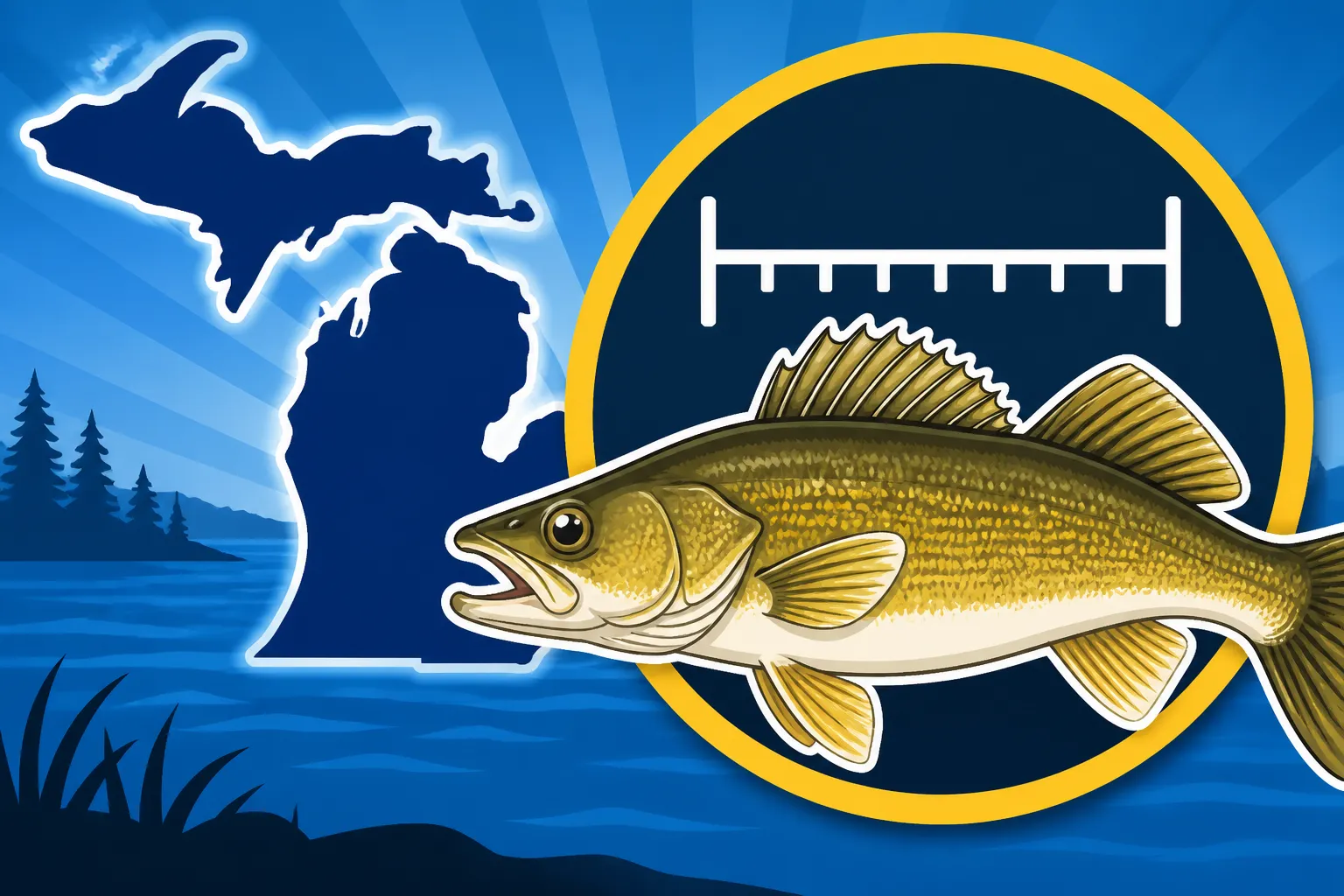
You've got that walleye in the net, it looks like a keeper, but how do you measure it correctly to be sure? There's a specific method, and slight variations can make the difference between a legal fish and one you have to release. Michigan regulations state that fish must be measured in total length, meaning from the tip of the snout (with the mouth closed) to the farthest tip of the tail (with the tail compressed or squeezed to give the maximum length).
Here’s a simple process:
- Have Your Tool Ready: Before you even cast, make sure you have a reliable measuring device easily accessible. A bump board is ideal, as it has a fixed end to push the fish's snout against, ensuring accuracy. You can find these at almost any tackle shop or easily order one from Amazon. A sturdy ruler or measuring tape will also work in a pinch.
- Handle With Care: If you intend to release the fish, minimize its time out of water. Keep your hands wet to protect its slime coat.
- Lay it Down: Gently place the fish on your measuring device.
- Close the Mouth: Ensure the fish's mouth is completely closed against the starting point of your ruler or bump board.
- Compress the Tail: Gently squeeze the tail fin together to get the longest possible measurement. Don't yank or twist, just bring the lobes of the tail together.
- Read the Measurement: Take a clear reading. If it's 15 inches or over (or whatever the specific regulation for that water body states), you're good to go. If it's even a fraction under, it must be released.
It sounds straightforward, but under pressure, especially with a lively fish, it can be tricky. Practice makes perfect. Remember, it's always better to err on the side of caution. If it's close, release it. You’ll feel much better than risking a citation.
Avoiding Common Mistakes and Potential Penalties
The rules are there to protect the fishery, and conservation officers are there to enforce them. Ignorance of the law is generally not considered a valid excuse. Making honest mistakes can still lead to serious consequences, and intentionally disregarding the rules will definitely lead to trouble.
Common mistakes include:
- Assuming Statewide Rules: This is the big one. Fishing a lake with a 13-inch minimum, then heading to another with a 15-inch minimum, and getting them mixed up. Always re-check the digest for each new spot.
- Inaccurate Measuring: A sloppy measurement that makes a 14.75-inch fish look like 15 inches can get you into trouble. Invest in a good bump board and use it properly every time.
- Keeping Too Many Fish: Exceeding the daily possession limit, even if all fish are legal size, is a violation. Keep count!
- Fishing on an Expired License: Don't forget to renew your Michigan Fishing License Renewal Each Spring.
The penalties for violating fishing regulations in Michigan can range from significant fines to loss of your fishing license, confiscation of your gear, or even jail time for severe offenses. A typical first offense for a size or bag limit violation might involve a few hundred dollars in fines and court costs, plus reimbursement fees for the fish. Imagine you're out on the Detroit River, known for its walleye, and a conservation officer approaches. They ask to see your license and check your cooler. If you have an undersized walleye, the officer won't hesitate. It's a quick way to turn a fantastic day of fishing into a costly mistake. Always consult the Michigan Fishing Regulations Every Angler Should Know to avoid these issues.
| Walleye Regulation Type | Minimum Size Limit (Inches) | Daily Possession Limit (Fish) | Common Application |
|---|---|---|---|
| Statewide General | 15 | 5 | Most inland lakes and rivers |
| Protected Slot | 15 | 5 (with slot rule) | Specific lakes/areas to protect spawners (e.g., 15-23 inch slot) |
| Reduced Minimum | 13 | 5 | Certain specific lakes or river sections |
| Increased Minimum | 18 | 5 | Less common, but exists for specific management |
| Lake Erie | 15 | 6 | Great Lakes exception for higher catch rates |
Note: This table provides common examples. Always consult the current Michigan Fishing Regulations Digest for precise, up-to-date information for your specific fishing location.
Contributing to Healthy Walleye Populations in Michigan
Beyond simply following the rules, every angler has a role to play in ensuring that Michigan's walleye fisheries remain vibrant and productive for generations to come. It’s about being a steward of the environment and truly understanding the impact of our actions.
Beyond the Limit: Ethical Catch and Release Practices
Sometimes, you'll catch a walleye that's perfectly legal, but you've already filled your limit, or you simply prefer to release it. Other times, you'll catch a fish that falls within a protected slot limit and must be released. In these scenarios, proper catch and release techniques are paramount to the fish's survival. A released fish that dies later is a wasted catch, regardless of its legal status.
Here are some best practices for ethical catch and release:
- Minimize Fight Time: Bring the fish in as quickly as possible without "horsing" it. Prolonged fights can exhaust a fish to the point where it can't recover.
- Use Barbless Hooks: If possible, consider crimping down barbs on your hooks. This makes hook removal much easier and quicker, causing less damage.
- Keep Fish in Water: If you can, unhook the fish while it's still in the water. If you must bring it aboard, use a rubberized net (which is gentler on their slime coat and fins than knotted nylon) and keep it out of the water for the shortest possible time. Avoid laying fish on hot, dry surfaces.
- Proper Unhooking Tools: Keep a pair of long-nosed pliers or a de-hooking tool handy. These allow for quick and easy hook removal, especially with deeply hooked fish, minimizing stress and injury. You can find excellent options for these tools on Amazon.
- Support the Fish: When handling, support the fish horizontally, especially larger walleye. Avoid holding them vertically by the jaw or gills, which can damage their internal organs and spine.
- Revive If Necessary: If a fish looks sluggish upon release, gently hold it in the water, facing into the current, and move it back and forth to force water over its gills until it swims away under its own power. Don't just toss it back if it's struggling.
By adopting these practices, you're not just adhering to the letter of the law, but upholding the spirit of conservation.
Reporting and Conservation Efforts
Michigan's walleye populations are a testament to ongoing conservation efforts, but these efforts rely heavily on data – and anglers play a crucial role in providing it. While walleye don't typically have specific harvest reporting requirements like muskellunge (check out Michigan Muskellunge Harvest Reporting Rules if you're interested in that), the DNR often conducts angler surveys or creel censuses where they ask about your catch. Participating in these is incredibly valuable.
Every time you purchase a Michigan Fishing License Guide for Residents and Nonresidents, a portion of that fee goes directly towards funding fisheries management, research, habitat restoration, and enforcement. Where Michigan Fishing License Money Goes is a question many anglers have, and understanding that contribution helps highlight why proper licensing and adherence to regulations are so important. The DNR uses this funding and the data they collect to decide when and where to stock walleye, to assess the impact of invasive species, and to adjust regulations to ensure the long-term health of these beloved fish. Your conscious effort, from measuring carefully to practicing responsible catch and release, is a vital part of protecting Michigan's incredible walleye fishing heritage.
Disclaimer
This article is for general informational purposes only and does not constitute professional advice. Laws, prices and regulations vary by location and change over time. Consult a qualified professional for guidance on your specific situation.