How to Fish for Carp in Michigan
For many anglers in Michigan, carp fishing often gets overlooked, sometimes even dismissed, in favor of game fish like walleye or salmon. But if you’ve ever found yourself struggling to get a bite, or simply looking for a new, exciting challenge that doesn't require a boat or a massive budget, you're missing out on one of the most accessible and hard-fighting fish in our waters. This guide is here to change that, offering you a comprehensive breakdown of how to successfully target carp in Michigan, from the gear you need to the best spots and techniques to get those drag-screaming runs.
Understanding the Michigan Carp and Why They're a Great Catch
Let's be honest, carp often get a bad rap. Some folks think they're "trash fish" or that they don't fight hard. But anyone who's ever hooked into a big Michigan common carp knows that's far from the truth! These fish are powerful, cunning, and can put up an incredible battle, making them an exhilarating target for any angler. They're also incredibly widespread and accessible, often found in waters where other popular game fish are scarce or heavily pressured.
The Different Types of Carp in Michigan Waters
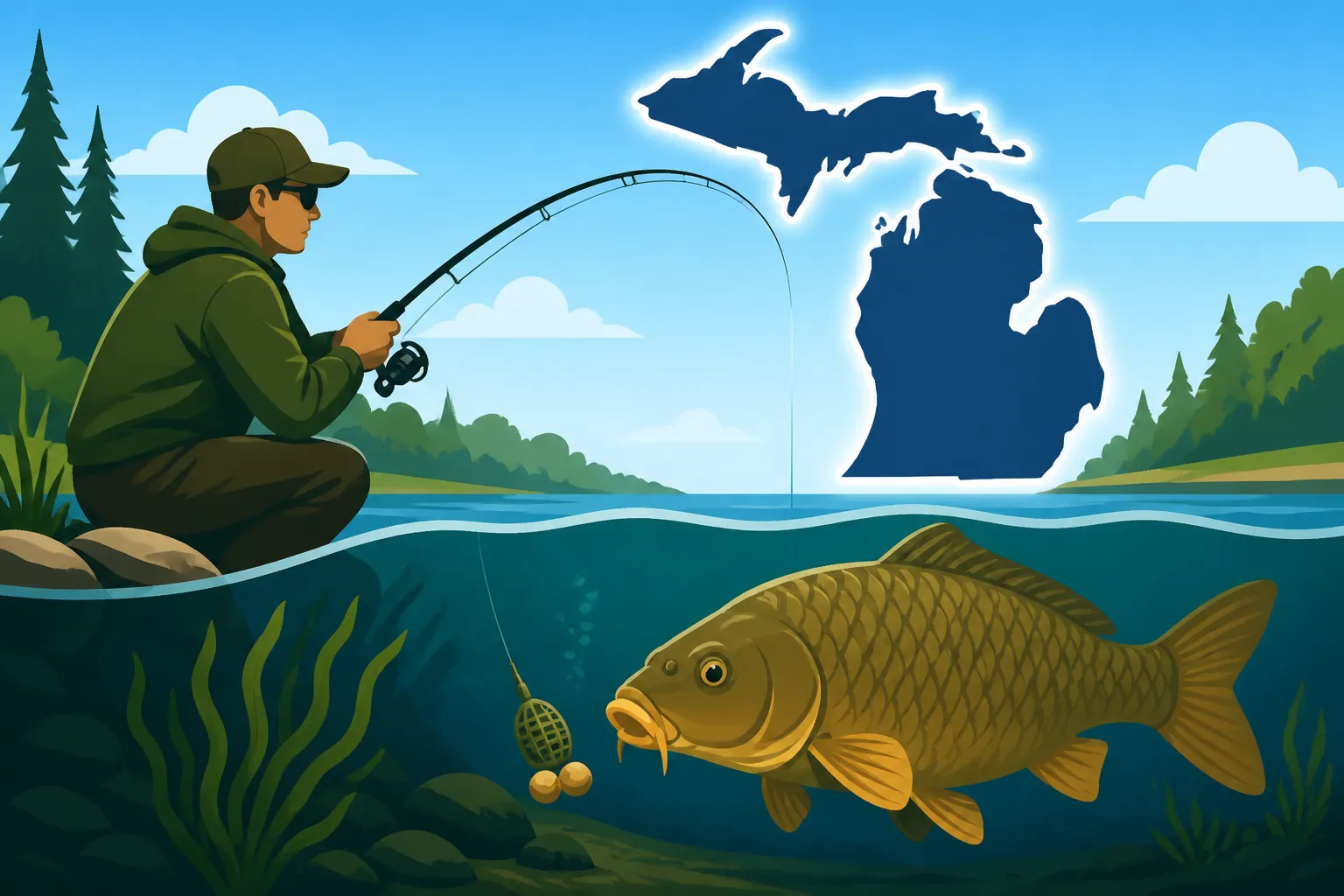
When we talk about "carp" in Michigan, we're usually referring to the common carp (Cyprinus carpio). These are the giants, often growing to impressive sizes, sometimes well over 20 pounds, with some even pushing into the 30s and 40s! They have those distinctive barbels around their mouths and a robust, golden-olive body. You might also encounter mirror carp, which are a variety of common carp with fewer, larger scales, giving them a "mirrored" appearance. Then there are also grass carp, which are more elongated and have different feeding habits, often stocked for aquatic weed control. For the purpose of sport fishing, the common carp is usually the primary target.
The Unsung Hero of Freshwater Fishing
One of the biggest frustrations for many anglers is the "skunk" – going home without a single bite. Carp fishing significantly reduces that risk. They're abundant, relatively easy to locate, and with the right approach, they're often willing to eat. This makes them a fantastic species for beginners, kids, or even seasoned anglers just looking for consistent action. Plus, you don't always need specialized, expensive gear. Much of what you might already own for bass or walleye can be adapted for carp, though some dedicated carp gear can definitely enhance the experience. They thrive in a wide range of Michigan's diverse waters, from our vast Great Lakes to our smallest inland ponds and slow-moving rivers. Michigan's Most Popular Fish Species might focus on salmon and trout, but carp deserve their own spotlight for the sheer joy they bring to many anglers.
Essential Gear and Baits for Michigan Carp Fishing
Fishing for carp successfully often comes down to two things: having the right tackle to handle their size and power, and presenting a bait they simply can't resist. You don't need to break the bank, but a few specialized items can make a huge difference.
Rods, Reels, and Line: Built for Battle
When it comes to carp, think strength and durability. These fish are notorious for strong runs and powerful headshakes, so a light panfish setup won't cut it. A medium-heavy to heavy action spinning rod, typically 7 to 10 feet long, is ideal. The extra length helps with casting further and provides better leverage when fighting a big fish. Pair this with a robust spinning reel in the 4000 to 6000 size range, capable of holding a good amount of line and delivering a smooth drag. For line, you'll want something tough. Many carp anglers opt for monofilament line in the 10-20 lb test range, as its stretch can help absorb sudden shocks from a running fish. However, braided line (20-40 lb test) with a fluorocarbon leader (15-25 lb test) is also a popular choice, offering superior sensitivity and casting distance. You can find excellent options for all these components on platforms like Amazon, often with reviews from other carp enthusiasts guiding your choices. For general gear advice, consider our guide on Best Rods and Reels for Michigan Fishing.
Baits That Carp Can't Resist
Carp are omnivores and notorious scavengers, which means they'll eat a wide variety of things. This is where carp fishing gets fun and creative! The most classic and effective baits include:
- Corn: Canned sweet corn is a carp magnet. It's cheap, readily available, and carp love it. You can fish it directly on a hook, or use multiple kernels on a hair rig (more on that technique later).
- Boilies: These are specialized, hardened dough baits that come in various flavors and sizes. They're a staple in dedicated carp fishing circles and are designed to be too tough for smaller "nuisance" fish to peck off, allowing them to wait for a carp. You can often find a good selection of boilies and associated flavors on Amazon.
- Dough Balls/Pastes: Homemade dough baits, often made from flour, cornmeal, and various flavorings (like vanilla extract, anise oil, or even Kool-Aid), can be incredibly effective.
- Worms: Large nightcrawlers can also entice carp, especially in rivers.
- Bread: Simple pieces of bread, balled up around a hook, can be a surprisingly effective and cheap option, especially for surface fishing or in highly pressured areas where carp are used to seeing it.
Pre-baiting, or chumming, an area with a generous amount of corn or other chosen bait a day or two before fishing can dramatically increase your chances of success. Just be sure to check Michigan Fishing Regulations Every Angler Should Know regarding chumming, as rules can vary.
Strategic Spots and Timing for Carp Success in Michigan
One of the great joys of carp fishing in Michigan is how accessible it is. You don't necessarily need a fancy boat or a long drive to find productive waters. Carp are prolific and can be found almost anywhere there's water.
Where to Find Carp: Lakes, Rivers, and Ponds
Carp thrive in many of Michigan's diverse aquatic environments. You'll find them in:
- Inland Lakes: Many of Michigan's large and small inland lakes are teeming with carp. Look for shallower areas, especially those with soft bottoms, weed beds, lily pads, or submerged structure. Bays, coves, and areas near marinas or public swimming beaches where they might be accustomed to human activity (and perhaps dropped food) are often hotspots. Check out our guide on Best Inland Lakes Worth Fishing – many of those same lakes hold fantastic carp populations, even if they're usually highlighted for bass or walleye.
- Rivers: Michigan's extensive river systems are prime carp territory. Slower sections, backwaters, oxbows, and areas with current breaks are excellent places to start. Look for muddy bottoms, fallen trees, and overhanging vegetation. Even rivers famous for trout and steelhead, like those mentioned in Best Rivers for Trout and Steelhead in Michigan, can hold large carp in their warmer, slower sections, offering a completely different angling experience.
- Great Lakes Tributaries and Harbors: The mouths of rivers flowing into the Great Lakes, as well as protected harbors and marinas, can be phenomenal carp spots, especially during warmer months. These areas often have abundant food sources and shelter. When considering Shore Fishing Techniques for Michigan's Great Lakes, remember that carp are often a prime target from piers and embankments.
Best Times to Target Michigan Carp
Carp are generally warm-water fish, so their activity levels are highest during the warmer months.
- Spring: As water temperatures begin to rise in April and May, carp become very active after their winter sluggishness. This is a prime time, especially before they begin to spawn. You'll often find them cruising in shallow, sun-warmed areas.
- Summer: Summer offers consistent carp action. They'll be active throughout the day, though early mornings and late evenings can be particularly productive as they feed more aggressively in cooler temperatures. Night fishing for carp can also be incredibly rewarding during the summer, as large fish often feed confidently under the cover of darkness.
- Fall: As water temperatures start to drop in September and October, carp go on a feeding frenzy to pack on weight for the coming winter. This can be one of the best times to catch large, hard-fighting fish. Their activity will decrease as the water gets colder, and ice fishing for carp is less common, though certainly possible in some areas. For general seasonal understanding, refer to Michigan Fishing Seasons Explained.
Carp are generally not subject to the same strict open and closed seasons as many game fish, meaning you can often pursue them year-round where waters are open. While other fish have Michigan Walleye Daily Possession Limit, carp often have more liberal or no possession limits, reflecting their abundance.
Techniques for Hooking and Landing Michigan Carp
So you’ve got your gear, your bait, and you know where to go. Now, let’s talk about how to actually get those powerful fish onto your line and into your net. Carp fishing is often a game of patience and proper presentation.
Setting Up Your Bait: Bottom Rigs and Hair Rigs
The most common and effective way to present bait to carp is on the bottom. Carp are often grubbing around in the sediment for food, so putting your bait right where they are makes sense.
- Basic Bottom Rig: A simple setup involves a sinker (often an egg sinker or a flat-sided "method" feeder sinker) above a swivel, with a leader (10-18 inches) tied to a hook. The sinker helps hold your bait in place against current or waves.
- Hair Rig: This is perhaps the most popular and effective carp rig. Instead of putting the bait directly on the hook, the bait (like a boilie or several kernels of corn) is tied to a small "hair" or line that extends from the hook shank. The hook itself remains exposed, improving hook-up ratios significantly. When a carp sucks in the bait, the hook follows, often lodging perfectly in the corner of its mouth. Learning to tie a hair rig can seem daunting at first, but there are countless tutorials available online, and it’s a game-changer for carp fishing. You can even find pre-tied hair rigs on Amazon if you're just starting out.
- Method Feeder: This is a specialized type of bottom fishing where a "method feeder" (a compact feeder that holds a ball of groundbait, often packed around the sinker) is used. When cast, the groundbait slowly breaks down, creating an enticing scent cloud around your hook bait, which is often presented on a short hair rig just inches from the feeder. It’s an incredibly effective way to concentrate carp in your fishing area.
Patient Waiting and the Thrill of the Take
Carp fishing is rarely a frantic, cast-and-retrieve affair. It's often about setting up your rod (or multiple rods, if regulations allow and you have multiple Michigan Fishing License Guide for Residents and Nonresidents), baiting your spot, and waiting. Use sturdy rod holders, often called bank sticks or rod pods, to keep your rods secure. Because carp can be subtle biters, especially big ones, bite alarms are incredibly useful. These small electronic devices attach to your rod and beep when line is pulled, letting you know you have a bite even if you're not constantly watching your rod tip. You can find reliable bite alarms and rod holders on Amazon, making your waiting game much more comfortable and productive.
When a carp takes the bait, it's usually unmistakable. The rod tip will bend over, and line will start peeling off your reel. Be ready to grab the rod and set the hook with a firm, sweeping motion. Then, hold on tight!
Fighting and Landing a Powerful Fish
Fighting a large carp requires patience and a good understanding of your tackle. Their initial runs can be incredibly strong, so let your drag do its job. Don't try to winch them in; you'll likely snap your line or pull the hook. Apply steady pressure, and pump the rod to gain line, reeling down when you lower the rod tip. Be prepared for strong headshakes and sudden changes in direction. Keep the fish away from snags like submerged trees or thick weed beds.
Once the fish is close, a large, strong landing net is absolutely essential. Trying to hand-land a thrashing, 20-pound carp is a recipe for disaster for both you and the fish. Once in the net, carefully unhook the fish. Many carp anglers practice catch and release, especially for larger fish, to ensure these magnificent fighters are available for others. If you plan to keep a fish, understand that while many carp have no legal size or bag limits, it's always ethical to only harvest what you will eat and to treat the fish humanely. For broader regulations, always check Michigan Fishing Regulations Every Angler Should Know.
Remember, fishing for carp is a rewarding experience that offers a unique challenge and plenty of excitement. Get out there, try these techniques, and discover the thrill of battling a true Michigan leviathan!
Disclaimer
This article is for general informational purposes only and does not constitute professional advice. Laws, prices and regulations vary by location and change over time. Consult a qualified professional for guidance on your specific situation.