How to Set Up a Tip-Up for Walleye
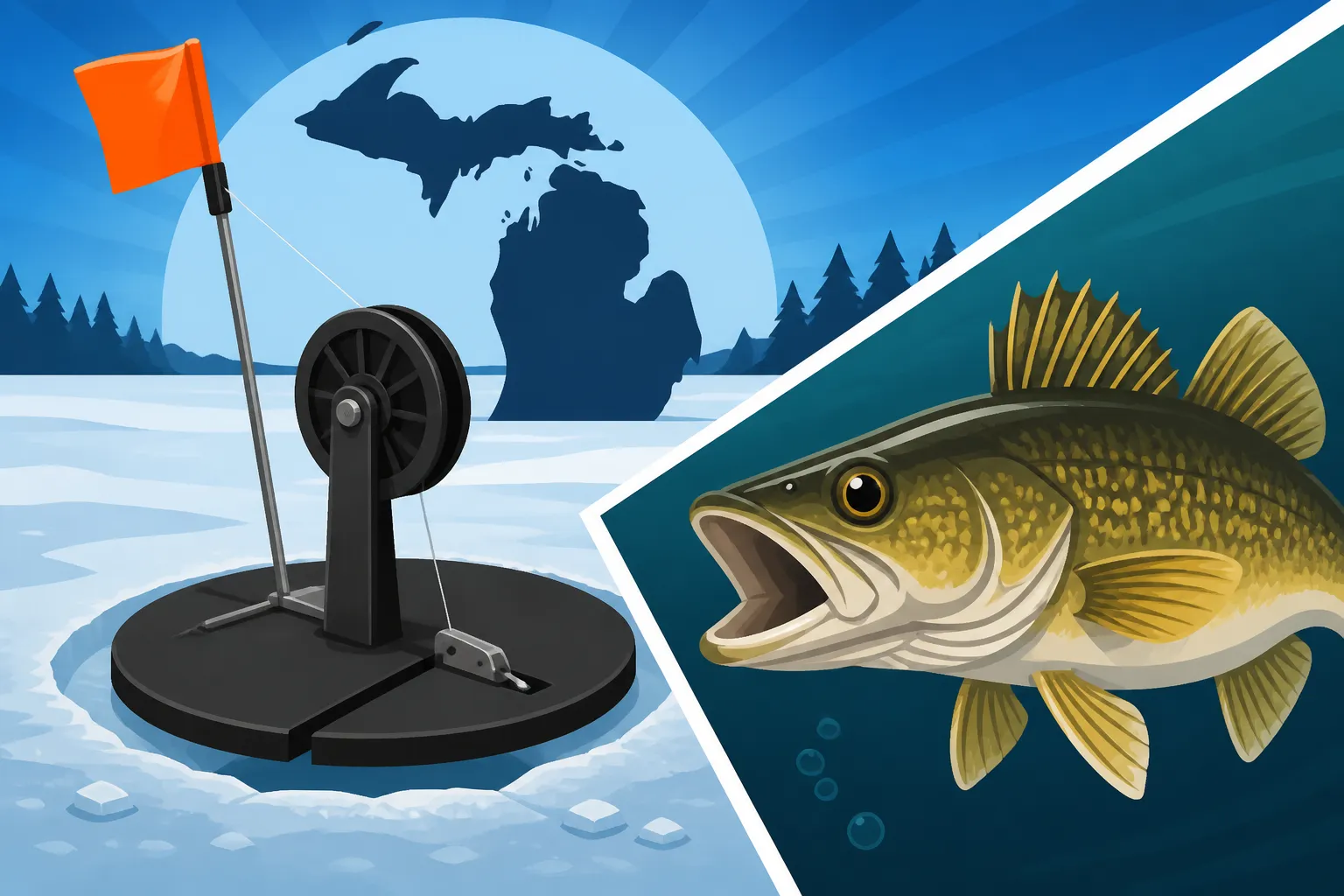
There's nothing quite like the thrill of seeing that bright orange flag fly up against a stark white Michigan winter landscape, signaling a potential walleye on the other end of your line. However, many ice anglers find themselves frustrated, either by tip-ups that don't perform well, an incorrectly rigged setup, or simply not knowing the best spots and strategies to entice those elusive walleye. This comprehensive guide will arm you with everything you need to confidently set up and deploy your tip-ups for successful walleye fishing on Michigan's frozen lakes.
Understanding the Basics of Tip-Up Fishing for Walleye
Tip-ups are a time-honored tradition in ice fishing, especially when targeting predatory fish like walleye. They allow anglers to cover more water than a single jigging rod ever could, increasing your chances of finding actively feeding fish. If you've ever felt limited by drilling just one or two holes and hoping for the best, tip-ups are your answer to expanding your reach.
Why Tip-Ups are a Game Changer for Walleye Anglers
Walleye are often cruising predators, moving along structure or over flats in search of a meal. Relying solely on a jigging rod means you're confined to a very small area. With tip-ups, you can spread your lines out, effectively creating a "net" across a wider zone. This strategy is particularly effective when you're trying to locate schools of fish or understand their movement patterns across a specific piece of structure. Imagine having five or more lines (depending on local regulations, of course, so always double-check the Michigan Fishing Regulations Every Angler Should Know) covering different depths or spots along a breakline. You're no longer waiting for a fish to swim directly under your single hole; you're inviting them to find your bait.
Beyond covering more water, tip-ups excel at presenting live bait in a natural, enticing way. Walleye, being opportunistic feeders, are often drawn to the subtle movements of a lively minnow struggling beneath the ice. A tip-up setup allows that minnow to swim freely within a certain radius, mimicking natural prey behavior far better than a dead stick or a jig ever could. It’s a passive yet highly effective method, perfect for those days when the fish are a bit finicky and prefer a stationary, easy meal.
The Core Components of a Standard Tip-Up
While there are many styles and designs, most tip-ups share a few fundamental components. At its heart, a tip-up is a device that suspends bait at a predetermined depth, and then signals a bite. You have the main body, often a wooden or plastic cross-stick or a round base, which rests on the edges of your ice hole, preventing the line from freezing in. This body typically houses a spool, which holds your fishing line.
Crucially, there's a trip mechanism connected to a flag or signal. When a fish takes the bait and pulls on the line, it trips this mechanism, causing the flag to spring up into the air, signaling a bite. Some modern tip-ups even incorporate wind-powered elements or other features to increase bait movement or sensitivity. Regardless of the bells and whistles, the core function remains the same: hold your line, present your bait, and alert you when a fish is interested. Understanding these parts will help you maintain your gear and ensure proper function, especially when you need it most on a frigid Michigan day.
Essential Gear for Your Walleye Tip-Up Setup
A successful walleye tip-up setup isn't just about having a tip-up; it's about having the right tip-up paired with the correct line, leader, hook, and bait. Skimping on any of these components can lead to frustration, lost fish, and a less enjoyable day on the ice. Think of it as building a system, where each part plays a crucial role in the overall effectiveness.
Choosing the Right Tip-Up for Walleye
When it comes to selecting a tip-up for walleye, durability and sensitivity are key. You want a unit that can withstand freezing temperatures, wet conditions, and the occasional tumble on the ice without breaking. Look for sturdy construction, often made from high-quality plastic or sealed wood. The trip mechanism should be easily adjustable for tension – this is vital for walleye, which can sometimes have a light bite, especially in cold water. Too much tension, and they'll drop the bait; too little, and the wind might set off your flag.
Many anglers prefer the traditional cross-stick style because it's simple, reliable, and keeps the reel spool deep in the water, preventing it from freezing solid. However, round tip-ups, which cover the entire hole, offer excellent freeze protection and prevent slush from building up. Brands like Frabill, Clam, and HT Enterprises are popular choices among Michigan anglers, offering various models designed for different conditions. You can often find a great selection of reliable tip-ups, along with other essential What Gear Do You Need to Ice Fish in Michigan on platforms like Amazon, making it easy to compare features and read reviews before you buy.
Line, Leader, and Hook Selection
This is where many anglers make crucial mistakes. The wrong line or hook can drastically reduce your success.
- Main Line: For your tip-up spool, a heavy-duty braided or Dacron line in the 20-30 pound test range is ideal. This main line doesn't need to be invisible; its purpose is to provide strength, resist abrasion from the ice, and be easy to handle with cold hands. You'll want a brightly colored line for visibility against the snow and ice, so you can easily track it when a flag goes up. Capacity is also important; ensure your spool can hold at least 50-75 yards of line, especially if you're fishing deeper lakes like Torch Lake or Higgins Lake.
- Leader Material: This is where invisibility becomes paramount. Walleye have excellent eyesight, especially in clear water. A 6-10 pound test fluorocarbon leader is the go-to choice. Fluorocarbon is nearly invisible underwater, extremely abrasion-resistant, and has less stretch than monofilament, which can help with hook sets. The length of your leader can vary, but 2-4 feet is a good starting point. You'll want to connect your main line to your fluorocarbon leader using a small, high-quality swivel to prevent line twist, especially if your minnow is a strong swimmer.
- Hook Selection: For live bait, a #6 or #8 treble hook, or a #2 to #4 single octopus hook, are excellent choices for walleye. The size will depend on the size of your baitfish. When using larger minnows or suckers, a quick-strike rig with two treble hooks is a very effective choice. This setup ensures a solid hook-up by allowing you to set the hook almost immediately after the fish grabs the bait, without giving it time to swallow it deep. For a deeper dive into hook styles and other gear, you might find articles on Best Tackle for Michigan Walleye Fishing helpful.
Best Baits and Weights for Walleye Tip-Ups
Live bait is king for tip-up walleye fishing. The natural movement and scent are often irresistible to hungry walleye under the ice.
- Live Bait: Fathead minnows are a staple, but shiners, golden shiners, and even small suckers (depending on local regulations and bait size limits) are incredibly effective, especially for larger walleye. The key is to keep your bait lively! Use a good bait bucket, an aerator, and refresh the water regularly to ensure your minnows are full of vigor when they go down the hole. A struggling minnow signals an easy meal to a passing walleye. You can pick up a variety of minnow types from local bait shops, or even find specialized bait buckets and aerators on Amazon to keep them kicking longer.
- Weight: A small split shot or a bullet sinker is typically all you need. The weight's primary purpose is to get your bait down to the desired depth and keep it from swimming up the hole. You'll want to place the weight about 6-12 inches above your hook. This allows the baitfish ample room to swim naturally, yet keeps it within the strike zone. Too much weight, and your minnow won't be lively; too little, and it might just swim circles near the surface. Experiment with different weights to find what works best for the size of your bait and the current conditions.
Step-by-Step Guide to Rigging Your Walleye Tip-Up
Getting your tip-up rigged correctly is crucial for success. A poorly spooled reel or a weak knot can cost you a trophy fish. This section will walk you through the process, ensuring you're ready for action.
Spooling Your Tip-Up with Main Line
First things first, you need to get that heavy main line onto your tip-up's spool. Start by tying the end of your braided or Dacron line securely to the spool using an arbor knot or a similar strong knot. Begin winding the line onto the spool, making sure it lays on evenly and tightly. You'll want to fill the spool almost to capacity, leaving about 1/8 to 1/4 inch of space from the edge to prevent line overrun and tangles.
A good practice is to wind the line under a bit of tension. You can do this by having a friend hold the spool of line with a gloved hand to create drag, or by running the line through a damp cloth. This ensures a tight, even spool that won't backlash or develop memory. Remember, this main line will be handled by hand, so ensuring it's free of kinks and tangles from the start will save you headaches when you're pulling in a fish.
Attaching the Leader and Hook System
Once your main line is spooled, it's time to add your leader and hook. Start by cutting a 2-4 foot section of your fluorocarbon leader material (6-10 lb test). Now, carefully tie one end of the fluorocarbon leader to the main line using a strong, reliable knot. The blood knot or a double uni-knot are excellent choices for connecting two lines of different diameters. Make sure these knots are cinched down properly and trimmed neatly.
Next, tie your chosen hook (treble or single octopus) to the other end of the fluorocarbon leader. A Palomar knot is a fantastic choice for hooks, known for its strength and reliability. If you're using a quick-strike rig, follow the manufacturer's instructions for tying it onto your leader, ensuring the hooks are positioned to maximize the chance of a good hook set. Before you deploy, always check your knots by giving them a firm tug. There's nothing worse than losing a fish due to a preventable knot failure. This entire process is part of getting your Michigan Ice Fishing Guide setup ready.
Setting the Trip Mechanism and Depth
This step is critical for actually catching fish. You need to adjust the tension on your tip-up's trip mechanism so that a walleye can take the bait without feeling too much resistance, but not so loose that the minnow's struggles or a gust of wind triggers the flag. Most tip-ups have a simple adjustment mechanism, often a small wire or spring, that allows you to increase or decrease the pressure required to trip the flag.
When you drop your bait down the hole, you'll want to set it just off the bottom, typically 6-18 inches up. Walleye often cruise close to the lakebed, and presenting your bait slightly above it makes it highly visible against the bottom. To find the exact depth, use a small depth finder or simply tie a lead weight to the end of your line, drop it to the bottom, mark your line with a bobber stop or a small piece of tape, then reel up the desired amount before attaching your bait. With the bait at the correct depth, engage the trip mechanism. The flag should be down, and the line should be free to spin off the spool when pulled. You're now ready for a flag-raising moment! Remember, mastering How to Catch Walleye Through the Ice in Michigan often comes down to these finer details.
Optimizing Tip-Up Placement and Strategy for Michigan Walleye
Once your tip-ups are rigged, simply dropping them anywhere isn't enough. Walleye are creatures of structure and routine, and strategic placement can dramatically increase your success rate. Think like a walleye – where would you hide, hunt, and travel?
Identifying Prime Walleye Locations on the Ice
Walleye on the ice often relate to similar structures they frequent during open water season. Look for areas with:
- Drop-offs: These are key travel routes and ambush points. Set tip-ups along the breakline, at various depths, to intercept walleye moving between shallow feeding flats and deeper resting areas.
- Humps and Reefs: Submerged islands or raised areas on the lake bottom attract baitfish, and thus, walleye. Position tip-ups around the edges and on top of these structures.
- Weed Edges: Healthy green weeds provide oxygen, cover for baitfish, and ambush points for walleye. Find the deep edge of weed beds and place tip-ups strategically.
- Points: Submerged points extending into the lake funnel fish movement.
- Inlets/Outlets: If you're on a lake with moving water, these areas can concentrate fish, though current can make tip-up fishing challenging.
Consider the time of day, too. Walleye are often most active during low-light periods – dawn, dusk, and even after dark. During these times, they might move shallower to feed. During midday, they often retreat to deeper water or denser cover. Using a portable fish finder to scout specific depths and identify baitfish or structure can give you a significant advantage. Some of the Best Ice Fishing Lakes in Michigan are known for their specific walleye habits, so research local patterns.
Spacing and Number of Tip-Ups
Michigan regulations allow anglers to use up to two lines when ice fishing, which includes tip-ups. This means you can have two tip-ups, or one tip-up and one jigging rod, or two jigging rods. It's crucial to know the specific regulations for the body of water you're fishing. For instance, sometimes boundary waters like Lake St. Clair or the Detroit River might have different rules. Always consult the current Michigan fishing digest or visit the DNR website for the latest on Michigan Fishing Regulations Every Angler Should Know.
When spacing your tip-ups, think about covering different parts of the structure you've identified. If you're on a drop-off, set one shallow, one mid-depth, and one deep. If you're on a hump, set one on top and others around the perimeter. Don't be afraid to experiment with distances, too. Sometimes walleye are spread out, and other times they're schooling tightly. Pay attention to which holes are producing and adjust your spread accordingly. If one tip-up flags, consider moving another tip-up closer to that productive spot.
Monitoring, Setting the Hook, and Handling Your Catch
Once your tip-ups are deployed, the waiting game begins. Keep a constant eye on your flags. When a flag goes up, don't just sprint to the hole and yank! A flying flag indicates a bite, but a walleye often "runs" with the bait for a short distance before stopping to swallow it.
Approach the hole calmly and slowly. Carefully take the line from the spool. You'll often feel the fish still pulling line, or a slight tension. Let the fish run for a few more seconds to ensure it has fully committed to the bait. Then, gently but firmly, lift the line, feeling for the weight of the fish, and set the hook with a strong, upward sweep of your hand. This is often referred to as "hand-lining." Once hooked, steadily pull the fish up the hole, keeping constant tension. Avoid slack line, which can allow the fish to throw the hook.
When you get the walleye to the surface, be ready to grab it. Have a pair of gloved hands ready, or use a gaff if allowed and appropriate for larger fish. Walleye have sharp teeth and gill plates, so handle them carefully. If you plan to release the fish, minimize its time out of the water, and use wet hands to protect its slime coat. Consider brushing up on specific Michigan Walleye Fishing Techniques for more advanced strategies.
| Component | Recommended Walleye Tip-Up Setup | Key Considerations |
|---|---|---|
| Tip-Up Type | Cross-stick or Round | Durability, sensitive trip mechanism, freeze protection |
| Main Line | 20-30 lb Braided or Dacron | High visibility, strength, abrasion resistance |
| Leader | 6-10 lb Fluorocarbon | Invisibility, abrasion resistance, less stretch |
| Swivel | Small, High-Quality Barrel/Crane | Prevents line twist, connects main line to leader |
| Hook | #6 or #8 Treble / #2-#4 Octopus | Size appropriate for bait, sharp, strong |
| Quick-Strike | Optional, highly effective | Two treble hooks, ensures solid hook-up |
| Weight | Small Split Shot / Bullet Sinker | Position 6-12 inches above bait, keeps bait at depth |
| Bait | Fathead, Shiner, Sucker Minnows | Lively bait is crucial, use aerator |
| Depth | 6-18 inches off bottom | Walleye often cruise near bottom structure |
| Flag Tension | Light to medium | Sensitive enough for light bites, prevents wind trips |
Disclaimer
This article is for general informational purposes only and does not constitute professional advice. Laws, prices and regulations vary by location and change over time. Consult a qualified professional for guidance on your specific situation.