How to Fish a Harbor for Salmon in Michigan
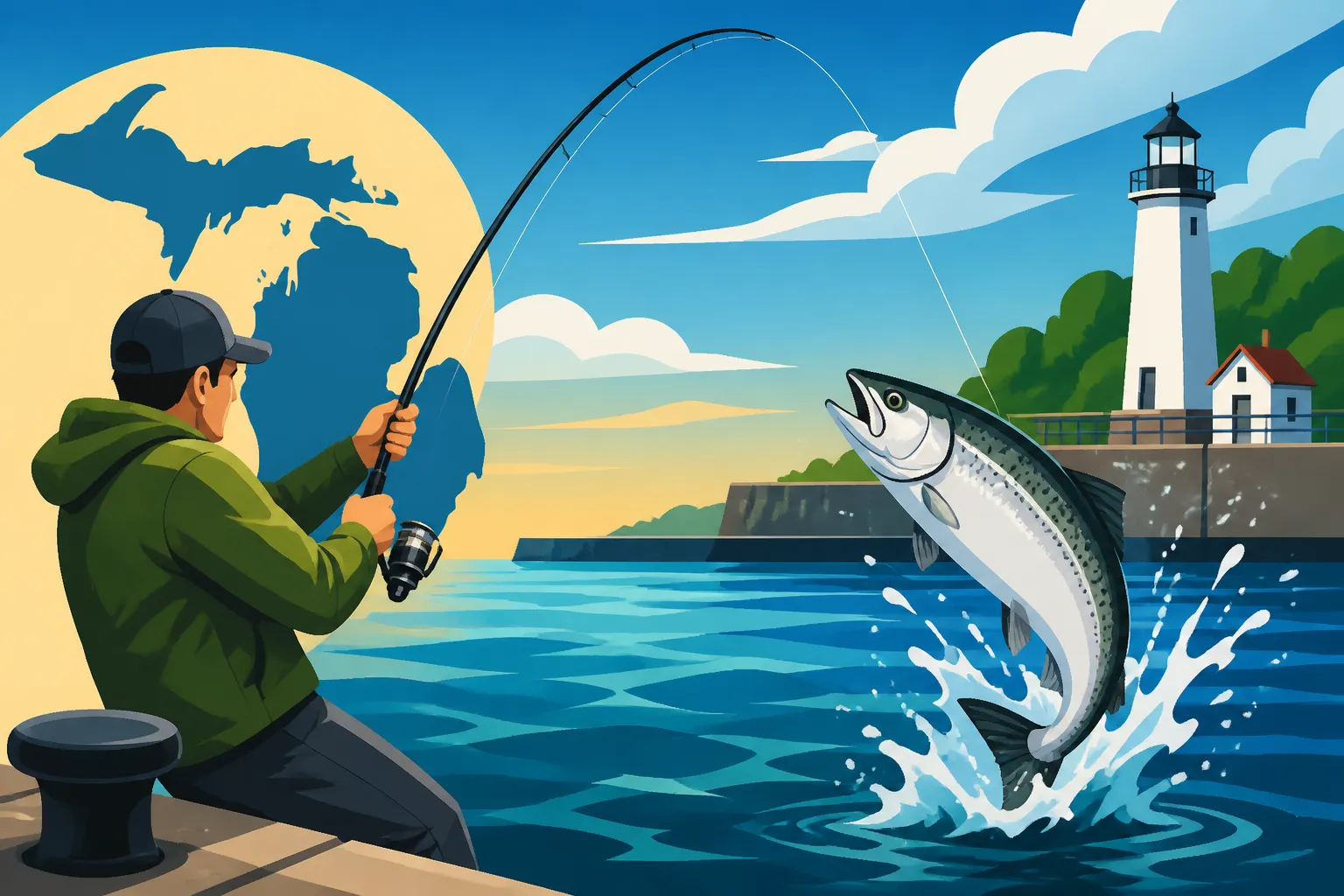
Many anglers dream of landing a magnificent salmon in Michigan, but often they picture themselves out on the vastness of the Great Lakes, battling waves on a big boat. The truth is, some of the most accessible and exciting salmon fishing happens right in the relative calm of Michigan's harbors. This guide is here to walk you through the ins and outs of fishing these often-overlooked hotspots, helping you understand salmon behavior and master the techniques needed to find success from shore, piers, or small boats within the harbor walls.
Understanding Michigan Salmon and Their Harbor Habits
It can be incredibly frustrating when you know salmon are somewhere but can't quite pinpoint where. Harbors, with their sheltered waters and proximity to river mouths, become prime real estate for salmon at certain times of the year. Understanding which salmon you're likely to encounter and why they choose to hang out in these specific areas is your first step toward cracking the code.
Species You'll Encounter in Michigan Harbors
When you're talking about salmon in Michigan, you're primarily focusing on two big players: Chinook and Coho salmon. While they both belong to the salmon family and are incredible fighting fish, they have some distinct differences that influence how and when you might find them in harbor settings.
Chinook salmon, often called "Kings," are the giants of Michigan's salmon fishery. These fish grow incredibly large, often pushing into the 20 to 30-pound range, and their brute strength makes for an unforgettable fight. They are typically found in harbors during their spawning migration, usually peaking in late summer and early fall. They've spent years out in the open waters of the Great Lakes, packing on size, and now they're returning to the rivers they were stocked in or born to. As they stage near river mouths, many will mill about in the deeper, cooler waters of nearby harbors, waiting for the right conditions to push upstream. You can learn more about these powerful fish in our detailed guide on Chinook Salmon in Michigan's Great Lakes.
Coho salmon, or "Silvers," are generally smaller than Chinooks, usually ranging from 5 to 12 pounds, though larger ones are caught. Don't let their size fool you, though; Coho are incredibly acrobatic and put on a spectacular aerial show once hooked. Like Chinooks, Coho also enter harbors during their spawning runs, but their timing can be a bit earlier, often starting in late summer and continuing well into fall. They also tend to be a bit more aggressive strikers, sometimes making them a bit easier to tempt with a variety of lures. We cover their specific behaviors and how to target them in our guide to Coho Salmon Fishing in Michigan. Both species, along with other trout and salmon species, contribute to the diverse fishery discussed in Michigan Salmon Species Explained.
Why Salmon Enter Harbors
Salmon don't just randomly swim into harbors; there's a method to their madness, driven by powerful biological instincts. When you're fishing a harbor, you're essentially looking for fish that are in a transitional phase. They've left the vastness of the Great Lakes but haven't fully committed to the upstream journey yet.
One of the primary reasons salmon congregate in harbors is staging. As the spawning season approaches, adult salmon migrate from the open lake towards the river systems where they intend to spawn. Harbors, especially those at the mouths of major rivers like the Manistee River or the Grand River, serve as natural holding areas. The salmon will hang out in these relatively sheltered, often deeper, and cooler waters, conserving energy while they wait for suitable water levels, temperatures, or rainfall to trigger their final push upstream. This waiting game can sometimes last for days or even weeks.
Secondly, harbors often offer thermal refuge. During warmer periods of late summer, the main lake might experience surface temperatures that are less than ideal for salmon. Harbors, with their deeper channels and sometimes cooler tributary input, can provide pockets of more comfortable water. Similarly, during early fall, sudden cold snaps might make the open lake less appealing, driving fish into the more stable thermal environment of a harbor.
Lastly, harbors often concentrate baitfish. While spawning salmon typically aren't actively feeding once they begin their migration, they still react to baitfish presence. A harbor mouth that funnels schools of alewives or smelt can attract staging salmon who, even if not truly hungry, will instinctively strike at something moving erratically nearby. This concentration of both predators and potential prey makes harbors dynamic fishing environments.
Essential Gear and Tackle for Harbor Salmon Fishing
Stepping into a tackle shop or browsing online for Michigan fishing gear can be overwhelming, with countless options promising the moon. When it comes to harbor salmon, you need gear that's robust enough for a powerful fight but also versatile enough for diverse harbor conditions. Don't just grab any old rod; precision and strength are key. You’ll want to equip yourself for Michigan's Fall Salmon Run Fishing, specifically.
Rods, Reels, and Line for Harbor Salmon
Let's talk about the backbone of your setup: the rod and reel. These aren't panfish you're after; these are hard-fighting salmon that will test your equipment.
Rods: For harbor salmon, a medium-heavy to heavy action spinning or casting rod, typically between 8 to 10 feet in length, is ideal. The longer rod provides better casting distance, which is crucial for reaching those deeper channels or breaking schools of baitfish from a pier. It also gives you more leverage to fight a strong fish, especially important if you're battling a big Chinook in close quarters. Look for rods with a good backbone but a forgiving tip to absorb headshakes and lunges without tearing the hook out. Popular brands like St. Croix or Fenwick offer excellent options that can stand up to the challenge. While a specific "salmon rod" isn't always necessary, a good quality "steelhead rod" can often pull double duty effectively; you can get more specific insights from our guide on the Best Rod for Steelhead Fishing.
Reels: A high-quality spinning or baitcasting reel in the 3000-5000 series (spinning) or 200-300 series (baitcasting) is what you'll need. The key here is a smooth, strong drag system and ample line capacity. A salmon can peel off a lot of line in a hurry, and a sticky or weak drag will lead to broken lines and lost fish. Brands like Shimano, Daiwa, or Penn are reliable choices known for their durable reels. Ensure the reel is spooled properly, and consider picking up a secondary spool if you plan on experimenting with different line types. Our guide on the Best Reel for Steelhead Fishing offers comparable advice that applies well to salmon. You can find many great options for both rods and reels on Amazon.
Line: When it comes to line, you have a few choices, and each has its pros and cons.
- Monofilament (Mono): A classic choice, 12-20 lb test mono offers good abrasion resistance, stretch (which acts as a shock absorber), and is relatively inexpensive. The stretch can be a downside if you need immediate hook-setting power from a distance, but it's forgiving.
- Braided Line: 20-40 lb test braid has no stretch, offering incredible sensitivity and direct hook sets. Its thin diameter for its strength allows for longer casts. However, braid has poor abrasion resistance against sharp rocks or pier pilings, and its lack of stretch means you'll need a rod with a more forgiving action. Always use a fluorocarbon or monofilament leader with braid to absorb shock and provide invisibility to wary fish.
- Fluorocarbon (Fluoro): Often used as a leader material (15-25 lb test), fluoro is nearly invisible underwater and has excellent abrasion resistance. It has less stretch than mono but more than braid. Some anglers spool their entire reel with heavier fluorocarbon, but it can be stiffer and more expensive.
A good hybrid approach is to spool with braided line and attach a 4-6 foot fluorocarbon leader with a strong knot, such as a double Uni knot or an Albright knot. This gives you the best of both worlds: casting distance and sensitivity from the braid, and stealth and abrasion resistance from the fluoro leader.
Lures and Baits That Get Results
Salmon in harbors can be finicky. Sometimes they'll strike anything, other times they require a specific presentation. Having a diverse tackle box is crucial. Many anglers stock up on their favorite lures from Amazon before the season kicks off.
Casting Spoons: These are absolute classics for salmon in harbors. Spoons mimic wounded baitfish and have an irresistible wobbling action. Popular choices include the Little Cleo, Krocodile, and Daredevle spoons. Sizes typically range from 2/5 oz to 1 oz, and colors like silver, chartreuse, blue/silver, or orange/gold are perennial favorites. Cast them out, let them sink to the desired depth, and retrieve with a varied speed, adding jerks and pauses to entice strikes.
Crankbaits and Stickbaits: When salmon are aggressive or actively chasing bait, these can be deadly. Long, slender crankbaits and stickbaits, often referred to as "jerking baits" or "twitch baits," are designed to imitate larger baitfish. Rapala Husky Jerks, Smithwick Rogues, or Yo-Zuri Crystal Minnows are excellent options. Experiment with sizes (3-6 inches) and colors, focusing on natural baitfish patterns or bright, aggressive colors like firetiger or chartreuse. Fish them with a "twitch-twitch-pause" retrieve to make them dart erratically.
Soft Plastics and Jigs: Sometimes, a slower, more subtle presentation is needed, especially when fish are lethargic or holding close to the bottom. Heavy jigs (1/2 oz to 1 oz) tipped with soft plastic bodies, scent-infused worms, or even a piece of real bait (like a minnow head or shrimp) can be effective. Popular soft plastics include Berkley Gulp! or Mister Twister grubs in white, chartreuse, or natural baitfish colors. Fish these with a lift-and-drop retrieve, bouncing them along the bottom or slowly swimming them through the water column.
Natural Bait: While many anglers prefer artificial lures, never underestimate the power of natural bait, especially when fish are tight-lipped.
- Spawn Bags: Small mesh bags filled with cured salmon or trout eggs are incredibly effective, mimicking the natural food source during spawning season. Use a small hook (size 6-10) and fish them under a bobber or on the bottom.
- Cut Bait/Sardines: Pieces of cut bait, such as alewives, smelt, or even sardines, can be fished on a hook near the bottom. The scent trail can attract salmon from a distance.
- Shrimp: Freshwater shrimp or pieces of cured shrimp can also be a surprisingly effective bait for staging salmon.
Always check the current Michigan Fishing Regulations Every Angler Should Know to ensure your bait choices are legal for the specific waters you're fishing.
| Lure Type | Best Use Case | Retrieval Technique | Common Colors |
|---|---|---|---|
| Casting Spoons | Active fish, mimicking wounded baitfish | Cast and retrieve with varied speed, jerks, and pauses | Silver, Chartreuse, Blue |
| Crankbaits | Aggressive fish, imitating larger bait | Twitch-twitch-pause, erratic darting | Firetiger, Natural Bait |
| Soft Plastics/Jigs | Lethargic fish, bottom presentation | Lift-and-drop, slow swim, bounced along bottom | White, Chartreuse, Black |
| Spawn Bags | Scent-based, natural food source | Under a bobber, still-fishing on bottom | Red, Orange, Pink |
Proven Techniques for Harbor Salmon Success
Knowing what gear to use is only half the battle. How you present that gear makes all the difference. Harbor fishing presents unique challenges compared to open-lake trolling or river wading, so specific techniques are essential. Many of these techniques overlap with broader Shore Fishing Techniques for Michigan's Great Lakes.
Casting and Retrieving Strategies
Casting is probably the most common and effective method for harbor salmon from shore or piers. It allows you to cover a lot of water and present your lure to actively cruising fish.
Fan Casting: Don't just cast straight out. Fan casting involves making casts in a wide arc, starting from one side (e.g., far left), making a cast, retrieving, then casting slightly to the right, and repeating until you've covered a wide section of water in front of you. This methodical approach ensures you're not missing any potential fish holding areas. Pay particular attention to current seams, sudden depth changes, or areas around structure like old pilings or boat docks, which often hold fish.
Varying Your Retrieve: This is perhaps the single most important aspect of successful lure fishing. Salmon can be picky, and what works one day might not work the next.
- Speed: Experiment with fast, medium, and slow retrieves. Sometimes a blazing fast retrieve triggers a reaction strike, while other times a slow, methodical wobble is what they're looking for.
- Pauses: Incorporate pauses into your retrieve. Many strikes occur when a lure stops or begins to fall, mimicking a confused or injured baitfish.
- Jerks and Twitches: Use your rod tip to impart jerks or twitches to your lure. This makes spoons flash erratically and crankbaits dart unpredictably.
- Depth: Pay attention to the depth you're fishing. Salmon often hold near the bottom, especially in deeper channels. Let your lure sink for a count before starting your retrieve to ensure it's in the strike zone. If you see baitfish near the surface, you might want to retrieve higher in the water column.
Remember, salmon are often "staging" in harbors, meaning they aren't actively feeding but are reacting to instinct or aggression. An erratic, wounded baitfish presentation is often what triggers a strike.
Still Fishing and Slip Bobber Setups
While casting covers water, sometimes the salmon are holding tight in a specific area, or they're less aggressive and require a more stationary presentation. This is where still fishing and slip bobber rigs shine.
Still Fishing with Bait: This technique is exactly what it sounds like: casting out a bait and letting it sit. This is particularly effective with natural baits like spawn bags, cut bait, or even a live minnow (if legal).
- Bottom Fishing: Use a small egg sinker or a split shot above your hook (with bait) to keep your offering near the bottom. Cast it out and let it sit. The scent will draw fish in. This is especially good in deeper harbor channels or near drop-offs. Use a sensitive rod tip or keep a close eye on your line for subtle bites.
- Anchor: If fishing from a small boat or kayak in the harbor, anchoring can allow you to present bait precisely in a known holding area without drifting. Just be mindful of boat traffic and regulations.
Slip Bobber Rigs: The slip bobber is a highly versatile and incredibly effective tool for harbor salmon, especially when they are suspended at a specific depth or when you need a natural drift with your bait.
- How it works: A slip bobber slides freely up and down your main line, stopping at a "bobber stop" (a small knot or plastic sleeve) which you can adjust to set your desired fishing depth. This allows you to cast a bait that's suspended 10, 20, or even 30 feet deep, something impossible with a fixed bobber.
- Setup: Thread your main line through a bobber stop, then through the slip bobber. Tie on a small swivel, and then a leader (2-4 feet) to your hook. Add split shot weights above the swivel to balance the bobber and get your bait down.
- Presentation: This method is excellent for fishing spawn bags, worms, or small pieces of cut bait. Cast it out, let the bait sink to the depth you've set, and let the current or a slight retrieve drift it naturally. Watch the bobber intently for any dips or movements. Sometimes a salmon will just "mouth" the bait, causing only a slight tremor in the bobber. This technique allows for a very natural presentation, as your bait drifts freely with the current, mimicking something that has detached or is an easy meal.
Remember, patience is a virtue with both still fishing and slip bobber techniques. These methods often require a longer wait but can yield impressive results when other tactics fail.
Timing Your Harbor Salmon Fishing Trips
Success in harbor salmon fishing isn't just about gear and technique; it's heavily influenced by timing. Being in the right place at the right time is paramount, and Michigan's changing seasons and daily conditions play a huge role. Understanding when to fish and what conditions to look for can significantly increase your chances. This goes hand-in-hand with understanding Michigan Fishing Seasons Explained and specifically the Best Months for Salmon Fishing in Michigan.
Best Seasons and Times of Day
Salmon fishing in Michigan harbors is largely a seasonal affair, with particular windows offering peak opportunities.
Peak Season: Late Summer to Fall: Without a doubt, the prime time for harbor salmon fishing is from late summer through the fall, typically August through November. This period coincides with the annual spawning migrations of both Chinook and Coho salmon. As river temperatures begin to cool and water levels become conducive, salmon begin to stage in and around harbor mouths, waiting to make their push upstream.
- August: Often marks the beginning of the Chinook run, with larger fish starting to show up.
- September & October: These are generally the peak months, with strong numbers of both Chinook and Coho. This is also when the salmon can be most aggressive.
- November: As water temperatures drop further, the bite can slow, but persistent anglers can still find success, especially with later-run Coho or straggler Chinooks.
Time of Day: While salmon can be caught at any time, certain periods often prove more productive.
- Dawn and Dusk: These are classic low-light periods that often trigger increased fish activity. Salmon, being predators, use the reduced visibility to their advantage, making them more comfortable moving into shallower harbor areas or striking lures.
- Night Fishing: Don't overlook night fishing! Salmon will often move into very shallow water in harbors after dark, especially if there's significant boat traffic during the day. Using glow-in-the-dark lures or those with rattles can be very effective under the cloak of darkness.
- Overcast Days: Heavily overcast days, or even light rain, can mimic low-light conditions and keep fish active throughout the day, offering excellent mid-day opportunities.
Reading Water Conditions for Optimal Success
Beyond the calendar and clock, paying close attention to environmental conditions can be the difference between a productive day and a frustrating one. This is key for any angler pursuing the Michigan's Great Lakes Fishing Regulations Guide.
Water Temperature: Salmon are cold-water species, preferring temperatures generally between 45-60°F. In late summer, they will seek out cooler pockets within harbors. A sudden drop in lake temperature can push more fish into the warmer, more stable harbor environment. Conversely, if harbor temperatures rise too high, they might retreat to deeper, cooler areas or out to the main lake. A good quality fish finder or a simple water thermometer can give you invaluable insight.
Water Clarity: Optimal water clarity for salmon is often slightly stained, but not muddy. After heavy rains, rivers can dump a lot of silt and debris into harbors, making the water very murky. While some fish might still bite in stained water, extremely muddy conditions usually shut them down. Look for areas where the water is clearer or where the murkiness transitions to clearer water, as salmon often stack up on these "color lines." Conversely, gin-clear water can make salmon very wary, requiring stealthier presentations and lighter leaders.
Current and Flow: Harbors at river mouths are constantly influenced by river flow. A strong, consistent current can be a good thing, as it brings in fresh, cool water and can concentrate baitfish. Salmon will often sit just out of the main current, conserving energy, waiting for food to drift by. Look for eddies, current seams, or areas behind structures where the current is broken. Pay attention to changes in river flow – a surge in water levels after a rain can trigger a fresh push of salmon into the river and through the harbor.
Wind and Waves: While harbors offer more protection than the open lake, strong winds can still affect fishing. A steady wind can create a current within the harbor, concentrating bait and creating prime feeding lanes. However, excessive wind can make casting difficult and make it hard to detect subtle bites. Pay attention to which way the wind is blowing; a wind blowing into the harbor mouth can push baitfish in, potentially attracting salmon.
By combining an understanding of these seasonal and daily conditions with your knowledge of gear and techniques, you'll be well on your way to consistent success in Michigan's vibrant harbor salmon fishery. It truly transforms the experience from a random act into a strategic pursuit.
There's nothing quite like the thrill of a Michigan salmon taking your lure in a harbor, the fight electrifying your rod as it tears across the water, making those initial runs that define these incredible fish. Whether you're casting spoons from a pier, drifting spawn under a slip bobber from a small boat, or even trying your luck at night, harbor fishing offers accessible and rewarding opportunities for anglers of all skill levels. With the right gear, a strategic approach, and a keen eye for conditions, you'll be well-equipped to hook into some truly memorable salmon and experience the unique charm of Michigan's Great Lakes harbors.
Disclaimer
Please note that fishing regulations, seasons, and license requirements in Michigan are subject to change. Always consult the latest Michigan Department of Natural Resources (DNR) fishing guide or website for the most current and accurate information before heading out on the water. This guide is for informational purposes only and does not supersede official regulations.