Best Rod Length for River Steelhead
There’s nothing quite like the electrifying pull of a Michigan steelhead, but feeling undergunned or overly cumbersome with your fishing setup can quickly turn a thrilling battle into a frustrating struggle. Many anglers grapple with finding that sweet spot for their river rods, wondering if their current pole is truly optimized for the powerful runs and subtle takes of these magnificent fish. This guide will meticulously break down how rod length impacts your success on Michigan’s renowned steelhead rivers, helping you make informed decisions for your next angling adventure.
Why Rod Length Matters for River Steelhead
The length of your fishing rod isn't just a number; it's a critical component that dictates how effectively you can present your bait, control your line, and ultimately, land a feisty steelhead. In the dynamic environment of a Michigan river, where currents shift, snags lurk, and fish make lightning-fast moves, every inch of your rod plays a significant role in your overall angling experience.
Managing Line and Lure Presentation
One of the primary benefits of a longer rod, especially when targeting steelhead in rivers, is its ability to help you manage your line. Imagine you're standing on the bank of the Manistee River, trying to drift a delicate spawn bag through a productive seam. A longer rod allows you to hold more line off the water, minimizing drag from conflicting currents and achieving a more natural, uninterrupted drift. This is crucial because steelhead are incredibly sensitive to unnatural presentations; any drag on your line can make your bait or lure behave unnaturally, signaling danger to the fish.
Furthermore, a longer rod provides superior reach. This means you can extend your lure into prime holding water that might be just out of reach with a shorter rod, or navigate around tricky obstacles like fallen logs and submerged rocks. For those tight, overgrown spots where every foot counts, a longer rod helps you guide your line and lure precisely where you want it, making subtle adjustments to compensate for varying water speeds and depths. It truly puts you in the driver's seat of your presentation, allowing for that perfect, enticing drift that's so often key to hooking up.
Hooksets and Fighting Power
Beyond presentation, rod length dramatically influences your hookset and your ability to fight a powerful fish like a steelhead. When you get that subtle take, a longer rod allows you to pick up more line slack with less effort, driving the hook home quickly and efficiently. Think of it like a lever; a longer lever requires less force to move an object a greater distance. This mechanical advantage is vital when you're dealing with long drifts and a lot of line out, ensuring a solid connection when a steelhead decides to strike.
Once the hook is set, a longer rod continues to work in your favor, particularly when you're battling a hard-fighting steelhead in a strong current. The increased length distributes the stress more evenly across the rod blank, creating a parabolic bend that acts as a shock absorber. This protects your line from sudden surges and head shakes, making it much harder for the fish to break off. Additionally, the extra length provides better leverage against the fish, allowing you to steer it away from snags and guide it towards your net with more control. It's not just about overpowering the fish; it's about outsmarting it with superior control and a smoother, more forgiving fight.
The Sweet Spot: Ideal Rod Lengths for Michigan Steelhead
When we talk about the "best" rod length for Michigan steelhead, it's really about finding the right length for your specific technique and the conditions you're fishing. There isn't a one-size-fits-all answer, but there are definitely preferred ranges that experienced anglers gravitate towards for different scenarios on our diverse rivers.
Longer Rods for Drifting and Float Fishing
For many Michigan steelhead enthusiasts, especially those who prefer drifting spawn bags, beads, or small jigs under a float, longer rods are often the weapon of choice. We're generally talking about rods in the 9 to 13-foot range, with some specialized float rods even reaching 15 feet or more. The reasoning here goes back to line control and presentation. When you're "float fishing for Michigan river steelhead," you're often making long drifts, and holding as much line as possible off the water is paramount to prevent drag. A long rod excels at this, allowing you to meticulously guide your float and bait downstream at the same speed as the current.
Consider a scenario on the Pere Marquette River where a subtle seam runs along a bank, requiring a precise 50-foot drift. A 10.5-foot rod, for instance, gives you the reach to mend your line upstream of your float, effectively countering different current speeds and keeping your bait in the strike zone longer. This superior line management translates directly into more natural presentations and, consequently, more hookups. These longer rods also cushion the fight wonderfully, absorbing the shock of a steelhead's powerful runs and head shakes, which is particularly beneficial when using lighter lines and leaders.
Shorter Rods for Tight Quarters and Casting Control
While longer rods dominate the float fishing scene, there are certainly times and places where a shorter rod, typically in the 7 to 9-foot range, shines for Michigan steelhead. If you find yourself on smaller, brush-lined tributaries or in spots with heavy overhead cover, a lengthy rod quickly becomes a hindrance. Imagine trying to make an accurate cast under an overhanging cedar branch on a tight stretch of the Two Hearted River with a 12-foot rod – it's practically impossible!
Shorter rods offer enhanced casting control and maneuverability. They allow for tighter, more precise casts, which can be essential when targeting specific pockets or eddies in confined spaces. Anglers who prefer casting lighter spoons, spinners, or even small crankbaits might also lean towards shorter rods for their greater sensitivity and easier handling. While you might sacrifice some line control on longer drifts, the ability to accurately place your lure and react quickly in close-quarters fishing can be a significant advantage. It's a trade-off, but for certain conditions, the agility of a shorter rod makes it the smarter choice.
Matching Rod Length to Specific Michigan Fishing Techniques
Michigan steelhead can be caught using a variety of methods, and each technique often has a preferred rod length range that maximizes its effectiveness. Understanding these distinctions is key to building a versatile steelhead arsenal.
Centerpinning and Float Fishing Considerations
When it comes to techniques like "centerpinning for Michigan steelhead" and traditional float fishing, rod length is king. These methods rely heavily on the ability to achieve long, drag-free drifts, and for that, you need a long rod. Most dedicated centerpin rods range from 11 to 15 feet, with 13 feet being a very popular all-around choice. The extra length allows for precise line mending, effortlessly lifting line off the water to maintain that perfect, natural drift. Without this length, your float and bait would be pulled unnaturally by currents, scaring off wary steelhead.
Think of it this way: a longer rod lets you cover more water from a single casting position, reaching those distant seams and current breaks without having to constantly reposition yourself. It also provides an incredible shock absorber during the fight. When a chrome steelhead rips downstream, a long, limber rod disperses that energy beautifully, preventing break-offs on light leaders. You might even find some excellent quality 13-foot float rods available on Amazon, perfectly suited for the task. The length isn't just a preference; it's a fundamental requirement for the technique to work as intended.
Spinner and Spoon Casting
If your go-to method for steelhead involves slinging spinners, spoons, or small crankbaits, your rod length preferences might shift. While you still want enough length for good casting distance, excessive length can hinder the rhythmic casting motion and feel required for these lures. For "how to fish a spinner for Michigan steelhead," a rod between 8.5 and 9.5 feet is often considered ideal. This length provides a good balance of casting distance, accuracy, and lure control.
A rod in this range allows you to make precise casts to structure, swift current seams, or other likely holding spots. It also offers enough sensitivity to feel the subtle vibrations of your lure and detect strikes. For anglers targeting aggressive steelhead that are willing to chase down a flashy presentation, these rods are perfect. The slightly shorter length also makes it easier to work your lure, imparting action and controlling its depth with quick rod tip movements. While some anglers might go a bit longer or shorter based on personal preference or the size of the water they're fishing, this range provides a strong foundation for effective spinner and spoon fishing.
Fly Fishing for Steelhead
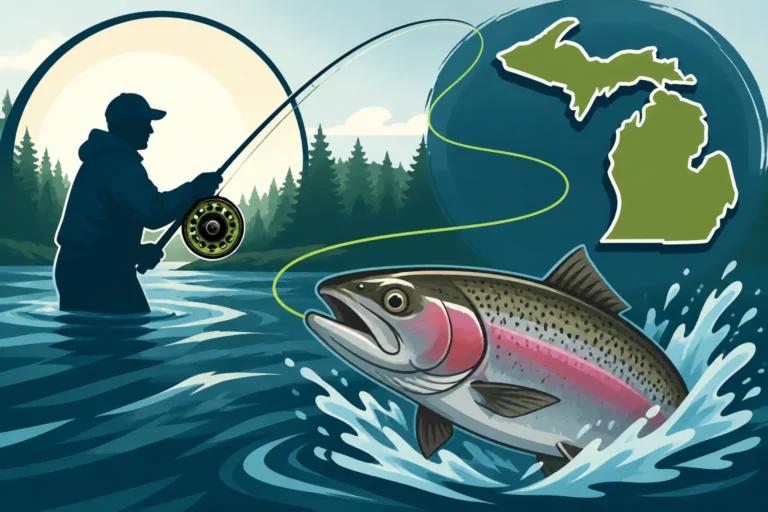
"Fly fishing techniques for Michigan steelhead" also have their own rod length considerations. While specific fly rod lengths can vary greatly depending on the technique (single-hand swinging, spey casting, nymphing), a common starting point for traditional single-hand fly fishing for steelhead in Michigan rivers is a 9 to 10-foot rod. A 9-foot, 8-weight rod is often considered a versatile all-around choice. The extra foot of length compared to a standard trout rod provides better line control, especially when mending line during a drift or high-sticking nymphs through complex currents.
For two-handed spey or switch rods, which are incredibly popular for swinging flies on larger rivers like the Muskegon River, lengths typically range from 11 to 14 feet for switch rods and even longer, 12 to 15 feet, for spey rods. These rods are designed to cast long distances with minimal backcasting room, making them perfect for covering expansive runs. The length and progressive action of these rods are specifically engineered to handle heavy sink tips and large flies, and to fight powerful anadromous fish effectively. Just like with conventional gear, the chosen rod length in fly fishing is intrinsically linked to the technique and the specific demands of targeting steelhead.
Navigating River Conditions and Angler Preferences
Beyond specific techniques, the physical characteristics of the rivers you fish and your own personal angling style will heavily influence your ideal rod length choice. Michigan's steelhead rivers are incredibly diverse, from the wide-open expanse of the Grand River to the intimate, tree-lined creeks of the Upper Peninsula.
The Impact of River Size and Bankside Cover
The size and character of the river you're fishing are paramount. On larger, wider rivers with open banks, such as the lower stretches of the Manistee or the St. Joseph River, a longer rod (10-13 feet) can be an enormous advantage. It allows you to cover more water, reach distant seams, and keep your line clear of conflicting currents and shallow riffles. The freedom of an open bank means you don't have to worry as much about snagging your rod tip on overhead branches during your cast or drift. In these big water scenarios, the benefits of extra reach and line control truly shine.
However, once you venture into smaller, more intimate tributaries or stretches with heavy bankside cover, those long rods can quickly become a liability. Imagine trying to make a precise roll cast with a 13-foot rod under a canopy of tag alders – it's nearly impossible. In such situations, a shorter rod, perhaps 8.5 to 9.5 feet, offers the necessary maneuverability to get your lure or bait into tight pockets and make accurate casts without constantly snagging branches. Anglers who frequently fish these "brushy" spots might even opt for even shorter rods, accepting a trade-off in line control for superior ease of use in cramped quarters. It's all about matching your gear to the environment you're in.
Personal Comfort and Casting Style
Ultimately, your personal comfort and casting style play a significant role in determining your preferred rod length. What feels "right" to one angler might feel awkward or unwieldy to another. Some anglers naturally prefer the feel of a shorter, snappier rod for casting, finding it more intuitive for precision. Others might appreciate the smooth, effortless loading of a longer rod, especially for techniques like spey casting where a graceful, continuous motion is key.
Consider your physical build, too. A taller angler might handle a 12-foot rod with ease, while a shorter angler might find anything over 10 feet to be cumbersome, leading to fatigue and less effective fishing. The best way to truly figure out what works for you is to get hands-on. If possible, try out different rod lengths, perhaps borrowing a friend's setup or visiting a specialized tackle shop that allows you to "test cast" various models. Investing in a rod that feels comfortable and natural in your hands will significantly improve your overall experience and, crucially, your effectiveness on the water. Many anglers start their search for the perfect stick by browsing options on Amazon, which offers a wide array of choices to compare.
Choosing the Right Action and Power to Complement Length
Rod length doesn't exist in a vacuum; it works in tandem with rod action and power to create a truly effective steelhead fishing tool. Understanding these characteristics will help you make a more informed decision and ensure your rod performs optimally for its intended purpose.
Understanding Rod Action and Its Role
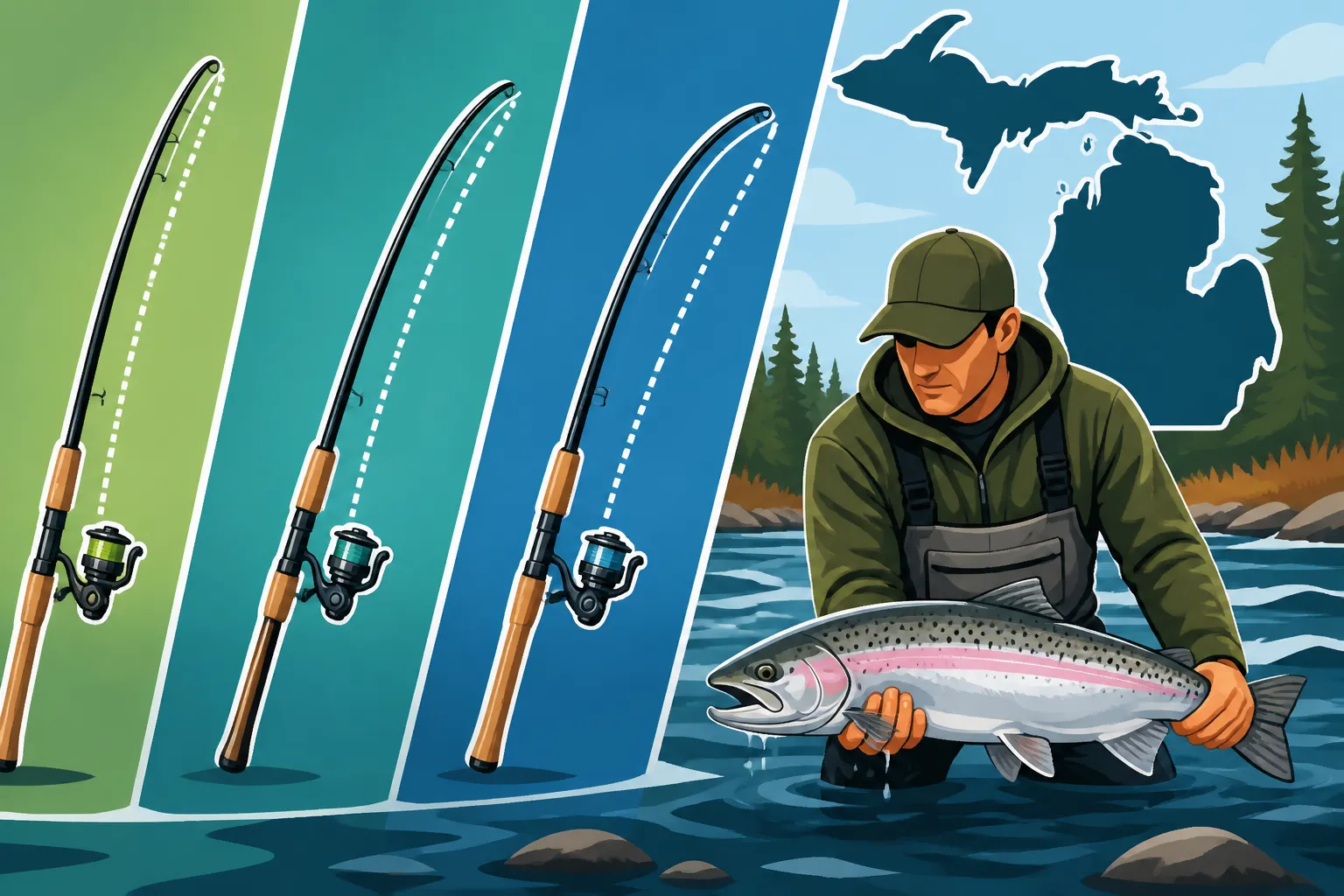
Rod action refers to where a rod bends when pressure is applied. It's generally categorized as fast, moderate-fast, or moderate (sometimes called slow). For Michigan steelhead, you'll typically be looking at rods with a moderate-fast to fast action.
- Fast Action: A fast-action rod bends primarily in the tip section. This provides excellent sensitivity, allowing you to feel subtle bites, and offers quick, powerful hooksets. It's often preferred for jigging or when fishing with lures that require precise control and immediate feedback. However, fast action rods can be less forgiving when fighting a powerful fish on light line, as they have less give throughout the blank to absorb surges.
- Moderate-Fast Action: This is arguably the most versatile action for river steelhead fishing. A moderate-fast rod bends in the upper half of the blank, offering a good balance of sensitivity, casting distance, and fighting power. It allows for solid hooksets while still providing enough flex to absorb headshakes and runs, protecting your leader. This action is excellent for a wide range of techniques, including drifting, float fishing, and casting lighter lures.
- Moderate Action: A moderate-action rod bends more deeply into the blank, sometimes even into the handle section. While less common for aggressive steelhead techniques, these rods can be fantastic for casting lighter lures or for techniques where a more parabolic bend is desired for maximum shock absorption. They excel at protecting ultra-light lines but might feel less responsive for detecting subtle takes.
The action of the rod dictates how quickly you can set the hook and how much "feel" you have for your presentation. Pairing the right action with your chosen length and technique is crucial for maximizing your chances of success.
Rod Power for Michigan Steelhead
Rod power, also known as rod weight, refers to the amount of force required to bend the rod blank. It typically ranges from Ultra-Light to Heavy. For Michigan steelhead, you'll generally be looking at rods in the Medium-Light to Medium-Heavy power range, depending on the specific application and the size of the fish you expect to encounter.
- Medium-Light Power: These rods are often preferred for techniques that involve lighter lines and smaller baits or lures, such as drifting single beads or small spawn bags, especially when water levels are low and clear, and fish are wary. A medium-light rod will load easily with lighter presentations, allowing for delicate casts and a more sensitive feel. However, you'll need to play fish carefully, as these rods have less backbone.
- Medium Power: A highly versatile power rating for Michigan steelhead. Medium power rods can handle a wide range of lure weights and line sizes, making them suitable for everything from float fishing to casting spoons. They offer a good balance of casting performance, sensitivity, and the backbone needed to turn a strong steelhead in current.
- Medium-Heavy Power: For anglers targeting large, aggressive steelhead or fishing in heavy current with heavier lures and lines, a medium-heavy rod provides the necessary power. This rating gives you significant leverage to control a hard-fighting fish and is excellent for larger spoons, spinners, or even heavier float setups. However, they can be less sensitive with lighter presentations.
Choosing the right power is about ensuring your rod can effectively cast your chosen lures and provide enough backbone to fight the fish without being excessively stiff or too flimsy. A perfectly matched rod will allow you to cast efficiently, feel every subtle bump, and confidently bring a hard-fighting steelhead to the net.
Where to Find Your Perfect Steelhead Rod
Finding the perfect steelhead rod is an exciting part of the angling journey, and thankfully, you have a plethora of options available, from browsing online to getting hands-on at your local shop.
Online Retailers and Local Tackle Shops
When it comes to purchasing fishing gear, many anglers start their search online. Retailers like Amazon offer an unparalleled selection of "best rods for steelhead fishing" from countless brands, often with detailed product descriptions, specifications, and customer reviews. This can be a fantastic way to research different models, compare prices, and explore a variety of lengths, actions, and powers from the comfort of your home. You might find a great deal on a highly-rated rod without the pressure of an in-person sale. Online forums and communities are also excellent resources for getting recommendations and insights into specific rod models that perform well on Michigan rivers.
However, nothing truly beats the experience of visiting a local tackle shop. Shops like Frank's Great Outdoors in Linwood, or other specialized fly shops along Michigan's major steelhead rivers, offer expertise that online shopping simply can't match. You can physically hold different rods, feel their balance, and get a sense of their true action. The staff at these shops are often seasoned local anglers themselves, providing invaluable advice specific to the rivers you plan to fish, current conditions, and even local techniques. They can also help you pair your chosen rod with the right reel and line, ensuring a balanced and effective setup. Sometimes, the slightly higher price point at a local shop is well worth the personalized guidance and ability to physically examine the product before committing.
Researching Brands and Reading Reviews
Before making a significant investment in a steelhead rod, it's always a good idea to do your homework. There are many reputable brands known for producing high-quality steelhead rods, such as St. Croix, G. Loomis, Fenwick, Shimano, Daiwa, and Lamiglas, among others. Each brand often has its own unique technologies and design philosophies. For instance, St. Croix's Legend Tournament Steelhead & Salmon rods are highly regarded by many Michigan anglers. Take the time to explore what different manufacturers offer and read independent reviews from other anglers.
Pay attention to reviews that mention specific performance attributes relevant to steelhead fishing, such as sensitivity, casting distance, fighting power, and durability. Does the rod hold up to hard use? Is the customer service good if something goes wrong? Look for feedback from anglers who fish similar techniques and in similar river environments to yours. While a rod might be highly rated for bass fishing, its characteristics might not translate perfectly to the demands of a Michigan steelhead run. A thorough investigation into brands and angler experiences will help you confidently choose a rod that will serve you well for many seasons to come.
| Rod Length Range | Primary Techniques | Key Advantages | Best For | Typical Michigan River Scenarios |
|---|---|---|---|---|
| 7-9 feet | Casting Spoons/Spinners, Jigging, Small Streams | Casting Accuracy, Maneuverability, Sensitivity | Tight spots, brushy banks, smaller rivers | Small tributaries, upstream pockets, specific casting targets |
| 9-11 feet | All-Around Spinning/Casting, Nymphing (Fly) | Versatility, Good Casting Distance, Moderate Line Control | Mixed conditions, larger lures, single-hand fly fishing | Medium-sized rivers, open bank casting, varied techniques |
| 11-13 feet | Float Fishing, Centerpinning, Switch/Spey (Fly) | Superior Line Control, Long Drifts, Shock Absorption | Long drifts, managing current, large rivers | Lower Manistee, Muskegon, St. Joe, open stretches |
| 13-15+ feet | Specialized Centerpinning, Long Spey Casting | Maximum Line Control, Ultra-Long Drifts, Exceptional Leverage | Extremely long drifts, very large rivers, advanced techniques | Saginaw Bay tributaries, wider sections of Great Lakes tributaries |
Disclaimer
The information provided in this guide is for general informational purposes only and is not intended as legal advice regarding Michigan fishing regulations. Fishing laws and regulations, including those pertaining to specific gear, can change frequently. Always consult the most current Michigan Department of Natural Resources (DNR) fishing guide or website before heading out on the water. Following all applicable rules and regulations is the angler's responsibility.