Michigan Fishing License Options for Out-of-State Visitors
It can be incredibly frustrating to plan a dream fishing trip to Michigan, only to realize at the last minute that the licensing requirements for out-of-state visitors are a little different than what you're used to back home. Nobody wants to deal with fines or have their trip cut short because of a simple misunderstanding. This comprehensive guide will walk you through all the Michigan fishing license options available to nonresidents, ensuring you're fully prepared and legal to cast your line in the Great Lakes State.
Why Nonresident Anglers Need a Michigan Fishing License
Navigating the rules for fishing in a new state can feel like deciphering a secret code, and Michigan is no exception. Many visitors often assume that if they're just coming for a short trip, or perhaps only plan to fish from a friend's boat, they might be exempt. However, the truth is quite clear: if you're not a Michigan resident and you're 17 years of age or older, you absolutely need a valid Michigan fishing license to participate in any fishing activities. This includes everything from casting a line from a pier on Lake Michigan to fly fishing a secluded trout stream in the Upper Peninsula.
The reason for this isn't just to be bureaucratic; it's fundamental to preserving Michigan's incredible fisheries for everyone. The funds generated from fishing license sales go directly back into conservation efforts, habitat restoration, fish stocking programs, and enforcement of regulations. So, while buying a license might seem like another item on your to-do list, it’s actually your contribution to keeping Michigan's waters healthy and teeming with fish for generations to come. Ignoring this requirement can lead to hefty fines and even confiscation of your gear, turning a relaxing getaway into a stressful ordeal. You definitely don't want to explain to a conservation officer why you thought you were exempt while holding a stringer of walleye!
Defining Residency for Michigan Fishing Licenses
Understanding what exactly constitutes a "resident" versus a "nonresident" for fishing license purposes is the first critical step. It’s not just about owning property here or visiting frequently; there are specific criteria. Generally, to be considered a Michigan resident for licensing, you must have resided in Michigan for a continuous period of at least six months immediately preceding your application for a license. This six-month period establishes your primary domicile.
Exceptions and nuances can sometimes arise. For instance, active-duty military personnel permanently stationed in Michigan, even if their home of record is elsewhere, may qualify for resident rates. Similarly, full-time students enrolled at a Michigan college or university might also qualify, provided they meet certain conditions. However, for the vast majority of out-of-state visitors coming for vacation, a nonresident license will be your only option. It’s always best to err on the side of caution and assume you are a nonresident unless you definitively meet the state's specific and strict residency requirements. Don't risk a misunderstanding; play it safe and secure the appropriate license. For a deeper dive, check out our guide on Michigan Fishing License Residency Requirements Explained.
Understanding Nonresident Fishing License Options
Michigan offers a variety of fishing license options tailored for non-residents, understanding that visitors might only be here for a short vacation or a specific fishing event. These options are designed to provide flexibility, allowing you to choose a license that best fits the duration and style of your trip. The key is to select the license that covers your planned fishing days without overpaying for time you won't use.
The two main categories you'll be looking at are the annual license and short-term licenses. Each has its own set of advantages depending on your situation. It's not a one-size-fits-all solution, and a little planning can save you money and hassle. For instance, a quick weekend trip might not justify the cost of a full annual license, but an extended stay or multiple visits throughout the year might make it the most economical choice.
Annual Nonresident Fishing License
For out-of-state anglers who plan to make multiple trips to Michigan throughout the year, or for those enjoying an extended stay, the Annual Nonresident Fishing License is often the most cost-effective choice. This license is valid from March 1st of the purchasing year through March 31st of the following year, regardless of when you buy it. This means if you buy it in August, it's still good until March 31st of the next year, essentially covering more than a full year of fishing if purchased early enough in the license year. This full coverage is perfect if you enjoy both summer and ice fishing opportunities in Michigan.
The cost for this license is higher than the short-term options, but the value becomes clear if you fish for more than just a few days. Imagine planning a summer trip to target smallmouth bass on Lake St. Clair, and then deciding last minute to come back in the fall for salmon on the Manistee River. With an annual license, you're already covered, saving you the expense and effort of buying another short-term license. It simplifies your fishing plans, allowing for spontaneous trips without the extra administrative step of securing a new license each time. For more information on the exact cost, see our article on Michigan Nonresident Annual Fishing License Cost.
Short-Term Nonresident Fishing Licenses
Michigan understands that not every visitor needs a full year of fishing access. That's why they offer convenient short-term options specifically designed for brief visits. These are perfect for a weekend getaway, a week-long family vacation, or a spur-of-the-moment fishing detour. Currently, the most popular short-term option for nonresidents is the 24-hour license.
The 24-hour fishing license is exactly what it sounds like: it's valid for 24 continuous hours from the time of purchase. This is fantastic for a single day of focused fishing, perhaps trying to hit a specific run on a river or spending a day on one of Michigan’s beautiful inland lakes. If you're only going to be on the water for a day or two, this option usually saves you money compared to the annual license. Keep in mind that "24 hours" means literally 24 hours, so if you buy it at 8:00 AM on Saturday, it expires at 8:00 AM on Sunday, regardless of when you actually started fishing. This type of license is often discussed in detail in guides like Michigan 24-Hour Fishing License Explained and confirms that Can Nonresidents Buy a Michigan 24-Hour Fishing License?.
Historically, Michigan has also offered a 72-hour (3-day) nonresident license, which provides a bit more flexibility than the 24-hour option for those longer weekend trips. However, license options and pricing can change, so always double-check the Michigan DNR website or an authorized license retailer for the most current offerings before your trip. It's a minor check that prevents major headaches!
Here's a quick comparison of typical nonresident license options:
| License Type | Validity Period | Best For | Approximate Cost (Nonresident) |
|---|---|---|---|
| Annual All-Species Fishing | March 1st – March 31st (next year) | Multiple trips or extended stays | ~$75-80 |
| 24-Hour All-Species Fishing | 24 consecutive hours | Single day of fishing | ~$10-15 |
| Youth All-Species (Under 17) | March 1st – March 31st (next year) | Not required for most under 17, but optional for catch-and-keep | Free (if required) / Minimal |
Note: Costs are approximate and subject to change by the Michigan DNR. Always verify current prices before purchase.
How to Purchase a Michigan Nonresident Fishing License
Once you've decided which type of nonresident license fits your fishing adventure, the next step is to actually get your hands on it. Michigan has made the process quite convenient, offering several ways to purchase a license, whether you prefer the ease of online shopping or the personal touch of a local retailer. This flexibility ensures that no matter where you are or how you plan, you can secure your license without unnecessary stress.
It’s always a good idea to purchase your license before you head out to your chosen fishing spot. While some remote bait shops might be available, relying on them last minute can be risky. Having your license in hand, or readily accessible on your smartphone, means you can hit the water the moment you arrive, maximizing your precious fishing time. Plus, you avoid the awkward situation of being asked for your license by a conservation officer when you don't have one!
Buying Online Through the DNR E-License System
The most convenient and increasingly popular way to buy a Michigan fishing license is through the Michigan Department of Natural Resources (DNR) e-license system. You can access this system from anywhere with an internet connection, whether you're at home planning your trip or in your hotel room in Michigan.
Here’s how it generally works:
- Visit the DNR Website: Navigate to the official Michigan DNR website and look for the "Licenses" or "Buy a License" section.
- Create or Log In to Your Account: If you're a first-time user, you'll need to create a customer account. This usually involves providing some personal information like your name, address, date of birth, and identifying as a nonresident. If you've purchased licenses in Michigan before, you can simply log in.
- Select License Type: Choose the "Fishing" category and then select the specific nonresident license you need (e.g., Annual All-Species, 24-Hour All-Species).
- Complete Purchase: Follow the prompts to enter payment information and complete the transaction.
- Print or Save: After purchase, you'll receive a digital copy of your license. You can print this out to carry with you, or save it as a PDF on your smartphone. Many anglers find the convenience of the digital license on their phone to be a game-changer.
This online system is efficient and available 24/7, making it incredibly simple to comply with regulations before your boots even hit the ground in Michigan. For a step-by-step guide, you can refer to How to Buy a Michigan Fishing License Online.
Using the Michigan DNR Hunt Fish App
For even greater convenience, the Michigan DNR offers the "DNR Hunt Fish App," available on both iOS and Android devices. This app is a fantastic tool for modern anglers and hunters, allowing you to manage your licenses right from your phone.
With the app, you can:
- Purchase Licenses: Just like the e-license system, you can buy all available fishing licenses directly through the app.
- Store Licenses: Your purchased licenses are stored digitally within the app, meaning you don't need to carry a paper copy (though having a screenshot or printout as a backup is never a bad idea).
- Report Harvests: For species like muskellunge, which have specific reporting requirements, the app provides a convenient way to register your catch. Learn more about this crucial tool in our article, Michigan DNR Hunt Fish App for Licenses and Reporting.
- Access Regulations: The app often includes digital versions of the current fishing regulations, putting all the rules at your fingertips.
This app truly streamlines the process, making it easy to stay legal and informed while on the go. Imagine you're browsing fishing gear on Amazon, and suddenly remember you need to renew your Michigan fishing license; you can do it right there on your phone!
Purchasing In-Person at Authorized License Retailers
For those who prefer a more traditional approach or need to ask specific questions, you can always purchase a Michigan fishing license in person. There are thousands of authorized license retailers located throughout the state, including bait and tackle shops, sporting goods stores, some county clerks' offices, and even some big box retailers like Walmart or Meijer.
When purchasing in person:
- Locate a Retailer: Before your trip, you can use the DNR's website to find authorized license dealers near your destination. Simply search "Where to Buy a Michigan Fishing License in Person" for up-to-date locations.
- Bring Identification: You'll need to present a valid form of identification, typically a driver's license or state ID. This is to verify your identity and confirm your nonresident status.
- Specify License Type: Clearly state which nonresident fishing license you wish to purchase. The staff will guide you through the process.
- Receive Your Paper License: You'll be issued a physical paper license immediately upon purchase.
Buying in person is a great way to support local businesses and often provides an opportunity to pick up some local bait or get some real-time fishing tips from the folks behind the counter. For those who enjoy a tangible license to slip into their wallet, this remains a popular option.
Important Regulations for Nonresident Anglers
Acquiring your Michigan fishing license is a fantastic first step, but it’s crucial to remember that the license is just your ticket to fish. To truly enjoy your trip without incident, you must also adhere to Michigan's specific fishing regulations. These rules are designed to manage fish populations, protect fragile ecosystems, and ensure fair sport for all anglers. Ignorance of the law is never an excuse, and conservation officers are vigilant in enforcing these guidelines.
Michigan's fishing regulations can be quite detailed, varying by species, body of water, and even time of year. While the core spirit of the regulations is generally consistent, specific nuances can catch even experienced anglers off guard. Always carry a copy of the current Michigan Fishing Guide (either physical or digital) and review it thoroughly before heading out.
Understanding Bag and Size Limits
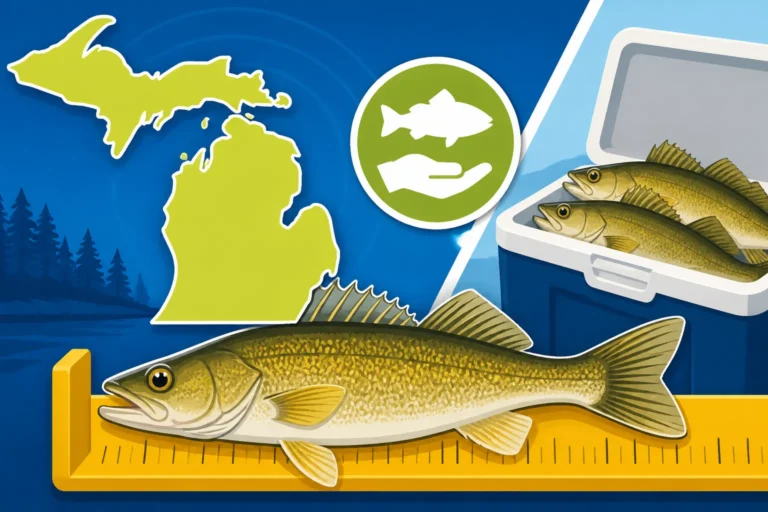
One of the most critical aspects of Michigan fishing regulations revolves around bag and size limits. These limits dictate how many fish of a particular species you can keep (bag limit) and the minimum or sometimes maximum length a fish must be to be legally harvested (size limit). These are not arbitrary numbers; they are scientifically determined to ensure sustainable fish populations.
For nonresidents, these limits are generally the same as for residents, but it's important to be aware of how they can differ across different bodies of water or for specific species. For example:
- Walleye: While there's a statewide minimum size limit, certain lakes might have slot limits (e.g., you can't keep walleye between 18-23 inches) or different daily possession limits. Our article on Michigan Walleye Size and Possession Limits goes into detail.
- Trout and Salmon: Species like Chinook salmon, Coho salmon, and various trout species often have combined bag limits across all trout and salmon species, with specific minimum sizes. Be sure to check the exact rules for the body of water you'll be fishing, especially if you're on the Great Lakes or their tributaries.
- Muskellunge: This prized game fish has very strict regulations, including a high minimum size limit (often 42-50 inches, depending on the lake) and a one-fish-per-year harvest limit for residents and nonresidents alike. If you're lucky enough to land one, you must immediately register your catch with the DNR. Learn more about Michigan Muskellunge Harvest Reporting Rules.
Always measure your fish accurately from the tip of the snout to the end of the tail and count your catch carefully. It's a good idea to have a measuring device readily accessible, and perhaps even a fish ID chart if you're targeting multiple species, which you can easily find on Amazon.
Fishing Season Dates and Special Regulations
Just as important as bag and size limits are the fishing season dates. Not all fish species are open for harvest year-round, and seasons can vary significantly between inland waters and the Great Lakes, or even between the Upper and Lower Peninsulas.
Key examples include:
- Walleye Opener: The walleye season has specific opening dates that differ between Michigan's Lower and Upper Peninsulas. Planning your trip around these dates is essential if you're specifically targeting walleye. See Lower Peninsula Trout and Walleye Opener and Upper Peninsula Walleye Season Opener for more details.
- Trout Season: While the Great Lakes generally have a year-round open season for trout and salmon, inland trout streams often have a defined open season, typically starting in late April. There might also be special regulations for specific "designated trout streams" that only allow artificial lures or flies. Make sure to consult the "Michigan Fishing Regulations Every Angler Should Know" guide.
- Free Fishing Weekends: Michigan offers specific "Free Fishing Weekends" throughout the year where both residents and nonresidents can fish without a license. While this is a fantastic opportunity, all other fishing regulations (bag and size limits, gear restrictions) still apply. Keep an eye out for information like Free Fishing Weekend in February and Summer Free Fishing Weekend in June.
Beyond seasons, some waters have special regulations such as "catch-and-immediate-release" zones, gear restrictions (e.g., only single-pointed hooks, no live bait), or specific rules for certain species like lake sturgeon. Before visiting a new body of water, always check the current Michigan Fishing Guide, which is available as a PDF on the DNR website and is essential reading for every angler, regardless of residency. You might even find a laminated version of the rules on Amazon to keep handy in your tackle box.
Navigating Boundary Waters and Great Lakes Rules
Michigan is uniquely blessed with vast stretches of Great Lakes coastline and shared boundary waters, which can sometimes add a layer of complexity for nonresident anglers. Fishing these expansive and sometimes inter-state waters often involves specific rules that differ slightly from inland lake or river fishing. Understanding these nuances is vital to ensure you're compliant, especially if you're venturing near state lines.
The sheer size and ecological diversity of the Great Lakes mean that regulations are often finely tuned to manage these incredible, yet sensitive, resources. Don’t assume that because you have a Michigan license, you’re covered for every possible scenario on these vast waters.
Fishing the Great Lakes and Connecting Waters
When fishing Michigan's portions of the Great Lakes (Lakes Superior, Michigan, Huron, and Erie) and their connecting waters (like the St. Marys River, St. Clair River, and Detroit River), your Michigan nonresident fishing license covers you fully within Michigan's jurisdiction. This means you can fish freely within the state's boundaries on these magnificent bodies of water. For a full breakdown, our Michigan Great Lakes Fishing Regulations Guide is an invaluable resource.
However, the Great Lakes are shared with other states and even Canada. This is where things can get tricky:
- Interstate Waters: If you are fishing a border water like Lake Superior, Lake Michigan, or Lake Erie, and you cross into the waters of another state (e.g., Wisconsin on Lake Michigan, Ohio on Lake Erie), your Michigan license does not automatically cover you. You would need a valid fishing license for that respective state. This is especially true if you anchor, cast, or land fish in the other state's waters.
- International Waters (Canada): If you venture into Canadian waters, even just across a river like the St. Clair or Detroit River, you must have an Ontario (or relevant Canadian province) fishing license and adhere to their regulations. Your Michigan license is absolutely not valid in Canada.
Always be aware of your location, especially when fishing near state or international borders on the Great Lakes. Modern GPS units on boats or even fishing apps on your phone can help you monitor your position relative to state lines. A small navigational error could lead to a significant fine if you accidentally fish in another jurisdiction without the proper license.
Rules for Charter Fishing Operations
Many nonresident anglers opt for the convenience and expertise of a Michigan charter fishing operation, especially when targeting salmon on the Great Lakes or muskellunge on Lake St. Clair. It's a fantastic way to experience Michigan's world-class fisheries with experienced guides and specialized equipment.
Here's an important point that sometimes confuses visitors: Even if you are fishing on a licensed Michigan charter boat, you, as the individual angler, are still required to possess a valid Michigan fishing license. The charter boat captain's license covers the operation of the vessel for hire, but it does not cover the individual anglers on board. Think of it like a taxi service – the driver has a commercial license, but you still need your driver's license to drive your own car later.
So, before stepping aboard that charter boat in Ludington, Traverse City, or Port Huron, make sure you have your nonresident annual or 24-hour license already purchased. The captain will likely confirm this before you leave the dock, and nobody wants to delay the start of an exciting fishing trip because of an overlooked license. This particular nuance is often addressed in discussions about Do Nonresidents Need a License to Fish From a Michigan Charter?.
Always plan ahead, get your license, and consult the latest Michigan fishing regulations. This way, your focus can remain squarely on enjoying the incredible fishing opportunities that Michigan has to offer.
Disclaimer
Please remember that fishing regulations, license costs, and options are subject to change by the Michigan Department of Natural Resources. While every effort has been made to provide accurate and up-to-date information in this guide, it is ultimately your responsibility as an angler to consult the official Michigan DNR website or the current Michigan Fishing Guide before engaging in any fishing activities. This guide is for informational purposes only and should not be considered legal advice.