Do You Need a License to Fish From Shore in Michigan?
The serene act of casting a line into Michigan's abundant waters is a beloved pastime for many, but the question of whether a fishing license is required often creates a ripple of confusion, especially when you're simply fishing from shore. Many folks assume that staying on dry land, be it a pier, a riverbank, or a Great Lakes beach, might exempt them from the usual rules. This guide is here to untangle that misunderstanding, providing a deep dive into Michigan's fishing license requirements for all you dedicated shore anglers, ensuring you can enjoy your time on the water legally and responsibly.
The Straightforward Truth About Michigan Shore Fishing Licenses
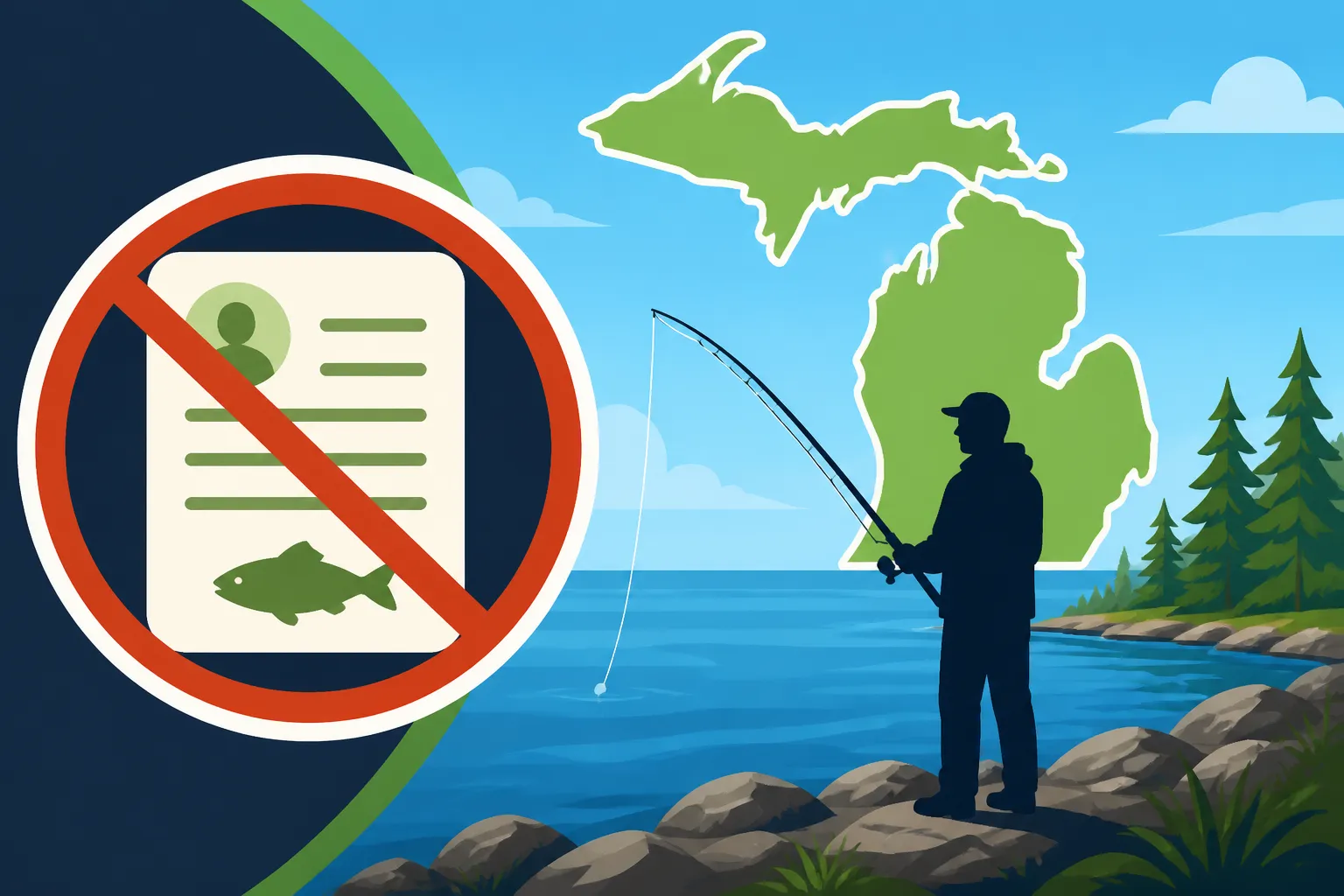
Let's cut right to the chase: if you're 17 years old or older and plan to fish in Michigan's public waters, whether from a boat, through the ice, or with your feet firmly planted on shore, you generally need a fishing license. There's no special exemption for shore fishing, and understanding this fundamental rule is the first step toward a hassle-free day on the water.
The Universal Requirement on Public Waters
Michigan is blessed with an incredible network of waterways, from the vast expanses of the Great Lakes to countless inland lakes, rivers, and streams. The Michigan Department of Natural Resources (DNR) manages these precious resources to ensure healthy fish populations for everyone to enjoy, now and in the future. To support these critical conservation and management efforts, a fishing license is mandated for most anglers.
This requirement applies universally across all public waters. Whether you're dropping a line off a popular pier in Grand Haven, casting into the Au Sable River, or trying your luck from the shoreline of a state park on Lake Huron, that license is your ticket to legally participate. The method of fishing—be it a fancy boat with all the electronics, an ice shanty in the dead of winter, or a simple folding chair on the bank—does not change the fundamental need for a license if you meet the age requirement. It's all about access to and harvest of public fish stocks, which are a shared resource. You might be wondering, Where Michigan Fishing License Money Goes; it primarily funds habitat restoration, fish stocking programs, and enforcement, making every license purchase a direct investment in the future of Michigan's fisheries.
Distinguishing Between Public and Truly Private Waters
The only scenario where a Michigan fishing license might not be required, even for an adult, is if you are fishing in truly private, self-contained waters. This means a pond or lake that is entirely located within private property and has absolutely no inlet or outlet connecting it to any public waterways or even intermittent streams that flow into public systems.
For instance, if you own a few acres with a small, spring-fed pond that has no connection to a nearby creek or river, you can fish it without a license. This is because any fish in that pond are considered private property, not part of the state's public fishery. However, this is a very specific and often misunderstood distinction. If your property borders a public lake, even a small inland one, or a river, and you're casting from your private dock or shoreline, you are still fishing in public waters. The fish in that body of water move freely and are considered public resources. Therefore, even on your own property, if it's connected to a public waterway, you still need that license. It's crucial to understand this nuance to avoid a costly mistake.
Key Exceptions to the Michigan Fishing License Rule
While the general rule is "get a license," Michigan does offer a few thoughtful exceptions that make fishing more accessible, especially for new and young anglers. It's always a good idea to stay informed about these to make the most of your time outdoors.
Age Exemptions for Young Anglers
One of the most encouraging aspects of Michigan's fishing regulations for families is the age exemption. Simply put, any child under the age of 17 does not need a fishing license to cast a line in Michigan waters. This is a wonderful opportunity for parents and guardians to introduce kids to the joys of fishing without an additional financial burden.
Imagine a beautiful summer day at the pier in Port Austin on Lake Huron, or a peaceful afternoon along the Grand River in Grand Rapids. Your 12-year-old can happily fish away, legally, while you supervise. However, it’s vital to remember that if you, as an adult (age 17 or older), are also fishing, or even actively assisting your child (e.g., baiting their hook, casting for them), you do need your own license. The exemption is solely for the youth. The spirit of this rule is to encourage youth participation, fostering a love for the outdoors and conservation from a young age. To dive deeper into this topic, you can check out our comprehensive guide on Do Kids Need a Fishing License in Michigan?.
Michigan's Free Fishing Weekends
Michigan offers an incredible gift to its residents and visitors twice a year: Free Fishing Weekends! These special events are designed to encourage everyone, regardless of experience or resident status, to try fishing without the need to purchase a license. Typically, one weekend occurs in February for ice fishing enthusiasts, and another in June, perfect for open-water opportunities.
During these designated weekends, all fishing license fees are waived for both Michigan residents and nonresidents. This means you can grab your gear and head to any public fishing spot – a local pond, a Great Lakes pier, or a quiet riverbank – and fish legally without a license. It’s an ideal chance to introduce friends or family who might be hesitant to buy a full license to the sport. What's even better is that during these weekends, the Michigan DNR also waives the requirement for a Recreation Passport for vehicle entry into state parks and boating access sites, making many prime shore fishing locations freely accessible. While the license requirement is waived, remember that all other fishing regulations, such as daily bag limits, minimum size limits, and species-specific rules, still apply. Always consult the current Michigan Fishing Regulations Digest for the most up-to-date information, or explore our detailed article on Michigan Free Fishing Weekends Explained.
Special Exemptions for Legally Blind Residents
Michigan also provides a specific and important exemption for its legally blind residents. Those who meet the criteria for legal blindness are eligible to obtain a Michigan fishing license at a discounted rate. This is another way the state strives to make outdoor recreation accessible to all its citizens.
To qualify for this discount, applicants typically need to provide proof of their legal blindness, such as a statement from a licensed ophthalmologist or optometrist. The process ensures that individuals facing specific challenges can still enjoy Michigan's fantastic fishing opportunities without undue financial burden. It’s a testament to the state’s commitment to inclusive outdoor recreation. For more information on eligibility and the application process, you can refer to our guide on Michigan Fishing License Discount for Legally Blind Residents.
Obtaining Your Michigan Fishing License
Once you understand if you need a license, the next step is how to get one. Fortunately, Michigan has made the process incredibly convenient, offering multiple ways to purchase your fishing license, ensuring you can quickly and easily comply with the regulations.
Options for Purchase: Online, App, and In-Person
Gone are the days when you had to track down a specific store during business hours. Today, getting your Michigan fishing license is easier than ever.
The most popular and arguably most convenient method is purchasing your license online through the official Michigan DNR eLicense website. This platform is user-friendly and allows you to buy your license from the comfort of your home, 24/7. After your purchase, you can immediately print out a physical copy, or simply save an electronic version to your phone. It's fast, efficient, and perfect for planning that last-minute fishing trip. For a step-by-step walkthrough, check out our guide on Buying a Michigan Fishing License Online.
Another excellent option for tech-savvy anglers is the Michigan DNR Hunt Fish App. This free app, available for both iOS and Android devices, allows you to purchase and store your license directly on your smartphone. It's incredibly handy, as you'll always have proof of your license with you, even if you forget your wallet. The app also offers other useful features, like harvest reporting for certain species and access to regulations. We delve deeper into this tool in our article on the Michigan DNR Hunt Fish App for Licenses and Reporting.
If you prefer a more traditional approach, or simply need to pick up some bait and tackle at the same time, you can purchase a license in person. There are thousands of authorized license retailers across the state, including bait and tackle shops, sporting goods stores like Cabela's or Jay's Sporting Goods, and even many convenience stores. Additionally, you can visit a Michigan DNR customer service center during business hours. When purchasing in person, be sure to bring a valid Michigan driver's license or state ID, as well as your date of birth, to expedite the process. Our guide on How to Buy a Michigan Fishing License provides more details on all these avenues.
Understanding License Types and Durations
Michigan offers a variety of fishing licenses designed to fit different needs and budgets. For most shore anglers who fish regularly, an Annual Resident or Annual Nonresident license is the most common choice.
The Michigan fishing license year runs from March 1st through March 31st of the following year. This means that no matter when you purchase your annual license, it will always expire on March 31st. So, if you buy a license in August, it's still valid until the following March 31st. This unique cycle is something to keep in mind, and you can learn more about it in our piece, Michigan's Fishing License Year Runs April to March.
For those planning a shorter trip, perhaps just a spontaneous weekend cast from a pier, the 24-Hour license is an excellent, cost-effective option. This license is valid for 24 hours from the time of purchase, making it perfect for out-of-state visitors or residents who only fish occasionally. This can be a great way to try out fishing on a specific lake or river without committing to a full year.
Residents aged 65 and older are eligible for a discounted Senior Fishing License, recognizing their lifetime contributions and offering a more affordable way to continue their passion. For a full breakdown of all the different options, including combination hunt/fish licenses and specific costs, our article Michigan Fishing License Costs and Types Explained is an invaluable resource. If you’re just starting out or need some basic gear for your shore adventures, remember you can always find reliable and affordable options on platforms like Amazon, from basic rod and reel combos to convenient tackle boxes.
Here's a quick reference table to help visualize the requirements:
| Angler Category | License Required? | Notes |
|---|---|---|
| Michigan Resident, 17+ | Yes | Annual Resident license is common. |
| Nonresident, 17+ | Yes | Annual Nonresident or 24-Hour license. |
| Under 17 years old | No | No license required for youth, but supervising adults (17+) need one if fishing or assisting. |
| Legally Blind Michigan Resident | Yes | Discounted license available with proof of legal blindness. |
| Anyone during Free Fishing Weekends | No | All other regulations (size/bag limits) still apply. State park entry also free. |
| Fishing on truly private, landlocked pond | No | Pond must have no connection to public waterways. |
| Fishing from private property on a public lake/river | Yes | The fish are considered public resources. |
The Consequences of Fishing Without a License
Fishing without a valid license in Michigan isn't just a minor oversight; it's a violation of state law. While the primary goal of the DNR is conservation and education, they also have a responsibility to enforce regulations. Getting caught without a license can lead to a series of unpleasant and costly consequences that far outweigh the modest price of a license.
Fines and Legal Ramifications
If a Michigan conservation officer (CO) checks your license and you're found to be fishing without one, you will face legal repercussions. The initial penalty for fishing without a license is typically a civil infraction, much like a traffic ticket. However, the fines are often substantial, frequently ranging from $100 up to several hundred dollars, plus court costs. This immediately makes the cost of an annual license, which is usually around $26 for residents, seem incredibly reasonable.
Beyond the immediate fine, an infraction can appear on your record, and repeated offenses can escalate to more serious misdemeanors. In some cases, depending on the severity and any additional violations (such as exceeding bag limits or fishing out of season), the penalties can include even higher fines or community service. It's a situation that's easily avoidable by simply making sure you're properly licensed. Our detailed article on What Happens if You Fish in Michigan Without a License provides a full overview of these potential consequences.
Potential Gear Confiscation and Other Penalties
One of the more jarring consequences of being caught without a fishing license, beyond the fine, is the potential for your fishing gear to be confiscated. Conservation officers have the authority to seize any equipment used in the commission of an illegal activity, including rods, reels, tackle boxes, and even illegally caught fish. Imagine losing that favorite rod you've had for years, or the expensive lure you just bought.
Furthermore, if you've harvested any fish without a valid license, you may be required to pay restitution for those fish, adding another financial burden to the fine. The experience of having your gear confiscated is not only costly but also quite disheartening, taking the joy out of what should have been a relaxing day. It's a stark reminder that complying with regulations is not just about avoiding trouble, but also about respecting the resource and the efforts to preserve it. Instead of facing such a loss, it's far simpler and less stressful to ensure you have your license in hand, or readily accessible on the DNR Hunt Fish App. If you ever found yourself in that unfortunate situation, replacing gear quickly and conveniently from Amazon could be a small comfort, but avoiding the situation entirely is always the best course of action. Always ensure you carry your license or have it digitally accessible whenever you hit the shore.
Disclaimer
The information provided in this guide is for general informational purposes only and does not constitute legal advice. Fishing regulations in Michigan can change, and it is the responsibility of each angler to consult the most current Michigan Fishing Regulations Digest published by the Department of Natural Resources (DNR) or visit the official DNR website before engaging in any fishing activity. Always verify specific rules, seasons, and limits for the waters you plan to fish.