Does Michigan Fishing License Revenue Fund the DNR?
It's a question every angler has asked, often while digging through their wallet for that annual fee: "Where exactly does my Michigan fishing license money go?" It’s easy to feel like it disappears into some bureaucratic black hole, especially when you're shelling out good money year after year. Rest assured, you're not alone in wondering if those hard-earned dollars actually make a difference on the water. This comprehensive guide will peel back the layers of Michigan's Department of Natural Resources (DNR) funding, showing precisely how your fishing license revenue contributes to the health and vitality of our state's incredible fisheries and natural resources.
Understanding Michigan DNR Funding Sources
The Michigan Department of Natural Resources, often simply called the DNR, is a massive organization tasked with managing an equally massive and diverse range of natural resources, from state parks and forests to wildlife and fisheries. Funding such an expansive mission requires a complex financial structure, drawing from various sources. Your fishing license is a critical piece of that puzzle, but it’s certainly not the only one. Understanding the different streams helps clarify how each dollar plays its part.
The Role of Fishing License Revenue
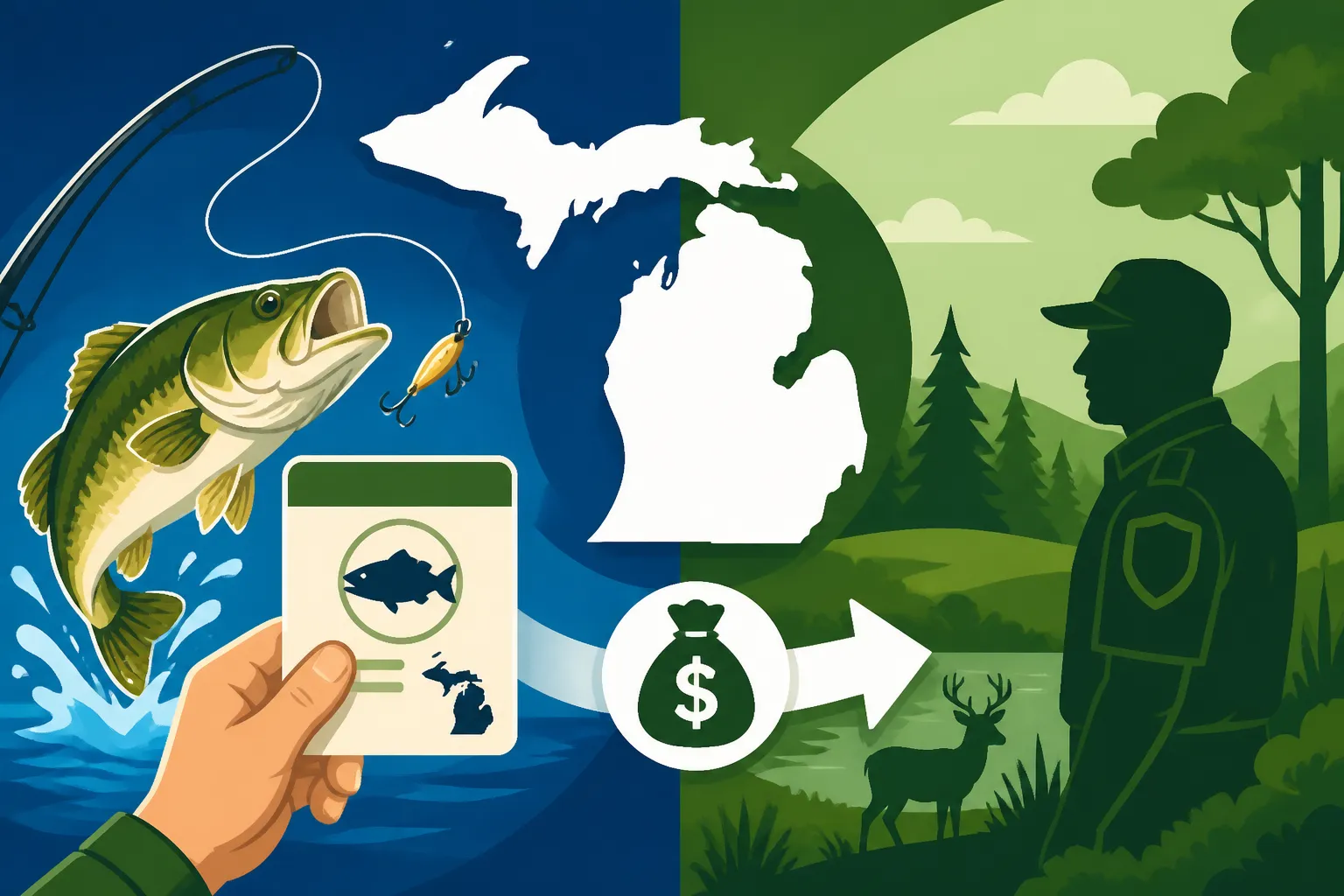
Let's cut right to it: yes, Michigan fishing license revenue absolutely funds the DNR, specifically its Fisheries Division and related conservation efforts. When you purchase your annual license, whether it's a resident or nonresident annual, a 24-hour pass, or a senior discount license, that money doesn't just vanish. It’s earmarked, in large part, to support the programs and personnel dedicated to ensuring healthy fish populations, maintaining access to fishing spots, and enforcing the rules that keep our waters sustainable. Think of it as your direct investment in the sport you love.
This revenue stream is foundational. Without it, many of the programs designed to monitor fish populations, conduct scientific research, and stock millions of fish across the state simply wouldn't exist. It's the core funding that allows the DNR to employ fisheries biologists, technicians, and conservation officers who are on the front lines every day, working to protect and enhance Michigan's aquatic ecosystems. It directly supports their salaries, equipment, and the operational costs of fish hatcheries, all vital components of our vibrant fishing culture.
Other Key Funding Streams for the DNR
While fishing license sales are crucial, the DNR also relies on several other significant funding sources to carry out its broad mandate. These can include state general fund appropriations, which are tax dollars approved by the legislature, as well as various federal grants specifically designated for wildlife and sport fish restoration. For instance, many of the beautiful state parks and recreation areas that anglers use for access or camping are often funded through separate park entry fees or dedicated millages.
Beyond these, the DNR generates revenue from timber sales in state forests, mineral leases, and even boat registrations, which support marine safety and water access projects. This diversified funding model is essential because it allows the DNR to address a wide array of conservation challenges that extend beyond just fisheries. For example, habitat restoration projects might benefit various wildlife species, and law enforcement efforts cover everything from illegal hunting to environmental protection, not just fishing violations. This layered approach ensures a more resilient and comprehensive conservation strategy for the entire state.
How Fishing License Dollars Are Allocated
It's one thing to know your money goes to the DNR, but it's another to understand how it's spent. The allocation of fishing license revenue is quite precise, driven by specific needs within the Fisheries Division and often dictated by federal mandates tied to those funding streams. It's not just a big pot of money; there are dedicated efforts to ensure accountability and impact.
Direct Conservation and Management Efforts
A significant portion of your fishing license dollars goes directly into what we call "on-the-ground" conservation. This includes critical work like fish stocking programs, which are vital for species like trout and salmon in the Great Lakes and various inland waters. DNR biologists carefully assess populations, determine stocking needs, and then raise millions of fingerlings and yearlings in state hatcheries before releasing them into suitable habitats. This ensures a healthy supply of sportfish for anglers and helps maintain ecological balance.
Beyond stocking, funds are allocated to habitat improvement projects. This could mean restoring wetlands, improving riverine structures for spawning fish, or removing barriers to fish migration. Imagine a river where logs and debris are strategically placed to create deeper pools and cover for brown trout, or a shoreline where invasive species are being managed to protect native fish. Your license fee makes these types of projects possible. These funds also support crucial research, allowing scientists to monitor fish health, study migration patterns, and understand the impacts of environmental changes, helping to inform future management decisions. Anglers can stay informed about these efforts by reviewing the annual Michigan Fishing Regulations Every Angler Should Know document.
Operational Costs and Staffing
It takes a lot of people and resources to manage Michigan's vast fisheries. Your fishing license money helps pay for the dedicated professionals who make it all happen. This includes the salaries of fisheries biologists who analyze data and develop management plans, fish culturists who run the hatcheries, and conservation officers who patrol our waters to ensure regulations are followed. These officers play a crucial role in preventing poaching and ensuring fair fishing for everyone, which directly impacts the health of our fish populations.
Additionally, operational costs such as fuel for research boats, maintenance for hatchery facilities, lab equipment for disease testing, and vehicles for field work are all supported by license revenue. It's not just glamorous projects; it's the everyday grind that keeps the system running smoothly. When you buy your Michigan Resident Annual Fishing License Cost or a Michigan Nonresident Annual Fishing License Cost, you're essentially helping to fund the very infrastructure that maintains Michigan as a premier fishing destination. This table provides a simplified overview of how a hypothetical fishing license dollar might be allocated, illustrating the diverse areas of investment.
| Category | Estimated Percentage of License Revenue | Examples of Activities Funded |
|---|---|---|
| Fisheries Management & Research | 40% | Population surveys, habitat studies, species monitoring, data analysis |
| Fish Production & Stocking | 25% | Hatchery operations, fish rearing, transportation, disease control |
| Law Enforcement & Regulations | 20% | Conservation officer salaries, patrol equipment, rule enforcement |
| Education & Outreach | 5% | Youth fishing programs, public workshops, informational materials |
| Administration & Overhead | 10% | Licensing system, general administration, equipment maintenance |
Note: These percentages are illustrative and can vary significantly year to year based on specific projects, budgets, and operational needs within the Michigan DNR. Exact figures are detailed in annual DNR financial reports.
The Federal Aid in Wildlife and Sport Fish Restoration Program
Beyond state-level funding, there's a huge, often overlooked, federal program that significantly amplifies the impact of your fishing license dollars. This program is a cornerstone of conservation funding across the United States, including right here in Michigan. It's a testament to how dedicated excise taxes on fishing and hunting equipment directly benefit wildlife and fisheries.
The Dingell-Johnson Act Explained
The Federal Aid in Sport Fish Restoration Act, commonly known as the Dingell-Johnson Act (and later expanded by the Wallop-Breaux Amendment), is a landmark piece of legislation. Enacted in 1950, it imposes an excise tax on fishing equipment, electric motors, and tackle boxes, as well as a portion of the federal fuel tax for motorboats. This isn't just a small tax; it's a significant revenue generator, with funds collected by the U.S. Fish and Wildlife Service. These funds are then apportioned back to state wildlife agencies, like Michigan's DNR, for approved sport fish restoration projects.
What does this mean for you? It means that every time you buy a new fishing rod, a tackle box from Amazon, or even fill up your boat with gas, a small portion of that purchase is contributing to a national trust fund for sport fish conservation. This program is incredibly effective because it ties the funding source directly to the people who benefit from healthy fisheries—anglers and boaters. It creates a self-sustaining cycle where participation in fishing directly fuels its future. This is a huge reason why states like Michigan can do so much with their conservation efforts.
Matching Funds and State Benefits
Here’s where it gets really interesting and where your state fishing license becomes even more powerful: the Dingell-Johnson Act operates on a matching funds principle. For states to receive federal funds, they must contribute a matching share, typically 25% of the project cost. This matching share almost exclusively comes from the revenue generated by state fishing license sales. So, for every dollar Michigan's DNR puts into an approved sport fish restoration project from your license fees, the federal program often kicks in three more dollars.
This 3-to-1 matching ratio is a game-changer. It means that the money from your Michigan Fishing License Guide for Residents and Nonresidents isn't just used once; it's leveraged to multiply its impact significantly. Without the revenue from fishing licenses, Michigan would forfeit a substantial amount of federal funding, severely limiting the scope of what the DNR could achieve for our state's fish and aquatic habitats. This synergistic relationship between state license sales and federal aid is a cornerstone of modern fisheries management, ensuring robust funding for everything from habitat improvements to stocking programs, and keeping our Best Places to Fish in Michigan thriving.
Transparency and Accountability in Funding
It's natural to want to know that your money is being used wisely. The Michigan DNR, like other state agencies, operates under principles of transparency and accountability, particularly when it comes to how public funds, including fishing license revenue, are managed. It's not always easy to navigate the complex world of government budgets, but the information is there for those who seek it.
Public Access to Financial Reports
The Michigan DNR regularly publishes annual financial reports and budget summaries that detail revenue streams and expenditures. These documents are generally available on the DNR's official website, providing a detailed breakdown of where every dollar comes from and where it goes. While they can sometimes be dense with financial jargon, they offer a clear picture of the agency's fiscal health and how various divisions, including the Fisheries Division, are funded. This level of detail allows concerned citizens and anglers to review specific allocations, ensuring that the DNR is upholding its commitment to conservation.
Furthermore, state legislative committees also review and approve the DNR's budget, adding another layer of oversight. Public hearings and opportunities for input are often part of this process, allowing stakeholders to voice their concerns or support for specific funding priorities. This open approach, while perhaps not always perfectly digestible for the average person, is designed to ensure that the DNR remains accountable to the public and to those who directly fund its work through purchasing a Michigan Fishing License Costs and Types Explained. Many also utilize the Michigan's DNR Hunt Fish App for Licenses and Reporting to manage their licenses, which further streamlines the process.
The Importance of Angler Participation
Ultimately, the entire system hinges on angler participation. When you decide to How to Buy a Michigan Fishing License, you're not just getting permission to fish; you're casting a vote for conservation. Each license purchased directly fuels the programs that sustain Michigan's fisheries, from the mighty salmon runs on the Great Lakes to the peaceful solitude of a trout stream. This direct link between user fees and resource management is often hailed as one of the most successful conservation models in the world. Even on Michigan Free Fishing Weekends Explained, the regular license sales still provide the foundational support that makes those special events possible.
Beyond the financial contribution, angler participation fosters a community of stewards. The more people who are engaged in fishing, the stronger the voice for conservation and the greater the collective commitment to protecting our natural heritage. This shared passion ensures that future generations will also have the opportunity to experience the thrill of a steelhead on the line or the peace of an evening walleye bite, contributing to techniques like those used in Michigan Walleye Fishing Techniques or exploring Michigan's Great Lakes Fishing Guide. Remember, every time you renew your license, typically around Michigan Fishing License Renewal Each Spring, you're actively contributing to the vibrant future of Michigan fishing. Don't forget that even Do Kids Need a Fishing License in Michigan? has specific rules that ensure younger generations also learn about this vital system.
Disclaimer
The information provided in this guide is for general informational purposes only and is not intended as legal or professional advice. Fishing regulations and funding structures can change, so always consult the official Michigan Department of Natural Resources (DNR) website and current year's fishing guide for the most accurate and up-to-date information.