Why Michigan Fishing Licenses Carry a $1 Surcharge
That tiny extra dollar tacked onto your Michigan fishing license might seem like a small annoyance, a fleeting moment of "what's this for?" as you check out. It's a common question, and one many anglers ponder, especially when you're just eager to get your lines in the water. This guide is here to unravel the mystery of that specific $1 surcharge, explaining precisely where it goes and why it's there, so you understand the full value of your investment in Michigan's fantastic fishing opportunities.
The Basics of Your Michigan Fishing License
When you purchase a Michigan fishing license, you're not just getting a piece of paper or a digital entry that says you're allowed to fish. You're actually making a vital contribution to the health and future of the state's aquatic resources. That small, sometimes unappreciated, $1 surcharge is part of a larger, incredibly important system.
More Than Just a Permit: Beyond the Price Tag
It's easy to look at the total cost of a fishing license – be it an annual resident license or a short-term nonresident option – and focus on the immediate expense. Many people, myself included, have stood at the counter or clicked through the online portal, seeing that dollar added on and thinking, "Another fee? What gives?" But truly, your Michigan fishing license is far more than a simple permit; it's an investment. Every dollar, including that specific surcharge, plays a role in sustaining the vibrant ecosystems we all cherish. Without these funds, the lakes, rivers, and streams we love to fish simply wouldn't be as healthy or as productive. Think of it as a membership fee to a very exclusive, very beautiful club, where the "club dues" go directly back into maintaining the grounds.
Understanding the Annual Renewal Cycle
Michigan's fishing licenses operate on a specific annual cycle, typically running from March 1st through February 28th of the following year. This means that regardless of when you purchase your license during that period, it will expire on February 28th. So, if you pick up your license in July, it’s still good until the end of February. However, when that new license year rolls around, and you decide it's time to renew your Michigan fishing license renewal each spring, that $1 surcharge will be applied once again. It's not a one-time fee for life; it's part of the ongoing cost associated with maintaining the statewide licensing system. This consistent renewal ensures that the program has the steady funding it needs to keep things running smoothly, year after year.
Unpacking the $1 Surcharge: Where Does That Dollar Go?
Now, let's zoom in on that specific $1. It doesn't disappear into some black hole, nor is it a general fund contribution that gets lost in the shuffle. This particular surcharge has a very direct and important purpose, something that directly benefits every angler in Michigan.
The Michigan Sport Card Program and its Funding
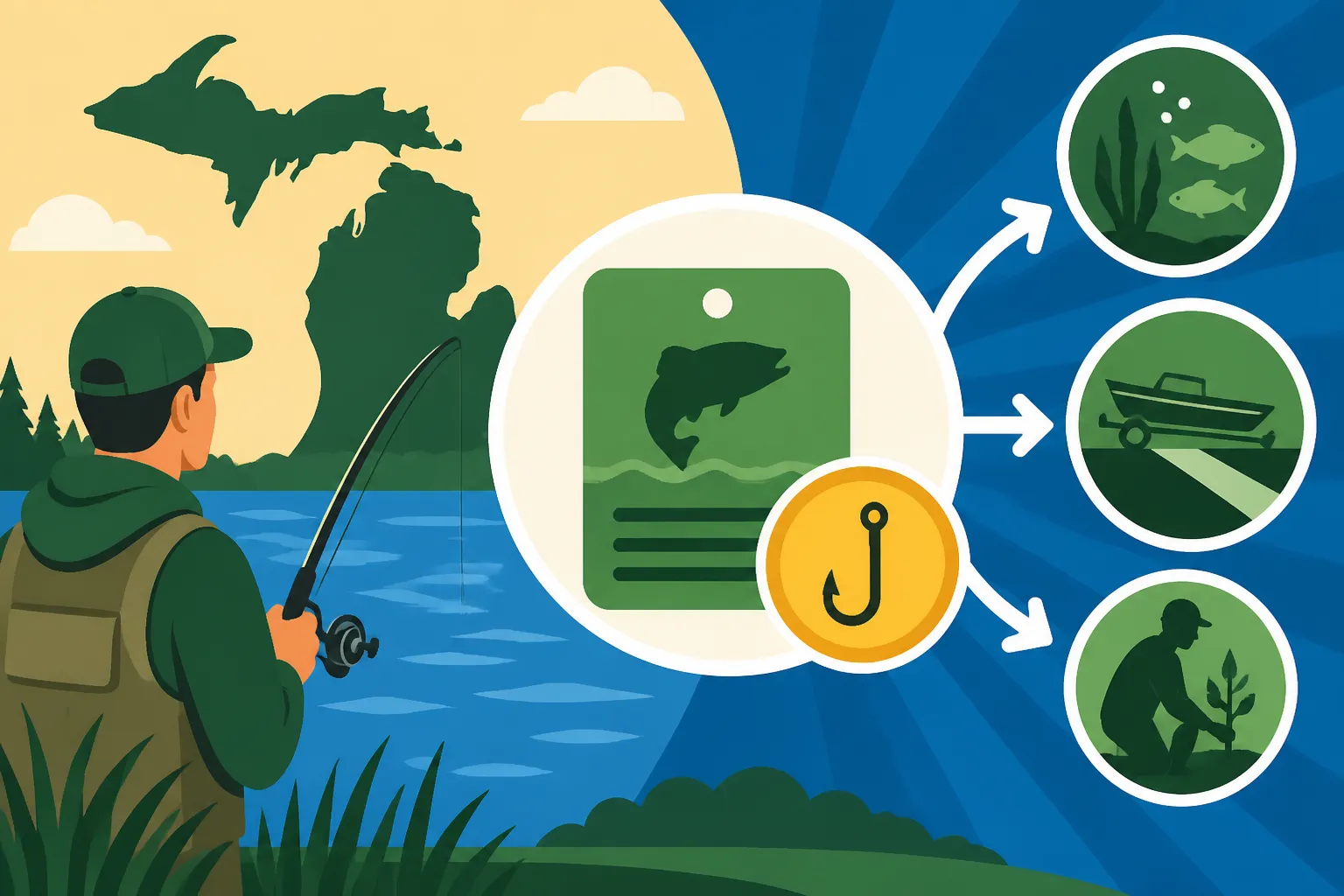
The $1 surcharge on your Michigan fishing license is specifically dedicated to funding and maintaining the Michigan Sport Card system. Back in the day, managing hunting and fishing licenses was a much more cumbersome process. You might have had different paper licenses, stamps, and permits for various activities, leading to a stack of documents or multiple cards in your wallet. The Michigan Sport Card program was introduced to streamline all of this. It's a centralized electronic licensing system that integrates all your licenses, permits, and stamps – from your annual fishing license to a deer hunting tag – under one unique identification number.
This system simplifies record-keeping for the Michigan Department of Natural Resources (DNR) and makes it incredibly convenient for you, the angler. Instead of worrying about multiple paper slips, you have a single reference number, or even a physical card if you choose to print one, that covers all your sporting needs. The $1 surcharge ensures that this complex, interconnected IT infrastructure can be continuously updated, maintained, and secured. Think about all the backend work: servers, software, cybersecurity, customer service support, and keeping up with evolving technology – it all costs money, and that dollar goes straight to keeping this crucial system operational and user-friendly.
Benefits of the Centralized Licensing System
The move to a centralized system, funded in part by that $1 surcharge, has brought a wave of improvements for both anglers and the DNR. For us, the biggest win is convenience. Instead of having to physically visit a licensed retailer every single time you need a new stamp or license, you can now manage everything from the comfort of your home. You can buy a Michigan fishing license online with just a few clicks, print it out, or simply keep a digital copy on your phone. Many anglers find this particularly helpful when planning last-minute trips or when they're already out in the field and realize their license has expired.
The Michigan's DNR Hunt Fish App for Licenses and Reporting is another fantastic benefit, allowing you to carry your licenses digitally, report harvests, and even view regulations directly on your smartphone. This wouldn't be possible without a robust, well-funded electronic system. For the DNR, the benefits are equally significant. The centralized system allows for more accurate data collection on license sales, which helps them understand angler participation and trends. This data, in turn, informs critical conservation decisions, stocking programs, and resource management strategies across the state. It reduces administrative overhead, allowing DNR staff to focus more on conservation efforts rather than manual paperwork.
The Broader Picture: How License Fees Support Michigan Fisheries
While the $1 surcharge has a very specific purpose for the Sport Card system, it’s important to remember that it's just one piece of a much larger financial puzzle. The bulk of your fishing license fee, along with other sources of revenue, forms the backbone of Michigan's extensive conservation and fisheries management efforts.
The Bigger Slice: General License Revenue and Conservation
The vast majority of the money you spend on your Michigan fishing license, beyond that $1 surcharge, goes directly to the Michigan Department of Natural Resources (DNR). This is where the real heavy lifting of conservation takes place. When you fork over the full price for, say, a Michigan Resident Annual Fishing License Cost, you're directly contributing to a wide array of programs designed to enhance and protect Michigan's diverse aquatic environments.
These funds are critical for things like habitat restoration projects – improving spawning grounds in rivers, rehabilitating lake shorelines, and managing invasive species. They also power the state's extensive fish stocking programs, ensuring that popular species like salmon, trout, and walleye continue to thrive and provide excellent angling opportunities. The DNR conducts crucial scientific research, monitoring fish populations, studying diseases, and assessing the overall health of our waters. Furthermore, your dollars support the enforcement of fishing regulations, ensuring that everyone plays by the rules and that fish populations aren't overfished. This means having conservation officers on the water and in the field, protecting our resources for future generations. All these efforts create a robust, sustainable fishery, which is ultimately why we buy licenses in the first place.
Federal Aid and the Pittman-Robertson Act / Dingell-Johnson Act
What's really fascinating, and often overlooked, is how your state fishing license dollars unlock even more funding for conservation through federal programs. This comes primarily from the Federal Aid in Sport Fish Restoration Act, commonly known as the Dingell-Johnson Act, and its counterpart for hunting, the Pittman-Robertson Act.
Here's how it works: these acts collect excise taxes (a hidden sales tax, if you will) on fishing equipment, tackle, motorboat fuels, and archery equipment at the manufacturer level. So, every time you buy a new fishing rod from a retailer like Amazon, or a fresh spool of line, or even gas for your boat, a small portion of that purchase goes into a federal trust fund. The critical part is that these federal funds are then apportioned back to the states, but only if the states contribute a certain amount of their own revenue from fishing license sales. Essentially, your state license fee acts as matching funds, allowing Michigan to draw down significant federal dollars that further boost conservation efforts. This effectively multiplies the impact of your license purchase, supporting large-scale projects that might otherwise be impossible. It’s a brilliant partnership between anglers, the sporting goods industry, and state and federal governments, all working together for the greater good of our natural resources.
Common Questions and Concerns About License Fees
It's natural to have questions about where your money goes, especially when it comes to something as important as fishing licenses. Let's tackle a few common thoughts and concerns that frequently arise.
Is This Surcharge New? A Look at Its History
Many anglers, especially those who've been fishing in Michigan for decades, might wonder if this $1 surcharge is a recent addition. It's a fair question, as fees and regulations can certainly change over time. However, the $1 surcharge specifically for the Michigan Sport Card system has been in place for quite some time now. It’s not a brand-new, surprise fee that just appeared on your latest purchase.
When the centralized electronic licensing system was initially implemented, this surcharge was established to cover the significant development and ongoing operational costs. Think about building a complex online platform from scratch, and then continually upgrading it, troubleshooting issues, and ensuring it can handle millions of transactions securely each year. That's a huge undertaking. So, while you might not have consciously noticed it every single time you’ve bought a license, it's been a consistent part of the cost structure, quietly working behind the scenes to keep the system robust and reliable. It reflects the reality that modern, convenient digital services aren't free to build and maintain.
Comparing Michigan's Fees to Other States
It's always interesting to see how Michigan's fishing license costs, including any surcharges, stack up against other states. Anglers often travel, or hear stories from friends in different regions, and wonder if they're getting a good deal. The truth is, most states have some form of administrative or processing fee associated with their licensing systems, and Michigan is no exception. While the exact wording or amount might vary, the underlying need to fund an efficient licensing infrastructure is universal.
Michigan's overall fishing license costs are generally considered competitive when compared to other popular fishing destinations. Some states might have slightly higher or lower base fees, or different structures for residents versus nonresidents. However, the value you receive in return – access to world-class fisheries across the Great Lakes, thousands of inland lakes, and countless miles of rivers – is undeniably significant. The $1 surcharge contributes to making the process of getting that access as smooth and hassle-free as possible, which is a value often appreciated more after experiencing less efficient systems elsewhere. It's a small price for the convenience and the underlying conservation efforts it supports.
Maximizing Your Investment: Getting the Most Out of Your License
Now that you understand where that $1 surcharge goes and how your entire license fee supports Michigan's fisheries, how can you ensure you're truly maximizing your investment? It's simple: get out there and fish! Your license is your ticket to exploring the incredible diversity of fishing opportunities Michigan offers.
Don't let your license just sit there; make it work for you. Take the time to really understand the local fishing regulations every angler should know to avoid any costly mistakes that could overshadow your fishing experience. Explore new waters – maybe check out some of the Best Places to Fish in Michigan that you haven't tried before, or delve into a new technique you've always wanted to learn. Even a short trip to a local pier or a quiet hour on a small inland lake can be incredibly rewarding. The more you engage with Michigan's fisheries, the more you appreciate the conservation efforts funded by your license, including that small but mighty $1 surcharge.
Here's a quick breakdown of where your fishing license funds generally go:
| Component of License Fee | Purpose & Allocation | Beneficiary |
|---|---|---|
| $1 Surcharge | Michigan Sport Card System maintenance and development | Michigan DNR (for IT infrastructure) |
| Base License Fee | Fish stocking programs | Michigan DNR (Fisheries Division) |
| Base License Fee | Habitat restoration & protection | Michigan DNR (Fisheries & Wildlife Divisions) |
| Base License Fee | Fisheries research & monitoring | Michigan DNR (Fisheries Division) |
| Base License Fee | Law enforcement (Conservation Officers) | Michigan DNR (Law Enforcement Division) |
| Base License Fee | Administrative costs & outreach | Michigan DNR (Various Divisions) |
| Matching Funds | Unlocks federal aid for larger projects | State & Federal Conservation Programs |
| Federal Excise Taxes | (Collected on gear, separate from license) | Federal Aid in Sport Fish Restoration Program (Dingell-Johnson Act) |
This table clearly illustrates that while the $1 goes to a very specific and essential piece of the puzzle, the vast majority of your fishing license dollars are dedicated to the direct management and enhancement of Michigan's precious fishing resources.
Disclaimer
The information provided in this article is for general guidance only and is not a substitute for official legal advice or the current Michigan fishing regulations. Always consult the latest Michigan Department of Natural Resources (DNR) official regulations digest or website before engaging in any fishing activities, as rules and fees can change.