Does a Michigan Fishing License Cover the Great Lakes?
It’s a common question that can cause a real headache for anglers, especially those new to the state or visiting from out of town: Does that standard Michigan fishing license you just bought actually cover you for the vast, incredible waters of the Great Lakes? The thought of navigating complex rules for different bodies of water can be daunting, and nobody wants to inadvertently break the law. This comprehensive guide is here to clear up that confusion, explaining exactly what your Michigan fishing license entails when it comes to Lake Superior, Michigan, Huron, and Erie, ensuring you can cast your line with confidence.
Understanding Michigan's Fishing License Coverage
The beauty of fishing in Michigan is often found in its simplicity when it comes to licensing for its diverse waters. Unlike some states that might require separate endorsements or licenses for specific types of water bodies, Michigan takes a wonderfully unified approach.
The Unified Approach to Michigan Waters
When you purchase a Michigan fishing license, whether it's an annual resident license, a nonresident annual, or even a shorter-term option like the Michigan 24-Hour Fishing License Explained, that license is your golden ticket for fishing all of Michigan's public waters. This includes not only our countless inland lakes and winding rivers but also the magnificent Great Lakes that border our state. This means you don't need a special "Great Lakes endorsement" or a separate permit to chase salmon on Lake Michigan, jig for walleye on Lake Erie, or pursue lake trout on Lake Superior. Your standard license covers it all, from the smallest stream to the largest freshwater seas. This unified system is a huge relief for many anglers, simplifying the process and allowing more freedom to explore. It’s designed to encourage participation and make the great outdoors accessible, rather than burdening you with an array of confusing permits.
Why the Confusion Exists
It's completely understandable why anglers might be confused about Great Lakes coverage. The sheer size and nature of these massive bodies of water make them feel fundamentally different from a small inland lake. Many other states have complex licensing structures, and even within Michigan, there are specific regulations that apply only to the Great Lakes or certain rivers connected to them. For instance, the year-round open season for certain trout and salmon species on the Great Lakes is a significant departure from inland trout season rules, leading people to wonder if the license itself is also different. The idea of "boundary waters" shared with other states or Canada also adds to the perceived complexity. We've all heard stories of people getting ticketed for seemingly minor infractions, so a little caution and double-checking are always a good idea. However, rest assured, when it comes to the basic license requirement, Michigan keeps it straightforward for its Great Lakes access. Just ensure you’ve got your current Michigan Fishing License Guide for Residents and Nonresidents on hand, whether in physical form or digitally on the Michigan's DNR Hunt Fish App for Licenses and Reporting.
Specific Scenarios and Exceptions on the Great Lakes
While a single license covers Michigan's Great Lakes waters, there are a few important nuances and exceptions that every angler should be aware of, especially when fishing near state or international borders, or when hiring a guide.
Boundary Waters and Reciprocity Agreements
The Great Lakes aren't exclusively Michigan's. We share them with other states and with Canada. This introduces the concept of "boundary waters" where regulations can become a bit trickier. For instance, parts of Lake Erie border Ohio, and Lake Michigan touches Wisconsin, Illinois, and Indiana. Lake Huron and Lake Superior also border Canada.
In many cases, Michigan has established reciprocity agreements with neighboring states, particularly for portions of the Great Lakes that are effectively shared, or on rivers that form a border. These agreements dictate whether a license from one state is valid in specific shared waters of another. For example, specific rules apply to the waters of Lake Erie that are shared with Ohio, or the Menominee River which forms part of the Michigan-Wisconsin border. It's absolutely crucial to check the current Michigan Fishing Regulations Every Angler Should Know, specifically the section on Michigan's Boundary Water Fishing Rules on the Great Lakes, if you plan on fishing anywhere near these state or international lines. Generally, your Michigan license will only cover the Michigan side of these waters, and straying into another state's jurisdiction without their license can lead to serious fines. Always know exactly where you are on the water, especially when trolling or drift fishing, to avoid any unintended boundary crossings.
Fishing from a Charter Boat
Michigan's Great Lakes charter fishing industry is a vibrant and popular way to experience the thrills of salmon, trout, and walleye fishing. If you're a nonresident or someone who rarely fishes and decides to book a trip on a licensed charter boat, you might wonder if you still need your own license. The answer is generally yes, with some exceptions.
Michigan law typically requires every individual angler on board a charter vessel to possess their own valid Michigan fishing license. The charter captain's license covers their ability to operate commercially and guide, but it doesn't extend to the individual anglers' requirement. This applies whether you're a seasoned local or an out-of-state visitor. However, there are very specific circumstances where a charter customer might be exempt, such as during Michigan's Free Fishing Weekends Explained, where no license is required for anyone, resident or nonresident. For most charter trips, assume you'll need your own license. Many charter captains will even confirm this with you when you book, or they might even sell licenses directly on board as a convenience. Always confirm with your charter captain beforehand to avoid any last-minute surprises. Getting your Michigan Nonresident Annual Fishing License Cost sorted before your trip can save you a lot of hassle.
Pier and Shore Fishing Access
For those who prefer to keep their feet on solid ground, fishing from the piers, harbors, and shorelines of the Great Lakes is incredibly popular and accessible. The good news is that your standard Michigan fishing license absolutely covers you for these activities.
Whether you're casting spoons for salmon off the Ludington pier, dropping a line for perch in the calm waters of a Lake Huron harbor, or surf fishing for steelhead along the sandy stretches of Lake Michigan, your license is valid. The rules regarding bag limits, size limits, and open seasons will still apply to the specific species you're targeting, just as they would if you were in a boat. Many of Michigan's Great Lakes piers, like those in Grand Haven, Holland, or Manistee, are prime locations for catching a variety of species, from trout and salmon to perch and smallmouth bass. You can often find essentials like bait, tackle, and even fishing licenses at nearby shops, making it easy to grab what you need before you head out. Don't forget to check the specific regulations for the area you're fishing, as some harbor areas might have unique rules. Gear up with some versatile tackle, perhaps a decent spinning rod you can find on Amazon, and enjoy the accessible angling opportunities the Great Lakes shorelines offer.
Acquiring Your Michigan Fishing License
Getting your Michigan fishing license is a straightforward process, designed to be as convenient as possible for anglers. Knowing your options for purchase and which license type best suits your fishing habits can save you time and ensure you're always legal.
Online, In-Person, and App Options
The Michigan Department of Natural Resources (DNR) has made it incredibly easy to purchase a fishing license, catering to modern convenience and traditional preferences.
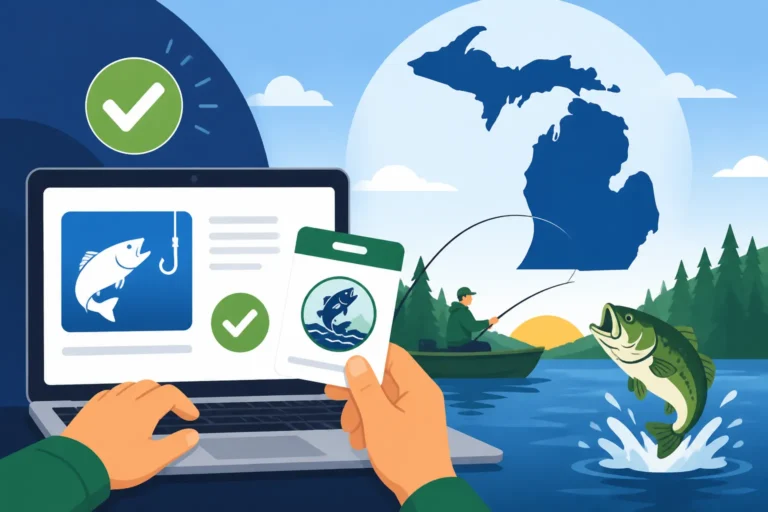
- Online: For many, the quickest and most popular method is to buy your license directly from the DNR's eLicense system online. You simply visit the Michigan DNR website, create an account or log in, select the license type you need, and complete the purchase. You can then print a copy of your license or save it digitally to your phone. This method is available 24/7, meaning you can literally buy a license on your phone while standing at the boat launch if you suddenly realize you forgot to renew.
- In-Person: If you prefer a more traditional approach or need to ask questions, licenses can be purchased at numerous authorized license retailers across the state. These include bait and tackle shops, sporting goods stores (like your local Cabela's or Dick's Sporting Goods), and even some convenience stores. Just look for the "DNR License Retailer" sign. When buying in person, you'll need a valid form of identification, and if you're a Michigan resident, proof of residency. They can answer basic questions and ensure you get the correct license.
- DNR Hunt Fish App: In a nod to our tech-savvy anglers, Michigan also offers the Michigan's DNR Hunt Fish App for Licenses and Reporting. This free app, available for both iOS and Android devices, allows you to purchase licenses, report harvests (like for Michigan Muskellunge Harvest Reporting Rules), and even view current regulations, all from your smartphone. It's incredibly convenient to have your license readily available on your device, even if you lose signal, as it's saved locally. Just remember to charge your phone!
| Purchase Method | Convenience | Access | Requirements | Ideal For |
|---|---|---|---|---|
| Online | Very High | 24/7 | Internet, ID/Residency Info | Quick, anytime purchase |
| In-Person | Medium | Business Hours | ID, Proof of Residency | Questions, tangible license, local support |
| DNR App | Very High | 24/7 | Smartphone, Internet (for purchase) | On-the-go, digital access, integrated features |
Choosing the Right License Type
Michigan offers various license types to suit different needs and durations. Understanding these options is key to ensuring you get the most cost-effective and appropriate license for your fishing plans.
- Annual Resident/Nonresident: These are the most common licenses, valid from March 1st of one year through March 31st of the next. If you plan on fishing more than a couple of times throughout the year, an annual license is almost always the most economical choice. The Michigan Fishing License Costs and Types Explained article provides a detailed breakdown of prices for both residents and nonresidents.
- 24-Hour License: Perfect for a quick, spur-of-the-moment trip or for visiting friends/family who only want to fish for a single day. This license is valid for 24 consecutive hours from the time of purchase. It's a great way to try out fishing without committing to a full annual license.
- Senior Licenses: Michigan offers discounted licenses for senior residents. If you're 65 or older and a Michigan resident, be sure to ask for this discount. It’s a wonderful perk for our seasoned anglers.
- Youth Licenses: Generally, youth under a certain age can fish for free in Michigan. However, there are specific rules about when a youth license becomes optional or required. Always check the current regulations regarding Michigan Youth Fishing License Rules to ensure compliance, especially if planning a family outing.
When deciding, consider how often you'll be fishing and whether you're a resident or nonresident. For example, a Michigan Resident Annual Fishing License Cost is significantly less than for a nonresident. If you're just visiting for a weekend, a 24-hour license might be sufficient, but if you're planning multiple trips throughout the year, the annual license is usually the better value.
Key Regulations Beyond the License
While your Michigan fishing license covers the Great Lakes, simply having a license isn't the end of your regulatory obligations. To be a responsible and legal angler, you need to understand the additional rules that govern what you can catch and how you can catch it.
Species-Specific Rules
The Great Lakes are home to an incredible diversity of fish, and the Michigan DNR works hard to manage these populations sustainably. This means that for almost every species you might target, there are specific rules regarding size, bag limits, and even sometimes a closed season.
- Daily Bag Limits: This refers to the maximum number of a specific fish species you can keep in a single day. These limits can vary significantly by species and even by specific body of water. For example, the Michigan Walleye Daily Possession Limit might be different on Lake St. Clair compared to Lake Erie. Always consult the Michigan Daily Bag Limits by Species for the exact body of water you're fishing.
- Minimum Size Limits: Many species have a minimum length they must reach before they can be legally kept. This is to protect juvenile fish and allow them to grow and reproduce. Catching a fish that's too small means it must be immediately released. For instance, there's a specific Michigan Walleye 15-Inch Minimum Size Limit in most waters. Be sure to carry a reliable measuring device on your boat or in your tackle box. Many anglers find durable measuring tapes or stickers that adhere to their boat helpful, often available on Amazon.
- Protected Slot Limits: In some special management areas, there might be a "slot limit," meaning fish within a certain size range must be released. This often protects prime breeding-size fish. For instance, certain waters might have a Michigan's Protected Walleye Slot Between 18 and 23 Inches. Always be extra careful to understand these unique rules.
- Season Dates: While many Great Lakes species can be fished year-round, others, particularly certain trout and salmon species on inland rivers or specific bass species, have defined open and closed seasons. It's critical to know when you can legally fish for your target species. The Michigan Fishing Season Dates and Rules guide is an invaluable resource for this.
A handy trick is to download the latest Michigan Fishing Regulations Digest PDF for 2026 to your phone or print a copy and keep it with your gear. It’s much easier than trying to remember every single detail.
Gear and Method Restrictions
Beyond what you catch, how you catch it also falls under specific regulations, ensuring fair chase and resource preservation.
- Number of Lines: Generally, Michigan anglers are limited to using three fishing lines per person at any given time, regardless of whether you're on the Great Lakes or an inland lake. However, there are exceptions, particularly during ice fishing season where the number of tip-ups might be increased in specific waters. It's always best to check the current regulations to confirm.
- Legal Baits and Lures: While most common baits and artificial lures are permitted, there can be specific restrictions, especially in certain trout or salmon waters, or for particular species. For instance, some trout streams may have "artificial lures only" rules, and understanding what constitutes an artificial lure is important. Even something as seemingly innocent as a bead can fall under specific definitions depending on how it's rigged.
- Snagging and Spearing: Illegal fishing methods like snagging (intentionally hooking a fish anywhere other than its mouth) are strictly prohibited for game fish. Spearing may be allowed for certain non-game fish species like suckers and carp in specific seasons and waters, but never for popular game species in the Great Lakes.
- Netting: The use of nets for sport fishing is generally restricted, though small landing nets to assist in bringing in a legally hooked fish are fine. Large-scale netting for game fish is typically reserved for commercial operations or scientific research and requires specific permits.
Understanding these gear and method rules is just as important as knowing your size and bag limits. The goal is to ensure a sustainable and ethical fishing experience for everyone. Always review the detailed gear regulations in the Michigan Fishing Regulations Digest, which is easily accessible online or often found at local bait and tackle shops.
Disclaimer
Please remember that fishing regulations can change. While this guide provides comprehensive information, it is your responsibility to always consult the most current Michigan Fishing Guide (available from the Michigan Department of Natural Resources) or their official website before heading out to fish. The information presented here is for general guidance and educational purposes only.