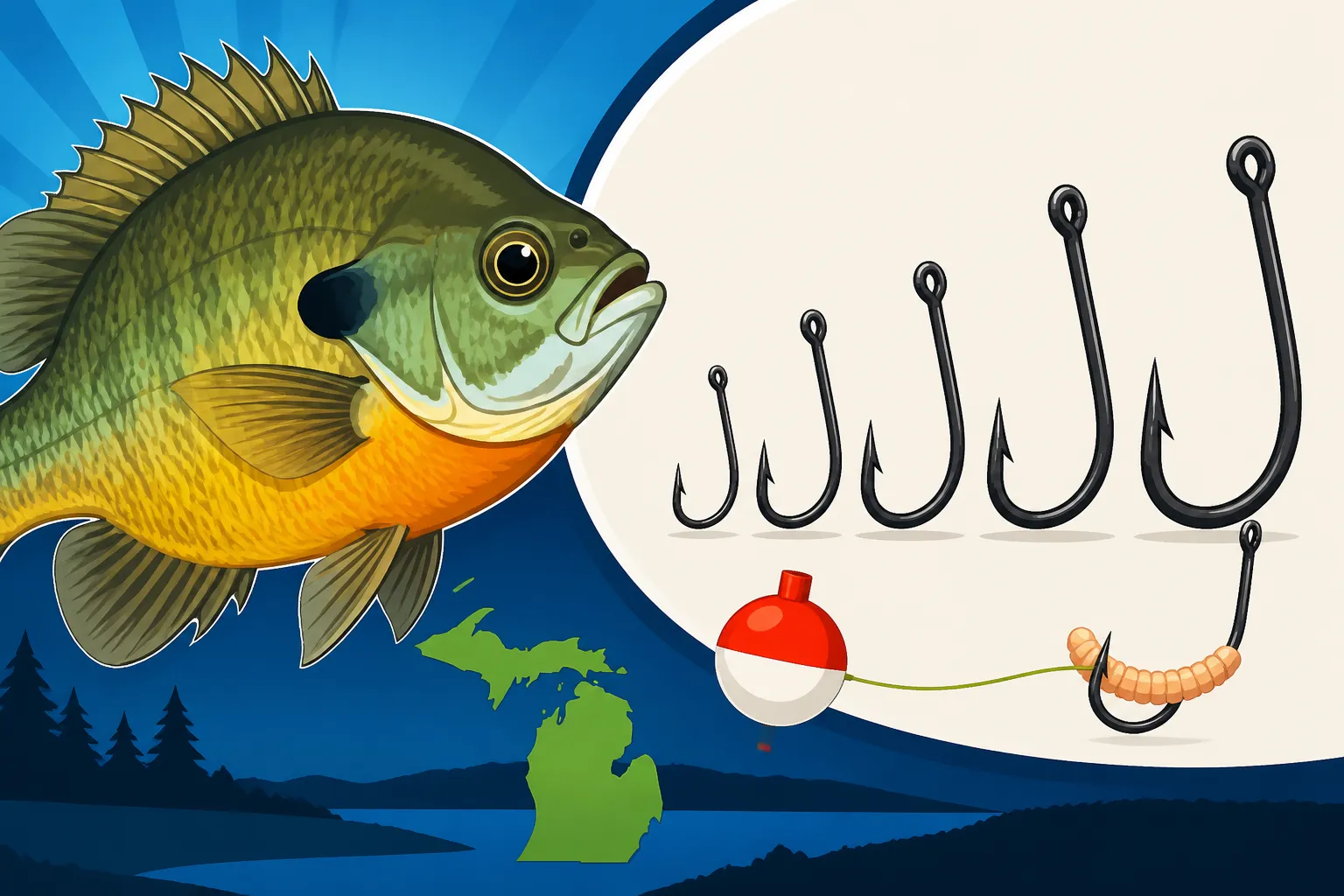
What Size Hook for Panfish
Figuring out the right hook size for panfish can feel like a surprisingly frustrating puzzle, especially when you're just trying to enjoy a peaceful afternoon on one of Michigan's beautiful lakes. You've got your bait, your favorite spot, and then you start wondering if that tiny little hook is truly tiny enough, or if the slightly larger one will just scare everything away. It’s a common dilemma that can lead to missed bites, swallowed hooks, and a general sense of "am I doing this right?" This guide is here to untangle that knot of confusion, breaking down exactly what hook sizes work best for Michigan's various panfish species and why, so you can spend less time guessing and more time reeling in those tasty catches.
Understanding Panfish and Their Mouths: Why Size Truly Matters
You might think a hook is just a hook, but for panfish, it’s a critical component that dictates your success. Panfish aren't big, toothy predators. They are often delicate feeders with mouths that range from tiny to merely small, and understanding this fundamental difference between species is the first step to choosing the perfect hook.
Different Panfish, Different Mouths
Michigan is blessed with a fantastic variety of panfish, each with its own unique feeding habits and mouth structure.
Take the humble bluegill, for instance. These feisty sunfish are known for their incredibly small, puckered mouths. They nip and peck at bait, often sucking it in rather than aggressively striking. If your hook is too large, a bluegill simply won't be able to get it far enough into its mouth to get hooked properly. You'll feel those light taps, set the hook, and come up empty, wondering if you just imagined the bite. It's a classic scenario that every panfish angler has experienced.
Then there are crappie, both black and white. While generally larger than bluegill, crappie also have relatively thin, papery mouths. They are ambush predators that flare their gills to inhale bait. If your hook is too heavy or too thick-wired, it can tear through their delicate mouth tissue, leading to lost fish right at the boat or shore. This is particularly frustrating when you've finally found a school of them.
And let's not forget yellow perch, another Michigan favorite. Perch have somewhat larger, firmer mouths compared to bluegill, but they're still not huge. They can be aggressive eaters, but they often "mouth" the bait before fully committing. A hook that’s too bulky can hinder their ability to take the bait naturally, making them suspicious and leading to dropped offerings. Learning about these differences is key to getting more fish in the cooler. Michigan Panfish Species Guide provides even more detail on these amazing fish.
The Impact of Hook Size on Hook-Up Ratios
The size of your hook directly impacts your hook-up ratio – that’s the number of fish you actually land compared to the number of bites you get. It’s simple physics and biology.
If your hook is too large, it’s like trying to eat a pea with a shovel. The panfish can’t get the point of the hook into its mouth, or if it does, it might only get the very tip, leading to a shallow hookset that pulls out easily. Imagine a bluegill trying to get a #2 hook into its tiny mouth; it's just not going to happen effectively. You'll see your bobber dance and dip, feel a definite tug, and then… nothing. It’s incredibly demoralizing, and often the culprit is simply a hook that's too big for the fish you're targeting.
Conversely, if your hook is too small for the bait you're using, you might face another problem: the fish swallowing the hook too deeply. While a tiny hook increases the chances of a bite, a hook that disappears entirely into the fish's gullet can make catch and release difficult or even fatal for the fish. This isn’t ideal, especially if you’re fishing an area where you might catch smaller fish you intend to release. A hook that’s just right allows for a solid hookset in the corner of the fish’s mouth, making removal quick and clean. It's all about finding that sweet spot, which is often easier said than done without a bit of guidance.
The Goldilocks Principle: Finding the "Just Right" Hook Size for Michigan Panfish
You want a hook that’s not too big, not too small, but just right. This section will help you navigate the often-confusing world of hook sizing and provide solid recommendations for Michigan’s most popular panfish species.
Common Hook Sizing Systems
Before we dive into recommendations, let's clear up the confusion around hook sizes. It's truly baffling to new anglers, and even experienced ones can get a little mixed up sometimes. Hooks are typically measured in two main ways:
- The Number System (#): This is where it gets counterintuitive. The larger the number, the smaller the hook. So, a #12 hook is much smaller than a #6 hook. For panfish, you'll mostly be dealing with hooks in this range, usually from #4 all the way down to #16 or even #20 for truly tiny bait and fish.
- The Aught System (X/0): This system is used for larger hooks, typically for bigger game fish. Here, the larger the "aught" number (e.g., 1/0, 2/0, 3/0), the larger the hook. You generally won't encounter aught-sized hooks when targeting panfish, but it's good to know the distinction so you don't accidentally buy a hook meant for salmon when you're trying to catch crappie.
It’s a system that truly tests your patience, but once you get the hang of it, it becomes second nature. Just remember: for panfish, smaller numbers mean bigger hooks, and bigger numbers mean smaller hooks.
Specific Recommendations for Michigan's Panfish
Now for the nitty-gritty – the actual sizes you should be looking for when you're out on the water targeting those Michigan panfish. These are general guidelines, of course, and you might find slight variations depending on the brand or hook style, but they'll give you a solid starting point.
- Bluegill: These little guys have the smallest mouths, so you need equally small hooks. Your best bet is typically hooks ranging from #8 to #14. For smaller bluegill or when using tiny baits like a single wax worm, even a #16 hook can be effective. If you’re getting a lot of bites but no hook-ups, go smaller. If they're consistently swallowing the hook, try going up a size or two. Many anglers find the #10 and #12 sizes to be perfect all-around choices for most bluegill scenarios in Michigan's lakes and ponds.
- Crappie: Crappie tend to have slightly larger mouths than bluegill, but they're still delicate. For crappie, hooks in the #4 to #8 range are usually ideal. A #6 hook is a fantastic all-purpose choice for most crappie fishing, whether you're using live minnows or small jigs. If you're targeting bigger slab crappie, a #4 might be appropriate, especially with a larger minnow. For smaller, early-season crappie, dropping down to a #8 or even a #10 can make a difference. Bluegill and Crappie Fishing in Michigan offers more targeted advice on techniques.
- Yellow Perch: Michigan's yellow perch fall somewhere in between bluegill and crappie in terms of mouth size and aggressiveness. For most perch fishing, hooks from #6 to #10 are generally recommended. A #8 hook is a strong performer for many situations, pairing well with small minnows, pieces of crawler, or grubs. If you're dealing with exceptionally large perch, a #6 could be considered. For finicky perch or smaller individuals, a #10 will often do the trick. Perch can be voracious, so having a good selection in this range will serve you well. You can learn more about these fascinating fish in Yellow Perch Fishing in Michigan.
Here's a quick reference table to help visualize these recommendations:
| Panfish Species | Recommended Hook Size Range | Common All-Around Choice | Best for Smaller Bait/Fish | Best for Larger Bait/Fish |
|---|---|---|---|---|
| Bluegill | #8 to #16 | #10 or #12 | #14 or #16 | #8 |
| Crappie | #4 to #10 | #6 | #8 or #10 | #4 |
| Yellow Perch | #6 to #10 | #8 | #10 | #6 |
Factors Influencing Your Choice
While the general recommendations are a great start, the ideal hook size isn't a static concept. Several factors can influence your final decision on any given day.
Bait Size: This is arguably the biggest factor. If you're using a tiny piece of a wax worm or a single salmon egg, a large hook will completely overwhelm it and look unnatural. Conversely, if you're threading on a larger minnow or a substantial piece of nightcrawler, a tiny hook won't have enough gap to expose the point for a solid hookset. Always match your hook size to your bait. A #12 hook for a single maggot makes sense; a #6 hook for the same bait does not. Check out Best Bait for Yellow Perch in Michigan for more bait ideas.
Presentation: Are you still-fishing with a bobber, jigging aggressively, or slow-drifting? For delicate bobber fishing where fish might just mouth the bait, a lighter wire, smaller hook can be an advantage. For active jigging with artificial lures, the hook is often built into the jig head, but if you're adding a bait trailer, make sure it complements the hook. The goal is always to make the bait look as natural and enticing as possible, and a poorly matched hook will detract from that.
Water Conditions and Fishing Pressure: In clear water or heavily fished areas, panfish can be incredibly wary. A tiny, nearly invisible hook with a light line can be the difference between catching fish and getting skunked. In stained or murky water, or when fish are aggressively biting, you might get away with slightly larger hooks. The more pressure the fish are under, the more subtle and refined your approach needs to be, and that includes your hook size.
Types of Hooks Best Suited for Panfish Anglers
Beyond just size, the style of hook you choose also plays a significant role in your panfish success. Different designs offer various advantages, from ease of hook removal to better bait presentation.
J-Hooks vs. Circle Hooks
These are the two most fundamental categories of hooks, and each has its place in the panfish angler's tackle box.
J-Hooks: These are the traditional, classic hooks you probably picture. They are shaped like the letter "J" (or sometimes more like a "C") with a sharp point that angles back towards the shank. J-hooks require the angler to set the hook. When you feel a bite, you typically give a quick, firm tug to embed the hook. For panfish, small J-hooks like the Aberdeen or Baitholder styles are incredibly popular because they're versatile and allow for immediate hook-setting, which many anglers prefer when they feel those light panfish taps. They're great for active fishing and feeling every little twitch.
Circle Hooks: Circle hooks have a distinct shape where the point is curved inward, pointing towards the shank. The magic of circle hooks is that they are designed to hook fish in the corner of the mouth without the angler having to set the hook aggressively. When a fish swallows a circle hook and then swims away, the hook slides out of the gullet until it catches the corner of the jaw, where it then rotates and sets itself. This makes them fantastic for reducing gut-hooking, which is a major benefit if you plan on practicing catch and release. For panfish, especially when live bait fishing or using tip-ups during ice fishing, small circle hooks can be very effective, ensuring a high survival rate for released fish. They're particularly useful if you're multi-tasking or not constantly holding your rod, such as when using a Best Bobber Setup for Panfish.
Aberdeen, Baitholder, and Treble Hooks
Within the J-hook family, several specific designs stand out for panfish.
Aberdeen Hooks: If you ask a seasoned panfish angler about their favorite hook, the Aberdeen often comes up. These hooks are characterized by a relatively thin wire, a wide gap, and a round bend. The thin wire is crucial because it causes minimal damage to live bait, keeping it lively longer. It also makes them easy to remove from a fish's mouth, and they tend to straighten out under heavy pressure from a snag, allowing you to retrieve your line and simply rebend the hook or tie on a new one. This wide gap ensures excellent hook-ups even on small-mouthed fish like bluegill, as long as the size is right. They’re a true workhorse for jigging and bobber fishing alike.
Baitholder Hooks: As the name suggests, baitholder hooks are designed to keep bait securely on the shank. They usually have one or two small barbs on the back of the shank that grip soft baits like nightcrawlers, grubs, or dough baits. This prevents the bait from sliding down or being easily stolen by nibbling fish. For panfish that love worms, like perch and larger bluegill, a small baitholder hook can be incredibly effective, ensuring your bait stays put and presents naturally until a fish commits. Just be mindful that the barbs can make baiting slightly trickier sometimes.
Treble Hooks: Treble hooks have three points radiating from a single shank. While popular on many artificial lures, they are generally not recommended for targeting panfish with bait. Their multiple points can cause significant damage to the delicate mouths of panfish, making proper catch and release nearly impossible. They are also much more prone to snagging in weeds or other underwater structure. If you're using small hard baits or spoons that come with treble hooks, consider replacing them with single hooks if you're primarily targeting panfish and wish to minimize harm.
Jig Heads: A Panfish Favorite
When it comes to artificial presentations for panfish, jig heads are king. A jig head is essentially a hook molded into a lead (or tungsten) head. They come in a vast array of sizes, weights, and colors, and are incredibly versatile for panfish.
Weight and Size: Jig heads are measured by their weight (e.g., 1/32 oz, 1/16 oz, 1/8 oz) and the size of the hook attached to them. For panfish, you'll typically be using very light jig heads, often 1/32 oz or 1/16 oz, sometimes even smaller like 1/64 oz for ultra-light presentations. The hook size on these jig heads usually ranges from #6 to #12, making them perfect for crappie, bluegill, and perch.
Versatility: You can tip jig heads with tiny plastic grubs, tubes, or larvae imitations to create a realistic lure that mimics natural forage. Alternatively, you can tip them with live bait like wax worms, spikes, or small minnows for a deadly combination. The weight of the jig head helps you cast further and get your bait down to the desired depth quickly, especially useful when targeting suspended crappie or perch in deeper water. Best Tackle for Michigan Walleye Fishing also covers jigging, but for much heavier tackle, showing the versatility of the technique.
Choosing the right jig head means matching the weight to the depth and current, and the hook size to your target species and chosen trailer. For winter fishing, micro jig heads are a staple, often tipped with a single maggot or plastic. When browsing for these, you'll find an enormous selection at stores like Bass Pro Shops or even online at Amazon, offering various weights and colors to match any condition.
Practical Tips for Panfish Hook Selection and Usage
Having the right hook is one thing, but knowing how to use it effectively is another. Here are some practical tips to enhance your panfish angling experience.
Matching Hook to Bait and Presentation
We touched on this, but it bears repeating: your hook needs to be a seamless extension of your bait. It should complement it, not dominate it.
If you're using a tiny minnow for crappie, opt for a small, thin-wire hook (like a #6 Aberdeen) that allows the minnow to swim naturally without being weighed down or constricted. Hook the minnow lightly through the lips or just behind the dorsal fin, making sure the hook point is exposed. For a live wax worm or a few maggots, a #10 or #12 hook will ensure the bait looks natural and the hook point is free to do its job. A hook that’s too big will not only look unnatural but can also impede the natural action of live bait, making it less appealing to finicky panfish.
When fishing soft plastics, the hook choice is even more critical. You want the hook to integrate with the plastic lure so it moves as one fluid unit. For tiny crappie tubes or grubs, the built-in hook on a 1/32 oz jig head is often perfect. If you're using a longer plastic worm or creature bait for bigger panfish, consider a small, wide-gap hook for better weedless rigging and increased hook-up potential. The key is balance – the hook, bait, and line should all work together to present an irresistible meal.
Light Line and Sensitive Rods for Panfish
While not directly about hook size, your choice of line and rod are crucial for effectively fishing with small hooks and light baits. Panfish have notoriously light bites, often feeling like nothing more than a faint tick or a slight change in line tension.
Light Line: For panfish, you want light monofilament or fluorocarbon line, typically in the 2- to 6-pound test range. This light line is less visible to wary fish in clear water, and it allows your small baits to fall naturally. Anything heavier will create too much drag and might spook the fish. Many anglers opt for a What Line Weight for Michigan Steelhead for trout, but for panfish, you're looking for something much, much lighter. The lighter line also makes it easier to feel those subtle bites.
Sensitive Rods: Pair your light line with a sensitive, ultra-light or light-action fishing rod. A rod with a fast or moderate-fast action will give you the sensitivity to detect those faint panfish bites and the backbone to set those small hooks without overpowering the fish. A limber tip helps absorb those quick headshakes and keeps those small hooks from tearing out of delicate mouths. The right rod and reel combo provides a complete system for panfish success. Best Rods and Reels for Michigan Fishing provides a broader look at selecting gear.
Strategic Hook Storage and Organization
Once you've acquired your perfect selection of panfish hooks, keeping them organized and in good condition is vital. Nothing is more frustrating than fumbling through a tangled mess of rusty hooks when the bite is on.
Dedicated Tackle Boxes: Invest in a small tackle box or a series of small, clear plastic containers with adjustable dividers. Dedicate specific compartments to different hook sizes and styles. Labeling these compartments can save you valuable time on the water. For example, keep all your #10 Aberdeen hooks in one spot and your #6 crappie jigs in another. You can find excellent options for these at any Bass Pro Shops or online at Amazon.
Preventing Rust: Small hooks, especially thin-wire ones, can rust quickly if exposed to moisture. After a fishing trip, allow your tackle box to air out completely before closing it up. You can also place small desiccant packets (like those found in new shoes or electronics) in your tackle box to absorb moisture. Some anglers even lightly coat their hooks with a protective oil before storage, though this is less common for panfish hooks.
Pre-Tied Rigs: For ice fishing or situations where you know exactly what you'll be using, consider pre-tying some leaders with your preferred panfish hooks. Store these on foam spools or small leader wallets. This allows for quick changes on the ice or in cold weather, minimizing downtime and maximizing your fishing opportunities. This is particularly useful for things like Best Ice Fishing Techniques for Michigan Walleye and other fast-paced fishing, where every second counts.
Common Panfish Hook Challenges and Solutions
Even with the right hooks, you'll inevitably face some challenges. Knowing how to troubleshoot common problems can turn a frustrating day into a productive one.
Dealing with Missed Bites and Swallowed Hooks
These are perhaps the two most common frustrations when targeting panfish, and they often relate directly back to your hook choice and technique.
Missed Bites: If you're constantly feeling bites but failing to hook up, several factors could be at play.
- Hook Size Too Large: As discussed, the most common culprit. Try dropping down one or two hook sizes to see if your hook-up ratio improves.
- Fish Are Just Nipping: Panfish, especially bluegill, can be notorious nibblers. They might just be tasting the bait. Try waiting a fraction of a second longer after you feel the initial tap, allowing the fish more time to fully inhale the bait.
- Dull Hook: Even new hooks can sometimes be less than razor-sharp. Check your hook point (more on this below).
- Too Much Line Slack: A bow in your line reduces sensitivity, making it harder to detect light bites and harder to set the hook quickly. Keep a relatively tight line.
Swallowed Hooks: This is a problem when you do hook the fish, but the hook is deep in its gullet, making removal difficult and often harmful to the fish.
- Hook Size Too Small: If your hook is consistently being swallowed, it might be too small for the size of fish you're catching or the bait you're using. Try going up a hook size or two. This provides more exposed hook point to catch the mouth before the fish can inhale it completely.
- Waiting Too Long to Set the Hook: While patience is good for nibblers, waiting too long can allow the fish to swallow the bait and hook deeply. With practice, you'll learn to distinguish between a tentative nip and a committed bite. Set the hook quickly once you feel a solid pull.
- Consider Circle Hooks: If catch and release is important to you, and you're struggling with gut-hooking, specifically switch to small circle hooks. They are designed to prevent deep hooking and significantly increase the survival rate of released fish.
Hook Sharpening and Maintenance
A sharp hook is a successful hook. It's a simple truth that many anglers overlook, especially with smaller panfish hooks. A dull hook struggles to penetrate a fish's mouth, leading to missed bites and lost fish.
Checking Sharpness: You can easily test a hook's sharpness by lightly dragging the point across your thumbnail. If it digs in and leaves a scratch, it's sharp. If it slides across smoothly, it's dull and needs sharpening. Do this periodically throughout your fishing day, especially after catching several fish or after snagging on structure.
Sharpening Tools: For smaller hooks, a small, fine-grit hook file or a diamond sharpening stone is all you need. Gently draw the file across the sides and point of the hook, always stroking towards the point, maintaining the original angle. Be careful not to take off too much metal or change the point's geometry. For tiny hooks, a few light strokes are usually sufficient to restore a razor-sharp edge.
Corrosion Prevention: Beyond organizing, hooks can get dull from minor corrosion. Always ensure your hooks are dry before storing them, and consider using rust-inhibiting tackle box inserts. Replacing rusty or severely corroded hooks is always the best option. You can buy hooks in bulk online through Amazon or at your local Bass Pro Shops, making replacement an easy and affordable option.
When to Adjust Your Hook Size
Learning to read the signs that your current hook setup isn't working is a crucial skill for any angler.
Signs to Go Smaller:
- Lots of bites, very few hook-ups.
- Fish are barely nipping the bait and letting go.
- You can see the fish (in clear water) mouth the bait but struggle with the hook.
- You're using very small natural baits (single maggot, tiny piece of crawler).
Signs to Go Larger:
- Fish are consistently swallowing the hook deeply, making release difficult.
- You're using larger natural baits (whole minnow, larger piece of nightcrawler).
- You're targeting bigger individual panfish (slab crappie, jumbo perch).
- Fish are aggressively striking, and you want a more robust hookset.
Experimentation is key! Don't be afraid to change your hook size or style if what you're doing isn't producing. Keep a variety of sizes and types of hooks in your tackle box, ranging from #4 all the way down to #16, for various panfish species and conditions. Often, a small adjustment can make a world of difference in your success on the water.
Disclaimer
This article is for general informational purposes only and does not constitute professional advice. Laws, prices and regulations vary by location and change over time. Consult a qualified professional for guidance on your specific situation.