Do You Need a Fish Finder for Lake Fishing?
Ah, the age-old debate: do you really need a fish finder when you're out on a Michigan lake? Many anglers, especially those new to deeper waters or looking to upgrade their gear, grapple with this question. It feels like everyone else has one, but is it truly a game-changer or just another gadget to complicate your peaceful day on the water? This guide will dive deep into whether a fish finder is a necessary tool for your Michigan lake fishing adventures, helping you decide if it's the right investment for your style and goals.
The Core Question: Do You Really Need a Fish Finder?
Let's get straight to it: no, you don't absolutely need a fish finder to catch fish on Michigan lakes. Generations of anglers have successfully pulled in impressive catches using nothing more than intuition, local knowledge, and a keen eye. However, in today's fishing world, these devices offer a significant advantage that can transform your angling experience, especially on unfamiliar or larger bodies of water. The question isn't about necessity, but rather about enhancing efficiency, reducing frustration, and ultimately, putting more fish in your boat.
Understanding Your Fishing Style and Goals
Before you even think about dropping hard-earned cash on a fish finder, take a moment to consider what kind of angler you are and what you hope to achieve. Are you a casual shore angler who enjoys a peaceful afternoon with a bobber, or are you a dedicated tournament angler targeting specific species like walleye or bass? If your idea of a perfect day is simply relaxing by the shore of a small, familiar pond, a fish finder might be overkill. You probably already know the hot spots, the drop-offs, and where the weeds gather.
But if you're venturing out onto vast inland seas like Houghton Lake or Higgins Lake, or even exploring new waters, the equation changes. If your goal is to efficiently locate schools of perch, find those elusive deep-water lake trout, or pinpoint structure that holds bass, then a fish finder moves from a "nice-to-have" to a "seriously consider." Think about your primary targets too; some species are more structure-oriented than others, making electronic assistance more valuable.
What a Fish Finder Actually Does for You
At its heart, a fish finder is a sonar device. It sends sound waves into the water, and when those waves bounce off objects (like fish, structures, or the bottom), they return to the transducer, which then interprets the information and displays it on a screen. It's like having X-ray vision underwater, giving you a real-time snapshot of what's beneath your boat.
This technology allows you to see several critical pieces of information. You can identify the depth of the water, locate changes in bottom contour such as ledges, humps, or drop-offs, and spot underwater structure like submerged trees, rock piles, or weed beds. Crucially, it helps you identify "arches" or "blobs" that indicate fish. Modern units even differentiate between individual fish and schools, and some advanced models can even show you the type of bottom (hard or soft). This direct insight into the underwater world takes a lot of the guesswork out of finding fish and helps you understand why some spots are consistently productive while others remain barren.
Advantages and Disadvantages of Using a Fish Finder on Michigan Lakes
Like any piece of fishing gear, fish finders come with their own set of pros and cons. Understanding these can help you make an informed decision that aligns with your fishing habits and budget. For those who frequently fish Michigan's diverse waters, from the smaller inland lakes to the larger bodies, the benefits often outweigh the drawbacks, but it’s not a universal truth for every angler.
The Benefits for Anglers
The advantages of a fish finder can be truly transformative for your fishing success:
- Pinpointing Fish and Structure: This is the most obvious benefit. Instead of blind casting, you can see if fish are present in a certain area before you even drop a line. You can identify schools of yellow perch congregating near a weed line on Lake St. Clair or mark suspended walleye over a deep flat. Finding submerged structures like old riverbeds or rock piles is also made easy, which are often prime holding areas for species like smallmouth bass.
- Understanding Bottom Composition and Depth: Knowing if you're over a hard-packed gravel bottom, soft mud, or a rocky reef is crucial for choosing the right bait and technique. A fish finder gives you this information instantly. You can also quickly see depth changes, which are often key transitions where fish like to ambush prey. For instance, knowing you're approaching a sudden drop-off from 10 feet to 25 feet can indicate a prime ambush point.
- Saving Time and Fuel: Imagine motoring around a large lake like Muskegon Lake, searching for productive spots. Without a fish finder, you're relying on guesswork or old maps. With one, you can quickly scan vast areas, identify promising contours or fish concentrations, and move directly to them, saving precious fishing time and fuel. This is particularly valuable when you're on a limited time frame, like a weekend trip.
- Targeting Specific Species More Effectively: Different fish species prefer different depths and structures. Knowing where lake trout suspend in deep water, or where crappie might be holding to brush piles, allows you to tailor your approach immediately. You can switch to Michigan Walleye Fishing Techniques when you see them on the screen, rather than wasting time with a lure meant for bass.
- Enhancing Safety: While not its primary purpose, knowing the depth and seeing underwater obstacles can help you avoid running aground or damaging your boat in shallow, unfamiliar areas. This is especially true when navigating complex shorelines or entering bays you haven't fished before.
The Potential Drawbacks and Learning Curve
It's not all sunshine and trophy fish, though. There are some downsides and considerations:
- Cost: Quality fish finders can be a significant investment, ranging from a couple of hundred dollars for basic models to thousands for high-end units with multiple sonar technologies. This can be a barrier for many anglers, especially if fishing isn't a primary hobby. However, there are increasingly affordable and effective options available that don't break the bank, especially from retailers like Bass Pro Shops or Amazon.
- Learning Curve: Interpreting the screen can take some practice. Those arches, lines, and blobs aren't always intuitive at first. Understanding what different bottom returns mean or distinguishing fish from debris requires time on the water and experimentation with settings. It’s not simply plug-and-play. You'll need to learn how to adjust sensitivity, zoom, and different sonar views to get the most accurate picture.
- Over-Reliance: It's easy to get fixated on the screen and forget about traditional angling skills. Sometimes, the fish are there, but they're not biting, and no amount of screen-gazing will change that. Relying solely on the fish finder can sometimes disconnect you from reading the water, observing surface activity, or using your intuition, which are invaluable skills.
- Installation and Maintenance: Unless you're buying a portable unit, a fish finder requires proper installation of the head unit and transducer, which can be daunting for some. Transducers need to be mounted correctly for optimal performance. Like all electronics, they also require careful handling and protection from the elements.
When a Fish Finder Becomes Indispensable (and When it's Not)
Deciding when a fish finder is truly a must-have versus a nice-to-have often comes down to the specifics of your fishing situation. Michigan offers such a diverse range of fishing environments that there's no single answer for everyone.
Scenarios Where a Fish Finder is a Game Changer
There are certain situations where a fish finder isn't just helpful, it's practically essential for maximizing your chances:
- Fishing Large, Unfamiliar Lakes: Imagine launching your boat onto a vast body of water like Mullett Lake or Burt Lake for the first time. Without a fish finder, you're essentially looking for a needle in a haystack. The device allows you to quickly survey vast areas, identify potential hotspots, and eliminate unproductive water, vastly increasing your efficiency.
- Deep Water Fishing: When you're targeting species that reside in deeper sections of the lake, like lake trout or suspended walleye, a fish finder is indispensable. It's nearly impossible to accurately present your lure at 40, 60, or even 100 feet without knowing what's down there. For anglers pursuing walleye on Saginaw Bay, What Electronics Help Find Walleye is a prime consideration to efficiently locate schools in open water.
- Ice Fishing: This is where a flasher-style or traditional fish finder truly shines. When you're drilling holes through thick ice, you need to know if there's anything beneath you before you set up camp. A fish finder allows you to scan the water column, identify fish directly below your hole, and even see your lure's presentation in real-time. This is why many ice anglers consider them non-negotiable for success, especially on popular Best Ice Fishing Lakes in Michigan. Learning How to Catch Perch Through the Ice in Michigan often starts with locating them quickly with a good finder.
- Targeting Structure-Oriented Fish: If your goal is to find bass hiding in submerged timber, crappie suspended around brush piles, or walleye relating to subtle humps, a fish finder's ability to reveal underwater structure is paramount. Without it, you'd be spending hours casting to featureless bottom.
- Trolling: For those who troll for salmon or trout on the Great Lakes, or even walleye on large inland lakes, a fish finder helps you stay over productive depths and spot schools of baitfish or target species as you move. This continuous feedback is crucial for making real-time adjustments to your trolling spread.
When Traditional Methods Still Shine
On the flip side, there are many scenarios where you can have a perfectly successful and enjoyable day on the water without a single electronic beep:
- Small Ponds and Lakes You Know Well: If you're fishing a local pond where you've spent countless hours, you probably have a mental map of the bottom, the weed lines, and the best spots. A fish finder won't add much value here beyond confirming what you already suspect.
- Shore Fishing or Pier Fishing: When you're casting from solid ground, a fish finder (unless it's a castable sonar ball) isn't practical. Here, reading the water, observing current breaks, and knowing local hot spots are your best tools. Many anglers have great success with Best Lake Michigan Fishing Piers and Harbors by simply knowing the common patterns.
- River Fishing (for certain species/techniques): While some river anglers use specialized side-imaging sonar for finding structure in larger rivers, many traditional river techniques, especially for trout or steelhead, rely more on reading current, seams, and knowing fish holding lies. For fly fishing on the Au Sable River, for example, a fish finder might distract more than help.
- Casual, Recreational Angling: If your primary objective is relaxation and enjoying nature, and catching a fish is a bonus rather than the main goal, then the expense and complexity of a fish finder might detract from your experience rather than enhance it. A simple rod, reel, and bait are often all you need.
- Kayak or Canoe Fishing on Smaller Waters: While portable fish finders are popular for kayaks, if you're paddling a Best Kayak for Michigan Lake Fishing on a small, clear lake, you might be able to see enough of the bottom and structure visually to forgo the electronics.
Choosing the Right Fish Finder for Michigan Lake Fishing
If you've decided that a fish finder is right for you, the next step is navigating the myriad of options available. The technology has advanced so much that there's a perfect unit out there for almost every angler and budget.
Types of Fish Finders and Their Features
The market is flooded with different types and features, but they generally fall into a few categories:
- Traditional 2D Sonar: This is the classic view you think of, showing arches for fish and the bottom contour. It’s reliable, often more affordable, and effective for most general fishing. Many entry-level units excel here.
- Down Imaging/DownScan: This technology provides a picture-like view directly beneath your boat, making it much easier to identify submerged trees, rock piles, and other structures with incredible detail. It's like looking at a black and white photo of the underwater world.
- Side Imaging/SideScan: This is a game-changer for covering large areas. Side imaging sends sonar beams out to the sides of your boat, allowing you to scan a wide swath of water and quickly locate structure and fish well away from your immediate path. This is particularly useful for finding scattered fish or expansive weed beds on bigger waters like Lake St. Clair or Michigan's Great Lakes.
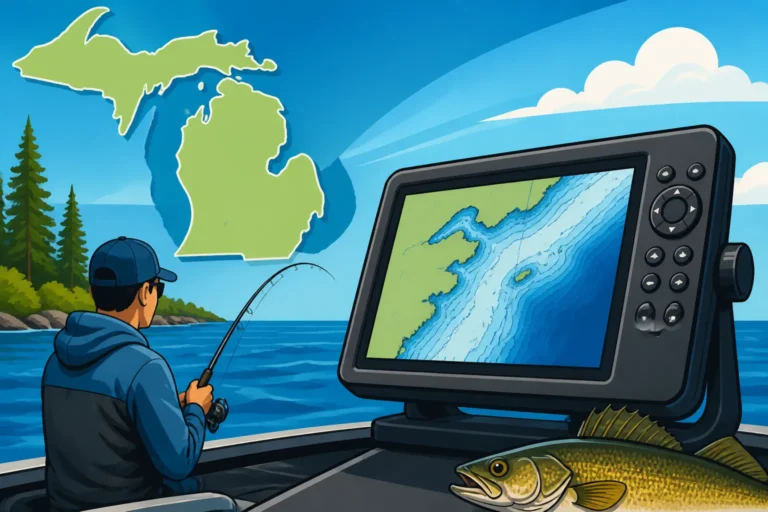
- GPS/Chartplotting: Many fish finders are now combo units, meaning they also include GPS and chartplotting capabilities. This allows you to mark waypoints for productive spots, follow navigation routes, and view detailed lake maps. For navigating vast bodies like Lake Michigan or the larger inland lakes, this feature is invaluable. You can save all your secret fishing holes and return to them with precision.
- Portable vs. Mounted Units: Portable fish finders are great for kayaks, canoes, rental boats, or ice fishing. They often use a suction cup transducer or a mount that clamps to the boat. Mounted units are permanently installed in powerboats and typically offer larger screens and more advanced features. For dedicated boaters, a mounted unit usually offers the best performance and integration.
- Live Sonar: This cutting-edge technology gives you real-time, video-like views of fish and your lure underwater. You can see fish reacting to your bait, how they approach, and how they shy away. While expensive, it offers an unprecedented level of interaction and understanding.
When considering features, think about what you mostly fish for. For example, if you primarily target walleye, Best Tackle for Michigan Walleye Fishing often involves understanding their depth and schooling patterns, which a quality sonar excels at revealing.
Budgeting and Where to Shop
Your budget will largely dictate the features you can afford. You can find basic, yet effective, 2D sonar units for a few hundred dollars. As you add features like GPS, down imaging, side imaging, and larger, higher-resolution screens, the price quickly climbs. Top-tier units with live sonar can run into the thousands.
It's a good idea to set a realistic budget first. For entry-level options, consider reputable brands that offer good value. You don't need the most expensive unit to see a significant improvement in your fishing. Many anglers find great deals and a wide selection at big box outdoor retailers like Bass Pro Shops, where you can often see units in person and get advice. Online retailers like Amazon also offer competitive pricing and a vast array of models, often with helpful customer reviews to guide your decision. Don't forget to check out specialized marine electronics stores too, as they often have knowledgeable staff who can walk you through the more advanced options.
Remember, the goal is to find a tool that enhances your enjoyment and success on the water, not just to keep up with the latest tech. Whether you fish Michigan's large inland lakes or stick to smaller, local waters, a fish finder can offer incredible insights, but your passion and intuition will always be your most powerful fishing tools.
Disclaimer
This article is for general informational purposes only and does not constitute professional advice. Laws, prices and regulations vary by location and change over time. Consult a qualified professional for guidance on your specific situation.