Best Ice Shelters for Michigan Ice Fishing
Michigan's ice fishing scene is legendary, but let's be honest, those beautiful frozen landscapes come with a hefty dose of brutal cold, biting winds, and sometimes relentless snow. Trying to enjoy a peaceful day on the ice, chasing perch or walleye, can quickly turn into a miserable experience if you're not properly sheltered. This guide is here to help you navigate the myriad of ice shelters available, so you can choose the perfect one to keep you warm, comfortable, and focused on reeling in that next big catch, no matter what Mother Nature throws your way.
Understanding Michigan's Ice Fishing Environment
Before you even start dreaming about the perfect ice shanty, it’s crucial to wrap your head around what fishing on a frozen Michigan lake really means. It's not just about staying warm; it's about battling the elements effectively so you can actually enjoy your time out there.
The Brutality of a Michigan Winter
Anyone who's spent a winter in Michigan knows it's not for the faint of heart. We're talking about temperatures that can plummet well below zero, often accompanied by wind chills that make it feel even colder. Imagine being out on a wide-open lake, say Saginaw Bay or Houghton Lake, with nothing but an endless expanse of ice around you. There's no tree line to break the wind, no hills to block the gusts. The wind just howls, cutting right through layers of clothing. It's this raw, exposed environment that demands serious consideration for your ice shelter.
Beyond the cold, there’s the snow. Sometimes it’s a gentle blanket, other times it’s a relentless blizzard that can dump inches or even feet in a single storm. Your shelter needs to be able to withstand the weight of snow, prevent drifts from piling up inside, and ideally, not become a frozen block that’s impossible to move. A flimsy shelter might offer some psychological comfort, but it won't stand a chance against a true Michigan squall, potentially collapsing or tearing, leaving you exposed and scrambling.
How Weather Impacts Your Shelter Choice
The specific weather you expect to encounter will heavily influence the type of shelter that’s right for you. Are you a fair-weather ice angler who only goes out on calm, sunny (but still cold!) days? Or are you the type who embraces every opportunity, regardless of whether there's a whiteout approaching? If you're planning on chasing early ice in December or pushing into late March, you’re likely facing different conditions than a mid-February outing.
Strong winds, which are a common feature on many larger Michigan lakes like Lake St. Clair or the Great Lakes itself, will demand a shelter with a robust frame and sturdy anchoring points. If you're someone who uses a portable propane heater inside your shelter – and let's face it, most of us do in Michigan – proper ventilation becomes a non-negotiable safety feature, which can be challenging to maintain in driving wind and snow. Thinking through these typical Michigan weather scenarios will help you prioritize features like insulation, frame strength, and ease of securing your shelter to the ice.
Types of Ice Shelters: A Detailed Look
When you start looking at ice shelters, you'll quickly realize there are a few main categories. Each has its own strengths and weaknesses, making them better suited for different styles of fishing and angler preferences. Understanding these differences is key to making an informed choice for your Michigan adventures.
Pop-Up Ice Shelters: Portability and Space
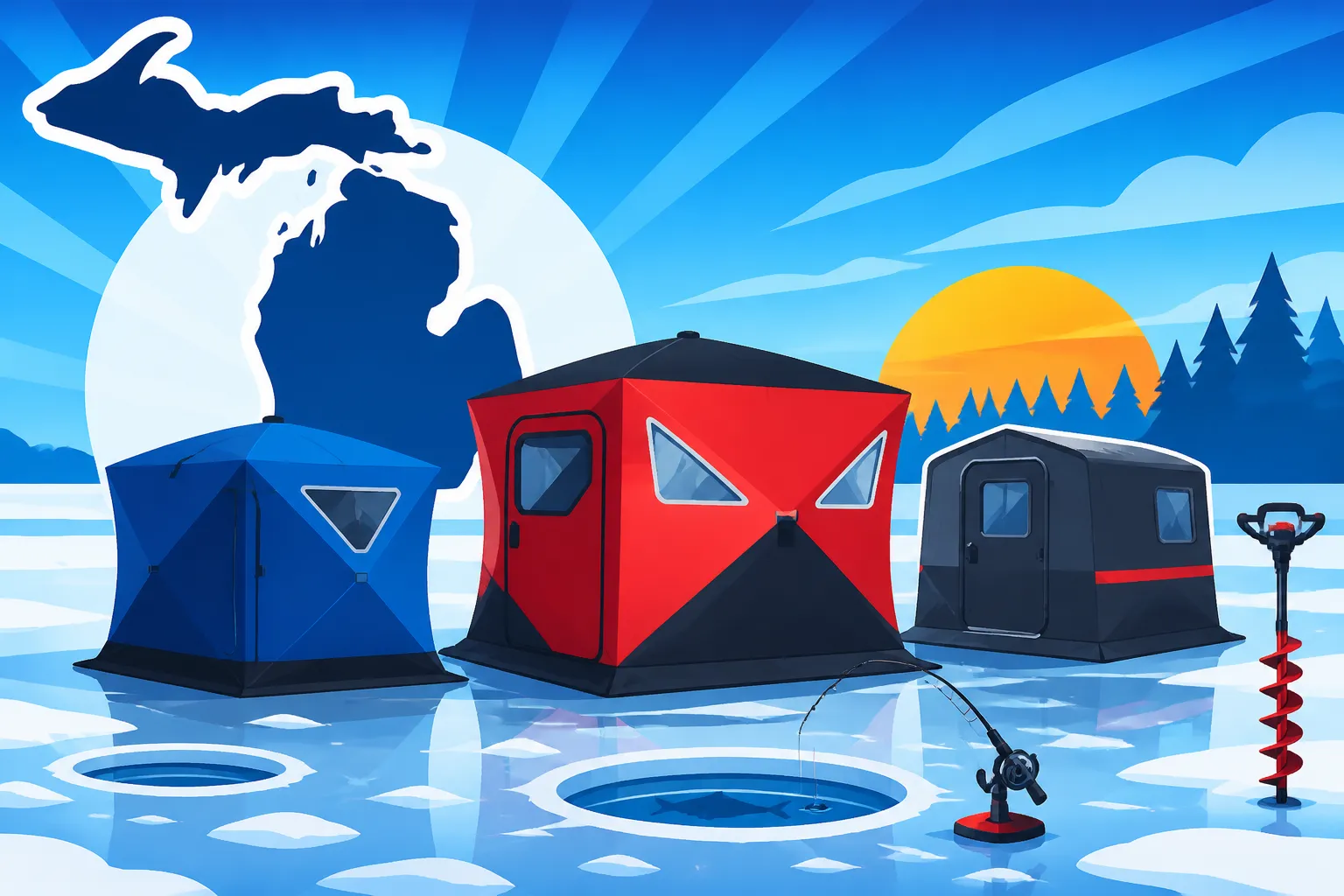
Pop-up ice shelters, often called hub shelters, are incredibly popular for a reason: they strike a fantastic balance between portability and spaciousness. Think of them like a tent that "pops" out into shape. They typically fold down into a compact bag, making them easy to transport in a sled or even on your back if you’re venturing out on foot. When you get to your spot, you simply pull out the hub walls, and the entire structure expands, often providing a surprisingly large interior space. Many serious anglers appreciate the versatility of a quality pop-up shelter, perfect for chasing those winter panfish or even larger species.
The major advantage of pop-ups is their generous interior room and relatively light weight. You can stand up comfortably in most models, stretch out, and have plenty of space for multiple anglers, gear, and a heater. This makes them ideal for group outings or for solo anglers who like a lot of elbow room. Setting them up generally involves extending the hubs and anchoring them to the ice, which can be quick if you have good ice anchors. However, they can be a bit more challenging to set up in very strong winds compared to a flip-over, as the large fabric panels act like sails until fully secured. When considering a pop-up, look at models from brands available at your local Bass Pro Shops or through online retailers like Amazon, as they often carry a good range.
Flip-Over Ice Shelters: Speed and Integrated Seating
Flip-over shelters are the workhorses of serious ice anglers, especially those who like to stay mobile or fish solo and want lightning-fast setup. These shelters are built onto a sled base, which serves as your transport, your floor, and often integrates seating. When you arrive at your desired fishing spot, you simply unlatch the frame and "flip" the tent fabric over the top of the sled, and you're ready to fish in a matter of seconds. This speed is a huge advantage when the weather is truly nasty, or when you're jumping from spot to spot looking for active fish.
The beauty of a flip-over is its self-contained nature. Your sled holds your rods, tackle, bait, and even your heater, so everything is right where you need it. Many models come with comfortable, swiveling seats already built-in, saving you the hassle of bringing separate chairs. While they tend to be heavier than pop-ups due to the sled, they're surprisingly easy to pull across the ice, especially if you have a good tow rope or an ATV/snowmobile. Their lower profile also makes them more stable in high winds once the fabric is deployed. The main trade-off is often less standing room compared to a large pop-up, and they can be pricier. However, for sheer convenience and durability in Michigan's conditions, a flip-over is hard to beat for many anglers who value efficiency.
Hub-Style Shelters: Maximize Your Crew's Comfort
While sometimes grouped with "pop-ups," dedicated hub-style shelters often refer to the larger, multi-hub designs that prioritize maximum interior space for multiple anglers. These aren't just one or two person affairs; we're talking about shelters designed to comfortably accommodate three, four, five, or even more people, along with all their gear, heaters, and fish finders. Think of a portable basecamp for your ice fishing crew. They still offer the same "pop-out" functionality as smaller pop-ups, but on a grander scale.
These shelters are fantastic for social fishing trips, family outings, or when you simply want ample room to spread out and fish several holes simultaneously. The expansive interior means everyone can fish without feeling cramped, and there's usually enough room for a robust heating system to keep the whole crew toasty. While they provide fantastic comfort, their larger size does mean they're generally heavier and take a bit more effort and time to set up and take down, especially if you're battling the wind. Anchoring becomes even more critical with these larger shelters, as they present a huge surface area for the wind to catch. If your main goal is to accommodate a larger group comfortably for extended periods, a dedicated large hub-style shelter is a stellar choice, though you'll want to ensure you have adequate transport, like a robust sled and perhaps an ATV, to move it across vast stretches of ice.
Key Features to Consider When Buying an Ice Shelter
Beyond the basic type, there are several crucial features that will significantly impact your comfort, safety, and overall enjoyment of your ice fishing excursions in Michigan. Don’t overlook these details, as they can make or break a day on the ice.
Insulation and Fabric: Staying Warm is Non-Negotiable
This is arguably the most critical factor for any ice shelter in Michigan. Non-insulated shelters, while lighter and cheaper, offer little more than a windbreak. They might be fine on a mild day or if you're incredibly hardy, but for the typical Michigan winter, you'll be burning through propane trying to keep a non-insulated shelter warm. Insulated shelters, on the other hand, feature a quilted fabric with a layer of insulation sewn between two layers of canvas, often polyester. This insulation drastically reduces heat loss, making your heater far more efficient and keeping you much more comfortable.
Look for shelters advertised as "thermal" or "fully insulated." The heavier the denier (a measure of fabric density) of the outer shell, generally the more durable it will be against tears and punctures. A fully insulated shelter will also help mitigate condensation, which is a common nuisance in colder shelters. Imagine your breath freezing on the inside walls and then dripping on you and your gear as the day warms up slightly—not fun! A good insulated shelter minimizes this, keeping the interior drier and more pleasant. When purchasing, it's worth the extra investment for thermal fabric, especially when you consider the cost of propane and your personal comfort. Many anglers swear by the difference a properly insulated shelter makes, allowing for longer, more enjoyable days on the ice.
Size and Capacity: Solo Angler vs. Fishing Crew
The internal dimensions and stated capacity are vital considerations. Are you primarily a solo angler who values mobility and minimalism? Or do you often fish with a buddy, your kids, or a larger group? A "one-person" shelter is generally quite snug, often best for one angler and minimal gear. A "two-person" might be comfortable for one with ample gear or two adults if you're willing to be cozy. For two anglers who like their space, or for two adults and a child, a "three-person" model is often a better fit.
Consider not just how many people but also how much gear you bring. Will you have multiple rod and reel setups, a portable fish finder, a heater, a bucket of minnows, and a cooler? All of this takes up precious floor space. Standing height is another factor; if you hate hunching over, look for models with a taller center height. Many flip-over shelters, for instance, are designed so you sit rather than stand. Pop-ups, especially the larger hub styles, often offer more standing room. Be realistic about your typical fishing party size and gear needs to avoid feeling cramped, which can quickly turn a fun outing into a frustrating one.
Portability and Setup Speed
Michigan ice fishing often involves moving around. Sometimes you drill a few holes, don't find the fish, and need to pack up and move to a new spot. This is where portability and setup speed become critical. A heavy, cumbersome shelter that takes 20 minutes to set up and take down will deter you from moving, even if the fish aren't biting where you are.
Flip-over shelters excel in setup speed; often, it’s a matter of seconds. They're built on a sled, making them easy to pull by hand or tow behind a snowmobile or ATV. However, they can be bulky to load into a truck or store. Pop-up shelters are typically lighter and fold into a compact bag, making them easier to transport in smaller vehicles or carry longer distances. The trade-off is that they take a little longer to deploy and anchor, especially in windy conditions where the large fabric panels can be a handful. Think about your transportation methods (truck, ATV, walking) and your willingness to move spots frequently. A casual angler might not mind a longer setup, but someone who "runs and guns" for walleye or crappie will prioritize speed above almost all else.
Ventilation and Safety for Heaters
Using a propane heater inside an ice shelter is almost a necessity in Michigan's winter. However, this introduces serious safety considerations regarding carbon monoxide poisoning. Adequate ventilation is paramount. Never use a heater that isn't rated for indoor use, and always ensure your shelter has vents or windows that can be opened to allow fresh air in and exhaust gases out.
Most modern ice shelters are designed with vents, usually near the top, to facilitate airflow. Some even have clear plastic windows that can be unzipped or rolled down to create additional ventilation. It's a good practice to invest in a portable carbon monoxide detector to place inside your shelter, offering an extra layer of safety. Even on the coldest days, slightly cracking a window or keeping a vent open is crucial. The goal is to balance warmth with a steady supply of fresh air. Without proper ventilation, carbon monoxide can build up quickly and silently, leading to serious health risks or worse. Never compromise on this safety feature, even if it means a little less warmth on an extreme cold day.
Popular Ice Shelter Brands and What They Offer
The ice fishing market is robust, with several brands that have earned a loyal following among Michigan anglers. While I can't give you exact model numbers or prices, understanding the general reputation and focus of these brands can guide your purchasing decisions. You'll find a wide array of options from these manufacturers, catering to different budgets and fishing styles.
Clam: Innovation and Comfort
Clam is a name synonymous with ice fishing, and for good reason. They are known for their wide range of shelters, from compact flip-overs to massive hub-style shelters, often prioritizing angler comfort and innovative features. Many of their shelters boast advanced thermal fabrics and intelligent designs, like integrated lighting systems or clever storage solutions. If you're looking for a shelter that combines ease of use with thoughtful amenities, Clam often has a strong contender. Their flip-over series, in particular, is highly regarded for its quick setup and durable sled bases.
Anglers often praise Clam for their robust frames and the quality of their insulation, which helps keep the inside toasty on those frosty mornings on Lake Gogebic or Mullett Lake. They typically offer good customer support and replacement parts, which is a bonus if something wears out after years of hard use. Whether you're a solo angler needing a quick deployment solution or a parent taking the family out, Clam likely has a shelter designed to meet those specific needs, often available at major outdoor retailers or online, like through Amazon.
Eskimo: Durability and Performance
Eskimo is another powerhouse in the ice fishing world, well-known for producing shelters that are incredibly durable and designed for serious performance. They often focus on robust construction, with heavier-duty fabrics and strong pole systems that stand up to the severe winds and heavy snowfalls common in Michigan. Their flip-over and hub shelters are popular, often featuring wide bases for stability and convenient features like large entry doors and plenty of windows.
What often sets Eskimo apart is their emphasis on ruggedness. Anglers who frequently fish in harsh conditions or who are tough on their gear often gravitate towards Eskimo for its perceived longevity. Their thermal models are particularly effective at retaining heat, making them a favorite for those long days on the ice. They also produce some excellent ice augers, so you know they understand the needs of ice anglers. If your priority is a shelter that can take a beating season after season and keep you warm through it all, Eskimo is certainly a brand to explore.
Otter: Premium Quality and Heavy-Duty Design
Otter Outdoors has carved out a niche as a premium brand, particularly in the realm of heavy-duty flip-over shelters. Their shelters are often characterized by incredibly durable Roto-Molded sleds, which are thicker and more resilient than many competitors, designed to withstand impacts and provide a stable base for years. This robust construction means Otter shelters tend to be heavier and often come with a higher price tag, but many dedicated anglers consider it a worthwhile investment for the sheer quality and longevity.
Otter shelters excel in challenging conditions, offering superior protection from wind and cold. Their larger models provide ample space and comfortable seating, making them a great choice for anglers who spend extended periods on the ice or who frequently bring a lot of gear. While perhaps not the lightest or most budget-friendly option, Otter is a top choice for those seeking the ultimate in durability, comfort, and protection from the elements during Michigan's brutal ice fishing season.
| Shelter Type | Key Advantages | Key Disadvantages | Best For |
|---|---|---|---|
| Pop-Up (Hub) | Spacious interior, good standing room, relatively light | Can be challenging to set up in strong winds, less integrated storage | Groups, family outings, anglers who prioritize space and portability for walking out |
| Flip-Over (Sled) | Fast setup/takedown, integrated sled & seating, durable | Heavier and bulkier to transport, less standing room, often pricier | Solo anglers, mobile anglers who "run and gun," those prioritizing speed and convenience |
| Hub-Style (Large) | Maximum interior space, accommodates large groups, excellent comfort | Heaviest, longest setup/takedown, requires significant transport (e.g., ATV) | Large groups, extended stays, base camp setup, social fishing |
Maximizing Your Ice Shelter Experience
Having the right ice shelter is a fantastic start, but it's just one piece of the puzzle for a truly comfortable and productive day on the ice. A few smart accessories and some practical tips for setup can turn a good shelter into a great one, ensuring you get the most out of your Michigan ice fishing adventures.
Essential Accessories for Comfort and Functionality
Even the best shelter can be improved with a few key additions. First and foremost, a reliable heater is non-negotiable. Look for propane heaters designed specifically for portable spaces, like those from Mr. Heater, and always remember the ventilation safety points we discussed. A portable fan can also be a game-changer, not just for circulating warm air but also for reducing condensation. Hanging a small battery-powered fan from the ceiling of your hub shelter can make a noticeable difference in overall comfort.
Lighting is another crucial aspect, especially if you're fishing early mornings or into the evening. Battery-powered LED light strips or puck lights can illuminate your entire shelter without the need for cumbersome generators or loud lanterns. For floor comfort, consider insulated mats or even old carpet squares. Sitting or standing directly on the ice, even in an insulated shelter, can still lead to cold feet. These simple additions can drastically improve your warmth and overall experience. Don't forget a sturdy set of ice anchors for your shelter; even if your shelter comes with some, having extra, good quality ones can make a difference on a windy day. Many anglers find these helpful additions for items purchased at shops like Bass Pro Shops, which often carry a wide variety of these practical accessories.
Setup and Take-Down Tips for Michigan Conditions
Setting up and taking down your shelter efficiently can save you a lot of grief, especially when the weather isn't cooperating. For pop-up shelters, always try to orient one of the hub walls into the wind first. This allows you to expand the shelter with the wind pushing against a flat surface, rather than catching it like a sail. Once popped out, immediately secure at least two anchors on the windward side before moving to the others. It's much easier to fine-tune anchor placement once the shelter is somewhat stable. Remember to spread out your anchors to maximize stability, especially on those vast, exposed lakes like Lake Erie.
For flip-over shelters, the process is usually quicker. Ensure your sled is positioned exactly where you want it before flipping the tent over. You don't want to drag it around once the canvas is deployed. Many flip-overs come with skirt flaps around the base; piling snow on these skirts creates an excellent seal against the wind and helps insulate the floor area, which is vital for keeping your feet warm. When it's time to pack up, regardless of your shelter type, make sure to brush off as much snow as possible. Packing wet snow can add significant weight and lead to ice formation, making your next setup much harder. If possible, allow your shelter to dry completely before storing it long-term to prevent mildew and extend its life. You might also want to check out articles like What Gear Do You Need to Ice Fish in Michigan for more comprehensive gear advice.
Remember, Michigan's fishing seasons offer incredible opportunities, and a good ice shelter ensures you can enjoy them in comfort. Whether you're targeting big walleye through the ice or setting up a tip-up for Michigan pike, the right shelter will make all the difference. For more detailed insights into specific ice fishing techniques, you might find guides like Ice Fishing Techniques for Michigan Walleye or Ice Fishing Techniques for Perch incredibly helpful. Don't let the cold deter you from some of the best fishing Michigan has to offer; prepare properly, and you'll have a fantastic time. And for those planning when to hit the ice, articles like When Does Ice Fishing Season Start in Michigan can provide valuable timing information.
Disclaimer
This article is for general informational purposes only and does not constitute professional advice. Laws, prices and regulations vary by location and change over time. Consult a qualified professional for guidance on your specific situation.