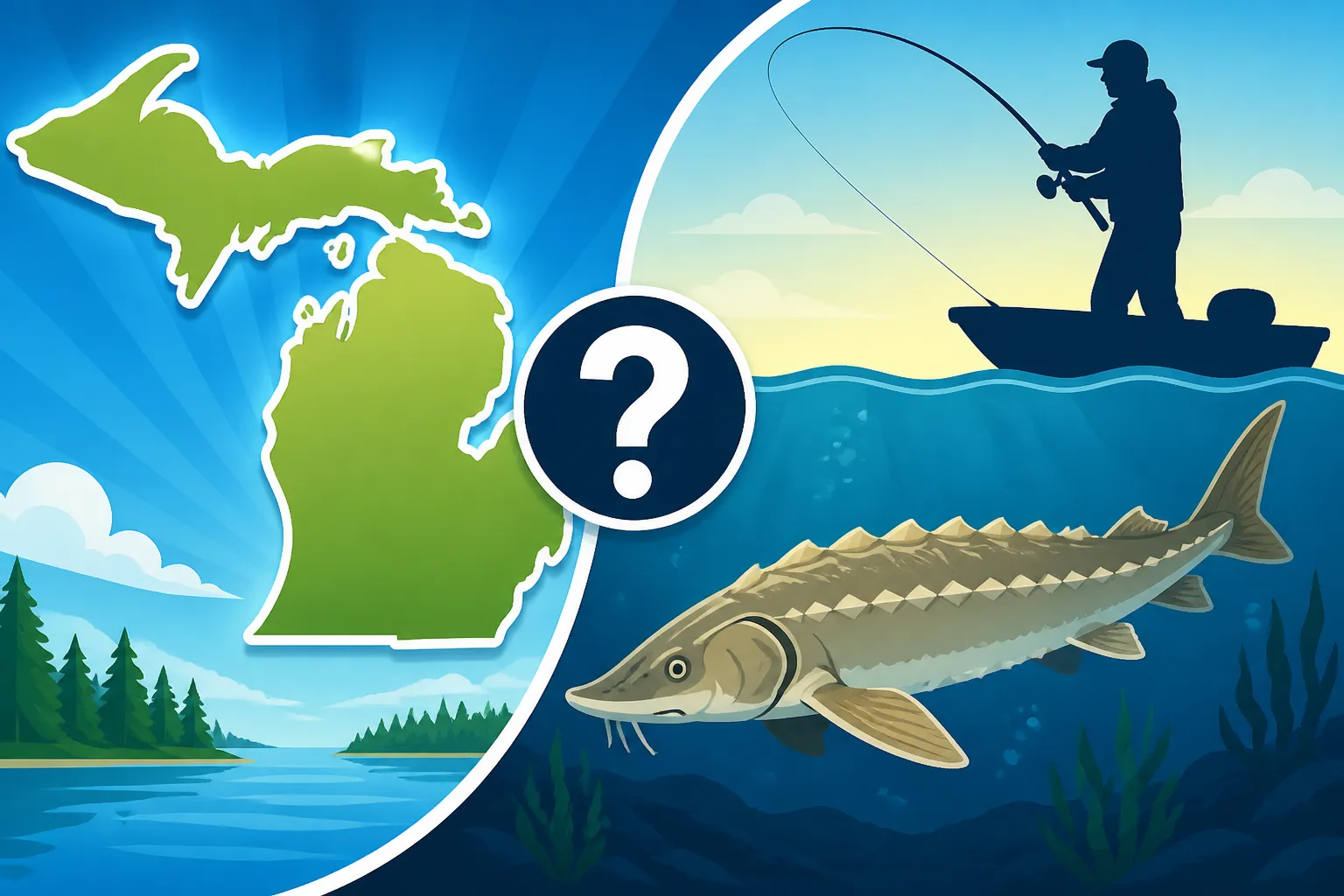
Is There Sturgeon Fishing in Michigan?
For many anglers, the idea of hooking into a truly ancient, monstrous fish like a lake sturgeon in Michigan is a dream that feels almost out of reach. It's not like chasing panfish or even battling a salmon; sturgeon fishing here comes with a unique set of challenges and, often, a lot of confusion about what's actually allowed. This guide is going to clear up that confusion, diving deep into whether you can legally fish for sturgeon in Michigan, where those rare opportunities might exist, and what it truly takes to engage with these magnificent, prehistoric giants responsibly.
The Unique Challenge of Sturgeon Fishing in Michigan
Let's be real: when most folks talk about fishing in Michigan, they're picturing bountiful catches of walleye, battling strong salmon in the Great Lakes, or reeling in a mess of perch from an inland lake. Sturgeon? That's a whole different ballgame. The first thing you need to understand is that lake sturgeon are a truly special species in Michigan, a relic from ancient times, and they've faced some tough challenges over the centuries. This isn't a fish you just randomly decide to target on a whim. Their populations were severely impacted by overfishing and habitat loss in the past, leading to very stringent conservation efforts today.
The frustration for many aspiring sturgeon anglers is the perception that these fish are simply off-limits, shrouded in mystery, or too complicated to pursue. And honestly, there's some truth to that. Unlike species with widespread open seasons and generous limits, lake sturgeon are managed with extreme care. The goal isn't necessarily to provide a widespread recreational fishery but to ensure the species' long-term survival. This means that if you're hoping to target sturgeon, you're entering a world of highly regulated, often limited-opportunity fishing that demands respect for the fish and a deep understanding of the rules. It's not impossible, but it requires a commitment to conservation and patience.
Why Lake Sturgeon Are So Protected Here
Michigan's lake sturgeon populations have a storied history, one that saw them thriving in vast numbers across the Great Lakes and many large rivers. Imagine fish that can live for over 100 years, grow to immense sizes (we're talking over 200 pounds!), and spawn in the same rivers for generations. They are truly living dinosaurs. Unfortunately, during the late 19th and early 20th centuries, these slow-growing, late-maturing fish were heavily exploited for their meat and roe, leading to dramatic declines. Dams, pollution, and habitat destruction further compounded the problem.
Because of this history, the Michigan Department of Natural Resources (DNR) treats lake sturgeon with immense care. They are considered a "threatened" species in Michigan, which immediately tells you that conservation is paramount. This isn't just about limiting how many can be caught; it's about protecting every individual fish to help the population recover. This translates into very specific, often restrictive, fishing regulations designed to minimize stress on the fish and maximize their chances of survival, especially after being caught and released. It's a testament to their ecological importance and their struggle for survival that they are afforded such high levels of protection, making any opportunity to fish for them truly a privilege.
The Permit System for Sturgeon Fishing Opportunities
So, can you actually fish for sturgeon in Michigan? Yes, but with significant caveats. For those dreaming of a harvest opportunity, Michigan offers an extremely limited and highly competitive spearing season for lake sturgeon on Black Lake in the northern Lower Peninsula. This isn't a traditional hook-and-line fishery for harvest, and it's certainly not open to everyone. It's a very specific, traditional practice that has been carefully managed for decades.
Participation in the Black Lake sturgeon spearing season requires applying for and being drawn in a lottery for a limited number of harvest tags. It's a highly anticipated event for those who participate, but the numbers are tightly controlled to ensure that only a small, sustainable number of fish are harvested each year. Even if you get a tag, success isn't guaranteed, and the season itself is often very short, sometimes lasting only a few hours if the quota is met quickly. This goes to show just how rare and cherished these harvest opportunities are. For more information on fishing for these unique species, you might want to read What Is the Sturgeon Season on Black Lake, Michigan.
Where You Can Find and Fish for Sturgeon in Michigan
While the harvest opportunities are exceptionally rare and specific to Black Lake, there are a few other places in Michigan where you can legally pursue lake sturgeon with hook and line on a catch-and-immediate-release basis. These fisheries are designed for the thrill of the fight and the unique experience of interacting with such a majestic creature, without any intent of taking the fish home.
It’s important to distinguish between where sturgeon exist and where you can legally target them. Lake sturgeon can be found in various Great Lakes waters and connecting rivers, but regulations often restrict direct targeting to specific areas and times. Always consult the current Michigan Fishing Regulations Every Angler Should Know before heading out.
Black Lake's Spearing Season and Catch-and-Release
Black Lake in Cheboygan and Presque Isle counties is undoubtedly the epicenter of Michigan's lake sturgeon management and fishing opportunities. As mentioned, it hosts the highly regulated winter spearing season. This is a truly unique experience, often conducted from shanties over clear ice, allowing spearers to spot cruising sturgeon below. The cultural significance and community involvement surrounding this season are immense.
Beyond spearing, Black Lake also offers limited hook-and-line catch-and-release opportunities, usually outside the spearing season. These opportunities are still carefully managed, sometimes requiring specific permits or being limited to certain periods. The focus here is entirely on the safe capture, handling, and release of these magnificent fish. Anglers often spend hours, even days, patiently waiting for a bite, knowing that the experience of landing and safely releasing a sturgeon is the ultimate reward. It's not about the cooler full of fish; it's about the connection to a true wild giant.
Other Rivers and Great Lakes Waters for Catch-and-Release
While Black Lake is famous for its sturgeon, other Michigan waters do hold populations that can be targeted on a catch-and-release basis. The Detroit River and St. Clair River are prime examples. These rivers, connecting Lake Huron and Lake Erie, are critical migration routes and spawning grounds for lake sturgeon. Here, anglers can target sturgeon with heavy tackle, experiencing intense battles. Similarly, certain stretches of the Menominee River (bordering Wisconsin) also offer fantastic sturgeon fishing, again strictly catch-and-release.
The key to success in these areas lies in deep understanding of the local regulations, using appropriate gear, and practicing impeccable catch-and-release techniques. These are not casual fisheries. Anglers often use robust boats, heavy rods, and specialized bait presentations to entice these bottom-dwelling giants. The thrill of hooking into a fish that could be older than your grandparents is an experience unlike any other. However, the responsibility of ensuring its survival after the fight is paramount. These are not "any fish, any time" waters; they are carefully managed environments where you're a guest in the sturgeon's ancient home. You can find many specialized gear options for these specific fisheries on Amazon.
Understanding Michigan's Sturgeon Seasons and Regulations
Navigating the regulations for sturgeon fishing in Michigan can feel a bit like reading ancient texts, especially compared to more straightforward species. This is because the rules are designed to protect a vulnerable population, making every detail crucial. It's not just about getting a license; it's about understanding the "why" behind the strict limitations. Ignoring these rules isn't just a minor infraction; it's a direct threat to the recovery of these incredible fish and can lead to significant penalties.
The most critical thing to remember is that lake sturgeon are generally catch-and-immediate-release in most Michigan waters. This means that as soon as you bring one to hand, you must release it safely, quickly, and with minimal stress. There are almost no general open seasons for harvesting sturgeon with hook and line. The exception, as we’ve discussed, is the highly controlled spearing season on Black Lake. For comparison, species like muskellunge also have Michigan Muskellunge Harvest Reporting Rules to ensure responsible management of large, rare fish.
Key Regulations for Lake Sturgeon in Michigan
The Michigan DNR’s fishing guide is your absolute best friend when it comes to understanding sturgeon regulations. Here are some critical points you'll likely encounter:
- Permit-Only Harvest: For lake sturgeon harvest (i.e., spearing), you must participate in a lottery and possess a special tag for the designated water body (currently Black Lake). Without this tag, harvesting a sturgeon is illegal.
- Catch-and-Release Requirements: In all other waters where lake sturgeon fishing is permitted, it is strictly catch-and-immediate-release. This means no keeping the fish, even if it appears injured.
- Gear Restrictions: There might be specific gear regulations, such as hook size, type of bait, or single-point hooks only, to minimize injury to the fish. Always double-check this for the specific water you plan to fish.
- Reporting: While there's no widespread hook-and-line harvest reporting, if you are lucky enough to be drawn for a spearing tag on Black Lake and successfully harvest a fish, there are strict and immediate reporting requirements to the DNR. This data is vital for management.
- Season Dates: Even for catch-and-release, there might be specific open and closed seasons in certain waters to protect spawning sturgeon or other sensitive periods.
- Illegal to Target Without Specific Authorization: In many waters where sturgeon exist but are not actively managed for recreational catch-and-release, it is illegal to target them at all. Always assume this is the case unless the regulations explicitly state otherwise.
Understanding and adhering to these rules is not just about avoiding a fine; it's about being a responsible steward of Michigan's precious natural resources.
The Black Lake Spearing Season: A Closer Look
The Black Lake sturgeon spearing season is truly a unique winter tradition. It’s an event deeply rooted in the community and carefully monitored by the DNR. Each year, only a small number of harvest tags are issued through a lottery system, and the season itself is remarkably short—often just a few days, sometimes even hours, depending on when the predetermined harvest quota is met.
Here’s a simplified breakdown of what to expect for the Black Lake season:
| Aspect | Details |
|---|---|
| Season Duration | Typically a very short window in late January or early February. The season closes immediately when the harvest quota is met or the calendar dates expire. |
| Permit Requirement | Mandatory permit obtained via lottery application well in advance of the season. Only permit holders may participate in the harvest. |
| Harvest Quota | A strictly enforced, very low number of sturgeon (e.g., 6-7 fish) for the entire season. Once this number is reached, the season is over. |
| Method | Spearing through the ice. This requires specialized equipment, including large ice shanties, cutting large holes, and powerful underwater lights for visibility. |
| Immediate Reporting | Successful spearers must immediately register their harvested sturgeon at a designated DNR station on the lake. This ensures accurate tracking against the quota. Michigan's 24-Hour Muskellunge Reporting Requirement offers a similar example for other large fish. |
| Conservation Focus | The entire event is designed as a conservation effort, allowing limited traditional harvest while closely monitoring the health and recovery of the Black Lake sturgeon population. |
It's a stark contrast to typical fishing seasons and underscores the exceptional nature of sturgeon in Michigan. For most anglers, the experience will be catch-and-release, if any at all.
Gear and Techniques for Michigan Sturgeon Fishing
Alright, so you've done your homework, you know where and when you can legally target these incredible fish, and you're committed to catch-and-release. Now, let's talk about the practical side: what kind of gear do you need, and what techniques are effective? Given that lake sturgeon are massive, powerful fish that live on the bottom of big rivers and lakes, your standard walleye or bass setup just isn't going to cut it. You need heavy-duty equipment that can withstand an incredible fight, and you need to prioritize the fish's safety above all else. Finding appropriate tackle that meets these demands might require a trip to a specialized tackle shop or a thorough search on platforms like Amazon.
Imagine trying to stop a small car with a bicycle chain; that's roughly the mismatch you'd have with light tackle and a large sturgeon. Their sheer power and weight demand robust rods, reels, and line that can absorb powerful runs and lift a heavy fish from deep water. Any weakness in your setup will likely result in a broken line, a lost fish, and potentially leaving a hook in its mouth, which we absolutely want to avoid.
Essential Gear for Battling a Giant
When targeting lake sturgeon, think "heavy-duty" in every aspect of your tackle.
- Rods: You'll want a very strong, heavy-action rod, typically 7 to 9 feet long, designed for big game. Catfish rods, muskie rods, or heavy saltwater boat rods are often good choices. The rod needs backbone to lift and control the fish, but also enough flex to absorb shock.
- Reels: Pair that rod with a robust baitcasting or spinning reel capable of holding a substantial amount of heavy line. Look for models with a strong drag system and solid construction. Don't skimp here; a malfunctioning drag can quickly lead to a broken line or an exhausted fish.
- Line: This is not the time for finesse. Many sturgeon anglers opt for 50-80 pound test braided line. Braid offers incredible strength and sensitivity, which is crucial for detecting subtle bites on the bottom. You'll also want a heavy monofilament or fluorocarbon leader, typically 80-150 pound test, for abrasion resistance against the sturgeon's rough mouth and any underwater snags. You can find robust options for all these on Amazon.
- Hooks: Use strong, sharp, single circle hooks. Circle hooks are generally recommended for catch-and-release because they are designed to hook in the corner of the fish's mouth, minimizing deep hooking and injury. Sizes can range from 5/0 to 10/0, depending on your bait.
- Weights: Heavy sinkers are essential to keep your bait on the bottom in strong currents. Pyramid sinkers or no-roll sinkers in the 3-8 ounce range (or even heavier, depending on current) are common.
- Net/Gloves: A very large, heavy-duty landing net (muskie or salmon net size) is crucial for safely bringing a sturgeon alongside the boat or to shore. Heavy-duty gloves can also help protect your hands from their rough bodies and fin spines.
- Pliers/Hook Remover: Even with circle hooks, you'll want strong pliers or a specialized hook remover to quickly and safely extract the hook.
Remember, the goal is to land the fish as efficiently as possible to minimize its stress, and this gear is designed to do just that. You can explore many of these Best Rods and Reels for Michigan Fishing for various species.
Effective Techniques and Responsible Handling
Sturgeon are primarily bottom feeders, so your techniques will revolve around presenting bait effectively on the river or lakebed.
- Bottom Fishing: The most common method involves a simple bottom rig. A popular setup is a "sliding sinker rig" or "Carolina rig" where the heavy sinker slides freely on the main line above a swivel, which is then tied to a heavy leader and your circle hook. This allows the fish to pick up the bait without immediately feeling the weight of the sinker.
- Bait: Common baits for sturgeon include natural options like chunks of cut bait (such as suckers, smelt, or shad), nightcrawlers, or even large crayfish. Freshness is key.
- Location: Look for deep holes, current breaks, river channels, and ledges where sturgeon tend to congregate and feed. Fish finders can be invaluable for identifying these bottom features.
- Patience: Sturgeon fishing is often a waiting game. These fish aren't always actively feeding, and their bites can be subtle. Be patient, watch your rod tip carefully, and let the circle hook do its job.
- Fighting the Fish: Once you hook into a sturgeon, get ready for a powerful, sustained fight. Keep constant pressure, let your drag work, and avoid horsing the fish in, which can cause undue stress.
- Catch-and-Immediate-Release Protocol: This is arguably the most critical part of sturgeon fishing.
- Land Quickly: Bring the fish in as quickly and safely as possible to minimize exhaustion.
- Keep in Water: Whenever possible, keep the sturgeon in the water or only partially out for a very brief moment. Their internal organs are not designed for prolonged time out of water.
- Support Fully: If you must lift it for a quick photo, support its entire body horizontally, especially its belly and tail. Never hold a sturgeon vertically by the head or tail, as this can cause severe internal damage.
- Remove Hook Gently: Use your pliers or hook remover to quickly and carefully remove the circle hook.
- Revive: If the fish seems sluggish, hold it gently upright in the current, facing into the flow, until it regains its strength and swims away on its own.
- Avoid Crowding: If fishing from shore or a pier, keep curious onlookers at a respectful distance to reduce stress on the fish during release.
By using the right gear and following strict catch-and-release protocols, you can enjoy the incredible experience of fishing for Michigan's magnificent lake sturgeon while ensuring their continued recovery.
Disclaimer
This article is for general informational purposes only and does not constitute professional advice. Laws, prices and regulations vary by location and change over time. Consult a qualified professional for guidance on your specific situation.