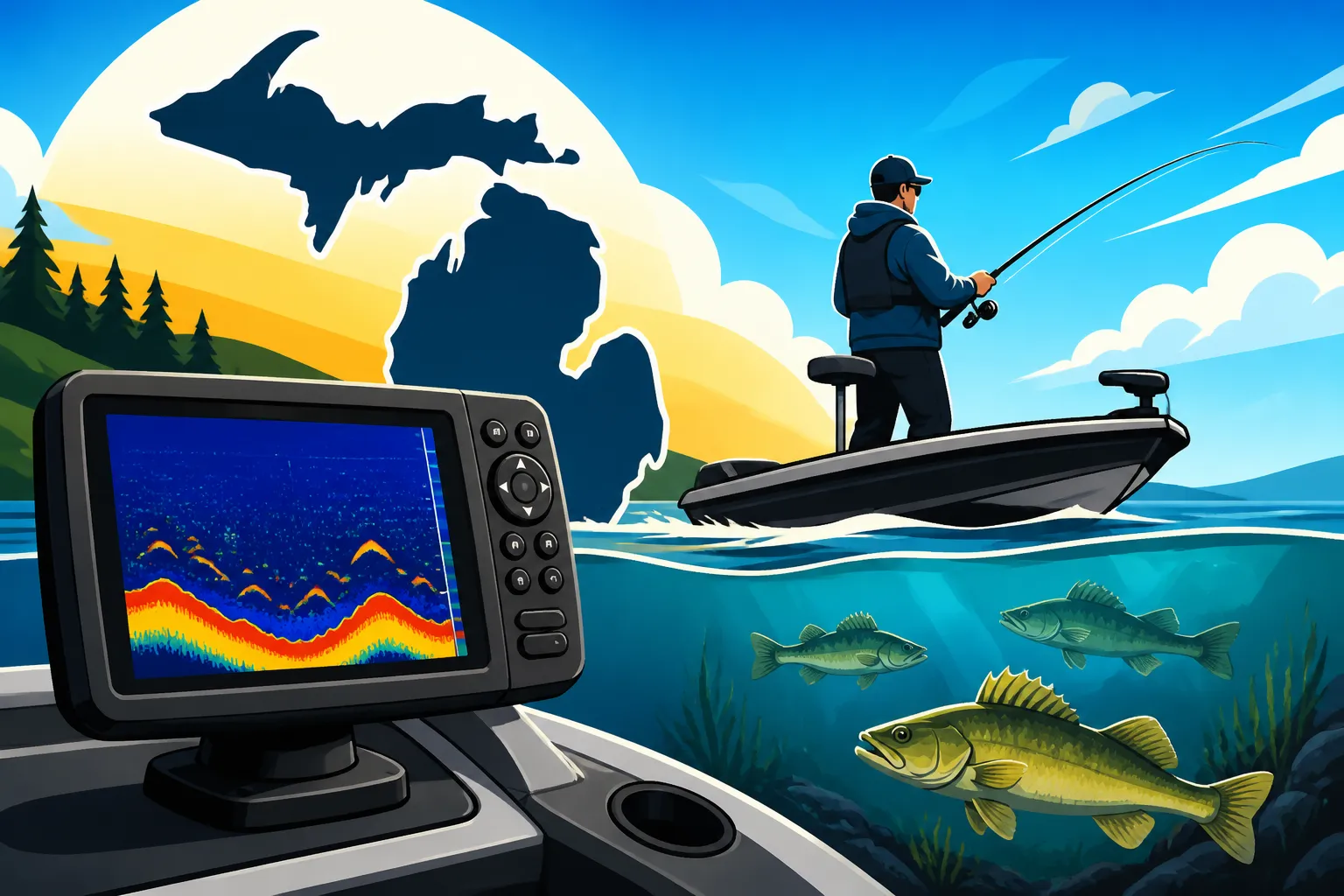
Best Fish Finder for Boat Fishing in Michigan
Navigating Michigan's vast and varied waterways, from the colossal Great Lakes to countless inland lakes and winding rivers, can be a real head-scratcher when you're trying to pinpoint where the fish are hiding. It's frustrating to spend hours on the water, casting into the blue, only to come up empty-handed. This guide is going to dive deep into everything you need to know about picking the best fish finder for your boat fishing adventures in Michigan, helping you transform those hit-or-miss days into consistent catches.
Why a Fish Finder is Essential for Michigan Boat Anglers
Let's be honest, trying to find fish in Michigan's immense bodies of water without a fish finder is like trying to find a needle in a haystack, blindfolded. These aren't small farm ponds we're talking about; we have some serious water here! A good fish finder isn't just a gadget; it's a critical piece of equipment that provides you with eyes beneath the surface, giving you a huge advantage in understanding the underwater world. Without one, you're guessing, and guessing usually leads to disappointment.
Navigating Diverse Michigan Waters
Michigan's fishing landscape is incredibly diverse. You might be targeting steelhead in the Manistee River one day, then chasing walleye on Saginaw Bay the next, and perhaps even heading out for salmon on Lake Michigan. Each of these environments presents unique challenges. On large, open waters like the Great Lakes, a fish finder helps you quickly cover vast areas, locating baitfish schools and structure that hold predatory fish. Imagine trolling for salmon on Lake Michigan; without knowing the depth or seeing the thermocline, you're essentially dragging lures through empty water.
Even on smaller inland lakes, a fish finder is invaluable. Many of these lakes, while seemingly straightforward, have complex bottom contours, hidden weed beds, and subtle drop-offs that fish relate to. You can spend all day casting aimlessly, or you can use technology to identify those sweet spots where fish are actively feeding or resting. It cuts down on wasted time and fuel, making your fishing trips more efficient and, frankly, much more enjoyable. Think of it as your personal scout, showing you exactly where to focus your efforts.
Uncovering Hidden Structures and Depths
Fish, especially the ones you want to catch, love structure. This could be anything from submerged timber, rock piles, ledges, humps, or even old sunken boats. These structures provide cover, ambush points, and often attract baitfish, which in turn attract larger game fish. Without a fish finder, finding these underwater oases is purely accidental. You might stumble upon a great spot, but good luck finding it again.
A quality fish finder allows you to identify these structures with remarkable clarity. You can see the contours of the bottom, the depth changes, and even distinguish between hard and soft bottoms. This information is gold! For instance, if you're targeting smallmouth bass on a rocky shoal, a fish finder will help you pinpoint the exact edges of that shoal or any scattered boulders that the bass might be using as cover. Knowing the precise depth where fish are suspended or holding tight to the bottom is another game-changer. Different species prefer different depths, and their preferences can change throughout the day and with seasonal shifts. Your fish finder lets you adapt to these changing conditions, helping you determine how deep to troll for lake trout or where the walleye are holding during their Michigan Walleye Fishing Techniques.
Key Features to Look For in a Michigan Fish Finder
When you start looking at fish finders, it can feel overwhelming with all the different technologies and acronyms. But don't worry, we'll break down the most important features that will make a real difference in your Michigan boat fishing experience. It's not about getting the most expensive unit, but the one that best suits your fishing style and the waters you frequent.
Transducer Technology: Sonar, DownScan, SideScan
The transducer is the heart of your fish finder, sending and receiving sonar waves. The type of technology it uses determines what you see on your screen.
- Traditional 2D Sonar: This is the classic "fish arch" view you're probably familiar with. It's excellent for marking fish, identifying bottom contours, and seeing bait balls. It uses a cone-shaped beam, with wider cones offering broader coverage but less detail, and narrower cones providing better detail but smaller coverage. For general fishing on almost any Michigan water, a good 2D sonar is your baseline. It's robust and reliable, showing you those classic arches that indicate fish.
- Down Imaging (DownScan/DownVu/ClearVu): This technology provides a picture-like view directly beneath your boat. Instead of arches, you'll see more detailed, photographic images of structure and fish. It's fantastic for identifying specific types of submerged timber, rock piles, or even individual fish holding tight to structure. If you're fishing a specific submerged stump for bass or trying to identify if that blob on your screen is a rock or a school of perch, DownScan is incredibly helpful. Brands like Humminbird and Lowrance have their own versions, each offering remarkable clarity.
- Side Imaging (SideScan/SideVu): This is where things get really exciting, especially for covering vast areas. SideScan sends beams out to the sides of your boat, giving you a wide swath of coverage. You can literally see structure, bait, and fish hundreds of feet to either side. This is a game-changer for finding those elusive offshore humps, scattered rock beds, or even searching for schools of walleye on a flat bottom without having to drive directly over them. If you spend a lot of time on larger bodies like Lake Erie for walleye or Grand Traverse Bay for salmon, SideScan will save you an immense amount of time and fuel by helping you locate fish-holding areas much faster. You can literally scan entire stretches of shoreline or open water from a distance.
Many modern fish finders combine all these technologies into one unit, giving you the best of all worlds. When looking for a unit, consider one that offers at least 2D sonar and Down Imaging for good versatility. If your budget allows, adding Side Imaging will exponentially increase your ability to locate fish.
Display Size and Resolution for Clarity
You can have the most advanced sonar technology in the world, but if you can't clearly see what's on the screen, it's pretty useless. This is why display size and resolution are so important.
- Display Size: Fish finders come in a huge range of screen sizes, from small 4-inch units to massive 16-inch displays. For most boat anglers, something in the 7-inch to 9-inch range offers a great balance of size and affordability. If you're planning on running multiple views simultaneously (e.g., map, 2D sonar, and SideScan), a larger screen (10+ inches) becomes incredibly beneficial. Trying to cram three detailed images onto a small screen is a recipe for eye strain and frustration, especially when the boat is bouncing around. Consider where you'll mount the unit and how far away you'll be viewing it.
- Resolution: Resolution refers to the number of pixels on the screen (e.g., 800×480, 1280×800). Higher resolution means a clearer, more detailed image, allowing you to distinguish between individual fish, weeds, and bottom structure with greater precision. It’s particularly important for DownScan and SideScan, where image clarity directly translates to better interpretation of what's beneath and around your boat. A low-resolution screen will make even advanced sonar look grainy and difficult to interpret. Always opt for the highest resolution you can afford within your chosen screen size.
GPS and Chartplotting for Navigation and Waypoints
A fish finder without GPS and chartplotting capabilities is like having a map without a compass – you can see where you are, but you can't reliably get to where you want to be or mark where you've been. This is a non-negotiable feature for Michigan boat fishing.
- GPS: An integrated GPS receiver allows your unit to know your precise location on the water. This is crucial for safety and navigation, especially on large lakes where landmarks might be few and far between. It helps you navigate safely through unfamiliar waters, avoid shallow areas, and return to your launch point even in dense fog or darkness.
- Chartplotting: This feature displays digital marine charts on your screen, showing depths, navigation markers, landmasses, and sometimes even detailed bottom contours. Being able to see these charts overlaid with your boat's position is incredibly powerful. You can plan your routes, identify potential fishing areas before you even get there, and understand the general topography of the lake. Many units come preloaded with basic maps, but you can often upgrade to more detailed charts from companies like Navionics or C-MAP, which offer high-definition contours and shaded relief that are fantastic for identifying structure.
- Waypoints and Tracks: This is arguably one of the most important aspects for an angler. Once you find a productive fishing spot – whether it's a hot walleye reef, a submerged timber pile holding bass, or a deep water salmon troll lane – you can mark it as a waypoint. This allows you to return to that exact spot again and again. You can also record your boat's path as a "track," which is great for recreating successful trolling passes or simply retracing your steps. Imagine finding a killer school of perch on Lake St. Clair; with waypoints, you can easily go back to that spot next time. What Electronics Help Find Walleye are often those with robust GPS and chartplotting features.
Power and Frequency for Different Depths
The power output (measured in RMS wattage) and the operating frequency of your transducer are crucial for performance, particularly in deeper waters.
- Power (RMS Wattage): Generally, higher RMS wattage means the fish finder can send a stronger sonar signal and receive a clearer echo from greater depths. If you're primarily fishing shallow inland lakes (under 50 feet), you won't need an extremely powerful unit. However, if you plan on targeting salmon or lake trout on the Great Lakes, where fish can be hundreds of feet down, a high-power unit (500W RMS or more) is essential for penetrating the water column and getting clear returns from deep fish and bottom structure. Don't confuse peak-to-peak power with RMS power; RMS is the continuous, effective power output and is the more important number to look at.
- Frequency: Transducers operate at different frequencies, each with its own advantages:
- High Frequencies (e.g., 200 kHz, 455 kHz, 800 kHz, 1.2 MHz): These frequencies provide excellent detail and target separation, making them great for shallower water (under 100 feet) and for identifying structure. They're what DownScan and SideScan technologies typically use for their photographic-like images. The trade-off is they don't penetrate as deep and are more susceptible to interference.
- Low Frequencies (e.g., 50 kHz, 83 kHz): These frequencies penetrate much deeper water, making them ideal for the Great Lakes or deep inland lakes where you might be fishing at 100+ feet. They also provide a wider cone angle, covering more area. The downside is less detail and target separation compared to high frequencies.
- CHIRP Sonar: This advanced technology (Compressed High-Intensity Radiated Pulse) sweeps a range of frequencies instead of a single one. This results in much clearer images, better target separation, and superior deep-water performance than traditional single-frequency sonar. Most high-end fish finders today feature CHIRP technology for both 2D and often for DownScan/SideScan, offering superior clarity across all depths. If you can, always opt for a CHIRP-enabled unit.
| Feature Type | Best Use Case in Michigan | Key Benefits |
|---|---|---|
| Traditional 2D Sonar | General fishing, marking fish arches, basic contour mapping. | Reliable, good for all depths, clearly shows fish and bait balls. |
| Down Imaging | Identifying submerged structure (trees, rocks) directly below boat. | Photo-like clarity, easy to distinguish structure from fish. |
| Side Imaging | Scanning large areas for structure and fish off to the sides. | Saves time, covers vast expanses, great for finding hidden features. |
| GPS/Chartplotting | Navigation, marking hot spots (waypoints), following troll lanes. | Prevents getting lost, allows return to productive spots, aids in planning. |
| High Power (RMS) | Deep-water fishing (Great Lakes salmon/lake trout). | Better depth penetration, clearer returns from deep targets. |
| CHIRP Frequencies | Versatile, superior clarity for all depths and conditions. | Excellent target separation, clear images, effective in deep and shallow. |
| Large, High-Res Display | Viewing multiple sonar screens and maps simultaneously. | Reduces eye strain, clearer interpretation of complex underwater scenes. |
Choosing the Right Fish Finder for Your Michigan Fishing Style
Michigan anglers aren't a monolithic group. We all have our preferred ways to fish, and the "best" fish finder really depends on your specific fishing adventures. A salmon troller on Lake Huron will have different needs than a panfish angler on a small inland lake. Let's explore some common Michigan fishing scenarios.
Great Lakes Trolling and Big Water Needs
If your passion lies in chasing salmon, steelhead, or lake trout on the immense waters of Lake Michigan, Lake Huron, or Lake Superior, your fish finder needs to be a serious piece of equipment. These are vast, deep, and often unpredictable waters.
- High-Power CHIRP Sonar: You absolutely need a unit with high RMS wattage and CHIRP capabilities. This will allow you to read depths of 100-300 feet or more with clarity, differentiate between suspended baitfish and larger game fish, and track your downrigger balls. How Deep to Troll for Lake Trout is a prime example of where deep-water sonar is crucial.
- Large Display with Excellent Resolution: Trolling often involves monitoring multiple screens simultaneously: a chartplotter to track your troll lines and waypoints, a 2D sonar to watch for fish and bait, and perhaps a DownScan or SideScan to identify thermoclines or deep structure. A screen of 9 inches or larger with high resolution will make this information easily digestible, even in bright sunlight or when you're bouncing around in waves.
- Robust GPS and Detailed Chartplotting: On the Great Lakes, navigation is paramount. You'll want a unit with a highly accurate GPS and the ability to load detailed marine charts. These charts often include bathymetric data (depth contours) that are essential for finding structure where big fish congregate. The ability to mark numerous waypoints (e.g., where you got a strike, where you saw a fish on sonar, hot structure) is also critical for success. Many Great Lakes anglers will also appreciate the ability to connect to external GPS antennas for even greater accuracy. Consider how units like those offered by Lowrance or Humminbird handle detailed mapping for the Michigan's Great Lakes Fishing Guide.
- Side Imaging (Highly Recommended): For big water, Side Imaging is a massive advantage. It allows you to quickly scan vast areas to locate baitfish schools, changes in bottom composition, or deep-water structure without driving directly over it. This saves precious time and fuel on those long trolling passes.
Inland Lake and River Versatility
For those who spend most of their time on Michigan's thousands of inland lakes, smaller rivers like the Au Sable, or medium-sized bays like portions of Lake St. Clair, versatility is key. You might be targeting walleye, bass, pike, or panfish, often in shallower to medium depths.
- Mid-Range CHIRP Sonar: A fish finder with good 2D CHIRP sonar will be more than adequate for most inland lake and river situations. You'll get clear returns for fish and structure in depths typically ranging from 10 to 100 feet.
- Down Imaging: This feature is incredibly useful for dissecting submerged weed lines, brush piles, fallen trees, and rock formations where bass and pike love to hide. You'll get a very clear picture of what you're casting to.
- GPS and Basic Chartplotting: While not as critical for sheer navigation as on the Great Lakes, GPS is still vital for marking those productive fishing spots you discover. A good basic chartplotter with depth contours for inland lakes is highly beneficial, helping you identify channels, drop-offs, and humps. Units in the 7-inch range usually offer a good balance of screen size and cost for this type of fishing.
- Portability (Optional but useful): If you fish from multiple boats, a rental boat, or even a kayak, consider a unit that can be easily mounted and dismounted. This often means models with quick-release mounts and perhaps battery packs. Many anglers find the mid-sized units from brands like Garmin or Humminbird perfect for this versatile application. When thinking about Best Boats for Michigan's Inland Lakes, a portable, feature-rich fish finder is a great companion.
Ice Fishing Crossover Capabilities
Michigan's long winters mean many anglers switch to ice fishing. Wouldn't it be great if your boat's fish finder could pull double duty? Many modern fish finders offer this capability.
- Flasher Mode: For ice fishing, a traditional flasher display is often preferred. Some fish finders can switch to a flasher mode, showing real-time sonar returns in a circular graph, which is ideal for jigging through the ice. It allows you to see your jig, the fish approaching it, and their reaction instantly.
- Specialized Ice Transducer: While your boat's transducer can work through the ice in a pinch (by floating it in a hole), a dedicated ice fishing transducer provides much better performance. These are typically cone-shaped and designed for optimal performance when suspended directly in the ice hole.
- Portability Kit: To use your boat unit for ice fishing, you'll need a special kit that includes a carrying case, an ice transducer, and a battery. This allows you to easily transport and set up your fish finder on the ice. If you're serious about ice fishing, look for units that specifically advertise ice fishing bundles or accessories. The ability to see structure, fish, and your lure on a larger, detailed screen through the ice is a huge advantage over traditional flashers. For more on this, check out a Michigan Ice Fishing Guide or Michigan Ice Fishing Gear Guide.
Installation and Setup Considerations
Once you've chosen your fish finder, the next crucial step is proper installation. A poorly installed unit, especially the transducer, can severely limit its performance, making even a top-of-the-line model perform like a budget option. Don't rush this part!
Transducer Mounting Options
The transducer is your window to the underwater world, so its placement is critical.
- Transom Mount: This is the most common and easiest type of installation for most fiberglass or aluminum boats. The transducer mounts to the boat's transom, partially submerged in the water. The key is to mount it where it will be in clean, undisturbed water, away from propellers, strakes, or other sources of turbulence. Incorrect placement will lead to signal loss, especially at higher speeds. Follow the manufacturer's instructions carefully for angle and depth.
- Thru-Hull Mount: For more permanent and high-performance installations, especially on larger boats or those with planing hulls, a thru-hull transducer is often preferred. This involves drilling a hole through the hull and mounting the transducer flush with the bottom. This provides the cleanest water flow over the transducer face, leading to excellent performance at all speeds. However, it's a more involved installation and often best left to professionals.
- In-Hull Mount (Shoot-Thru): For fiberglass boats, some transducers can be epoxied to the inside of the hull, shooting the sonar signal directly through the fiberglass. This avoids drilling holes in the hull and keeps the transducer protected. The trade-off is usually a slight loss in signal strength, meaning it might not perform as well in very deep water as a transom or thru-hull. It's not suitable for aluminum or wooden hulls.
- Trolling Motor Mount: Many transducers are designed to be mounted directly to the shaft or head of a trolling motor. This is a popular option, especially for freshwater anglers, as the trolling motor is often in clean water, and the transducer turns with the motor, allowing you to scan in the direction you're pointing. This is often the best choice for specific applications like bass fishing where pinpoint accuracy is needed.
When mounting, make sure all cables are routed cleanly and secured to prevent chafing or damage. Use marine-grade sealant for any holes drilled through the hull to prevent leaks. You can find many helpful videos and guides for various mounting methods, or if you're uncomfortable doing it yourself, consider having a marine electronics specialist handle the installation. You want your new investment to perform at its peak! You can find a wide range of mounting hardware and transducers from trusted retailers like Bass Pro Shops or online through Amazon.
Powering Your Fish Finder
Your fish finder needs a clean, consistent power source. Most units run on 12V DC power from your boat's battery.
- Dedicated Circuit: Ideally, you should wire your fish finder to a dedicated fuse or circuit breaker on your boat's electrical panel, or directly to your starting battery with an inline fuse. This prevents interference from other electrical devices on your boat and ensures a stable power supply. Avoid wiring it directly into existing circuits that power other electronics, as this can lead to "noise" on your sonar screen.
- Proper Gauge Wire: Use the correct gauge wire as recommended by the manufacturer. Using wire that's too thin can cause voltage drops, especially over longer runs, which can negatively impact performance.
- Battery Condition: Ensure your boat battery is in good condition and adequately charged. A weak battery can cause your fish finder to perform erratically or even shut down. If you have multiple electronics, consider adding a dedicated auxiliary battery.
Software Updates and User Interface
Modern fish finders are essentially marine computers, and like any computer, they benefit from software updates.
- Regular Updates: Manufacturers frequently release software updates that improve performance, add new features, fix bugs, and enhance mapping capabilities. Make it a habit to check for and install these updates. They can often be downloaded from the manufacturer's website and installed via an SD card. This ensures you're always getting the best out of your unit.
- User-Friendly Interface: While advanced features are great, a complex, unintuitive user interface can make your fish finder frustrating to use. Before buying, try to get hands-on with different models or watch video reviews to see how easy it is to navigate menus, adjust settings, and switch between screens. You want to spend your time fishing, not fumbling with buttons! Brands like Garmin are often praised for their user-friendly interfaces, while Humminbird and Lowrance offer incredibly powerful, feature-rich systems that can take a little more learning. Ultimately, the best interface is the one that you find easy to use on the water.
By paying attention to these details, from picking the right technology to ensuring proper installation and keeping your software current, you'll maximize the effectiveness of your fish finder and dramatically improve your success on Michigan's incredible fishing waters. So go ahead, arm yourself with knowledge and the right gear, and get ready for some fantastic fishing!
Disclaimer
This article is for general informational purposes only and does not constitute professional advice. Laws, prices and regulations vary by location and change over time. Consult a qualified professional for guidance on your specific situation.