When Does Ice Fishing Season End in Michigan
Ah, the bittersweet moment when winter's icy grip begins to loosen, and we start to see those familiar dark spots appearing on our beloved fishing lakes. For many of us who live for the tranquility and unique challenge of ice fishing, the end of the season can bring a real mix of emotions – a little sadness that it's over, but also the eager anticipation of open water. Knowing precisely "when does ice fishing season end in Michigan" isn't as simple as circling a date on a calendar; it's a dynamic, ever-changing situation governed by weather, ice safety, and regional specifics. This guide will walk you through all the nuances, helping you stay safe and know when to transition your gear.
Understanding Michigan's Ice Fishing Season End
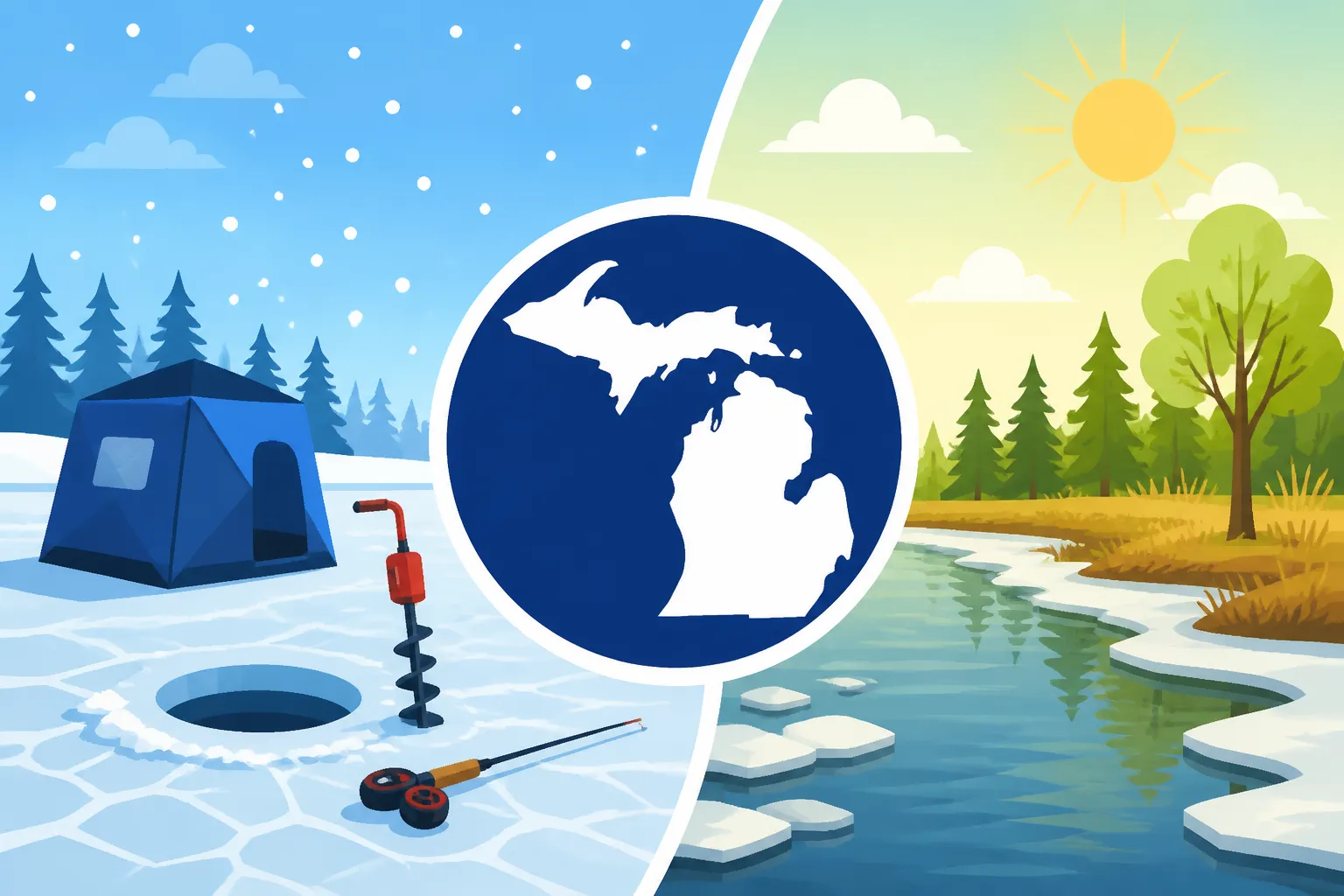
Unlike some hunting seasons or specific species openers, there isn't one official "closing date" for ice fishing statewide in Michigan. Instead, the end of the ice fishing season is primarily dictated by Mother Nature herself, specifically the warming trends that make ice unsafe. It's a gradual decline, not an abrupt halt, and it varies wildly from year to year and even from lake to lake.
The Dynamic Role of Weather and Ice Conditions
Michigan's weather is famously unpredictable, swinging from mild, sunny days to sudden cold snaps, even in late winter or early spring. These fluctuations are the main reason why we can't just pick a hard date. What might be perfectly safe ice one day can become dangerously compromised the next.
- Sustained Warm Temperatures: The most obvious sign of the end is a consistent stretch of above-freezing temperatures. Day after day of sunshine and warm air slowly but surely degrades the ice, even if it looks thick on the surface. Snowmelt running onto the ice and subsequent refreezing can create layers of "rotten" ice that are deceptive.
- Rain Events: Rain is particularly detrimental to ice integrity. It can quickly erode the surface, seep into cracks, and penetrate the ice structure, making it soft and honeycombed. A heavy rain event followed by a freeze can create an unstable top layer, leaving the underlying ice weak.
- Sunlight Penetration: As the days get longer and the sun sits higher in the sky, more solar radiation penetrates the ice, especially clear ice. This internal melting weakens the entire sheet, often from the bottom up. Dark spots on the ice, caused by absorbed sunlight or areas of thin ice, are red flags.
It's a constant battle between freezing and thawing. While a cold night might put a skim on a puddle, it doesn't do much to reinforce a large expanse of melting lake ice. Always assume that spring ice is more dangerous than mid-winter ice, even if it appears to be the same thickness.
Ice Thickness and the Overriding Importance of Safety
The Michigan Department of Natural Resources (DNR) consistently stresses safety over any specific dates. They don't declare an official "end" to the ice fishing season but instead provide clear guidelines for safe ice thickness. These guidelines are paramount, especially as spring approaches.
The general rule of thumb for safe ice, as advised by the DNR, is:
| Activity | Minimum Ice Thickness (inches) | Notes |
|---|---|---|
| Ice fishing on foot | 4 | Always use a spud bar or auger to check ahead. |
| Snowmobile or ATV | 5-7 | Distribute weight, avoid unnecessary stops. |
| Light vehicle (car/small truck) | 8-12 | Never drive on clear ice; check ice consistently. |
| Medium truck | 12-15 | Extreme caution. |
It's critical to understand that these are minimums for new, clear ice. Early spring ice is rarely new or clear. It's often "rotting" ice, filled with air pockets and deteriorating crystals, which can be significantly weaker than its appearance suggests. A seemingly thick sheet of spring ice might only have the strength of half its actual thickness due to its honeycomb structure.
As the season winds down, you'll find conditions changing rapidly, sometimes hourly. What was safe in the morning might be treacherous by afternoon. This is why vigilance, constant checking, and erring on the side of caution are non-negotiable.
Regional Variations Across Michigan's Diverse Landscape
Michigan is a big state, and the weather patterns vary significantly from its southernmost counties to the tip of the Upper Peninsula. Therefore, the "end" of ice fishing season happens at different times across these regions.
- Southern Michigan (Lower Peninsula): Areas like those around Detroit, Kalamazoo, or Grand Rapids will typically see their ice fishing season end much earlier, sometimes as early as late February or early March. Lakes here are often shallower and more susceptible to early warming trends. You might find anglers transitioning to early spring fishing for panfish or pike while northern parts of the state are still solidly frozen.
- Central Michigan (Lower Peninsula): Lakes around Traverse City, Houghton Lake, or Saginaw Bay will usually hold ice longer, often through mid-March, and sometimes even into late March in colder years. These larger, sometimes deeper lakes, and generally colder ambient temperatures, provide a longer season.
- Northern Michigan (Lower Peninsula) and the Upper Peninsula: This is where the ice season truly extends. Lakes in the northern Lower Peninsula and throughout the Upper Peninsula can often offer safe ice well into April. Places like Lake Gogebic or Indian Lake in the U.P. are renowned for their extended ice fishing opportunities. However, even here, sudden warm spells can bring a swift end to the season, especially on shallower bays or near shorelines.
Understanding these regional differences is vital for planning your late-season trips. Always check local conditions and forecasts for the specific body of water you intend to fish.
Official Guidance and Safety Protocol
While there isn't a hard closing date, the Michigan DNR is your primary source for understanding regulations and, more importantly, safety. Their approach is focused on providing information that empowers anglers to make safe decisions rather than setting arbitrary end dates.
DNR Recommendations and the Absence of Hard Dates
The Michigan DNR does not issue a specific "ice fishing season end date." This is a crucial distinction. Their focus is always on ice safety. They provide guidelines for minimum ice thickness, advice on how to test ice, and warnings about the dangers of early and late-season ice. This flexible approach makes sense given the variability of Michigan's weather. Instead of a blanket rule, they put the responsibility on the individual angler to assess conditions.
This means you won't find a line in the official Michigan Fishing Regulations Every Angler Should Know digest that says, "Ice fishing ends March 15th." What you will find are sections dedicated to ice safety, stressing caution and personal responsibility. For specific locations, local bait shops, conservation officers, and online forums often provide the most up-to-date, hyper-local ice conditions.
Species-Specific Season Closures That Influence Late Ice Fishing
While the act of ice fishing itself doesn't have a hard end date, the seasons for certain fish species do. This means that even if there's safe ice on a particular lake, you might not be allowed to target certain species.
For instance, the inland trout season has a specific opener and closure for many waters. If you're ice fishing on an inland lake or stream that holds trout, you might be out of luck if the season for that species is closed, even if the ice is thick. Similarly, specific regulations might apply to certain lakes for species like walleye or muskellunge.
It's imperative to consult the current year's Michigan Fishing Regulations Every Angler Should Know or the Michigan DNR website to verify open seasons for the species you intend to target. You might be able to fish through the ice for panfish or pike, but not for walleye, depending on the specific waterbody and time of year. For example, some inland lakes might have a closed season for walleye just before the general opener in late April, even if there's still fishable ice. This is less common for late-season ice fishing but can occur, especially if the ice lingers longer than usual.
Public Versus Private Waters
The regulations and safety guidelines discussed largely apply to public waters. If you're fishing on private property, such as your own pond or a friend's private lake, the need for a Michigan Fishing License Guide for Residents and Nonresidents still applies, but landowner permission is also required. However, when it comes to ice safety, the same principles apply regardless of ownership. Private waters are still susceptible to the same weather patterns and ice degradation, and personal safety should always be the top priority. Never assume that a private pond is inherently safer just because it's smaller or less exposed.
Recognizing the Signs of Deteriorating Ice
As the ice fishing season winds down, recognizing the signs of weakening ice is critical for safety. This isn't just about how thick the ice is, but about its quality.
Visual Cues and Sound Warnings
Late-season ice often looks vastly different from solid mid-winter ice. Learning to read these signs can literally save your life.
- Dark Spots and Water on the Ice: Any area that looks darker than the surrounding ice is a warning sign. This often indicates open water beneath a thin layer, or ice that is becoming saturated with water. Puddles of water on the ice, especially if they are growing, mean the sun is doing its work.
- Honeycomb or "Rotten" Ice: This is perhaps the most dangerous form of late-season ice. As ice melts, the crystal structure weakens, becoming porous and resembling a honeycomb. It can be surprisingly thick but offers almost no structural integrity. Rotten ice often appears milky or slushy and can crumble easily. You might even see the tops of air bubbles or gas pockets near the surface.
- Candle Ice: This is an advanced stage of rotten ice, characterized by vertical ice crystals that resemble candles. These "candles" separate easily, and a sheet of candle ice can break apart with little warning, even under light weight. It looks like a collection of individual ice columns.
- Changes in Color: Ice that has gone from clear or bluish-green to milky white, grey, or opaque is usually weaker. Grey or dark ice indicates the presence of water within the ice, making it soft and dangerous.
- Soft or Slushy Patches: These are obvious indicators that the ice is melting. If your boots sink into slush or the surface feels spongy, it's time to move on or head in.
- Strange Sounds: While strong ice can make "booming" or "groaning" sounds as it expands and contracts, late-season ice often produces cracking, popping, or even bubbling sounds that are more indicative of internal melting and weakening. If you hear continuous cracking underfoot, that's your cue to retreat slowly and carefully.
The Importance of a Spud Bar or Auger
Never rely solely on visual cues or someone else's tracks. Your most important piece of safety gear in late season is a spud bar or, even better, your ice auger.
- Constant Testing: As you move across the ice, especially in unfamiliar areas or near pressure cracks, use a spud bar to continuously test the ice ahead of you. A sharp jab should not break through solid ice. If it goes through with one or two jabs, you're on thin ice.
- Auger Drills: The best way to know the true ice thickness and quality is to drill frequent test holes. This gives you a clear cross-section of the ice, allowing you to see if it's clear, cloudy, layered, or rotten. Drill a hole, check the thickness, and examine the ice chips for texture and color. If the chips are slushy or crumble easily, be extra cautious.
- Partners and Safety Gear: Always fish with a buddy during late ice, and always carry safety gear like ice picks, a throw rope, and wear a flotation suit if possible. Many reputable brands offer excellent ice fishing suits that provide buoyancy and warmth, readily available on platforms like Amazon.
When to Pack It Up: Prioritizing Safety Over Fish
It's tempting to try and squeeze out that last trip, to catch one more walleye or a big panfish through the ice. But there comes a point when the risk simply outweighs the reward.
- Trust Your Gut: If something feels off, or you have an uneasy feeling about the ice, listen to it. No fish is worth risking your life for.
- Observe Others: If you see other anglers packing up or hear warnings, take heed. Don't be the last one on the ice.
- DNR Warnings: Pay attention to any localized warnings issued by the DNR or local authorities about deteriorating ice conditions. These are based on real-time observations and public safety concerns.
- Shoreline Integrity: Often, the shoreline is the first place ice breaks down due to wave action, warmer water runoff, and sunlight reflecting off the land. Even if the main lake seems solid, if you can't safely access it from shore, the season is effectively over for that spot.
Preparing for the End of Ice Season and Beyond
The end of ice fishing marks a transition, not just for the weather, but for us anglers as well. It’s time to switch gears, literally and figuratively, and start looking forward to the next set of opportunities Michigan’s waters have to offer.
Early Spring Opportunities
Even as the ice recedes, the fishing doesn't stop. Early spring provides fantastic opportunities for different species and techniques.
- Panfish Power: As soon as the ice leaves, especially in shallower bays and canals, panfish like bluegill and crappie become very active. They move into warmer, shallower water to feed, making them accessible from shore or small boats. The bite can be incredible!
- Pike and Walleye: Northern pike are often aggressive right after ice out, staging in shallow areas for spawning. You can have fantastic action casting spoons or large crankbaits. For walleye, the period just after ice-out can be excellent, especially in rivers or connecting waters where they stage for their spawn. The Lower Peninsula Trout and Walleye Opener is a highly anticipated event for many.
- Steelhead Runs: For many, the melting ice simply means it’s time to hit the rivers for the spring steelhead run. Rivers like the Manistee, Muskegon, and Au Sable become prime destinations. Learning How to Fish for Steelhead in Michigan becomes the new obsession.
Gear Storage and Maintenance
Once the ice fishing season is truly over, proper gear maintenance is crucial to ensure your equipment is ready for next winter and lasts for years to come.
- Clean Everything: This is paramount. Salt, slush, and fish slime can be corrosive. Wipe down all rods, reels, augers, and tip-ups thoroughly. Use fresh water and dry everything completely.
- Lubricate and Protect: Apply a light oil to reel gears and moving parts. For augers, especially those with gas engines, follow manufacturer guidelines for off-season storage. Electric augers should have their batteries charged to about 50-70% capacity for long-term storage, as fully charged or fully depleted batteries can degrade faster.
- Sharpen Augers: Get those auger blades professionally sharpened or replace them if they're dull or nicked. You'll thank yourself next season.
- Check Lines and Leaders: Strip off old line from your ice fishing reels and replace it next season. Check leaders for abrasion or weaknesses.
- Organize Tackle: Go through your tackle box, cleaning out any rusty hooks or tangled lures. Consolidate items and make a list of what you need to replenish. You might find some great deals on replacement hooks, jigs, or even new ice fishing rods on Amazon during the off-season.
- Proper Storage: Store rods in cases, and reels in protective bags. Keep all gear in a cool, dry place to prevent rust, mildew, and damage. An organized gear closet or storage area can make the start of next season much smoother.
The Michigan fishing license year typically runs from April 1st to March 31st. This means that even if you're out late-season ice fishing in March, your current license is likely still valid. However, if you plan to fish into April as the ice melts and open water returns, you'll need to remember your Michigan Fishing License Renewal Each Spring. It’s a good reminder that while one season ends, another is always just beginning in Michigan.
Looking Forward to the Next Season
The end of the ice fishing season isn't goodbye; it's just "see you later." Take the time to reflect on your catches, your favorite memories, and what you learned. Perhaps you discovered a new tactic or a fantastic new spot. Plan for next year – maybe consider trying out new techniques for Michigan Walleye Fishing Techniques through the ice, or exploring new waters that are part of the Michigan Ice Fishing Guide. The cycle of fishing in Michigan is continuous, offering something special in every season.
Disclaimer
The information provided in this guide is for general informational purposes only and does not constitute legal advice or guarantee safety. Ice conditions are highly variable and can change rapidly. Always exercise extreme caution, verify local conditions, and consult official Michigan Department of Natural Resources (DNR) regulations and advisories before venturing onto the ice. Safety should always be your top priority.