How Deep to Troll for Lake Trout
Finding those elusive Lake Trout in Michigan's vast Great Lakes can feel like searching for a needle in a haystack, especially when you're trying to figure out just how deep they're hanging out. It's not as simple as dropping a line and hoping for the best; these powerful fish are notoriously depth-sensitive, moving significantly with the seasons and even throughout the day. This guide is here to unravel the mystery of Lake Trout depths, offering practical, season-specific advice and gear recommendations to help you consistently put these magnificent fish in your boat.
Understanding Lake Trout Behavior and Habitat in Michigan
Before you can even think about what lures to tie on or what speed to troll, it's absolutely crucial to understand the fish you're targeting. Lake Trout, often affectionately called "Lakers," are cold-water predators, and their behavior, particularly their depth preference, is almost entirely dictated by water temperature and the availability of their favorite meals. In Michigan's Great Lakes—Lake Superior, Lake Michigan, and even deep pockets of Lake Huron—these factors play out dynamically throughout the year.
Seasonal Movements and Water Temperature Preferences
Lake Trout are creatures of comfort when it comes to temperature. They thrive in water that's typically between 45 and 55 degrees Fahrenheit (7-13 degrees Celsius). This specific temperature range is called their "preferred thermal niche." As the seasons change, the Great Lakes undergo significant temperature stratification, and the Lakers will move to find that sweet spot.
In the early spring, when the lake's surface temperatures are still quite chilly, Lake Trout can often be found relatively shallow. The entire water column might be within their comfort zone, or the baitfish they prey on are concentrated closer to the surface or along the shorelines. As summer progresses and the surface waters warm dramatically, a distinct thermocline forms. This is a layer where the water temperature rapidly changes with depth. Below the thermocline, the water is much colder and denser. This is where the Lake Trout retreat, seeking refuge from the warmer surface waters that they simply can't tolerate for long periods. Come fall, as the air cools and the surface waters start to chill down, the thermocline begins to break down, allowing Lake Trout to spread out again and often move shallower as the entire lake cools. Knowing how to read these thermal shifts is paramount to success.
Forage Base and Bottom Structure Influence
Beyond temperature, what Lake Trout eat and where their food lives also heavily influences their depth. In Michigan, their diet often consists of smaller baitfish like ciscoes (also known as lake herring), alewives, and various sculpins. These baitfish, in turn, are often found near specific structures or depths.
If you're fishing on Lake Michigan, for example, and the alewives are congregated at a certain depth over a deep flat, you can bet the Lake Trout will be nearby. Similarly, if there's a deep-water reef system or a significant drop-off that provides ambush points and structure for baitfish, Lake Trout will often patrol those areas. They are opportunistic predators, and they're going to go where the food is easiest to find. Combining your knowledge of their preferred water temperature with an understanding of where their prey is located gives you a powerful advantage in predicting their likely depth. Using your electronics to mark bait balls is often a direct indicator of where the target species might be lurking.
Essential Gear for Deepwater Lake Trout Trolling in Michigan
Trolling for Lake Trout in Michigan's deep waters isn't like casting for bass in an inland lake. You need specialized gear to present your lures at precise depths, withstand the fight of a large Laker, and efficiently cover water. Having the right tools isn't just about convenience; it's about necessity for consistent success.
Downriggers and Dipsy Divers Your Depth Control Arsenal
When you're trying to hit depths of 60, 100, or even 150 feet consistently, a standard planer board or flatline simply won't cut it. This is where downriggers become your best friend. Downriggers are mechanical devices that use a heavy lead ball (the "downrigger ball") to carry your fishing line, with the lure attached, down to a specific depth. Your line is clipped to a release on the downrigger cable, and when a fish strikes, the line pops free, allowing you to fight the fish directly without the weight of the ball.
There are many types, from manual crank models to electric ones that retrieve the ball with the push of a button. For serious Great Lakes trolling, especially when targeting Lake Trout, electric downriggers from brands like Cannon or Scotty are incredibly popular. They allow for precise depth adjustments and effortless retrieval, which is invaluable when you're checking lines or moving spots. When considering "How to Set Up Downriggers for Salmon Trolling," remember that the general principles apply directly to Lake Trout, though ideal depths and lure presentations will differ. Knowing "What are Downriggers Used For" is the first step to mastering deepwater trolling. You can find a wide array of downriggers and accessories, including various weight downrigger balls, online on platforms like Amazon.
Another popular depth control device, often used in conjunction with or as an alternative to downriggers, are Dipsy Divers (or similar directional diving planers). These are disc-shaped devices that dive when trolled, pulling your lure out to the side and down to a specific depth. They come in various sizes and can be adjusted to dive left or right, helping you spread out your lines and cover more water. While perhaps not as precise for exact depth control as a downrigger, they are excellent for deploying additional lines and targeting different depths simultaneously, giving your spread more versatility.
Rods, Reels, and Line for Lake Trout
Your rod, reel, and line setup needs to be robust enough to handle the stresses of deepwater trolling and the powerful runs of a large Lake Trout.
- Rods: For downrigger fishing, you'll want rods that are typically medium-heavy to heavy action with a moderate to fast tip. The rod needs enough backbone to handle the strain of the downrigger ball and a fighting fish, but also enough tip flexibility to absorb the shock of the strike when the line releases. Lengths often range from 7 to 10 feet. If you're looking for quality rods, checking out "Best Trolling Rods for Michigan Salmon" can give you a good starting point, as many salmon rods work perfectly for Lake Trout due to their similar size and fighting characteristics.
- Reels: Line counter baitcasting reels are almost a non-negotiable for deepwater trolling. These reels feature a digital or mechanical counter that tells you exactly how much line you have out, which is crucial for replicating successful depths and maintaining your lure's position relative to the downrigger ball. Brands like Daiwa and Shimano offer excellent line counter reels.
- Line: For your main line, many anglers prefer a high-test braided line (e.g., 30-50 lb test) due to its minimal stretch, which provides superior sensitivity and hooks-setting power, especially when fishing deep. However, a monofilament or fluorocarbon leader (e.g., 20-30 lb test) is almost always used between your main line and the lure. Fluorocarbon is particularly favored for its invisibility underwater and abrasion resistance. Don't skimp on quality here; a strong, reliable line is your only connection to that trophy fish.
Trolling Strategies and Depth Adjustments by Season
The beauty and challenge of Lake Trout fishing in Michigan's Great Lakes is their dynamic nature. You can't just pick a depth and stick with it year-round. Successful anglers constantly adjust their tactics based on the season, weather, and current water conditions.
Spring Trolling Depths for Lake Trout
When spring arrives in Michigan, the vastness of the Great Lakes slowly warms. In areas like Lake Superior and the northern reaches of Lake Michigan, the water remains cold enough that Lake Trout are not yet forced into the deep abyss. This is often the time when you'll find them at their most accessible depths, sometimes even within casting range from shore or piers during early morning or late evening.
Generally, in spring, Lake Trout will be found anywhere from 20 to 60 feet, sometimes even shallower if there’s an abundant baitfish presence close to the surface or near structure like reefs and points. The key here is that the entire water column is often within their preferred temperature range. Look for baitfish schools on your sonar, especially near drop-offs, river mouths, or rocky points that retain warmth and attract prey. Early in the season, before a strong thermocline develops, Lakers are often more scattered, so covering water efficiently with multiple lines at varying depths can be productive. Consider exploring areas where the "Michigan's Great Lakes Fishing Guide" suggests for early-season activity.
Summer Deepwater Tactics
Summer is when Lake Trout truly earn their "deepwater" reputation. As the sun beats down and the surface waters heat up, the Lake Trout plunge into the colder, more stable temperatures found at significant depths. This is prime time for dedicated downrigger fishing.
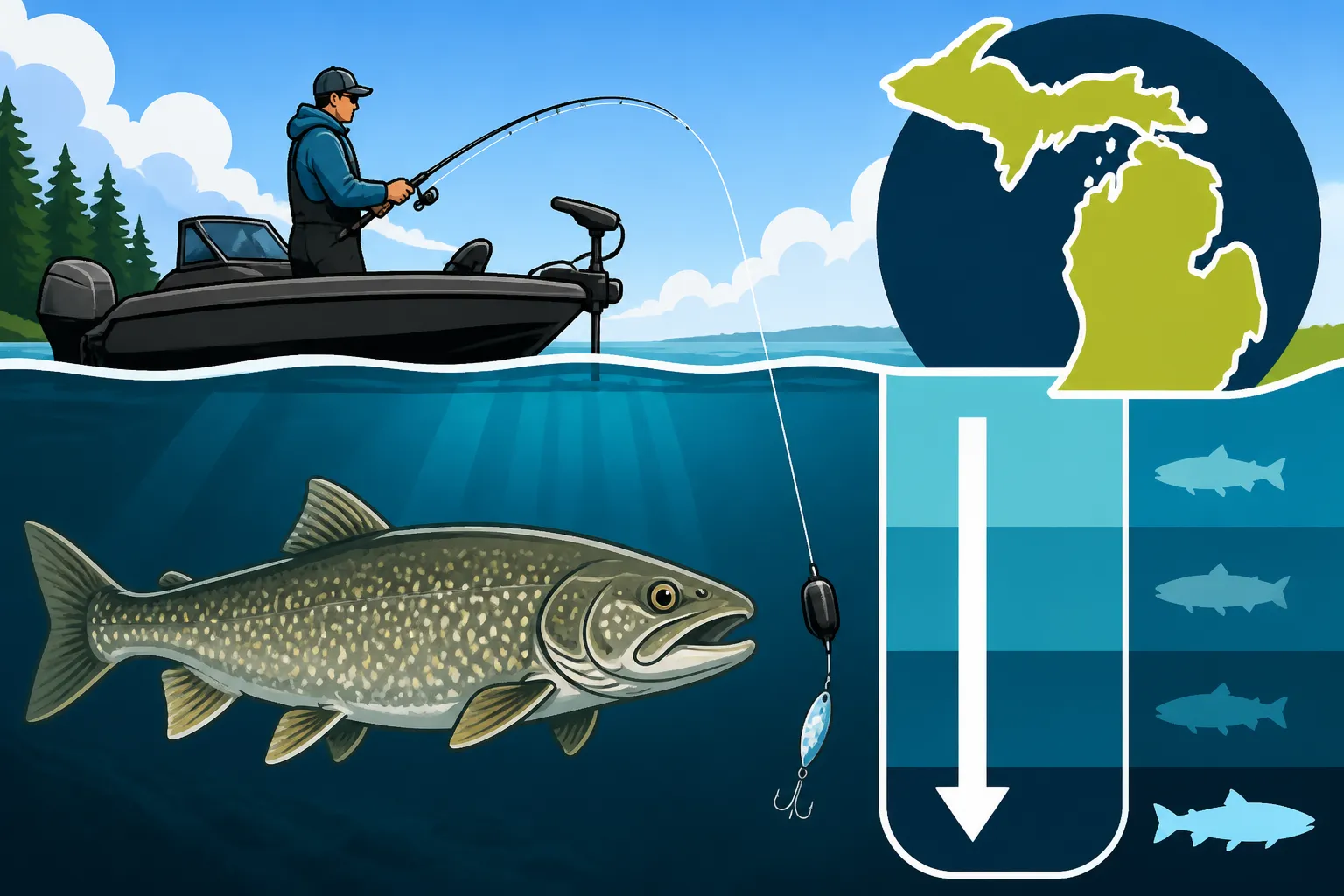
During the peak of summer, expect to find Lake Trout primarily from 60 to 150 feet, and sometimes even deeper in extremely clear and expansive waters like those found in the central basins of Lake Superior. Your sonar becomes an invaluable tool here, not just for marking fish, but for identifying the thermocline. The thermocline acts like an invisible ceiling for many warm-water species, but it's the bottom boundary for many cold-water fish, including Lake Trout, or at least a zone they frequent. They will often hover just above, within, or just below this layer, where the temperature and oxygen levels are optimal. "What Depth Do Lake Trout Live At" is really dependent on finding this thermal refuge. Trolling slowly and precisely through these deep thermal bands is essential.
Fall Transition and Trolling Depths
As Michigan’s vibrant fall colors appear, the air temperatures drop, and the Great Lakes begin to cool down. This process reverses the summer stratification, and the thermocline gradually weakens and eventually breaks up. This fall turnover allows Lake Trout to once again spread out and move into shallower water, making them more accessible than during the dog days of summer.
In the early fall, you might still find them in the deeper summer haunts, but as the water cools, they will start migrating shallower. Depths from 40 to 100 feet become common, particularly as they begin their pre-spawn movements in certain areas. Look for them around traditional spawning grounds if you know them, which often consist of rocky reefs and shoals. These periods can offer fantastic fishing, as the fish are often aggressive as they feed heavily before the lean winter months. Your trolling strategies should become more dynamic, trying different depths across a wider range.
Winter Ice Fishing Depths
While this guide focuses on trolling, it's worth a brief mention that Lake Trout are also a popular target for ice anglers in Michigan during the winter. Trolling is obviously not the method here. However, understanding their winter habits can give you additional insight into their preferences. Through the ice, anglers often target Lake Trout in similar depth ranges to the fall and spring—anywhere from 30 to over 100 feet, depending on the specific lake and structure. They'll often hold near deep points, humps, and structural elements where baitfish congregate.
Mastering Electronics and Reading the Water
Modern marine electronics are no longer a luxury for Lake Trout trolling; they are a necessity. Without a reliable fish finder and a good understanding of how to interpret its readings, you're essentially trolling blind in the vast, deep waters of the Great Lakes.
Using Sonar and Fish Finders
Your fish finder is your window into the underwater world. It shows you the bottom contour, identifies structure, and, most importantly, displays fish and baitfish. For Lake Trout, you're looking for several key things:
- Bottom Structure: Large humps, drop-offs, deep rocky reefs, and shelves are all prime Lake Trout habitat. Your sonar will paint a detailed picture of these features, allowing you to troll along their edges or over their tops.
- Baitfish Schools: Lake Trout follow their food. If you mark dense schools of baitfish, especially at certain depths, you can be sure that predators like Lake Trout won't be far behind. These bait balls often appear as dense clouds or clusters on your screen.
- Lake Trout Arches: Individual Lake Trout will often show up as distinct arches on your sonar. The size and shape of the arch can even give you a clue about the size of the fish. When you see consistent arches at a particular depth, that's your cue to focus your efforts there.
For Great Lakes fishing, a quality fish finder with CHIRP sonar, side imaging, and down imaging capabilities can be a game-changer. Brands like Humminbird, Lowrance, and Garmin offer excellent units. If you're pondering "Best Fish Finder for Boat Fishing in Michigan," invest in the best one you can afford. It will pay dividends in fish caught. Even if you're asking "Do You Need a Fish Finder for Lake Fishing?" the answer for Lake Trout in the Great Lakes is a resounding yes. These devices, often available on Amazon, are critical for success.
Understanding Thermoclines and Water Temperature
As discussed earlier, the thermocline is a critical factor for Lake Trout, especially in summer. It's essentially a temperature boundary layer. On your fish finder, a strong thermocline might appear as a distinct horizontal line or a hazy, irregular band across the screen, sometimes accompanied by baitfish stacked along its edges.
Many modern fish finders can incorporate water temperature probes, either built into the transducer or as an add-on. Some even have advanced features that can graphically display the thermocline. Pay close attention to the water temperature readings at different depths. If your boat is equipped with a temperature probe on your downrigger ball, that's even better, as it gives you real-time temperature at your lure's depth. Aim to keep your lures in that 45-55°F range, or slightly above or below where the baitfish are congregating relative to that thermal layer. This is where "What Electronics Help Find Walleye" also applies, as the principles of using sonar to find thermal breaks and baitfish are universal for many species.
Lure Selection and Presentation at Depth
Once you've located the fish and know their preferred depth, the next step is presenting the right lure in an enticing way. Lake Trout are powerful predators, and they often respond well to aggressive presentations and lures that mimic their natural prey.
Spoons, Plugs, and Spinners for Lake Trout
Michigan Lake Trout, especially the larger ones, aren't shy about hitting big baits. Your tackle box should be stocked with a variety of options to see what they're keying in on.
- Spoons: Large trolling spoons are a staple for Lake Trout. Think "Magnum" or "King" sized spoons. Their wobbling action is highly effective at mimicking injured baitfish. Colors can vary widely, from natural baitfish patterns (silver, blue, green) to brighter, more aggressive colors (chartreuse, orange, bright green) for stained or deep water. Brands like Dreamweaver, Michigan Stinger, and Warrior Lures offer excellent trolling spoons, many of which are readily available on Amazon.
- Plugs (Crankbaits): Deep-diving crankbaits are also very effective. Look for models designed for trolling that can reach considerable depths on their own or when paired with downriggers. Jointed models can offer an even more erratic action that can trigger strikes. Rapala Deep Tail Dancers or Storm Deep ThunderSticks are popular choices.
- Dodgers/Flashers with Flies: This is a classic Great Lakes combination, especially effective for salmon but also highly successful for Lake Trout. A dodger or flasher creates an erratic, attracting motion and vibration, mimicking a school of baitfish, and is followed by a shorter leader (12-36 inches) to an artificial fly. The fly imitates a smaller baitfish that's struggling in the wake of the larger "school." The action of the dodger imparts enticing movement to the fly. This setup is very popular for targeting fish that are suspending. You can find "Best Tackle Box Setup for Michigan Anglers" might include some of these items.
When selecting lures, consider the water clarity. In clear waters, natural patterns often excel. In stained or deep, dark waters, brighter, UV-enhanced, or glow-in-the-dark lures can be more visible and provoke strikes.
Speed and Trolling Patterns
Trolling speed is a critical, often overlooked, factor. For Lake Trout, a slower speed is generally more effective than for, say, Chinook Salmon. While you might troll for Chinook at 2.5-3.5 mph, Lake Trout often prefer speeds between 1.8 and 2.5 mph. This slower speed allows your lures to run truer at depth and gives the fish more time to react and strike. Experimentation is key; sometimes a slight increase or decrease in speed can make all the difference. Compared to "Best Trolling Speed for Coho Salmon," which might be a bit faster, Lake Trout often appreciate a more leisurely presentation.
Don't just troll in a straight line. Incorporate S-turns into your trolling pattern. As your boat turns, the lures on the inside of the turn will slow down and drop slightly, while the lures on the outside will speed up and rise. This varying action can often trigger strikes from following fish that might otherwise ignore a consistent presentation. Watch your rod tips closely for any changes in action; sometimes a fish will pick up a lure without immediately pulling the line from the downrigger release, resulting in a subtle "fish on" signal.
| Season | Typical Trolling Depth Range (Feet) | Preferred Water Temperature (°F) | Common Lure Types | Key Behavior |
|---|---|---|---|---|
| Spring | 20 – 60+ | 40-50 | Spoons, smaller plugs, dodger/flies | Follow bait into shallower, cooler waters |
| Summer | 60 – 150+ | 45-55 | Large spoons, deep-diving plugs, dodger/flies | Retreat to deep, cold thermocline waters |
| Fall | 40 – 100+ | 45-60 | Large spoons, plugs, larger dodger/flies | Move shallower as water cools, pre-spawn |
Disclaimer
Fishing conditions and regulations in Michigan can change. Always consult the latest Michigan Department of Natural Resources (DNR) fishing guide before heading out on the water. This information is for general guidance and educational purposes only.