How to Troll for Chinook Salmon on Lake Michigan
Trolling for Chinook salmon on Lake Michigan can feel like trying to solve a complex puzzle with moving pieces – boat speed, lure depth, water temperature, and what the fish are actually feeding on can change everything in an instant. It’s incredibly rewarding when you hook into one of these powerful kings, but getting to that point consistently requires more than just luck. This comprehensive guide is designed to break down the complexities of trolling for Chinook on Michigan's vast waters, helping you understand their behavior, choose the right gear, and apply effective techniques to increase your chances of success.
Understanding Chinook Salmon Behavior on Lake Michigan
To consistently catch Chinook salmon, also known as King salmon, on Lake Michigan, you first need to understand them. These aren't just any fish; they're apex predators that travel vast distances, often following temperature breaks and baitfish schools across this massive freshwater sea. Their behavior is highly influenced by the seasons and the availability of their preferred forage.
Seasonal Movements and Depths
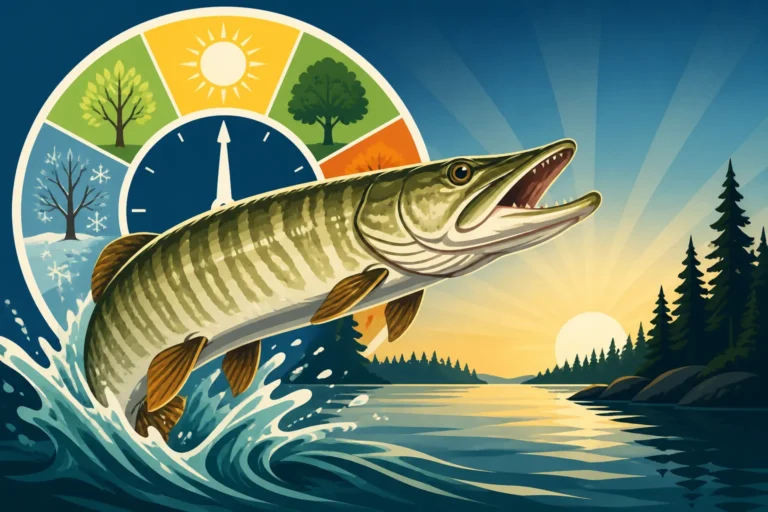
Chinook salmon on Lake Michigan are creatures of habit, yet their habits change drastically with the seasons. Understanding these shifts is paramount to locating them.
During the spring, after the ice recedes, Chinook often gather in shallower, warmer waters, particularly near river mouths and harbors where early baitfish activity begins. You might find them in the top 30 feet of the water column, especially in areas where rivers like the Manistee River or the St. Joseph River discharge warmer water. As spring progresses into early summer, the thermocline — that distinct layer separating warmer surface water from colder deep water — starts to form. Chinook will often orient themselves to this thermocline, especially near the colder side, seeking comfortable temperatures and abundant food. At this time, they can be anywhere from 30 to 80 feet deep, depending on the lake's thermal structure. Knowing the current water temperatures is crucial, and a good fish finder with temperature sensors can be your best friend.
As summer fully sets in, the thermocline becomes well-defined and often deeper. This is when Chinook often move offshore, chasing schools of baitfish like alewives. They'll typically be found in deeper water, sometimes 60 to 120 feet down, still hugging that thermocline or just below it. This is prime time for offshore trolling, often requiring the use of downriggers to precisely target these depths. You'll often find them suspended over very deep water, sometimes hundreds of feet deep, but they're concentrated at specific depths within the water column. Towards the end of summer and into early fall, as they prepare for their spawning runs, Chinook start migrating closer to shore, particularly towards their natal rivers. They can be found in a wider range of depths then, from 20 to 100 feet, as they transition from offshore feeding grounds to staging areas near river mouths. This is an exciting time for anglers, as the fish are aggressive and often in excellent condition.
Forage and Feeding Habits
Chinook salmon are primarily piscivores, meaning they eat other fish. On Lake Michigan, their diet is largely dominated by alewives, which are a non-native, invasive species that provide a rich food source for salmon and trout. However, they'll also consume other baitfish like bloaters, smelt, and even juvenile perch if the opportunity arises.
Their feeding habits are often opportunistic. They will actively hunt down schools of baitfish, often ambushing them from below or along temperature breaks. This is why understanding where the baitfish are is just as important as knowing where the salmon are. A good fish finder will not only show you arches that might be salmon but also dense clouds of bait. If you find the bait, the salmon are usually not far behind. Chinook are known for their aggressive strikes, especially when they're actively feeding. This aggressive nature means they'll often hit a wide variety of lures and presentations, but matching the hatch – or at least the general size and profile of their current forage – can significantly increase your success. Sometimes, they're picky, only hitting specific colors or sizes, which is why having a diverse tackle box is so important.
Essential Gear for Trolling Chinook Salmon
Trolling for Chinook salmon on Lake Michigan is a gear-intensive endeavor, but having the right tools makes all the difference. You're not just casting a line; you're orchestrating a spread of lures at various depths and distances to cover as much water as possible.
Rods, Reels, and Line Selection
Choosing the right rod, reel, and line is critical for both detecting strikes and successfully landing a powerful Chinook. For trolling, you'll want rods that are specifically designed to handle the stresses of pulling diving lures or being paired with downriggers and planer boards.
Rods: Generally, medium-heavy to heavy power rods, typically 7 to 10 feet in length, are preferred. Shorter rods (around 7-8 feet) are often used with downriggers, as they provide good leverage and fight control from the boat. Longer rods (9-10 feet or more) are excellent for use with dipsy divers and planer boards, as their length helps spread out lines, reducing tangles and allowing more lures in the water. Look for rods with a moderate action, which means they'll have a good bend throughout the blank, absorbing the shock of a strike and helping keep fish buttoned up during the fight. Brands like Okuma, Daiwa, or Shimano offer a wide range of trolling rods suitable for Great Lakes salmon. You can often find great deals on these rod types on platforms like Amazon.
Reels: Levelwind conventional reels are the standard for trolling. They offer excellent line capacity, durable drags, and the ability to handle the large diameter lines often used. Look for reels with a strong, smooth drag system, as a big King salmon can really test your equipment. Reels in the 20 to 45 series (e.g., Daiwa Sealine 47LC, Okuma Cold Water CLC-303D) are popular choices, often featuring line counters (LC) which are absolutely essential for precise depth and distance management. Being able to replicate a successful presentation once you find it is key, and a line counter reel makes that possible.
Line: The most common main line for Great Lakes trolling is monofilament, often in the 20 to 30-pound test range. Monofilament offers good stretch, which can act as a shock absorber during violent head shakes, reducing pulled hooks. However, some anglers prefer braid for its zero stretch and increased sensitivity, especially with dipsy divers, but then often add a monofilament or fluorocarbon leader to absorb shock. Fluorocarbon leaders, typically 20 to 40-pound test, are also very popular for their low visibility in clear Great Lakes waters and abrasion resistance. A good rule of thumb for leader length is usually 6 to 8 feet, giving you enough stealth without sacrificing fight control.
Downriggers, Dipsy Divers, and Planer Boards
These tools are crucial for getting your lures down to the fish at precise depths and spreading your lines out, preventing tangles and covering a wider swath of water.
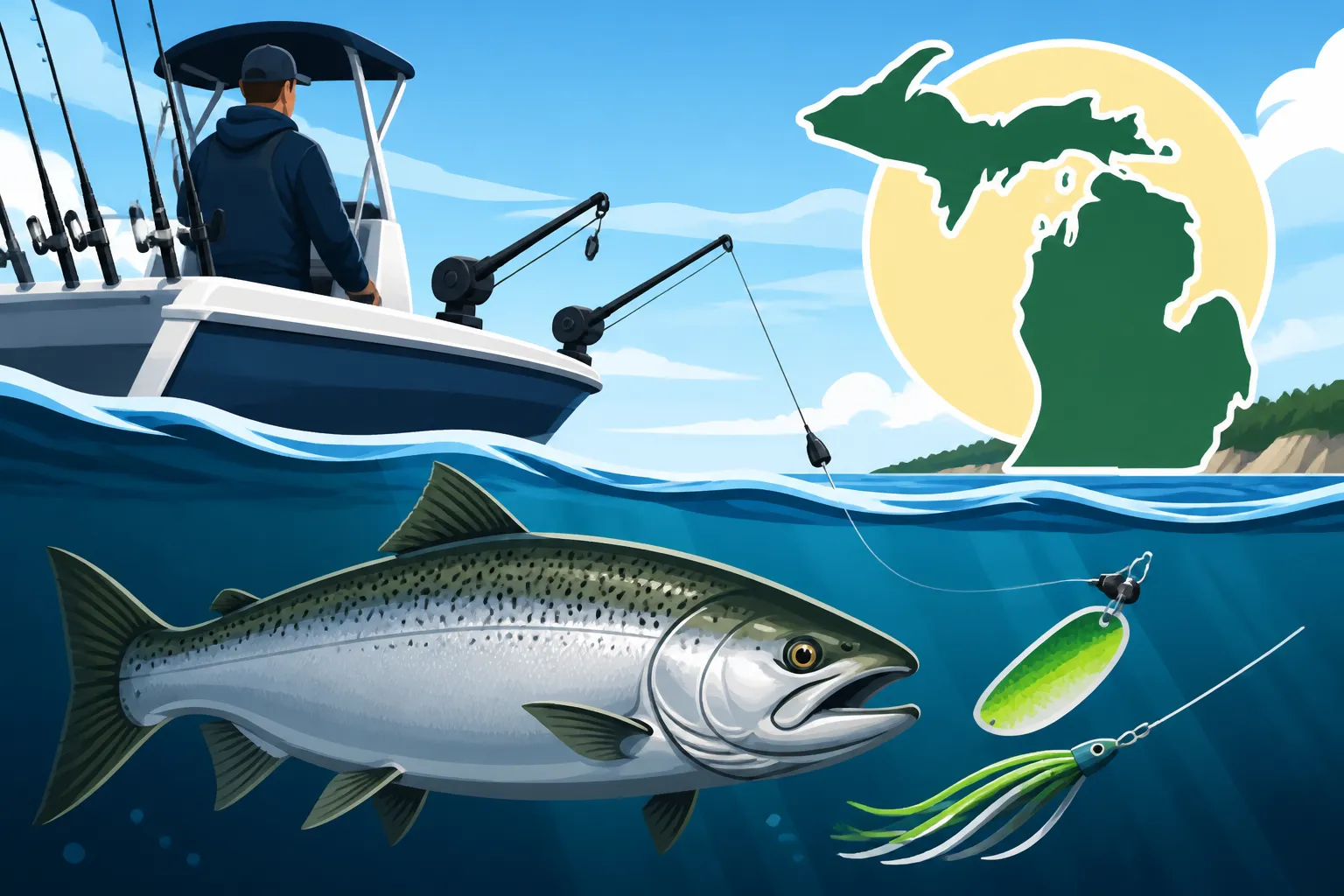
Downriggers: These are mechanical devices that use a heavy ball (typically 8-12 pounds) to carry your fishing line and lure down to a specific, controlled depth. Your line is attached to the downrigger cable with a release clip. When a fish strikes, the line pops out of the clip, and you fight the fish directly. Downriggers are indispensable for targeting precise depths, especially when Chinook are holding tight to a thermocline or a specific baitfish school. Popular brands include Scotty and Cannon, both offering reliable and feature-rich models. Mastering their use allows you to put lures exactly where the fish are, even at 100+ feet deep.
Dipsy Divers (or Dispsy Divers): These are disc-shaped diving devices that are attached directly to your main line. They have an adjustable trip mechanism that causes them to dive to a set depth when trolled. They also have an adjustable directional fin, allowing them to pull off to the side of the boat, creating a wider spread. When a fish strikes, the trip mechanism releases, reducing resistance and allowing you to fight the fish. Dipsy divers are excellent for covering depths from 20 to 100 feet and are often used in conjunction with downriggers to diversify your spread. Brands like Luhr-Jensen make very popular Dipsy Divers that are widely available at tackle shops and online.
Planer Boards: These buoyant boards attach to your main line and pull your lures far out to the side of the boat, away from the boat's wake. This allows you to present lures to fish that might be spooked by the boat. They are particularly effective in calmer waters and when fish are feeding higher in the water column or closer to the surface. Both inline planer boards (which attach directly to the line) and mast systems (where multiple lines clip to a tow line run from a mast on the boat) are used. They help create an incredibly wide spread, often allowing you to run 6 to 10 lines or more without tangles, greatly increasing your chances of finding fish. For more on maximizing your spread, check out How to Troll for Chinook Salmon on Lake Michigan.
Lures, Baits, and Color Selection
Chinook salmon are attracted to a variety of presentations, and having a diverse tackle box is key to adapting to changing conditions.
Spoons: Metal trolling spoons are arguably the most popular and effective lures for Lake Michigan Chinook. They imitate injured baitfish with their wobbling, flashing action. Sizes typically range from 2.5 to 5 inches. Popular patterns include "Silver Streak," "Dreamweaver," and "Michigan Stinger." Experiment with different colors – bright colors like chartreuse, orange, and blue tend to work well in cloudy water or low light, while natural colors like silver, black, and green excel in clear water or bright conditions. You can find a huge selection of spoons on Amazon, often in multi-packs which can be a great way to build your arsenal.
Flasher/Dodger and Fly Combinations: This setup is incredibly deadly for Chinook. A flasher or dodger is a large, erratic attractor that creates flash and vibration, drawing fish in. A leader (typically 18-36 inches) is then tied to the back of the flasher, with a fly (a type of tinsel or Mylar lure) attached to the end. The flasher imparts an irresistible action to the fly. Common flasher colors mirror spoon colors, and flies come in a multitude of patterns, often imitating alewives. Popular brands for these combos include Luhr-Jensen and Pro-Troll. This combination is especially effective when fish are suspended and actively feeding.
Plugs: Diving plugs, sometimes called crankbaits, are also effective, especially when Chinook are aggressive. They have a lip that causes them to dive and wobble, mimicking larger baitfish. J-Plugs by Luhr-Jensen are classic examples, often used without additional weight for shallow-running fish or with downriggers for deeper presentations. These lures work by appealing to the salmon's predatory instinct with their aggressive, hard-wobbling action.
Live Bait / Cut Bait: While less common than artificials for Great Lakes trolling, some anglers do use cut bait (like pieces of herring or alewife) in special rigs or behind flashers. This can be particularly effective when fish are sluggish or when imitating dead or injured baitfish. However, the vast majority of successful Chinook trolling is done with artificial lures.
Choosing the right color often depends on light conditions, water clarity, and what the fish are currently feeding on. A good starting point is always to run a variety of colors and see what gets hit. Don't be afraid to experiment with combinations that seem unusual – sometimes the fish surprise you!
Mastering Trolling Techniques on Lake Michigan
Once you have your gear sorted, it's time to put it to use. Trolling isn't just about dragging lures; it's a strategic dance of setting lines, monitoring your electronics, and making constant adjustments to find and trigger strikes.
Setting Your Spread and Depths
A well-organized trolling spread is crucial for covering different depths and zones, increasing your chances of intercepting active fish. It also helps prevent tangles, which can quickly ruin a good bite.
Typical Spread Configuration:
A common setup for a boat with two downriggers, two dipsy divers, and a couple of planer board lines might look like this:
- Downriggers: These are usually your deepest lines, set directly off the transom of the boat. One might be set at 70 feet, the other at 90 feet, targeting specific depth bands.
- Dipsy Divers: These can be run off the sides of the boat, typically set to run shallower than your downriggers, say 40 and 60 feet. By adjusting their directional fin, you can make them run wide to the port and starboard.
- Planer Boards: These run your shallowest lines, often 10-30 feet deep, far out to the sides. This gives you a massive width to your spread, presenting lures to fish that might be avoiding the boat's direct path.
- Copper/Leadcore: Some anglers also run copper or leadcore lines, which are weighted lines that sink to specific depths at certain speeds, usually without additional diving devices. These can be run from the stern (straight out the back) or also off planer boards for even more variety.
The key is to create a "Christmas tree" effect, with lures at different depths and distances, covering the entire water column you believe fish are in. For a deeper dive into Great Lakes rigging, consider reading about Trolling Gear for Michigan's Great Lakes.
Depth Control with Line Counters: Your line counter reels are invaluable here. When running dipsy divers, the amount of line you let out, combined with the diver setting, determines the depth. For instance, a Dipsy Diver on a #3 setting might run at 40 feet with 100 feet of line out. Downriggers, of course, tell you exactly how deep your cannonball is. Always note what setup produces strikes – depth, lure type, color, and amount of line out. This precise information helps you replicate success. If you're consistently getting hits at a specific depth, adjust other lines to that depth.
Reading Your Electronics and Water Conditions
Your boat's electronics – primarily your fish finder/sonar and GPS – are your eyes beneath the surface and your guide on the vast expanse of Lake Michigan. Learning to interpret them is fundamental.
Fish Finder Interpretation: Your sonar will show you several critical pieces of information:
- Bottom Contour: Helps you understand the structure below, though often in deep water, fish are suspended.
- Baitfish Schools: These appear as clouds or dense masses. Where there's bait, there are often predators.
- Fish Arches: These are the primary indicators of salmon. Large, distinct arches are what you're looking for. Pay attention to the depth at which these arches appear.
- Thermocline: This appears as a distinct line or band on your screen, indicating the temperature break. Chinook are frequently found just below or within this layer. Many modern fish finders, like those from Humminbird or Lowrance, offer incredibly detailed views, helping you pinpoint exactly where the fish are holding. Using a good Best Fish Finder for Boat Fishing in Michigan can make a huge difference in your success rate.
Water Temperature and Clarity: Both factors heavily influence Chinook behavior and lure choice.
- Temperature: Chinook prefer colder water, generally in the 45-55°F range. Your fish finder may have a surface temperature gauge, but knowing the temperature at depth (from the thermocline) is more critical. Look for temperature breaks or "temp lines" where warmer and colder water meet, as these are often productive feeding zones.
- Clarity: Clearer water often calls for more natural lure colors and longer leaders for stealth. Stained or turbid water, especially after heavy rains, can make brighter, more aggressive colors like chartreuse, orange, or glow patterns more effective, as they stand out more.
Trolling Speed: This is a subtle but critical factor. Chinook salmon often prefer lures trolled at speeds between 2.0 and 3.5 miles per hour, but this can vary daily. Sometimes, a slight change in speed – just 0.1 or 0.2 mph – can be the difference between a dead spread and screaming reels. Pay attention to your GPS speed over ground, and also observe how your lures are performing in the water at different speeds. Some lures have an optimal speed at which they perform their best action. For instance, you might find that the Best Trolling Speed for Coho Salmon is slightly different from Chinook, so always be ready to adjust.
Adjusting for Success
The most successful trollers are constantly making adjustments. Lake Michigan is dynamic, and what worked an hour ago might not work now.
The "S-Turn" Technique: Instead of trolling in a straight line, periodically make wide, slow S-turns with your boat. As your boat turns, the lures on the inside of the turn will slow down and drop, while the lures on the outside will speed up and rise. This change in speed and depth can often trigger strikes from otherwise lethargic fish. Many anglers find that more strikes occur during these turns than during straight-line trolling.
Lure Changes and Color Rotation: If you're not getting bites, don't be afraid to change things up. Start by rotating lure colors and patterns. If that doesn't work, try different lure types (e.g., switch from spoons to a flasher/fly combo). Pay attention to any patterns – if one color or type of lure is getting all the hits, put more of those in the water. Remember, what the fish want today might be completely different tomorrow. Having a well-stocked tackle box, maybe even with some new lures bought easily from Amazon, means you're always ready to adapt.
Depth Adjustments: Constantly monitor your sonar for baitfish and salmon arches. If you see fish consistently at a new depth, adjust your downriggers and dipsy divers accordingly. If the thermocline shifts, so should your lures. Even moving a downrigger ball up or down 5-10 feet can make a huge difference.
Safety and Best Practices on the Great Lakes
Fishing on Lake Michigan, while incredibly rewarding, demands respect for its immense size and unpredictable nature. Safety should always be your top priority.
Navigating Lake Michigan Weather
The weather on Lake Michigan can change dramatically and rapidly. A calm morning can turn into a dangerous storm in a matter of hours.
Weather Monitoring: Always check the marine weather forecast before heading out, and keep an eye on it throughout your trip. Use a marine radio (VHF) for continuous weather updates from the National Weather Service. Apps on your smartphone can also provide real-time radar and wind conditions. Be aware of wind direction and speed, as well as wave height predictions. Even a moderate chop can quickly become uncomfortable or unsafe in a smaller boat. Knowing when to head back to shore is a critical decision that should never be taken lightly.
Boating Safety Gear: Ensure your boat is equipped with all required safety gear, including enough Life Jackets and Michigan Boating Safety Rules for everyone on board, a sound-producing device (horn or whistle), visual distress signals (flares), a fire extinguisher, and a first-aid kit. A reliable marine radio is non-negotiable for communicating with other boats and shore. Always let someone on shore know your float plan – where you're going and when you expect to return. For new boaters, understanding Michigan Boating Laws for Anglers is crucial before hitting the water.
Catch and Release Considerations
While many anglers target Chinook for their delicious table fare, practicing proper catch and release for undersized fish or when you've reached your limit is essential for conservation.
Handling Fish Properly: If you intend to release a fish, minimize its time out of the water. Use a large, knotless rubber net to land the fish gently. Remove the hook quickly using pliers or a dehooking tool. If the fish is deeply hooked, it may be better to cut the line close to the hook than to try and remove it, as this can cause more internal damage. Avoid touching the fish's gills or eyes, and support its body horizontally.
Reviving Fish: For larger fish or those that have fought hard, take time to revive them. Hold the fish gently in the water, facing into the current (or move the boat forward slowly to push water through its gills), until it regains its strength and can swim away on its own. Never just toss a fish back into the water without ensuring it's ready. Understanding Michigan Fishing Regulations Every Angler Should Know for bag and size limits, as well as specific rules for certain species, will help you make informed decisions about keeping or releasing your catch. Remember, you're permitted a Michigan's Combined Trout and Salmon Possession Limit on most Great Lakes waters.
Table: Seasonal Chinook Salmon Trolling Depths & Lure Recommendations
| Season | Typical Depth Range (Feet) | Primary Forage | Recommended Lure Types & Colors | Notes |
|---|---|---|---|---|
| Spring | 15 – 50 | Alewives | Spoons (chartreuse, orange, silver/blue), shallow-diving plugs | Near river mouths & harbors. Warmer surface temps. Focus on baitfish concentrations. |
| Early Summer | 30 – 80 | Alewives | Spoons (green/silver, black/silver), dodger/fly combos | Thermocline begins to form. Fish often relate to the upper or middle parts of the thermocline. Move offshore as waters warm. |
| Mid-Summer | 60 – 120 | Alewives, Smelt | Dodger/fly combos (glow, green/silver), spoons (blue/silver, black) | Offshore fishing. Fish hug the deep thermocline or just below it. Downriggers are essential. Focus on colder water layers. |
| Late Summer/Early Fall | 20 – 100 | Alewives | Spoons (orange, fire tiger, glow), plugs (J-Plugs), dodger/fly | Migration to staging areas near rivers. Aggressive fish. Can be found at a wider range of depths, often shallower as they approach shore. |
Remember, this table provides general guidelines. Local conditions and daily fish behavior can always vary, so be prepared to adapt!
Disclaimer
Fishing conditions and regulations in Michigan can change. Always consult the latest Michigan Department of Natural Resources (DNR) fishing guide before heading out on the water. This information is for educational purposes only and should not be considered legal advice.