Grand River Fishing Spots Near Grand Rapids
Trying to navigate the vast stretches of the Grand River, especially right in the middle of a bustling city like Grand Rapids, can feel like finding a needle in a haystack. You know there are fish there – big ones, even – but figuring out where to cast a line without trespassing, battling crowds, or just plain wasting time is a common headache for many anglers. This guide aims to cut through that confusion, offering you a detailed look at the most productive and accessible fishing spots along the Grand River near Grand Rapids, helping you spend less time searching and more time reeling in your next trophy.
Navigating the Grand River's Fishery Near Grand Rapids
The Grand River, as it meanders through and around Grand Rapids, is a truly dynamic fishery, presenting a unique blend of urban accessibility and wild river challenges. Understanding its character is key to unlocking its potential. It's not just one continuous stretch of water; it's a series of distinct environments, each with its own rhythm and resident fish populations.
Understanding the Grand River's Unique Character
The Grand River near Grand Rapids is a remarkable blend of natural beauty and urban development, heavily influenced by its dams and the renowned fish ladder. This section of the river transitions from more suburban and industrial stretches downstream to the vibrant downtown area, then continues upstream through various parks and residential zones. The river’s flow, depth, and bottom structure can change dramatically within a short distance, offering diverse habitats. The presence of the Sixth Street Dam in downtown Grand Rapids is a major factor, creating a significant barrier and bottleneck for migratory species, which in turn concentrates fish below and above the dam. The fish ladder adjacent to the dam is a critical pathway, allowing species like salmon and steelhead to continue their journeys upstream, creating seasonal hotspots.
What makes this part of the Grand River truly special is its ability to support both warmwater and coldwater species. You might be targeting smallmouth bass in one eddy and then find yourself hooked into a powerful steelhead just a short walk away. The riverbed varies from rocky riffles to sandy flats and deep pools, providing shelter and feeding grounds for a wide array of fish. Navigating these different zones and understanding where various species prefer to hold at different times of the year is an art form, but one that richly rewards patient anglers.
Seasonal Opportunities and Target Species
The Grand River near Grand Rapids offers fantastic fishing opportunities year-round, but your success largely depends on understanding which species are active when, and where they tend to be found. The seasonal migrations and feeding patterns dictate the best times to target different fish.
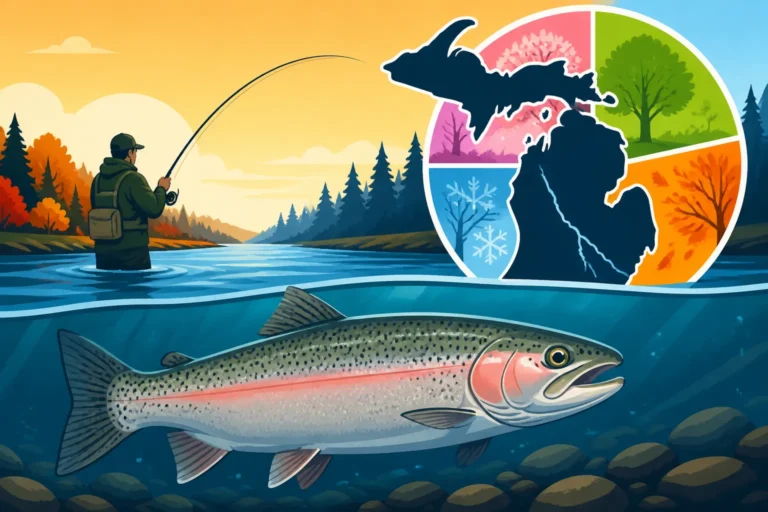
Spring (March-May): This is prime time for steelhead. As winter recedes, these magnificent anadromous rainbow trout push upstream, following their urge to spawn. You’ll find them congregating below and above the Sixth Street Dam, especially in the swift currents. Steelhead are known for their powerful runs and aerial acrobatics, making them a thrilling catch. Early spring also sees the return of migratory brown trout, and as water temperatures rise, walleye become very active, moving into shallower, current-rich areas to spawn. This is a fantastic season for jigging techniques for walleye. Crappie and pike also become more active as the waters warm. For those curious about the precise timing, our guide on Michigan's Spring Fishing Season Guide provides excellent detail.
Summer (June-August): When the heat hits, the Grand River becomes a warmwater haven. Smallmouth bass really shine in the summer, often found near rocky structures, current breaks, and drop-offs. Largemouth bass are also present in slower, weedier sections. Channel catfish become highly active, especially during evening and night fishing excursions, often found in deeper holes. Panfish like bluegill and crappie can be found in abundance in calmer backwaters and eddies. This is a great time for casual fishing with lighter tackle, though the midday sun can make fishing challenging. Early mornings and late evenings are often the most productive.
Fall (September-November): The Grand River truly comes alive in the fall with the epic salmon runs. Chinook and Coho salmon, fresh from Lake Michigan, surge upstream to spawn, providing some of the most exciting and challenging fishing of the year. The sheer power of a fresh Chinook is something every angler should experience. Following closely behind the salmon are the brown trout and steelhead, eager to feed on salmon eggs and smolts. This is another prime steelhead season, with many anglers specifically targeting these "fall-run" fish. Our article on Michigan's Fall Salmon Run Fishing offers great insights into this exciting time. The banks of the river become crowded during these runs, so knowing key access points is crucial.
Winter (December-February): Don't hang up your rods just because it's cold! Winter offers unique opportunities, primarily for resident brown trout and a strong, sustained run of "winter steelhead" who continue to feed and hold in the deeper pools and slower runs. Ice fishing is generally not common on the main river channel due to current, but some calmer backwater channels and adjacent ponds connected to the river might freeze over, offering opportunities for pike and panfish. For the adventurous, targeting steelhead in the cold weather can be incredibly rewarding, though patience and proper cold-weather gear are essential. Our Michigan Ice Fishing Guide can offer general tips for winter angling in Michigan.
| Season | Primary Target Species | Common Techniques | Ideal Locations (General) |
|---|---|---|---|
| Spring | Steelhead, Walleye, Brown Trout, Pike | Drift fishing, jigging, float fishing, casting stickbaits | Below/above Sixth Street Dam, deeper holes, current breaks |
| Summer | Smallmouth Bass, Largemouth Bass, Catfish, Panfish | Casting soft plastics/crankbaits, live bait, topwater | Rocky structures, current seams, deeper pools, weed lines |
| Fall | Chinook Salmon, Coho Salmon, Steelhead, Brown Trout | Drifting spawn, casting spinners/spoons, fly fishing | Below/above dams, fast-moving runs, deep pools |
| Winter | Steelhead, Brown Trout | Float fishing, bottom bouncing, fly fishing (nymphs) | Deeper, slower pools, areas with consistent current |
Prime Shore Fishing and Public Access Points
For many anglers, especially those just starting out or visiting for a day, shore fishing is the most accessible and enjoyable way to experience the Grand River. Grand Rapids is quite angler-friendly, offering numerous parks and public areas that provide direct access to the water.
Downtown Grand Rapids Hotspots
The heart of Grand Rapids offers some surprisingly productive and exhilarating fishing, primarily due to the presence of the Sixth Street Dam and the diverse urban river environment. This is where you’ll find a mix of anglers targeting everything from migratory salmon and steelhead to resident bass and catfish.
The Sixth Street Dam area is, without a doubt, the most famous and often the most crowded spot. Below the dam, the churning waters create a natural congregation point for fish resting before attempting to ascend the fish ladder, or for those feeding on disoriented baitfish pushed through the gates. This spot is legendary for its steelhead and salmon runs in spring and fall. Anglers here often use heavy tackle, drift fishing with spawn bags, or casting spoons and spinners. Upstream of the dam, particularly along the eastern bank in Fish Ladder Park, you can also find good fishing. The fish ladder itself is a fascinating structure, and while fishing in the ladder is prohibited, fish often hold in the pools immediately below and above its entrances. The concrete banks and walkways provide easy access, but prepare for company, especially during peak seasons.
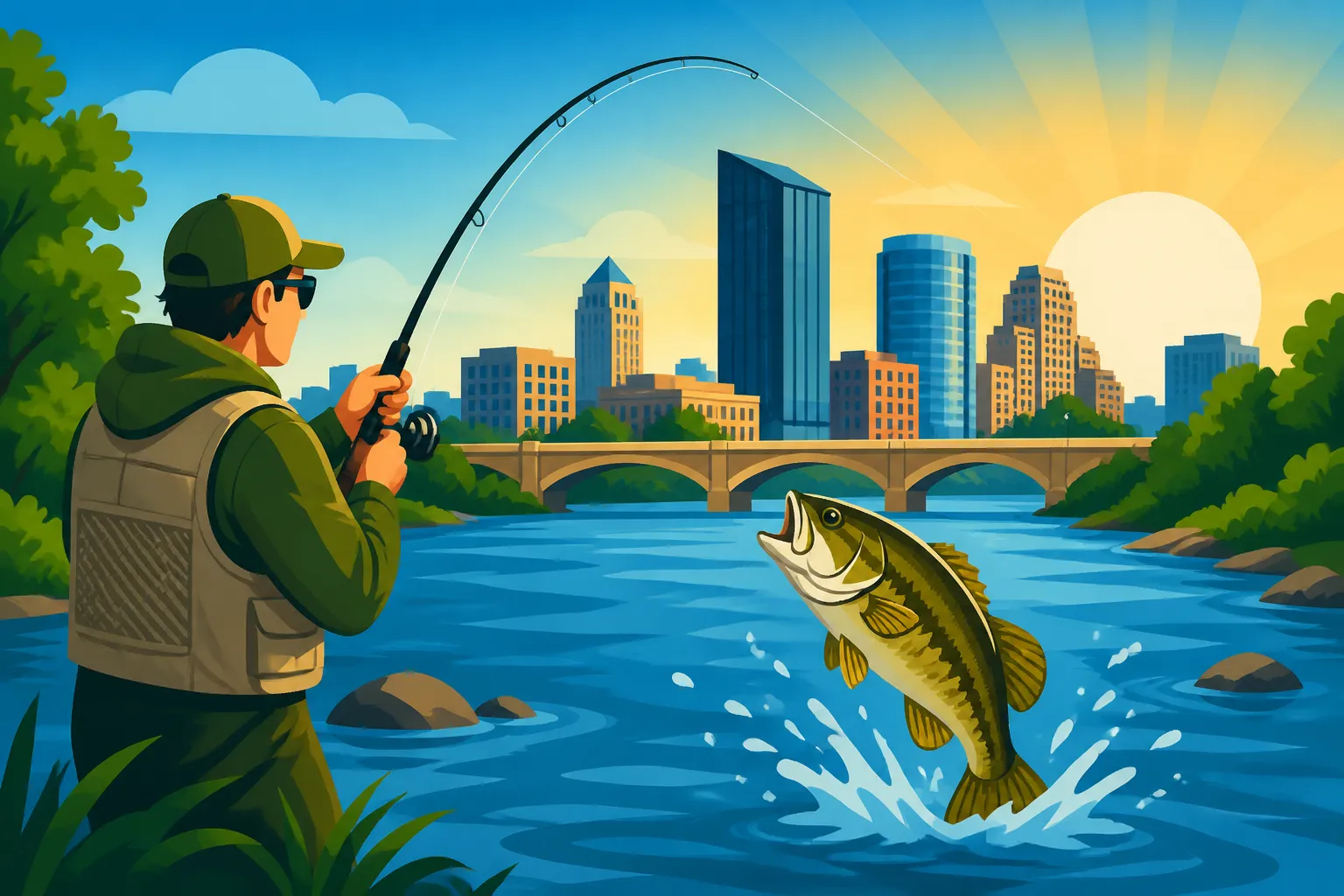
Just a bit downstream from the dam, on both sides of the river, are additional excellent spots. The stretch near the Gerald R. Ford Presidential Museum on the west bank and Ah-Nab-Awen Park on the east bank offers great opportunities. Here, the current slows slightly, and deeper pockets exist. These areas are excellent for smallmouth bass throughout the summer, often yielding impressive catches on crankbaits or soft plastics. During the salmon and steelhead runs, these spots also attract fish dropping back from the dam. The urban backdrop provides a unique fishing experience, with the city skyline as your backdrop. You can often find anglers enjoying a peaceful evening, casting for catfish, which are abundant in these deeper, slower sections, especially after dark using cut bait or stink baits. This accessibility makes it a prime choice for impromptu fishing trips after work or on a casual weekend morning.
Upstream and Downstream Public Parks
Beyond the immediate downtown core, the Grand River widens and meanders through several beautiful public parks, offering a slightly less crowded and more natural fishing experience. These parks provide ample bank access, parking, and often amenities like restrooms and picnic areas, making them ideal for a family outing or a longer fishing session.
Riverside Park, located just a few miles north of downtown Grand Rapids, is a sprawling green space that offers extensive shore access along both banks of the river. The river here is wider and generally slower-moving than directly downtown, featuring a mix of shallow flats, deeper channels, and some weed beds. This diversity of habitat makes it an excellent all-around spot. You can target smallmouth and largemouth bass in the summer, especially near submerged structures and current breaks. Pike are also frequently caught here, often lurking in the weedier sections. During spring and fall, steelhead and walleye will pass through this area, though they might be more spread out than below the dam. Riverside Park is also a fantastic spot for panfish like bluegill and crappie, particularly in the calmer eddies and backwaters. The multiple access points and open spaces make it easy to find your own secluded spot, even on busier days.
Further upstream, places like Johnson Park in Walker or Millennium Park in Walker and Grand Rapids offer more diverse environments. Johnson Park, with its series of lagoons and access to the main river channel, provides a great mix. The lagoons themselves can be productive for largemouth bass, pike, and panfish, while the river access can yield smallmouth, walleye, and even migratory species depending on the season. Millennium Park, one of the largest urban parks in the country, also boasts extensive Grand River frontage. While much of it is geared towards recreation, there are specific areas with good fishing access. These parks are fantastic for anglers who prefer a more natural setting while still being close to city amenities. They often provide boat launches, which we'll discuss next, allowing for even greater exploration. Remember that understanding Michigan Fishing Regulations Every Angler Should Know is critical, no matter where you cast your line.
Boat and Kayak Access for Deeper Exploration
While shore fishing offers fantastic opportunities, getting out on the water in a boat or kayak can unlock vast stretches of the Grand River that are otherwise unreachable. This allows you to explore deeper channels, isolated pockets, and less-pressured fishing grounds, often leading to more consistent success.
Popular Boat Launches and Ramps
For those with a fishing boat, jon boat, or even a small aluminum craft, several public boat launches provide excellent access to different sections of the Grand River around Grand Rapids. These ramps are typically well-maintained and offer ample parking.
The Riverside Park boat launch is a popular choice, offering easy access to the northern stretches of the river. From here, you can motor upstream to explore calmer waters or head downstream towards the city. This launch is suitable for most small to medium-sized fishing boats and is an excellent staging point for targeting a variety of species throughout the year. Another key access point is the Wyoming City Park boat launch, located downstream from Grand Rapids. This launch puts you into a wider, slower section of the river, which can be excellent for summer bass, pike, and catfish. It's also a good starting point for exploring the various oxbows and backwater channels that feed into the main river, where large populations of panfish and largemouth bass often reside.
For anglers looking to target the migratory runs closer to downtown but want the flexibility of a boat, launching further downstream and slowly motoring up can be an option, though navigation near the Sixth Street Dam can be challenging and is generally not recommended directly below the dam due to strong currents. It's usually better to launch above the dam or focus on the lower river. When planning your boat trip, remember that Michigan Boat Registration Requirements apply, and you'll want to ensure all your paperwork is in order before hitting the water. If you're looking for a guided experience and want to save the hassle of bringing your own boat, considering a local charter is a great idea. Platforms like FishingBooker can help you find experienced captains who know the Grand River intimately and can put you on the fish, no matter the season.
Kayak and Canoe Fishing Advantages
Kayak and canoe fishing on the Grand River has exploded in popularity, and for good reason. These smaller, more nimble crafts offer a distinct advantage: stealth and access to otherwise unreachable spots. If you're looking for a truly immersive and often more productive fishing experience, a kayak or canoe might be your best bet. Our guide on Kayak Fishing in Michigan provides more general insights.
The beauty of kayak fishing on the Grand River is the ability to quietly navigate shallow riffles, sneak into tight eddies, and paddle upstream into areas that larger motorboats can't access. This means you can often find fish that haven't seen a lure in days, leading to less pressured and more aggressive bites. Launching a kayak or canoe is also incredibly flexible. While formal boat launches work perfectly, you can often put in at smaller, less developed access points in parks or even designated canoe launches along the river. This ease of access significantly expands your fishing options.
Consider putting in at spots like Johnson Park or Riverside Park and then paddling several miles up or downstream, fishing as you go. You'll discover hidden channels, fallen trees, and isolated rock piles that hold everything from aggressive smallmouth bass to elusive steelhead. In the fall, a kayak offers a fantastic way to silently approach salmon and steelhead in shallow runs without spooking them. You can drift through prime stretches, presenting your bait or fly with precision. Just remember to always prioritize safety: wear your personal flotation device, let someone know your float plan, and be aware of river conditions, especially current strength and potential submerged hazards. The Michigan DNR Hunt Fish App for Licenses and Reporting can also be very handy for checking regulations and river maps on the go.
Essential Tips for Success on the Grand River
Fishing the Grand River, particularly around Grand Rapids, can be incredibly rewarding, but it also presents its own set of challenges. To truly maximize your chances of success, it pays to be prepared and knowledgeable about the river's nuances.
Gear and Bait Recommendations
Having the right gear and bait can make all the difference between a frustrating day and a memorable one on the Grand River. Given the river's diverse fishery, a versatile approach is often best.
For walleye and bass, a medium-light to medium power spinning rod, 6'6" to 7' in length, paired with a 2500-3000 series reel spooled with 8-12 lb braided line (with a fluorocarbon leader) is a good all-around setup. For walleye, jigs tipped with minnows or soft plastics (like Berkley Gulp! minnows or paddletail swimbaits) are highly effective, especially when worked slowly along the bottom. Our guide to the Best Bait for Michigan Walleye dives deeper into this topic. Small crankbaits and stickbaits are also excellent choices, particularly for covering water and finding active fish. For smallmouth bass, consider throwing tube jigs, grubs, Ned rigs, or small topwater lures in summer.
When targeting salmon and steelhead, you'll want to step up your gear. A medium-heavy spinning rod, 8'6" to 10'6" in length, or a comparable centerpin setup, is ideal for managing line and fighting powerful fish in strong currents. Spool your reel with 15-20 lb braided main line and attach a 10-15 lb fluorocarbon leader. Effective baits include fresh or cured salmon roe (spawn bags), beads (mimicking eggs), inline spinners (like Mepps or Blue Fox), and small crankbaits. Fly anglers will want a 7-9 weight rod, depending on the species and river conditions, with appropriate sinking or floating lines. These fish are powerful, and having a quality net with a rubber mesh is crucial for safe, ethical landing and release. For those seeking expert guidance, a local fishing guide found through FishingBooker can provide tailored advice on the latest gear and techniques for specific species and conditions on the Grand River.
For catfish and panfish, simpler setups work well. A medium action rod with 10-15 lb monofilament or braided line will suffice for catfish. Nightcrawlers, cut bait (like pieces of suckers or shad), chicken livers, or commercial stink baits fished on the bottom with a sinker are proven winners. For panfish, ultralight spinning gear with 4-6 lb line and small hooks tipped with worms, crickets, or small artificial jigs under a bobber is perfect. Don't forget essential accessories like pliers for hook removal, a good pair of polarized sunglasses to spot fish and structure, and plenty of extra terminal tackle.
Reading the Water and Current
The Grand River, like any moving water, tells a story if you know how to read it. Understanding current, depth changes, and structure is paramount to locating fish, as they constantly seek out comfortable lies, feeding lanes, and ambush points.
Current breaks are always prime locations. Fish will expend less energy by holding in slower water just out of the main current, waiting for food to drift by. Look for eddies behind rocks, fallen trees, bridge pilings, or sharp bends in the river. These are often high-percentage spots for bass, walleye, and even migratory trout and salmon. The transition lines between fast and slow water are especially productive.
Depth changes are also crucial. Look for deep holes, drop-offs, and sudden changes in the riverbed contour. These often hold larger fish and provide sanctuary from current and predators. A good fish finder can be invaluable from a boat, but even from shore, observing the water color and flow can give clues. Darker, slower-moving water often indicates deeper sections. During low light conditions or when fish are less active, they often retreat to these deeper pockets.
Structure, whether natural or man-made, is a magnet for fish. Submerged logs, rock piles, weed beds (in slower sections), and even old tires or debris provide cover, ambush points, and habitat for baitfish. Casting your lure near these structures, or drifting your bait just past them, will significantly increase your chances. Pay close attention to the way the current flows around these features; understanding how fish position themselves in relation to the current will greatly improve your presentation. For more advanced river fishing techniques, especially for migratory species, understanding Michigan Steelhead Run Timing and how it relates to river flow is essential.
Respecting Regulations and Conservation
Fishing the Grand River is a privilege, and it comes with the responsibility of respecting the resource, fellow anglers, and the law. This ensures that future generations can enjoy the same fantastic opportunities.
First and foremost, always ensure you have a valid Michigan fishing license. You can easily purchase one online through the Michigan Department of Natural Resources (DNR) website or at licensed vendors. Our detailed guide, Michigan Fishing License Guide for Residents and Nonresidents, can walk you through the process. Ignorance of the law is not an excuse, and fishing without a license can result in hefty fines.
Familiarize yourself with the specific Michigan Fishing Regulations Every Angler Should Know, especially those pertaining to the Grand River. This includes daily bag limits, minimum size limits, and species-specific rules. For example, some sections of the river might have special regulations regarding artificial lures or catch-and-release only seasons for certain species. Pay close attention to migratory species like muskellunge, which have specific harvest reporting rules. Our article on Michigan Muskellunge Harvest Reporting Rules offers insights into these requirements. Always carry a copy of the current Michigan Fishing Guide (available online or at DNR offices) or use the DNR Hunt Fish App for immediate access to regulations.
Practicing ethical catch-and-release, especially for sensitive species like muskellunge, salmon, and steelhead, is vital. Use appropriate tackle to minimize fight time, handle fish gently with wet hands, avoid dragging them on rocks, and use a rubberized net to protect their slime coat and fins. If you intend to release a fish, consider crimping down the barbs on your hooks for easier removal. Dispose of all trash properly, and never leave fishing line or bait containers behind. These small acts of respect contribute significantly to the health of the fishery and ensure a positive experience for everyone who visits the Grand River.
Disclaimer
Please be aware that fishing conditions, regulations, and access points can change. Always check the latest Michigan Department of Natural Resources (DNR) fishing guide and local advisories before heading out. Exercise caution and follow all safety guidelines while fishing, especially near dams and in swift currents. Your safety and adherence to regulations are your responsibility.