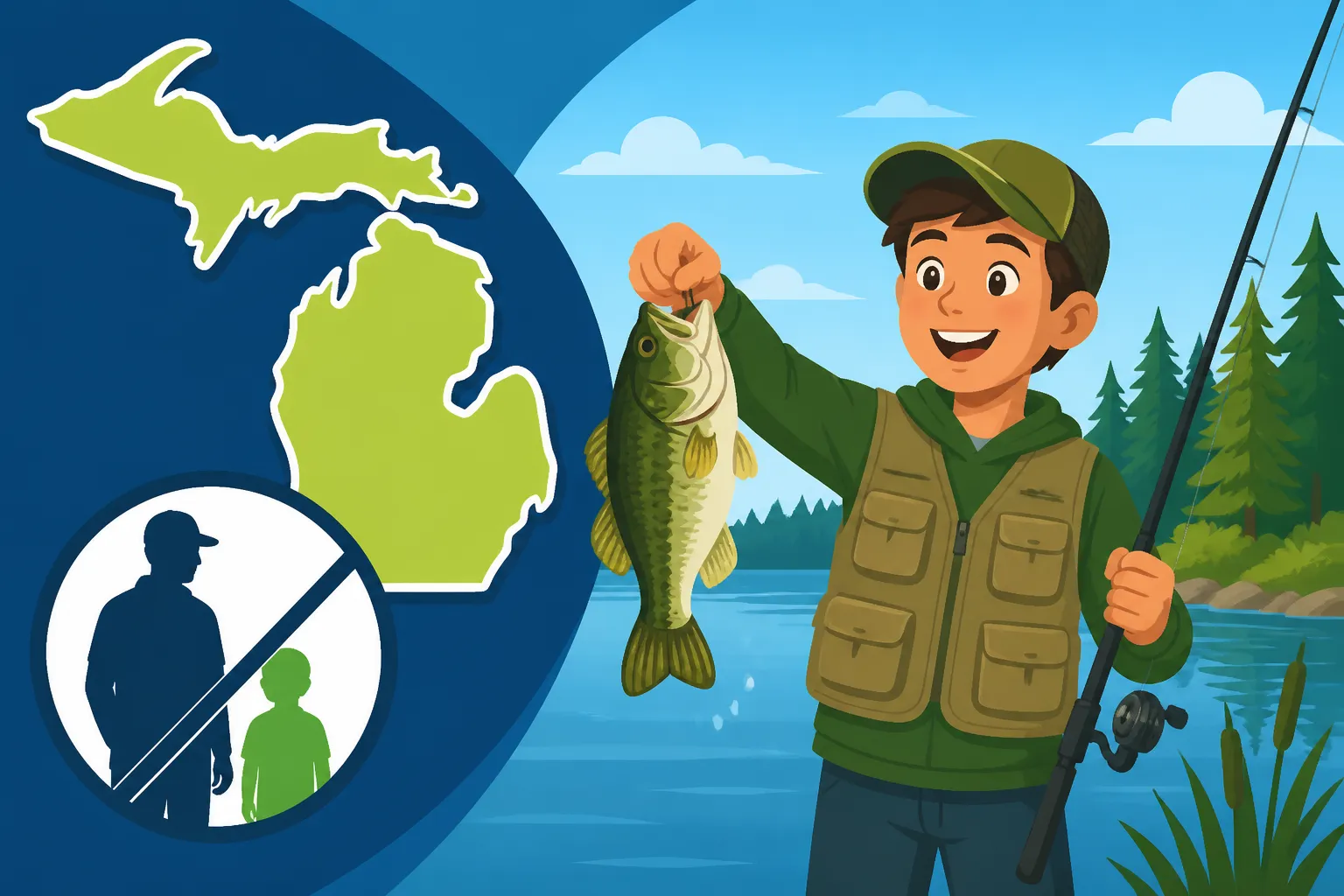
Michigan’s Minimum Age to Fish Without Adult Supervision
It’s a tale as old as time, isn’t it? That moment when your child, bursting with newfound independence and a serious case of the fishing bug, asks if they can finally head out to their favorite fishing spot alone. Or maybe you’re a young angler yourself, staring at the glittering water, wondering if you’re old enough to truly call the shots on your own fishing adventure. The idea of letting them go can be thrilling, a sign of their growing maturity, but also a little nerve-wracking. We all want to encourage their passion, but safety and staying on the right side of the law are always top of mind. This guide will help you understand Michigan's fishing regulations concerning age and supervision, so you can confidently navigate those waters.
The Basics of Michigan's Youth Fishing Regulations
Michigan’s Department of Natural Resources (DNR) has some clear guidelines regarding fishing licenses, which is often where the confusion around age and supervision begins. It’s important to separate the concept of needing a license from the idea of being old enough to fish without an adult present. While related, they aren't quite the same thing in the eyes of the law.
Licensing Requirements for Young Anglers
Let's cut right to the chase: Michigan law states that anyone aged 17 years or older must possess a valid fishing license to fish in public waters. This is a hard and fast rule, whether they're fishing with you, with friends, or completely on their own. However, if your child is under the age of 17, they are absolutely welcome to fish without needing to purchase a license. This is a wonderful initiative by the state to encourage youth participation in outdoor activities and make fishing accessible to everyone, regardless of age.
Think about it this way: your energetic 15-year-old, tackle box in hand, can stroll down to the local pond and cast a line without any paperwork. They're good to go! But that same child, once they hit their 17th birthday, will need to make sure they've got their license in their pocket, even if it's just for an hour's worth of fishing. This rule is consistent across all public waters, from tiny backyard creeks to the vastness of the Great Lakes. It also applies during special events like the Michigan Free Fishing Weekends Explained, which are designed to let everyone experience fishing without the usual license requirement for a few select days each year, regardless of age.
So, when you consider the question, "Do Kids Need a Fishing License in Michigan?", the answer boils down to their age. If they are 16 and under, no license is required. If they are 17 or older, yes, a license is mandatory. There's no optional youth license to buy; it’s simply a requirement that kicks in at a specific age.
The "Without Adult Supervision" Nuance
Here's where things get a little more nuanced and where many parents feel a bit lost. While the Michigan DNR is very clear about when a license is needed based on age, they do not have a specific, codified minimum age at which a child can legally fish without adult supervision. The state fishing regulations focus predominantly on licensing, bag limits, and seasons, rather than stipulating a "supervision age." This means that technically, if your child is under 17 and therefore doesn't need a license, they could, from a pure fishing regulation standpoint, go fishing alone.
However, this absence of a specific fishing-related supervision age doesn't mean it's a free-for-all. What it really means is that the responsibility for a minor's safety and well-being falls squarely on the parent or guardian. General child supervision laws still apply, and a parent could be held liable if a child is put in harm's way due to lack of appropriate supervision, even if no fishing regulation was broken. This is a critical distinction that often gets overlooked. For instance, if a 10-year-old is fishing alone and gets into trouble, even though they don't need a license, the legal implications for the supervising adult could be significant under general child welfare statutes.
Ultimately, the decision of when a child is mature enough to fish without a parent or guardian present is a personal one, made by the adults responsible for them, taking into account the child's maturity, the fishing environment, and local ordinances which might have stricter rules than state fishing laws. The Michigan fishing regulations simply don't have a line item that says, "Children under X age must be accompanied by an adult while fishing."
Understanding Parental Responsibility and Safety Considerations
Since Michigan's fishing regulations don't explicitly define a minimum age for unsupervised fishing, the onus truly falls on parents and guardians to make informed decisions. It's not just about obeying the law, but ensuring the safety and positive experience of young anglers.
Beyond the License: Safety First
Even if your child is under 17 and doesn't need a license, the question of whether they are truly safe to be out fishing on their own is paramount. The great outdoors, while beautiful, also presents inherent risks. Think about the potential dangers: accidental drownings, especially if they fall into cold water or are fishing near strong currents; hypothermia if they're not dressed properly for changing Michigan weather; getting lost in unfamiliar territory; encountering wildlife, which can range from curious critters to more dangerous animals; and of course, the ever-present risk of accidental hookings with sharp fishing gear.
Before you even consider letting a young angler go solo, you should honestly assess several factors. How mature is your child? Do they have strong swimming skills? Are they familiar with the specific body of water and its potential hazards? Do they understand how to react to sudden weather changes, like an unexpected thunderstorm rolling in over Lake Huron or a sudden drop in temperature in the Upper Peninsula? Do they know basic first aid and how to handle a minor injury, or who to call in an emergency? Packing a well-stocked, waterproof first-aid kit, perhaps one easily purchased from a reliable online retailer like Amazon, is a non-negotiable step for any solo excursion. Similarly, ensuring they have appropriate footwear and clothing for the elements is crucial, as is a reliable way to communicate, like a fully charged cell phone.
Consider two hypothetical 12-year-olds: one who is incredibly responsible, knows the fishing spot like the back of their hand, is a strong swimmer, and carries a small emergency kit. The other is impulsive, easily distracted, struggles with swimming, and has a tendency to wander off. While both are legally able to fish without a license, only one might be genuinely ready for unsupervised fishing. It’s a judgment call that requires careful thought and a deep understanding of your child's capabilities and limitations.
Local Ordinances and Property Rules
It's easy to assume that if the state says something is okay, it's okay everywhere. However, that's not always the case. While the Michigan DNR might not have an "unsupervised age" for fishing, individual cities, townships, or even specific parks can implement their own ordinances that might require minors under a certain age to be accompanied by an adult in public spaces, including fishing piers or access points. These local rules are often put in place for general public safety, not specifically for fishing, but they apply nonetheless.
For example, a municipal park in Grand Rapids might have a posted rule stating that "children under 14 must be accompanied by an adult in all park areas." In this scenario, even if your 13-year-old is a seasoned angler and legally doesn't need a fishing license, they would still be in violation of the park's rules by fishing alone. Similarly, if they're fishing on private property, whether it's a friend's pond or a leased access point, the property owner's rules regarding minor supervision would take precedence. Always check with local authorities or property owners to avoid any misunderstandings or potential citations.
The definition of "supervision" can also be a bit hazy. Does an adult need to be standing right next to the child? Generally, it means within reasonable sight and hearing, able to intervene quickly if needed. If a parent is picnicking 100 yards away while a young child fishes by a busy river, that might not be considered adequate supervision if something goes wrong. This isn't just about fishing, but about general child welfare and ensuring that a responsible adult is accessible and aware of the child's activities.
Equipping Young Anglers for Independent Fishing
Once you’ve made the thoughtful decision that your young angler is ready for some independent fishing time, the next step is to ensure they are properly equipped and knowledgeable. Giving them the right tools and information isn't just helpful; it's a crucial part of their safety and success.
Essential Gear and Preparedness
Independent fishing requires more than just a rod and reel. If your young angler is heading out alone, they need to be prepared for various scenarios. First and foremost, a properly fitted life jacket is essential, even if they plan to fish from shore or a pier. Accidents happen quickly, and a life jacket can be a lifesaver. Ensure they have appropriate clothing for the weather – layers are always a good idea in Michigan – along with plenty of water, some snacks, and effective bug spray, especially during warmer months.
Beyond the basics, a small, well-organized tackle box with their essential gear is important. This might include extra hooks, sinkers, bobbers, and a few reliable lures or baits. A small multi-tool, which can be picked up easily from Amazon, can be incredibly handy for cutting line, removing hooks, or making minor repairs. They should know how to tie a few basic knots, such as the clinch knot or palomar knot, and how to safely unhook and handle fish, whether they plan to keep or release their catch. Learning how to properly measure fish is also key for adherence to regulations. For those just starting, a solid "Best Budget Rod and Reel Combo for Beginners" is a fantastic investment, offering durability and ease of use without breaking the bank.
Knowing the area they'll be fishing in is also critical. Discuss landmarks, potential hazards like deep drop-offs or slippery rocks, and where the safest places to cast are. It's also a good idea to establish a check-in routine – perhaps a text every hour or a call when they're done – so you know they're safe and sound. Preparedness isn’t just about gear; it’s about having a plan and communicating it effectively.
Educating Young Anglers on Regulations and Ethics
Even without needing a license, young anglers are still bound by all other Michigan fishing regulations. This is a vital point that needs to be thoroughly communicated. They must understand and adhere to Michigan Bag and Size Limits Explained for specific species, as well as any special regulations for the body of water they are fishing. For example, some lakes might have specific rules for certain fish, or even catch-and-release-only zones.
It’s also important to instill a strong sense of fishing ethics. This includes responsible catch-and-release practices if they aren't keeping fish, disposing of trash properly (leave no trace!), and respecting private property. They should know that even if a prime fishing spot looks tempting, if it's on private land, they need permission to access it. A good practice is to provide them with a copy of the current Michigan Fishing Regulations Every Angler Should Know, or at least guide them on how to access it through resources like the DNR Hunt Fish App for Licenses and Reporting. This app is an invaluable tool for checking real-time regulations, especially when they might vary by location or species.
As they approach the age of 17, it’s a good time to discuss the upcoming requirement for a license. Explaining that the Michigan Fishing License Year Runs April to March can help them understand the renewal cycle for when they transition into needing their own license. Familiarizing them with resources like Reading the Michigan Fishing Regulations Digest will empower them to be responsible and informed anglers for life, long after they've outgrown the need for adult supervision.
Benefits and Challenges of Youth Fishing Independence
Allowing young anglers to fish independently is a significant step, one that comes with both rewarding benefits for their development and inherent challenges that require careful management. It's a balance between fostering growth and ensuring safety.
Fostering Skills and Confidence
The decision to let a young person fish independently, once they are truly ready, can be incredibly beneficial. It provides a unique opportunity for them to develop a wide array of skills. Problem-solving becomes a natural part of the experience: what do you do when your line gets tangled, or the fish aren't biting in your usual spot? It encourages self-reliance, as they learn to depend on their own knowledge and judgment rather than looking to an adult for every answer. This can significantly boost their confidence, knowing they can navigate a situation and find success on their own.
Beyond practical skills, independent fishing fosters a deeper appreciation and connection with nature. Without the constant presence or instructions of an adult, they can observe the environment more closely, understand fish behavior on their own terms, and truly immerse themselves in the tranquility of the outdoors. It's a chance for quiet reflection and a developing sense of personal responsibility for their actions and the environment. This kind of hands-on, self-directed learning can be far more impactful than any structured lesson. Imagine them exploring new areas in Michigan's Great Lakes Fishing Guide or discovering their own secret spot within the Best Places to Fish in Michigan; these are experiences that build character and lifelong memories.
Potential Pitfalls and How to Mitigate Them
Of course, with greater freedom comes greater risk. The potential pitfalls of unsupervised fishing are real and should not be overlooked. Accidents can happen, as discussed earlier, but there's also the risk of them getting into trouble, perhaps by inadvertently trespassing or misinterpreting a regulation. They might also become frustrated if they aren't catching anything, leading to a negative experience if not managed well. It’s also important to remember that as much as we hope for their independence, there are always dangers from other people, which, while rare, need to be considered.
To mitigate these challenges, a gradual approach to independence is often best. Start with short, supervised trips where you're present but allow them to handle all aspects of the fishing independently. Then, progress to letting them fish alone in very familiar, safe areas for short periods, with frequent check-ins. As they prove their responsibility and judgment, you can slowly extend the duration and expand the fishing grounds. Open and honest communication is paramount. Encourage them to always carry a fully charged phone, know who to call in an emergency, and understand that if they ever feel unsafe or uncomfortable, they should immediately pack up and come home. Reinforce that there’s no shame in calling for help or admitting they’re not comfortable.
By providing thorough education on Michigan Fishing Regulations Every Angler Should Know, equipping them with essential safety gear, and building their skills incrementally, you can help them navigate these potential issues. Being clear about expectations and fostering an environment where they feel comfortable asking questions or admitting mistakes will go a long way in ensuring their independent fishing experiences are safe, enjoyable, and ultimately, deeply rewarding.
| Age Group | Fishing License Required | Adult Supervision Legally Mandated (DNR) | Key Considerations for Parents |
|---|---|---|---|
| Under 17 | No | No (but highly recommended for younger ages) | Parental responsibility is key. Assess child's maturity, swimming ability, knowledge of the area, weather awareness, and emergency protocols. Check local park ordinances which may require supervision for minors. |
| 17 and Older | Yes | No | Must carry a valid Michigan fishing license. While not legally mandated for supervision, safety considerations (especially in remote or dangerous areas) still apply to new or inexperienced adult anglers. |
| Free Fishing Weekends | No (for all ages) | No (but highly recommended for younger ages) | During Michigan Free Fishing Weekends Explained, no license is required for anyone. All other regulations (bag limits, size limits, etc.) still apply. Parental responsibility for minors remains the same as during regular season. |
Disclaimer
The information provided in this guide is for general informational purposes only and is not intended as legal advice. Fishing regulations in Michigan can change, and it is the responsibility of every angler to consult the most current Michigan Fishing Regulations Digest or the Michigan Department of Natural Resources (DNR) website for the precise and up-to-date rules and laws before engaging in any fishing activities. Local ordinances may also apply.