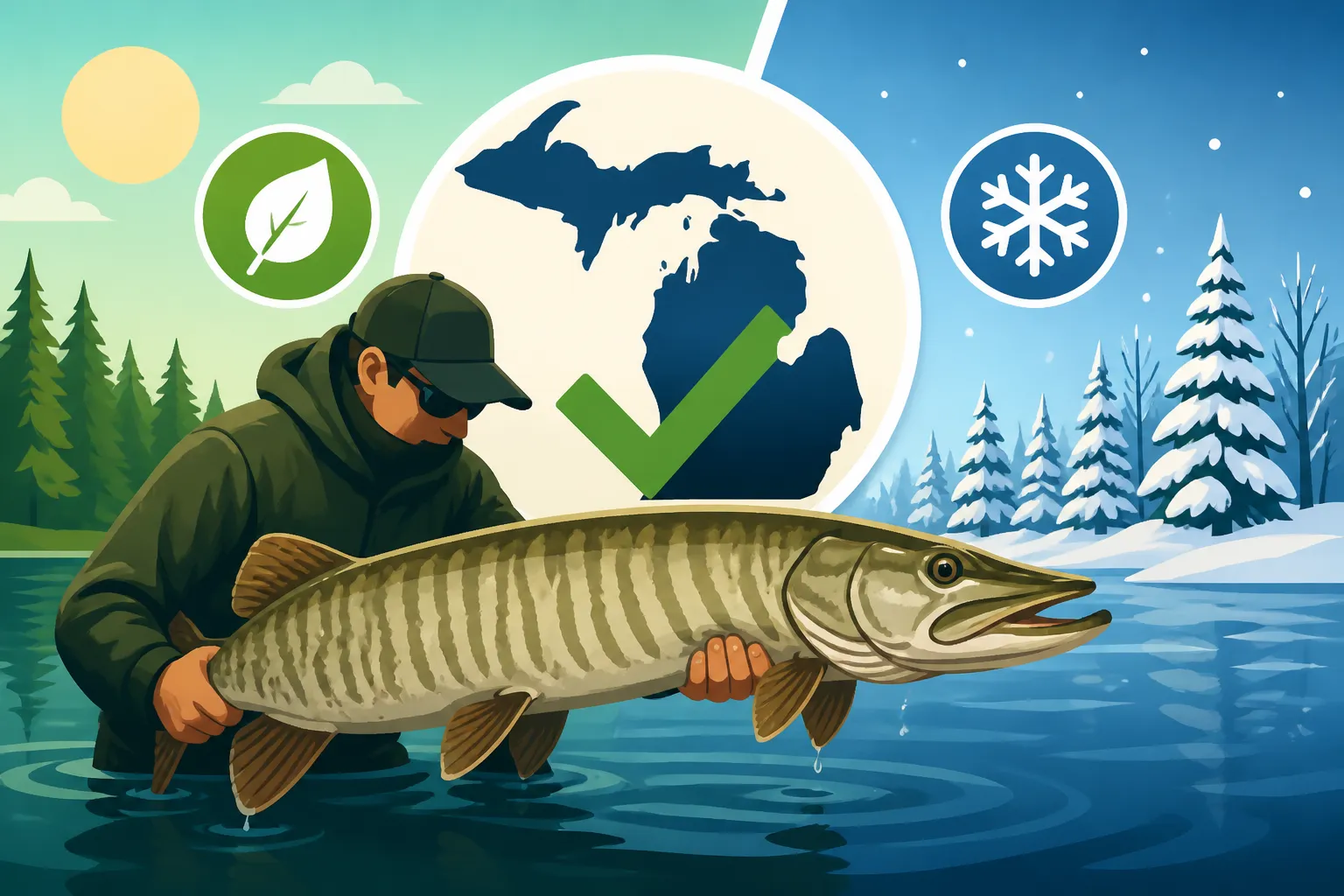
Is Catch-and-Release Muskie Fishing Legal Year-Round in Michigan?
There's nothing quite like the thrill of chasing muskellunge in Michigan's abundant waters. These incredible apex predators, often called "the fish of 10,000 casts," capture the imagination of anglers across the state. But for many, the exact rules surrounding muskie fishing, especially when it comes to catch-and-release, can feel like navigating a complex maze. You want to do right by these magnificent fish and ensure you're compliant with the law, but trying to pinpoint whether year-round catch-and-release is truly permitted can be a frustrating exercise. This guide will cut through the confusion, clarifying Michigan's regulations for muskellunge, so you can focus on the chase with confidence and a clear conscience.
Understanding Michigan's Muskellunge Fishing Seasons
Michigan's Department of Natural Resources (DNR) takes the conservation of muskellunge very seriously, which means specific regulations are in place to protect these vulnerable populations. It's important to understand that there's a distinct difference between when you can harvest a muskie and when you can catch-and-release one. The general assumption might be that if a season is closed for keeping, it's closed for everything, but that's often not the case with muskellunge.
General Open Seasons for Harvest and Catch-and-Keep
For those rare moments when you actually manage to land a legal-sized muskie and decide to keep it (a decision most dedicated muskie anglers rarely make), there are specific open seasons. Generally, the statewide muskellunge season for harvest runs from the first Saturday in June through March 15th of the following year. This applies to both inland waters and the Great Lakes, though specific nuances always apply. However, it's critical to remember that even during this harvest season, there are strict size and possession limits. For instance, the statewide minimum size limit for harvesting a muskie is typically 42 inches. You're also only allowed to harvest one muskellunge per license year. This one-fish-per-year rule highlights just how precious these fish are and how carefully their populations are managed. If you do harvest one, remember the critical step of reporting your catch. The state has specific Michigan Muskellunge Harvest Reporting Rules you need to follow diligently, often within 24 hours of landing the fish, to help the DNR track population health.
Specific Waters and Special Regulations for Muskellunge
While the general statewide rules provide a good baseline, Michigan fishing is famous for its exceptions. Certain bodies of water have what are called "special regulations" that supersede the general rules. This is particularly true for muskellunge. For example, some lakes might have an even larger minimum size limit, such as 50 inches. Two notable examples often cited for this increased minimum size are Lake Hudson and Thornapple Lake. These tougher restrictions are usually put in place by local fisheries managers to help protect growing muskie populations and ensure more fish reach trophy size. Always check the most current Michigan Fishing Regulations Digest or the DNR's online resources before heading out, especially if you're exploring new waters. A quick glance at the guide for your specific lake or river can save you from a potential violation and ensure you're fishing responsibly. These localized rules might also influence whether catch-and-release is permitted year-round or if a specific closure is in place, even for non-harvest activities.
The Nuance of Catch-and-Release for Muskellunge in Michigan
This brings us to the heart of the matter: is catch-and-release muskie fishing legal year-round? The answer, for the most part, is a resounding yes, with crucial caveats. Many muskie anglers view the fish as too magnificent to keep, and the sport truly revolves around the challenge of the catch and the thrill of the release.
When Catch-and-Release is Permitted Year-Round
Generally speaking, in Michigan, catch-and-release fishing for muskellunge is indeed permitted year-round on most waters, even outside the harvest season. This means you can pursue these incredible fish even when you aren't legally allowed to put one in your cooler. This allowance recognizes the unique nature of muskie fishing, where the act of catching and releasing is often the primary goal. You'll find that this is true for most of the Great Lakes (Lake St. Clair is a prime example of fantastic year-round muskie fishing) and many inland lakes. The key here is "catch-and-immediate-release." If you hook a muskie outside of the harvest season, or if it doesn't meet the minimum size limit, you must release it immediately with the least possible harm. This is where proper handling techniques become not just good practice but a legal requirement. Remember, a muskie isn't something you can boat, measure, take photos of for ten minutes, and then decide to release. It needs to go back into the water as quickly and safely as possible.
However, as mentioned earlier, always consult the Michigan Fishing Regulations Every Angler Should Know because there can be specific waters with special regulations that might impose a closure even on catch-and-release fishing for certain periods, usually to protect spawning fish or newly stocked populations. These are rare but important to identify. The vast majority of Michigan's waters, especially those with established muskie populations, allow for year-round catch-and-release, giving dedicated anglers plenty of opportunities to hit the water.
Responsible Catch-and-Release Practices for Muskie
Since catch-and-release is so central to muskie fishing, knowing how to do it properly is paramount. These fish are powerful, have sharp teeth, and can be easily injured if not handled correctly. The goal is to minimize stress and physical harm to ensure their survival after release.
Here are some essential practices:
- Proper Gear: Use heavy-duty rods and reels that can handle the fight without prolonging it excessively, which can exhaust the fish. Strong, braided line and sturdy leaders are a must to prevent break-offs that leave hooks in the fish. Investing in high-quality gear is worth it, and you can find a wide range of suitable rods and reels for muskie fishing on Amazon.
- Large Net: A big, rubberized landing net is crucial. Avoid knotless nylon nets, as these can strip a fish's protective slime layer. Rubberized nets protect the fish's fins and skin and prevent hooks from getting tangled. You can find excellent muskie-specific nets online, including many options available through Amazon.
- Tools for Hook Removal: Long-nose pliers, bolt cutters, and jaw spreaders are non-negotiable. Muskies have incredibly bony mouths and sharp teeth. Trying to unhook them by hand is dangerous for both you and the fish. Bolt cutters are essential for cutting hooks if they are deeply embedded, which is far better than tearing tissue trying to pry them out.
- Minimal Time Out of Water: The golden rule is to keep the fish in the water as much as possible. If you must boat it for a quick measurement or photo, do so quickly, supporting its body horizontally. Never hold a large muskie vertically by its jaw, as this can severely damage its internal organs and spine.
- Unhooking in the Water: Try to remove hooks while the muskie is still in the net and in the water. If the hooks are deep or difficult, cut them.
- Revive the Fish: Once unhooked, hold the muskie gently in the water, supporting its belly, and allow it to recover until it can swim away under its own power. Move it back and forth slightly to push water over its gills if necessary.
Following these practices ensures that the fish you release has the best chance of survival, contributing to the health of Michigan's muskie populations for years to come. For more detailed instructions, check out our guide on Catch-and-Immediate-Release Rules for Muskellunge.
Why These Regulations Exist for Muskellunge
Understanding the 'why' behind fishing regulations often helps anglers appreciate their importance and adhere to them more diligently. For muskellunge, the regulations are deeply rooted in conservation and the unique biological characteristics of the species.
Conservation Efforts and Muskie Population Health
Muskellunge are relatively slow-growing fish that don't reach maturity until several years old, and they don't produce as many offspring as some other species. This makes them particularly vulnerable to overfishing. Their populations can take a long time to recover once depleted. The stringent size limits (like Michigan's 42-inch minimum, or 50-inch minimum in specific waters like Lake Hudson) are designed to ensure that most muskies have the chance to spawn multiple times before they are eligible for harvest. This contributes to a robust and healthy gene pool. The one-fish-per-year bag limit further reinforces this, making muskie a true "trophy" fish, not one you'd ever target for a meal regularly. The DNR actively manages muskie populations through stocking programs and habitat protection, and the data collected from the Michigan's Muskellunge Harvest Registration Requirement is vital for these efforts. These detailed regulations are a testament to the state's commitment to preserving these iconic fish for future generations of anglers.
Protecting Spawning Fish
Another critical reason for specific season dates, even for catch-and-release in certain rare instances, is the protection of spawning fish. While the general muskie harvest season opens in June, well after the spring spawn, a year-round catch-and-release allowance could theoretically put undue stress on pre-spawn or spawning fish in very specific, sensitive areas. Muskies typically spawn in shallow, vegetated areas in spring, usually when water temperatures reach the mid-40s to low 50s Fahrenheit. During this time, they are more concentrated and can be more susceptible to capture. Regulations aim to minimize disturbance during this crucial reproductive period. By allowing year-round catch-and-release on most waters, the DNR balances angling opportunity with conservation, trusting anglers to practice responsible techniques. Any specific closures for catch-and-release would be rare and highly localized, designed to provide maximum protection during unique local spawning windows.
Navigating the Michigan Fishing Regulations Digest
The sheer volume of fishing regulations can feel overwhelming. Many anglers admit to just glancing at the highlights or relying on word-of-mouth. However, with species like muskellunge, where details matter, it's crucial to know how to access and interpret the official rules.
Accessing the Latest Information from the DNR
The most reliable and up-to-date source for Michigan fishing regulations is always the Michigan Department of Natural Resources (DNR). Every year, the DNR publishes a comprehensive Michigan Fishing Regulations Digest. You can typically find a digital PDF version of this digest on their official website, which you can easily download to your phone or tablet. This digital format is incredibly convenient for quick look-ups while you're on the water. Many tackle shops, sporting goods stores like Cabela's or Gander Outdoors, and even some general retailers have physical copies available for free as well. Getting into the habit of reviewing this digest annually, especially if you plan to fish new areas or target specific species, is an absolute must. While you might not find the full digest on Amazon, specific gear related to understanding and applying regulations, like waterproof cases for printed copies, can certainly be found there.
For even more immediate information, the DNR also offers the Michigan's DNR Hunt Fish App for Licenses and Reporting. This app is a game-changer for anglers, allowing you to not only purchase and display your Michigan Fishing License Guide for Residents and Nonresidents, but also to access the current regulations, check species-specific rules, and even report your muskellunge harvest directly from your phone. It's an indispensable tool for staying informed on the go.
Key Regulations Beyond Season Dates
Beyond the core season dates and catch limits, the digest contains a wealth of other important information that can impact your muskie fishing experience. For instance, understanding what constitutes an artificial lure versus live bait might be crucial in certain waters with special regulations. There are also rules regarding the number of lines you can use, specific gear restrictions (like spear fishing for rough fish), and even rules for transporting fish.
A quick table summarizing the core statewide muskellunge regulations can be a handy reference, but remember, always defer to the official DNR digest for the most current and specific rules for your exact fishing location.
Regulation Category Statewide Muskellunge Rule Important Notes
: Disclaimer:** This content is for informational purposes only and is not a substitute for official Michigan fishing regulations. Always consult the latest Michigan DNR Fishing Guide before heading out on the water.