Best Net for Landing Muskellunge
There's nothing quite like the heart-stopping moment a monstrous Michigan muskellunge surfaces beside your boat or appears from the depths of a river channel, its massive form shimmering. But that exhilarating high can quickly turn into frustration, or even danger, if you don't have the right gear to safely land it. This guide is dedicated to helping you choose the best net, ensuring both a successful catch and a healthy release for these incredible fish.
Why a Specialized Muskie Net Isn't Just a "Nice to Have"
Let's be honest, you can't just grab any old bass net from your garage and expect it to handle a true Michigan monster. Muskellunge are in a league of their own, and attempting to land one with inadequate equipment is a recipe for disaster, for both you and the fish. It's a common mistake, especially for anglers new to targeting these apex predators, to underestimate the sheer power involved.
The Sheer Power and Size of Michigan Muskellunge
Imagine a fish that can easily exceed 40 or even 50 inches, built like a torpedo, and packed with muscle. That's a muskellunge in Michigan waters. They don't just swim; they propel themselves with incredible force. When you finally get one boat-side or bank-side after a grueling fight, it's still full of fight, thrashing, rolling, and shaking its massive head. A regular trout or walleye net simply isn't designed to contain that kind of power. The hoop is too small, the handle too flimsy, and the mesh too shallow to cradle such a formidable creature. Trying to force a huge muskie into a small net often results in the fish escaping, tearing the net, or worse, injuring itself. The pursuit of the Michigan's Record Muskellunge speaks volumes about the size these fish can attain here.
Protecting the Fish and Yourself During the Landing Process
Many Michigan muskie anglers practice catch-and-release, which is fantastic for conserving these majestic fish. However, a proper release starts with a proper landing. Using the wrong net can inflict serious damage on a muskie. Traditional knotted nylon nets can strip away their protective slime coat, leading to infections. The small mesh can tangle their fins, causing tears or breaks. Furthermore, a thrashing muskie can embed treble hooks from your lure deep into the net mesh, making unhooking a nightmare and prolonging the fish's time out of water. A specialized muskie net minimizes these risks, providing a wide, deep, and gentle cradle. It also protects you. Those sharp teeth and multiple treble hooks are no joke, and a muskie thrashing outside a proper net can easily lead to a hook embedded in your hand or arm. Safe landing is critical, especially when considering Catch-and-Immediate-Release Rules for Muskellunge.
Key Features to Look for in a Top-Tier Muskie Net
When you're investing in a muskie net, you're not just buying a tool; you're buying peace of mind and contributing to the health of the fishery. There are specific design elements that set a true muskie net apart from general-purpose landing nets. Don't skimp on these features, as they are crucial for both fish safety and angler success.
Hoop Size and Depth: Giving Your Muskie Room to Breathe
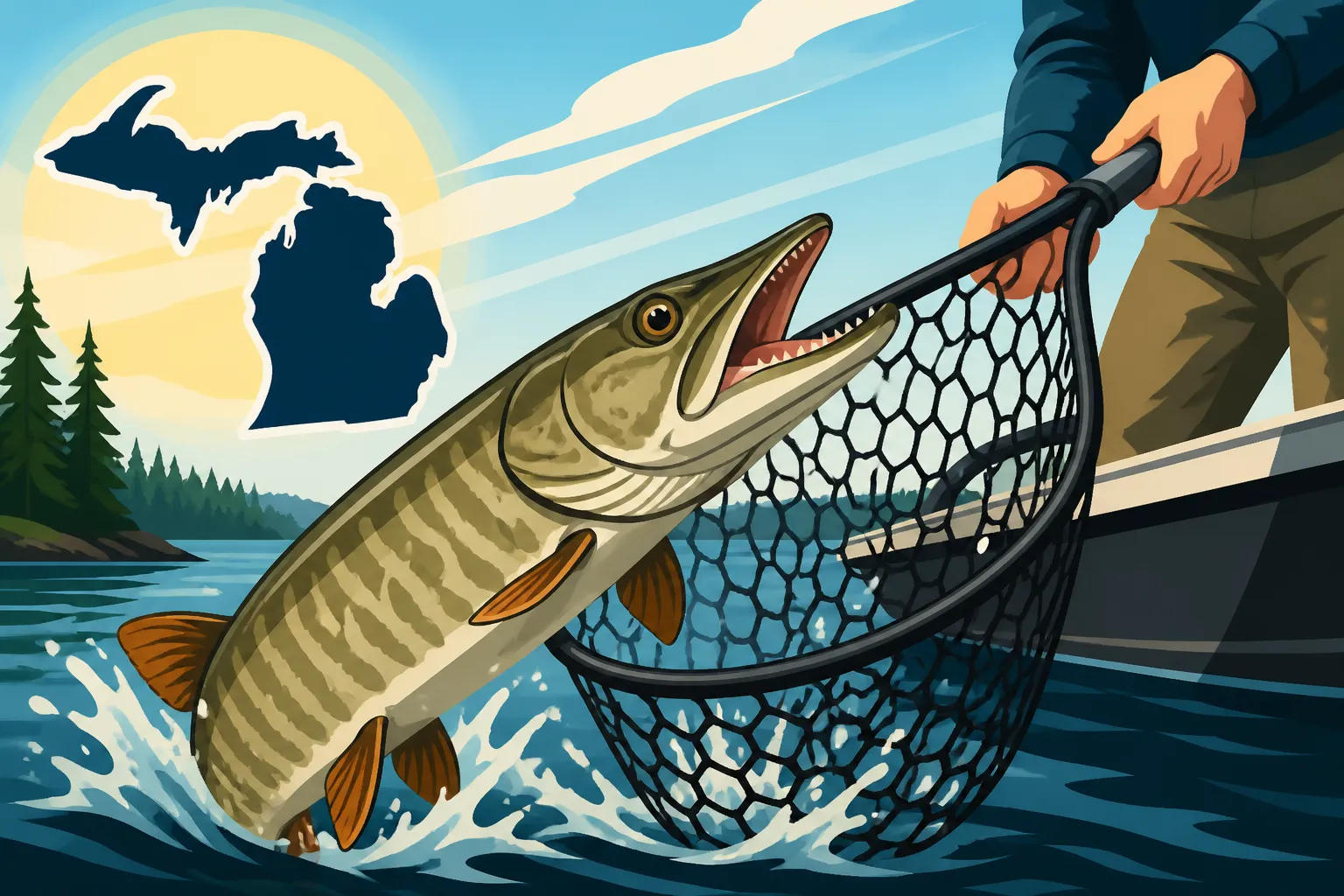
This is perhaps the most critical factor. A muskie net needs an enormous hoop. We're talking about hoops that are typically 30×32 inches, 36×40 inches, or even larger. The goal is to allow the entire fish to slide into the net headfirst without having to bend or fold its body. A smaller hoop means you're trying to shove a fish into a space that's too tight, increasing the chances of injury to the fish and a missed landing.
Equally important is the depth of the net bag. It needs to be deep enough to fully engulf the fish once it's inside, preventing it from flopping out. A net that's too shallow will only contain part of the muskie, allowing the powerful tail to kick and potentially send the fish sailing back into the water, often with your expensive lure still attached. Look for net bags that are 36-48 inches deep. This ample space allows the muskie to remain submerged in the water while you work to unhook it, significantly reducing stress and improving its chances of survival. Think of it as a temporary, safe holding pen right next to your boat.
Handle Length and Strength: Control When It Matters Most
The handle of a muskie net is not just for holding; it's for leverage and control. When a large muskie makes that last surge, you need a handle that won't flex, bend, or break. Look for heavy-duty aluminum or composite handles. Many quality muskie nets feature telescoping handles that extend, allowing you to reach further from the boat or shore. This adjustability is incredibly useful.
For boat fishing, a handle that extends from about 4-6 feet is often ideal, giving you enough reach over the gunwale without being cumbersome. If you're fishing from shore, a longer handle, potentially 8-10 feet, might be necessary to reach over obstacles or navigate varied terrain. The ability to extend the handle quickly is a massive advantage in those split-second landing opportunities. A sturdy handle also gives you the confidence to lift a heavy fish without worrying about it snapping under the strain, which is a real concern with a 20-30 pound (or heavier) muskie.
Net Material: Prioritizing Fish Health and Hook-Free Retrieval
This is where modern net technology truly shines for muskie fishing. Forget those old, stringy, knotted nylon nets. For muskies, you absolutely want a knotless, rubberized or rubber-coated mesh. Here's why:
- Fish Protection: The smooth, coated material is far gentler on a muskie's delicate slime coat, which is their first line of defense against disease. It also prevents damage to their fins and scales. This is paramount for catch-and-release success.
- Hook Friendly: This is a game-changer. Treble hooks from muskie lures – which often have two or three sets of them – famously get tangled in traditional nylon mesh. Untangling can take precious minutes, keeping the fish out of water for too long and causing significant stress. With rubberized mesh, hooks rarely snag. They simply slide against the smooth material, making unhooking a quick and efficient process.
- Weight and Drying: Rubberized nets tend to be heavier, but they also shed water quickly, preventing them from holding scent or getting mildewy. They are much easier to clean and dry.
When you're searching online, perhaps browsing options on "Amazon" or "Bass Pro Shops", make sure to filter for these critical features. It makes all the difference in the world when you're trying to quickly and safely handle a feisty muskie.
Top Considerations for Choosing Your Michigan Muskie Net
Now that we've covered the essential features, let's think about how these translate to your specific angling needs. Not every muskie angler fishes the same way, and your net should reflect your personal approach to tackling Michigan's waters. From the vastness of Lake St. Clair to smaller inland lakes, your environment dictates your gear.
Boat vs. Shore: Matching Your Net to Your Fishing Style
Your primary fishing platform is a huge determinant for your net choice.
- Boat Fishing: If you spend most of your time chasing muskies from a boat, particularly larger vessels on waters like Lake St. Clair or the bigger Great Lakes bays, you'll likely want a net with a robust, perhaps slightly shorter, but still extendable handle. The wider hoop sizes are especially beneficial here, allowing you to scoop the fish from the water quickly. Since you're often standing higher above the water, a massive reach isn't always as critical as sheer strength and ease of deployment. You might also want a net that can be easily stored on the boat deck or in a rod locker without getting in the way while you're casting huge bucktails or jerkbaits. Keeping your net readily accessible, perhaps laid out on the deck, can prevent fumbling when that big fish suddenly strikes.
- Shore or Wading Fishing: While less common for muskie, some dedicated anglers target them from shore or while wading in larger rivers or accessible lake points. For these situations, a longer handle is absolutely essential. You need to be able to reach out over submerged logs, rocky banks, or drop-offs to secure your catch. Portability becomes a bigger factor here too, as you might be hiking a bit to get to your fishing spot. A net with a folding hoop and a collapsing handle, even if it adds a little weight, can be a lifesaver when you're navigating brush or carrying other gear. Consider the terrain where you typically fish; a sturdy net that can take a bump or two against rocks is a good idea.
Portability and Storage: Convenience on the Water
Let's face it, muskie nets are big. There's no getting around that. But how big it feels depends on its design for portability and storage.
- Collapsible Handles: Many muskie nets feature handles that telescope, significantly reducing their overall length for transport. Some even have a button or lever mechanism for quick deployment, which is incredibly handy when you've got a muskie charging the boat at the end of a long figure-eight.
- Folding Hoops: Another great innovation is the folding hoop. This allows the large net frame to fold in half or collapse, making it much more compact. This is a huge benefit for smaller boats, kayaks (yes, some intrepid anglers pursue muskie from kayaks!), or even just fitting the net into your vehicle without taking up the entire back seat.
- Consider Your Vehicle and Boat: Before buying, think about how you'll get this sizable piece of equipment to and from your fishing destination. Will it fit in your trunk? Does your boat have designated storage? A net that's constantly getting underfoot or is difficult to manage can quickly become a nuisance, no matter how effective it is at landing fish.
Budgeting for Quality: An Investment in Your Muskie Pursuit
High-quality muskie nets are an investment, no doubt about it. They typically range higher than your average panfish net, and for good reason. They are built with more robust materials, larger components, and specialized features designed for demanding situations.
Think of it this way: you're likely spending good money on specialized muskie rods, reels, lines, and those expensive lures. What's the point of all that investment if you lose the fish of a lifetime at the boat because you skimped on the landing net? A quality net will last for many seasons, withstand countless battles with toothy critters, and ultimately pay for itself in successful landings and healthy releases.
When you're ready to make the purchase, check out retailers like "Bass Pro Shops" and "Amazon". They often have a wide selection, allowing you to compare features and read reviews from other muskie anglers. While specific price points fluctuate, expect to invest in a net that you trust will hold up when it counts most. Consider it an essential part of your muskie arsenal, right alongside your heavy-duty tackle and knowledge of Michigan Muskellunge Fishing Techniques.
Best Practices for Using and Maintaining Your Muskie Net
Having the right muskie net is only half the battle; knowing how to use it effectively and keep it in top shape is equally important. These giants require a certain finesse and respect, and proper netting technique, followed by careful handling, ensures that both your trophy and your gear remain in excellent condition. Adhering to these practices will significantly improve your success rate and minimize stress on the fish.
The Landing Technique: Smooth, Swift, and Stress-Free
Landing a muskie isn't just about scooping; it's a coordinated effort that requires timing and a calm demeanor. The key is to lead the fish into the net, not chase it.
- Lead the Fish: As the muskie nears the boat or shore, try to guide its head into the net. This is crucial because muskie have incredible forward propulsion, but are less agile moving backward. Once their head is in the hoop, they're much easier to manage.
- Submerge the Net: Have the net fully submerged in the water, ready and waiting. Don't lift it out of the water and try to bring it down on top of the fish. This usually spooks the muskie, causing it to bolt.
- Scoop Up and Lift: Once the muskie's head is in the net, swiftly scoop it forward and upward, lifting the entire fish into the net. The goal is to get as much of the muskie's body into the deep bag as possible.
- Keep it Wet: Once the fish is in the net, try to keep the net, and therefore the fish, in the water. This is especially true if you're fishing from a boat. The water supports the fish's weight, protects its slime coat, and keeps it calmer. It's truly a team effort, and if you have a fishing buddy, make sure one person is ready with the net while the other guides the fish. This cooperative approach can make all the difference, particularly with larger, more powerful fish.
Handling and Release: Ensuring a Successful Return
After a muskie is in the net, the work isn't over. Quick, careful handling is essential for a successful release, particularly since many anglers follow Michigan's One Muskellunge Per Year Rule or practice 100% catch and release.
- In-Net Management: Keep the muskie in the water within the net. Immediately get your hook removers, jaw spreaders (if necessary), and any measuring devices ready. Minimize the fish's time out of the water.
- Unhooking: Carefully reach into the net (wear heavy-duty gloves!) and remove the hooks. Long-nosed pliers or specialized hook-out tools are indispensable. If a hook is deeply embedded, don't yank. Consider cutting the hook with bolt cutters if it means saving the fish.
- Quick Photo and Measurement: If you plan to measure or take a quick photo, do so as quickly as possible. Keep the fish horizontal and supported, especially its belly. Avoid hanging it vertically by the jaw or gills.
- Revival and Release: Once unhooked and documented, gently guide the muskie, still in the net, back into the water. Support it upright in the net, allowing fresh water to flow over its gills. When it starts to kick vigorously, gently ease the net away, allowing it to swim off on its own power. Never simply toss a muskie back; ensure it's ready to swim strong. This commitment to proper release ties directly into How to Catch and Release a Muskellunge.
Net Care: Extending the Life of Your Essential Tool
Your muskie net takes a beating. It's exposed to water, sunlight, hooks, and powerful fish. Proper care will ensure it serves you for many seasons.
- Rinse Thoroughly: After each trip, especially if you've been in murky or saltwater (though most Michigan muskie fishing is freshwater, boat fishing on the Great Lakes is a different beast), rinse your net thoroughly with fresh water. This removes fish slime, dirt, and any potential contaminants.
- Inspect for Damage: Regularly check the mesh for tears or holes, and the hoop and handle for cracks, bends, or loose parts. Small tears can be repaired before they become large ones.
- Dry Completely: Always allow your net to dry completely before storing it. This prevents mildew, which can degrade the mesh and cause unpleasant odors. Hang it in a well-ventilated area.
- Proper Storage: Store your net out of direct sunlight when not in use. UV rays can degrade plastic and rubber components over time. Keep it in a place where it won't get bent or crushed. A dedicated storage spot in your garage or boat locker is ideal.
By following these best practices, your muskie net will remain a reliable part of your fishing gear, ready for that next encounter with a Michigan freshwater leviathan. Remember, a well-maintained net is a safe net, for both you and the impressive fish you pursue.
| Feature | Description | Why It Matters for Muskie |
|---|---|---|
| Hoop Size | Large diameter, often rectangular or D-shaped (e.g., 30×32" or 36×40") | Accommodates entire fish, prevents injury, allows for quick, stress-free landing. |
| Net Depth | Deep bag (e.g., 36-48 inches) | Fully contains the muskie, prevents escape, allows for in-water unhooking. |
| Handle Length | Sturdy, often telescoping (e.g., 4-10 feet) | Provides necessary reach and leverage, crucial for controlling powerful fish. |
| Handle Material | Heavy-duty aluminum or composite | Withstands extreme forces, prevents bending or breaking under load. |
| Mesh Material | Knotless, rubberized, or rubber-coated | Protects fish's slime coat, prevents fin damage, eliminates hook snags, easy to clean. |
| Overall Build | Robust, durable components, heavy-duty construction | Designed to endure repeated use against large, aggressive fish and harsh conditions. |
Disclaimer
This article is for general informational purposes only and does not constitute professional advice. Laws, prices and regulations vary by location and change over time. Consult a qualified professional for guidance on your specific situation.