Life Jackets and Michigan Boating Safety Rules
It’s a scenario many of us dread: you're out on the beautiful waters of Michigan, perhaps enjoying a peaceful morning fishing trip, and suddenly something unexpected happens. Whether it's a rogue wave, a sudden mechanical issue, or an unfortunate slip, being prepared for the worst can quite literally be a lifesaver. This guide is dedicated to walking you through everything you need to know about life jackets and Michigan's essential boating safety rules, ensuring your next adventure on the water is as safe as it is enjoyable.
The Unwavering Importance of Life Jackets for Michigan Anglers
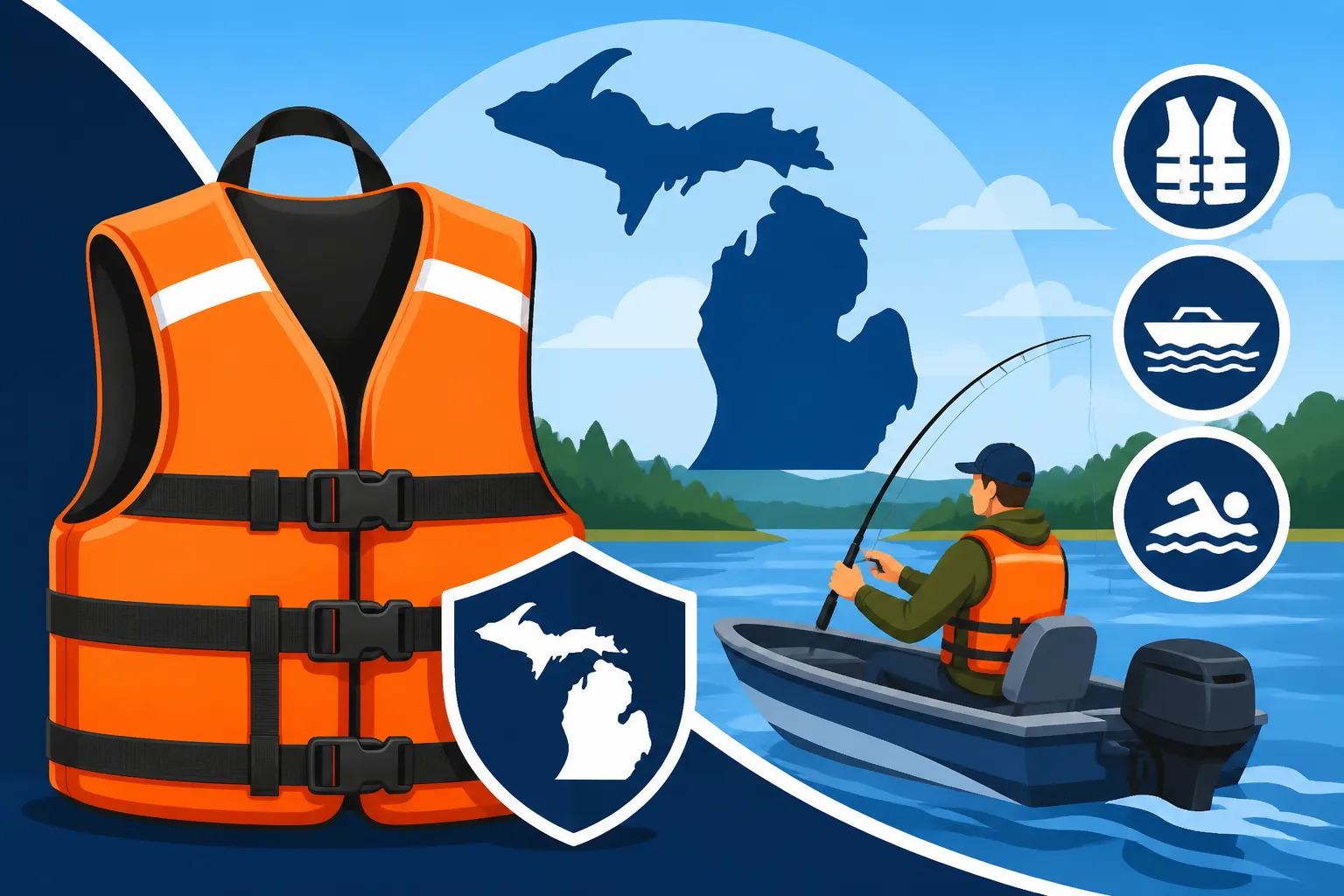
We've all heard the stories, or perhaps even had a close call ourselves. The water, especially Michigan's vast Great Lakes or rushing rivers, can be unpredictable. While many of us might consider ourselves strong swimmers, the reality is that an unexpected fall into cold water, an injury, or simply being disoriented can quickly turn a fun day into a perilous situation. That's where a properly fitted life jacket, or Personal Flotation Device (PFD), comes in. It's not just a piece of equipment; it's your primary defense against drowning.
Why Just Having a Life Jacket Isn't Enough
It's a common oversight: people own life jackets, but they're often stowed away under a seat, in a locker, or even at home. The problem is, a life jacket can't help you if you're not wearing it. In the critical moments following an accidental capsize or fall overboard, there simply isn't time to retrieve a stowed PFD. Many accidents happen so fast that victims never get the chance to grab one. Imagine a sudden storm whipping up waves, or your boat hitting a submerged object at speed – in such scenarios, you're in the water before you can even think about where your life jacket is. This is why boating safety experts consistently stress the importance of wearing your PFD from the moment you step onto the boat until you step off.
Beyond the immediate safety aspect, wearing a life jacket also conserves energy. If you find yourself in the water, especially cold Michigan water, a PFD allows you to float effortlessly, reducing the energy you'd expend trying to stay afloat. This is crucial for avoiding hypothermia and extending your survival time while waiting for rescue. It also keeps your head above water, preventing aspiration of water, which can lead to secondary drowning.
Real-Life Scenarios: When PFDs Make a Difference
Think about typical Michigan fishing conditions. Perhaps you're out on Lake St. Clair chasing smallmouth bass, or navigating the swift currents of the Manistee River for steelhead. A sudden gust of wind could easily push a small boat off course or even capsize a kayak. If you're wearing your PFD, you immediately bob to the surface, maintaining your airway and greatly increasing your visibility for rescuers. Without it, you could be struggling to swim in heavy clothing, disoriented, and quickly succumb to the cold water.
Consider also the solitary angler. Many of us enjoy the peace and quiet of fishing alone. In such situations, there's no one else to throw you a line or pull you back aboard. If you fall out of your boat, a PFD is your only immediate lifeline. Even on larger craft, if you're alone and fall overboard, trying to swim back to a drifting boat can be an exhausting and often futile endeavor. A PFD gives you that crucial buoyancy and visibility to hold on and await help, or to slowly work your way back to your craft if conditions allow. It's this recognition of immediate, undeniable value that makes wearing a PFD a non-negotiable part of responsible Michigan fishing.
Michigan's PFD Laws: What Every Boater Needs to Know
Michigan, like all states, adheres to federal regulations regarding Personal Flotation Devices, with some specific additions that every boater and angler needs to understand. These laws are designed not to inconvenience you, but to protect you and your loved ones on the water. Ignorance of these rules isn't a valid excuse if a mishap occurs, or if you encounter a conservation officer on patrol.
General Requirements for All Vessels
First and foremost, the U.S. Coast Guard (USCG) mandates that every vessel must have at least one readily accessible, USCG-approved PFD for each person on board. "Readily accessible" is key here – it means you shouldn't have to dig through a tackle box or unlatch a complicated storage compartment to get to it. It needs to be available for immediate use. Furthermore, these PFDs must be in good, serviceable condition, meaning no torn fabric, ripped straps, or deflated cells. An old, mildewed, or damaged life jacket simply won't offer the protection it's designed for and won't count towards your legal requirement.
It's important to differentiate between merely having a PFD and wearing one. While the law often states "have on board," there are specific circumstances where wearing is mandatory, and it's always the safest practice. Beyond the basic numbers, Michigan also specifies certain types of PFDs for different situations, which we'll delve into shortly. Always make sure the PFDs you have are appropriate for your boat's size and the activity you're undertaking. You can usually find the USCG approval stamp and information about the PFD's type directly on the label.
Special Rules for Children and Specific Activities
Michigan takes the safety of its youngest adventurers very seriously. The law specifically states that all children under 6 years of age must wear a USCG-approved Type I or Type II PFD whenever they are on the open deck of any vessel, or in any vessel 20 feet or less in length, while it is underway. This means if you have a toddler or young child on your fishing boat, kayak, or canoe, they must have their life jacket on at all times when the boat is moving. This applies even if you're just drifting with the current, as "underway" essentially means not at anchor, tied to a dock, or aground. It’s a common mistake to think this rule only applies to larger boats or fast speeds, but it's much broader.
Beyond children, certain activities also trigger mandatory wear requirements. Anyone being towed behind a vessel, whether water skiing, wakeboarding, or tubing, must wear an appropriate PFD. Similarly, people riding personal watercraft (PWC) must also wear a PFD. While not explicitly mandated for all situations, activities like Kayak Fishing in Michigan or stand-up paddleboarding (SUP) are inherently more prone to accidental falls into the water, making PFD wear a critical safety measure, even if the law only requires it to be on board for adults. Remember, these laws are the bare minimum; responsible boating often means going above and beyond. For a full rundown of rules, refer to Michigan Boating Laws for Anglers.
Different Types of Life Jackets and Their Best Uses
Not all life jackets are created equal, and understanding the different types can help you choose the best PFDs for your specific Michigan fishing adventures. The U.S. Coast Guard classifies PFDs into different "Types" based on their design, buoyancy, and intended use. Knowing these distinctions is vital for ensuring you have the right gear for the right situation.
Understanding USCG PFD Types
There are generally five types of USCG-approved PFDs, though the labeling has evolved to more performance-based categories (Level 50, 70, 100, 150, 275). For simplicity, we often still refer to the Type system:
- Type I (Offshore PFD): These are designed for rough, open, or remote waters where rescue may be delayed. They have the most buoyancy and are designed to turn an unconscious person face-up in the water. They are bulky but offer maximum protection. You'll often see these on large commercial vessels or charter boats heading into the Great Lakes.
- Type II (Near-Shore Vest): Good for calm, inland waters or where there is a good chance of a quick rescue. They offer less buoyancy than Type I but are less bulky. They may turn an unconscious person face-up, but it's not guaranteed in all conditions. These are common for general recreational boating.
- Type III (Flotation Aid): These are perhaps the most common for anglers and recreational boaters. They are comfortable for continuous wear, designed for general recreational activities, and come in many styles (vests, fishing vests, ski vests). They have the same minimum buoyancy as Type II, but are not designed to turn an unconscious person face-up. You must actively turn yourself to remain face-up.
- Type IV (Throwable Device): This isn't a wearable PFD, but rather a cushion or ring buoy designed to be thrown to someone in the water. Every vessel 16 feet or longer (except canoes and kayaks) must have at least one USCG-approved Type IV device on board. This is a critical piece of safety equipment for immediate rescue.
- Type V (Special Use Device): These are PFDs designed for specific activities, like kayaking, windsurfing, or even deck suits with built-in flotation. They must be clearly labeled for their intended use and worn to be counted as a PFD. Inflatable PFDs, which are very popular among anglers for their comfort, often fall into this category and must be worn to be considered valid PFDs.
| PFD Type | Description | Best Use Case | Buoyancy Level (Approx.) | Turns Unconscious Face-Up |
|---|---|---|---|---|
| Type I | Offshore PFD | Rough, open, remote waters; delayed rescue | High (22 lbs) | Yes |
| Type II | Near-Shore Buoyant Vest | Calm, inland waters; quick rescue likely | Medium (15.5 lbs) | May, but not guaranteed |
| Type III | Flotation Aid (Vest/Jacket) | General recreational use; comfortable for continuous wear | Medium (15.5 lbs) | No (user must assist) |
| Type IV | Throwable Device | Supplementary rescue aid; not wearable | Medium (16.5 lbs) | N/A |
| Type V | Special Use Device | Specific activities (e.g., inflatables, kayaking vests) | Varies, often high | Depends on design |
Inflatable PFDs vs. Inherently Buoyant Vests
When you walk into a store like Bass Pro Shops or browse options on Amazon, you'll see a wide array of PFDs, but two main categories stand out: inflatable PFDs and inherently buoyant vests.
Inherently Buoyant Vests are what most people picture when they think of a life jacket. They are made of foam or other buoyant material that provides flotation without any action required from the wearer. They come in Type II and Type III varieties, and sometimes Type I for offshore models.
- Pros: Always buoyant, no need to activate, generally lower cost, reliable. Excellent for children and non-swimmers. Great for situations where you might be in and out of the water frequently, like wade fishing or launching a boat.
- Cons: Can be bulky, hot, and restrict movement, especially for active anglers who are casting frequently.
Inflatable PFDs are much less bulky and more comfortable, as they only inflate when needed. They are often worn like suspenders or a small belt pack. They typically fall under Type V (special use) and require regular maintenance to ensure they are in working order.
- Pros: Extremely comfortable, lightweight, and allow for full range of motion, making them very popular with anglers. They can be manually inflated by pulling a cord, or automatically upon immersion in water (depending on the model).
- Cons: Require maintenance (checking the CO2 cartridge, re-arming kits), can puncture, and are generally more expensive. Crucially, they must be worn to be considered valid PFDs under USCG regulations. If it's tucked away, it doesn't count. They are generally not recommended for non-swimmers or children under 16, as they require some user intervention or consciousness to operate effectively (unless automatic).
For anglers, the comfort of an inflatable PFD can be a game-changer, encouraging continuous wear, which is the ultimate goal for safety. However, for young children or anyone who might not be able to activate it, a traditional inherently buoyant vest is usually the safer choice.
Choosing the Right Life Jacket for Your Fishing Adventures
Selecting the perfect life jacket isn't just about meeting legal requirements; it's about ensuring comfort, safety, and suitability for the type of fishing you love in Michigan. A well-chosen PFD can make the difference between a minor scare and a tragic accident.
Factors to Consider for Comfort and Safety
When you're out on the water, especially for long hours chasing that elusive walleye or steelhead, comfort is paramount. An uncomfortable life jacket is one you're less likely to wear.
- Fit: This is the most crucial factor. A PFD should fit snugly but allow for full range of motion. It shouldn't ride up around your ears when you lift your arms. For adults, check the weight and chest size on the label. For children, go by weight, not age, and always test it in shallow water if possible to ensure it keeps their head above water. An ill-fitting PFD is almost as dangerous as no PFD at all, as it can slip off or fail to provide adequate flotation. Many brands, including those found at Bass Pro Shops, offer varying sizes and cuts to accommodate different body types.
- Activity: Consider what kind of fishing you'll be doing. If you're fly fishing in a river, a PFD that allows for unhindered casting motion is essential, perhaps a Type III vest with large armholes or an inflatable suspender style. For trolling on the Great Lakes, a more robust Type I or Type II might be suitable, or again, a comfortable inflatable that you'll keep on for hours. If you're on a kayak, a PFD specifically designed for paddling will have a higher back to clear the seat.
- Buoyancy: While all USCG-approved PFDs meet minimum buoyancy standards, some offer more. If you're a non-swimmer, or if you'll be in rough or cold water where hypothermia is a concern, opt for higher buoyancy.
- Color and Features: Bright colors (red, orange, yellow) significantly increase visibility in the water, which is critical for rescue. Look for features like reflective tape, whistles, pockets for essentials, and attachment points for gear, especially if you're an avid angler who likes to keep tools handy. Many fishing-specific PFDs will have integrated pockets, D-rings, and gear loops.
- Water Temperature: Michigan waters can be notoriously cold, even in summer. Cold water immersion is a serious risk. While a PFD doesn't prevent hypothermia, it keeps your head above water and helps you conserve body heat by reducing exertion. Some PFDs, particularly Type I offshore models, can be worn over survival suits for extreme cold. For winter ice fishing, specific floatation suits often incorporate PFD capabilities, providing both warmth and buoyancy.
Sizing for Adults, Children, and Special Needs
Proper sizing is paramount, especially for children. As mentioned, children's PFDs are sized by weight, not age. A PFD that is too large will ride up and could allow a child to slip out, while one that is too small won't provide enough flotation. Always follow the manufacturer's weight guidelines carefully.
For adults, PFDs are typically sized by chest circumference, and sometimes weight. Always try on a PFD before purchasing to ensure a snug fit. If you can raise your arms and the PFD touches your chin or ears, it’s too loose. Adjustable straps are your friend here, allowing for a customized fit over different layers of clothing.
For individuals with special needs or larger body types, there are extended sizes and specific designs available. It's crucial that everyone on board, regardless of their size or swimming ability, has a PFD that fits them correctly. Don't try to make a "one-size-fits-all" work; invest in individual PFDs for each person. When shopping online at places like Amazon, pay close attention to the sizing charts and customer reviews to help guide your choice.
Beyond the Law: Best Practices for Boating Safety in Michigan
While understanding and complying with Michigan's life jacket laws is fundamental, true boating safety extends far beyond just legal minimums. Adopting a comprehensive approach to safety not only protects you and your passengers but also enhances the overall enjoyment of your time on the water.
The "Wear It!" Philosophy
This simple phrase is perhaps the most important safety advice you'll ever receive. Instead of just "having" life jackets on board, cultivate a culture where everyone on your boat, especially children, wears their PFDs whenever the boat is underway. This is particularly crucial for smaller vessels like kayaks, canoes, and stand-up paddleboards, where accidental capsizes are more common, and for any activity on cold water or during inclement weather.
Think of wearing a life jacket like wearing a seatbelt in a car. You don't put it on after an accident; it's there as a preventative measure. Make it a routine. Before you cast off, ensure everyone has their PFD on and properly adjusted. Lead by example; if you, the captain, are wearing yours, others are much more likely to follow suit. This proactive approach drastically reduces risk and ensures that if the unexpected happens, you're already protected. It removes the panic and time wasted trying to find and don a PFD in a stressful situation.
Additional Essential Safety Equipment
A PFD is just one piece of the safety puzzle. A responsible Michigan boater should also carry a range of other essential equipment:
- Visual Distress Signals (VDS): Flares, flags, and other signals are crucial for attracting attention in an emergency, especially on the vast Great Lakes.
- Sound Producing Device: A whistle, horn, or bell can be used to signal other vessels or call for help.
- Fire Extinguisher: Mandated for certain vessels, but a good idea for any boat with an engine.
- Anchor and Line: Essential for holding position, especially in current or windy conditions, or in case of engine failure.
- Paddle/Oars: Even on powerboats, a backup means of propulsion can get you out of a tight spot.
- First-Aid Kit: For treating minor injuries that can inevitably occur on a boat.
- Tool Kit: Basic tools for minor repairs can prevent a small issue from becoming a major problem.
- Navigation Lights: Required for nighttime operation.
- Marine Radio/Cell Phone: For communication. While a cell phone is handy, a marine VHF radio is more reliable on open water for distress calls.
- De-watering Device: A bailer or bilge pump to remove water from your vessel.
Always check the current Michigan Fishing Regulations Every Angler Should Know or the Michigan DNR website for a comprehensive list of required safety equipment based on your vessel type and size. It's better to be over-prepared than under-prepared.
Boating Safety Courses and Education
One of the most valuable investments you can make in your safety is education. Michigan offers several boating safety courses, many of which can be taken online or in person. These courses cover everything from navigation rules and legal requirements to emergency procedures and boat handling.
In Michigan, all operators born after December 31, 1978, must have a boater safety certificate to operate a motorboat. Even if you're exempt due to age, taking a course is highly recommended. It deepens your understanding of water safety, helps you anticipate potential hazards, and makes you a more confident and competent boater. For more information, refer to Michigan Boating Safety Certificate Requirements. Organizations like the US Coast Guard Auxiliary and the U.S. Power Squadrons also offer excellent educational opportunities. Knowledge truly is power when it comes to safe boating.
Common Misconceptions About Life Jackets and Boating Safety
Despite all the campaigns and regulations, there are still quite a few myths and misunderstandings circulating about life jackets and boating safety. These can be dangerous, leading to a false sense of security or, worse, putting lives at risk. Let's clear up some of the most persistent ones.
"I'm a Strong Swimmer, I Don't Need One"
This is perhaps the most common and most dangerous misconception out there. While it's great to be a strong swimmer, even Olympic athletes wear life jackets in certain boating situations. The reality of an emergency on the water is often far from a controlled swim.
- Cold Water Shock: Michigan's waters are frequently cold. Falling into cold water can cause an involuntary gasp for air, leading to water inhalation. It can also cause rapid loss of muscle control, making even the strongest swimmer unable to stay afloat.
- Injury/Disorientation: A fall from a boat can lead to head injury, stunning, or disorientation. If you're unconscious or incapacitated, your swimming ability is irrelevant. A PFD will keep you afloat.
- Currents and Waves: Strong currents or large waves can quickly exhaust even a good swimmer. Trying to swim against a strong current or through crashing waves is incredibly difficult and draining.
- Heavy Clothing: Fishing often means wearing layers, waders, or heavy jackets. These quickly become waterlogged and extremely heavy, pulling you down and making swimming nearly impossible.
Simply put, a life jacket isn't just for non-swimmers; it's for anyone who finds themselves unexpectedly in the water. It's a fundamental piece of safety equipment, regardless of your personal swimming prowess.
"My Boat Has Built-In Flotation, So We're Fine"
Many modern boats, especially smaller fishing vessels and kayaks, are designed with some degree of inherent flotation to prevent them from sinking completely if swamped. This is a fantastic safety feature, but it absolutely does not negate the need for individual PFDs.
- Staying with the Vessel: While your boat may float, you might still be knocked clear of it, or it could be partially submerged and unstable. It's far easier to stay with a floating boat if you are also independently buoyant.
- Exposure: Being in the water, even holding onto a floating boat, exposes you to hypothermia and other elements. A PFD helps keep your head and upper body out of the water, slightly reducing exposure.
- Visibility: If you're clinging to an overturned boat, you might be harder to spot than if you're wearing a bright PFD that keeps you higher in the water.
Built-in flotation is a valuable secondary safety feature, but it's no substitute for the personal, immediate buoyancy and protection that a properly worn life jacket provides.
"Life Jackets Are Uncomfortable and Get in the Way"
This might have been true years ago, but modern life jacket technology has come a long way. The bulky, orange "horse collar" PFDs are still around, but they're largely supplemented by much more comfortable and activity-specific designs.
- Fishing Vests: Many Type III PFDs are designed as fishing vests, complete with pockets for tackle, pliers, and other gear. They are contoured for casting and movement.
- Inflatable PFDs: As discussed, these are incredibly lightweight and allow full range of motion. Many anglers forget they're even wearing one until it's needed. They're perfect for those who find traditional vests restrictive. When browsing Bass Pro Shops or Amazon, you'll find a wide variety of these sleek, comfortable options.
- Kayaking/Paddling PFDs: These are specifically designed with high backs to avoid interfering with kayak seats, and often have larger armholes for paddling motion.
The key is to find a PFD that fits you properly and is comfortable for your specific activity. If it's uncomfortable, you won't wear it. Take the time to try on different styles and brands. The minor inconvenience of wearing a PFD pales in comparison to the peace of mind and the potential life-saving benefit it offers.
Maintaining Your Life Jackets for Optimal Safety
Just like any other piece of safety equipment, life jackets require proper care and maintenance to ensure they function correctly when you need them most. A neglected PFD might not provide the buoyancy or reliability necessary in an emergency, effectively rendering it useless. Regular checks and correct storage are simple steps that can significantly extend the lifespan and effectiveness of your life jackets.
Regular Inspection and Care
Think of it as a pre-trip checklist for your most vital safety gear. Before each boating season, and ideally before every significant outing, take a few minutes to inspect each PFD on board.
- Check for Tears and Punctures: Examine the fabric for any rips, cuts, or abrasions. Even small holes can compromise the integrity of the PFD, especially those with foam inserts. If you find significant damage, it's time to replace it.
- Examine Straps and Buckles: Ensure all straps are intact, not frayed, and securely sewn. Test all buckles and zippers to make sure they fasten properly and hold strong. A PFD that comes undone in the water is useless.
- Look for Mildew and Deterioration: Mildew not only smells bad but can also weaken fabric over time. If you see signs of excessive mildew, clean it. If the fabric feels brittle or appears to be degrading, it’s a sign the PFD is reaching the end of its life.
- Test Buoyancy (Periodically): For inherently buoyant PFDs, a simple test is to put it on and step into shallow water. Does it keep your head comfortably above the surface? For inflatable PFDs, follow the manufacturer's instructions for testing the CO2 cartridge and ensuring the inflation mechanism is ready. If it's an automatic inflatable, check the "status indicator" to ensure it's armed. If it’s a manual, make sure the pull tab is easily accessible.
After use, especially if they get wet, hang your life jackets to air dry thoroughly before storing them. Never store a wet PFD, as this encourages mildew and deterioration. If they get dirty, clean them gently with mild soap and water, then rinse thoroughly. Avoid harsh chemicals or machine washing, which can damage the buoyant material and fabric.
Proper Storage and Longevity
How you store your life jackets can significantly impact their longevity. Proper storage protects them from damage and environmental factors.
- Keep Out of Direct Sunlight: Prolonged exposure to UV rays can break down the fabric and foam over time, making them brittle and less effective. Store PFDs in a shaded area or in a compartment when not in use.
- Avoid Crushing: Don't stack heavy gear on top of your life jackets. Constant compression can flatten the buoyant material in foam-filled PFDs, reducing their flotation capacity.
- Provide Ventilation: Store PFDs in a well-ventilated area to prevent moisture buildup and mildew growth.
- Read Manufacturer Guidelines: Always refer to the care and storage instructions provided by the manufacturer. They know their product best and can offer specific advice.
Even with the best care, life jackets don't last forever. Foam can eventually lose its buoyancy, and fabrics can degrade. If your PFD shows significant signs of wear, or if you doubt its effectiveness, replace it. The cost of a new life jacket is a small price to pay for the safety it provides. You can find excellent replacement options at various price points, whether you prefer to shop in-store at Bass Pro Shops or online through retailers like Amazon. Remember, an old, worn-out PFD is not a safe PFD.
Disclaimer
This article is for general informational purposes only and does not constitute professional advice. Laws, prices and regulations vary by location and change over time. Consult a qualified professional for guidance on your specific situation.